






















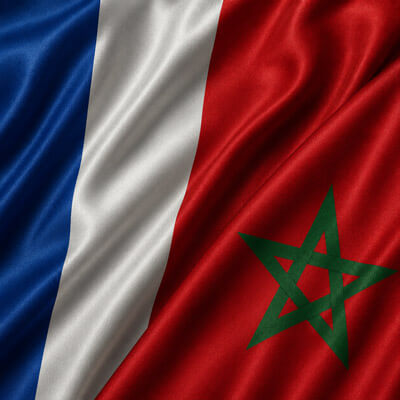
France vs. Morocco

France’s edge comes from squad depth and returning pieces like Bradley Barcola, Manu Koné and Jules Koundé, which FIFA says are back after earlier injury absences. A neutral-site knockout in Boston also favors the side with more established talent if it controls tempo and creates early chances.
France becomes less likely if Morocco’s press and transition game disrupts buildup, or if France’s attack again looks blunt without Randal Kolo Muani in the squad.
A level result is most plausible if Morocco’s compact knockout structure keeps France from separating early and both sides trade low-volume chances. FIFA’s schedule confirms a neutral-site match in Boston, which can support a tighter game state if neither team forces risk.
The draw weakens if France’s returning starters tilt possession and chance quality enough to produce a clear winner, especially with an early goal opening the match.
Morocco has a live path if Mohamed Ouahbi’s squad settles quickly and the team repeats the disciplined knockout form that carried it to the 2022 semifinal. FIFA’s own team profile shows Morocco can survive against elite opponents, so a compact defensive plan and set-piece edge matter.
Morocco is less likely if France’s healthier core controls midfield and turns its depth into sustained pressure, limiting the upset window before late-game variance can help.
Odds, liquidity, volume, and open interest are sourced from Polymarket and last synced at Jul 9, 2026 8:52 pm.
What could move the odds
Informational summary of factors that may affect reported probabilities.
Market-implied thesis
France’s price implies the market sees superior squad depth and knockout pedigree outweighing Morocco’s upset path at a neutral Boston venue.
FIFA confirms Match 97 at Boston Stadium; neutral site reduces any home-field framing and makes squad availability central to the probability split.
What could reprice it
The final FIFA team sheets and any late fitness updates on Barcola, Koné, Koundé or Morocco’s starters could shift France, draw, and Morocco pricing quickly.
France regained several injured players, while Morocco’s confirmed squad under Mohamed Ouahbi makes selection and tactical setup the key near-term catalyst.
Where the market may be weak
The market has deep liquidity, but the three-way format can mislead if bettors price “France” like qualification rather than regulation-time match result.
Multi-outcome Yes prices settle by the listed match outcome, so draw risk is economically separate from either team’s advancement narrative.
Counter-signal
Morocco’s 2022 semifinal run and recent squad continuity argue the underdog price may understate their ability to drag France into a low-margin match.
France’s Kolo Muani omission also narrows some attacking-depth assumptions, even with other players returning from injury.
AI-generated market summary, reviewed for clarity. This summary is informational only, may contain errors, and is not financial, investment, betting, or trading advice.
Market details
- Resolution criteria
- This event is for the upcoming FIFA World Cup game, scheduled for Thursday, July 9, 2026 between France and Morocco.
- Platform
-


- Category
- Sports › World Cup
- Close date
- July 9, 2026, 8:00 PM UTC
- Settlement source
- fifa.com
- Market rules summary
- Multi-outcome Polymarket event. Each listed option is represented by its Yes price on the underlying market. View full rules
France’s pedigree meets Morocco’s knockout resilience in Boston rematch
The market’s France lean rests on recent finishing power, deeper knockout pedigree, and a familiar 2022 matchup frame. Morocco’s case comes from penalty-tested resilience, a 3-0 Canada win, and the chance that a tight regulation match keeps the draw live.

The market is pricing France as the team more likely to control the July 9 quarterfinal at Boston Stadium, while still leaving meaningful room for a regulation-time stalemate. That split makes sense if the central story is France’s higher attacking ceiling against a Morocco side whose recent World Cup identity is built around surviving elite opponents and turning tight games into pressure events.
France’s price is anchored in recent knockout proof, not reputation alone
France’s 61.5% share is easier to understand after FIFA’s official Round of 32 report: a 3-0 win over Sweden on June 30, with Kylian Mbappé scoring twice and Bradley Barcola adding the third. For the market, that result matters because knockout pricing tends to reward teams that have recently converted superiority into goals. A favorite can look fragile when dominance produces narrow margins; France’s latest official result points the other way.
Mbappé’s brace carries extra weight because he compresses the tactical problem for Morocco. If France can threaten in transition and from settled possession, Morocco’s defensive plan has fewer safe zones. Barcola’s goal also matters because it suggests the scoring burden is not confined to one player. The market’s France lean can therefore be read as a judgment that Morocco must solve multiple French threats, not simply contain the most obvious one.
The draw price signals respect for Morocco’s ability to slow games down
The 24.5% draw option is the most revealing piece of the board because this is a knockout-stage fixture with a clear favorite. Its presence implies the market is placing real weight on a level score through the relevant settlement window, likely because Morocco’s recent path supports a game state where France possession does not automatically become France separation.
FIFA’s French-language tournament coverage says Morocco reached this stage after finishing second in Group C, eliminating the Netherlands on penalties, and beating Canada 3-0 in the Round of 16. The penalty result is especially relevant to the draw bucket: it shows Morocco have already turned a high-profile opponent into a coin-flip ending after regulation pressure. The Canada score matters in a different way, because it prevents the market from treating Morocco only as a low-block spoiler. They have evidence of turning a knockout match into a comfortable result when the game opens.
| Market input | Why it matters to pricing |
|---|---|
| France at 61.5% | Recent 3-0 Sweden win supports confidence in finishing and control. |
| Draw at 24.5% | Morocco’s penalty-tested route keeps a tight regulation outcome plausible. |
| Morocco at 14.5% | The market recognizes an upset path, while assigning France the stronger baseline. |
| $3.09M liquidity | Depth makes new lineup or tactical information more likely to be absorbed quickly. |
The rematch narrative gives Morocco credibility without erasing France’s baseline
FIFA’s Morocco team page frames this as another meeting with the side that beat the Atlas Lions in the Qatar 2022 semifinals, while also noting Morocco are targeting a second straight appearance in the World Cup last four. That history matters because it gives the underdog price a concrete basis: Morocco have already shown they can reach this tier of the competition and compete in the same bracket neighborhood as France.
The same history also supports France’s side of the market. The 2022 semifinal reference is a reminder that France have already handled this matchup in a World Cup knockout setting. Pricing can incorporate both ideas at once: Morocco’s deep-run pedigree reduces the chance of a simple mismatch, while France’s own tournament résumé and current attacking evidence justify the favorite position.
Boston timing turns logistics into a subtle market variable
FIFA’s schedule lists France vs. Morocco as Match 97 at Boston Stadium on July 9, 2026, at 16:00 local time. That detail matters because a late-tournament match is shaped by recovery, travel, heat management, and squad rotation as much as by abstract team quality. A favorite with elite attackers benefits if the match becomes stretched, but a controlled tempo can pull more probability toward Morocco and the draw.
The market close at 8:00 PM UTC aligns with the match timing, so the most sensitive repricing window should come from confirmed team sheets, injury availability, and tactical shape. If Mbappé starts with France’s main attacking pieces around him, the existing favorite story gains confirmation. If France rotate heavily, lose a key attacker, or show a conservative setup, the draw component becomes more important because Morocco’s best market case depends on keeping the score level deep into the match.
The main counter-signal is Morocco’s path against elite opposition
The strongest challenge to the France-leaning story is Morocco’s demonstrated ability to eliminate the Netherlands on penalties and then beat Canada by three. Those results show two separate upset mechanisms: endurance in a match where margins are thin, and attacking execution when space appears. For the market, that combination is more threatening than a one-dimensional underdog profile.
Several hypothetical catalysts could force a sharper move before kickoff: a confirmed absence or minutes restriction for Mbappé, a France lineup missing pace on the wings, Morocco naming an unusually defensive XI, or early reports about pitch and weather conditions favoring a slower match. Conversely, confirmation of France’s first-choice attack, signs Morocco are missing key defensive personnel, or tactical news pointing to an open game would reinforce the logic behind France’s current lead.
The failure mode for the market’s France-heavy story is a first half where Morocco deny central space, prevent transition chances, and turn the crowd and rematch emotion into fuel rather than noise. In that scenario, the draw option would stop acting like a secondary outcome and become the market’s main expression of Morocco’s leverage. France’s task is to make their quality visible early enough that Morocco cannot drag the match into the type of ending they have already survived in this tournament.
Sources
Related markets
 Argentina vs. Switzerland

 Spain vs. Belgium
 Wimbledon ATP: Jannik Sinner vs Jan-Lennard Struff