

Custodial wallets are account-based crypto wallets where a company controls the private keys. They’re most common as exchange wallets, but you’ll also see terms like hosted wallet, managed wallet, and centralized wallet. Use the control test: if a provider controls signing or recovery, or can block transfers at its discretion, it’s custodial. Remember, not all self-custody wallets expose a seed phrase or a single exportable private key.
This guide breaks down custodial vs non custodial wallet trade-offs, how exchange wallets compare to self-custody, and what to look for in fees, withdrawals, and account security.
Top Custodial Crypto Wallets
- Multi-network deposits and withdrawals across major blockchains
- Built-in exchange, credit, and card tools inside one account
- Strong account-level security controls, including whitelisting and anti-scam checks
- Watch-only mode tracks any address
- 0.25% swaps, cheaper than MetaMask
- Address whitelist locks send targets
CryptoSlate may earn a commission when you visit partner sites through links on this page, at no extra cost to you. Our rankings and reviews remain editorially independent and based on our published methodology. Read disclosure
Disclaimer: CryptoSlate may receive a commission when you click links on our site and make a purchase or complete an action with a third party. This does not influence our editorial independence, reviews, or ratings, and we always aim to provide accurate, transparent information to our readers.The majority of “best custodial wallets” lists are really lists of exchange wallets. If you’re searching for the best crypto exchange wallet, you’re usually comparing these account-based options where the platform manages private keys, deposits, and withdrawals for you. The upside is convenience (easy login, fast transfers between trading pairs, and simpler recovery). The downside is that you’re relying on a third party for access, withdrawals, and account security, so the best custodial wallet providers are the ones that pair strong security controls with reliable withdrawals and clear fees. Depending on your region and limits, a custodial wallet provider may require identity verification for certain features or withdrawals.
If you’re comparing a crypto exchange wallet to a self-custody app, watch for brand confusion: some exchanges also publish separate non-custodial apps. For this shortlist, treat “custodial” as “you can’t export keys or a recovery phrase that lets you move funds without the provider.”
What to look for in a custodial wallet provider:
- Account security (2FA options, device/session controls, address allowlists)
- Withdrawal reliability (processing times, limits, clear rules)
- Supported assets and networks (especially for stablecoins across multiple chains)
- Fees (trading fees, spreads, withdrawal fees)
- Support quality (response speed, account recovery clarity)
- Transparency (policies, incident communication)
If you’re comparing the best crypto exchange wallets, a side-by-side table makes it easier to evaluate custodial wallet providers in more detail — especially if you’re deciding between similar fee structures or withdrawal limits. This comparison focuses on practical details that matter day-to-day: account protections, withdrawal reliability, supported networks (especially for stablecoins), and fee structure.
Comparison Table
| name | Custody | Blockchains | Hardware Support | Staking | Fiat On-ramp |
|---|---|---|---|---|---|
 Nexo Nexo | Custodial | Bitcoin, Ethereum, Base, Polygon, BNB Smart Chain, Arbitrum, Optimism, Solana, Avalanche, Tron | No | Limited | Yes |
 Rabby Wallet Rabby Wallet | Non-custodial | Ethereum, BNB Smart Chain, Avalanche, Arbitrum, Base, Optimism, Polygon | Yes | None | No |
Note: fees, limits, and supported networks can vary by region and can change over time, so treat this as a comparison snapshot and verify key details in the provider’s official fee and support pages.<!
If you want to go beyond the table, the next section breaks down the top custodial wallet providers one by one. Each review focuses on the practical stuff: how the account is secured, what withdrawals are like, which networks are supported for stablecoins, and where fees tend to show up.
Custodial Crypto Wallets Reviews
Nexo
Pros
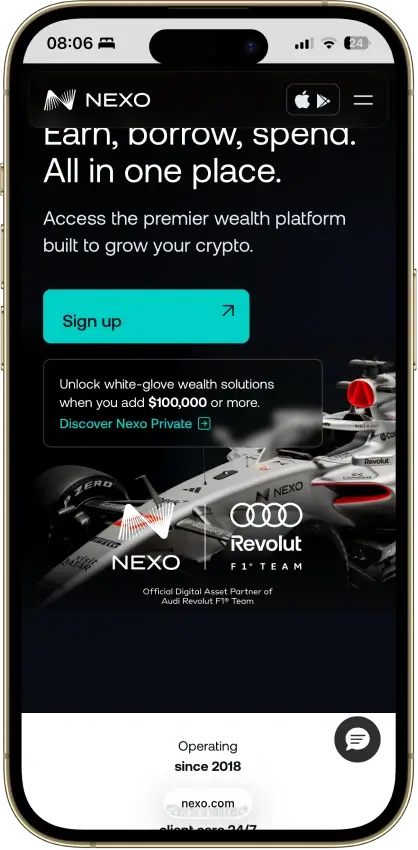
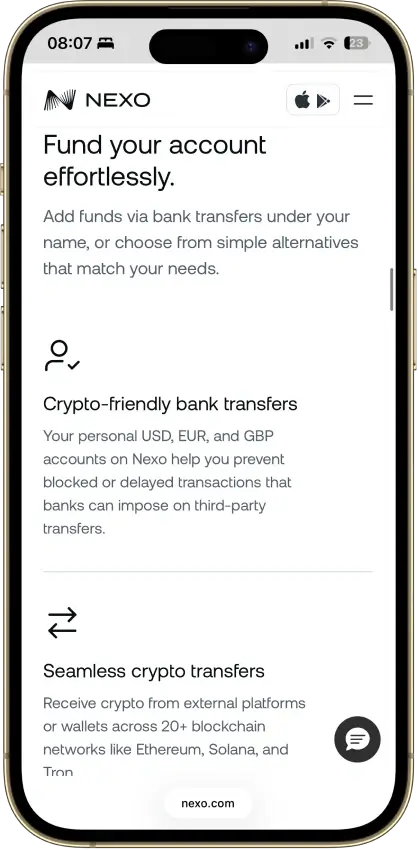
- Supports multi-network deposits and withdrawals across major chains, which makes it easier to move assets over the route Nexo actually supports for each coin.
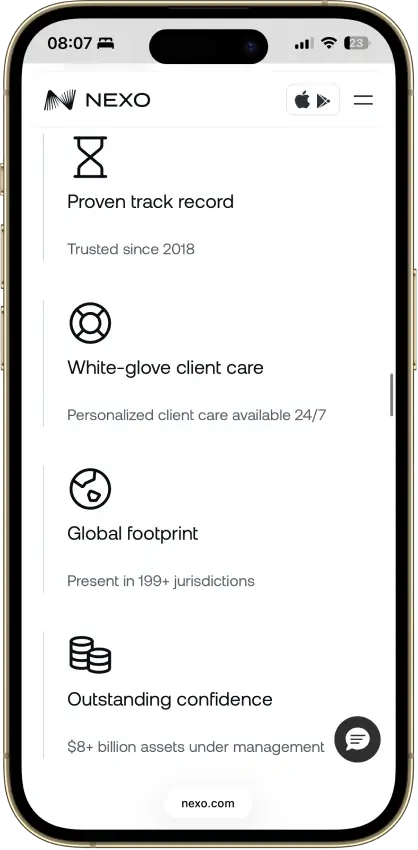
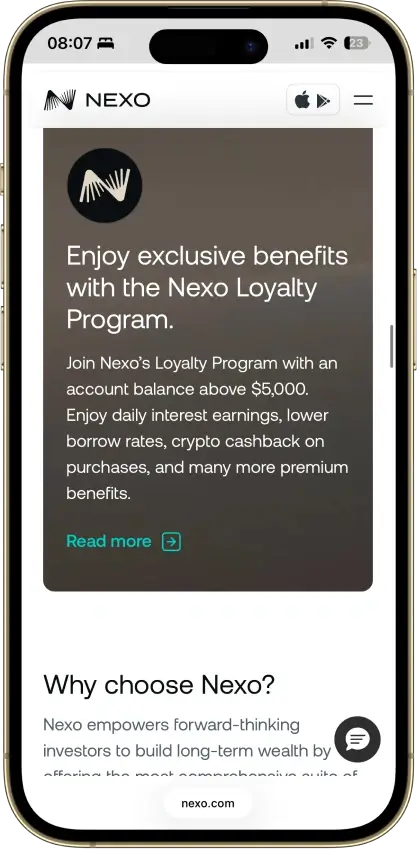
- Combines custody, swaps, Nexo Pro trading, credit lines, and card spending in one account instead of forcing users to split those jobs across multiple apps.
- Uses account-level protections such as authenticator support, biometrics, anti-phishing code, address whitelisting, and anti-scam withdrawal monitoring.
- Available on web, iOS, and Android, so users can manage balances and transfers without being locked to a single device type.
Cons
- Custodial by design, so you do not get a seed phrase or direct control of the private keys for platform balances.
- Not a strong choice for wallet-native Web3 use, because the older Nexo Web3 wallet was sunset and the current product is built around managed account custody.
- Requires full identity verification as part of the account model, which makes it a poor fit for privacy-first users.
- Feature availability varies by jurisdiction and product line, so not every user gets the same mix of card, yield, credit, or transfer features.


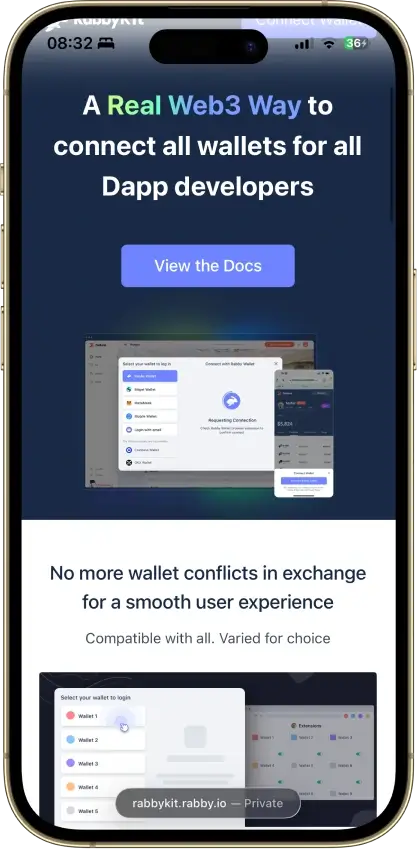
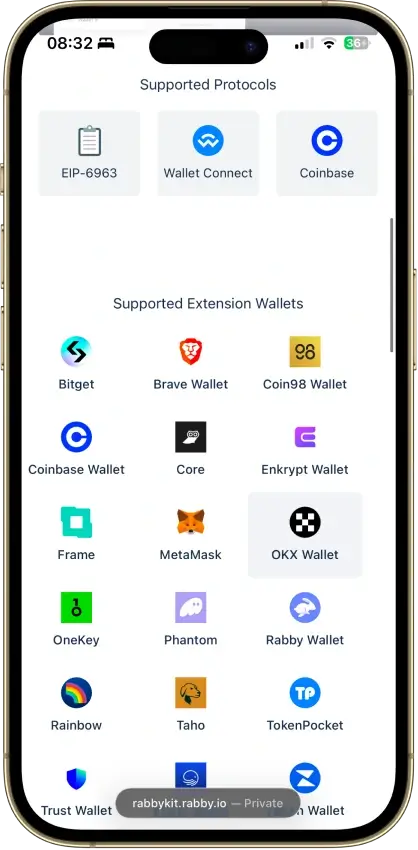
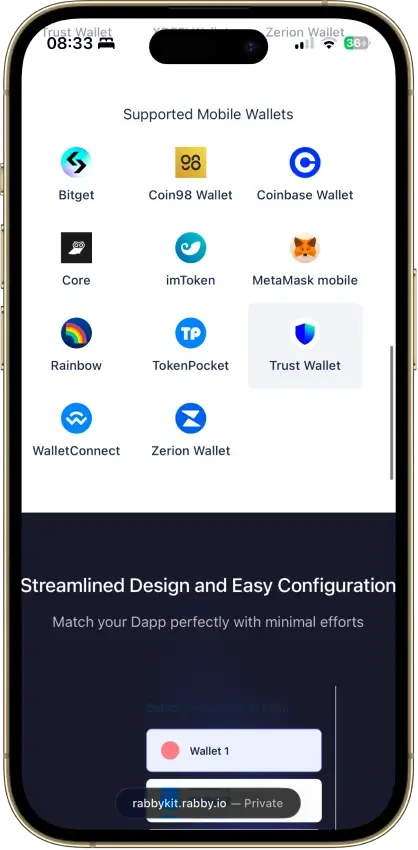
Rabby Wallet
Pros
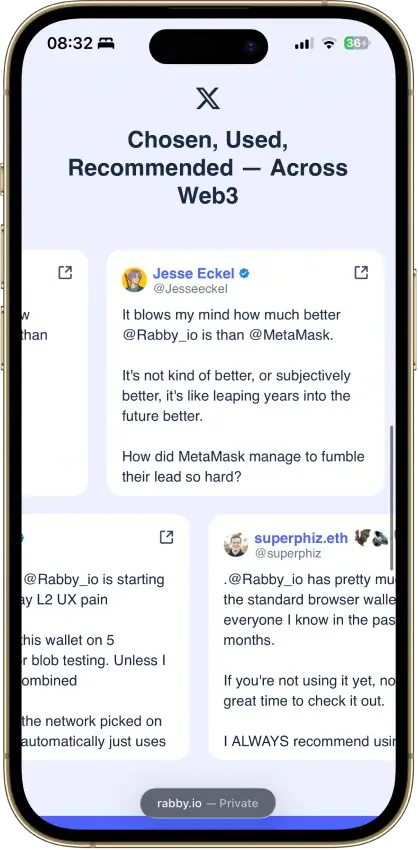
- Fully open source with public repos
- Simulates every transaction before you sign
- Flags scam sites and risky token approvals
- 100+ EVM chains with automatic switching
- Audited by Least Authority and SlowMist
Cons
- EVM only, no Bitcoin, Solana, or XRP
- Dense interface for casual holders
- 2022 swap contract exploit, about $200K
- No native staking or fiat on-ramp
- Seed phrase is the only recovery path
After the reviews, the rest of this guide explains the key terms — what “custodial,” “exchange wallet,” and “hosted wallet” mean — plus the trade-offs to keep in mind.
How We Rank
Custodial Crypto Wallets uses the Crypto Wallets scoring rubric.
Control of funds, exportability, and wallet portability.
How clearly keys and signing responsibilities are explained.
Audits, bug bounties, and credible third-party security review.
Backup, recovery, and loss-prevention options for normal users.
Protections against phishing, drainers, malicious dApps, and scams.
Past incidents, disclosure quality, and response maturity.
WalletConnect, browser, mobile, chain, and dApp compatibility.
How clearly users can understand, review, and approve signatures.
Smart-account features, passkeys, batching, and gas abstraction.
Fiat on/off ramps, cards, bank links, and payment functionality.
How Custodial Wallets Work
A custodial wallet is a wallet where a third party (usually a centralized exchange or app) holds the private keys for you. You’ll also see the phrase custodial crypto wallet used for the same setup: an account or app where the provider handles signing and key management in the background. In other words, the custodial wallet meaning comes down to control: you can see your balance and request deposits or withdrawals, but the provider is the one that actually manages key security in the background. “Exchange wallet” and “hosted wallet” usually refer to provider-held custodial setups. “Managed wallet” is broader and can also describe user-owned embedded crypto wallets, so do not treat all four terms as synonyms.
In a typical custodial wallet flow, you create an account, secure it with 2FA, deposit funds to an address the platform shows you, and then trade, hold, or withdraw. The main benefit is convenience (easy login and recovery). The main trade-off is that your access depends on the provider’s account controls, policies, and support.
Custodial wallet example: exchange accounts, brokerage-style crypto apps, and some NFT or gaming platforms that custody assets for frictionless onboarding.
- Who controls private keys: the provider, not you
- How recovery works: password resets and account recovery through the platform
- If your account is locked: withdrawals can pause until the issue is resolved
- Withdrawal permissions/limits: set by the provider (and can vary by asset and region)
- Where fees show up: trading fees/spreads, withdrawal fees, plus network fees for on-chain sends
Custodial Vs Non-Custodial Wallet
The simplest way to compare them is key control: custodial wallets are controlled by a provider, while non-custodial wallets are controlled by you. With custody, you’re trading control for convenience — login recovery, support, and often faster in-app trading. With self-custody, you’re trading convenience for independence — you can move funds without permission, but you’re responsible for backups and security.
| Feature | Custodial wallet | Non-custodial wallet |
|---|---|---|
| Keys/control | Provider controls keys | You control keys |
| Recovery | Password/reset flows | Seed phrase or recovery method |
| Best for | Convenience, frequent trading | Long-term control, DeFi, portability |
| Main risk | Counterparty/account risk | User backup and personal security risk |
| Privacy | Often more data collection | Varies; depends on how you use it |
| Fees | Trading + withdrawal + network | Mostly network fees (plus swaps if used) |
Use a custodial exchange wallet if you’re buying small amounts, trading often, or you need simple recovery. Use a non-custodial wallet if you want full control, plan to hold long-term, or you’ll use on-chain apps — but only if you’re ready to store and protect your recovery phrase.
When a custodial wallet is fine:
- You trade frequently and value convenience
- You’re starting out with smaller balances
- You want simple account recovery and support
When a non-custodial wallet is better:
- You’re holding long-term or moving larger balances
- You want to use DeFi, NFTs, or on-chain apps
- You want portability and control without account permission
Note: hot vs cold describes internet exposure, not custody. A wallet can be hot or cold and still be custodial or non-custodial. For example, exchange wallet access is custodial and online, but reputable exchanges typically keep only operational liquidity in hot wallets and store most customer assets in cold storage.
What Is An Exchange Wallet?
An exchange wallet is the wallet inside your crypto exchange account. Crypto exchange wallets refers to two things: (1) the balance you see on the exchange, and (2) the deposit addresses the platform gives you for each asset and network. In practice, an exchange wallet crypto setup is custodial — the exchange controls the private keys — and you’re using an account ledger that tracks what you own on the platform.
One of the most common mistakes with a crypto exchange wallet is sending funds on the wrong network. Stablecoins are the classic example (USDT on ERC20 vs TRC20 vs other chains). If you deposit on the wrong network, the transfer may not credit automatically, and recovery can be slow or not possible depending on the platforms. Always match the network shown in the exchange wallet deposit screen, and if you’re unsure, test with a small amount first.
How an exchange wallet app typically works:
- Create an account
- Enable 2FA (and other security options if available)
- Deposit crypto or buy with fiat
- Trade or hold funds on the exchange
- Withdraw to an external wallet (optional)
One common confusion: some exchanges also publish a separate non-custodial wallet app. Don’t assume an “exchange wallet app” is custodial just because it shares the same brand — check whether you can export keys or a recovery phrase.
Exchange Deposit Addresses Are Not Personal Wallet Addresses
With an exchange wallet, the deposit address shown in your account is usually part of the exchange’s custody system, not a personal address you fully control. Exchanges commonly sweep deposits into hot or cold storage, and withdrawals may come from a different address than the one you deposited to.
That is why exchange wallets are a poor fit for airdrops, fork snapshots, ICO or token-sale claims, and any flow where you need to prove control of a specific address. For those use cases, a non-custodial wallet is usually the better fit.
Centralized Wallet Vs Decentralized Crypto Wallet
A centralized wallet is a wallet or account run by a company. If you’re wondering what is a centralized wallet, think of an exchange account balance or an app where you log in and the service handles custody, security, and recovery for you. In everyday crypto, centralized wallets are often custodial wallets — meaning the provider controls the private keys — but “centralized” and “custodial” aren’t identical terms.
Here’s the practical difference: centralized vs decentralized crypto wallet usually describes who runs the system, while custodial vs non-custodial describes who controls the keys. Most centralized services custody keys for convenience, but you can still interact with decentralized apps using a non-custodial wallet.
Centralized wallet example: an exchange wallet tied to a login-based account, or a hosted app that manages deposits, withdrawals, and recovery for you.
| Term | What it usually means |
|---|---|
| Centralized wallet | Wallet/account run by a company/service (often custodial) |
| Decentralized wallet | Typically a self-custody wallet used with DeFi apps (often non-custodial) |
Rule of thumb: most centralized crypto wallet setups are custodial. When you’re unsure, apply the same key-control check: can you export keys or a recovery phrase and move funds without a provider’s approval?
Hosted Wallet, Managed Wallet, And Other Names
A lot of beginner confusion comes from overlapping labels. “Hosted wallet,” “managed wallet,” “exchange wallet,” and “custodial account” are often used to describe a similar idea: a provider runs the wallet infrastructure for you, and you access funds through a login. To sort the terms, use the same key-control check: if you can’t export keys or a recovery phrase and move funds without the provider, it’s custodial.
A hosted wallet (sometimes written as a wallet hosted by a provider) is typically a custodial setup where the service creates the wallet, stores the keys, and handles signing behind the scenes. A managed wallet is a broader term that usually means the provider manages security and recovery for you. In consumer crypto, “managed” almost always implies custody, even if the provider uses different tech under the hood.
An exchange wallet is the most common hosted wallet people use day-to-day — it’s the custodial wallet inside an exchange account. A custodial account is similar language that focuses on the relationship: the platform holds the assets/keys on your behalf and enforces account controls for withdrawals, limits, and recovery.
Hosted wallet vs unhosted wallet: an unhosted wallet (often used as a synonym for a non-custodial wallet) is one where you control the keys or recovery phrase yourself. That means you can move funds without asking a provider — but you also own the responsibility for backups and security.
Glossary:
- Hosted wallet: provider-created wallet where the service stores/controls keys (usually custodial)
- Managed wallet: provider-managed security and recovery; typically custodial for retail users
- Exchange wallet: a hosted custodial wallet inside an exchange account
- Custodial account: an account where a platform holds keys/assets on your behalf
- Unhosted wallet: commonly used term for a non-custodial/self-custody wallet
Embedded Wallet Infrastructure Is Not Automatically Custodial
Some modern wallet infrastructure providers support the full range of setups: fully user-controlled self-custody, shared-control models, and service-controlled wallets. That means “embedded wallet” or “wallet as a service” does not tell you enough on its own.
The practical question is still the same: who controls signing, who controls recovery, and who can approve or block transactions?
Cryptocurrency Wallet Vs Exchange
The cryptocurrency wallet vs exchange question comes up because the two are often used together, but they do different jobs. An exchange is a platform where you buy, sell, and trade. A wallet does not store the crypto itself; it stores or manages the keys and signing authority that control access to assets on the blockchain.
A simple way to think about a cryptocurrency exchange wallet is: it’s the custodial wallet inside your exchange account. You can buy and trade quickly, but you’re relying on the exchange to hold keys and process withdrawals. With a non-custodial wallet, you control the keys and can move funds without permission — but you’re responsible for backups.
Common wallet + exchange workflow: buy on an exchange → withdraw to a wallet for long-term storage or on-chain apps.
Scenario: I trade often. Keeping some funds in an exchange wallet can be practical for frequent trades and quick conversions. Just treat it like an account: use strong security, and don’t keep more on-platform than you’re comfortable relying on.
Scenario: I hold long-term. Many people buy on an exchange, then withdraw to a non-custodial wallet (often a hardware wallet for larger balances) so they control keys and reduce reliance on a third party.
Holding Crypto On Exchange Vs Wallet
The “holding crypto on exchange vs wallet” decision is mostly about how much control you want versus how much convenience you need. An exchange wallet is easier for buying, selling, and quick conversions. A non-custodial wallet gives you more control and portability, but it also puts backup and security on you.
A simple way to decide is to check:
- Amount size: smaller balances are easier to manage on an exchange; larger balances often justify moving to self-custody
- Time horizon: short-term funds for trading can stay on an exchange; long-term holdings are commonly moved off-platform
- Need for trading: if you trade frequently, keeping some funds in an exchange wallet can reduce friction
- Need for DeFi/NFTs: most on-chain apps require a non-custodial wallet you connect directly
- Comfort with backups: if you’re not ready to protect a recovery phrase, a custodial wallet may be safer for you right now
Many people land on a split setup: keep only what you need for active trading on the exchange, and move long-term holdings to a non-custodial wallet once you’re comfortable with backups.
Keeping everything in one place increases single-point-of-failure risk.
Compliance Friction: Self-Custody Transfers May Need Extra Verification
In the EU and UK, some custodial platforms now collect extra information when you send crypto to or from an external wallet.
Depending on the platform and route, you may be asked for the recipient’s name, country, wallet type, or proof that you own the self-custody wallet before a withdrawal is approved or a deposit is released.
That does not change the custody model, but it does change the user experience. For some users, the real trade-off is not just control versus convenience. It is also compliance friction versus portability.
Fees — Wallet Vs Exchange
When people compare crypto wallet exchange fees, they often mix up platform fees with network fees. Exchanges can charge for trading, for withdrawing, or through a spread (especially in broker-style “buy crypto” flows). Wallet apps usually don’t charge a “storage” fee, but they can include swap fees if you trade inside the wallet, and you’ll still pay network fees whenever you send on-chain.
| Fee type | Where it shows up |
|---|---|
| Trading fee | Exchanges (spot, margin, derivatives) |
| Spread | Some broker-style apps and instant-buy flows |
| Withdrawal fee | Exchanges (sometimes fixed, sometimes dynamic) |
| Network fee | Any on-chain send (paid to miners/validators) |
| Swap fee | Wallet apps that offer in-app swaps (plus network fees) |
Common misconception: network fees are paid to the blockchain network — not to the exchange or wallet. However, exchanges can add their own withdrawal fee or set a minimum that effectively increases the cost, especially for smaller transfers.
Smart-contract wallets can improve UX with batching or sponsored gas, but they can also cost more gas than traditional EOAs on some chains, especially Ethereum mainnet.
Custodial Wallet Security Risks
The main custodial wallet security risks come from three places: counterparty risk (the provider controls keys and withdrawals), account risk (your login and recovery channels can be attacked), and platform security (breaches, bugs, or operational failures). There’s also a practical “checkout” angle: some custodial wallet security risks show up when people buy crypto via in-app card payments or third‑party on‑ramps and get tricked by phishing pages, fake support, or spoofed deposit addresses.
A few habits go a long way:
- Use a unique password and 2FA (authenticator app or security key if supported)
- Secure the email account tied to the wallet (strong password, 2FA, recovery settings)
- Enable withdrawal allowlists/whitelisting and any withdrawal delays, if available
- Review active sessions/devices and revoke anything you don’t recognize
- Watch for phishing and fake support: bookmark the official site/app and verify URLs before logging in or checking out
- Test small withdrawals first, especially on new networks or to new addresses
- Don’t keep everything in one place: keep a small trading balance on the platform and move long-term holdings to self-custody when you’re ready
- Keep your device and browser updated, and avoid installing random extensions that can tamper with addresses
Insurance Reality Check
Crypto held in a custodial wallet is not FDIC-insured just because the company works with banks or stores some customer cash with banking partners. FDIC insurance applies to eligible bank deposits at insured institutions, not to crypto assets themselves.
If a platform advertises bank relationships, read the fine print and separate cash-balance protections from crypto-asset risk.
Custodial Wallets For Bitcoin, Stablecoins, NFTs, Games, And Lightning
Custodial wallets show up in different ways depending on what you’re doing. A custodial bitcoin wallet is often just an exchange account where the platform holds BTC keys for you. For stablecoins, custody is usually about convenience across multiple chains. For NFTs and games, custody is often used to remove seed-phrase friction. And for Lightning, custody usually means the provider manages channels and liquidity so you can send and receive instantly without running node infrastructure.
Here’s how custodial wallets typically show up across different crypto use cases.
| Use case | What “custodial” usually means | Why apps use custody | What to watch for |
|---|---|---|---|
| Custodial Bitcoin Wallet | BTC held in an exchange wallet under a login (provider controls keys). | Fast buys/trading, simpler recovery. | Account lockouts can pause withdrawals; limits vary. |
| Custodial Stablecoin Wallets (User Experience) | USDT/USDC on multiple networks inside an exchange wallet or hosted app. | Flexibility across chains. | Match the network; test first; watch minimums/withdrawal fees. |
| Custodial NFT Wallet | NFT keys held by a marketplace/app; ownership tied to your account. | Frictionless onboarding + recovery. | Transfers depend on platform rules; account issues can block access. |
| Custodial Wallet For Games | In-game assets held under your account login. | Less friction, smoother gameplay. | Withdrawals/bans depend on game rules; keep big balances off-platform if you want control. |
| Custodial Lightning Wallet | Provider manages channels/liquidity/routing. | Instant payments with minimal setup. | Limits and uptime vary; custody risk still applies. |
Wallet Infrastructure / Wallets-as-a-Service
Wallet infrastructure providers can power custodial, self-custodial, service-controlled, and mixed-control wallets. Do not treat WaaS as custodial by default. Instead of every product managing private keys, signing, recovery, and internal controls from scratch, the provider offers tooling (often via APIs) that handles key management, transaction approval policies, and operational security.
Companies use WaaS to speed up onboarding and make crypto feel more like a normal fintech app — login-based access, smoother recovery, and simpler in-app transfers. It can also help centralize compliance and risk controls, since permissions, monitoring, and reporting can be managed consistently across the product.
For most people choosing a personal wallet, WaaS isn’t something you “pick” directly. It’s the behind-the-scenes layer powering many exchange wallets and hosted apps. The practical takeaway is still the same: if you can’t export the keys or recovery phrase and move funds without permission, you’re using a custodial setup and relying on the provider’s policies and support.
Depending on region, custodial providers may require KYC, Travel Rule data, or proof that you own a self-hosted wallet before some deposits or withdrawals are processed.
Custodial Wallets are The Stepping Stone to More Advanced Crypto Banking
Custodial wallets are simple because you log in and the provider manages keys — but if you can’t export a recovery phrase or private keys, you’re trusting that provider for access and withdrawals. If you trade often or you’re just getting started, an exchange wallet can be a practical on-ramp.
If you’re holding long-term or using on-chain apps, moving funds to a non-custodial wallet gives you more control and portability. A common approach is to keep a smaller trading balance on-platform and move the rest to self-custody once you’re comfortable with that wallet’s recovery model, whether that’s a seed phrase, passkey, multisig, or another user-controlled setup.
