

Some sports prediction markets look cheap on paper but offer poor user experience once you place orders. Spreads widen, fills slip, and exiting early becomes harder than expected.
Others are easy to fund and simple to use, but fall apart outside major games. NFL and NBA headlines trade well. Everything else feels thin or inactive.
Here we help you choose the right platform for how you actually trade. It shows where liquidity holds up, how money moves in and out, and whether a prediction market is a better fit than a sportsbook for your use case.
Top Sports Prediction Markets
- Regulated U.S. prediction market
- Strong depth in major markets
- API and historical data access
- CFTC-regulated U.S. sports event contracts through CDNA
- Sports-focused product with chat, leaderboard, and parlays
- Easy USD funding across bank, card, PayPal, and mobile wallets
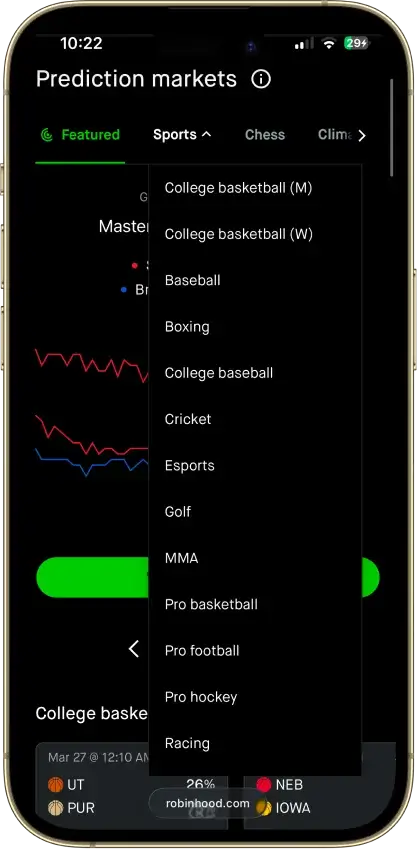
- Built into the main Robinhood app, so existing users can fund and trade without leaving their brokerage workflow
- Real-money event contracts offered through Robinhood Derivatives and partner CFTC-regulated exchanges
- Lets you close positions before resolution instead of forcing you to hold every trade to final payout
- Standalone DraftKings app and web product
- Regulated setup through Wedbush
- $0.01 per contract per side, plus exchange fees
CryptoSlate may earn a commission when you visit partner sites through links on this page, at no extra cost to you. Our rankings and reviews remain editorially independent and based on our published methodology. Read disclosure
Disclaimer: CryptoSlate may receive a commission when you click links on our site and make a purchase or complete an action with a third party. This does not influence our editorial independence, reviews, or ratings, and we always aim to provide accurate, transparent information to our readers.A quick fit table makes the shortlist easier to scan before you compare the full platform table.
| Use Case | Best Pick |
|---|---|
| Beginners | Robinhood Prediction Markets |
| NFL | Kalshi |
| NBA | Polymarket |
| Live Trading | Kalshi |
| Props | Polymarket |
| Fast Cash-Outs | Kalshi |
Start with this shortlist, then match it to how you actually trade. If you care about tight spreads and exiting early, focus on Kalshi or Polymarket. If you just want simple access with minimal setup, Robinhood or DraftKings will feel easier but come with trade-offs.
Comparison Table
| Name | Minimum deposit | KYC | Liquidity model | Early exit | Core categories | Position limit | API access |
|---|---|---|---|---|---|---|---|
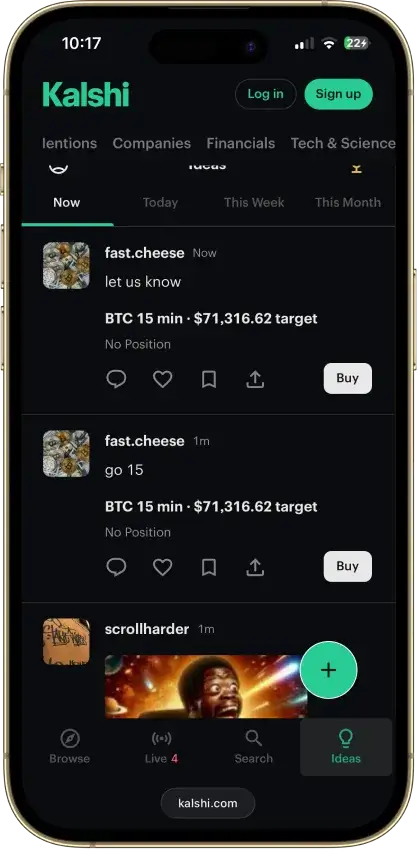
 Kalshi Kalshi | $1 | Full KYC | Order Book | Yes | Elections, politics, sports, culture, crypto, climate, economics, mentions, companies, financials, tech & science | Yes | Yes |
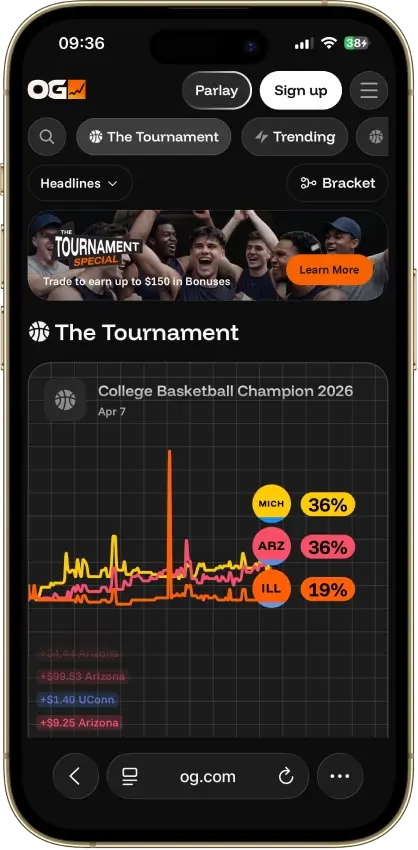
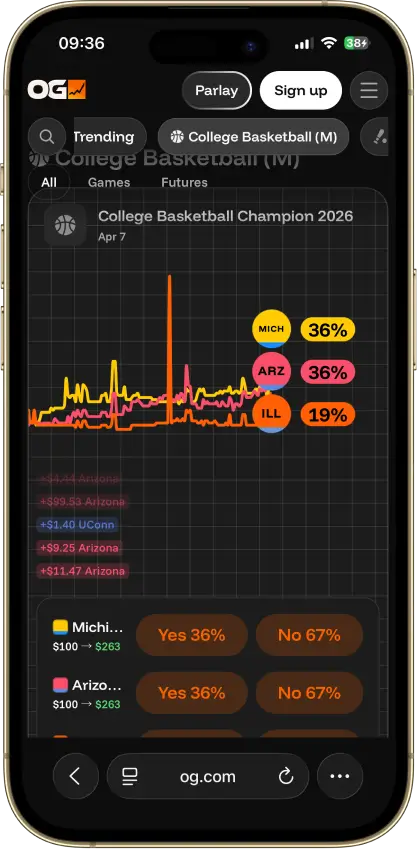
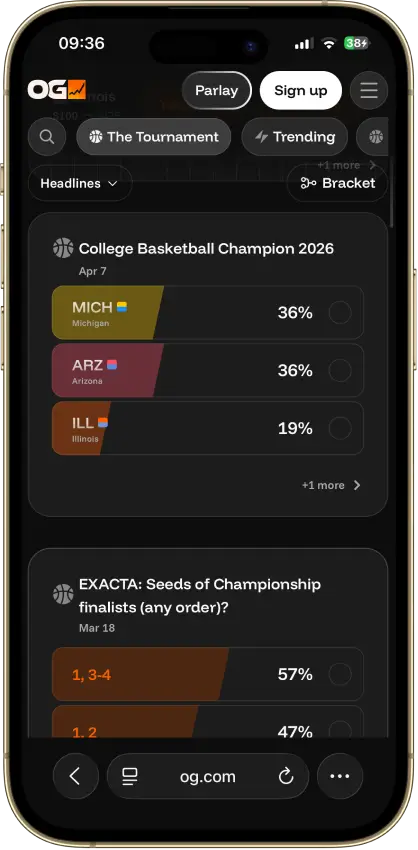
 OG OG | $1 | Full KYC | Order Book | Yes | Sports, Politics, Economics, Culture, Crypto, Financials, Companies, and Climate. | Yes | No |
 Robinhood Robinhood | $1 | Full KYC | Broker / Routed | Yes | Sports, Politics, Culture, Crypto, Climate, Economics, Companies, Financials, Tech & Science, Health and World | No | No |
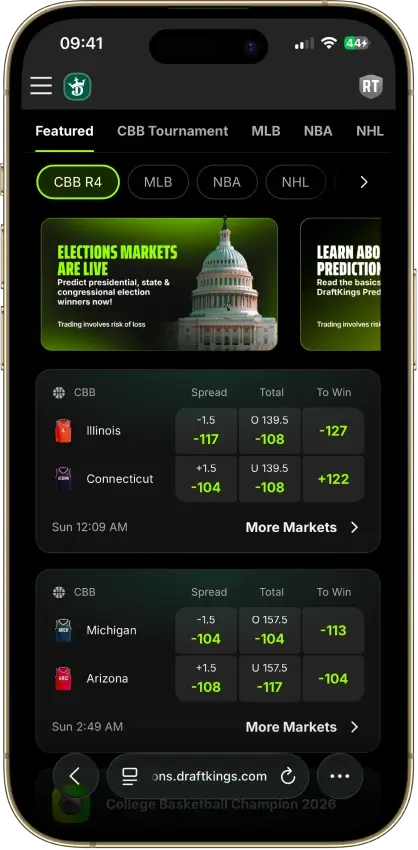
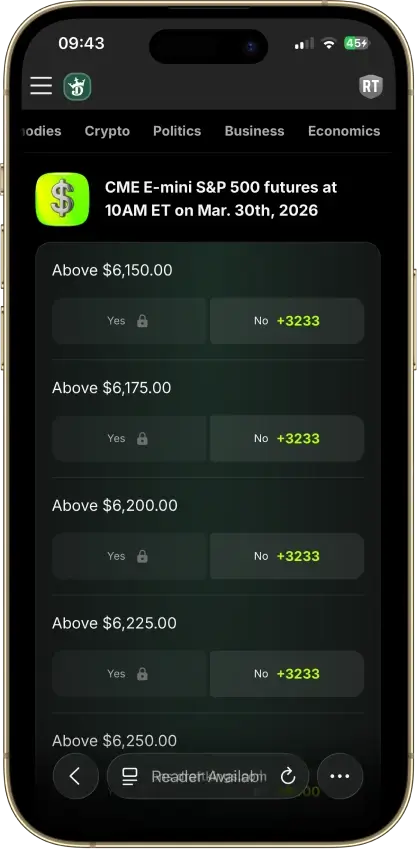
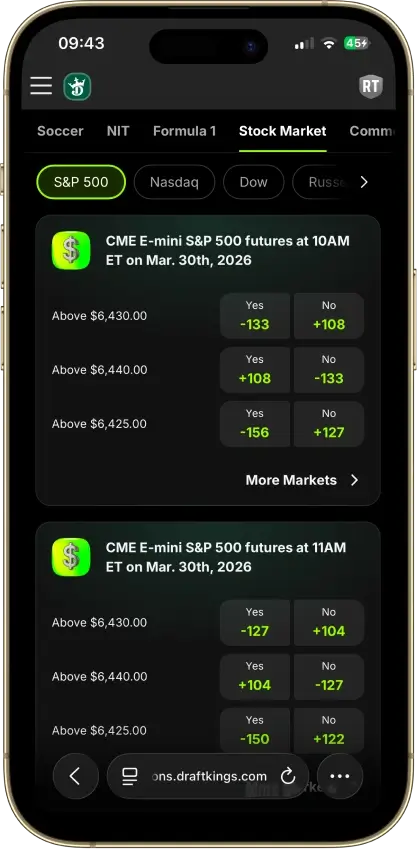
 DraftKings DraftKings | $5 | Full KYC | Broker / Routed | Yes | Sports, Stock Market, Commodities, Crypto, Politics, Business, Economics. | Yes | No |
Platforms like Robinhood and DraftKings have smoother onboarding but weaker execution quality and less flexibility. Kalshi and Polymarket trade better but require more setup and closer attention to rules.
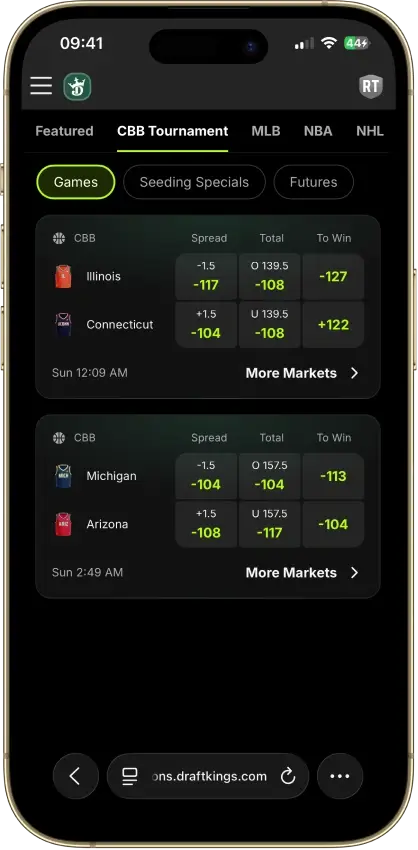
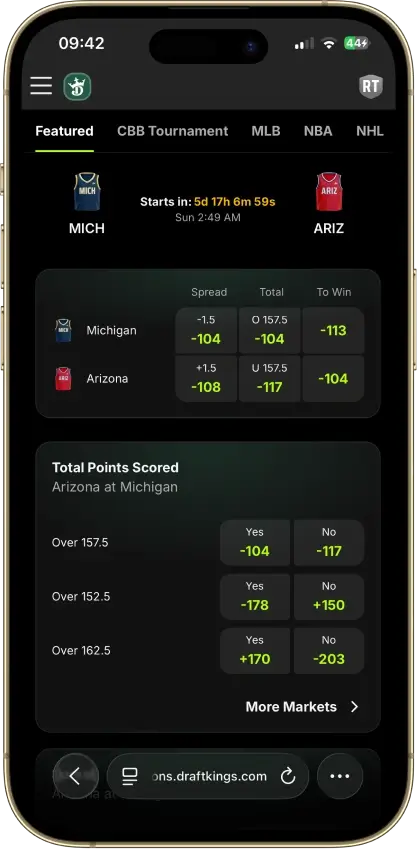
Depth and coverage can make a big difference here as Kalshi and Polymarket handle NFL and NBA markets well, but liquidity drops quickly outside major events. OG by Crypto.com and DraftKings list more casual markets, though often without real trading depth.
This section gives a tighter buying-guide view of each platform. The focus is on the decision points that matter most before funding an account: fit, market quality, money movement, and the main trade-off that can change the choice.
Sports Prediction Markets Reviews
Kalshi
Pros
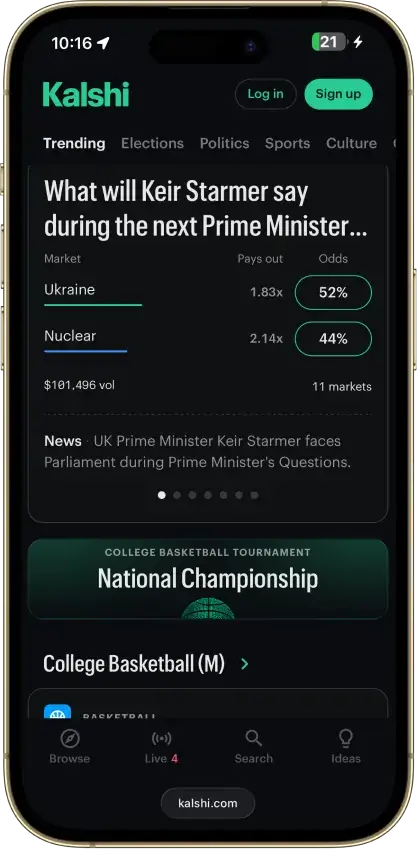
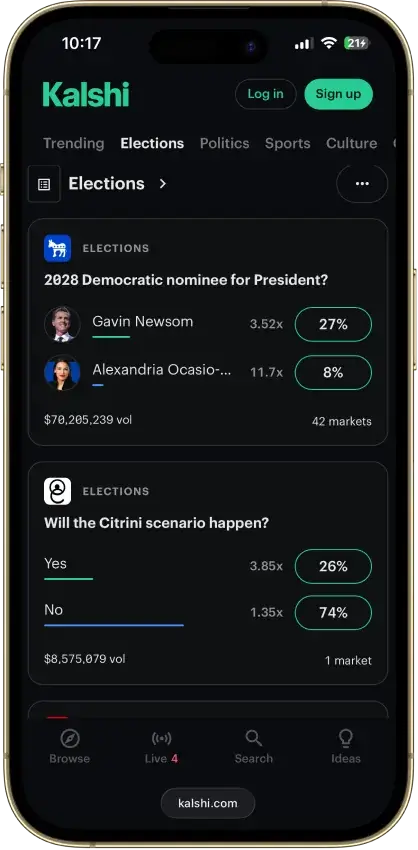
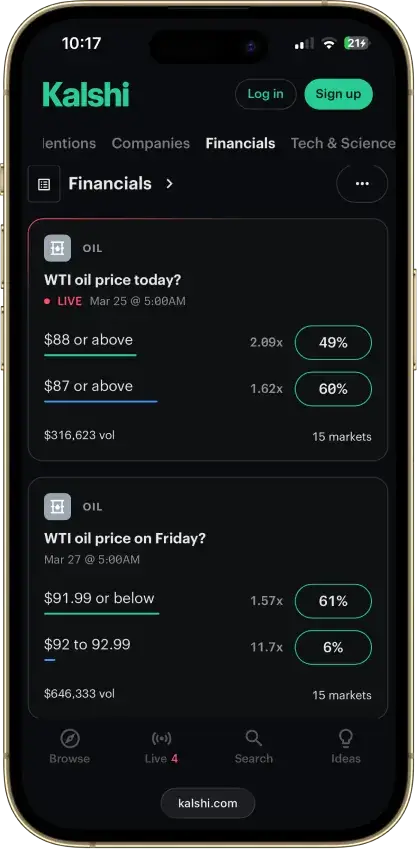
- Regulated U.S. exchange, not an offshore workaround
- Stronger depth in flagship markets than many rivals
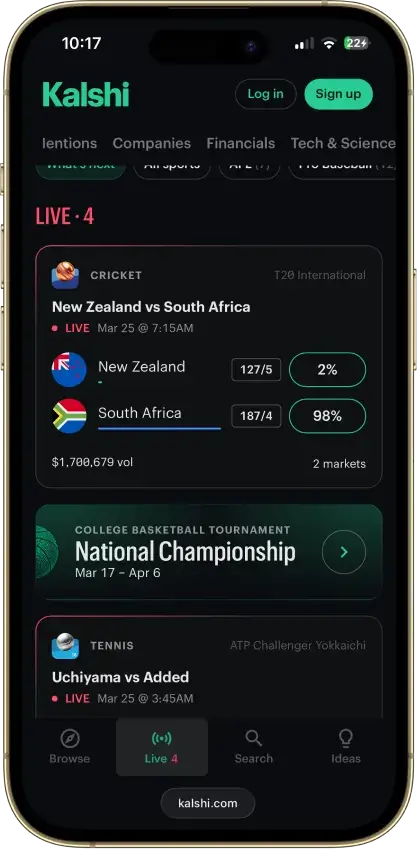
- You can usually exit before resolution
- Broad funding and cash-out options
- Serious API, WebSocket, and historical-data access
Cons
- Full KYC adds real setup friction
- Access still depends on jurisdiction
- Total trading cost is not always obvious
- Thin markets can be hard to exit
- Some contracts come with extra trading restrictions

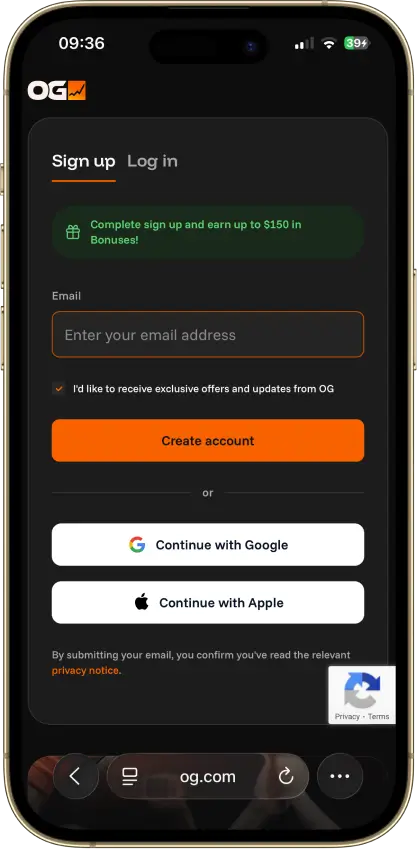
OG
Pros
- Multiple USD funding rails, including instant deposit, ACH, wire, PayPal, Venmo, debit card, Apple Pay, and Google Pay.
- Early exits are available before settlement when opposing liquidity exists
- Sports coverage goes beyond winners into spreads, totals, player markets, futures, and parlays
- Trade cost, payout, and fees are visible before order confirmation
- Available on iOS, Android, and web, with portfolio tracking, chat, and leaderboard features built in
Cons
- Full KYC and U.S.-only access create immediate signup friction
- Early exits are not guaranteed because closing still depends on another participant taking the other side
- Orders use immediate-or-cancel logic, so larger trades can fill only partly and the rest is canceled
- Cash withdrawals are ACH-only, which is narrower than the deposit side
- No public API or historical data access for model-driven or bot-based trading

Robinhood
Pros
- Easy funding if you already use Robinhood
- You can exit before resolution
- Fees are simple at the contract level
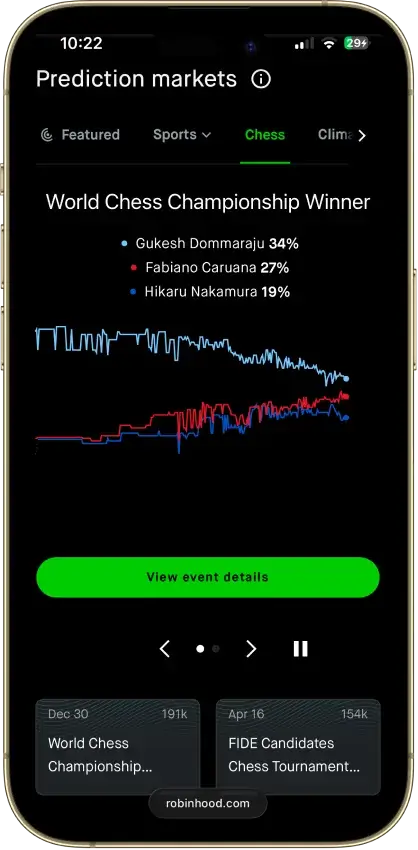
- Market coverage goes beyond sports and politics
- Fits naturally into the Robinhood app
Cons
- Event contracts are app-only
- You need Robinhood Derivatives approval
- Liquidity can be thin in some markets.
- State access is not uniform
- Tax reporting is weaker than regular brokerage products


DraftKings
Pros
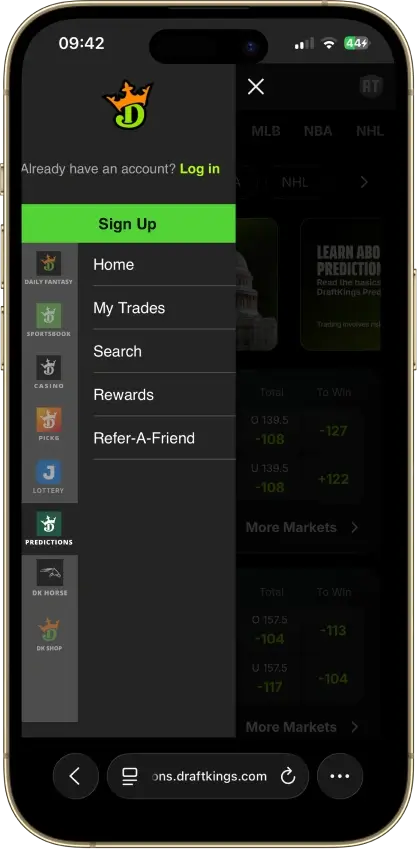
- Standalone app and web product inside a familiar DraftKings ecosystem
- Regulated structure with Wedbush instead of a legal gray area
- Positions can be sold before final resolution when liquidity is available
- Category mix extends beyond sports into crypto, stocks, politics, business, and economics
- Posted platform commission is $0.01 per contract per side
Cons
- Market access changes by state and by category, especially for sports
- Full KYC can reach into income, tax, and trading-experience checks
- Predictions balances do not move freely across other DraftKings products
- Unsettled funds and play-through rules can delay withdrawals or limit access to cash
- No public API or easy historical-data path for bot-driven users
These five platforms solve different problems. Kalshi and Polymarket are stronger if you care about trading quality. Robinhood, DraftKings, and OG by Crypto.com are easier to approach, but each gives up something in depth, flexibility, or cash-out clarity.
How We Rate Sports Prediction Markets
Our rankings focus on real sports-trading use, not homepage polish or broad marketing claims. We look at the parts that change the experience once a user funds an account and starts trading.
- Setup Friction + Account Readiness: how hard it is to sign up, verify, and get ready to place a first trade.
- Funding Rails + Deposit Friction: how easy it is to move money in and turn that balance into usable buying power.
- Cash-Out Flow + Payout Reality: how clearly winnings settle and how practical withdrawals feel in real use.
- Liquidity + Execution Quality: whether markets are actually tradable, not just listed.
- Fees + Hidden Cost Drag: the total cost once spreads, trading fees, gas, FX, and withdrawal friction start to add up.
- Sports Coverage + Market Usefulness: whether the platform offers sports markets that are broad enough and useful enough to matter.
- Rule Clarity + Grading / Dispute Handling: how easy it is to understand market wording, settlement rules, and edge cases.
- Trust Model + Security / Custody: whether the risk model is clear and the platform feels reliable enough to fund.
- UX + Apps + Data Tooling: whether the app, site, and tools make trading easier or harder.
- Transparency + Support + Reporting Readiness: how well the platform handles documentation, support, statements, and account records.
This methodology rewards platforms that offer a strong user experience after the first deposit. It favors strong liquidity, practical funding and withdrawals, useful sports coverage, and rules that do not create avoidable surprises.
It punishes platforms that look easy at first but break in real use. Thin markets, hidden cost drag, weak reporting, and unclear grading pull scores down quickly.
Sports Prediction Markets vs Sportsbooks
Sports prediction markets and sportsbooks can look similar from a distance, but they work differently once you place real money. One is built around tradable market pricing. The other is built around bookmaker odds and house margin.
| Factor | Sports Prediction Markets | Sportsbooks | Why It Matters |
|---|---|---|---|
| How It Works | You buy and sell contracts tied to an outcome | You place a bet at quoted odds | Trading and betting are not the same experience |
| Who Sets The Price | Market participants, liquidity, and platform structure shape pricing | The sportsbook sets the line and adjusts it | This changes how efficient or beatable pricing can be |
| How Cost Shows Up | Fees, spreads, slippage, gas, or withdrawal friction | Embedded vig, line shading, and payout structure | The cheapest-looking option is not always the cheapest in practice |
| Early Exit | Often possible before resolution if liquidity is there | Usually limited to cash-out offers, if available | Early exit flexibility matters for active users |
| Market Breadth | Strongest on headline events and selected narratives | Usually stronger on full game slates and mainstream props | Coverage depth varies by model |
| Best Use Case | Trading price moves, reacting to news, and managing positions | Picking sides, parlays, and simple pregame betting | The better tool depends on how you want to participate |
A sports prediction market is usually the better choice for those who want to act on spot, trade out before the final whistle, or treat a sports opinion like a position instead of a fixed bet. It also makes more sense when pricing matters to you, because a good entry and a good exit can matter as much as being right on the outcome.
A sportsbook is usually the better choice for those who want the easiest path from deposit to wager. It fits casual game picks, same-game parlays, standard spreads and totals, and users who care more about broad bet menus than tradable pricing or early exits.
How To Choose The Right Sports Prediction Market
A good platform match usually comes down to a few practical checks. Most bad choices happen because one of these breaks in real use, not because the brand looked weak from the start.
Check Which Sports And Leagues Actually Trade Well
A platform can look strong until you move beyond headline NFL or NBA events. Check whether the sports you care about have real depth, active pricing, and enough volume to enter and exit without bad fills.
Check Whether You Want Pregame, Live, Props, Or Futures
Some platforms are better for pregame markets. Others are more useful for live trading, longer-dated championship markets, or narrative-heavy props. Pick the platform that matches how you plan to trade most often.
Check How Hard It Is To Get From Signup To First Trade
This is where many platforms lose users. Broker approvals, KYC checks, geolocation rules, and wallet setup can all slow down account readiness. A cleaner path matters if you want to move quickly.
Check How You Fund The Account
Bank transfer, card, brokerage cash, and crypto wallet funding all feel different in practice. Choose the rail that matches how you already move money, not the one that sounds cheapest at first glance.
Check Whether You Can Exit Before The Resolution Period
Early exit is one of the biggest differences between platforms. Some let you trade out at any time if liquidity holds up. Others are closer to hold-until-resolution products.
Check Fees, Spreads, And Hidden Cost Drag
The posted fee is only part of the cost. Wide spreads, slippage, gas, FX, and withdrawal friction can make a platform more expensive than it first appears.
Check How The Platform Handles Injuries, Delays, And Voids
Sports markets can get messy fast. Injury news, postponements, canceled games, and odd edge cases all test how clear the rules really are. If the grading language is vague, that risk lands on the user.
Check Whether The App Fits Casual Use Or Active Trading
Some apps are built for quick mobile use. Others work better on desktop or for more active order management. Choose the setup that fits your pace, not just the cleanest-looking interface.
The wrong platform usually fails on one of these checks, not on branding. It might fund poorly, trade thinly, handle edge cases badly, or make withdrawals harder than expected. That is what usually turns a decent-looking platform into the wrong choice.
Funding, Fees and Cash-Out
To make that flow clearer, the table below breaks down where cost, delay, and friction usually show up in the process of funding and cashing out from a wallet or account in prediction markets.
| Step Or Cost | What Happens | Why It Matters |
|---|---|---|
| Deposit Methods | You add funds by bank, card, brokerage balance, or crypto wallet | The easier the rail, the faster a normal user can get started |
| Buying Power Timing | Deposited funds may be usable right away or after a hold | Fast access matters if you are trading around live or short-dated markets |
| Trading Fees | The platform may charge explicit fees on entry, exit, or settlement | Low headline fees do not always mean low total cost |
| Spreads And Slippage | Thin markets create worse fills when you enter or exit | Execution quality matters as much as the fee line |
| Withdrawal And Off-Ramp Costs | Cashing out may involve bank delays, partner costs, gas, or conversion friction | This is where real payout quality often separates platforms |
Market result, payout posting, withdrawable balance, and actual cash received are not the same thing. A contract can resolve correctly, but the money can still take time to post, become withdrawable, and reach your bank or wallet.
That gap is where users misread platform quality. The best platforms do not just grade markets correctly. They also make the full money path clear from deposit to final cash-out.
Liquidity, Live Markets and Execution
A sports platform is only as good as its execution. Some look active on the screen but trade poorly once you try to enter, exit, or place size. That is why liquidity matters more than raw market count.
If you mainly trade major NFL or NBA events, focus on platforms with tighter spreads, cleaner fills, and reliable early exits. If you want regular slates or live markets, check whether pricing still holds up outside headline games. A platform that works well only on finals or breaking-news spots may not fit everyday use.
This is where fit changes by user type. Casual users can stay with simpler platforms if they trade small and stick to major events. Active traders need stronger live execution, limit order control, and better exits. Larger-size traders should care most about slippage, because weak depth gets expensive fast.
Rules, Grading and Edge Cases
Sports markets feel safest when the rules answer the practical questions before anything goes wrong. You should know who decides the result, what happens if a game moves, and how player-related edge cases are handled before you place the trade.
- Check The Resolution Source: The safer platforms name the official result source clearly. If you cannot tell whether grading comes from a league result, a data provider, or internal platform judgment, that is a weak sign.
- Check Injury And Scratch Language: This matters most for player props and participation-based markets. If the rules do not clearly explain what counts as playing, the risk shifts to you.
- Check Delay And Postponement Rules: Some platforms handle short delays cleanly but get vague when games move to another day. That changes whether a market stays open, resolves later, or gets voided.
- Check Void And Cancellation Terms: A void policy should be easy to find and easy to understand. If it is buried or too broad, you may not know where you stand until after the event.
- Check The Dispute Path: You do not need a long legal process, but you do need a visible one. A support route or review process should be clear before money is at stake.
- Check The Market Wording Itself: Most grading problems start with vague wording, not the final score. Broad language around participation, timing, or completion is where avoidable disputes usually come from.
This section matters most if you trade props, same-day injury news, or events that can be delayed or rescheduled. Casual users can usually avoid most trouble by sticking to simple markets with narrow wording. More active users should treat unclear rules as a real cost, because trust usually breaks at the edge cases, not the obvious outcomes.
Access, KYC and Reporting
Access friction can change the right choice just as much as fees or liquidity. Two platforms may cover the same sport, but one may ask for a brokerage account and full identity checks while another may add wallet setup, off-ramp steps, and more manual records.
Before you fund an account, check how hard it is to open, verify, and legally use the platform where you live. Age rules, KYC timing, and sports-market restrictions matter most here, because they can block you right before the first trade or right when you try to withdraw.
Reporting matters more after a few trades than it does on day one. Broker-style platforms usually feel simpler because statements and exports are built in. Crypto-native platforms can feel faster at first, but they often create more manual tracking and more paperwork once you start reconciling trades or preparing for taxes.
- Check whether you need a brokerage account, crypto wallet, or separate app setup.
- Check whether KYC happens at signup, funding, or withdrawal.
- Check whether sports markets are restricted in your state or region.
- Check whether the platform gives statements, exports, or usable trade history.
