

Choosing a crypto exchange in Canada begins with the company that will hold the account. A familiar name can operate through different entities, each with its own provincial access and products, plus distinct payment and custody terms. A suitable account completes the intended route from Canadian dollars to the chosen asset and back at a documented cost. It also provides usable records after funds leave the platform.
Top Crypto Exchanges in Canada
- Quarterly Merkle reserve attestations
- 600+ crypto assets listed globally
- Named U.S. ACH, wire, and RTP rails
- All-state U.S. centralized spot access
- Free U.S. ACH deposits and withdrawals
- SEC filings and annual financial audits
- 422 dated global spot assets
- 0.25% maker / 0.50% taker entry fees
- REST, WebSocket, bots, and subaccounts
CryptoSlate may earn a commission when you visit partner sites through links on this page, at no extra cost to you. Our rankings and reviews remain editorially independent and based on our published methodology. Read disclosure
Disclaimer: CryptoSlate may receive a commission when you click links on our site and make a purchase or complete an action with a third party. This does not influence our editorial independence, reviews, or ratings, and we always aim to provide accurate, transparent information to our readers.Compare Canadian Crypto Exchanges
| Name | Total Assets | Products | Staking | Trading fees (low) | Trading fees (high) |
|---|---|---|---|---|---|
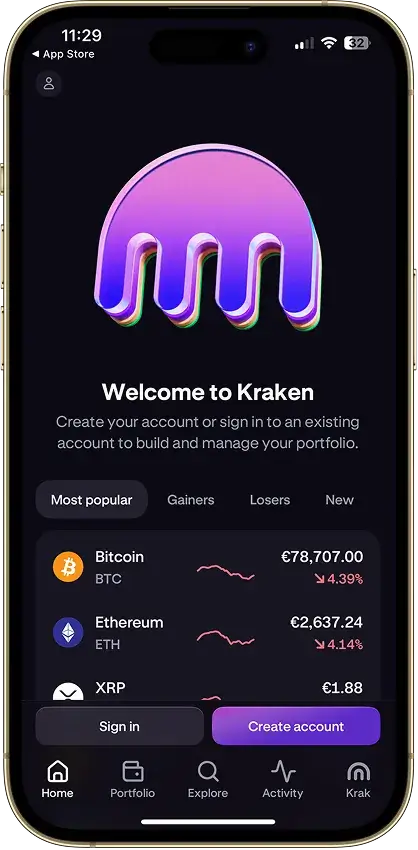
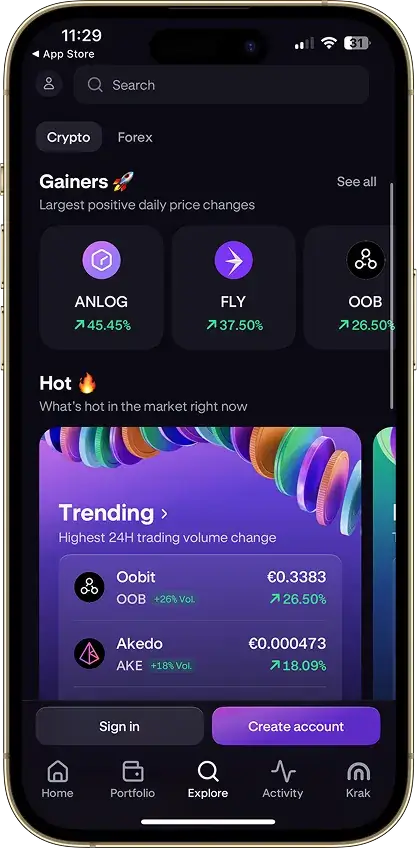
 Kraken Kraken | 600 | Spot, Margin, Futures or Perps, OTC, Simple-buy Broker | Yes | 0.00 | 0.80 |
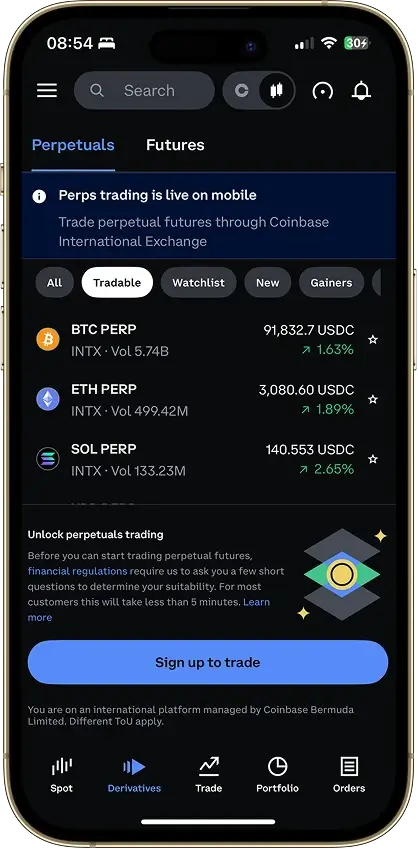
 Coinbase Coinbase | 270 | Spot, Futures or Perps, OTC, Simple-buy Broker | Yes | 0.00 | 0.90 |
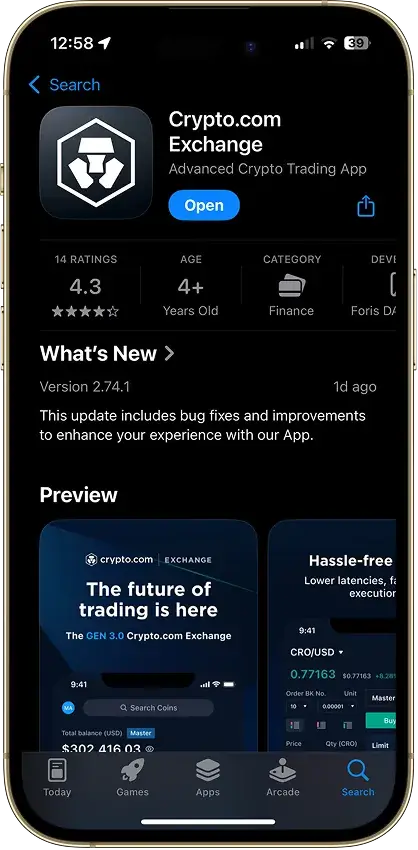
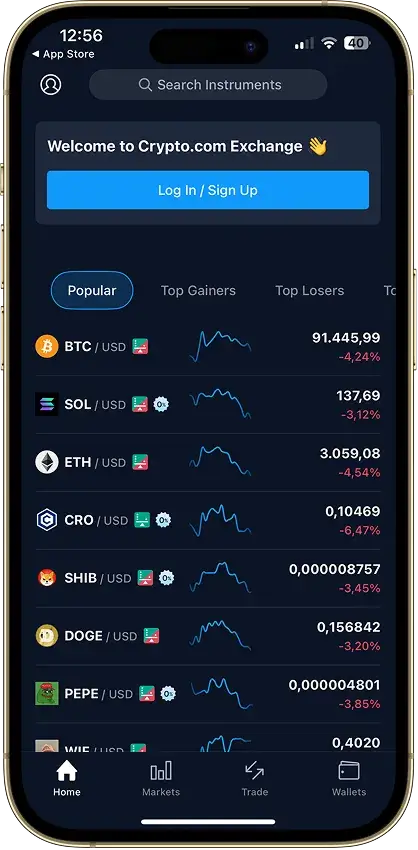
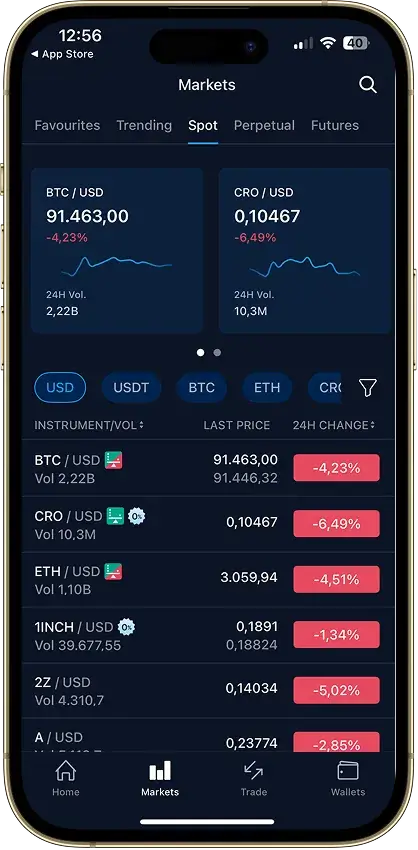
 Crypto.com Crypto.com | 422 | Spot, Margin, Futures or Perps, Options, OTC, Simple-buy Broker | Yes | 0.00 | 0.50 |
Detailed Canadian Crypto Exchange Reviews
Kraken
Pros
- User-verifiable quarterly reserve inclusion
- Free U.S. ACH withdrawals
- Sixteen U.S. perpetual contracts after checks
- REST, WebSocket, FIX, and futures APIs
Cons
- 0.40% / 0.80% entry Pro fees
- Seven-day hold on Plaid ACH amounts
- No service in New York or Maine
- Card limited to the U.K. and EEA
Coinbase
Pros
- Free ACH deposits and withdrawals in the U.S.
- Centralized spot access across all U.S. states
- Simple Buy and Advanced share one balance
- SEC filings and annual financial audits
Cons
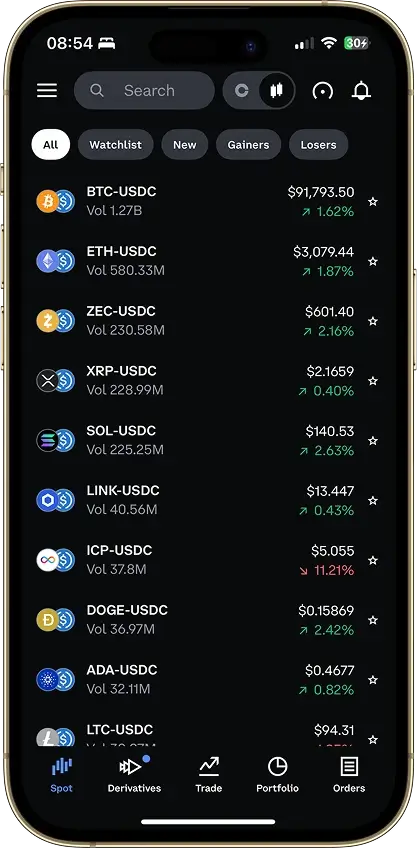
- Estimated small Simple Buy cost near 3.5%
- US Advanced entry taker fee is 0.90%
- No user-verifiable Merkle inclusion
- New staking paused in four U.S. states
Crypto.com
Pros
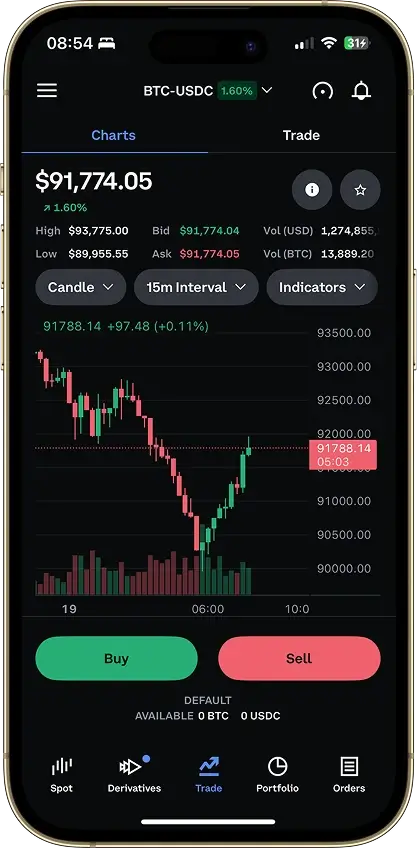
- 422 dated global spot assets
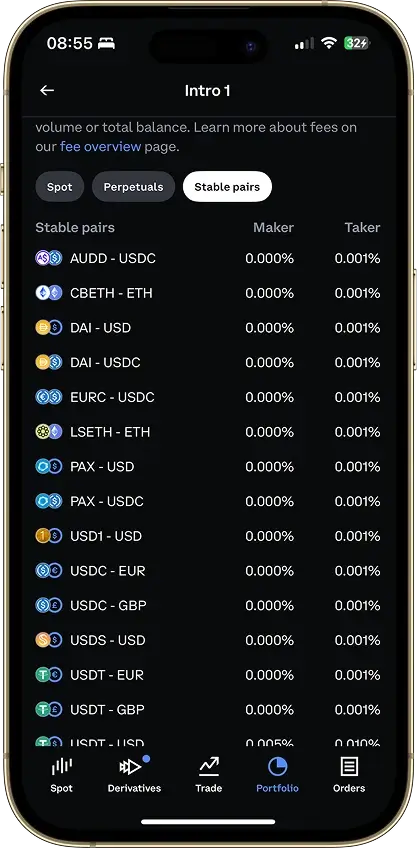
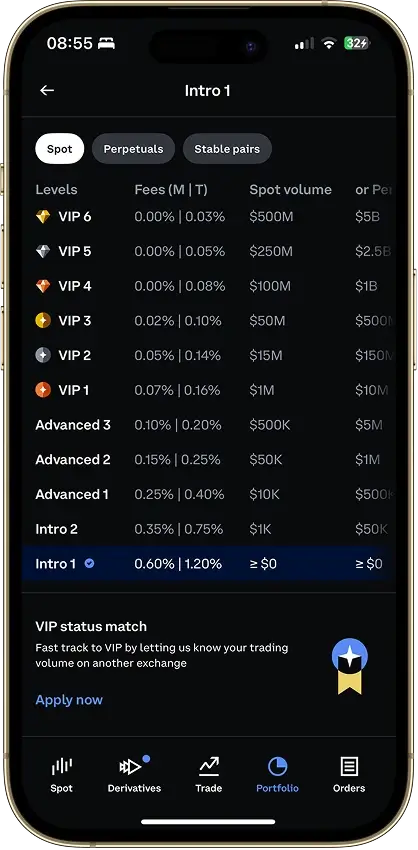
- 0.25% / 0.50% entry spot fees
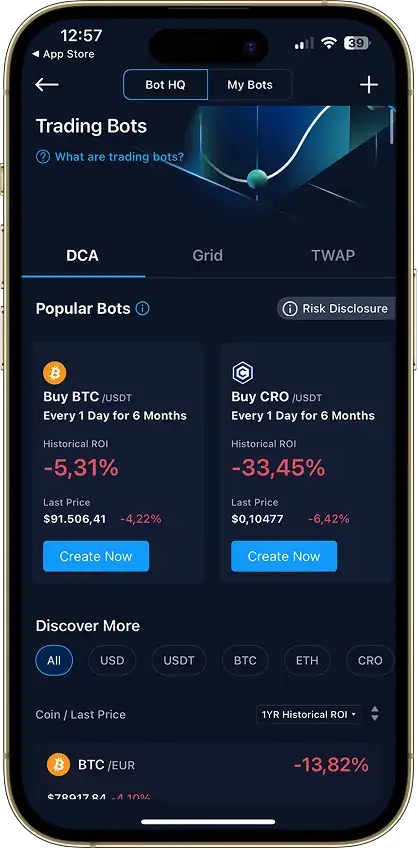
- Built-in DCA and Grid trading bots
- U.S. ACH and Fedwire funding where available
Cons
- Reserve attestation dates to 2022
- U.S. Instant ACH: seven-business-day hold
- No open retail API sandbox
- No pass-through FDIC cover for U.S. Exchange cash
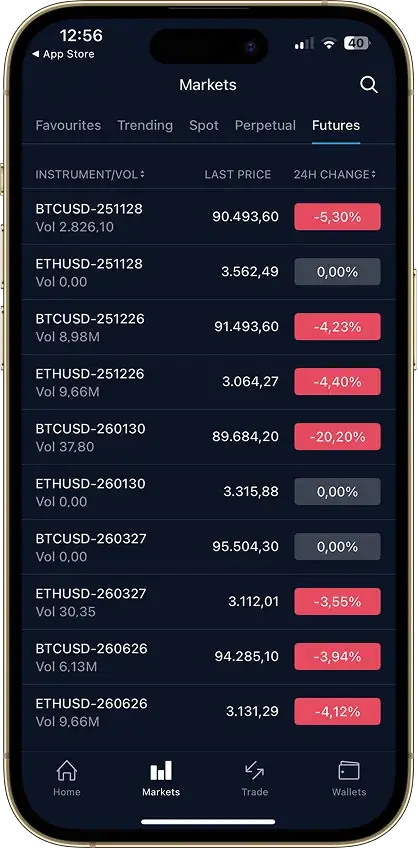
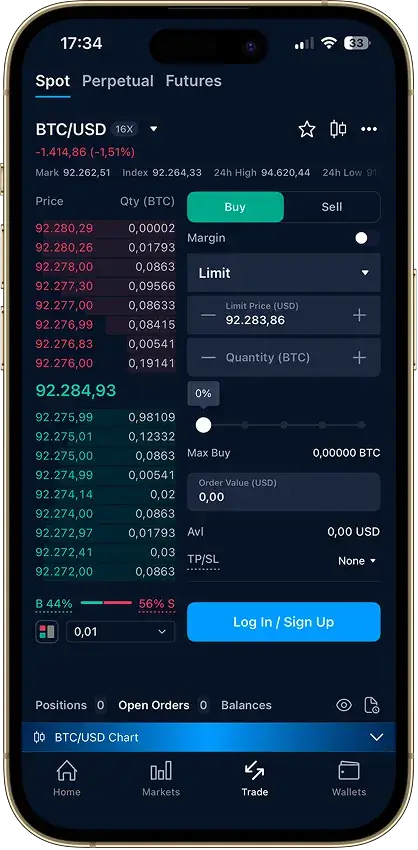
How We Rank
Crypto Exchanges in Canada uses the Crypto Exchanges scoring rubric.
Cold‑vs‑hot balance, key management (HSM/MPC), incident history, withdrawal controls, client‑asset segregation
Order‑book depth/dispersion, spreads, uptime/SLOs, circuit‑breaker design, incident response
Licensing/registrations (MSB/MTL, FCA, MiCA, AUSTRAC, FSA), governance, compliance record
Maker/taker levels by tier, “instant buy” spread, funding/withdrawal costs, fee transparency
Frequency/scope of attestations, Merkle user‑verifiable liabilities, on‑chain wallet disclosures, auditor independence
Breadth of fiat rails (ACH/SEPA/FPS/wire), settlement speed, geographic coverage
Spot, margin, perps/options, staking/earn, card, OTC, API availability
App stability/performance, accessibility, documentation, support SLAs, incident communication
REST/WebSocket depth, rate limits, sandbox, SDKs, change management and monitoring
Last updated Jan 30, 2026
How the CA Score Fits the Canadian Authorization Check
The evidence behind the CA Score follows a shared review process. The score remains the publisher's Canadian assessment in the generated modules, but it cannot replace an entity-specific securities decision. Read it only after confirming that the resident's province, customer class, and intended product fall within the account being compared.
The wider exchange landscape covers accounts across markets. The Canadian sequence begins with the company in the terms, then opens the decision named for that company. Conditions and jurisdictions establish the usable scope. Only then do CAD movement, live product access, custody, and recourse become comparable.
Cost is measured from the bank debit, not from the first fee row. The calculation follows the credited CAD amount through the chosen quote or order, then finishes with either a bank receipt or the asset quantity delivered to a wallet. This exposes card markup, currency conversion, market depth, and exit charges without forcing unlike purchase routes into one headline rate.
The Canadian assessment keeps four evidence records apart. Login and withdrawal controls concern account access. Custody terms identify the asset holder and legal treatment. CDIC and CIPF apply only within their stated programs and cannot be carried over to crypto. The internal complaint route and applicable member or regulator process determine where an unresolved case can go.
Verify the Canadian Entity and Its Authorization
Start with the Canadian terms of service. Record the legal company name and governing law, then identify the account provider and complaints contact. Note any separate custodian. Cards and staking can involve another company, as can lending and derivatives. Each entity needs its own authorization and availability check.
The CSA’s authorized-platform list organizes current Canadian securities decisions by entity. The useful record is the underlying decision. It identifies the registration category and principal regulator. Jurisdictions and conditions appear with the decision date. A list entry should not be shortened to “legal in Canada,” since the permitted service can be narrower than the group’s global catalog.
Quebec adds a direct entity check through the Autorité des marchés financiers. Other provincial or territorial regulators participate through Canada’s securities framework. Registration in one category does not erase account restrictions or product limits, and the decision conditions still apply. Read the current order and match it to the company named in the account agreement.
Federal anti-money-laundering registration answers a different question because it concerns an MSB’s AML duties. FINTRAC’s consumer explanation states that registration is not a license or endorsement and that the agency does not assess ordinary business conduct or recover lost funds. FINTRAC status cannot replace securities authorization or custody analysis, and it does not amount to a solvency finding.
An authorization check is therefore a sequence:
- Match the account terms to the exact legal entity.
- Open the current entity-specific securities decision.
- Confirm the province and customer class, then the product in scope.
- Check CIRO membership when the company claims it.
- Treat FINTRAC status only as an AML fact.
- Repeat the checks after a material terms or product change.
Check Province and Product Access
A Canadian signup page does not prove that every province receives the same service. The account record should name where a new retail client can register and which conditions apply. Location can change purchase limits and asset availability. It can also affect staking or lending, along with margin or derivatives access. Display restrictions beside the product instead of burying them in a footnote.
Live product access must be tested after identity verification because a public page may describe a global service that the Canadian account cannot open. A spot market does not establish futures or options access. A mobile app listing cannot prove local card access, and the same limitation applies to yield products and advanced interfaces.
Check each intended flow in the account:
- confirm the asset is available to buy in the resident’s province
- open the exact spot or other product screen
- inspect the purchase cap and any lock or client-class restriction
- confirm that staking or rewards use the same entity and terms
- verify the withdrawal network and minimum
- record any destination-wallet information requested before transfer
Identity checks are normal for a regulated Canadian account. A source-of-funds or destination-wallet request does not by itself prove a withdrawal problem. Compare it with published policy and use the complaint route for an unresolved hold.
Follow the CAD Route in Both Directions
CAD support should describe both directions because a platform may accept a card purchase without maintaining a Canadian-dollar balance. It may accept a bank deposit yet return funds through another method. The deposit logo alone says nothing about a same-name cash-out and its fee. Review conditions also need a separate check.
| CAD Method | What It Can Do | What to Check |
|---|---|---|
| Interac e-Transfer | Move money from a participating Canadian financial institution where the exchange supports it | Sender name, bank limit, exchange limit, pending review, deposit and cash-out support |
| Bank transfer | Fund or withdraw larger routine amounts where available | Account details, reference, processing basis, return route, bank and exchange charges |
| Wire transfer | Move larger amounts through bank instructions | Minimum, intermediary charges, currency, beneficiary name, posting and cash-out process |
| Debit or credit card | Buy crypto through a quoted purchase flow | Card fee, issuer treatment, spread, limit, supported cards, refund and withdrawal route |
| Crypto transfer | Move an existing asset into or out of the account | Asset, network, address and memo, minimum, platform fee, compliance review |
Interac e-Transfer begins with a participating Canadian bank or credit-union account, and the financial institution sets its own limits or charges. The exchange controls a separate layer of limits and review. A transfer described as fast can still remain pending at the bank. Check both sides before attributing the delay to the platform.
Run a small complete test before relying on the route for a larger balance:
- Send CAD from an account with the same verified name.
- Record the amount received and any fee or hold.
- Place the intended order and save the quote or fill record.
- Withdraw a small crypto amount through the required network.
- Sell the remaining test amount and request CAD cash-out.
- Save the bank receipt and platform ledger, together with the completion time.
The test should record province and entity, account tier and asset, amount and order type, plus device and date. Without those fields, a fast deposit claim cannot be compared across platforms. The same applies to a withdrawal time recorded on a different rail or account tier.
Price the Complete CAD Round Trip
The cheapest exchange for a Canadian trader cannot be identified from one percentage. Compare the same asset and Canadian-dollar amount, then hold the order method and time window constant. Calculate how much value arrives in the asset and how much returns through the intended exit.
| CAD Route Event | Evidence to Save | Comparison Output |
|---|---|---|
| Bank or Interac debit | Sender amount, bank charge, reference, and time | CAD credited after the funding step |
| Instant purchase | Firm quote, stated charge, and asset quantity | Effective CAD price per unit |
| Order-book execution | Order size, fill prices, fee tier, and completed charge | Weighted fill price after trading cost |
| Fiat or stablecoin conversion | Both quantities, conversion rate, and separate charge | Additional CAD cost created by the intermediate step |
| Asset withdrawal | Network, quantity sent, quantity received, minimum, and platform charge | Net crypto delivered to the destination |
| CAD cash-out | Sale record, withdrawal request, provider charge, and bank receipt | Net CAD returned and elapsed time |
An advertised zero deposit fee covers only the deposit line. A wider purchase quote can cost more than a visible trading commission. The opposite can also occur when an advanced order book has thinner CAD depth at the intended size. A stablecoin route adds another conversion and can create a second spread.
For a recurring purchase, compare the automated quote with a manual order for the same amount and time. Include the cost of selling and returning CAD.
Crypto withdrawal fees and minimums vary by asset and network. Confirm the destination’s supported route, address format, and memo before sending a small test.
Custody, Asset Segregation, and Recourse
The safest-exchange question has no permanent winner because custody and recourse can change with the serving entity. CryptoSlate’s security and custody analysis looks across markets. The Canadian task is narrower. Identify which company owes the customer and who controls the assets. Then examine the asset record and any complaint or insolvency process.
The custody language for cash and crypto should identify any third-party custodian, then explain how customer assets are held. Trust treatment differs from segregation, and omnibus wallets add another structure. Each can create distinct operational and legal claims. A reserves snapshot leaves the question unanswered when it omits liabilities and legal ownership. Off-balance-sheet obligations matter too.
| Question | Evidence to Read |
|---|---|
| Who holds the asset? | Canadian terms, custody agreement, and named third-party custodian |
| How is it recorded? | Trust, segregation, omnibus-account, and beneficial-ownership language |
| What protects the account? | Authentication, withdrawal allowlists, recovery controls, and incident procedures |
| What supports financial claims? | Audited statements, liability-aware assurance, decision terms, and current disclosures |
| Where can a complaint go? | Internal complaint policy, principal regulator, CIRO status, and applicable member process |
Crypto assets do not gain Canadian deposit insurance because an exchange uses a domestic bank. CDIC coverage concerns eligible deposits at member institutions. The account terms must establish whether any Canadian-dollar balance is an eligible deposit held for the customer. Crypto and a general platform balance should not be presented as insured cash.
CIPF serves a different purpose by addressing missing property after the insolvency of a member firm, subject to its terms and limits. Crypto assets are excluded. Eligible cash or securities held at a member may receive different treatment, but CIPF does not cover a market loss or a decline in the price of an asset.
A unique password and phishing-resistant authentication can reduce account risk when device review and a withdrawal allowlist are also available. These controls do not prove platform solvency. Understand the operational burden before choosing self-custody.
A personal wallet replaces the platform's key-control dependency with a holder-managed recovery system. Before transferring, validate the asset, chain, destination format, and memo requirement, then send an amount small enough to verify the route. The wallet plan also needs offline recovery material and an inheritance decision. Approvals, bridges, and connected applications introduce separate risks after the transfer arrives.
Keep Records for Canadian Crypto Tax
Records belong in the exchange decision before the first trade because the source data may be difficult to recover later. CRA’s crypto recordkeeping requirements call for the asset and units alongside the date and time. They also cover Canadian-dollar value and transaction nature, plus the counterparty or address. Wallet addresses and yearly opening or closing balances complete the record. Exchange trade and transfer ledgers should be exported regularly.
Test the export before building a long history so missing fields surface early. A useful file separates trades and fees from CAD movement. Crypto deposits and withdrawals need their own entries, as do rewards and reversals. The file preserves timestamps and transaction identifiers. A yearly total is inadequate when it cannot reconstruct individual dispositions or distinguish a transfer from a sale.
Canadian tax treatment can depend on the facts and on whether activity is on capital or business account. CRA guidance identifies sales for cash and crypto-to-crypto exchanges as possible dispositions. Spending and gifts can also qualify. Moving the same asset between wallets under the same ownership is not itself a disposition. The transfer and its fee still need records so later activity can be reconciled.
Required records are generally kept for at least six years under the applicable timing rules, and some documents may need longer retention. Export before closing an account and retain source files outside the platform. Tax software can reconcile activity, but it cannot recreate a missing order ledger or prove ownership of an unlabelled wallet transfer.
Choose an Exchange for the Intended Job
No single account flow leads every Canadian decision because a simple CAD purchase and active order-book trading require different evidence. Define the job and pass the entity or access gates before comparing the platforms that remain. Recurring purchases and negotiated block trades add their own tests.
| Intended Job | Primary Check | Common Mismatch |
|---|---|---|
| Occasional CAD purchase | Firm quote and complete cash-out route | A simple screen with a wider embedded spread |
| Active spot trading | Executable depth, order types, fee tier, and stable withdrawals | Global liquidity that is unavailable to the Canadian account |
| Recurring purchase | Pricing method, funding failure rules, cancellation, and records | Automation using a higher-cost purchase path |
| Larger negotiated order | Quote method, minimum, settlement entity, and CAD return | A retail order book with insufficient depth at the intended size |
| Staking or rewards | Product entity, asset use, lock, reward terms, and exit | Global availability inherited by the Canadian account |
| Margin or derivatives | Canadian issuer, province, client class, collateral, and liquidation rules | A global product page mistaken for local access |
| Self-custody transfer | Asset, network, fee, minimum, address controls, and record export | A listed asset without the required withdrawal network |
Large orders may warrant CryptoSlate’s large-order exchange coverage after Canadian eligibility is confirmed. The useful result is a firm quote tied to a settlement entity and route. An OTC label alone does not establish price quality or Canadian access.
Leveraged products require a separate check because spot eligibility cannot be carried across to another contract. The specialist futures research and options product research examine contract design and market quality. A Canadian resident should first confirm the serving entity and province, then check the customer class and live order screen.
Peer-to-peer and decentralized routes answer another problem. Escrow cannot prevent every payment reversal or off-platform fraud. A decentralized protocol can add smart-contract and bridge risk. Token approvals and front-end access add another layer, followed by liquidity and wallet risks. Neither route removes Canadian recordkeeping needs. Their distinct costs and risks should be assessed on their own pages, not used to pad a centralized-exchange list.
FAQ
Canadian Crypto Exchange FAQ
What is the best crypto exchange in Canada?
The best fit starts with a Canadian entity that serves the trader’s province and offers the intended product. It must complete the required CAD or crypto withdrawal route. Compare qualifying accounts on full transaction cost, execution at the planned size, custody, recourse, and exports. No permanent winner covers every province, product, and money route.
How can I check whether a crypto exchange is authorized in Canada?
Identify the company in the Canadian account terms, then open its current entity-specific securities decision through the CSA or provincial regulator. Confirm the registration category, principal regulator, jurisdictions, conditions, and date. Check CIRO membership when claimed. Repeat the product and province check in the live account because a decision does not make every service available everywhere.
Does FINTRAC registration make a crypto exchange safe?
FINTRAC’s registry answers whether an MSB is registered for federal anti-money-laundering supervision, not whether an exchange is safe. The agency says registration is not a license or endorsement and does not assess business conduct or recover customer funds. Securities authorization, custody, financial condition, account controls, product access, and complaint routes need separate evidence. None creates a safety guarantee.
Which CAD deposit method should I compare?
Compare a CAD method that also supports the intended cash-out. Interac e-Transfer can be practical where both the financial institution and exchange support it, but each side controls limits and reviews. Bank transfers and wires differ from cards in fees and timing. Test a small same-name deposit, trade, and withdrawal before relying on a larger amount.
Are crypto assets protected by CDIC or CIPF?
Crypto assets are not CDIC-insured deposits, and CIPF excludes crypto assets from its coverage. Eligible Canadian-dollar deposits at a CDIC member or eligible cash and securities held by a CIPF member can have different treatment. Coverage depends on the legal account structure and the program’s terms. It does not protect against a crypto price decline.
Can Canadians trade crypto derivatives?
Access depends on the serving entity, province, customer class, and contract. A Canadian spot account or global derivatives page does not establish local futures, options, or margin access. Check the current securities decision, Canadian terms, eligibility screen, collateral rules, and live order ticket. Do not fund an account based only on a group-wide product list.
What crypto records should Canadian traders keep?
Keep the asset and units, timestamp, Canadian-dollar value, transaction purpose, counterparty or wallet address, transaction identifier, fees, and opening or closing balances. Export trade and transfer ledgers regularly, including every CAD or crypto deposit and withdrawal. Preserve source files outside the exchange for the required retention period, since a later annual summary may omit essential detail.
Is moving crypto between my own wallets taxable in Canada?
CRA guidance says a transfer between wallets under the same ownership is not itself a disposition. Keep both addresses, the transaction identifier, timestamp, amount, and Canadian-dollar value so the transfer can be reconciled. Network-fee treatment and later sales still require records. A transfer that changes beneficial ownership can have a different tax result.
This page provides general information instead of personal financial or legal advice. It is not tax advice. Crypto assets can lose value, and registration does not remove platform or custody risk. Fraud and transfer risk also remain.

