


Legion Overview
Legion Screenshots


Screenshot 1 of 8
Legion Pros and Cons
Pros
- No launchpad token needed for base access
- Score can reward activity, not just wallet size
- Embedded wallet flow stays closer to self-custody than exchange balance access
- Projects can filter for builders, users, and long-term backers
- Some rounds can sit close to listing or TGE
Cons
- Full KYC and proof of address slow setup
- Strong score still does not guarantee allocation
- Sale rules can change from one round to the next
- Token delivery timing depends on each project
- Deal flow is narrower than large exchange launchpads
Who Legion Is Best For — And Who Should Skip It
Legion works best for users who care about sale quality more than open access. It is less appealing for users who want quick entry and fixed, predictable rules.
The cleaner split is filtered access versus open access, not beginner versus advanced. Legion is built for filtered access, and that shapes the whole experience.
It also suits users who can accept uncertainty at the allocation stage. The platform removes the staking requirement up front, but hands some of that uncertainty back through project discretion when selections are made.
What Legion Actually Is And How It Works
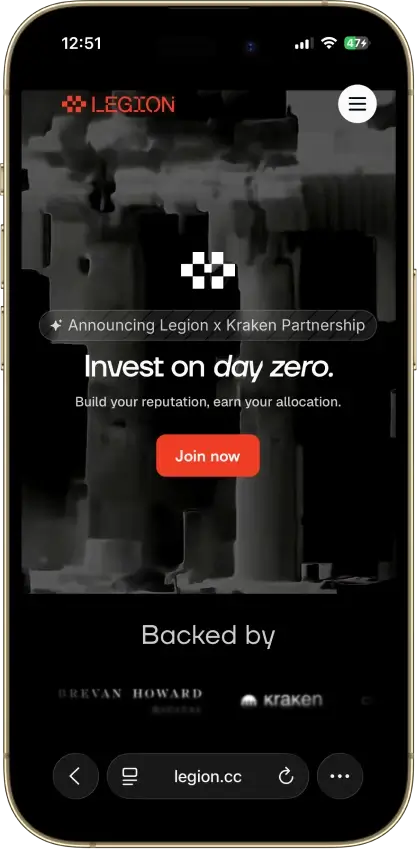
Legion is a launchpad for curated early token rounds. It targets pre-TGE and community sales. Projects use it when they care about who gets in, not just how fast a round fills.
Access starts with a Legion account, a completed profile, and full identity checks. After that, users apply to each sale and fund with the required asset, usually a stablecoin. The platform then combines score signals with project-level filters to decide who moves forward.
From there, each deal follows its own terms. Selected users stay in the round, unselected funds are unlocked or returned, and tokens arrive at TGE or over a vesting schedule. The flow feels closer to a self-custodial wallet experience than an open sale page, but the final outcome is still shaped by project choice.
Availability, KYC and Setup Friction
The real drag comes from identity checks, proof of address, and the fact that each sale can layer its own restrictions on top.
What slows access in real use is not chain setup. It is the review layer before any money goes in. Users need to clear identity checks first, then wait for a live sale they can actually join.
Track Record, Current Activity and Project Screening
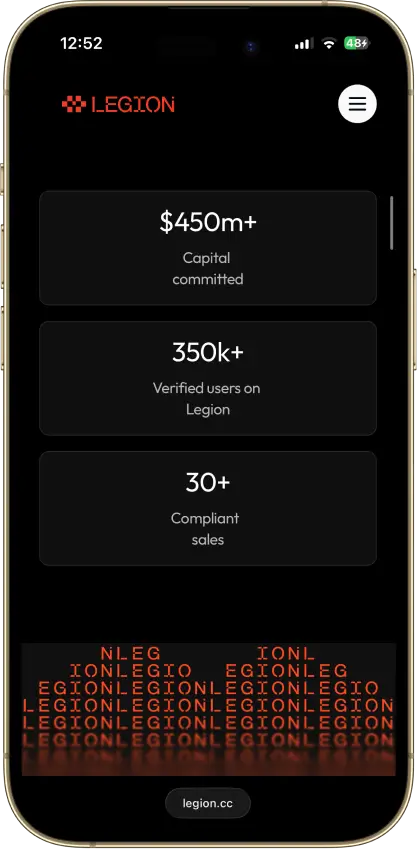
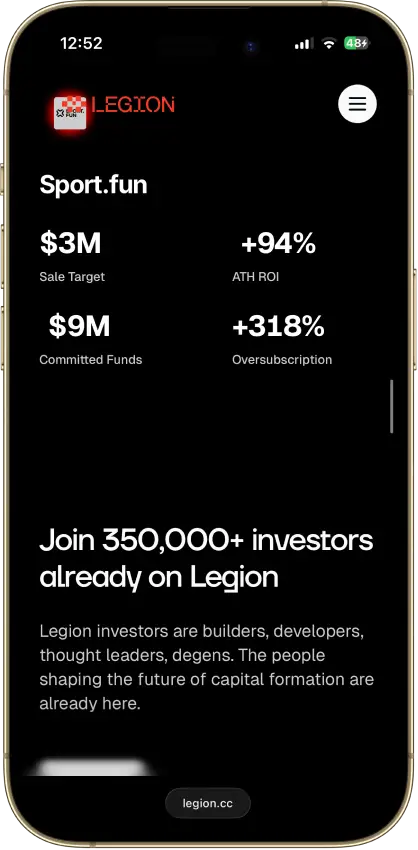
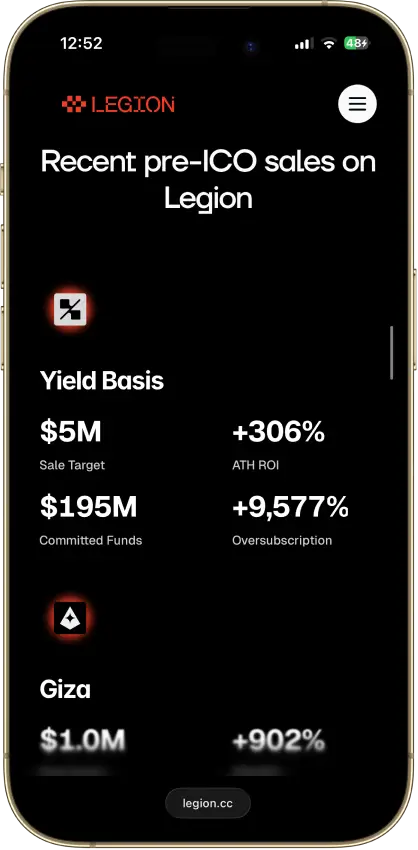
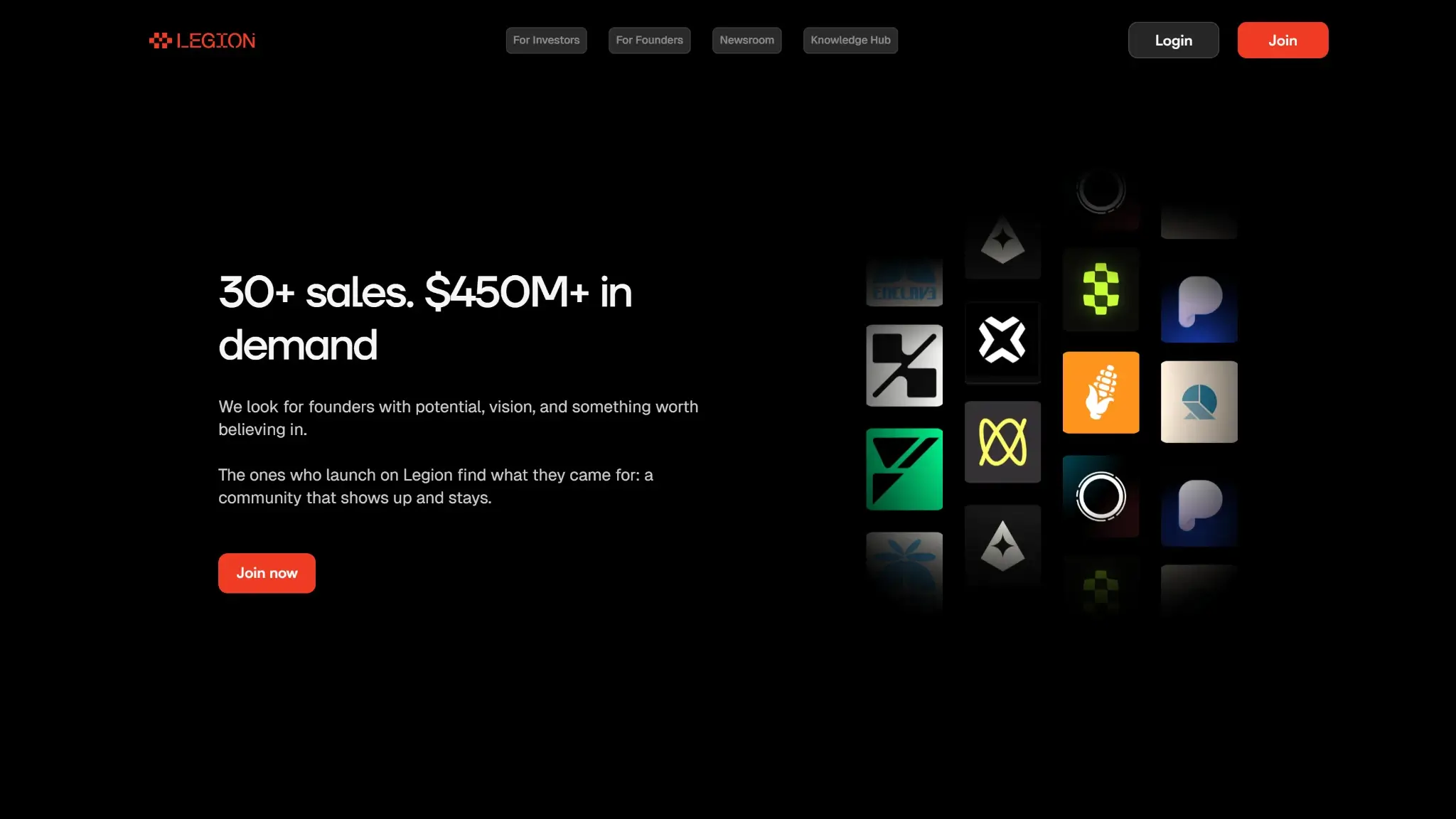
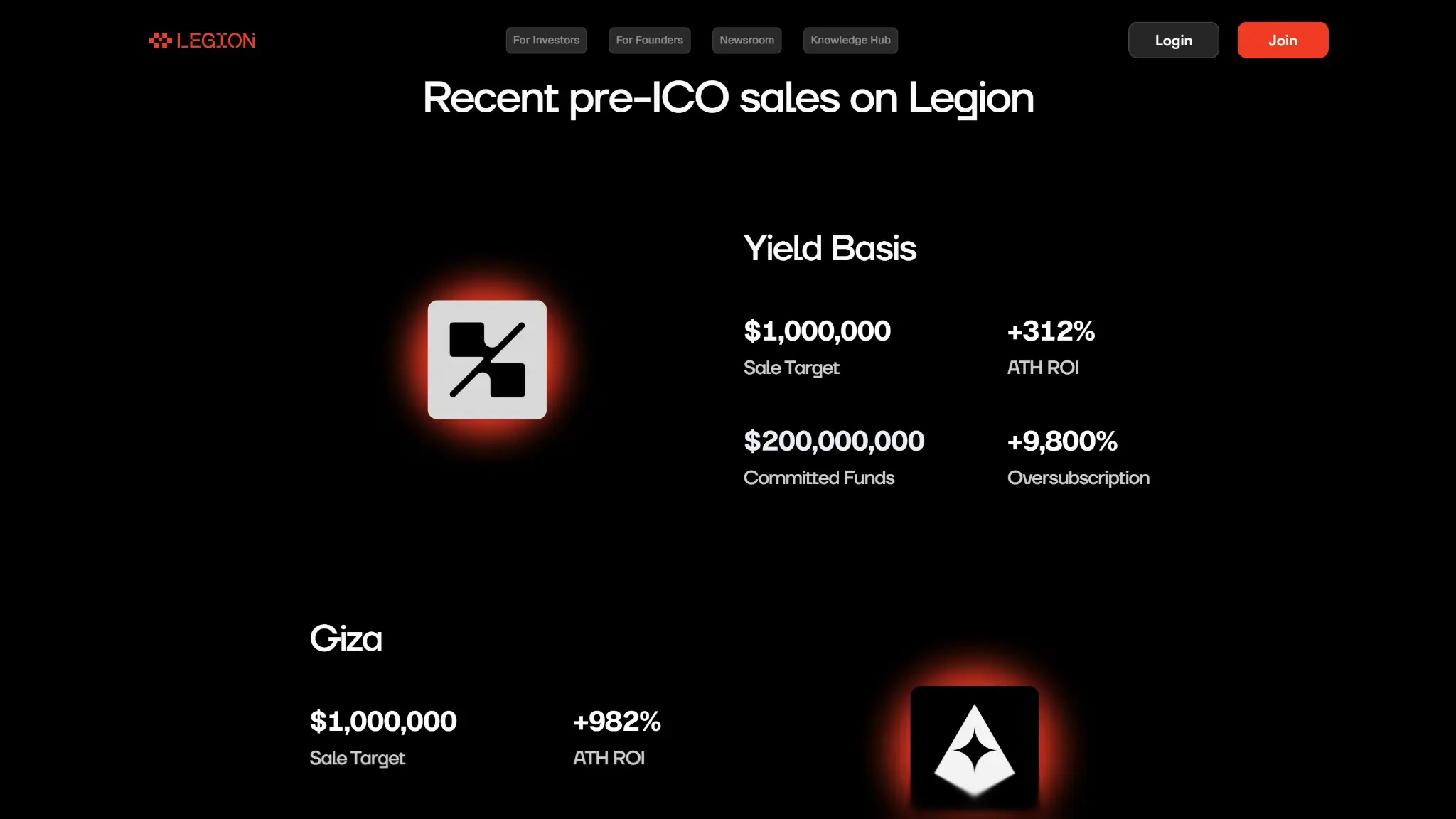
Legion has a visible deal history, which already puts it ahead of many smaller launchpads. The platform points to more than 30 completed sales. Recent launches include Yield Basis, FUEL, Enclave, Makina, Giza, Sport.fun, Skate, Corn, Intuition, Resolv, and Pulse.
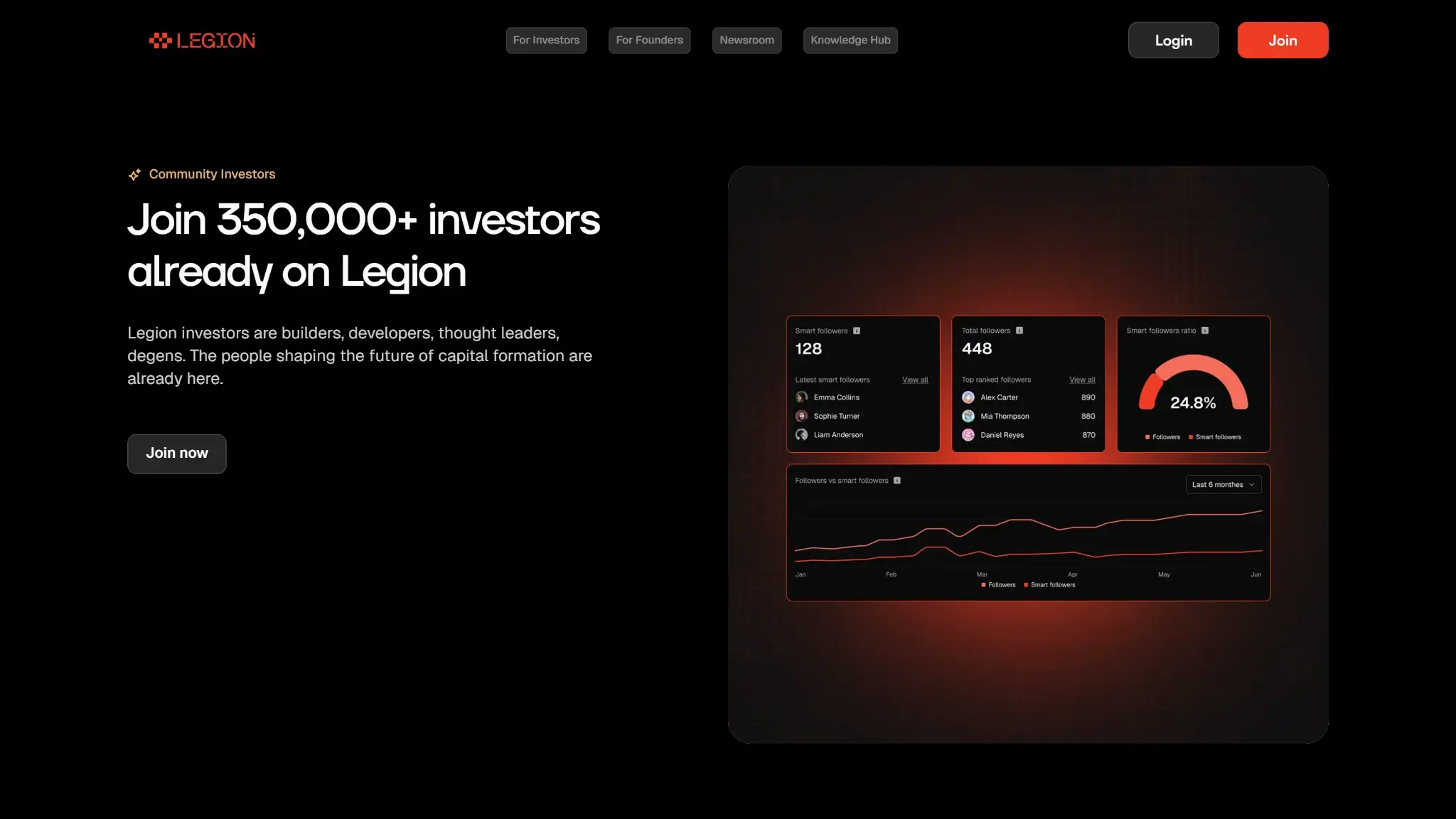
That is enough to show real activity rather than a dormant brand running on one old cycle. The harder question is quality, not count.
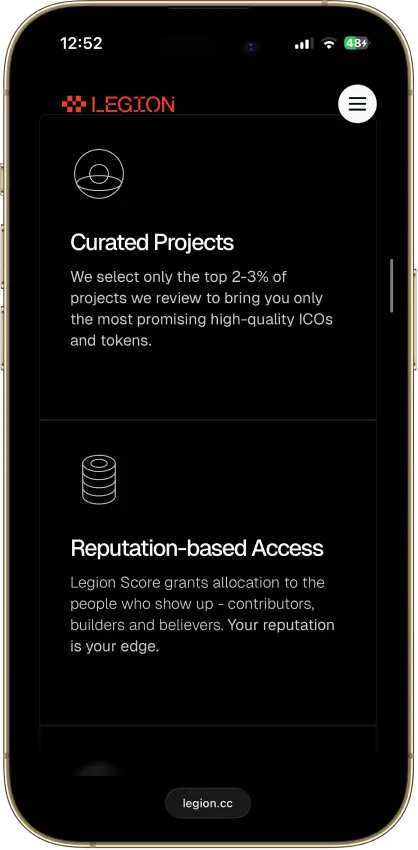
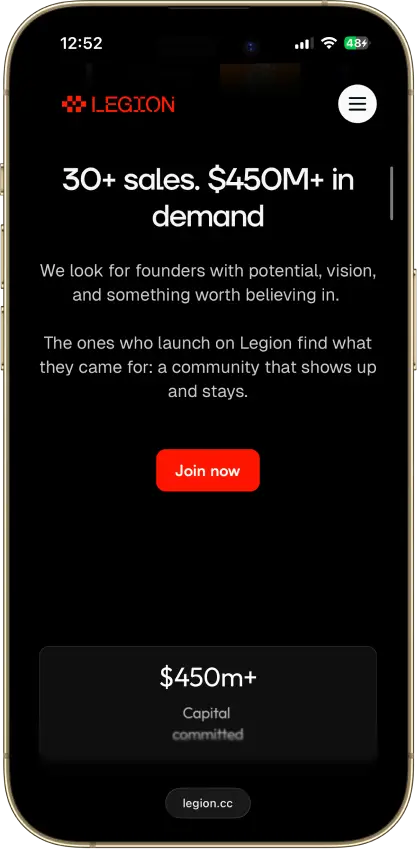
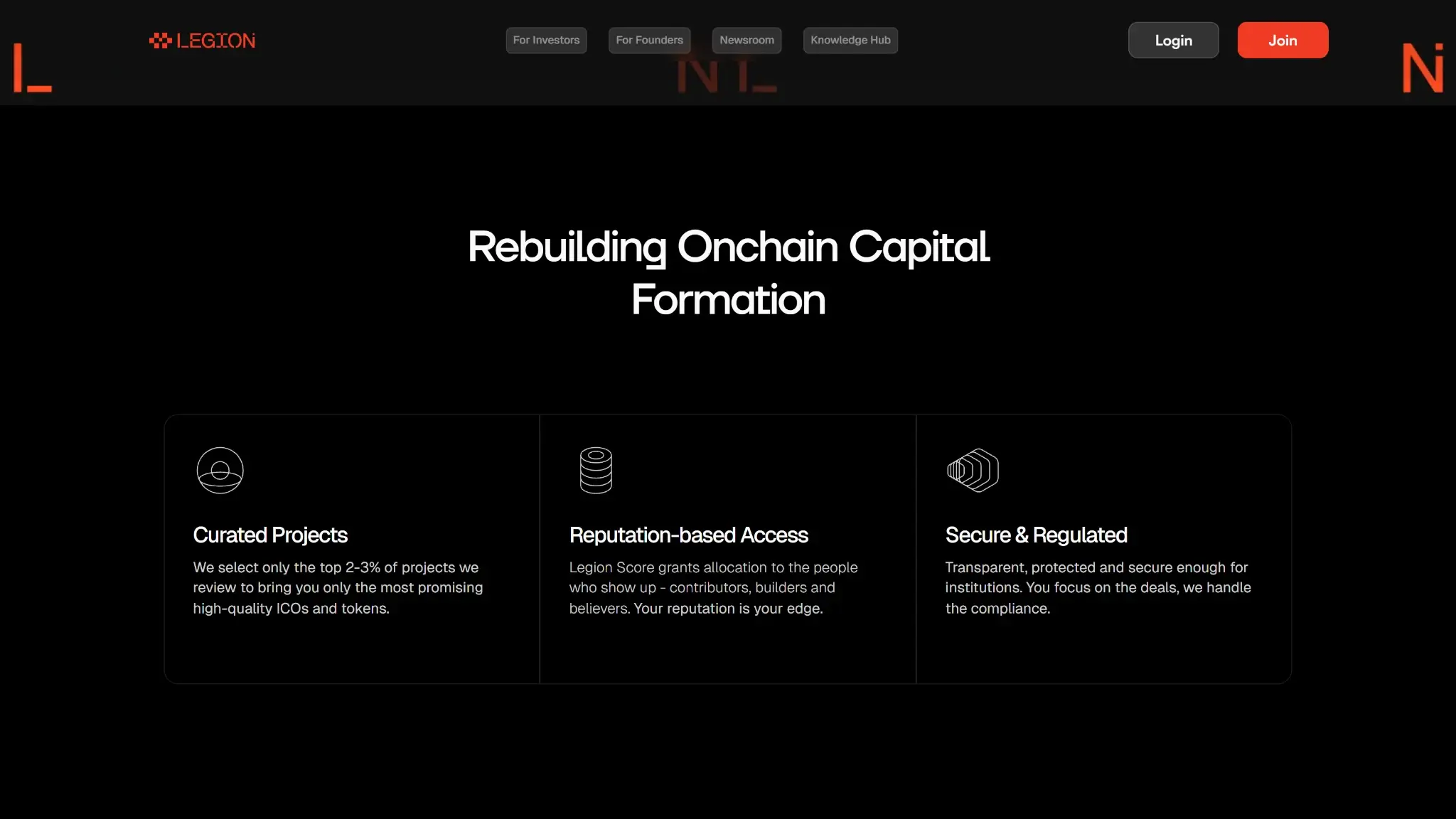
Legion keeps the funnel tight and says it screens down to a small fraction of the projects it reviews. That gives it a stronger curation story than high-volume pads. Even so, the public scorecard is incomplete. Demand figures and oversubscription data are easy to find, but platform-wide figures on listing speed, long-term token performance, and failed launches are not presented in one place.
Project Mix, Discovery Quality and Ecosystem Fit
Compared with broader exchange-run pads and open IDO hubs, Legion runs a narrower and more selective list. The deal flow is not built to put a new launch in front of users every day. It is built to keep the list shorter and the filtering tighter.
Legion feels narrow but reasonably strong. It moves often enough to stay relevant but does not compete on launch count.
Claim Flow, Vesting and Exit Reality
Winning an allocation on Legion does not mean the tokens are ready to use. The user pledges assets during the sale window, and those assets stay locked while the project decides who gets in. If the user is not selected, the assets are unlocked. If selected, the next step follows that sale's own purchase terms, not a single Legion-wide unlock template.
Legion does standardize one useful protection. Users have a withdrawal right that starts when they pledge and runs until 14 calendar days after the sale window closes. That right ends early if tokens are already distributed to the wallet, or if the token lists before the 14-day window closes. Gas still stays spent.
This is more protective than launchpads that lock capital until the round ends with no exit option. In pre-liquid approved sales, the project can withdraw raised capital after the refund window closes, while token delivery still waits for TGE details and token supply to the sale contract.
When claims open, locked allocations can route through vesting contracts rather than a full immediate unlock. On Legion Prime sales, the path can be tighter because the round can run with a partner like Kraken and target day-one exchange access.
Legion is better at filtering who gets into a round than standardizing when that round becomes liquid. A user can win an allocation and still wait through the refund window, TGE publication, vesting setup, and listing timing before the position is easy to exit.
Fairness, Bot Resistance and Launch Integrity
Legion does more than a simple FCFS launchpad to reduce bot pressure. A user is not racing a single click against faster wallets and scripts. The platform uses profile review, wallet history, social signals, and builder signals. That makes basic sybil farming harder than on pads that only check a wallet balance or a staking tier.
That helps on fairness but creates a different trade-off. Projects still decide who gets in, so the model is less exposed to queue abuse but more exposed to selection opacity. A user can build a stronger score and still lose allocation because the project wants a different mix of holders, builders, or communities.
Whale bias is lower than on launchpads that reward the biggest token lock, but it is not gone. Network value, visible reputation, and project preference can still tilt results toward better-connected users.
The biggest integrity risk is not sniper abuse. It is uneven disclosure after the sale starts, particularly around unlock shape, listing readiness, and how clearly the project explains who it wants on the cap table.
Security, Smart Contract Risk, Compliance and Trust
Legion uses an embedded wallet model, so users stay closer to self-custody and remain responsible for their own signing and wallet secrets. That is cleaner than parking assets in a fully custodial flow, but pledged funds still interact with Legion sale contracts. Contract design still matters.
The bigger risk is not wallet custody. It is whether the sale contract logic, refund path, and project delivery all work as expected. Legion publishes a security policy, runs a live Code4rena bug bounty, and documents emergency actions such as pausing the frontend and triggering emergency withdrawals on active sale contracts.
Full KYC, proof of address, and reputation-linked profiling mean users give up more privacy than they would on looser on-chain launchpads. There is no standing promise to make users whole after unrecoverable smart contract loss. Trust still comes down to contract quality, platform controls, and project execution.
Customer Support, Community and Incident Handling
Legion's documentation is stronger than its direct support offer. The help center covers KYC, proof of address, account issues, wallet issues, sale flow, Legion Score, and security. The main direct contact is hello@legion.cc.

Public community channels extend to Discord, Telegram, X, Farcaster, LinkedIn, YouTube, TikTok, and Substack. What support can actually resolve is narrower than that list suggests.
Legion can help with verification problems, profile issues, wallet connection trouble, and basic sale-process questions. It cannot fix project allocation decisions, token price, listing timing, cliff terms, vesting terms, irreversible onchain transfers, or lost wallet secrets.
There is no public status page. Incident communication depends on help content, site updates, and direct notices to affected users rather than a dedicated real-time feed.
Final Verdict
Legion removes the staking requirement most launchpads rely on and replaces it with profile review, wallet history, and reputation signals. That makes entry cheaper and harder to bot, but it shifts uncertainty rather than removing it. Full KYC with proof of address adds friction upfront, sale rules vary round to round, and a strong Legion Score still does not guarantee allocation because each project makes its own selection call. Post-allocation, liquidity timing depends on vesting schedules and listing readiness that Legion does not control. It suits users who want screened pre-TGE access and can accept that outcome. It does not suit users who want open entry, fixed rules, or a fast exit.
Merit-based access instead of pure FCFS · Full compliance with self-custodial embedded wallets · Curated pre-TGE sales built for quality filtering
Disclaimer: CryptoSlate may receive a commission when you click links on our site and make a purchase or complete an action with a third party. This does not influence our editorial independence, reviews, or ratings, and we always aim to provide accurate, transparent information to our readers.
