Reviews ▸ Crypto Exchanges ▸
Bitstamp Exchange Review
Bitstamp Exchange Review
Bitstamp is a security‑first, regulation‑heavy exchange that doubles as a clean fiat on‑ramp for BTC, ETH, XRP, and other majors. It suits US, UK, and EU users who care more about solid bank rails and compliance than chasing the very lowest taker fees or the widest altcoin list.

Reviewed by Andrej
Fact-Checked
Pending Assignment A fact-checker will be added soon.
 Launched in 2011
- Longest‑running exchange (since 2011) with Big Four‑audited financials
- Strong fiat rails
- About 95% cold storage, insurance, SOC 2 and ISO 27001
Longest‑running exchange (since 2011)
Bitstamp Overview
Exchange Name Bitstamp
Parent Company Robinhood Markets, Inc.
Launch Year 2011
Languages English, Spanish, Slovenian
KYC Yes
Products Spot, Futures or Perps, OTC
Total Assets 107+
Staking Yes
Copy Trading No
Derivatives Yes
Proof of Reserves No
Trading Fees 0.00% - 0.40%
Maker Fee 0.30%
Payout Time 2 days
Restricted Countries Canada
Supported Cryptos Bitcoin, Ethereum, XRP, Litecoin, Bitcoin Cash, …Bitcoin, Ethereum, XRP, Litecoin, Bitcoin Cash, Solana, USDC, Tether, Cardano
Website www.bitstamp.net/
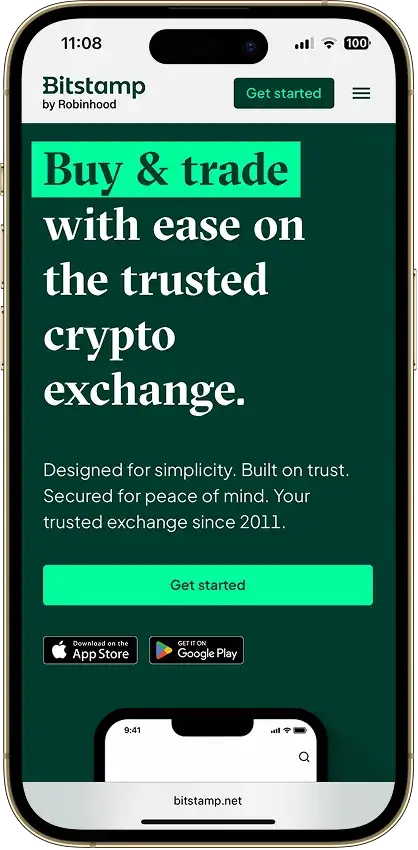
Bitstamp Screenshots
Bitstamp Pros and Cons
Pros
- Proven security and transparency with about 95% cold storage and annual Big Four audits
- Robust fiat on/off‑ramps in the US, EU, and UK with fast bank payouts
- Clear, volume‑tiered pro fees; deep liquidity on BTC, ETH, and XRP majors
- 24/7 support channels with live chat and phone lines in key regions
- EU‑regulated perps for eligible users seeking simple hedging tools
Cons
- No margin or options; derivatives unavailable outside eligible EU markets
- Instant buys via cards/wallets carry about 4% fees and embedded spreads
- Curated roughly 100–115‑asset list is smaller than top‑tier rivals
- Strict KYC and address whitelisting add first‑time withdrawal friction
What is Bitstamp? Background and Oversight
Founded in 2011, Bitstamp is a centralized, custodial crypto exchange operated by Bitstamp Ltd (UK) and Bitstamp Europe S.A. (Luxembourg). In June 2025 it became a subsidiary of Robinhood Markets and is presented as Bitstamp by Robinhood, often described in branding as “Robinhood Bitstamp.”
Bitstamp serves an estimated five million users and lists roughly 100–115 assets, with a focus on major pairs in USD, EUR, and GBP. Its reputation rests on conservative listings, reliable fiat rails, and long‑running order‑book markets with deep liquidity on BTC, ETH, and XRP.
Recent context includes the completion of the Robinhood acquisition and the rollout of EU‑regulated perpetual swaps via Bitstamp Financial Services for eligible regions. The platform’s market relevance stems from a security‑first stance, audited financials, and a clean, beginner‑friendly trading experience aligned with strict compliance norms.
Features and Services
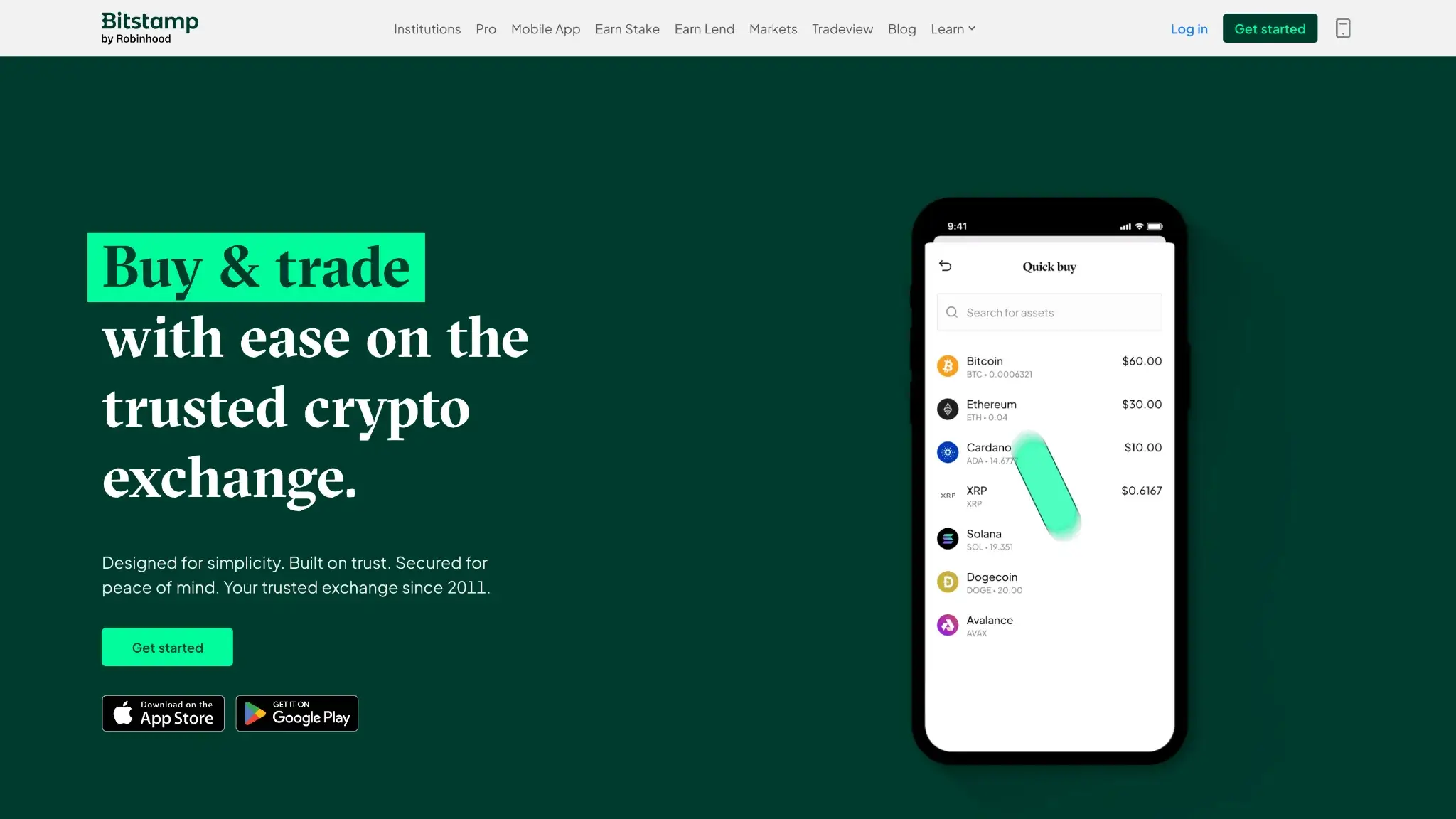
Bitstamp’s feature set is conservative by design compared to high‑leverage venues. It focuses on regulated spot markets, bank‑grade fiat rails, and a limited EU‑only derivatives layer. It offers 107 coins and roughly 230 spot pairs, fewer than multi‑hundred‑asset rivals, but with deep books on majors.
Trading Options
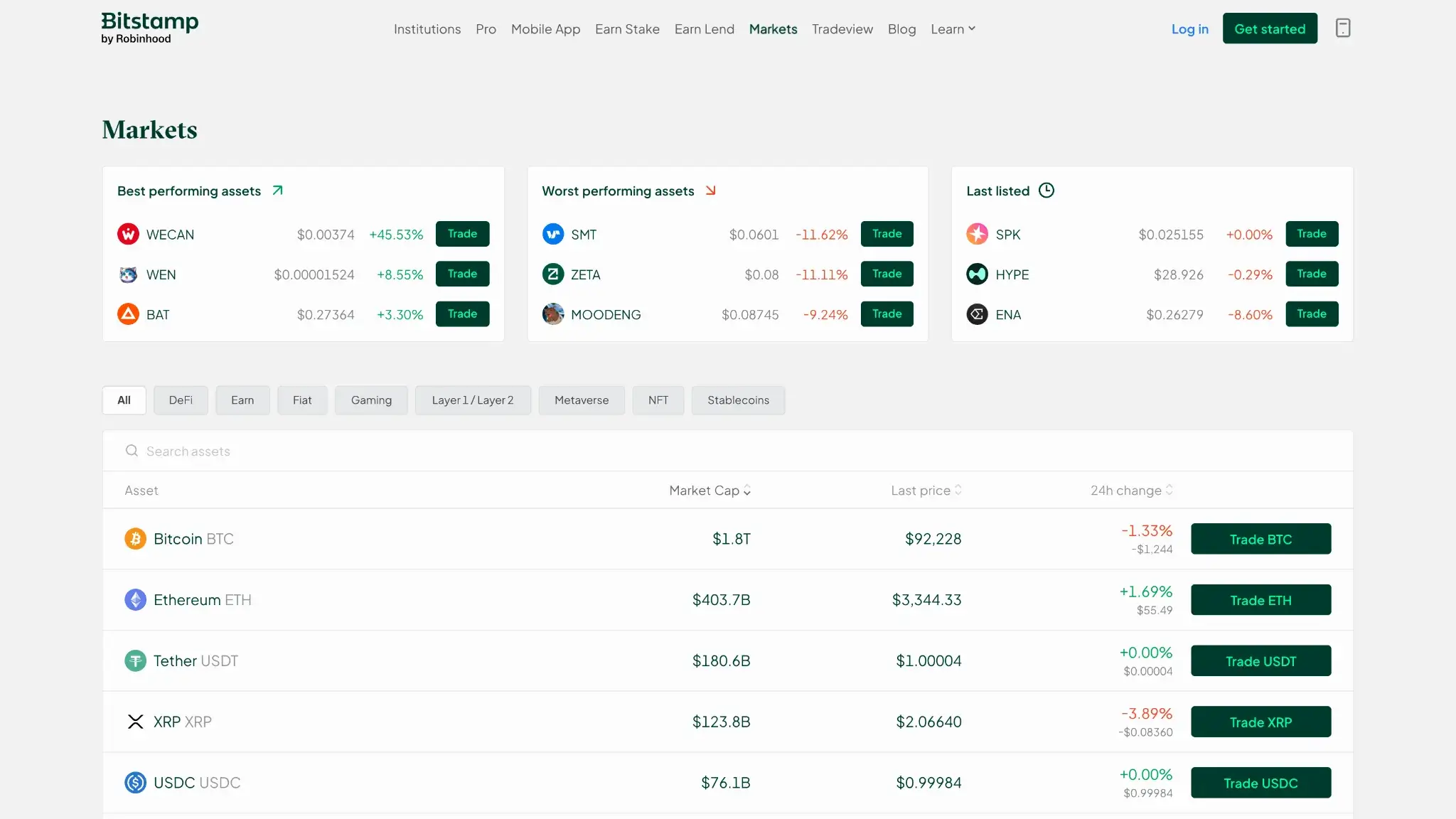
Markets offered. Spot trading is available globally. An OTC desk handles large block trades for institutions. Derivatives are limited to perpetual swaps for eligible EU users via Bitstamp Financial Services; there is no retail margin or options, and no derivatives access in the US, Canada, Japan, or other restricted regions.
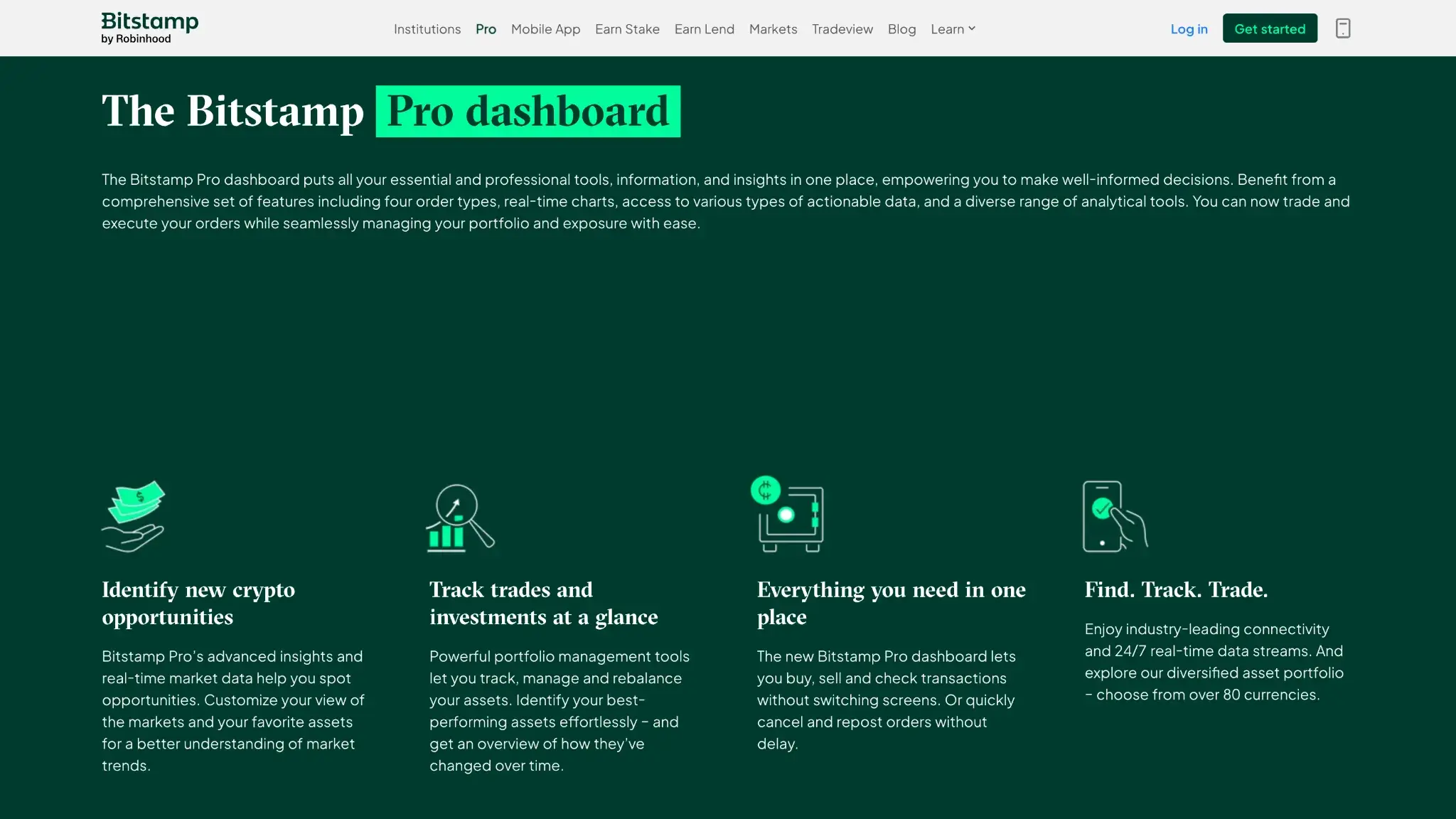
Interface modes. The Quick Buy/Sell/Convert flow quotes a firm price for 10 seconds and suits one‑tap purchases. Tradeview (Pro) exposes full order books, depth, TradingView charts, and core order types (market, limit, stop, stop‑limit). Mobile and web have near‑feature parity. Stop order availability was revised in Apr. 2025 (trailing stops and stop‑market buys removed), so advanced users should recheck saved strategies.
Pairs and assets. Expect liquid majors in USD/EUR/GBP books with stablecoin quotes in USDC/USDT and a handful of crypto‑to‑crypto pairs (e.g., BTC/ETH). Pair coverage is narrower than alt‑heavy exchanges, but the top fiat books are robust.
Derivatives and Leverage Controls
Availability. Bitstamp lists USD‑margined perpetual swaps for BTCUSD and ETHUSD. Contracts are cash‑settled in USD, with collateral posted to a prefunded derivatives account.
Leverage and margin modes. Maximum leverage for non‑professional users is up to 5x. Both cross and isolated margin modes are supported. Liquidations use a mark‑price model; funding is applied at set intervals each day per contract specifications. Notional tiers and maintenance margin scale with position size.
Regions and eligibility. Perpetuals are EU‑only under a MiFID‑authorised entity. Access requires full KYC and suitability checks; derivatives are not offered in the US, Canada, Japan, and other restricted markets. Platform safeguards include leverage caps and eligibility gating by jurisdiction.
Risk disclosure. Perpetual swaps are complex and can result in rapid losses. Funding payments, adverse moves, and liquidation can exceed fees and slippage. Use of leverage amplifies outcomes in both directions; positions may be auto‑reduced under stress via platform risk controls.
Supported Assets
Asset coverage. At the time of doing of our Bitstamp review , Bitstamp listsed about 107 cryptocurrencies and close to 230 spot pairs, with an emphasis on large‑caps and curated additions. Base currencies include USD, EUR, GBP, plus stablecoin books. There is no native exchange token. Bitstamp is best known for its BTC/USD, ETH/USD, and XRP/USD order books, which remain among its deepest and most liquid markets.
Stablecoins and networks. Trading commonly features USDC, USDT, and EURC; PYUSD appears in Quick Buy flows in supported regions. Deposits and withdrawals generally use the asset’s primary network (for example, USDT/USDC on Ethereum). TRC‑20 and BEP‑20 routes are not supported unless explicitly stated.
Listing cadence and policy. Listings and delistings are conservative and policy‑driven. Bitstamp publishes a Digital Asset Listing Framework and posts dated notices for changes—for example, several EU/EEA delistings in Mar.–May 2025 tied to evolving rules and liquidity reviews.
Native token impact. Bitstamp has no house token and no token‑linked fee discounts or VIP tiers; fees are volume‑based only.
Staking and Rewards
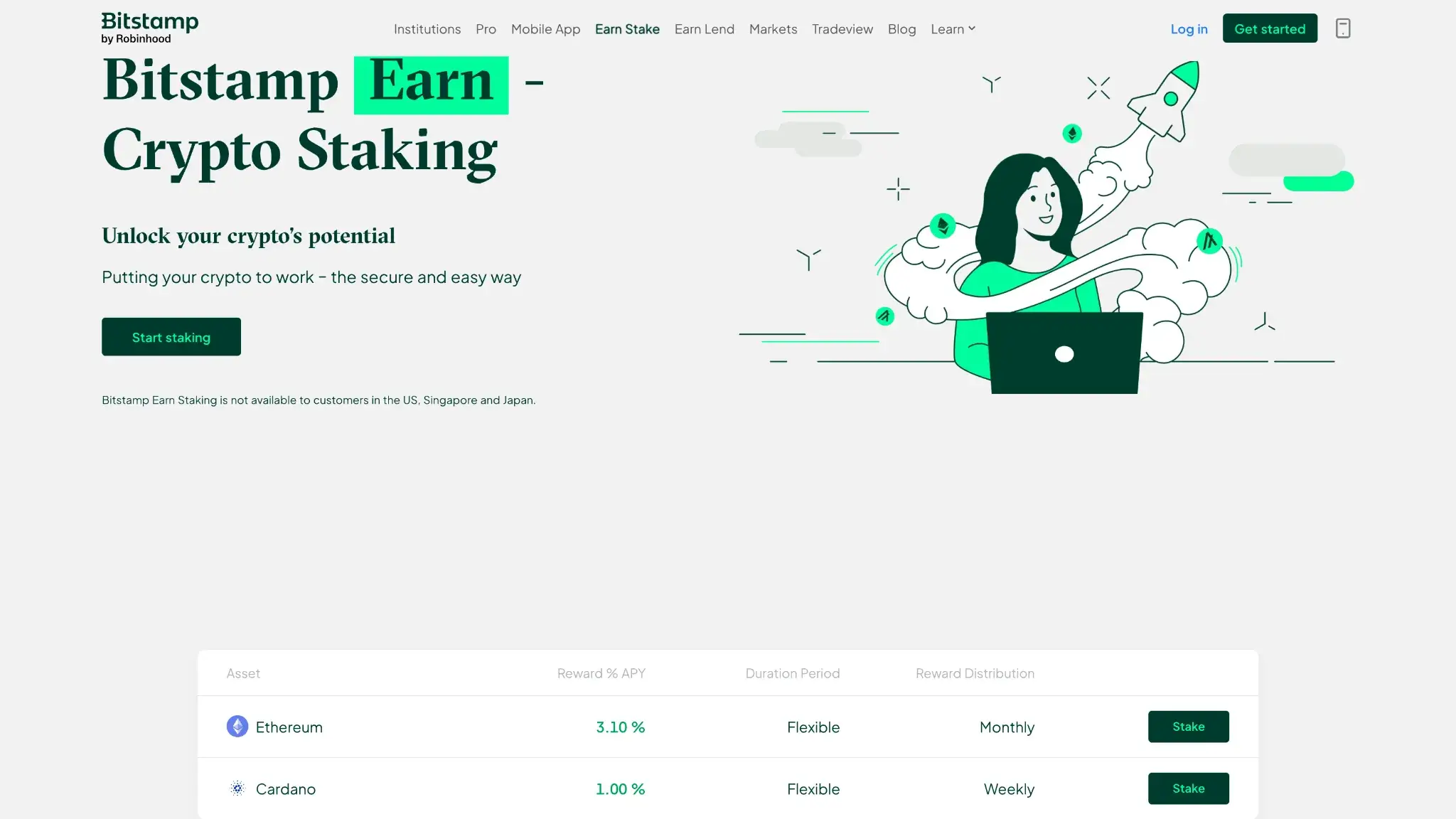
Product scope and yields. Bitstamp Earn offers staking for Ethereum (ETH) and Cardano (ADA) in eligible regions. Yields are variable and set by the underlying networks. As a recent reference point (May 2025), indicative rates were up to ~3.1% APY for ETH and ~1.0% APY for ADA. Staking is a custodial delegation service run by Bitstamp by Robinhood rather than self‑staking.
Fees/commission and payout cadence. Bitstamp charges a 15% commission on staking rewards. ETH rewards post monthly and ADA rewards post weekly. There are no platform lockups on these assets. Rewards appear in your asset balance in the app; if you keep the asset staked, effective compounding occurs via continued accrual.
Eligibility, limits, and exit. Staking is not available to residents of the US, Canada, Japan, or Singapore. A verified account is required. You can opt out at any time; withdrawals follow normal network settlement. Bitstamp has also wound down staking for certain assets when protocols or rules changed (e.g., ALGO in Apr. 2025), and posts dated notices ahead of changes.
Copy Trading and Bots
Availability and access. Bitstamp does not provide native copy trading or in‑app strategy bots. Users can connect third‑party automation platforms via Bitstamp’s REST/WebSocket APIs to run DCA, grid, or signal‑driven strategies. API keys are permissioned (read/trade/withdraw) and should be scoped to trading only.
Launchpad, Launchpool and Airdrops
Product definitions and scope. Bitstamp does not operate a Launchpad or Launchpool. Token launches are not sold or farmed via Bitstamp. The exchange has, at times, supported network airdrops on a case‑by‑case basis (for example, XRP‑holder distributions), crediting eligible users after issuer snapshots. At the moment, there are no active launchpad, launchpool, or exchange‑run airdrop campaigns.
Wallet and Self‑custody Options
Custody model. Bitstamp accounts are custodial by default. Assets are held in exchange wallets with the majority in cold storage at qualified custodians. There is no in‑app self‑custody wallet and users cannot export private keys; assets move on‑ and off‑platform via standard deposits and withdrawals.
Keys and recovery. Private keys are managed by Bitstamp and its custodians. Users control access through 2FA, device checks, and withdrawal address whitelisting. New addresses may require additional verification and a brief cool‑down before first use.
Networks and asset support. Deposits and withdrawals primarily use asset‑native networks, with a small number of additional routes (for example, WETH on Polygon). Ethereum‑based tokens default to ERC‑20; TRC‑20 and BEP‑20 routes are not supported unless explicitly stated. The network list is shown per asset before you generate an address. Bitstamp also operates a Bitcoin Lightning Network node to support the ecosystem, but standard customer deposits and withdrawals use the Bitcoin base chain and the networks shown in‑app.
Security, controls, and costs. Security controls include TOTP 2FA, address whitelist, session alerts, and optional IP filters for API keys. Crypto withdrawals incur network fees shown at confirmation; fiat rails post bank fees where applicable. Large or unusual transfers can be held for review under compliance rules.
API and Programmatic Trading
Interfaces and capabilities. Bitstamp offers HTTP REST v2, WebSocket v2 for real‑time market data and events, and FIX v2 for professional connectivity. Endpoints cover market data, trading, account, fees, withdrawals, deposits, sub‑account transfers, Travel Rule contacts, and Earn subscriptions.
Authentication and permissions. API keys are created in Account → API access with granular scopes for read, trading, and withdrawals. The v2 scheme uses signed headers and a nonce. Follow least‑privilege practice and keep withdrawals disabled unless required; rotate keys regularly.
Account structure and access controls. Sub‑accounts are supported and can be segregated with per‑sub‑account keys. Keys support IP allowlists and there is a kill switch to revoke all API keys. Pair API access with 2FA on the main account and an address whitelist for withdrawals.
Reliability and environments. Request limits are high‑throughput: 400 requests per second with a 10,000‑requests per 10‑minute threshold. For real‑time streams, prefer WebSocket. Maintenance windows are announced ahead of time through official channels; no public sandbox is advertised.
Developer resources. The canonical API documentation lists request limits, authentication examples, endpoint coverage, and a changelog. WebSocket channels and FIX specifics are documented alongside REST. Support is available through standard customer channels, with enterprise contacts for bespoke connectivity and data licensing.
Other Notable Features
Tax tooling and reporting. You can find these in Account then Reports, Bitstamp provides downloadable CSV and PDF statements covering trades, deposits, withdrawals, and balances. These exports feed major crypto‑tax tools. In the US, Bitstamp issues tax forms when required by law; users should rely on their own records and local guidance. Bitstamp does not provide tax advice.
Institutional/Prime. Institutions get an RFQ/OTC desk for large clips, custody integrations (e.g., BitGo and Copper/ClearLoop), FIX connectivity, sub‑accounts with key segregation, and Bitstamp‑as‑a‑Service for embedded crypto. Onboarding requires full KYB, authorized‑signatory verification, and funding setup; timelines vary by jurisdiction and documentation completeness.
Web3 and NFT. Bitstamp does not offer a Web3 wallet, dApp browser, or NFT marketplace. Users interact with web3 apps via external self‑custody wallets and can transfer assets in or out over supported networks. No WalletConnect‑style signing is available in‑app.
Listings and Delistings Policy
Bitstamp publishes asset changes through its Digital Asset Listing Framework and dated notices on its Announcements/Help Center hubs. Updates are communicated via site posts, in‑app banners, and email to affected customers. This section summarizes what Bitstamp states publicly; policies can change without notice.
Sources and announcement channels. The canonical sources are the Digital Asset Listing Framework page for policy, the Announcements/Blog for new listings and delistings, and the status page for operational updates. These are the authoritative references for timing and scope.
Selection and review criteria. Disclosed criteria include legal and regulatory posture, project security and operations, market demand and liquidity quality, technical integration readiness, and ongoing monitoring outcomes. Reviews are periodic and may include re‑assessments when rules or issuer circumstances change.
Delisting triggers and timelines. Stated triggers include regulatory changes, sustained low liquidity or quality of markets, material security or disclosure issues, or project discontinuation. Notices specify dates for trading suspension, any post‑only or cancel‑only windows, and withdrawal deadlines. Bitstamp may keep withdrawals open beyond trading halt dates so users can exit positions.
Regional/entity variance. Listings can differ by operating entity (Bitstamp Europe S.A., Bitstamp Ltd, Bitstamp USA, Inc.). Assets may be listed globally but paused or delisted for a single region. Readers should confirm availability from within their verified account and the public Markets page for their locale.
Recent change. In May 2025, Bitstamp posted a regional delisting notice for selected EU/EEA markets in response to evolving rules and liquidity reviews, with clear trading‑halt and withdrawal timelines in the announcement.
Fees and Pricing
Under Bitstamp’s 2025 fee schedule, the exchange charges fees across Simple Buy/Sell, Advanced maker/taker trading, fiat deposits and withdrawals, crypto withdrawals, conversions, and staking commissions. Advanced fees are 30-day volume based and quoted in USD-equivalent volume. Simple buys surface the final rate in-flow before you confirm.
Simple buy or sellQuoted price includes a spread. Instant Service fee 4% for card, Apple Pay, Google Pay, or PayPal; shown at checkout.
Advanced maker or takerMaker 0.30%–0.00% · Taker 0.40%–0.03% by 30‑day USD‑equivalent volume.
Card deposit4% Instant Service fee on purchases via card, Apple Pay, Google Pay, PayPal.
Bank transferACH deposits/withdrawals typically $0; SEPA deposits €0 and withdrawals €3; international wire withdrawals 0.1% (min $25/€25).
Crypto withdrawalNetwork‑only fee, fixed per coin (e.g., BTC 0.0005 BTC, ETH 0.03 ETH) shown before you submit.
Under Bitstamp’s 2025 fee schedule, Pro uses a maker-taker table that starts at 0.30% maker / 0.40% taker for under $10,000 in 30-day USD-equivalent volume and falls to 0.00% / 0.03% at the top tier. Simple Buy/Sell bakes fees into the spread and adds a 4% processor fee for card, Apple Pay, Google Pay, or PayPal funding. ACH and SEPA deposits are typically free, SEPA withdrawals cost €3, international wires 0.1% with a $25/€25 minimum, and crypto withdrawals use network-only fees. Bitstamp Earn takes a 15% commission on staking rewards, with variable yields. To keep costs down, use the Pro interface, increase 30-day volume, and fund by bank transfer instead of cards. Compared with mass-market platforms such as Coinbase and lower-cost venues like Kraken or Binance, Bitstamp’s Pro fees sit roughly mid-pack.
VIP Tiers and Fee Discounts Table
| Tier | 30‑day volume | Maker | Taker | Notes on discounts or exclusions |
|---|---|---|---|---|
| Base | < $10,000 | 0.30% | 0.40% | Default Pro spot rate. Simple Buy/Sell excluded. |
| Mid | $100,000 – $500,000 | 0.10% | 0.20% | Qualification uses USD‑equivalent 30‑day volume. |
| Upper mid | $500,000 – $1,500,000 | 0.08% | 0.18% | Applies on Pro spot only. No maker rebates. |
| Top (VIP 7) | $1,000,000,000 – $1,500,000,000 | 0.00% | 0.03% | Adjusted volume applies; FX/stable pairs count 20% toward tiering. |
These tiers are the default Pro spot rates for most users; region-specific pages may set different rates. Bitstamp has no native‑token discounts and no paid subscription for fee cuts. Time‑limited welcome pricing may be offered to qualifying high‑volume accounts and applies to Pro spot only, not to Simple Buy/Sell or derivatives.
Payments and Fiat Support
Bitstamp’s base account currencies are USD, EUR, and GBP. Core on‑ramps and off‑ramps are ACH in the US, SEPA in the EU, Faster Payments in the UK, plus international wires, cards, Apple Pay, Google Pay, and PayPal. Instant card and wallet purchases run through Bitstamp’s Instant Service flow. Limits are enforced per transaction or by daily and monthly windows depending on the rail.
| Payment method | Minimum deposit | Minimum withdrawal | Maximum withdrawal |
|---|---|---|---|
| ACH (US) | — | — | $50,000 per transaction |
| SEPA (EU) | — | — | — |
| Faster Payments (UK) | — | — | — |
| Wire (SWIFT) | Bank dependent | Bank dependent | Bank dependent |
| Card / Apple Pay / Google Pay | $ / € / £ 25 purchase minimum | — | $ / € / £ 2,500 daily · $ / € / £ 20,000 monthly |
| PayPal | $ / € / £ 25 purchase minimum | — | $ / € / £ 2,500 daily · $ / € / £ 20,000 monthly |
| Crypto (on‑chain) | Network minimums | Network minimums | Network dependent |
Funding currency stays native in your balance. If you trade in a different fiat currency, conversion happens by placing orders on that fiat book or by using the Convert or Instant Buy flow, where the final rate and any Instant Service 4% processor fee are shown in‑flow. Bank beneficiaries must be in your name. Turn on withdrawal address whitelists for crypto. ACH deposits and some card purchases can be held until settlement before withdrawal.
Third‑party wallets and card processors are integrated into Instant Service. Bitstamp remains the counterparty for trades, while bank transfers clear through your bank and its networks. For authoritative details see the Fee schedule and Bank withdrawal, ACH, Card, PayPal, and Withdrawal timing FAQs.
Fiat Rails by Region
| Region | ACH | SEPA | Faster Payments | Wire | Cards | PayPal | Notes |
|---|---|---|---|---|---|---|---|
| US | Yes | — | — | Yes | Yes | Yes | ACH deposits $10k daily / $25k monthly. ACH WDs $50k per transaction. 1–2 business days. |
| EU or EEA | — | Yes | — | Yes | Yes | Yes | SEPA deposits €0, WDs €3. Instant SEPA available in supported countries. |
| UK | — | — | Yes | Yes | Yes | Yes | FPS usually same day. Wires 3–5 days. |
| RoW | — | — | — | Yes | Yes | — | Availability varies by country and issuer. Use SWIFT wires for fiat. |
Withdrawal Networks and Fees Matrix
| Asset or network | Fee model | Typical confirmation window | Notes |
|---|---|---|---|
| BTC on‑chain | Network‑only fee | ~10–60 minutes | Higher miner fees speed confirmation. |
| ETH ERC‑20 | Network‑only fee | ~5–15 minutes | Gas varies with load. |
| USDT TRC‑20 | Not supported on Bitstamp | — | Use ERC‑20 on Ethereum. TRC‑20 deposits or WDs are not available. |
| USDT ERC‑20 | Network‑only fee | ~5–15 minutes | Higher gas at peaks. |
Choose lower‑fee networks where supported by the platform and asset. For stablecoins, ERC‑20 gas fluctuates, so plan withdrawals when network load is lower.
Is Bitstamp safe?
Bitstamp looks relatively safe by centralized-exchange standards, but it is not risk free. It was hacked once in 2015, when attackers stole about 19,000 BTC from a hot wallet. Since then there have been no further major exchange-level breaches reported, and Bitstamp now keeps most customer assets in BitGo-backed cold storage with crime insurance and hardened controls.
The platform is regulated in the EU under Luxembourg’s CSSF with a MiCA CASP license and says it holds customer funds 1:1 in custody, with annual Big Four financial audits dating back to 2016.
Bitstamp does not yet offer a user-verifiable proof of reserves, so you are still relying on its internal controls and regulators rather than cryptographic on-chain checks
Controls. Bitstamp states it keeps ~95% of client assets in cold storage, with the remainder in a multisig online wallet for operations. Users can enable TOTP 2FA, withdrawal‑address whitelisting, device checks, and API IP allowlists. Withdrawal fees and destination details are shown before confirmation. Defaults: trading and funding work without whitelisting, while 2FA is strongly recommended and required for sensitive actions. HSM or MPC details are not disclosed.
Custody and insurance. Bitstamp holds assets with qualified custodians and partners including BitGo and Copper. It maintains a crime‑insurance policy arranged through Paragon and underwritten by Lloyd’s market participants, covering a range of theft and fraud events across hot and cold environments. Client fiat balances are held with partner banks. Bank deposit insurance may apply to fiat under each bank’s rules. Crypto is not government‑insured.
Proof of reserves or audits. Bitstamp does not publish a user‑verifiable Merkle‑tree Proof of Reserves at the moment. The company states its global financial statements have been audited annually by a Big Four firm since 2016, and it highlights external transparency ratings. Audit frequency is annual, user self‑verification of inclusion is not offered.
Incidents and remediation. Bitstamp reports no material security incidents in the last 12 months. A historical event remains relevant: in Jan. 2015, a hot‑wallet breach led to the theft of <19,000 BTC. Bitstamp reimbursed customers, rebuilt wallet infrastructure, and expanded controls. The exchange has operated without comparable breaches since.
Status page and Incident History
Official channels. Bitstamp posts operational notices and maintenance on its Announcements/Help Center and through @Bitstamp and @BitstampSupport on X. Updates are timestamped in UTC and appear ahead of planned maintenance and bank‑holiday payment pauses.
Recent events (last 12–24 months).
- Jun. 19, 2025 — USD bank payments paused (US Juneteenth). Planned banking pause. EUR SEPA, GBP FPS, cards, and wallets unaffected. Normal service resumed next business day.
- Jul. 4, 2025 — USD bank payments paused (US Independence Day). Planned banking pause. Other rails unaffected. Normal service resumed next business day.
For a full archive of notices, check Bitstamp’s Announcements hub. If services appear unavailable, verify via the app, the website, and the official X accounts for real‑time updates.
UX and Customer Support — KYC and Geographic Access
Bitstamp’s web and mobile apps emphasize simple navigation, quick access to Buy/Sell/Convert and a Pro trading view with order book, depth, and charts. Performance is kept current with frequent mobile releases. Support is available 24/7 via live chat, email, and published phone lines.
UI and Navigation
Layout and workflows. The dashboard surfaces quick Buy/Sell/Convert, while the Pro view exposes full order books, live trades, depth charts, and stop/limit order entry. Advanced tools are discoverable from the trading screen; help and account settings route through the profile menu.
Performance and stability. Mobile cadence indicates active maintenance (iOS v4.10 in Nov. 2025; Android updated Nov. 7, 2025). Bitstamp communicates planned pauses (e.g., bank‑holiday payment holds) via announcements.
Accessibility and localization. The iOS store lists English UI; regional listings include localized risk disclosures (FR/IT/ES). Web help is in English with regional legal notices.
Mobile App
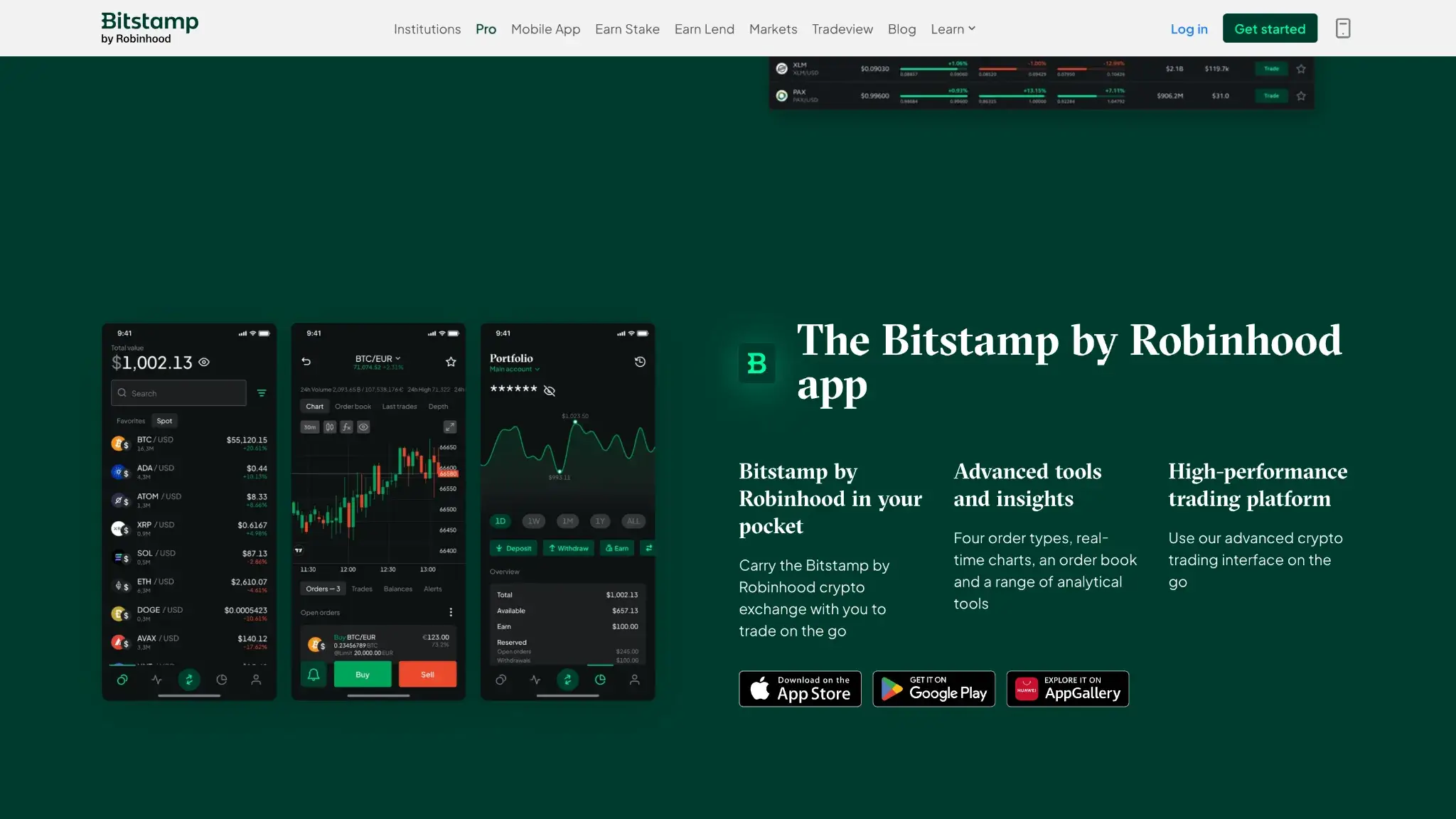
Platforms and availability. The Bitstamp app is available on iOS and Android under the name “Bitstamp by Robinhood: Buy BTC.” The Play listing shows an update on Nov. 7, 2025; the iOS version history shows ongoing Nov. 2025 updates. Bitstamp documents country availability for the apps, including US (excluding Hawaii & Nevada) and an Android country list.
Feature parity. Mobile supports Basic and Pro modes with order book, last trades, depth, and charts. In‑app notifications for new asset listings were added in late 2024 and continue through subsequent releases.
Performance, security, and alerts. The apps are actively updated; data‑safety and privacy disclosures are published on Google Play. Users can enable 2FA and manage security in account settings; phishing guidance and safe‑use practices are covered in the Help Center.
Registration
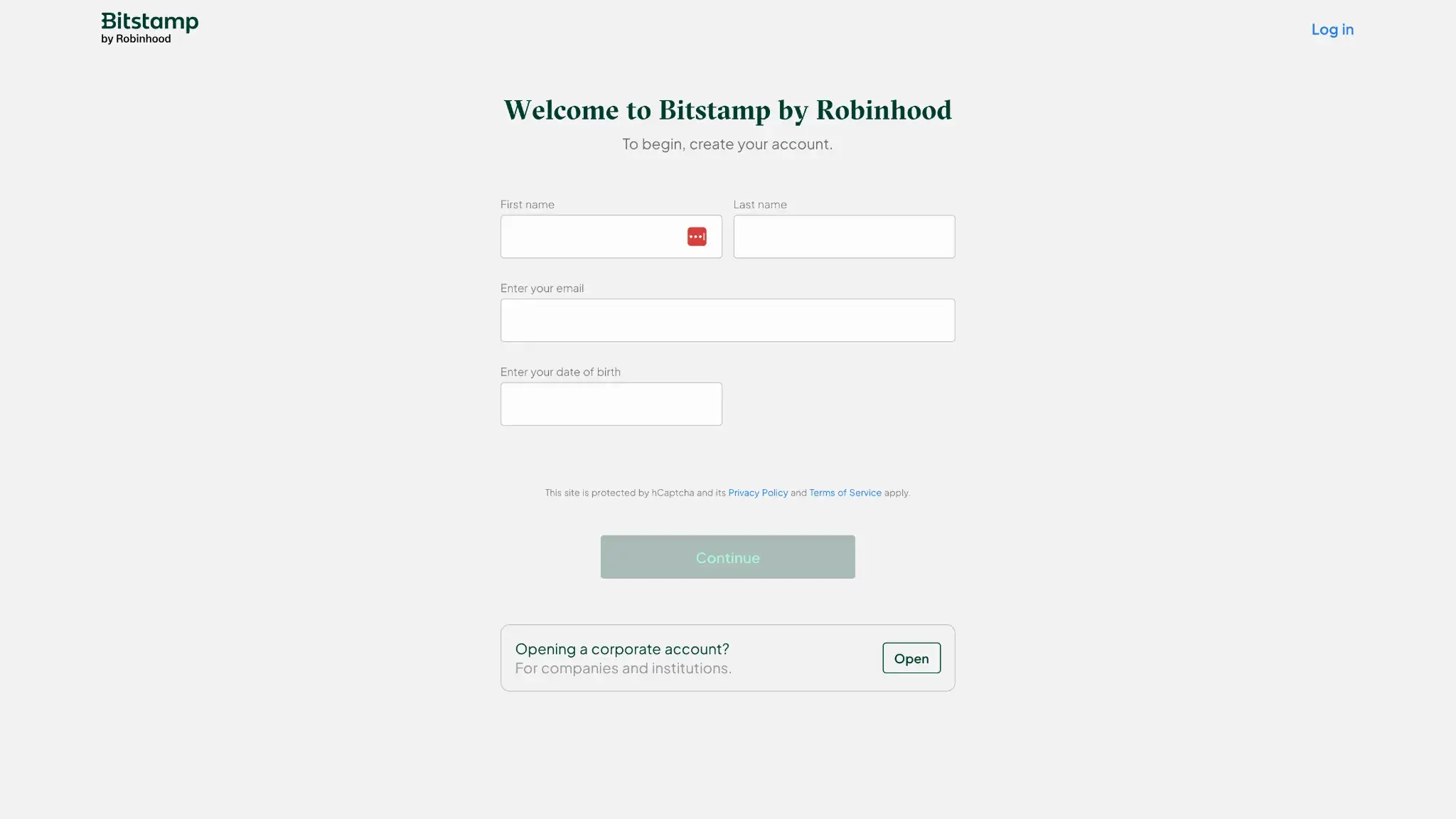
Account creation flow. Sign up with email and password, confirm your email, then complete identity verification before funding. Bitstamp’s KYC guide lists accepted documents (passport/ID/driver’s license and proof of address).
Security setup. After first login, enable TOTP 2FA and consider withdrawal‑address whitelisting for additional protection; device checks and support contacts are documented in the Help Center.
App availability and coverage. Bitstamp provides an official country list for app availability, including US (excluding Hawaii & Nevada) on iOS and extensive coverage on Android. Store listings confirm current availability and versioning.
KYC and Geographic Access
Bitstamp requires full identity verification before trading or using fiat rails. KYC is triggered at signup and again when documents expire, details change, or risk rules flag activity. Enhanced due diligence can be requested for large or unusual flows. Pending approval, funding and withdrawals are limited. Derivatives access requires a derivatives sub‑account and suitability checks in eligible regions.
Accepted documents and typical timelines. Individuals submit a government ID (passport, national ID, or driver’s license) and proof of address (bank statement or utility bill). Liveness may be requested. Automated reviews complete in minutes in most cases. Manual reviews typically clear within 1–24 hours. Peak periods or mismatched documents can extend timelines; resubmissions should use high‑quality, uncropped images and recent POA.
Availability and notable restrictions. Bitstamp serves most countries. US access excludes Hawaii and Nevada. Canada is not supported. Derivatives are EU‑only via Bitstamp Financial Services and are not available in the US, Canada, or Japan. Sanctioned jurisdictions are blocked, including Russia and specified regions of Ukraine. Availability can change without notice.
Live Chat Available
Email[email protected]
Who is Bitstamp Best for
Bitstamp suits security‑first investors and everyday buyers who want reliable fiat rails and a clean app. It works well for users funding by ACH, SEPA, or Faster Payments and trading major assets with transparent, volume‑tiered fees. It is a practical fit for US, UK, and EU users who prioritize compliance and straightforward workflows. Traders who need high‑leverage derivatives, the widest altcoin list, or ultra‑low taker fees should consider platforms built for those goals. See Fees and pricing, Payments and fiat support, Is Bitstamp safe?, and Features and services for the trade‑offs established above.
Alternative Sites like Bitstamp



- Kraken — lower maker and taker fees at higher volumes and margin, with regulated futures in select regions.
- Coinbase — broader asset list and instant ACH, plus a native debit card for everyday spending.
- Bybit — deeper derivatives roster and higher leverage, with extensive contract variety and pro tools.
- Uphold — fast EUR and GBP rails with commission‑free buys, convenient for quick off‑ramps.
Pick Bitstamp when you value strong fiat rails, conservative listings, and a security‑first posture over maximum product breadth.
Final Verdict
Bitstamp is a secure, regulation‑first exchange that excels as a fiat on‑ramp and a dependable place to trade the majors. It suits security‑minded buyers and long‑term holders who want fast **ACH, SEPA, and Faster Payments**, a clean app, and transparent, volume‑tiered fees. The trade‑offs are higher **instant‑buy** costs, a curated coin list, and no high‑leverage products in most regions. For everyday investing and cashing in or out, Bitstamp delivers reliable rails and a straightforward experience grounded in compliance. Advanced traders who need deep derivatives, the very widest altcoin lineup, or rock‑bottom taker fees should compare specialized platforms.
Overall Score
8.2Best For
Security-minded buyers using ACH, SEPA, or Faster Payments who trade majors on a clean app — not for leverage seekers or altcoin hunters.
PROS
- Proven security and transparency with about 95% cold storage and annual Big Four audits
- Robust fiat on/off‑ramps in the US, EU, and UK with fast bank payouts
- Clear, volume‑tiered pro fees; deep liquidity on BTC, ETH, and XRP majors
- 24/7 support channels with live chat and phone lines in key regions
- EU‑regulated perps for eligible users seeking simple hedging tools
CONS
- No margin or options; derivatives unavailable outside eligible EU markets
- Instant buys via cards/wallets carry about 4% fees and embedded spreads
- Curated roughly 100–115‑asset list is smaller than top‑tier rivals
- Strict KYC and address whitelisting add first‑time withdrawal friction
Disclaimer: CryptoSlate may receive a commission when you click links on our site and make a purchase or complete an action with a third party. This does not influence our editorial independence, reviews, or ratings, and we always aim to provide accurate, transparent information to our readers.
FAQ
What are Bitstamp trading fees and VIP tiers?
Advanced trading starts at 0.30% maker and 0.40% taker and falls to 0.00% maker and 0.03% taker based on 30‑day USD‑equivalent volume. Simple buys include a spread and a 4% Instant Service fee when using cards or wallets.
Does Bitstamp require KYC and what limits apply?
Yes. Full identity verification is required before trading or using fiat rails. Typical caps include ACH deposits at 10,000 dollars daily and 25,000 dollars monthly and ACH withdrawals at 50,000 dollars per transaction. Enhanced due diligence can be requested for large or unusual flows.
Where is Bitstamp available?
Bitstamp serves most countries. The United States is supported except Hawaii and Nevada. Canada is not supported. Derivatives are EU‑only under a MiFID‑authorised entity and are not available in the United States, Canada, or Japan. Availability can change without notice.
Which coins does Bitstamp support?
Bitstamp lists about 107 cryptocurrencies and around 230 spot pairs with an emphasis on large‑caps. The United States roster is narrower due to local rules. Stablecoin books are available in USDC, USDT, and EURC.
How long do withdrawals take?
ACH and SEPA withdrawals typically arrive in one to two business days. International wires usually take three to five days. Crypto withdrawals are released promptly and then follow the chain, for example Bitcoin in about ten to sixty minutes.
Is Bitstamp safe and does it publish proof of reserves?
Bitstamp keeps most client crypto in cold storage and supports 2FA and withdrawal‑address whitelisting. It maintains crime insurance and undergoes annual Big Four financial audits. A user‑verifiable Merkle proof of reserves is not published at the moment.
Does Bitstamp offer staking or rewards?
Yes. Bitstamp Earn supports staking for Ethereum and Cardano in eligible regions. Yields are variable and Bitstamp takes a 15 percent commission on rewards. ETH rewards post monthly and ADA rewards post weekly. Staking is not available in the United States, Canada, Japan, or Singapore.
Does Bitstamp have an API for programmatic trading?
Yes. Bitstamp offers REST v2, WebSocket v2, and FIX v2 with granular API key scopes, IP allowlists, and high‑throughput limits. There is no extra fee for API access beyond normal trading fees.
Longest‑running exchange (since 2011)
Disclaimer: CryptoSlate may receive a commission when you click links on our site and make a purchase or complete an action with a third party. This does not influence our editorial independence, reviews, or ratings, and we always aim to provide accurate, transparent information to our readers.