
Coinbase Exchange Review

Best for beginners and compliance‑first buyers who want a simple fiat on‑ramp and audited transparency. Coinbase holds about 98% of customer assets offline and publishes audited financials. The trade‑off is higher simple‑trade costs than low‑fee rivals.

Verified Review Checked against CryptoSlate standards
Published Dec. 16, 2025
Updated Dec. 17, 2025
Andrej
Reviewed by Andrej
Since Sep 2025 7 articles & reviews
Nate Whitehill
Fact-Checked by Nate Whitehill
Since Aug 2017 7 articles fact-checked

This operator is not available in your region.

We're sorry, but some of the content on this page is not accessible from your region. This page is for informational purposes only.

Checking your location...

Launched in 2012
8.6
  • Public company with audited financials
  • 98%+ cold storage and strong account security
  • Deep USD liquidity and easy bank rails

Deep USD liquidity and easy bank rails

Coinbase Overview

Exchange Name Coinbase
Parent Company Coinbase Global, Inc.
Launch Year 2012
Languages English, Spanish, German, French, Chinese, Russian, Portuguese, Polish, Thai
KYC Yes
Products Spot, Futures or Perps, OTC, Simple-buy Broker
Total Assets 270+
Staking Yes
Copy Trading No
Derivatives Yes
Proof of Reserves Yes
Trading Fees 0.00% - 0.60%
Maker Fee 0.4%
Payout Time Fiat: Instant - 3 days
Restricted Countries Iran, Iraq, Syria, Cuba, Ukraine, …
Supported Cryptos Bitcoin, Ethereum, Litecoin, Bitcoin Cash, XRP, …

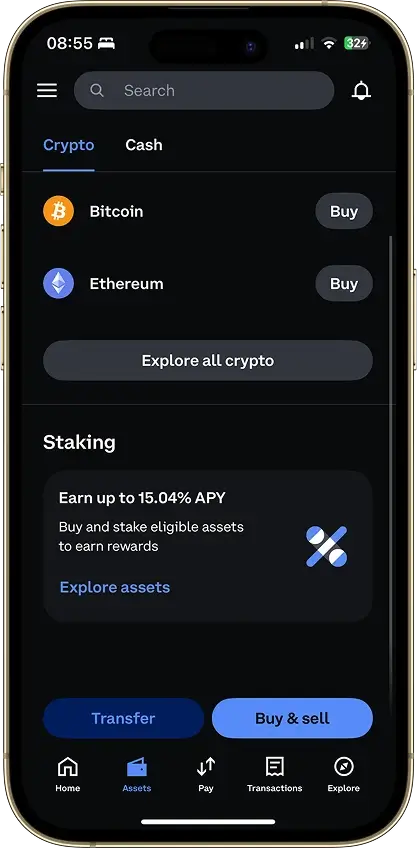
Coinbase Screenshots

Coinbase Pros and Cons

Pros

  • Publicly listed with audited financials and full reserve accounting.
  • 98%+ cold storage. 2FA, security keys, and whitelists available.
  • Clean app and Advanced Trade UI. Easy ACH/SEPA/FPS funding and fast cash‑outs.
  • Broad asset coverage and deep USD liquidity. Staking on major PoS assets.
  • Regulated derivatives for eligible non‑US retail via Coinbase International.

Cons

  • Higher fees on simple buys and small card purchases.
  • No copy‑trading. Limited leverage and product depth vs. offshore rivals.
  • Features vary by region. Not available in sanctioned jurisdictions.
  • Financial‑audit proof‑of‑reserves only. No user‑verifiable Merkle attestation.

What is Coinbase? Background and Oversight

Founded in 2012 by Brian Armstrong and Fred Ehrsam, Coinbase is a U.S.-based crypto exchange operated by Coinbase Global, Inc. It listed on NASDAQ in 2021, which subjects the company to quarterly reporting and external audits. That public-company status means customer assets and liabilities are disclosed in financial statements and examined by independent auditors.

Coinbase serves users in over 100 countries through local entities and licenses. Core products include a beginner-friendly brokerage, Advanced Trade with order-book execution, institutional Prime/OTC, staking on eligible assets, and a Visa debit Card in supported markets. For non-U.S. retail in eligible jurisdictions, Coinbase International offers perpetual futures integrated inside Advanced Trade.

In recent years Coinbase focused on compliance and infrastructure. It expanded bank rails in the U.S., UK, and EU, strengthened staking disclosures, and grew its ecosystem with a self-custody wallet and the Base Layer-2 network. The strategy prioritizes transparency and regulated access over maximum product breadth or lowest headline fees.

A clean, white crypto platform landing page showing mobile app portfolio and price charts beside the headline “The future of money is here” and an email sign-up form.

Features and Services

Coinbase prioritizes regulated access, fiat rails, and account security over product breadth and leverage. Advanced Trade covers order‑book spot. There is no retail margin, no options, and no copy trading. Perpetual futures are available only to eligible non‑US users via Coinbase International.

Trading Options

Coinbase Advanced BTC-USDC depth chart showing aggregated bid and ask liquidity on a green and red order book curve, alongside live order book and trade history.

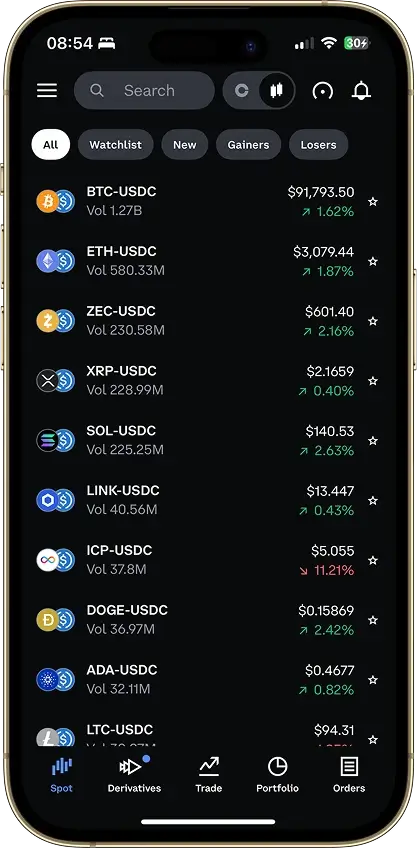
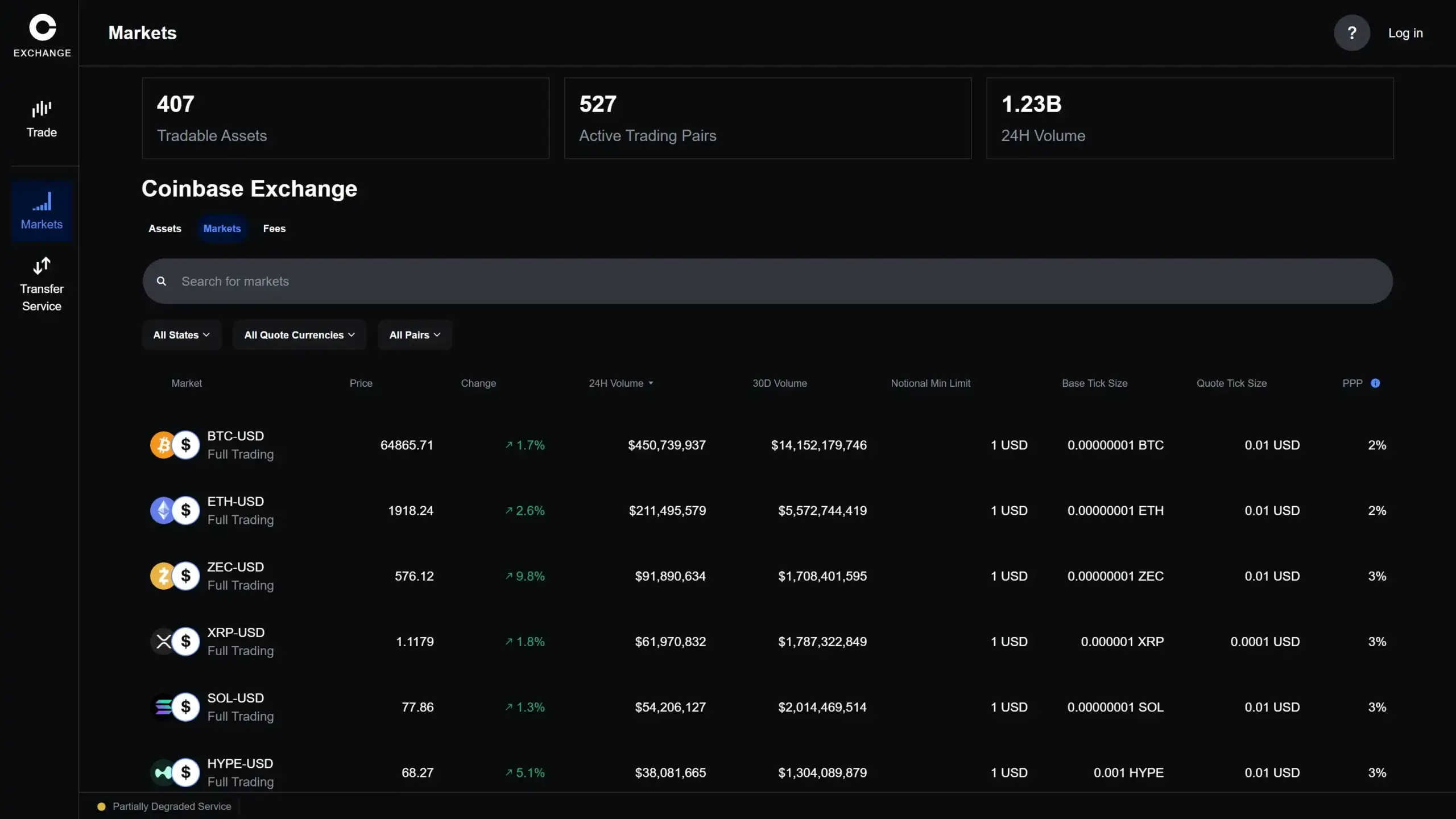
Spot trading lists over 240 assets and 550+ spot pairs, with USD, EUR, and GBP bases. Retail margin is not offered. Perpetual futures are available to eligible non‑U.S. users within Coinbase International. Maximum leverage for eligible retail perps is up to 50× by contract. Options are not available.

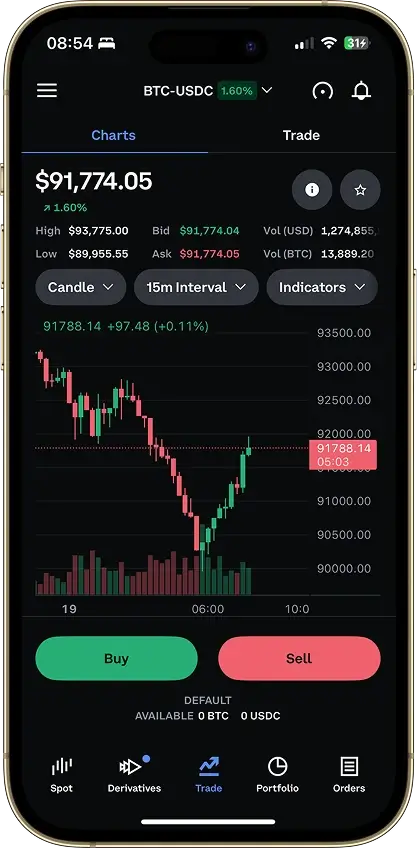
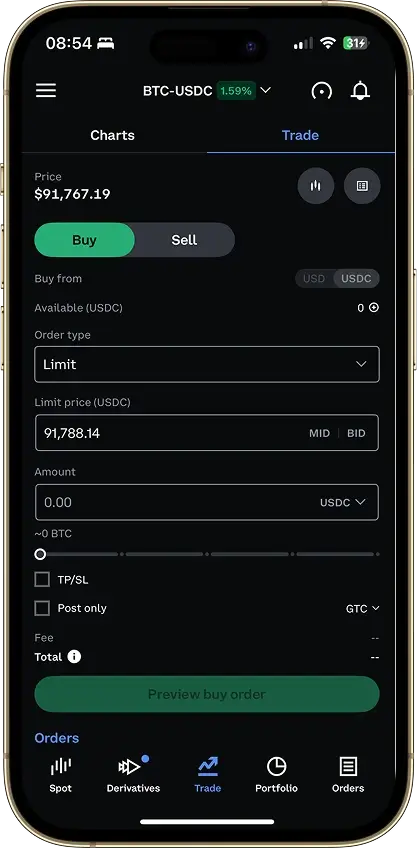
Interface modes. Two paths exist. The default buy/sell uses a quoted price and simple toggles for recurring buys. Advanced Trade exposes order book, depth, and TradingView charts. The web interface offers TradingView with 104 indicators plus market, limit, and stop orders, with post‑only and time‑in‑force controls. Mobile mirrors core order types and charts under the Advanced tab. The web interface offers more chart studies and tools, mobile focuses on core indicators and execution.

Pairs and assets. Coverage emphasizes major L1s and mid‑caps with fiat and USDC quote books. USD, EUR, and GBP bases are common on top pairs. Altcoins often trade against USD or USDC. See Supported assets for counts and stablecoin notes.

Brokerage and Simple-buy Experience

Coinbase Advanced Trade screen in dark mode with Crypto, Futures and Perpetuals tabs and a Top gainers list featuring tokens like Axelar, Humidifi, Gravity, IoTeX and Metaplex.

For most beginners, the default Coinbase buy/sell screen is the main experience. You choose a coin, enter a fixed fiat amount such as “Buy $100 of BTC,” pick a funding method (bank transfer, card, or PayPal where supported), and confirm. The same simple-buy flow is available on both web and mobile, and recurring buys can be scheduled in a few extra taps.

Simple buys use a spread plus an explicit fee. The total cost shows on the trade preview before you commit, including the estimated all-in price versus the current quote. Minimum order sizes are small on majors like BTC and ETH, while some smaller assets are only accessible through the Advanced Trade interface.

Compared with Advanced Trade, simple-buy is more expensive but much easier to use. You do not pick order types or think about maker versus taker fees, Coinbase handles execution behind the scenes. Active traders who care about precise pricing and lower fees should use Advanced Trade instead.

Derivatives and Leverage Controls

Coinbase Derivatives Exchange partners banner showing logos for ABN AMRO, Architect, Clear Street, Coinbase Financial Markets, Ironbeam, Marex, NinjaTrader, StoneX, Sweet Futures, Tradovate, Webull and Wedbush.

Coinbase International lists USD‑quoted perpetual futures across a growing roster of markets, including BTC‑PERP, ETH‑PERP, LTC‑PERP, XRP‑PERP, and many others. Contracts are linear, USDC‑settled with no expiry. No inverse coin‑margined contracts for retail.

Leverage and margin. Headline leverage is up to 50× by contract, with dynamic position tiers and maintenance requirements. Accepted collateral includes USDC by default, with BTC and ETH available via multi‑asset collateral for eligible accounts. Funding accrues on a fixed schedule to align perp and spot prices. A USDC‑denominated Insurance Fund covers negative‑equity liquidations before auto‑deleveraging (ADL) is used as a last resort.

Regions and eligibility. Perps are not available to U.S. retail. Access depends on jurisdiction and full KYC. Many EU and UK retail users are restricted by local rules. Professional or institutional access follows entity‑specific approvals.

Risk reminder. Leverage amplifies gains and losses. Positions can be liquidated if equity falls below maintenance levels. Funding, tiered margins, and notional caps can change with volatility.

Supported Assets

Coinbase lists over 240 assets and 550+ spot pairs. Fiat bases include USD, EUR, and GBP. Counts change regularly — confirm in‑app. Coverage is curated. Some small‑caps or legally sensitive tokens may be absent.

Stablecoins and networks. USDC supports multiple networks on Coinbase, including Ethereum, Solana, Polygon, Base, Arbitrum, Avalanche, and Optimism (availability varies by product). USDT is supported only on Ethereum (ERC‑20) on the main exchange. Deposit and withdrawal networks can differ from trading routes. Network choice affects fees and speed.

Listing cadence and policy. Listings are announced on official channels and roll out in phases — transfer‑only, then post‑only, then full trading. Coinbase conducts periodic reviews and can suspend or delist assets that fall short of standards.

Native token impact. There is no exchange token. Holding USDC or COIN stock does not reduce coinbase fees. Discounts come from volume tiers or subscriptions, not token balances.

Staking and Rewards

A dark, grid-style Coinbase page showcasing icons for Coinbase-supported staking assets, with navigation and sign-in/sign-up controls across the top.

Staking on Coinbase is custodial. Coinbase staking covers major PoS assets such as ETH, ADA, SOL, DOT, and ATOM. Yields are variable and asset specific. Examples include ETH ~1.89%, SOL ~4.27%, and ADA ~1.60% with net rates shown in app and subject to change. Rates move with network conditions.

Fees and payouts. Coinbase takes a commission on rewards. These Coinbase staking fees are currently 35% for many major assets such as ADA, ATOM, AVAX, DOT, ETH, MATIC, SOL, and XTZ. Coinbase One members may receive reduced commission percentages by tier. The app shows net APY after commission. Payout cadence depends on the network and ranges from a few days to weekly. Rewards are credited in kind and generally auto compound.

Eligibility and exit. Availability depends on region and KYC. Unstaking follows network rules. ETH timing depends on the network queue and can range from hours to weeks. Typical unbonding windows include SOL ~2–5 days, ADA ~2 days, XTZ ~2 days, MATIC ~8 days, and DOT ~30 days. Coinbase shows estimated timelines before you opt in.

Risks. Staking on Coinbase still carries protocol and regulatory risk and is not risk free. Users who ask if staking on Coinbase is safe or worth it should understand that validators can be slashed, networks can change rules, and yields can fall over time. You also rely on Coinbase as a custodian for access to your staked balance.

Coinbase Card

Coinbase offers a Visa card in supported regions. In the UK, the consumer card is issued by Paysafe Financial Services Limited. In the US and many EU programmes, the card is issued by Pathward, N.A. and powered by Marqeta. Users get a physical card and an instant virtual card with Apple Pay and Google Pay support. Verification is required. Availability and issuer differ by market.

Rewards and costs. Rewards are paid in crypto and vary by region and program. Coinbase does not charge a transaction fee for spending. A conversion spread applies on crypto spends. FX and ATM rules follow local program terms. Spend limits apply.

Funding and settlement. You pick a spending source — fiat balance, stablecoins, or another asset. Crypto spends convert at the point of sale. The conversion rate shown in‑app includes any spread.

Controls and restrictions. The app supports card freeze, PIN view, alerts, and spend controls. Merchant category restrictions and regional limits apply. See our dedicated Coinbase Card review for fees, caps, and ATM limits.

Copy Trading and Bots

Coinbase does not offer copy trading, leaderboards, or native strategy bots. All trading is self‑directed. Programmatic traders can use the API stack described below, standard spot and derivatives fees apply.

Launchpad, Launchpool and Airdrops

Coinbase is rolling out a regulated token sale platform rather than a classic launchpad or launchpool. Token issuers apply, complete compliance checks, and run time‑boxed public sales, most retail users simply see new assets listed after the sale. There is no staking‑based launchpool like on Binance. Occasional reward missions and airdrop‑style campaigns are time‑limited promos, not a standing launchpad product.

Wallet and Self‑custody Options

By default, Coinbase accounts are custodial: the exchange holds keys and manages cold and hot storage. Users who want self‑custody can download the separate Coinbase Wallet app, a Web3 wallet where they control private keys and recovery phrases.

Coinbase Wallet supports multiple networks, including Ethereum, Solana, major EVM chains, and Bitcoin‑family assets, with built‑in send, receive, swap, DeFi, and NFT support. Moving funds between the exchange and Coinbase Wallet is treated as an on‑chain transfer with normal network fees.

API and Programmatic Trading

Coinbase Advanced API landing page highlighting deep liquidity and top-tier execution with a call-to-action button to create an API key for algorithmic trading.

Coinbase offers several programmatic interfaces. The Advanced Trade API provides REST endpoints for account, orders, and fills, plus a WebSocket feed for real‑time market data across spot and perps. Professional users can also access Exchange APIs with REST, FIX for order entry, and dedicated WebSocket feeds for latency‑sensitive market data.

API keys are created in‑app with scoped permissions for read‑only access, trading, or transfers. Keys can be restricted by profile and IP allowlists. Rate limits apply per IP and per key, with separate limits for REST and WebSocket messages. A sandbox environment, SDKs, and detailed docs support bot builders and institutions.

Other Notable Features

Coinbase provides tax tooling and reports for many regions. Users can export transaction histories in CSV and connect to third‑party tax tools, U.S. customers receive specific forms when thresholds are met. Institutional clients access Coinbase Prime for custody, OTC/RFQ execution, and bespoke settlement workflows, separate from the retail app.

On the Web3 side, Coinbase Wallet connects to dApps, DeFi protocols, and NFT marketplaces on supported networks. The wider ecosystem includes the Base Layer‑2 network, which hosts apps and on‑chain projects that users can reach via self‑custody wallets. These extras do not change core trading fees but may matter if you need institutional workflows, richer tax exports, or direct Web3 access.

Listings and delistings policy

Coinbase publishes its listing standards and announces new assets via official channels. The Asset Listings Process outlines legal, compliance, and technical reviews. New listings and availability updates are centralized on @CoinbaseMarkets (X), with longer posts on the Coinbase Blog.

  • Sources and announcement channels. See the Asset Listings Process page for policy and the Coinbase Blog for detailed posts. Real‑time listing notices are posted on @CoinbaseMarkets.
  • Selection and review criteria. Assets are vetted by the Digital Asset Support Group against legal, compliance, and technical security standards, then monitored continuously after launch. Projects apply through Asset Hub, timelines vary.
  • Delisting triggers and timelines. Coinbase conducts periodic reviews and can suspend or remove assets that no longer meet standards, have technical failures, or migrate networks. Notices communicate trading suspension dates and any withdrawal windows.
  • Regional/entity variance. Availability can differ by entity and jurisdiction. Posts and notices specify where each asset is enabled, and geo‑fencing may apply based on local rules.
  • Recent change (Aug. 2025). Coinbase announced the removal of Function X (FX) as part of a routine review, with trading suspended mid‑August and transfers noted on help pages. Users retained withdrawal access per the notice.

Coinbase Fees and Pricing

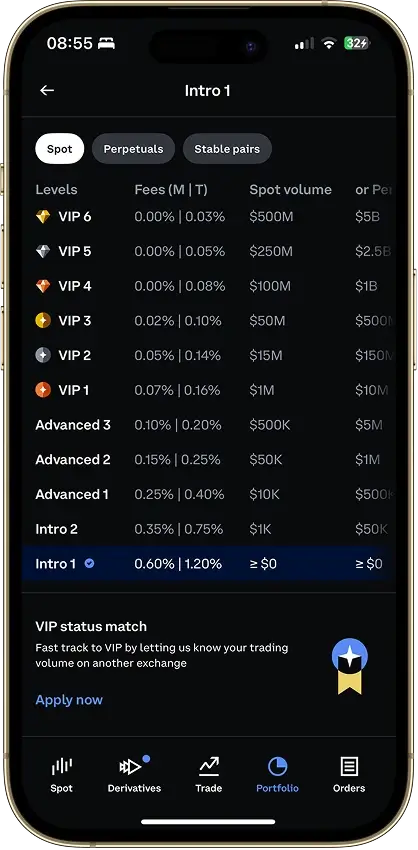
Coinbase Advanced desktop fee levels page summarizing maker and taker fees for spot and perpetuals across Intro, Advanced and VIP tiers, with 30-day volume thresholds.

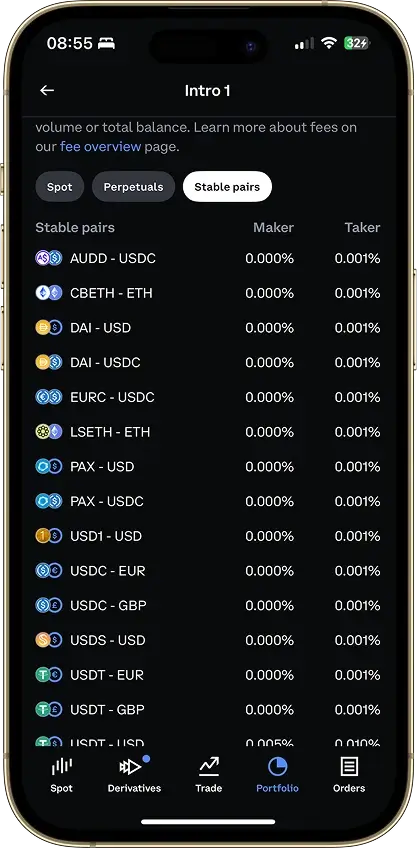
Coinbase uses two models for Coinbase trading fees and Coinbase transaction fees. Simple buy/sell includes a spread in the quoted price and may add a variable fee shown at checkout. Advanced Trade uses a maker‑taker schedule based on trailing 30‑day USD volume.

Legacy Coinbase Pro fees and Coinbase Pro trading fees now map into the same Advanced Trade fee table, so Coinbase Pro vs Coinbase fees are just a question of using the Advanced Trade interface instead of the simple buy/sell flow. Fiat rails include ACH, SEPA, Faster Payments, and wires. Crypto withdrawals pay network fees, and some assets also include a processing fee.

Trade tier or methodFee or pricing note
Simple buy or sellSpread included in quote; any variable fee shown in trade preview.
Advanced maker or takerMaker 0.00–0.40% · Taker 0.05–0.60% (by 30‑day volume).
Card depositVariable by region; fee shown before confirmation.
Bank transferACH free; USD wire $10 in / $25 out; SEPA €0.15 in / free out; UK Faster Payments free in / £1 out.
Crypto withdrawalNetwork fee applies; USDT withdrawals incur a 0.01% processing fee (max 20 USDT) in addition to network fees.

Advanced Trade fees. Maker and taker ranges run from 0.40%/0.60% at the base tier (<$10k 30‑day volume) down to 0.00%/0.05% at the top tier for very high volume. Tiers update based on 30‑day USD volume. Your tier at order time sets the fee. This maker and taker table is the current Coinbase trading fees structure on the exchange.

Simple pricing. The default buy/sell flow bakes a spread into the quote and may add a variable platform fee. The final rate and any fee display on the confirmation screen before you submit. Conversions also include a spread. Many users think of these charges as Coinbase transaction fees in the simple flow.

Fiat rails and timing. ACH deposits/withdrawals are free and typically take 1–3 business days. USD wires cost $10 in / $25 out and land same day if sent before bank cut‑off. SEPA deposits are €0.15 with free withdrawals. UK Faster Payments are free in / £1 out.

Crypto withdrawals. Coinbase passes through network fees. For specific assets, a processing fee can apply — for USDT, a 0.01% processing fee (capped at 20 USDT) is added to the network fee. Network choice (e.g., L2 or Solana for USDC) materially affects costs and speed.

Staking commissions. Coinbase takes a commission on staking rewards (standard rates apply by asset). The app shows net yield to the user.

Ways to lower Coinbase fees. Many users ask how to avoid Coinbase fees or how to lower Coinbase fees, but you cannot remove them entirely. You can reduce costs though. Use Advanced Trade instead of simple buys. Increase 30‑day volume to reach lower tiers. Consider Coinbase One membership where available for trading fee benefits or credits.

For withdrawals, choose lower cost networks such as Lightning for BTC or layer 2 and alternative layer 1 routes for USDC where supported. This matters most if you feel Coinbase fees are too high on small card purchases and wonder why Coinbase fees are so high compared with specialist low fee venues.

VIP Tiers and Fee Discounts Table

Tier30‑day volumeMakerTakerNotes on discounts or exclusions
Base<$10,000 (USD)0.40%0.60%Default Advanced Trade tier.
Mid$100,000–$1,000,0000.10%0.20%Standard schedule; no native‑token discounts.
Top≥$400,000,0000.00%0.05%Highest public tier on Exchange fees page.

Discounts. Coinbase has no exchange token for fee cuts. Coinbase One offers subscription‑based benefits that reduce spot trading costs or provide fee credits up to a monthly cap. It does not apply to derivatives and does not remove spreads on simple trades.

Payments and Fiat Support

Primary account bases are USD, EUR, and GBP. Core rails include ACH (US), SEPA (EU), Faster Payments (UK), and domestic/international wires, plus cards and PayPal in supported markets. Third‑party processors handle card and PayPal flows. Limits are enforced per method and scale with verification level and account history; Coinbase shows exact per‑transaction and rolling 24‑hour limits in‑app.

Payment methodMinimum depositMinimum withdrawalMaximum withdrawal
ACH (US)No Coinbase fee. Deposit limits vary by account. Higher caps available via wireNo Coinbase feeLimits shown in app (rolling 24‑hour window)
SEPA (EUR)No Coinbase fee. Deposit limits vary by bank and accountNo Coinbase feeWithdrawal limits shown in app. Higher caps available by approval
Faster Payments (GBP)No Coinbase feeNo Coinbase feeWithdrawal limits shown in app. Higher caps available by approval
USD wireBank and rail limits applyBank and rail limits applyTypical caps depend on Fedwire and SWIFT limits on Exchange. Higher tiers available by review
Cards (debit/credit)Varies by issuer and regionPurchase caps shown at checkout
PayPalRegion dependentRegion dependentRegion dependent; shown in app

In the US, deposits and withdrawals use ACH for standard transfers and wires for same‑day settlement. Instant cash‑out to eligible Visa/Mastercard debit and to PayPal is supported for near‑real‑time payouts. In the EU/EEA, SEPA covers EUR in and out; wires handle non‑EUR. In the UK, Faster Payments covers GBP in and out. In RoW, coverage leans on cards and SWIFT wires. All fiat features require full KYC.

Limits. Per‑method limits vary by verification level, tenure, and risk checks. Coinbase enforces limits per transaction and over a rolling 24‑hour window. Exact caps display in Settings → Limits. Large or unusual withdrawals can trigger enhanced due diligence.

Settlement times. ACH typically settles in 1–3 business days. USD wires settle same day if sent before bank cut‑off. SEPA credits in 0–2 business days. Faster Payments is near‑instant. Instant cash‑out to supported cards or PayPal usually completes in minutes. Bank holidays and cut‑offs apply.

Currency matching and conversion. Withdrawals must match the payout currency. If your balance is in a different fiat, Coinbase converts at a quoted rate that includes a spread. Crypto‑to‑fiat conversions in the simple flow also include a spread. No extra platform fee applies to bank withdrawals beyond any disclosed rail fee.

Beneficiaries and safeties. Bank accounts are verified before use. Address book and withdrawal whitelists are available for crypto. Purchases funded by ACH cannot be withdrawn as crypto until ACH funds fully settle. Security reviews can delay payouts if risk checks trigger.

Partners. Card processing and PayPal are handled by third‑party providers in supported regions. Bank transfers move over local clearing rails or SWIFT. Coinbase remains the counterparty for exchange conversions.

Coinbase Withdrawals — Fees, Limits, and Timing

A Coinbase withdrawal can mean cashing out to a bank or PayPal or sending crypto to an external wallet. Coinbase withdrawal fees depend on the rail and the network. Bank withdrawals use the rail fees in the table above and crypto withdrawals pass through network costs and any processing fee such as the USDT charge.

Coinbase withdrawal limits are not one size fits all. Limits vary by country, payment method, verification level, and account history. The app shows your Coinbase withdrawal limit and rolling 24‑hour caps in Settings → Limits. Large or unusual payouts can sit under review until extra checks complete.

Coinbase withdrawal time also depends on the method. ACH cash outs usually take one to three business days. SEPA and Faster Payments are often quicker. Instant card and PayPal withdrawals normally arrive in minutes. On chain crypto withdrawals depend on the network and the fee level you choose.

How to Withdraw Money from Coinbase

  • Open the Coinbase app or website and sign in.
  • Go to your portfolio, pick the asset or fiat balance, and choose Withdraw or Cash out.
  • Select the destination, such as a linked bank account, card, PayPal, or external wallet.
  • Enter the amount and review the screen that shows Coinbase withdrawal fees and the estimated arrival time.
  • Confirm the withdrawal and track the status in your activity feed.

If you wonder why you cannot withdraw from Coinbase, check first for unsettled ACH deposits, recent chargebacks, or new devices. Compliance or security reviews can temporarily pause withdrawals until Coinbase finishes its checks.

Fiat Rails by Region

RegionACHSEPAFaster PaymentsWireCardsPayPalNotes
USYesYesYesYesACH free; wires for same‑day; instant cash‑out to cards/PayPal in minutes
EU/EEAYesYesYesYesSEPA in/out; PayPal in selected countries; SWIFT for non‑EUR
UKYesYesYesYesFPS near‑instant; £1 outbound fee typical; PayPal supported
RoWYesYesCoverage varies by country; cards and SWIFT most common

Withdrawal Networks and Fees Matrix

Asset or networkFee modelTypical confirmation windowNotes
BTC on‑chainNetwork fee onlyAbout 10–60 minutesPriority affects time; fees vary with mempool load
BTC LightningNetwork routing fee onlyUsually seconds to minutesLower cost than on‑chain; capacity limits may apply
ETH (ERC‑20)Network fee onlyAbout 5–15 minutesGas varies with load; L2 routes can be cheaper/faster
USDC (Polygon)Network fee onlyAbout 1–5 minutesLow fees; confirm the recipient supports Polygon USDC
USDC (Solana)Network fee onlyAbout <1–2 minutesVery low fees; confirm Solana address support
USDT (ERC‑20)Network fee + processing feeAbout 5–15 minutesProcessing fee per Coinbase policy; no TRC‑20 support

To minimize costs, pick lower‑fee networks where supported (e.g., Lightning for BTC, Polygon or Solana for USDC) and confirm the destination supports the chosen network before withdrawing.

Is Coinbase safe? Security and Proof of Reserves

Coinbase is among the safest mainstream exchanges for buying and holding crypto. It keeps about 98% of customer crypto in offline cold storage, supports hardware‑key 2FA and withdrawal allowlists, and holds USD at partner banks with FDIC pass‑through coverage up to $250,000 when bank rules apply. Coinbase relies on audited annual financials and quarterly reports rather than a user‑verifiable Merkle proof of reserves.

Controls. Coinbase holds the majority of customer crypto in offline cold storage and minimizes hot‑wallet balances for operations. Key‑management specifics are not disclosed. Accounts require two‑factor authentication with support for authenticator apps and hardware security keys. Optional protections include withdrawal address whitelists, device and session management, and cooldowns after security changes. Large or unusual withdrawals may face extra checks.

Custody and insurance. Coinbase is the custodian for exchange balances. Customer crypto is held separate from company assets. Hot‑wallet balances are covered by a crime insurance policy for theft events. Fiat balances are held at regulated partner institutions or in short‑term instruments. Deposit insurance applies to fiat only through partner banks and up to published limits. Crypto balances are not FDIC or SIPC insured.

Proof of reserves or audits. Coinbase does not publish a user‑verifiable Merkle‑tree proof of reserves. Instead, it relies on audited annual financial statements and quarterly reports that present customer assets and corresponding liabilities. Users cannot self‑verify account inclusion on‑chain.

Incidents and remediation. Coinbase publishes live and historical incidents on its Status page and describes impact and fixes in plain language. Recent events include short withdrawal pauses, web performance issues, and a support‑tool vendor breach with no wallet losses. See the Status page and incident history section below for a concise log.

Status Page and Incident History

status.coinbase.com is updated in near real time and timestamped in Pacific Time. Check it before raising tickets about transfers, logins, or trading.

Recent incidents (past 12 months).

  • Nov. 2025 — ETH/ERC‑20 sends delayed; backlog cleared the same day.
  • Oct. 2025 — Web UI degraded; fixed within ~50 minutes.
  • Sept. 2025 — ETH network event; withdrawals paused then resumed.
  • June 2025 — International exchange perps price‑feed issue; trading halted briefly, then restored.

UX and Customer Support — KYC and Geographic Access

Coinbase’s day‑to‑day experience is clean and predictable. The Coinbase app and web share one design language. Prices and balances update in real time. Support is available via help articles, live chat, email, and a request‑a‑call option in select countries.

UI and Navigation

Layout and workflows. The dashboard surfaces portfolio, watchlist, and a buy/sell widget. Core actions — Deposit, Withdraw, Trade, Send/Receive — are one or two clicks from the header or asset page. Advanced Trade has its own tab with order book, TradingView charts, depth, and an order form. Power features are discoverable without cluttering the default view.

Performance and stability. Pages and charts load quickly under normal conditions. During volatility, Coinbase prioritizes order placement and security; any slowdowns or pauses are logged on the Status page with timestamps and resolutions.

Accessibility and localization. The interface supports font scaling, keyboard navigation, and a dark theme. The iOS listing shows 17 languages supported, including Dutch, French, German, Indonesian, Italian, Japanese, Korean, Polish, Portuguese, Russian, Spanish, Swedish, Thai, Turkish, and Chinese (both scripts).

Mobile app

Platforms and availability. Coinbase mobile apps are available on iOS and Android in supported regions. On iOS the app lists as Coinbase: Buy BTC, ETH, SOL; on Google Play it shows 50M+ downloads and a strong 4.7/5 rating from around 1.8M reviews.

Feature parity. Most web features are present in the app. You can fund with local rails, place market, limit, or stop orders in Advanced Trade, stake eligible assets, manage Card settings, and withdraw to bank or PayPal where supported. Dense charting and table views remain easier on web.

Performance, security, and privacy. The app opens quickly to a cached portfolio and refreshes live data on connect. You can lock access with PIN or biometrics. Security and notification settings live under Profile → Settings, where you manage alerts for prices, fills, staking, and account activity.

Registration

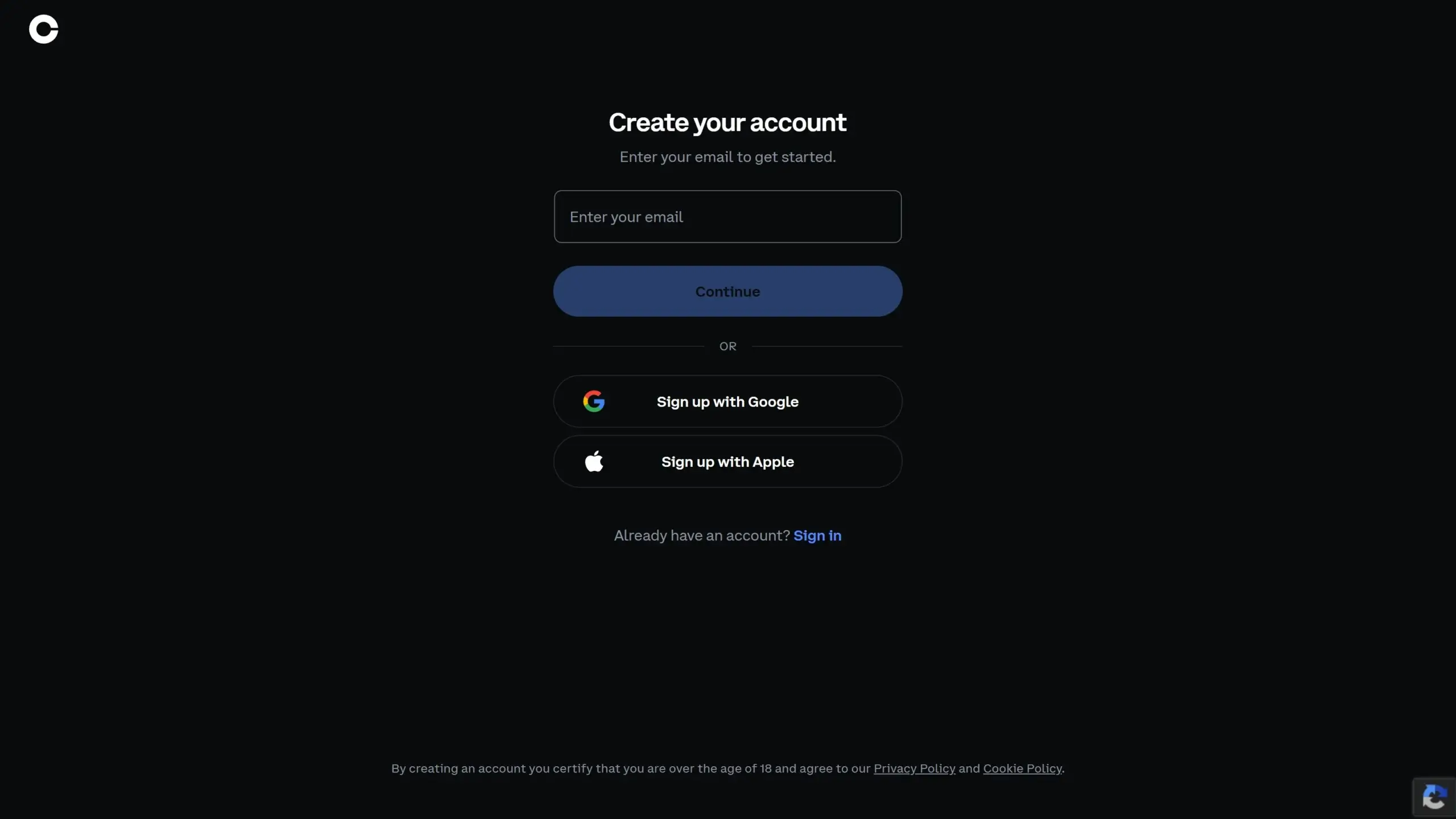
Coinbase create account page in dark mode showing an email sign-up form and options to register with Google or Apple before accessing all Coinbase products.

Account creation. Sign up with email, create a strong password, verify email and phone, then provide personal details. Coinbase may complete an automated identity check; if needed it requests a government ID and a selfie video.

Security setup. 2FA is required. Add an authenticator app or a hardware security key. You can enable an address allowlist after onboarding to restrict crypto sends to saved addresses.

Coverage notes. App download and onboarding depend on your country of residence. If your region is unsupported or sanctioned, account creation and features are blocked.

KYC and Geographic Access

Policy and triggers. Verification unlocks features in stages. Basic signup allows browsing. ID verification enables trading and fiat rails. Enhanced due diligence may be required for higher limits or derivatives. Re‑verification can occur after document expiry or risk events.

Documents and timelines. Accepted IDs include passports and state‑issued IDs; proof of address may be requested. Automated checks complete in minutes for most users. Manual reviews can take longer during peak demand.

Availability. Coinbase serves 100+ countries. Products are entity‑specific. Perpetual futures are unavailable to U.S. retail and to UK retail; pre‑launch markets exclude US, UK, and Canada. Local rules can also affect staking and card availability.

Verification Levels and Withdrawal Limits

LevelRequired documentsFiat deposit limitFiat withdrawal limitCrypto withdrawal limitTypical review time
BasicEmail, phone, personal detailsNot enabledNot enabledLow trial limits onlyInstant automated checks
VerifiedGovernment photo IDShown in app (per 24‑hour window)Shown in app (per 24‑hour window)Shown in app; higher after historyMinutes for most users
EnhancedProof of address and additional checksHigher caps by approvalHigher caps by approvalHigher caps; allowlist advisedHours to a few days
InstitutionalBusiness KYC and agreementsCustomCustomCustomCase by case

View exact caps in Settings → Limits. You can request increases; review times vary.

Geo Access and Entity Mapping

Region or countryOperating entityWhat is availableNotes
United StatesCoinbase, Inc.Spot, staking, card, APINo retail perps; some assets vary by state
European UnionCoinbase Europe entitiesSpot, staking (selected), card, APISEPA rails; product set varies by country
United KingdomCoinbase UK, Ltd.Spot, staking, card, APIFaster Payments; retail derivatives restricted
CanadaCoinbase Canada, Inc.Spot, CAD funding (where live), APIRegistered; some assets and staking limited
SingaporeCoinbase Singapore Pte. Ltd.Spot, SGD funding, staking (selected), APIMAS‑licensed; card availability varies
Rest of worldRegional coverageSpot and conversionsCards and fiat rails depend on licensing; check help pages

Customer Support

Channels and availability. Start with the Help Center for step‑by‑step guides. Escalate via live chat or email. A request‑a‑call option is available in Australia, Brazil, Canada, Germany, Spain, France, Ireland, Singapore, the UK, and the US. Coinbase One members get priority routing.

Responsiveness. Live chat usually connects within minutes during peak hours. Email replies often arrive within 24–72 hours. Complex compliance reviews take longer. The Status page posts real‑time incidents and maintenance windows in PT.

Authentication and safety. Support will not ask for your password or 2FA codes. Verify URLs and in‑app contact points before sharing information. Use the app or website to open tickets rather than responding to unsolicited messages.

Self‑serve tools. Most account changes, tax exports, and limit requests are self‑serve in Settings.

Who is Coinbase Best for

Coinbase is best for beginners and compliance‑first users who want a simple way to buy and hold major coins with strong legal oversight. It suits long‑term investors who value audited financials, clear fiat rails, and an easy mobile app more than rock‑bottom fees. Active traders who need lower maker and taker fees, deep altcoin coverage, or heavy leverage will likely prefer a specialist exchange alongside Coinbase.

Alternatives Sites like Coinbase Exchange and Broker

  • Kraken — Lower trading fees and spot margin up to 5× where allowed, with strong U.S. and EU compliance.
  • Binance — Lower maker and taker fees and broader altcoin and derivatives coverage in permitted jurisdictions.
  • Crypto.com — Richer card rewards and broader earn features for everyday spending and mobile‑first users.

Pick Coinbase if you want maximum regulatory clarity, deep USD liquidity, and a straightforward fiat on‑ramp. Pick one of the alternatives if your priority is the lowest possible fees, broad derivatives, or richer spend‑focused card perks.

Final Verdict

Coinbase is a secure, regulated exchange with strong cold‑storage practices, audited financials, and reliable fiat rails. It is a good fit if you care most about trust, simple UX, and the ability to move money between bank, card, and crypto without learning advanced order types. The trade‑off is cost and product breadth. Base‑tier Coinbase fees are higher than low‑cost rivals, the asset list is curated, and leverage is limited with no retail perps in the U.S. Use Coinbase as a primary on‑ramp and custody hub, and add a low‑fee or derivatives venue if you need aggressive trading tools.

Overall Score

8.6

Best For

Beginners and compliance-first buy-and-hold users who value trust, strong fiat rails, and a polished UX more than the absolute lowest trading fees

PROS

  • Publicly listed with audited financials and full reserve accounting.
  • 98%+ cold storage. 2FA, security keys, and whitelists available.
  • Clean app and Advanced Trade UI. Easy ACH/SEPA/FPS funding and fast cash‑outs.
  • Broad asset coverage and deep USD liquidity. Staking on major PoS assets.
  • Regulated derivatives for eligible non‑US retail via Coinbase International.

CONS

  • Higher fees on simple buys and small card purchases.
  • No copy‑trading. Limited leverage and product depth vs. offshore rivals.
  • Features vary by region. Not available in sanctioned jurisdictions.
  • Financial‑audit proof‑of‑reserves only. No user‑verifiable Merkle attestation.
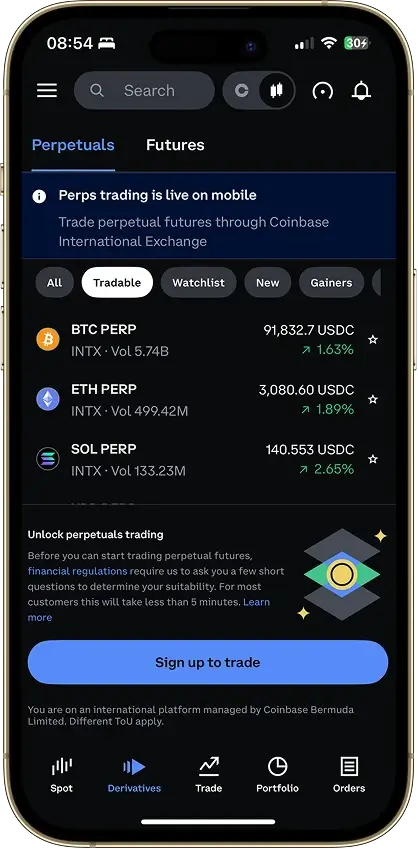
Coinbase mobile Perpetuals tab showing BTC PERP ETH PERP and SOL PERP markets and sign up to trade banner

Disclaimer: CryptoSlate may receive a commission when you click links on our site and make a purchase or complete an action with a third party. This does not influence our editorial independence, reviews, or ratings, and we always aim to provide accurate, transparent information to our readers.

FAQ

FAQs

Is Coinbase safe?

Coinbase is a regulated exchange with about 98% of customer crypto in offline cold storage, audited financials, hardware‑key 2FA support, and FDIC pass‑through cover on eligible USD balances at partner banks. It does not publish a Merkle proof of reserves, so users rely on financial statements and risk controls rather than on‑chain attestations.

How do I spot Coinbase scam emails and texts?

Most “Coinbase scam emails” and texts are phishing messages that impersonate the brand and push you to click a link, share codes, or install remote‑access tools. Ignore links, open the official app or coinbase.com manually, and check for real alerts there. Coinbase support will never ask for your password or 2FA codes.

What are Coinbase fees?

Advanced Trade uses a tiered maker and taker schedule from 0.40%/0.60% at base down to 0.00%/0.05% for very high 30‑day volume. Simple buys include a spread plus any variable fee shown on the preview screen. Bank transfers are mostly free, while card, PayPal, and some crypto withdrawals can carry extra charges.

How do I withdraw money from Coinbase?

From your portfolio, choose a fiat balance or coin, tap Withdraw or Cash out, pick a linked bank account, card, PayPal, or external wallet, enter the amount, and confirm. The app shows Coinbase withdrawal fees, estimated arrival time, and any limits before you approve the transaction.

What are Coinbase withdrawal fees and limits?

Fiat withdrawals generally use the rail fees in the Payments section, with ACH and most SEPA payouts free and wires, cards, and PayPal subject to published charges. Crypto withdrawals pass through network fees and, for USDT, an extra processing fee. Exact withdrawal limits are account specific and shown in Settings → Limits.

Is Coinbase Wallet safe?

Coinbase Wallet is a separate self‑custody app where you control private keys and recovery phrases instead of Coinbase. Safety depends on how you protect your device, passcode, and backups. There is no FDIC cover if you lose the wallet or seed; treat it like any other non‑custodial crypto wallet.

Does Coinbase offer staking, and is staking on Coinbase safe?

Yes. Coinbase offers custodial on‑chain staking on major proof‑of‑stake assets, paying variable net yields after a commission. Staking is convenient but not risk free: networks can be slashed or change economics, rewards can fall, and you rely on Coinbase as custodian. Unstaking follows each chain’s own timelines.

How can I lower my fees on Coinbase?

Use Advanced Trade instead of simple buys, target maker orders when possible, and grow your 30‑day volume to move into lower tiers. Where supported, consider Coinbase One for subscription‑based trading‑fee benefits, and choose lower‑fee withdrawal networks such as Lightning for BTC or L2s for USDC when they fit your needs.