
Bybit Exchange Review
Best for active, non‑US traders who want low, transparent maker/taker fees and pro‑grade derivatives. Strengths are 0.1% spot and 0.02%/0.055% perps with copy trading. Availability and fiat rails vary by country.
- Low, published spot and perps fees with VIP tiers
- Perpetuals and USDC options with advanced order controls
- Monthly proof of reserves with user‑verifiable Merkle checks
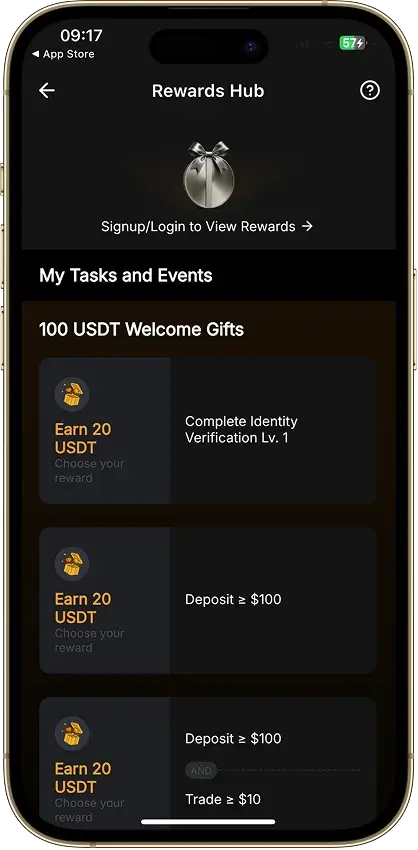
Up to 100 USDT bonus
Bybit Overview
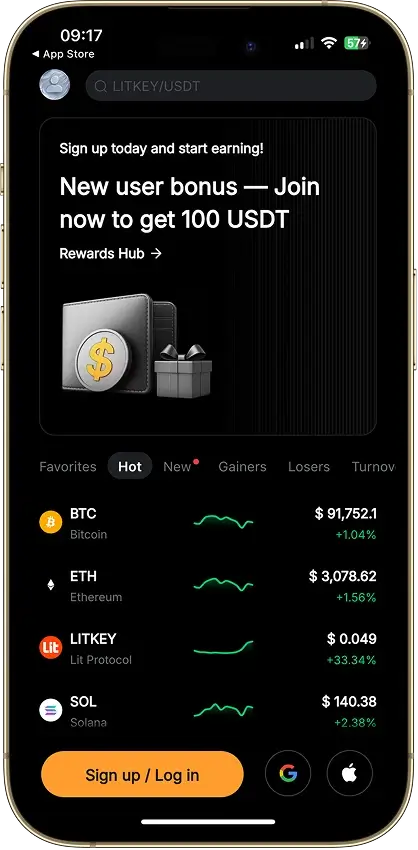
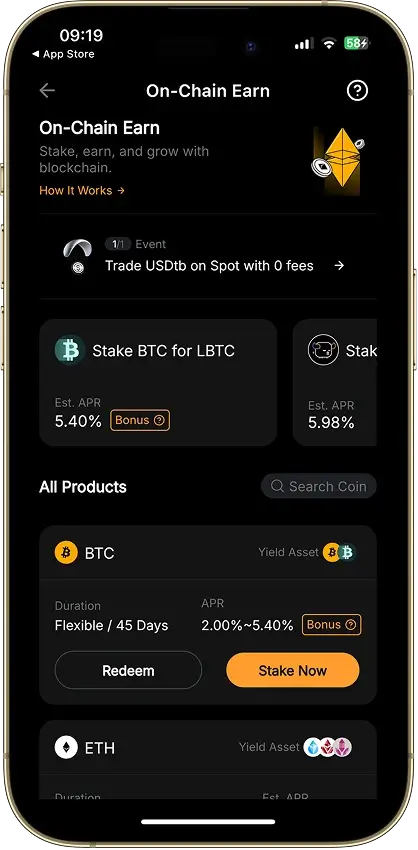
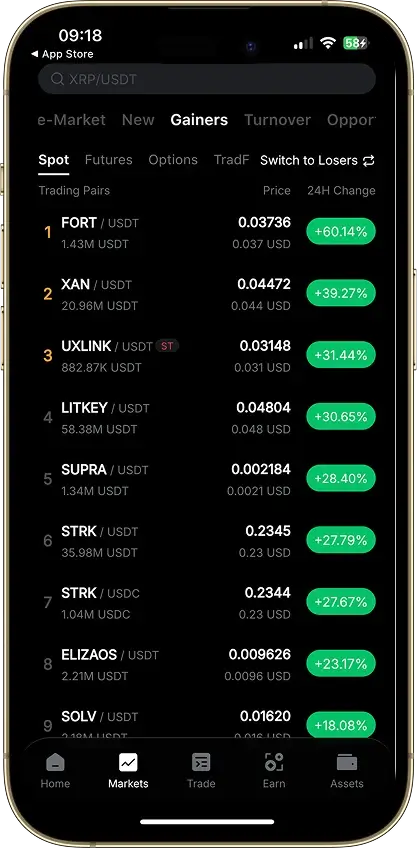
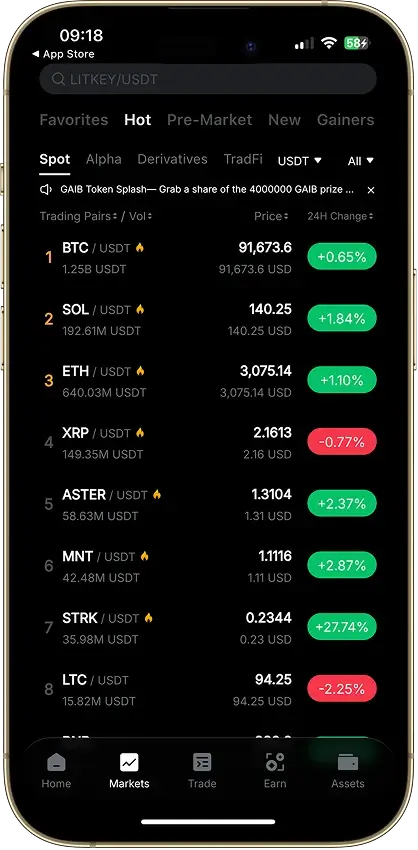
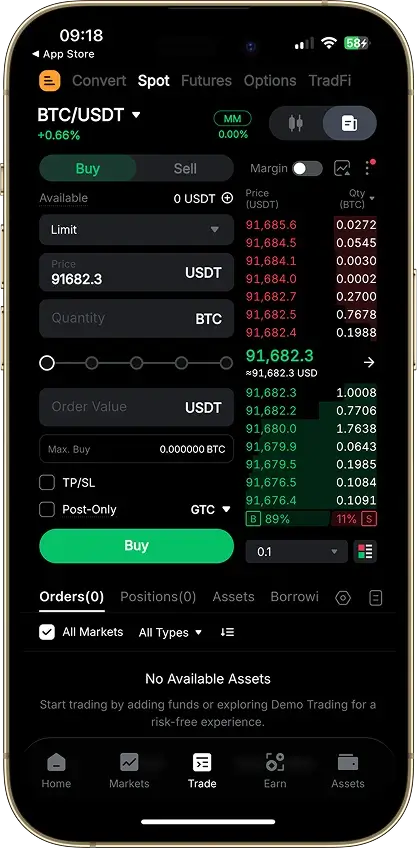
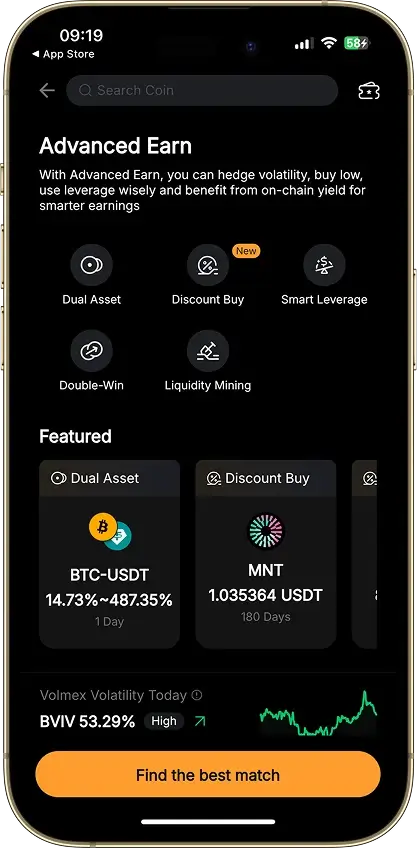
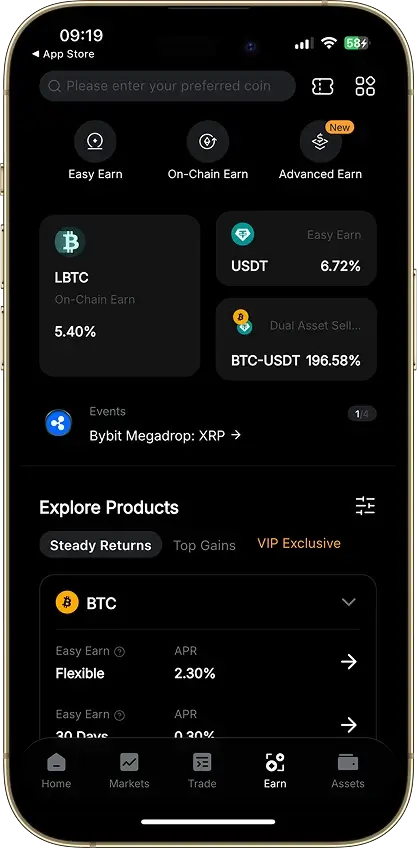
Bybit Screenshots
Bybit Pros and Cons
Pros
- Low, transparent fee schedule on spot, perps, and options with VIP discounts
- Advanced suite: perps, USDC options, copy trading, bots, and OTC
- Fast crypto withdrawals with instant processing windows
- Ongoing proof of reserves with user‑side verification
- Broad P2P and card coverage for on‑ramping in many countries
Cons
- Unavailable in major markets (U.S., U.K., Canada, Singapore, and others)
- Fiat rails depend on third‑party providers and vary by country
- High leverage raises risk for new traders
- Card and some Earn products limited to specific regions
What Is Bybit? Background And Oversight
Bybit launched in 2018 and is operated by a Dubai‑based group of entities led by CEO Ben Zhou. It is a centralized, custodial exchange known for derivatives and now offers a full stack across spot, margin, perpetuals, and options. The platform serves a large global user base and lists hundreds of assets.
In 2024–2025, Bybit emphasized transparency and compliance. It instituted recurring proof‑of‑reserves with a third‑party verifier and rolled out mandatory KYC. In Europe, services are migrating to Bybit.eu to align with MiCA, with product scope that varies by country.

Features and Services
Bybit’s feature set is built for active trading and compares closely with OKX and Binance on depth of instruments, while focusing more on derivatives than fiat rails. Independent data placed Bybit among the top three venues for perpetuals by market share in the first half of 2025, and it maintains a high‑frequency product rollout across spot, margin, and options. Availability varies by region; EU users are routed to Bybit.eu with a narrower product scope pending additional licensing.
Trading Options

Markets offered. Live products include spot, spot margin (up to 10×), perpetual futures in USDT, USDC, and inverse coin‑margined formats, USDC‑settled options (European, cash‑settled), and an OTC/RFQ channel for large tickets. Pre‑Market Perpetuals run for select listings before conversion to standard contracts. Derivatives are unavailable in restricted jurisdictions. In the EU, Bybit.eu currently offers spot and spot margin; regulated derivatives are pending a MiFID license.
Interface modes. A one‑click Convert handles simple swaps, while the advanced terminal provides TradingView charts, ladder and depth, and full order‑type support including market, limit, stop, take‑profit, OCO, post‑only, and reduce‑only. Mobile apps on iOS and Android mirror core order entry, position management, and account security with near feature parity to web.
Pairs and assets. Spot trading centers on USDT and USDC quote markets with some BTC‑quoted pairs. Fiat pairs are limited and vary by entity. See Supported assets for coin coverage.
Liquidity note. We found data that showed Bybit’s 24‑hour derivatives volume at ~$24.7B with open interest near $16.0B, placing it in the top tier of venues by activity.
Brokerage And Simple‑Buy Experience

Simple‑buy flow. Bybit’s One‑Click Buy lets users purchase a fixed fiat amount of crypto via card or supported bank rails (where available) on web and mobile. Choose currency and method, review the final all‑in rate, and confirm; assets credit to the Funding Account typically within minutes. The minimum order is USD $10 (currency equivalent). Simple‑buy is available for core assets (e.g., BTC, ETH, USDT, USDC); many altcoins are trade‑only in the advanced view.
Pricing model. Simple‑buy uses a spread + provider fee model. The exact provider fee and quote appear at checkout. As of Nov. 2025, our test quotes showed BTC all‑in ~1.2%–1.6% above mid‑market with EU Visa, and ~2.8%–3.2% with non‑EU cards (inclusive of provider fee). Method‑specific tables list additional payment options and minimums by region.
Limits and coverage. Comparison to advanced. Per‑transaction and rolling 24‑hour purchase caps are provider‑ and KYC‑dependent and are shown in‑flow; simple‑buy is unavailable in excluded jurisdictions (see KYC and geographic access). Compared to the advanced interface (maker/taker fees from 0.1%/0.1% on spot), simple‑buy costs more but reduces steps and avoids order‑book complexity—useful for infrequent or first‑time purchases. See Fees and pricing for exact bands and ways to minimize cost.
Derivatives And Leverage Controls
Availability. Perpetual contracts are offered in USDT‑margined, USDC‑margined, and inverse formats. USDC futures with expiries are available on core markets, and USDC options are European‑style and cash‑settled. Contract specs publish tick sizes, minimums, settlement windows, and funding scheduling per market.
Leverage and margin modes. Maximum leverage depends on product and risk tier. BTCUSDT supports up to 100x under the lowest risk tier, while selected USDC perpetuals support up to 125x. Bybit’s Unified Trading Account offers isolated, cross, and portfolio margin modes with tiered maintenance margins, risk limits that scale with position notional, and position limits tied to contract open interest. Perpetuals typically settle and fund on 8‑hour cycles.
Regions and eligibility. KYC is mandatory to trade. Derivatives access is blocked in excluded jurisdictions and limited in the EU to Bybit.eu, which currently lists spot and margin only while Bybit pursues a MiFID license for regulated futures and options. Eligibility and leverage caps can differ by entity and user tier.
Risk disclosure. Derivatives and leverage can amplify losses as well as gains. Liquidations follow the platform’s tiered maintenance‑margin model. If losses exceed collateral and the insurance fund, auto‑deleveraging (ADL) can reduce opposing positions. Use appropriate risk controls.
Supported Assets
Asset coverage. Bybit lists 350+ spot assets and 450+ perpetual pairs, covering all major large‑cap coins plus a rotating set of mid‑caps. Coverage changes frequently with new listings and periodic delistings.
Stablecoins and networks. Core trading and settlement rely on USDT and USDC. Deposits and withdrawals support multiple networks, including TRC‑20 and ERC‑20 for USDT, with network support shown in the withdrawal window. Trading routes may differ from deposit networks.
Listing cadence and policy. New assets and delistings are posted on the Bybit Announcements hub, with pre‑market perpetuals often transitioning to standard contracts after initial liquidity builds. Items are time‑stamped and include contract or spot details.
Native token impact. Bybit does not offer trading‑fee discounts via a native exchange token. The platform has supported ecosystem tokens in Launchpool events, but fees and VIP tiers are volume‑based, not token‑based.
Staking And Rewards

Product scope and yields. Bybit offers Easy Earn (Flexible and Fixed terms), Fixed Rate Loan supply products, and On‑Chain Earn for PoS assets. Flexible Easy Earn quotes for stablecoins typically sit in the low‑single‑digit APY range, while fixed‑term promos can post higher but time‑limited APRs. On‑Chain Earn tracks protocol yields on assets like ETH and SOL and is variable by design. Yields are displayed in‑app and can change with market conditions.
Fees/commission and payout cadence. Easy Earn yields accrue hourly and are credited daily at 12:30 am UTC to the Funding Account. On‑Chain Earn credits extra yield daily at 6:00 am UTC. Fixed terms pay principal plus yield at maturity. Easy Earn APRs shown are floating and reflect any platform fee. Auto‑Earn can move idle balances into Flexible products each day at 10:00 am UTC. Minimums, caps, and eligible coins are listed per product.
Eligibility, limits, and exit. Standard KYC is required to invest. Earn products are not available in excluded jurisdictions. Flexible terms allow redemption any time, but a full 24‑hour holding window is needed to earn that day’s yield. Fixed terms cannot be redeemed early; some structured products may involve lockups or early‑exit restrictions. Check the coin page for per‑asset limits and regional availability.
Bybit Card

Program and eligibility. The Bybit Card is a Mastercard debit program for the EEA and Switzerland. A virtual card is issued first, with an optional physical card after address verification. Digital wallets are supported in the EEA/CH, including Apple Pay, Google Pay, and Samsung Pay. Card Lite offers a limited virtual version with a EUR 150 lifetime spend cap.
Rewards and costs. Marketing materials advertise up to 10% cashback and 8% APR on eligible card balances. Fees and limits vary by tier. ATM withdrawals in EEA/CH carry a 2% fee on the amount above EUR 100 per month. FX and crypto conversion charges can apply. PSD2 contactless caps apply in Europe. See the in‑app Fees and Limits for current thresholds.
Funding and settlement. The card draws from your Funding Account. You can set up to three spend currencies, with default priority USDT → USDC → BTC. Transactions are settled in EUR, with crypto converted at authorization. If balances are insufficient, payments may fail until you top up or adjust currency priority.
Controls and restrictions. Card controls live in‑app: freeze or unfreeze, PIN setup, digital‑wallet binding, and address updates. Merchant category and regional restrictions apply.
Copy Trading And Bots

Availability and access. Bybit supports Copy Trading in Classic, Pro, and TradFi variants, plus built‑in grid and DCA bots. Access sits under Copy Trading on web and in‑app. KYC is required. Availability can vary by region and entity.
Pricing and fees. Copy Trading uses a profit‑share model. Follower profit shares commonly start at 10% for Cadet/Bronze Master Traders and 12% for Silver and above, with a high‑water‑mark rule in TradFi Copy Trading. Minimum allocations and any subscription terms are shown before you follow.
Controls and risk disclosures. Followers can set allocation caps, stop loss, drawdown limits, and trailing stops via Smart Copy Mode. Leaders disclose a track record window with metrics such as ROI, PnL, win rate, and maximum drawdown. Bybit displays standard risk warnings. Losses remain possible even when copying experienced traders.
Execution and limitations. Copy trades route to matching perpetual instruments and respect your leverage settings within platform limits. Slippage and latency can differ from a leader’s fills, especially in fast markets. Options and certain assets are not eligible for copying. If a market is restricted in your region, the strategy will not copy that instrument.
Launchpad, Launchpool And Airdrops

Product definitions and scope. Bybit runs three distribution formats. Launchpad hosts token sales on the exchange with two paths: a subscription track that commits MNT for a pro‑rata allocation, and a lottery track that commits USDT for draw‑based allocations. Launchpool is staking‑based distribution where users stake supported coins to earn new tokens with flexible redemption. Wednesday Airdrop is a weekly, task‑based reward program with rotating campaigns. Active events are listed on the Announcements hub.
Eligibility and participation. KYC Level 1 is required across Launchpad, Launchpool, and Wednesday Airdrop. Users in restricted countries are not eligible. Launchpad subscriptions require moving MNT or USDT to the Funding Account during the subscription window. Some sales run under ByStarter, which can add whitelist checks and minimum holding rules. Launchpool sets staking caps that may increase for VIP tiers. Airdrop tasks open each Wednesday and close the following Tuesday.
Allocation and distribution mechanics. Launchpad subscriptions lock the committed balance during the event. After allocation, the platform distributes tokens to the trading account and refunds any unfilled MNT or USDT to the Funding Account at distribution time. Lottery entries award allocations to winning tickets only. Launchpool rewards accrue during the staking period and are claimable in app; caps, rates, and claim times vary by pool and are published per event. Airdrop rewards follow the campaign brief and credit on completion or at the event close.
Risk and disclosures. Token launches are volatile and may include vesting, cliffs, and regional restrictions. Allocation is not guaranteed and listing prices can diverge from subscription reference prices. Always review the project terms on the official Announcements page.
Wallet And Self‑Custody Options
Custody model. Exchange balances are custodial under Bybit accounts. Bybit also offers a Seed Phrase Wallet under its Web3 suite for self‑custody. In 2025, Bybit decommissioned Cloud and Keyless Wallets and kept the Seed Phrase Wallet as the primary self‑custody option. Users can move assets between the exchange and wallet via standard on‑chain transfers.
Keys and recovery. The Seed Phrase Wallet uses a 12–24 word seed. The seed unlocks the private keys and cannot be reset by support. Users can import or export wallets and should back up seeds offline. Exchange API keys and withdrawal whitelists are managed separately in the account security center and do not affect the Web3 seed wallet.
Networks and asset support. The wallet supports multiple EVM and non‑EVM networks. Users can add custom networks and hold native coins and supported tokens. Deposits and withdrawals follow each network’s confirmation rules. Network choices for on‑chain moves determine fees and settlement times.
Security, controls, and costs. Users can review and revoke token approvals, connect to dApps, and sign transactions in app or via the browser extension. On‑chain actions incur network gas. Transfers to or from the exchange can face review holds if account security settings were recently changed.
API And Programmatic Trading
Interfaces and capabilities. Bybit provides REST v5 and WebSocket APIs that cover market data, order management, positions, account, assets, loans, and RFQ. As of Aug.–Nov. 2025, the HTTP IP limit defaults to 600 requests in 5 seconds per IP, with per‑endpoint UID‑based limits such as 10 orders per second on core trade paths. Market data streams support depth up to level 1000 on WebSocket.
Authentication and permissions. API keys support HMAC (system‑generated) or RSA (self‑generated) signing. Keys carry granular scopes for read‑only, trading, and selected asset operations. Withdrawals require the dedicated permission and will only process to whitelisted addresses when address whitelists are enabled. Time syncing and recv‑window settings are required for signed calls.
Account structure and access controls. Keys are created in API Management per main account or sub‑account. Each key supports IP allowlists and least‑privilege scopes. 2FA is required to create or modify keys. Brokers and third‑party integrations can issue application‑scoped keys with pre‑defined permissions.
Reliability and environments. Bybit runs a testnet for development and a public status page for uptime and maintenance notices. Scheduled maintenance windows and trading rule changes are announced ahead of time. WebSocket connections have separate connection limits per market category.
Developer resources. The canonical docs cover endpoints, code samples, and error codes. Official SDKs exist for Python, Go, Java, and .NET, with a community Node.js SDK. Changelogs record breaking changes and new endpoints; integration guidance and FAQs outline signing and rate‑limit headers.
Other Notable Features
Tax tooling and reporting. Bybit provides a Data Export tool for orders, trades, and account history and a Tax API that connects to partners like Koinly and Crypto Tax Calculator. Exports are CSV‑based and initiated from Account → Account Statement on web. Region‑specific forms are handled by partner software; Bybit does not issue U.S. 1099s.
Institutional/Prime. The RFQ block‑trading venue supports large sizes with quotes from liquidity providers and no order‑book impact. Eligibility requires KYC and meeting minimum RFQ size thresholds. Institutional users can request access from the sales team and use sub‑accounts, IP allowlists, and API keys for segregated operations.
Web3 and NFT. Bybit’s Seed Phrase Wallet offers self‑custody with dApp connectivity and approval management. Web3 services were streamlined in 2025: the NFT Marketplace and several wallet types were discontinued on Apr. 8 and May 31, 2025, while the Seed Phrase Wallet and Airdrop features remain available.
Listings and Delistings Policy
Bybit communicates all listings, delistings, and related changes via its Announcements hub and entity‑specific announcement pages. Notices include product scope, timelines, and the impact on deposits, trading, and withdrawals.
Sources and announcement channels. The canonical source is the Bybit Announcements site, with entity pages for EU and regional operations. Maintenance and risk‑limit changes are posted there and on the status feed.
Selection and review criteria. Bybit’s published Token Management Rules and listing notes state that projects are monitored for ongoing compliance, liquidity, technical stability, and legal status. Pre‑market mechanisms are used on some listings to manage orderly price discovery.
Delisting triggers and timelines. Help‑center policies outline Spot Delisting and Derivatives Delisting mechanisms. Typical notices specify suspension of deposits, trading‑pair removal, and a withdrawal buffer for spot tokens. If users do not withdraw in time and conditions permit, Bybit may convert remaining balances to USDT after the buffer period. Derivatives notices include contract cutoff times and position handling.
Regional/entity variance. EU notices are posted on the Bybit.eu feed and may differ from Bybit.com in product coverage and timing. Readers should confirm availability on their local entity announcement page.
Recent change. Oct. 31, 2025: Bybit announced the delisting of 18 spot pairs and selected metaverse tokens, with deposit suspension and withdrawal timelines in the notice.
Fees and Pricing
Bybit charges fees across simple buy/sell, advanced trading (spot, perpetuals, options), fiat deposits/withdrawals, on‑chain withdrawals, conversions, and Earn. VIP discounts are 30‑day volume or asset‑balance based, quoted in percent. Where card or bank partners are used, their fees apply and are shown at checkout.
Regional tables list method‑specific fees.
Perps: 0.0200%–0.0000% maker · 0.0550%–0.0450% taker.
Options taker: 0.0300%→0.0150% by tier.
Non‑EU Visa 3.05%; Non‑EU Mastercard 2.70%;
Asia JCB 5.00%
Bybit EU warns SWIFT for EUR/GBP ~0.51%
Coverage and how it works. The advanced interface uses a maker/taker model with VIP tiers based on last‑30‑day volume or asset balance. Base non‑VIP rates are spot 0.1% / 0.1%, perps 0.02% / 0.055%, and options 0.02% taker. Higher VIP tiers reduce both maker and taker rates; top perps maker can reach 0.00% while taker bottoms at 0.045%.
Simple buy/sell. One‑Click Buy prices include the provider transaction fee and the quoted rate; the exact fee percent and final rate are shown on the order page before you confirm. Regional payment tables (e.g., PLN BLIK, ZAR Instant EFT, JPY eCheck) list method‑specific fees and minimums.
Fiat rails. Card fees follow Bybit’s schedule by issuing region and scheme. Bank transfers (SEPA/FPS) and local rails are offered via partners; Bybit often charges no platform fee for these deposits or withdrawals, though partner or network fees may apply and are disclosed in‑flow. P2P platform fees are ad‑level and currency‑dependent per the Nov. 2, 2025 policy; payment‑provider fees may also apply.
Crypto withdrawals. Bybit applies a fixed, network‑only fee per asset (e.g., BTC, ETH, USDT on TRC‑20 or ERC‑20). The fee and minimum appear in the withdrawal dialog and on the live status page. Settlement timing depends on chain load.
Earn commission. Displayed APRs for Easy Earn are floating and shown net of platform fees; On‑Chain Earn covers validator ops and gas within the service and credits extra yield on a daily schedule. Do not rely on APR figures in this section; see Staking and rewards for mechanics.
Lowering costs. Three practical ways to reduce fees: trade on the advanced interface (avoid simple‑buy spreads), increase 30‑day volume to unlock VIP discounts, and pay fees in MNT where available to apply a 25% spot fee discount and 10% futures fee discount on top of your VIP rate. Always check My Fee Rate for your live tier and the authoritative Trading Fee Structure page for updates.
VIP Tiers And Fee Discounts Table
Spot (crypto‑crypto) — maker/taker by 30‑day volume
| Tier | 30‑day volume | Maker | Taker | Notes on discounts or exclusions |
|---|---|---|---|---|
| VIP 0 | < $1,000,000 (base) | 0.1000% | 0.1000% | Base non‑VIP spot rate. |
| VIP 3 | ≥ $10,000,000 | 0.0625% | 0.0750% | Volume or asset‑balance can qualify; regional variants may apply. |
| Supreme VIP | ≥ $100,000,000 | 0.0300% | 0.0450% | Top standard tier for spot crypto‑crypto pairs. |
For perpetuals, maker ranges from 0.0200% at VIP 0 down to 0.0000% at Supreme VIP, while taker ranges from 0.0550% to 0.0450%. Paying fees with MNT applies an additional 25% discount on spot and 10% on futures to your VIP rate; options are excluded. Links: Trading Fee Structure, FAQ — Paying Trading Fees with MNT, My Fee Rate.
Payments and Fiat Support
Bybit’s primary account base for trading is USDT/USDC, with deposits and withdrawals in both fiat and crypto. Fiat on‑ramps use third‑party processors.
In the EEA, bank rails are generally SEPA.
Limits are enforced per transaction and via rolling 24‑hour windows for certain methods.
| Payment method | Minimum deposit | Minimum withdrawal | Maximum withdrawal |
|---|---|---|---|
| Card (via partners) | USD $10 per One‑Click Buy (varies by currency) | — | — |
| Bank transfer (SEPA) | Shown in flow; often €0 platform fee | Shown in flow; partner fees may apply | — |
| P2P marketplace (escrow) | Per ad/currency (e.g., BRL 50, AUD 10) | Per ad/currency | Per ad/currency |
| Crypto (BTC) | Network minimum | Network minimum | — |
| Crypto (USDT‑TRC20) | Network minimum | Network minimum | — |
| Crypto (USDT‑ERC20) | Network minimum | Network minimum | — |
Coverage and how it works. Cards support instant buys through integrated providers; final fees and rates appear at checkout. SEPA deposits/withdrawals are available in parts of the EEA through e‑money partners; settlement is typically same day to T+1 on business days. P2P supports local rails in many markets with Bybit escrow; price and limits are set by advertisers. U.S. and U.K. residents are not supported on Bybit.com.
Limits and timing. Card buys usually authorize instantly after provider checks. Bank transfers follow local clearing cut‑offs; SEPA credits are often same‑day if sent before bank cut‑off, otherwise next business day. P2P trades clear once both sides confirm payment. Crypto deposits credit after on‑chain confirmations; large withdrawals or recent security changes can add a short internal review. Daily credit ceilings per chain can defer excess deposits to Pending Assets until 00:00 UTC resets.
Currency matching and conversion. One‑Click Buy quotes include card/processor fees and convert local currency into USDT/USDC/BTC. Funding in one currency while trading another can trigger a conversion; the exact rate is shown in‑flow. P2P settles in local currency between parties and delivers crypto to your Funding Account.
Address and beneficiary management. Enable withdrawal address whitelists for crypto. For fiat withdrawals, the beneficiary name must match the verified account name. Some partners require an initial test deposit or account verification before withdrawals are enabled.
On‑/off‑ramp partners. Card rails and certain bank routes are handled by vetted providers (e.g., Simplex‑class gateways, regional e‑money institutions). Disputes and chargebacks are handled by the provider per its terms; Bybit posts the net result once cleared.
Fiat Rails By Region
| Region | ACH | SEPA | Faster Payments | Wire | Cards | PayPal | Notes |
|---|---|---|---|---|---|---|---|
| US | No | — | — | No | No | No | Bybit is not available to U.S. residents. |
| EU or EEA | — | Yes | — | Yes | Yes | — | SEPA deposits/withdrawals via partners; SWIFT available in some countries. |
| UK | — | — | No | No | No | — | UK service not supported; no Faster Payments. |
| RoW | — | — | — | Yes | Yes | — | Availability varies by country and provider; P2P widely used. |
Withdrawal Networks And Fees Matrix
| Asset or network | Fee model | Typical confirmation window | Notes |
|---|---|---|---|
| BTC on‑chain | Network only | About 10–60 minutes | Higher priority can reduce time. |
| ETH ERC‑20 | Network only | About 5–15 minutes | Gas varies with network load. |
| USDT TRC‑20 | Network only | About 2–10 minutes | Lower‑fee network for stablecoin flows. |
| USDT ERC‑20 | Network only | About 5–15 minutes | Higher gas during congestion. |
Choose lower‑fee networks where supported (e.g., USDT‑TRC20, XRP, LTC, SOL) to reduce withdrawal costs, and batch withdrawals when practical.

Is Bybit Safe? Security And Proof Of Reserves
Bybit is generally safe for active trading, with caveats. The exchange holds most assets in cold storage, requires TOTP 2FA for sensitive actions, supports passkeys and address whitelists, and publishes a monthly Merkle-tree proof of reserves attested by Hacken that users can self-verify. Custody is in-house and crypto is not insured. After a Feb. 2025 wallet compromise that stole about $1.5B in ETH, Bybit paused withdrawals, replenished reserves within ~72 hours, and later PoR reports showed 100%+ coverage.
Controls. Bybit holds a majority of assets in cold storage and operates hot wallets for processing withdrawals. Keys are managed with multi‑signature approvals; exact thresholds and any use of MPC/HSM are not disclosed. User‑side controls include TOTP 2FA and passkeys for login, withdrawal address whitelists with a new‑address lock, device and session review, and precautionary withdrawal holds after security changes. Defaults: 2FA is required for sensitive actions; address whitelisting is opt‑in. Bybit also runs risk limits and liquidation safeguards for derivatives and maintains an insurance fund for trading losses; this is not consumer deposit insurance.
Custody and insurance. Custody of crypto is in‑house under Bybit entities, with client assets held segregated from corporate funds per policy. Crypto is not insured by a government scheme. Any fiat/e‑money handled by payment partners follows those institutions’ protections and terms only. Bybit has not published the scope of any private crime or specie insurance policy.
Proof of reserves or audits. Bybit runs a recurring Merkle‑tree PoR program verified by Hacken. The attestation confirms that on a given snapshot date, assets ≥ liabilities for covered coins and provides a user self‑verification flow by Merkle inclusion. The dashboard lists the latest attestation date and covered assets and links the auditor’s report. Update frequency is monthly per Bybit’s statements.
Incidents and remediation. Feb. 2025: a Bybit wallet compromise resulted in the theft of roughly $1.5B equivalent in ETH. Bybit paused withdrawals, raised replacement liquidity, and replenished reserves within about 72 hours, then resumed normal operations. Subsequent PoR checks reported 100%+ coverage. No material customer balance haircuts were announced. Other outages over the last year were routine maintenance windows communicated in advance on the Status page.
How To Verify PoR Yourself
- Open Bybit’s Proof of Reserves dashboard and check the latest attestation date and auditor report hash.
- In your account’s PoR view, copy your Merkle leaf or use the in‑page checker to verify your account inclusion against the published root.
- Confirm the recurrence (monthly), asset coverage, and any limitations stated in the report (snapshot basis, scope) before drawing conclusions.
Status Page And Incident History
- Status page: Bybit’s public Status portal posts real‑time incidents, maintenance windows, and resolutions; timestamps are shown in UTC and updates are added as events evolve.
- Recent incidents (last 12–24 months):
- Feb. 2025 — Wallet compromise: large outbound ETH theft; withdrawals paused; reserves replenished and services restored within ~72 hours.
- Rolling — Scheduled maintenance: periodic engine and wallet maintenance windows announced ahead of time; trading and transfers resume on completion.
UX And Customer Support — KYC And Geographic Access
Bybit’s day‑to‑day experience is built around a clean top menu (Markets, Trade, Derivatives, Earn, Buy Crypto, Wallet) and an advanced TradingView terminal. Pages load quickly and stay responsive during peak sessions. Accessibility includes dark theme, scalable charts, and keyboard navigation on web. Localization is broad: the app lists 14 languages, and web adds more. Primary support channels are in‑app/web live chat and help‑center tickets, with 24/7 coverage.
UI And Navigation
Layout and workflows. The web app uses a persistent top bar for core sections and a profile menu for Account, Security, API, and Sub‑accounts. The advanced terminal exposes order book, depth, ladder, and order tickets with TP/SL and conditional entries. Common tasks—deposit, trade, transfer, withdraw—sit under Wallet with clear status views.
Performance and stability. The trading UI remains responsive under typical load, with real‑time order book updates and charting. A public status portal posts incident and maintenance notices in UTC. There is no published multi‑month uptime metric; users can review recent windows on the status feed.
Accessibility and localization. Dark theme is default. Chart panes resize and panels can collapse for keyboard focus. The iOS app lists English + 13 languages, including Arabic, French, Indonesian, Japanese, Portuguese, Russian, Simplified and Traditional Chinese, Spanish, Ukrainian, Vietnamese, and Kazakh. Web and app localization depth varies by page.
Mobile App
Platforms and availability. The iOS app, “Bybit: Buy Bitcoin & Crypto,” requires iOS 13.0+. The Android app on Google Play shows 10M+ downloads and is updated frequently. A separate Bybit EU app is listed for European users. Availability depends on region and store policies.
Feature parity. Mobile supports spot, derivatives, copy trading, Earn, deposits and withdrawals, security controls, and portfolio views. Core order types and position management mirror web. Some settings and tax exports remain web‑first.
Performance and stability. The Android listing reports frequent stability updates and recent UI widgets for Card, Copy Trading, and Trading Bot. Under poor connectivity, quotes may refresh slower; orders queue once re‑connected.
Security and privacy. App login supports biometric unlock and 2FA prompts for sensitive actions. Session and device lists are available under Account & Security. App store privacy sections disclose diagnostics and usage data categories and encryption in transit.
Notifications and alerts. Users can enable price, order, funding, and system alerts. Opt‑in lives under Settings → Notifications. Push delivery is server‑side; email fallbacks are available for system events.
Accessibility and localization. Mobile follows system text scaling. Language selection matches the 14‑language list on iOS, with regional variations on Android.
Registration

Account creation flow. Sign‑up uses email or phone, a password, and a one‑time verification code. KYC is mandatory to trade. Standard requires proof of identity, Advanced adds proof of address, and Pro adds enhanced due diligence. Many users clear Standard in minutes.
Security setup. After first login, users enable TOTP 2FA and can add passkeys, anti‑phishing code, withdrawal address whitelist, and device approvals in Account & Security. OAuth via Apple or Google may be available in certain regions.
App availability and coverage. iOS requires iOS 13.0+; Android availability depends on store policy by country. Regional gating applies: the U.S. and U.K. are not supported on Bybit.com, and EU users are routed to entity‑specific apps and web portals. Unsupported IDs or addresses will halt onboarding until resolved.
KYC And Geographic Access
Policy and triggers by level. Bybit requires KYC to trade. Standard unlocks spot, margin, derivatives, P2P, and most Earn features; Advanced raises limits with proof of address; Pro adds enhanced due diligence. Non‑KYC accounts are withdrawal‑only. KYC can be triggered at sign‑up, before first deposit or trade, or during risk reviews. Large withdrawals, unusual activity, or fiat off‑ramp requests may prompt EDD or SOF checks. Limits update on a rolling 24‑hour basis at 00:00 UTC.
Accepted documents and typical timelines. Accepted POI: passport, national ID, residence permit, or driver’s license; e‑copies are not accepted. POA must be dated within three months and may include utility bills or bank statements; mobile phone bills are not accepted. Liveness is required. Standard reviews usually take about five minutes, but can extend to one working day; Advanced is often minutes to 24 hours; Pro is case‑by‑case. Peak‑period delays and document mismatches are common rejection reasons.
Availability and notable restrictions. Bybit.com is not available in the U.S., Mainland China, Hong Kong, Singapore, Canada, France, the U.K., and sanctioned regions. EU users are routed to Bybit.eu, where scope differs by country and licensing. Always confirm local availability on the official list.
Verification Levels And Withdrawal Limits
| Level | Required documents | Fiat deposit limit | Fiat withdrawal limit | Crypto withdrawal limit | Typical review time |
|---|---|---|---|---|---|
| Non‑KYC | — | — | — | ≤ 20,000 USDT / day; ≤ 100,000 USDT / month | — |
| Standard (Level 1) | POI + liveness | — | — | ≤ 1,000,000 USDT / day; no monthly cap | ~5 minutes, up to 1 working day |
| Advanced (Level 2) | POA (≤ 3 months) | — | — | ≤ 2,000,000 USDT / day; no monthly cap | Minutes to 24 hours |
| Pro (Level 3) | Enhanced due diligence (EDD/SOF) | — | — | Up to 60,000,000 USDT / day (by approval) | Case‑by‑case |
Notes: VIP tiers can raise daily limits above base KYC ceilings. Address whitelists are optional but recommended for withdrawals.
Geo Access And Entity Mapping
| Region or country | Operating entity | What is available | Notes |
|---|---|---|---|
| United States | — | — | Not supported on Bybit.com. |
| EU / EEA | Bybit EU | Spot, spot margin, Earn (select), Card (EEA/CH) | Derivatives pending MiFID; scope differs by country. |
| United Kingdom | — | — | Not supported on Bybit.com. |
| Canada | — | — | Not supported on Bybit.com. |
| Singapore | — | — | Not supported on Bybit.com. |
| France | — | — | Not supported on Bybit.com. |
| Hong Kong | — | — | Not supported on Bybit.com. |
| RoW (permitted markets) | Bybit Global (Bybit.com) | Spot, margin, derivatives, Earn, API, Copy Trading, OTC | Leverage caps and feature access may vary by entity and tier. |
Customer Support
Channels and availability. Bybit offers 24/7 live chat on web and in‑app, plus a ticket portal via the Help Center. Language coverage reflects the app’s localization set. Identity checks may be required for account‑specific requests.
Responsiveness and SLAs. Live chat typically responds within minutes. Documented reviews for certain flows, such as manual fiat withdrawal verification, are up to 48 hours. Compliance reviews during risk or EDD can extend timelines; users are notified in‑app and by email.
Authentication and safety. Support will never request your password, 2FA codes, or seed phrase. Verify you are on the official domain and use in‑app chat from a logged‑in session for sensitive requests. Confirm support email domains before replying.
Self‑serve resources. The Help Center provides step‑by‑step guides for funding, trading, KYC, and security. The public Status page lists incidents and maintenance in UTC; check status before opening tickets.
Escalation and account holds. For KYC or withdrawal reviews, submit the requested documents through the provided portal; reviews are typically completed within 24–48 hours. For address verification or new‑address usage, expect a 24‑hour withdrawal lock after certain security changes. Escalate unresolved KYC cases to the compliance team as directed in the Help Center.
Who Is Bybit Best For
Bybit fits active, non‑US traders who value low, transparent fees and deep derivatives liquidity, and who are comfortable with stablecoin funding and mandatory KYC. It serves copy‑trading followers and systematic traders who want pro‑grade order controls, fast crypto withdrawals, and solid uptime. It is less suitable for users who need seamless bank rails or broad fiat support, or who prefer exchanges with fully onshore licensing in their country.
Alternative Sites like Bybit
- Kraken — stronger bank rails and on‑chain staking in supported regions, regulated US/EU, easier fiat onboarding.
- OKX — comparable derivatives with wider Web3 tools and Earn marketplace, better for staking breadth and DeFi access.
- Binance — broader coin list and global fiat on‑ramps, similar low fees, stronger card availability in many regions.
Choose Bybit when you want low fees and derivatives depth — consider these when fiat rails or regional access are the priority.
Final Verdict
Bybit is a pro‑grade, derivatives‑first exchange with low fees and deep liquidity, best suited to active non‑US traders. It works well for users who value tight maker and taker pricing, advanced order controls with copy trading and bots, and fast crypto withdrawals. On the other hand, fiat rails depend on third‑party partners and vary by country, regional blocks limit availability for some users, and high leverage increases risk for newcomers.
Overall Score
8.7Best For
Best for active derivatives traders and copy-trading followers who want tight maker/taker pricing, deep BTC/ETH perpetual liquidity, and pro tools (bots, advanced orders). Less ideal for fiat-first buyers or users in restricted regions.
PROS
- Low, transparent fee schedule on spot, perps, and options with VIP discounts
- Advanced suite: perps, USDC options, copy trading, bots, and OTC
- Fast crypto withdrawals with instant processing windows
- Ongoing proof of reserves with user‑side verification
- Broad P2P and card coverage for on‑ramping in many countries
CONS
- Unavailable in major markets (U.S., U.K., Canada, Singapore, and others)
- Fiat rails depend on third‑party providers and vary by country
- High leverage raises risk for new traders
- Card and some Earn products limited to specific regions
Disclaimer: CryptoSlate may receive a commission when you click links on our site and make a purchase or complete an action with a third party. This does not influence our editorial independence, reviews, or ratings, and we always aim to provide accurate, transparent information to our readers.
FAQ
What are Bybit trading fees and how do VIP tiers work?
Bybit’s advanced interface uses a maker/taker schedule starting at 0.1%/0.1% for spot and 0.02%/0.055% for perpetuals, with options 0.02% taker. VIP discounts are based on 30‑day volume, reducing spot to 0.03%/0.045% and perps maker to 0.00% at top tier.
Does Bybit require KYC and what are my withdrawal limits?
Yes. KYC is mandatory to trade. Non‑KYC accounts are withdrawal‑only. Standard (Level 1) allows up to 1,000,000 USDT per day, Advanced up to 2,000,000 USDT per day, and Pro up to 60,000,000 USDT per day, with limits refreshing at 00:00 UTC.
Is Bybit available in my country?
Bybit.com is not available in the United States, United Kingdom, Canada, Singapore, France, Hong Kong, Mainland China, or sanctioned regions. European users are routed to Bybit.eu, where product scope varies and derivatives remain pending licensing.
Which coins and markets does Bybit support?
Bybit lists 350+ spot assets and 450+ perpetual pairs, anchored by USDT and USDC quote markets. Deposits and withdrawals support multiple networks, including TRC‑20 and ERC‑20 for stablecoins. Fiat pairs are limited and entity‑specific.
How long do withdrawals take and what fees will I pay?
Bybit charges a fixed, network‑only fee per asset and shows the amount before you confirm. Typical network times are BTC about 10–60 minutes, ETH about 5–15 minutes, and USDT‑TRC20 about 2–10 minutes, depending on congestion. Choosing lower‑fee networks can reduce costs.
Is Bybit safe and does it publish proof of reserves?
Bybit holds most assets in cold storage, enforces TOTP 2FA and address whitelists, and maintains an insurance fund for trading losses. It publishes a monthly Merkle‑tree proof‑of‑reserves attested by Hacken, with user self‑verification. A Feb. 2025 wallet incident was remediated with reserve replenishment.
What are Bybit simple‑buy fees and spreads?
Simple‑buy purchases display an all‑in rate at checkout that includes the provider’s card fee and the quoted exchange rate. As of Aug. 2025, EU cards show 1.10% provider fee and non‑EU cards 2.70%–3.05%, with the final all‑in shown before you confirm.
How can I lower my fees on Bybit?
Trade on the advanced interface to avoid simple‑buy spreads, place maker orders where possible, and increase your 30‑day volume to unlock VIP discounts. Where supported, paying fees in MNT applies additional spot and futures discounts.