
Robinhood Exchange Review

Verified Review
Published Updated

Built for beginners and casual buyers who want a clean app and $0 commission U.S. spot orders. Simple-buy spreads are typically ~0.3%–0.8%; the coin list is curated and derivatives access is EU only.

Editorial

Andrej Gjorgievski
Reviewed by Andrej Gjorgievski
Since Sep 2025 49 reviews
Nate Whitehill
Fact-Checked by Nate Whitehill
Since Aug 2017 8 reviews fact-checked
Launched in 2018
7.5
  • Commission‑free routing on standard crypto orders
  • Crypto deposits and withdrawals to external wallets
  • EU perps live since 2025 — tokenized U.S. stocks live in 2025

One app, multiple markets

Robinhood Overview

Exchange Name Robinhood
Parent Company Robinhood Markets, Inc.
Launch Year 2018
Languages English
KYC Yes
Products Spot, Futures or Perps, OTC, Simple-buy Broker
Total Assets 25+
Staking Yes
Copy Trading No
Derivatives Yes
Proof of Reserves No
Trading Fees 0.00% - 0.85%
Maker Fee 0.02%
Payout Time Fiat: Instant - 3 days
Restricted Countries North Korea, Iran, Syria, Cuba, Ukraine, …

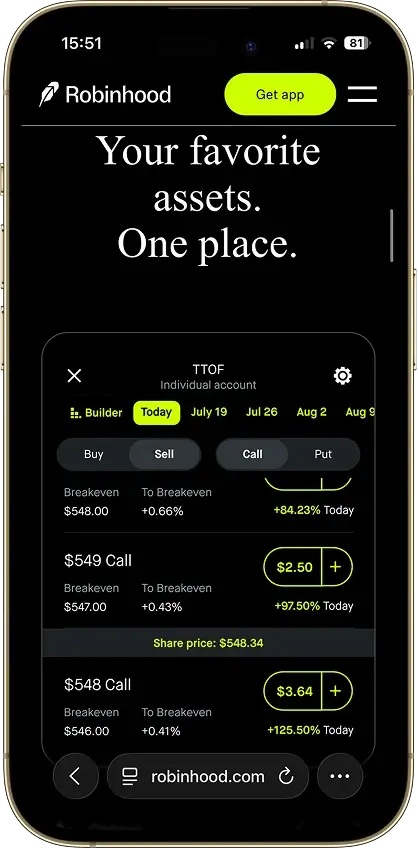
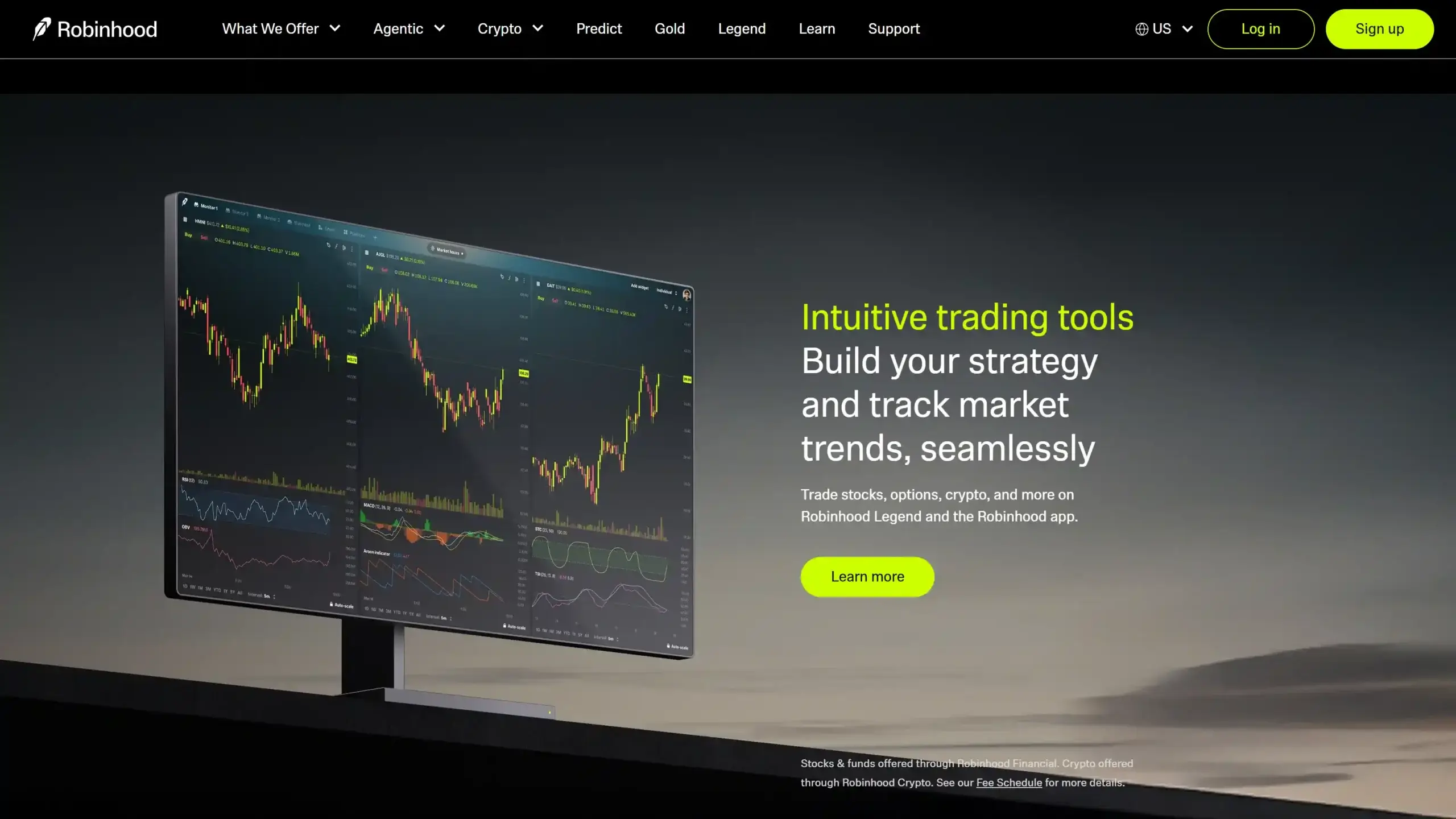
Robinhood Screenshots

Robinhood Pros and Cons

Pros

  • Commission‑free crypto on standard order routing; clear fee tiers on Smart Exchange Routing
  • Simple app with instant deposits, fractional buys, and integrated stocks, options, and cards
  • Crypto deposits and withdrawals supported for major networks; self‑custody wallet available
  • EU rollout adds tokenized stocks and crypto perps in one app
  • Public, regulated operator with strong compliance posture

Cons

  • No public proof‑of‑reserves; limited transparency vs on‑chain‑first rivals
  • Smaller coin list than peers; past delistings on regulatory news
  • Advanced crypto tools are limited; no public trading API for retail
  • Daily crypto transfer limits; some features restricted by region (e.g., NY transfers)

What Is Robinhood? Background And Oversight

Robinhood is a U.S.‑based, publicly listed fintech founded in 2013. Crypto trading launched in 2018 under Robinhood Crypto, LLC, a subsidiary of Robinhood Markets, Inc. The app integrates stocks, ETFs, options, cash cards, and cryptocurrencies in a single interface.

The company reports more than 20 million funded accounts in the U.S. (as of 2023) and is expanding abroad. In Dec. 2023 it launched commission‑free crypto in the European Union. In 2025 it completed the acquisition of Bitstamp, adding 50‑plus global licenses and an institutional exchange brand. Recent releases include tokenized U.S. stock trading for EU customers (2025) and a rollout of crypto perpetual futures in Europe (mid‑2025).

Robinhood’s model focuses on ease of use and tight routing. Standard crypto orders route to market makers without commissions. Advanced Smart Exchange Routing in Legend and pro tools adds a transparent fee tier. The platform supports on‑chain deposits and withdrawals for supported assets and offers a separate self‑custody wallet app for multi‑chain usage.

Robinhood Crypto hero banner promoting low cost crypto trading in the US

Features and Services

Robinhood’s feature set prioritizes low-friction spot investing for beginners, then layers on pro‑style tooling and selective derivatives in regions where they are approved. Compared with Coinbase and Kraken, the app supports a smaller, curated coin list and hides order‑book complexity, while Legend on desktop adds candlesticks, indicators, and multi‑chart layouts. Coinbase lists 300+ assets as of 2025, whereas Robinhood emphasizes cost and simplicity over breadth.

Trading Options

Markets offered. Robinhood supports spot crypto trading for retail in the U.S. and EU. There is no crypto margin and no crypto options. Institutional OTC access is available through Bitstamp by Robinhood in applicable regions.

Crypto deposits and withdrawals are live for supported coins. In the EU app, a separate perpetual futures venue is available.

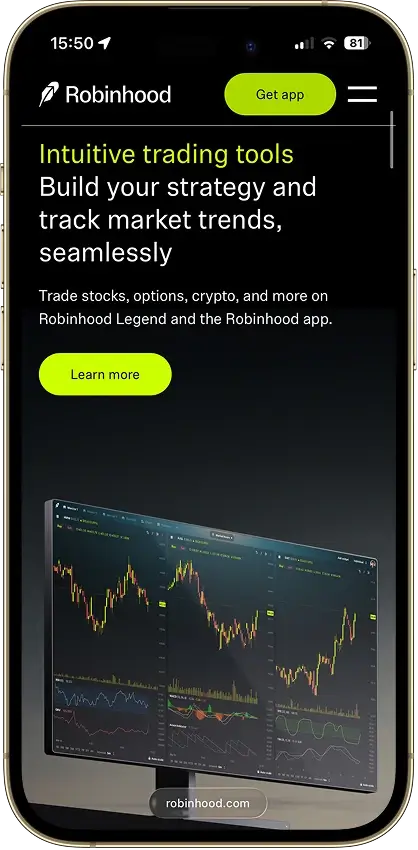
Interface modes. Trading is available on mobile apps and web. Legend on desktop adds advanced charting with multi‑chart layouts and technical indicators. Core order types for spot are market and limit. Perpetual futures add stop and take‑profit. Advanced drawing tools and multi‑chart layouts are desktop‑first; mobile omits multi‑chart.

Pairs and assets. In the U.S., spot trades are USD‑denominated buys and sells of individual assets. In the EU, spot quotes display in EUR, while perpetual futures are USD‑quoted with automatic FX conversion at entry and exit. Quote assets on spot are fiat rather than USDT/USDC pairs, aligning with Robinhood’s retail‑first design.

Liquidity Snapshot. On Jul. 30, 2025, The Block reported $28 billion in Q2 2025 Robinhood app crypto notional volume, up 32% year over year; Bitstamp contributed additional exchange volume during the period.

Brokerage And Simple‑Buy Experience

Simple‑buy flow. Retail users can buy a fixed fiat amount of crypto in a few taps on mobile or web (for example, Buy $100 of BTC). The app shows the all‑in price at confirmation, then posts the fill to your portfolio. Simple‑buy is available in supported U.S. and EU regions and uses the same funding rails.

Pricing model and limits. Simple buys use spread‑only pricing with $0 commission. At the time of doing our Robinhood review, typical all‑in spreads on BTC/ETH land around ~0.3%–0.8% under normal liquidity, and can widen during volatile periods. Minimum order size is $1/€1. Some assets may be available only in simple‑buy, while others also appear in the advanced view.

Comparison to advanced trading. The advanced interface adds charts and order controls and, where applicable, uses Smart Exchange Routing with a published percentage fee on executed notional. Simple‑buy favors speed and clarity; advanced favors more tools.

Derivatives And Leverage Controls

Robinhood futures trading hero showing desktop and mobile trading tools with advanced charts

Availability. Perpetual futures are live for eligible EU customers via a Bitstamp‑operated trading venue accessed through the Robinhood Europe app. Contracts are linear, cash‑settled, priced and quoted in USD, with P&L calculated in USD. The app handles EUR→USD conversion on entry and USD→EUR on close. Positions are marked and P&L is updated on a 15‑minute cycle.

Leverage and margin modes. European perpetuals offer up to ~3× leverage on supported markets. The product uses initial margin with variation margin as prices move. Funding rates are applied on an 8‑hour cadence to keep contract prices aligned with the index. Order tickets support market, limit, take‑profit, and stop orders. Leverage is up to about 3x across supported pairs; cross/isolated modes are not exposed in‑app.

Regions and eligibility. Perpetuals are EU‑only at this time. Access requires full KYC, an appropriateness assessment, and eligibility within the Robinhood Europe entity. Contracts are executed on a regulated MTF operated by Bitstamp; availability can vary by country. U.S. customers do not have access to crypto derivatives in the Robinhood app.

Risk disclosure. Perpetual futures are complex products with high loss potential. Losses can exceed the initial margin if a position is liquidated. Funding payments, fast price moves, and thin books can increase risk. Leverage amplifies gains and losses, and auto‑deleveraging or venue‑level protections may affect outcomes during stress.

Supported Assets

Asset coverage. Robinhood lists a curated set of 25+ cryptocurrencies in the U.S. and EU, focused on majors, selected large‑cap altcoins, and a handful of high‑demand meme tokens. Counts vary by region and over time; as of Nov. 10, 2025, EU support exceeds 25 assets, while U.S. availability remains selective. Spot trades are fiat‑quoted (USD in the U.S., EUR in the EU).

Stablecoins and networks. USDC is supported, with Ethereum and Polygon network support for transfers; availability by network and asset can differ between the brokerage app and the self‑custody Robinhood Wallet. Deposits and withdrawals follow native‑chain routing where offered; unsupported networks or formats are rejected.

Listing cadence and policy. Listings follow a conservative, compliance‑led process with periodic additions and occasional delistings tied to regulatory developments. EU and U.S. help centers maintain live supported‑assets pages and policy notes; announcements accompany major changes.

Native token impact. Robinhood has no native exchange token. There are no token‑holder fee discounts, VIP tiers, or staking requirements tied to a house coin; pricing and access are set account‑wide.

Staking And Rewards

Robinhood crypto staking hero section inviting users to earn rewards on ETH and SOL

Product scope and yields. Robinhood offers custodial staking for Ethereum (ETH) and Solana (SOL) to eligible customers. In the U.S. , staking is available with a minimum of $1; in the EU, customers can start from €1. Yields are variable and set by each network’s conditions rather than by Robinhood. As of Nov. 10, 2025, in‑app estimates typically display ~3–4% for ETH and ~6–7% for SOL; rates vary by network conditions. Estimated rates are shown in‑app before you stake.

Fees/commission and payout cadence. Robinhood charges a 25% commission on staking rewards. Rewards accrue in‑asset and post on a scheduled basis. If you leave assets staked, rewards continue to compound. There are no promotional lockups for current U.S. staking; prior EU transfer‑match promos ended in 2025. You can view pending and settled rewards, validator details, and estimated APY inside the staking panel.

Eligibility, limits, and exit. Full KYC is required. Staking availability varies by region and asset, and not all jurisdictions are supported. Unstaking follows each network’s mechanics: SOL has a short cool‑down window before funds become liquid, while ETH exits depend on the validator exit queue, so timelines can vary. Robinhood does not charge a separate early‑exit fee.

Robinhood Card

Robinhood Gold Card hero banner advertising 3 percent cash back on all purchases

Program and eligibility. The Robinhood Cash Card is a prepaid debit card on the Mastercard network, issued by Sutton Bank for U.S. customers. It is available as both virtual and physical cards and supports Apple Pay, Google Pay, and Samsung Pay. The separate Robinhood Gold Card is a Visa credit card issued by Coastal Community Bank and is available to Robinhood Gold members in the U.S.

Rewards and costs. Cash Card customers can opt into round‑ups with a weekly 10–100% bonus on the rounded amount, capped at $10 per week, and access rotating Cash Card Offers at selected merchants. The Cash Card has a posted $2.50 ATM fee . There is no foreign transaction fee for the debit program; card‑network FX applies. The Gold Card pays 3% cash back on everyday purchases and 5% on travel booked through the portal, with no annual fee for active Gold members and no foreign transaction fees.

Funding and settlement. Card transactions settle from your spending account balance. You do not spend crypto directly at the point of sale. To use crypto for purchases, you first sell to cash in the app, then spend from your balance. Exchange rates for card transactions are determined by the card network at the time of settlement.

Controls and restrictions. Both cards support in‑app freeze/unfreeze, PIN management, virtual numbers, and real‑time alerts. Some merchant categories and regions may be restricted. For deeper details on limits and fees for the Gold Card, see the dedicated card review.

Copy Trading And Bots

Availability and access. Robinhood does not offer live copy trading or a public strategy‑bot marketplace in the at the time of our Robinood review. The company has announced a social trading experience that allows users to follow verified trade posts and manually mirror ideas, with wider availability targeted after this review window. Developers can use the Robinhood Crypto API to place orders programmatically for their own accounts.

Pricing and fees. There is no platform fee for copy trading because automated copy features are not live. Any future social or copy features will disclose pricing in the app at launch. API usage for personal trading is available without a separate platform commission beyond standard crypto trading costs.

Controls and risk disclosures. Followers should review allocations and set their own position sizes, stops, and exits. Robinhood posts risk warnings that past performance is not indicative of future results. Social features are designed to tie posts to real executed trades to reduce misinformation, but users remain responsible for their own risk.

Execution and limitations. There is no automated copying at this time. Any replication of ideas is manual and subject to slippage, latency, and your account’s eligibility and limits. Crypto orders execute through Robinhood’s routing or partner venues. Leverage or derivatives cannot be copied in the U.S. app, and copied strategies are limited to the instruments you personally can access.

Launchpad, Launchpool And Airdrops

Product definitions and scope. Robinhood does not run a token Launchpad or Launchpool. There is no in‑app token sale platform and no staking‑to‑allocate program. Robinhood occasionally runs promotional rewards in the EU such as sign‑up or transfer matches and Learn and Earn modules. These are education or promo incentives, not token launches.

Eligibility and participation. Promos and Learn and Earn require a verified account, region eligibility, and completing the listed tasks. Snapshot or holding rules for token sales do not apply because Robinhood does not host token sale allocations. Offer caps and timelines vary by campaign and are shown in‑app.

Allocation and distribution mechanics. For promos, reward amounts are fixed or capped and post to the account once the stated conditions are met. There is no vesting or unlock schedule for token‑sale allocations because no Launchpad/Launchpool exists. If a network performs an airdrop to holders, support is not guaranteed and may be unsupported; see the Help Center for current policy.

Risk and disclosures. New tokens can be volatile and issuer disclosures may be limited. Participation in third‑party token launches outside Robinhood carries loss risk and potential scam exposure. Always verify the official announcements hub and Help Center before acting.

Wallet And Self‑Custody Options

Custody model. The default Robinhood Crypto account is custodial. For self‑custody, Robinhood offers Robinhood Wallet as a separate app. You can move assets between brokerage and wallet using Robinhood Connect and standard on‑chain transfers, subject to network and compliance checks.

Keys and recovery. Robinhood Wallet is self‑custody with a secret recovery phrase. You control the keys and can import or export compatible wallets. The brokerage account does not expose private keys; transfers are the bridge from custodial to self‑custody.

Networks and asset support. Robinhood Wallet supports major networks including Ethereum, Bitcoin, Solana, Dogecoin, Arbitrum, Polygon, Optimism, and Base. You can send, receive, and swap supported assets in‑wallet. In the brokerage app, deposit and withdrawal support follows native‑chain routes per asset and may differ from wallet coverage.

Wallet includes biometric lock, address book, and dapp connectivity for signing transactions. Network fees apply to on‑chain actions. Brokerage‑side withdrawals can be delayed by review holds or settlement rules; wallet‑to‑wallet transfers settle on‑chain once mined.

API and Programmatic Trading

Interfaces and capabilities. Robinhood offers a Crypto Trading API for eligible U.S. customers. The API provides REST endpoints for market data, account data, and order placement. Rate limits are enforced per endpoint and per account using rolling windows; see the Rate limits section in the developer docs. The API covers crypto only; equities trading via public API is not offered.

Authentication and permissions. Developers generate credentials in the API credentials portal after account verification and 2FA. Keys are scoped to your account. Read‑only access and trading access are supported; withdrawals and external transfers are not enabled via API. Rotate keys and restrict scopes to least privilege. Account Structure And Access Controls. Keys are tied to your primary brokerage account; sub‑accounts are not exposed. Configure IP allowlists where available and enable device‑level security in the app. All API trading follows the same compliance, risk, and position controls as in‑app trading.

Reliability and environments. The production API is live 24/7 for crypto. Scheduled maintenance windows and incident updates are posted on the status page. A public sandbox is not offered; test with small sizes and mock data where needed.

Developer resources. The canonical developer docs cover authentication, endpoints, and examples. The newsroom announcement marks general availability and ongoing updates. Community discussions and third‑party SDKs exist but are not officially supported.

Other Notable Features

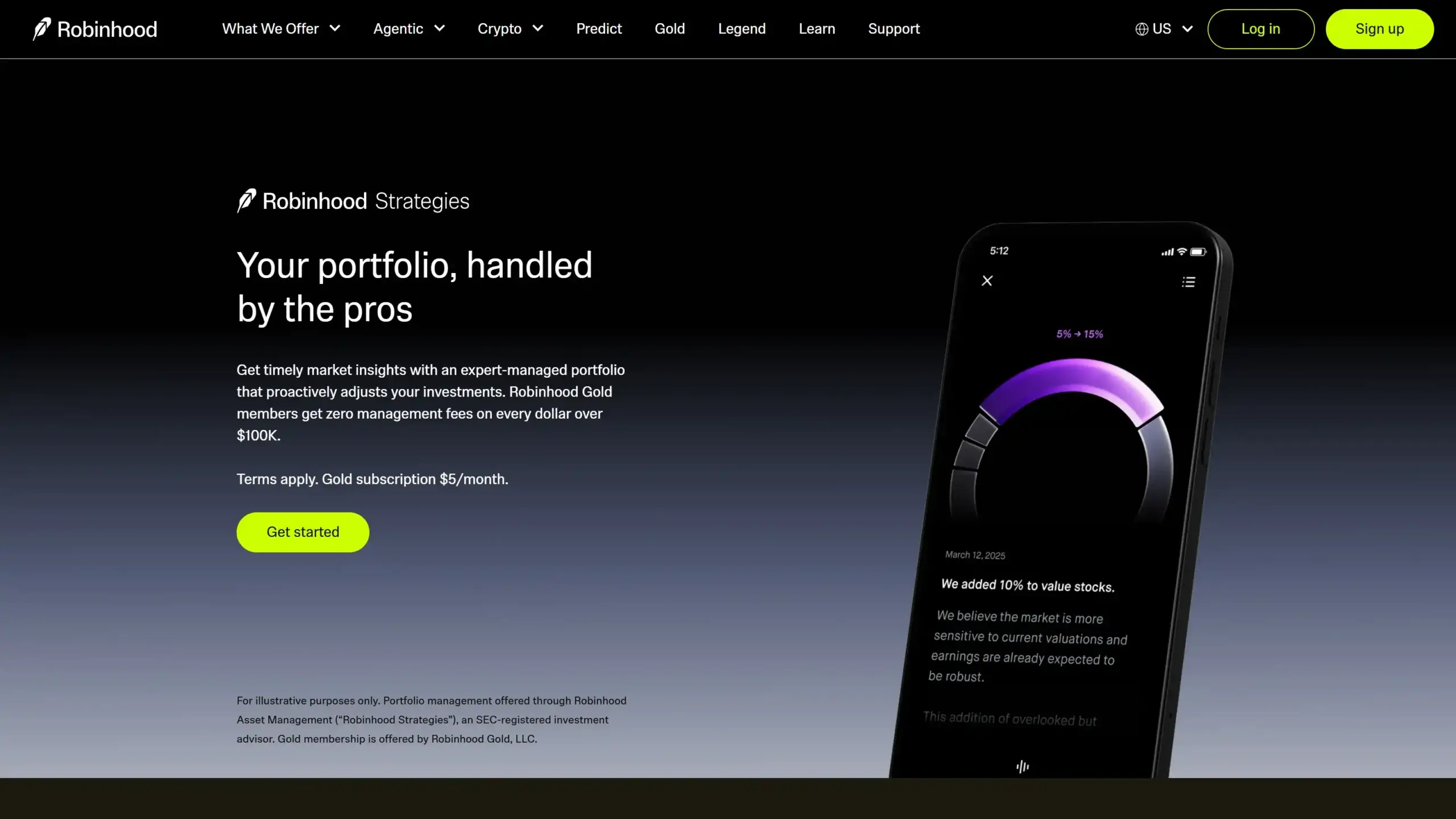
Robinhood Strategies page showing tax advantages and tax loss harvesting message Hold your gains Harvest your losses

Tax tooling and reporting. In the U.S., Robinhood provides 1099 tax forms for crypto disposals and staking rewards when thresholds apply, plus CSV exports. EU and UK customers can export transaction histories for local tax filing. The API can aid read‑only sync to third‑party tax apps. This is not tax advice.

Institutional/Prime. Institutional services are available via Bitstamp Europe S.A. and Bitstamp USA, Inc.. Offerings include OTC/RFQ block trading, institutional onboarding, and API connectivity. Eligibility requires entity KYC and jurisdictional approval. U.S. access to specific OTC services may be limited.

Web3 And NFT. Robinhood Wallet supports NFT storage and viewing on supported networks and connecting to dapps. Brokerage accounts do not interact with dapps. Always verify contracts and permissions before signing, and expect standard network fees for mints, swaps, and transfers.

Listings and Delistings Policy

Robinhood communicates asset availability through its Help Center and Newsroom. The canonical pages are Crypto availability for the U.S. and Supported crypto for the EU, with additions or removals also posted in the Newsroom → Crypto feed and surfaced in‑app.

Sources and announcement channels.

  • U.S.: Crypto availability — supported assets list (Help Center).
  • EU: Supported crypto and policy notes (Help Center).
  • Company announcements: Newsroom → Crypto category and in‑app notices.
  • Social: @RobinhoodApp on X for broadcast updates.

Robinhood states that it regularly reviews the crypto it offers. Listings and relistings are evaluated against regulatory developments, custody and network support, and platform risk controls. Formal criteria are not enumerated beyond these disclosures; the Help Center and Newsroom are treated as the source of truth.

Delisting triggers and timelines. When support ends for a token, Robinhood posts an effective date and time, and explains user impact. In the EU, Help Center notices have instructed customers that trading would suspend, positions could be closed only, and that holdings should be sold or withdrawn before the deadline (example below). U.S. investor disclosures note past delistings following a platform review.

Regional/entity variance. Asset availability and timelines can differ by entity (U.S. vs EU). Customers should confirm on the regional Help Center pages, since a token may remain listed in one region and not the other.

Recent change.

May 2025 (EU): Trading support for EOS ended on May 29, 2025 at 20:00 CEST; positions were close‑only until the deadline (EU Help Center notice).

Jun. 2023 (U.S.): U.S. filings state Robinhood ceased support for ADA, MATIC, and SOL after a platform review (Investor disclosures).

Fees and Pricing

Robinhood’s crypto pricing has two tracks. In the U.S. , spot orders route by default to market makers with $0 commission; advanced tools (Legend, ladder, and advanced charts) use Smart Exchange Routing with a volume‑tiered percentage fee on executed notional.

In the EU, spot crypto trades carry a 0.50% trading fee on the executed euro amount, EURC buy and sell are fee‑free, and perpetual futures use a maker/taker schedule. All crypto transfers incur network fees only.

Simple buy or sellU.S.: $0 commission via market‑maker routing; price includes spread shown at order review.
EU: 0.50% on executed EUR amount; EURC spot is fee‑free.
Advanced maker or takerU.S.: Not applicable to spot (no maker/taker).
EU perps: 0.02% maker (Robinhood) + 0.00% venue; 0.02% taker (Robinhood) + 0.02% venue; assessed on USD notional.
Card deposit$0 platform fee for deposits; debit card or bank top‑ups supported; your bank or provider may charge.
Bank transfer$0 via ACH/SEPA for deposits; inbound wires generally $0 from Robinhood’s side; your bank may charge.
Crypto withdrawalNetwork‑only fee; Robinhood charges no platform withdrawal fee.

Advanced fee tiers (U.S.). Orders executed with Smart Exchange Routing are charged on executed notional by 30‑day eligible volume: 0.85% under $50,000; 0.25% from $50,000 up to $5,000,000; 0.10% at $5,000,000+. A 0.02% portion of this fee is passed through to the executing partner exchange and is included in the rate. Only orders executed with Smart Exchange Routing count toward the 30‑day volume.

Simple buy/sell model. For U.S. market‑maker routing, Robinhood shows the all‑in price at confirmation with $0 commission. In the EU, spot crypto trades carry a 0.50% trading fee on executed EUR; EURC spot trades are fee‑free.

Simple‑buy spreads. On BTC and ETH in normal conditions, simple‑buy orders typically land around ~0.3%–0.8% above mid‑market. Spreads widen in volatile periods. The final rate is shown at confirmation in the order flow.

Funding and cash out. Deposits by ACH/SEPA have no platform fee. Instant withdrawals to a debit card or bank post in minutes and incur 1.75% (min $1, max $150) per transaction; standard ACH withdrawals are $0 and arrive in about 1–3 business days.

Crypto transfers. Robinhood charges no platform fee for crypto withdrawals or deposits; on‑chain network fees apply and vary by chain and congestion.

Staking commission. Robinhood takes a commission on staking rewards: 25% in the U.S. and 15% in the EU. Yields are variable and set by network conditions.

Lowering costs. Use market‑maker routing for zero‑commission U.S. spot if you do not need advanced tools. If you use Smart Exchange Routing, increasing 30‑day volume can drop your tier. Prefer standard bank transfers over instant withdrawals to avoid the 1.75% fee. For withdrawals, choose lower‑fee networks where supported. In the EU, consider EURC spot for fee‑free trades where it fits your plan.

VIP Tiers And Fee Discounts Table

U.S. — Smart Exchange Routing fee tiers (spot orders executed with SER)

Tier30‑day volumeMakerTakerNotes on discounts or exclusions
Base<$50,0000.85% of executed notional per order; 0.02% included venue pass‑through; spot only; orders must execute with SER to count toward volume.
Mid$50,000–$5,000,0000.25% of executed notional per order; 0.02% included venue pass‑through.
Top≥$5,000,0000.10% of executed notional per order; 0.02% included venue pass‑through.

EU — Perpetual futures default maker/taker

Tier30‑day volumeMakerTakerNotes on discounts or exclusions
Default0.02% (RH) + 0.00% venue0.02% (RH) + 0.02% venueAssessed on USD notional; no published volume discounts or maker rebates.

There is no native‑token discount. Robinhood Gold does not change crypto SER rates or EU perp fees. Discounts do not apply to simple buy. Official schedules control if rates change.

Payments and Fiat Support

Robinhood supports USD as the base currency in the U.S. app and EUR in the EU app. U.S. funding uses ACH, instant bank transfers, debit card rails, and wires. The EU app supports SEPA bank transfers for deposits and withdrawals.

The UK app uses Faster Payments for brokerage accounts; crypto trading is not generally available to UK retail. Instant rails are processed by licensed payment providers and carry a posted fee, while bank transfers are free on Robinhood’s side. Limits apply per transaction and per 24‑hour window and may reset at 7:00 pm ET.

Payment methodMinimum depositMinimum withdrawalMaximum withdrawal
ACH (US)$50,000/day via spending limits page
Instant withdrawal (US)Varies by account; resets daily
Wire (US)Outgoing wires supported; fee applies
SEPA (EU)Varies by account; see in‑app limits
Faster Payments (UK)Varies by account; see in‑app limits

Methods and KYC. U.S. customers fund and withdraw via ACH, instant bank transfer to a debit or bank, and bank wires. The EU app supports SEPA deposits and withdrawals. The UK app supports Faster Payments for brokerage; crypto trading availability remains limited. All methods require a verified account in your name.

Limits. ACH withdrawals support up to $50,000 per day per the Spending limits page. Instant withdrawals have account‑specific daily caps that reset at 7:00 pm ET; the app displays your current limit before submission. EU SEPA and UK Faster Payments limits vary by user history and verification. Units are per 24‑hour window unless otherwise stated.

Settlement times. ACH withdrawals typically arrive in 1–3 business days. Instant withdrawals arrive in minutes and carry 1.75% with a $1 minimum and $150 maximum per transaction. SEPA deposits and withdrawals typically post same day or next business day depending on bank cut‑offs. Faster Payments are usually near‑instant.

Currency matching and conversion. U.S. accounts fund and trade in USD. EU accounts fund in EUR and trade spot in EUR. Perpetual futures in the EU are USD‑quoted, and the app performs EUR↔USD conversion on entry and exit. Card transactions settle at card‑network FX rates when relevant.

Address and beneficiary management. Bank payouts require a linked bank account in your name. Changing or adding beneficiaries can trigger verification and review. Newly deposited funds may be held until settlement before withdrawal. For crypto, deposit and withdrawal network support must match the asset’s allowed routes.

On‑/off‑ramp partners. Instant rails are processed through licensed payment providers; Robinhood lists fees and processing windows in the Help Center. For EU derivatives and some exchange operations, execution occurs at a Bitstamp‑operated venue, while fiat rails remain under Robinhood Europe.

Fiat Rails By Region

RegionACHSEPAFaster PaymentsWireCardsPayPalNotes
USYesYesYesNoACH free 1–3 business days; instant withdrawals minutes (1.75% fee); outgoing wire $25
EU or EEAYesNoSEPA deposits and withdrawals; spot in EUR; limits vary by account
UKYesNoNoFaster Payments for brokerage; crypto trading not generally available; no wires
RoWVariesVariesAvailability depends on license and residency; check in‑app

Withdrawal Networks And Fees Matrix

Asset or networkFee modelTypical confirmation windowNotes
BTC on‑chainNetwork‑onlyAbout 10–60 minutesPriority fee selection affects timing
ETH ERC‑20Network‑onlyAbout 5–15 minutesGas varies with network load
USDT TRC‑20Network‑onlyAbout 2–10 minutesOften lower network fees
USDT ERC‑20Network‑onlyAbout 5–15 minutesHigher gas during peaks

Choose lower‑fee networks where supported and compatible with your destination wallet. Robinhood does not add a platform withdrawal fee for crypto.

Is Robinhood Safe?

Robinhood crypto security features page highlighting cold storage, insurance and 24 by 7 support

Robinhood is custodial and holds most customer crypto in cold storage with 2FA and transaction reviews. Crypto balances are not FDIC or SIPC insured and there is no published proof of reserves.

Robinhood operates a regulated, custodial crypto service that holds most customer assets in cold storage, offers 2FA and transaction reviews, and carries crime‑insurance for a portion of assets. It does not publish a proof‑of‑reserves. Crypto balances are not FDIC or SIPC insured. The firm disclosed a 2021 data incident and paid SEC and FINRA penalties in 2025 after control and recordkeeping failures. Sources: Help Center and Newsroom, SEC Jan. 13, 2025 release, FINRA Mar. 7, 2025 notice, and the public status site.

Robinhood states that it holds the majority of customer crypto in cold storage (percentage undisclosed) with operational security controls around key access and coin movements. Users can enable two‑factor authentication and manage trusted devices and device approvals in the app.

The brokerage app supports on‑chain deposits and withdrawals for supported networks with transaction reviews and holds when risk checks flag activity. Address whitelisting is not disclosed in the brokerage app. Bitstamp by Robinhood supports address whitelisting on its exchange venue.

Custody and insurance. Crypto custody is provided by Robinhood Crypto entities. The company states it does not lend customer crypto. Crypto holdings are not protected by SIPC or FDIC. Crime insurance covers a portion of assets against theft in Robinhood’s storage systems (coverage share undisclosed). Fiat cash held in spending or brokerage sweep programs may be placed at partner banks and can be FDIC‑insured up to program limits. Securities in brokerage accounts are covered by SIPC up to statutory limits. Coverage details live in the Help Center.

Proof of reserves or audits. Robinhood does not publish a proof‑of‑reserves attestation. There is no Merkle‑tree user inclusion check and no third‑party reserve report available as of the capture date. The firm publishes security and custody disclosures in Help Center articles and company posts.

Incidents and remediation:

  • Jan. 13, 2025 — The SEC announced $45 million in combined penalties against two Robinhood broker‑dealer units over multiple controls and recordkeeping failures. Robinhood accepted the order and stated it had addressed the issues.
  • Mar. 7, 2025FINRA announced a settlement totaling $29.75 million in fines and restitution for certain supervision and disclosure lapses. Robinhood said it implemented remedial measures.
  • Nov. 3, 2021Data security incident resulting from social engineering of a support employee. Reported exposure: about 5 million email addresses and 2 million full names, with ~310 customers’ additional PII. Robinhood reported no SSNs or bank details exposed and no customer financial loss. This remains a material historical event that informs current controls.

Status Page And Incident History

Live service updates are posted on status.robinhood.com and via @AskRobinhood. The status site notes the page is retired for real‑time updates and links to Twitter for live notices. The history view lists recent days with no incidents reported. For older entries and maintenance windows, use the Incident History archive and the Help Center for post‑mortems.

UX And Customer Support — KYC And Geographic Access

Robinhood presents a simple, mobile‑first experience with fast navigation, clean asset pages, and integrated funding. Web access adds advanced charting and desktop layouts. Support is offered in‑app via live chat and phone callback, with a searchable Help Center and a public status page. English is the primary language across regions.

UI And Navigation

Layout and workflows. The app surfaces portfolio, search, asset pages, trading, transfers, and settings from clear top‑level menus. Asset pages show price, chart, news, and a Trade button. Funding and withdrawals live under Transfers. Legend on web adds a workspace with multi‑panel charts and a prominent order ticket.

Performance and stability. The mobile app and web respond quickly under normal market conditions and reconnect automatically after brief network drops. During volatility, order submission can queue while risk checks run. The public status page and @AskRobinhood posts carry incident notices.

Accessibility and localization. The app supports dark mode, large text settings, and screen‑reader labels for core actions. Web and mobile share most layouts with minor differences in chart tools. English is primary. Currencies and time formats localize by region.

Mobile App

Platforms and availability. The mobile app is available on iOS and Android in the U.S., EU, and UK stores, subject to local eligibility. The listing name appears as Robinhood with regional subtitles indicating stocks and crypto. Availability and features vary by jurisdiction.

Feature parity. Mobile supports account onboarding, spot trading, alerts, deposits, withdrawals, and staking where available. EU customers access perpetuals in‑app. Advanced drawing tools and multi‑chart layouts are web‑first in Legend. Core order types are present on mobile; some pro tools remain desktop only.

Performance and stability. Quote updates are real‑time and order tickets remain responsive on typical LTE connections. Background refresh follows OS limits. The app prompts to retry during poor connectivity and resumes once a network is available.

Security and privacy. Login supports biometrics and 2FA (app‑based codes or SMS). New devices require approval. Session and device lists are manageable in settings. Permissions cover notifications, camera for ID capture, and storage for statement exports. Privacy controls live in Settings → Privacy.

Notifications and alerts. Users can opt in to price alerts, order fills, transfer statuses, staking events, and service notices. Alerts are server‑side and deliver even when the app is closed. Manage alerts per asset and in global settings.

Accessibility and localization. Mobile follows the same accommodations as web. English UI is primary. Currency display aligns with region. Differences from web are limited to advanced chart layouts.

Registration

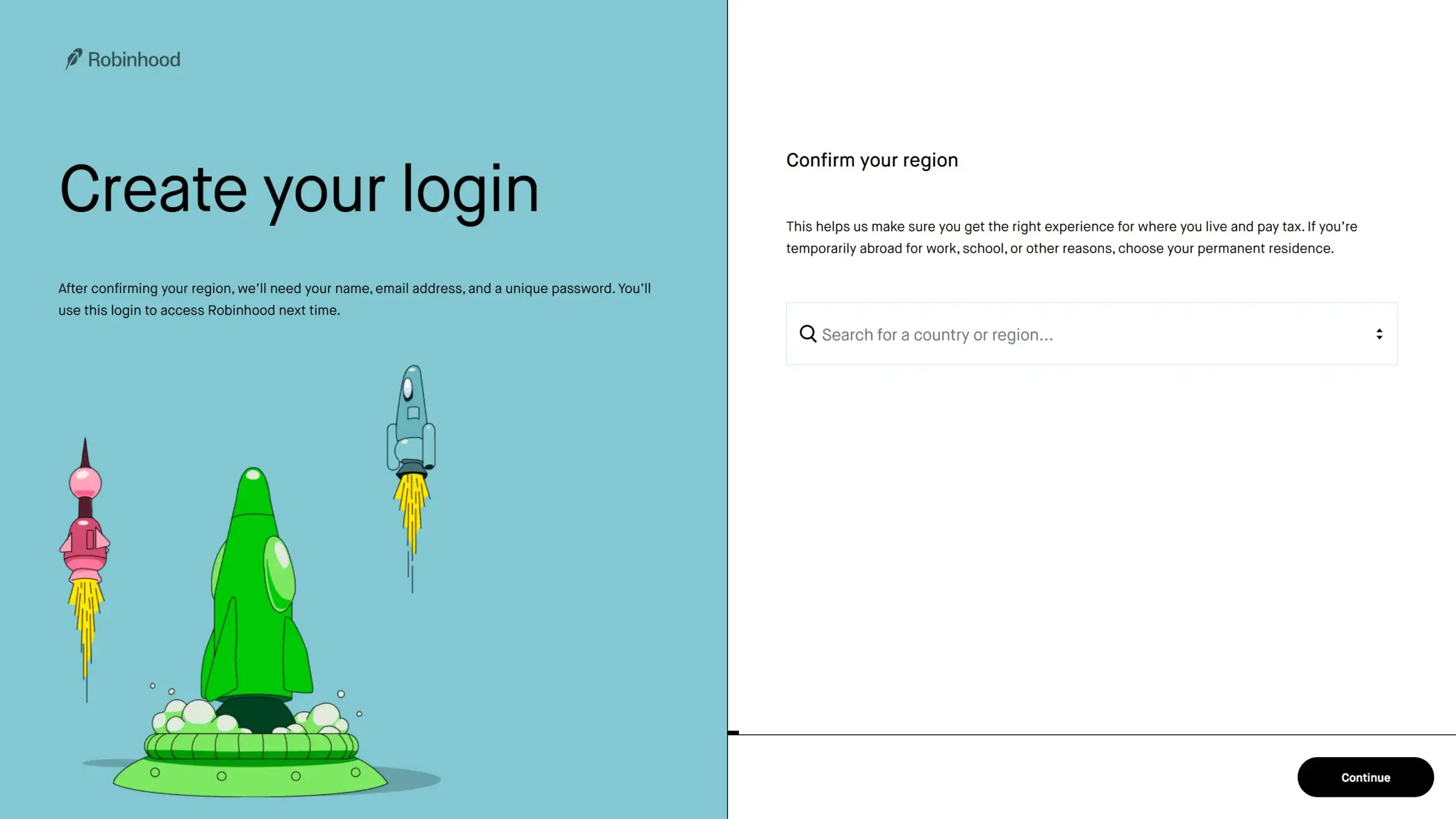
Robinhood desktop login page with email and password fields for account access

Account creation flow. Sign up with email and phone, then complete identity verification. U.S. customers provide SSN. EU/UK customers provide a government ID and basic profile details. Most accounts are approved in minutes. Manual reviews can take longer.

Security setup. The app prompts users to enable 2FA after verification. Codes can be delivered via an authenticator app or SMS. Recovery methods and device approvals are available in settings. Single‑sign‑on options are not required.

App availability and coverage. The app is listed in major regional stores. Features are gated by residency and entity. Unsupported jurisdictions cannot complete onboarding.

KYC And Geographic Access

Policy and triggers by level. Full KYC is required to trade, deposit, withdraw, and use staking. Derivatives access in the EU also requires an appropriateness assessment. Re‑verification can occur after profile changes, unusual funding patterns, large withdrawals, or when documents expire.

Accepted documents and typical timelines. U.S.: driver’s license, state ID, or passport plus SSN. EU/UK: passport or national ID, and proof of address where required. A liveness or selfie check may be requested. Automated checks often complete in minutes. Manual reviews can take hours to a few days during peak periods.

Availability and notable restrictions. U.S.: spot crypto and transfers are widely available, with state‑level restrictions on certain features. EU: spot crypto in EUR and perpetual futures for eligible customers. UK: brokerage and cash features are live; crypto availability is limited and may require additional approvals. Sanctioned countries are not supported.

Official restricted list. Availability can change without notice. Check the Help Center → Crypto availability for U.S. coverage and EU Supported crypto for Europe before onboarding.

Verification Levels And Withdrawal Limits

LevelRequired documentsFiat deposit limitFiat withdrawal limitCrypto withdrawal limitTypical review time
Verified accountGovernment ID, selfie or liveness; SSN (U.S.) or national ID (EU/UK)Instant deposit limits are account‑specific; higher limits with historyACH up to $50,000 per 24h; instant withdrawal caps vary and reset dailyUp to $5,000 per 24h and up to 10 withdrawals; higher by reviewMinutes for auto‑approval; hours–days if manual
Higher limits by reviewAdditional documents and source‑of‑funds as requestedHigher limits by approvalHigher limits by approvalHigher limits by approvalCase‑by‑case

Geo Access And Entity Mapping

Region or countryOperating entityWhat is availableNotes
United StatesRobinhood Crypto, LLCSpot crypto, staking, crypto transfers, API, Cash CardNo crypto derivatives; certain state‑level feature limits (e.g., transfers in NY)
European Union / EEARobinhood Europe (retail); Bitstamp Europe S.A. (perps venue)Spot crypto in EUR, staking, perpetual futures for eligible usersPerps quoted in USD with EUR conversion; no card
United KingdomRobinhood U.K. Ltd.Brokerage and cash features; limited cryptoFaster Payments for fiat; crypto availability subject to approvals
Rest of worldCoverage limited to licensed regions; check Help Center

Customer Support

Channels and availability. Support is available via in‑app live chat, phone callback, and email, backed by a searchable Help Center. Chat is available 24/7. Phone hours vary by region. Use in‑app contact to authenticate before sharing account details.

Responsiveness and SLAs. First responses on chat typically arrive within minutes; no formal SLA is published. Resolution times vary by issue type and workload. Urgent issues such as account lockouts or fraud receive priority routing. No formal public SLA is posted.

Authentication and safety. Support will verify identity through in‑app checks. Representatives do not ask for 2FA codes or passwords. Only use links from the app or the official site. Verify addresses before sending funds.

Self‑serve resources. The Help Center covers funding, transfers, limits, fees, staking, and security. The status site and @AskRobinhood handle incident notices and maintenance windows. Check status before opening tickets during outages.

Escalation and account holds. For frozen withdrawals, KYC reviews, or suspected compromise, use in‑app chat to request an escalation. Be prepared to submit updated ID, proof of address, or source‑of‑funds. Reviews can take hours to days depending on complexity.

Who Is Robinhood Best For

Robinhood suits beginners and casual buyers who want a clean app, $0‑commission U.S. spot orders, and straightforward funding with ACH or SEPA. It also fits EU users who want selective perpetual futures with low headline leverage and EUR‑based spot trades. Those who value simple fees and fast cash‑out options will appreciate the network‑only crypto withdrawals and clear instant withdrawal pricing.

However, pro traders chasing deepest order books, hundreds of assets, or high leverage should consider venues with broader pairs and maker/taker depth. Privacy‑focused users who require a published proof of reserves or who reside in restricted regions may prefer alternatives.

Final Verdict

Robinhood is a beginner‑friendly on‑ramp with a curated coin list and $0‑commission U.S. spot orders. It works best for new or casual investors who want a clean mobile app, network‑only crypto withdrawals, and clear instant withdrawal pricing. EU users also gain selective perpetual futures alongside EUR‑quoted spot. The trade‑offs are real: a smaller coin lineup, no published proof of reserves, limited pro‑level tools, and derivatives limited to the EU. If you value simplicity, integrated funding, and transparent costs, Robinhood fits. If you need deeper books, broader assets, or proof‑of‑reserves transparency, consider a more advanced venue.

Overall Score

7.5

Best For

Best for beginners and low-volume buyers in the U.S. and EU who want a clean app, $0-commission U.S. spot, and network-fee-only withdrawals. Not ideal for power traders, and EU perps are limited (~3×) while UK retail crypto is largely unavailable.

PROS

  • Commission‑free crypto on standard order routing; clear fee tiers on Smart Exchange Routing
  • Simple app with instant deposits, fractional buys, and integrated stocks, options, and cards
  • Crypto deposits and withdrawals supported for major networks; self‑custody wallet available
  • EU rollout adds tokenized stocks and crypto perps in one app
  • Public, regulated operator with strong compliance posture

CONS

  • No public proof‑of‑reserves; limited transparency vs on‑chain‑first rivals
  • Smaller coin list than peers; past delistings on regulatory news
  • Advanced crypto tools are limited; no public trading API for retail
  • Daily crypto transfer limits; some features restricted by region (e.g., NY transfers)
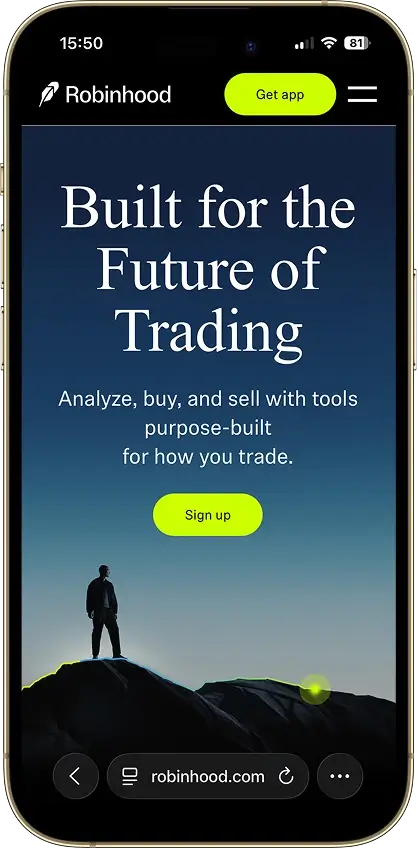
Robinhood mobile hero screen reading Built for the Future of Trading with sign up button
Affiliate Disclosure

Disclaimer: CryptoSlate may receive a commission when you click links on our site and make a purchase or complete an action with a third party. This does not influence our editorial independence, reviews, or ratings, and we always aim to provide accurate, transparent information to our readers.

FAQ

Is Robinhood safe?

Robinhood is custodial and holds most customer crypto in cold storage with 2FA and transaction reviews. Crypto balances are not FDIC or SIPC insured and there is no published proof of reserves.

What are Robinhood fees?

U.S. spot orders route commission‑free by default. Advanced orders that use Smart Exchange Routing charge 0.85%–0.10% by 30‑day volume. In the EU, spot is 0.50% and perpetual futures are maker 0.02% (RH)+0.00% venue and taker 0.02% (RH)+0.02% venue. Crypto withdrawals are network‑fee only.

Does Robinhood require KYC?

Yes. A verified account is required to deposit, trade, withdraw, stake, or access EU derivatives. Identity checks can include government ID, liveness, and proof of address by region.

Which coins does Robinhood support?

Coverage is curated rather than exhaustive, with 25+ assets across regions and support for USDC on select networks. Availability differs by entity and can change. Fiat‑quoted spot is standard in USD or EUR.

How long do withdrawals take?

ACH withdrawals typically arrive in one to three business days. Instant withdrawals to a debit or bank post in minutes with a posted fee and cap. Crypto transfers depend on network congestion, commonly minutes to under an hour. Limits apply per 24‑hour window.

Is Robinhood available in my country?

U.S. customers can access spot crypto with some state‑level restrictions. EU customers have EUR‑quoted spot and selective perpetual futures. UK brokerage and cash features are live while crypto access is limited. Sanctioned countries are not supported.

Does Robinhood offer staking or rewards?

Yes. Eligible customers can stake ETH and SOL with variable network yields and a platform commission. Availability and exit timelines depend on region and network rules. Rewards accrue in‑asset on a schedule and show in the staking panel.

How can I lower fees on Robinhood?

Use standard U.S. routing for $0‑commission spot when you do not need advanced tools. If you trade with Smart Exchange Routing, higher 30‑day volume reduces the rate. Prefer bank transfers over instant withdrawals, and choose lower‑fee networks for crypto when supported.