

What Is a Prediction Market? Examples, Legality, and Reliability
We believe in full transparency with our readers. Some of our content includes affiliate links, and we may earn a commission through these partnerships. However, this potential compensation never influences our analysis, opinions, or reviews. Our editorial content is created independently of our marketing partnerships, and our ratings are based solely on our established evaluation criteria. Read More





A prediction market is a platform that lets users bet on the outcome of future events. It serves as an exchange for contracts whose payoffs depend on event outcomes across politics, sports, or asset performance.
In this article, we’ll explain what a prediction market is and how it works. We’ll also discuss a few major platforms making waves in the crypto market, including Polymarket. After reading this, you’ll get a grasp of how prediction markets operate under the hood and which platform type can meet your specific needs.
- In This Article
- In This Article
- Show Full Guide
Prediction Markets Explained
Prediction markets are digital venues for trading contracts that pay out to investors who accurately predict the outcome of a certain event. The price of a contract fluctuates between $0 and $1, reflecting the probability of an event and the collective perception of the most likely outcome.
Here, a lower price suggests lower odds, and vice versa. After the outcome is verified, winning contracts pay out while losing contracts expire with a total loss.
Prediction market contracts are similar to futures contracts or binary options, which are derivatives tied to the performance of underlying assets. However, instead of tracking price movements, they settle based on whether a specific event happens or not.
For example, “Will Donald Trump win the election?” was one of the most traded markets prior to the 2024 U.S. election, boosting the adoption of decentralized prediction platforms like Polymarket.
Still, don’t treat these contracts as “polls,” where people say what they believe without risking anything on the outcome. In fact, prediction markets are often more precise than most surveys because participants have their skin in the game. For instance, Polymarket traders accurately anticipated Donald Trump’s victory and the results of the New York elections.
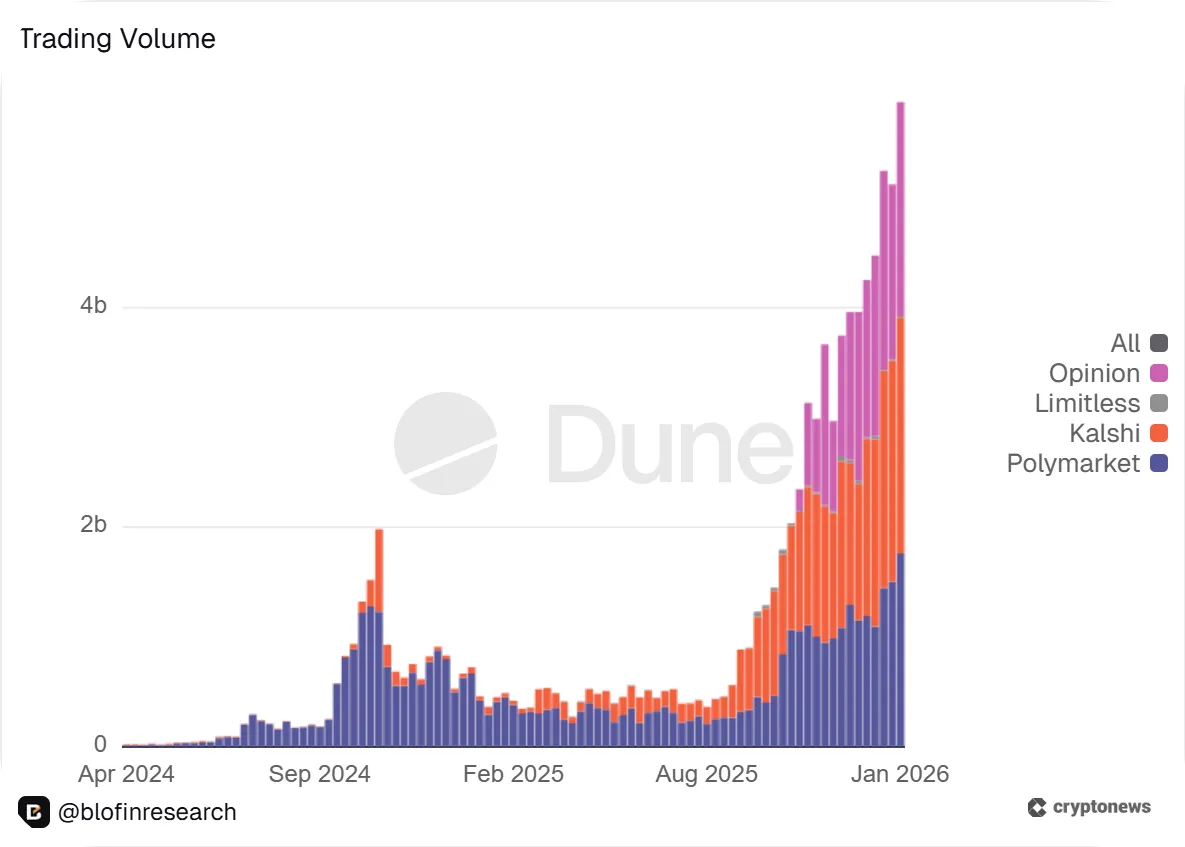
At the beginning of 2026, prediction platforms were handling record trading volumes, with BNB Chain-based Opinion quickly growing into one of the largest prediction platforms, alongside Polymarket and Kalshi.
Glossary of Key Terms
Before going any further, let’s briefly define the key terms that you’ll often see throughout this article, which will help you understand how prediction markets work and how prices are formed.
Let’s start by defining a contract, outcome, and implied probability, which are specific to most prediction markets:
- Contract: A financial instrument or share tied to a specific event result. Usually, the contract is priced between $0 and $1.
- Outcome: The event result that determines if a contract pays out or not.
- Implied probability: The chance of an outcome that derives from a contract price. For example, if the contract is priced at $0.70, it implies a 70% probability that the event will occur.
These contracts behave like financial instruments, so we should define bid/ask, spread, slippage, and liquidity, most of which are already familiar to crypto investors:
- Bid/Ask: Bid represents the highest price buyers are willing to pay, and Ask represents the lowest price sellers are willing to accept.
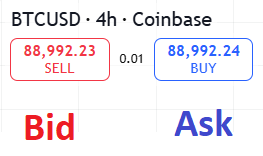
- Spread: The difference between the bid and the ask. Smaller spreads usually mean healthier markets and higher liquidity.
- Liquidity: This shows how easily you can find a counterpart to trade an asset without affecting its price. It reflects the trading activity and health of a market.
- Slippage: When your trade executes at a worse price than expected, due to low liquidity or high volatility.
Prediction markets structure their trading activity on a blockchain or a centralized database. Therefore, we should define what a market maker, order book, and AMM are:
- Market maker: An entity or algorithm that places buy and sell offers on the other side of traders, providing liquidity and smooth execution.
- Order book: A unified list of all buy and sell orders at different prices. It is usually associated with centralized platforms and helps match buyers and sellers.
- AMM (Automated Market Maker): A decentralized system that, instead of matching buyers and sellers, utilizes a smart contract-based pool for liquidity and sets prices using a formula.
Speaking of contract execution, you should learn about settlement, resolution, and oracle:
- Settlement: The payout process after the event ends with a result. Winning shares settle at $1 and losing ones settle at $0.
- Resolution: The official and widely accepted ruling of which outcome is true for payouts.
- Oracle: Specific to blockchain-based markets, it is a data source that feeds real-world results and outcomes into a decentralized market.
Last but not least, some strategies involve arbitrage and hedging, where:
- Arbitrage is about profiting from price differences between platforms for the same event.
- Hedging uses prediction markets to offset risk in existing portfolios or as protection against political and regulatory outcomes.
How Prediction Markets Work (Step-by-Step)
Now let’s see how prediction markets work. On most prediction platforms, you’ll encounter this flow: the platform lists an event (topics differ), traders buy and sell contracts based on what they believe will happen, and the market settles once the outcome becomes verifiable.
For this guide, we’ll use Polymarket since it remains the largest decentralized prediction platform.
The step-by-step process goes as follows:
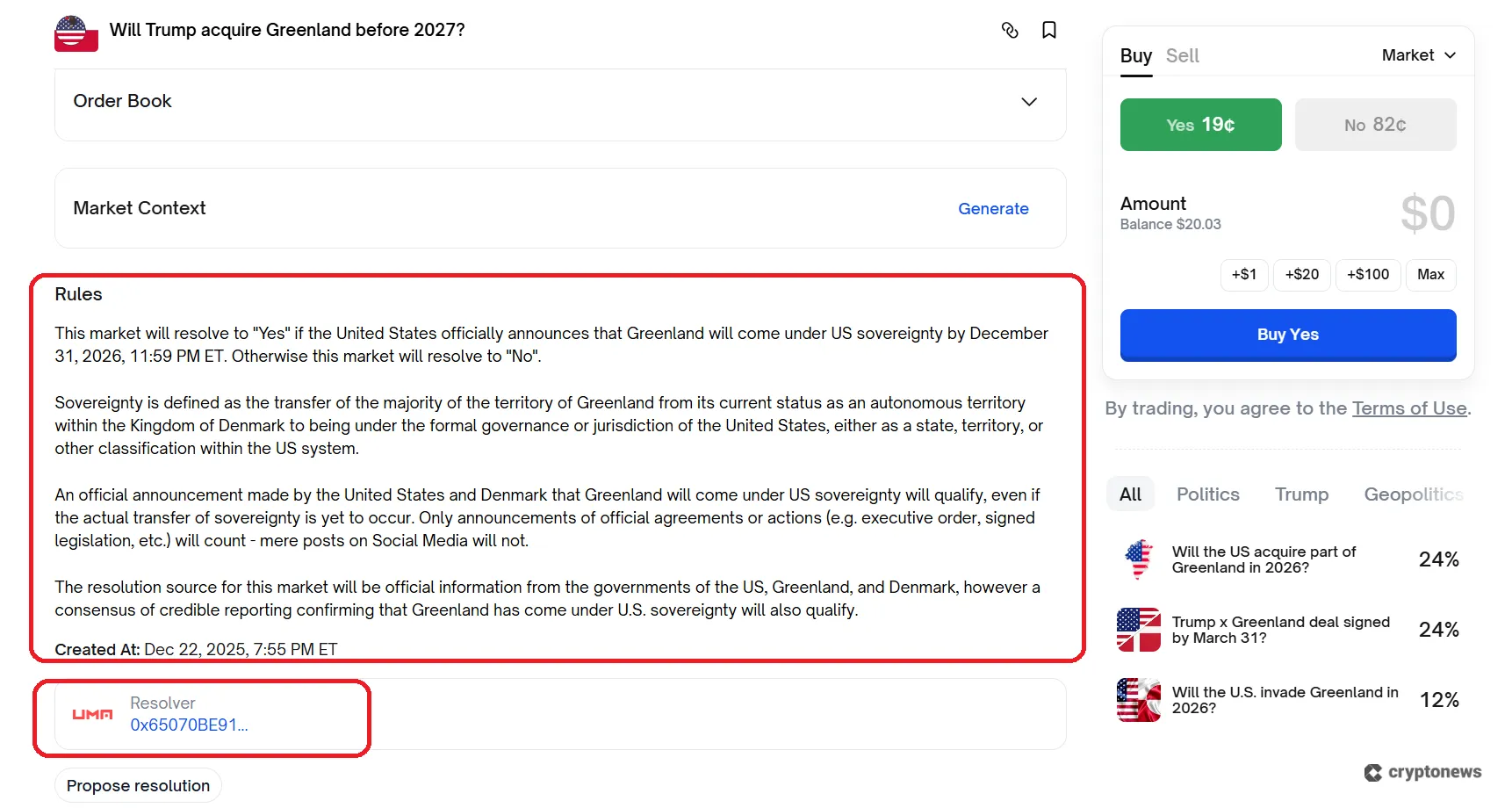
1) An event is listed with clear rules, e.g., “Will Trump acquire Greenland by 2027?”
Wording here is the most important because it defines the contract rules. Each event includes multiple details that need careful attention, including the exact question, deadline, and the resolution source.
2) Outcomes are defined: Each event is built around Yes/No outcomes. Some events consist of several binary markets, e.g., Polymarket price predictions like “Bitcoin price on February 4, 2026?” display multiple price targets.
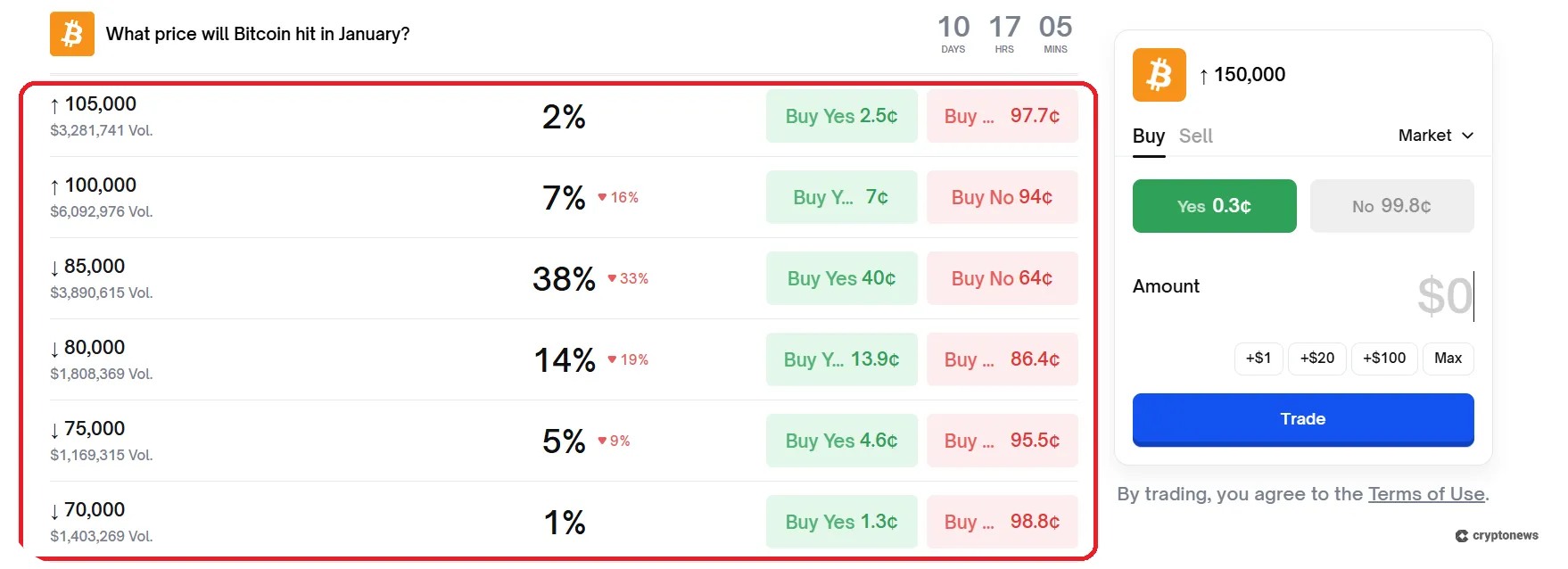
3) Contracts trade: Once live, users can buy and sell Yes and No shares for each outcome. If you believe that an outcome is likely to happen, you buy a Yes share. If you believe it won’t happen, you buy a No share.

Some markets may show three possible outcomes, such as Team A, Draw, and Team B in a sports match.
Polymarket allows users to buy shares with USDC on Base, so they should set up a Web3 wallet before trading.
4) Prices move in real time with new information and trading demand, reflecting the participants’ implied probability of the event. The price of “Yes” shares goes up when demand rises (people believe an outcome is more likely to happen), and it drops when confidence fades, e.g., the public learns of contrary information. As a rule, the prices of Yes and No shares add up to $1.
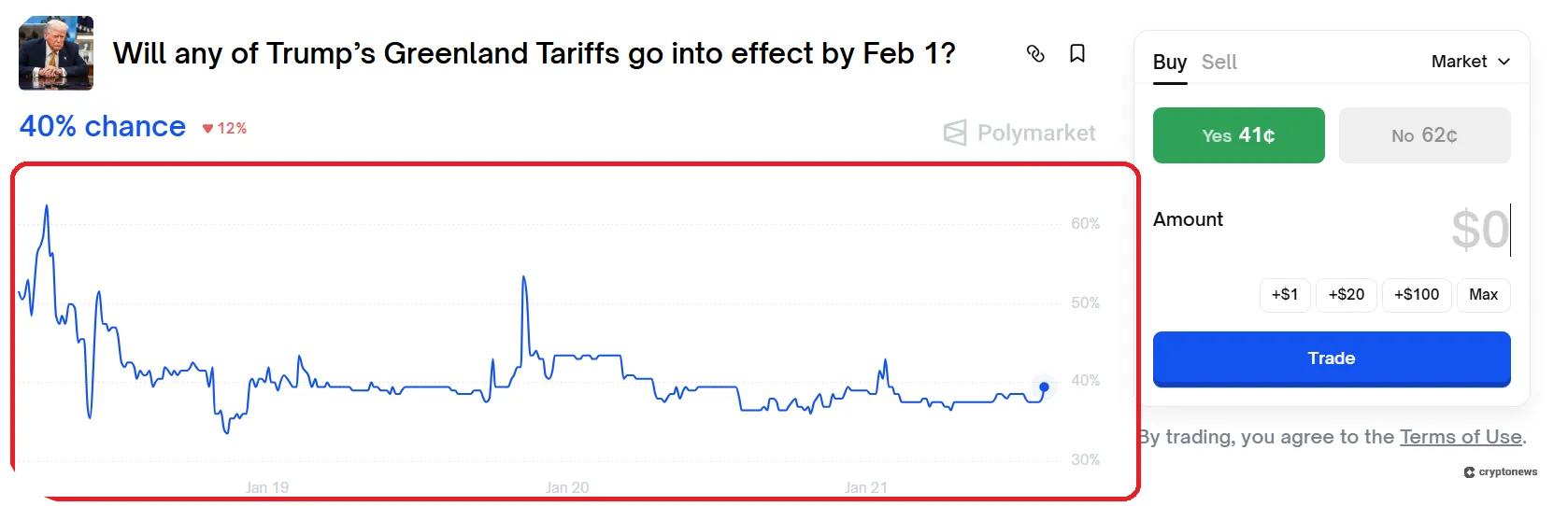
5) Resolution happens after the event concludes or the deadline passes. The platform uses a pre-defined source, such as official government election results or a recognized sports league score report. Decentralized prediction markets like Polymarket use an oracle that feeds the real-world result on-chain (popular oracle systems include Chainlink and UMA).
6) Settlement and payout reward users who predicted an event accurately. Winning outcomes pay $1 per share, and losing outcomes settle to $0. For example, if you bought winning “Yes” shares at $0.40 and they settle at $1.00, your profit is $0.60 per share, or 150%.
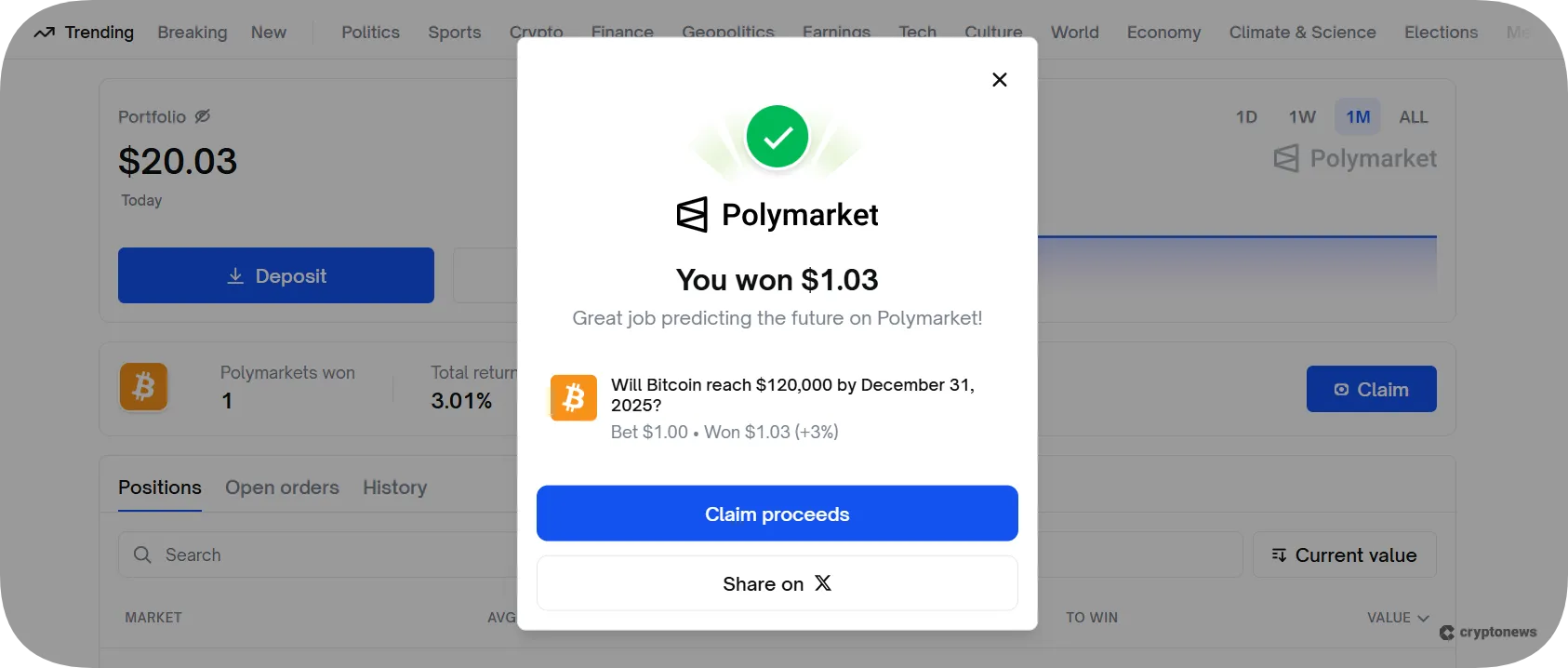
Note that you can sell shares at current prices before resolution.
The Key Concept: Market Price = Probability
One thing to understand is that the price of a Yes share reflects the implied probability. However, you should also consider the market’s liquidity, spread, and fees to get a clearer picture of the crowd’s confidence.
For example, in low-liquidity markets, the Yes price would represent the probability less accurately because it can be influenced by a few large trades.
But in general, traders check Yes share prices to understand the odds.
Contracts/Shares: What Are You Actually Buying?
Most investors would easily understand what it’s like to buy Tesla, Google, or Nvidia shares, but purchasing Yes and No shares? What are you actually investing in?
Well, the Yes and No shares you buy on platforms like Polymarket can be treated as derivatives tied to the outcomes of events. You can think of them as binary crypto options, which is probably the closest analogy.
The shares settle at $1 if the prediction is true, and become worthless if it turns out to be false. So no matter which side you buy (Yes or No), you’re paid $1 if you’re right. As mentioned, multi-outcome markets consist of several binary contracts.
And remember, you don’t have to hold the share until the final result. Most prediction markets allow you to sell your share at the current price before resolution. For example, if the price of your share has increased in the meantime, you can sell it earlier for a profit.
Order Books vs. Automated Market Makers (AMMs)
Crypto-oriented prediction markets can run on one of two trading systems: order books or AMMs, which directly impact price discovery and execution.
An order book works like a traditional exchange, matching buyers and sellers. It ensures better price discovery and gives users more control.
AMMs work by creating liquidity pools directly on-chain, with traders buying shares against those pools. When buying Yes shares, the pool shifts, and the algorithm adjusts the price accordingly to reflect higher odds.
However, AMMs often experience higher slippage on large trades, which is why Polymarket moved away from an AMM model to adopt a Central Limit Order Book (CLOB).
The platform describes it as hybrid-decentralized, having an operator processing off-chain matching and ordering. The system settles on-chain in a non-custodial way via signed orders.
Today, most of the successful prediction markets implement order book systems due to their efficient execution.
Prediction Market Examples
Now that you understand the basics of a prediction market, let’s explore some real examples. To get the full picture, we’ll discuss three different themes on Polymarket:
Politics
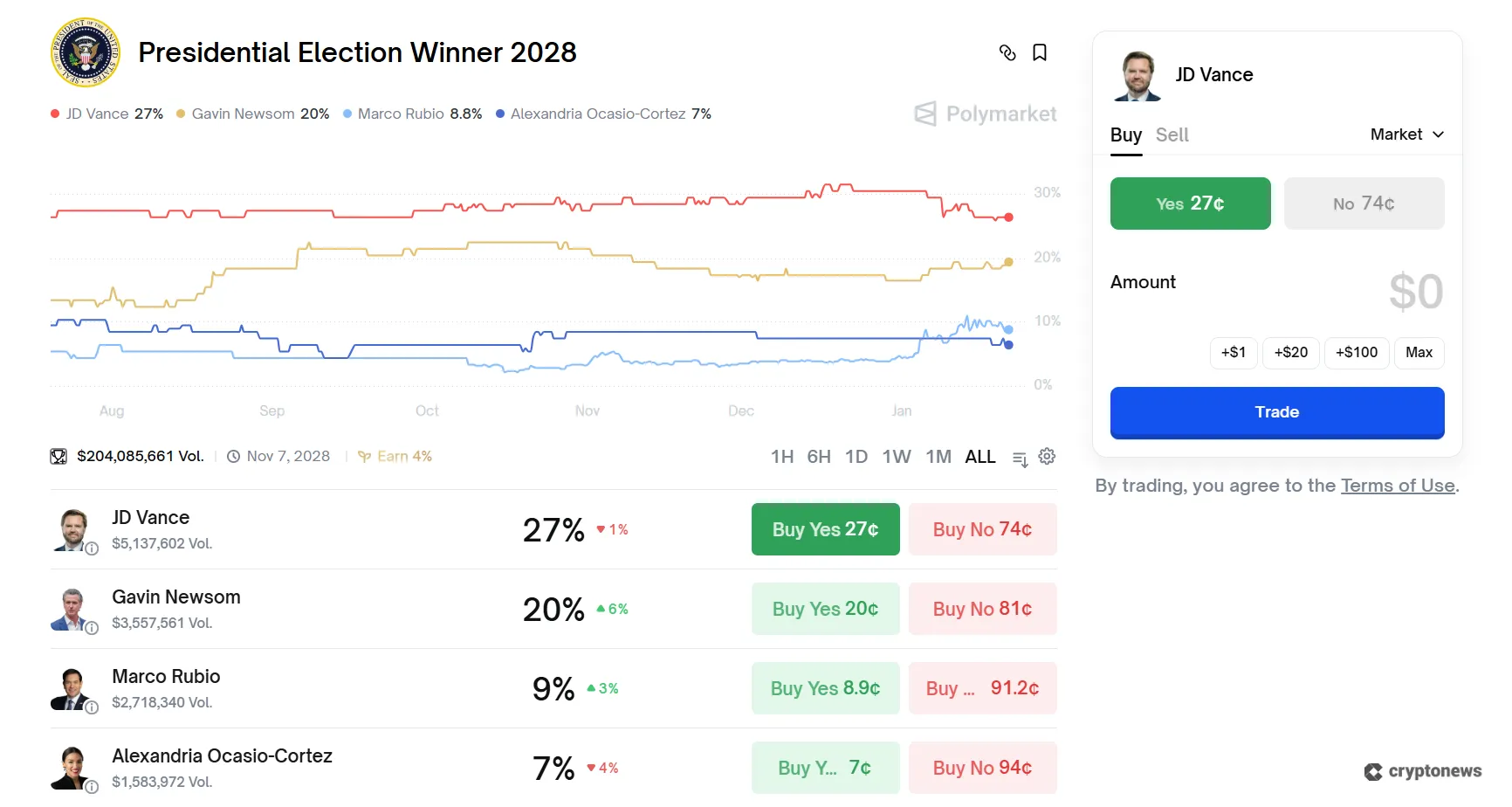
“Presidential Election Winner 2028”
This is a multi-outcome market that will settle in November 2028, when the U.S. elects its next president. At the time of writing, the market displays more than 20 candidates, each with a Yes/No contract.
The Yes shares of Republican J.D. Vance and Democrat Gavin Newsom have the highest prices, $0.27 and $0.20, respectively, although neither is the nominee of their party.
You could argue that some outcomes are nearly guaranteed, but their high price means minimal profits. For example, you could buy No shares for candidates like LeBron James, Tucker Carlson, or Ivanka Trump, and earn small profits.
Sports
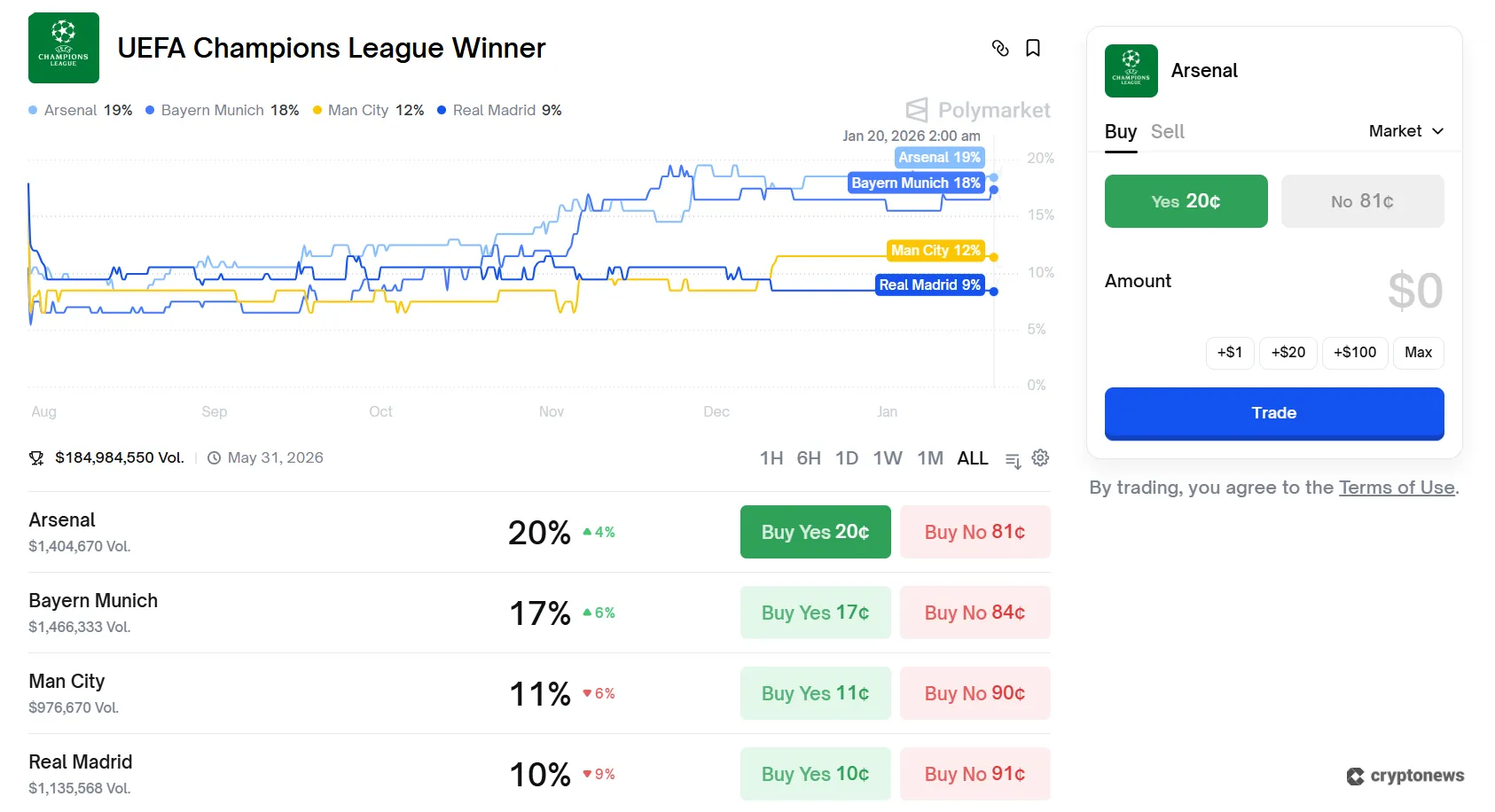
“UEFA Champions League Winner”
This is also a multi-contract market that will settle on May 30, 2026, the day of the Champions League final. As of this writing, you can buy Yes and No shares for over 20 clubs, with Arsenal and Bayern Munich having the highest implied probability.
The ruling says:
“This market will resolve to “Yes” if the listed team is officially crowned the winner of the 2025–26 UEFA Champions League. Otherwise, it will resolve to “No.”
If teams are eliminated during the tournament, the trades will resolve to “No.”
If you buy Yes shares for Arsenal at $0.20 and they win, you earn a 400% return. You could also sell earlier if Arsenal reaches later stages, like the semifinals or the final, in which case Yes shares will increase in price.
Economic Data
“US recession by the end of 2026?”
This is a straightforward binary contract. It stipulates that the market will resolve to Yes if one of these two conditions is met:
The seasonally adjusted annualized percent change in quarterly U.S. real GDP from the previous quarter is less than 0.0 for two consecutive quarters between Q2 2025 and Q4 2026 (inclusive), as reported by the Bureau of Economic Analysis (BEA).
The National Bureau of Economic Research (NBER) publicly announces that a recession has occurred in the U.S., at any point during 2025 or 2026, with the announcement made by the time the BEA releases the advance estimate for Q4 2026.
Last year, traders believed there was a nearly 50% chance of a recession, but today the Yes share costs $0.23.
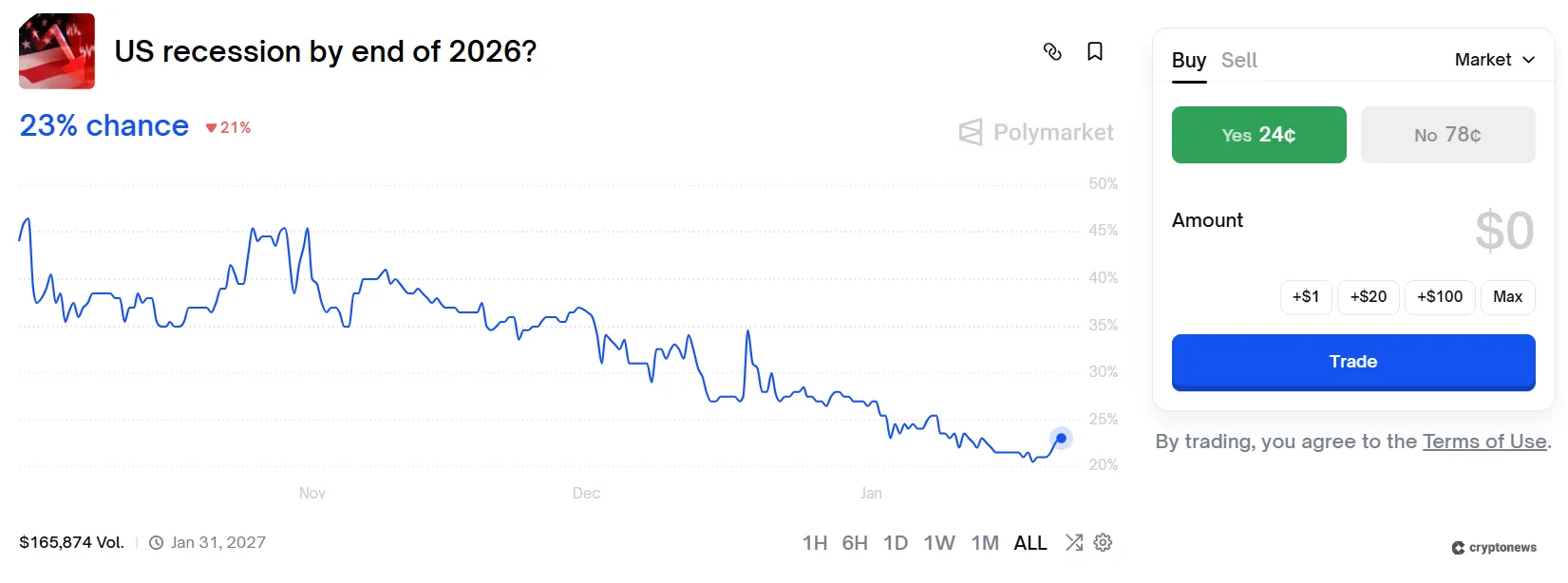
If you think the U.S. economy is doomed this year, you could buy Yes shares and wait for two negative quarterly GDP reports in a row in 2026.
Quick Numeric Walkthrough of an Information Market
Let’s see how you can trade on prediction markets, which can be regarded as ‘information markets’, as the contracts move in response to news and updates. We’ll quickly walk through two scenarios for the same event.
Scenario 1 – You buy Yes shares at $0.30
- You buy 100 Yes shares at $0.30 each; Total cost: $30
- If the event resolves as Yes, each share settles at $1; Total payout: $100
- Profit (excluding fees): $100 − $30 = $70 (+233% return)
Note that in this scenario, the implied probability at the moment of purchase is about 30%, indicating the event is less likely but still possible.
Scenario 2 – Selling early after a price increase
If news breaks in your favor, demand may follow, pushing the Yes price higher.
Here is what happens if you sell your Yes shares after the price moves from $0.30 to $0.55:
- You sell your 100 Yes shares at $0.55; Sale proceeds: $55
- Profit (before fees): $55 − $30 = $25 (+83% return)
In this scenario, the likelihood of the outcome has increased, but you’re still not sure it will happen. Therefore, you can exit your position earlier with a hefty return. Many traders profit from probability shifts rather than waiting for markets to resolve.
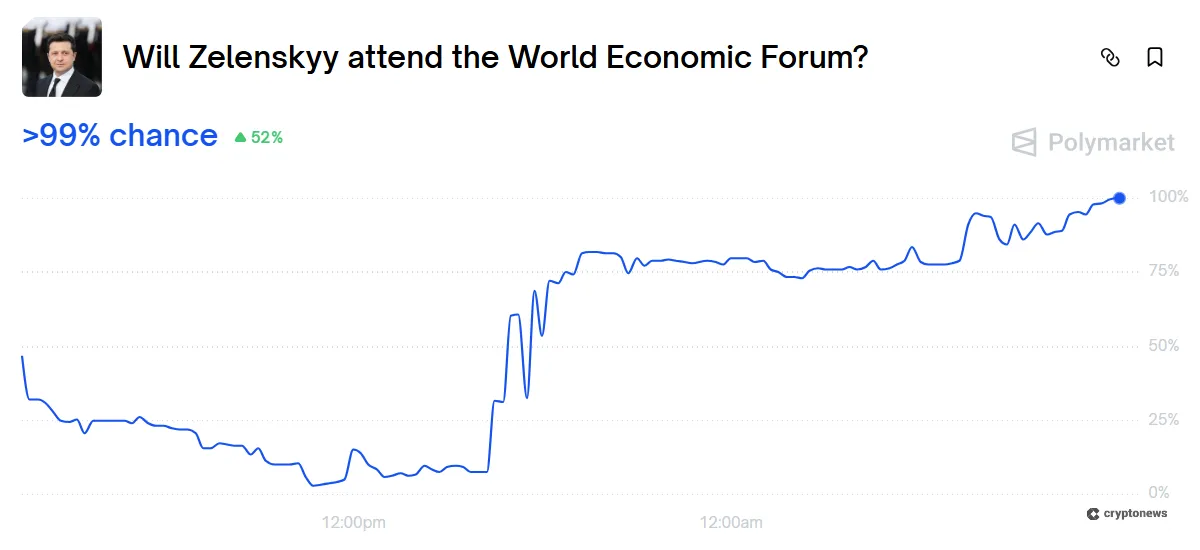
Here is a real example of price volatility driven by news. On January 21, 2026, the market-priced likelihood of Ukrainian President Volodimyr Zelensky attending the Davos meeting stood at less than 10% as he had canceled the trip.
However, a few hours later, Axios reported that he would still travel to Davos to meet Donald Trump, causing the price of Yes shares to gradually increase to 99%.
Prediction Markets vs. Gambling vs. Investing
Interestingly, prediction markets feel like both gambling and investing. While they share similarities with both, they also have some unique aspects.
To begin with, they may be treated as gambling in certain jurisdictions because you’re staking money on outcomes. However, prediction market users don’t trade against a centralized entity, such as William Hill or another bookmaker.
Instead, users trade against each other, forming odds naturally and dynamically based on trading activity and new information. It’s like monetizing your knowledge.
In the U.S., prediction contracts are regulated by the Commodity Futures Trading Commission (CFTC), whereas gambling is regulated by the states. This is why Kalshi, a fast-growing prediction market, cannot offer sports events in some U.S. states.
At the same time, prediction markets may feel like investing, although you don’t purchase ownership rights but event-based contracts that settle when the market resolves, which is more like speculating on futures contracts.
Therefore, prediction markets sit somewhere between betting and trading, where the speculative nature prevails. The distinctive lines become blurry, as gambling and investing often overlap.
Eilers & Krejcik strategic advisor Chris Grove told CNBC:
“There’s always been some overlap between the two, but we appear to be living in a world where gambling is [becoming] more like investing just as investing is pushing further and further in the direction of gambling.”
Why People Use Prediction Markets
The profile of a prediction market user varies, as there are multiple use cases of this growing phenomenon. While some people stake funds for entertainment, others monitor these markets for analytical purposes.
Below, we explore some of the main use cases.
Forecasting Signal
Prediction markets are good at turning probability into a single price that updates continuously. You can view this as a real-time probability gauge, and many analysts have found that Polymarket’s accuracy has often outperformed bookmakers and polls.
Hedging
Investors can use prediction markets for risk hedging. For example, a company facing regulatory uncertainty could hedge against negative outcomes. Retail investors can hedge their portfolio risks tied to market data and political events.
Information Aggregation
Prediction markets are like “wisdom of the crowd” systems, allowing participants to monetize their knowledge. Therefore, they collect opinions like polls, but unlike traditional surveys, they reflect aggregated beliefs more accurately.
Trading and Speculation Opportunities
However, first and foremost, most users trade on prediction markets to speculate on probability shifts, tracking breaking news and polling data to identify arbitrage opportunities or monetize their beliefs.
Common Real-World Use Cases of Event Futures
Based on the use cases discussed above, we can distinguish three main profiles of prediction market users:
- Individuals: Retail users trade for speculation and entertainment, showing interest in narratives across sports, politics, and financial markets, including crypto and macro events. They would trade questions like “What price will Bitcoin hit in 2026?” or bet on presidential elections.
- Businesses: Companies can use prediction markets internally to improve decision-making. For instance, their markets can cover project delivery risk and timeline probability, quarterly performance, launch readiness, and budget overruns. A basic example would be the company asking, “Will we hit $10M revenue this quarter?”
- Researchers and journalists: Analysts working for media and research companies can use prediction markets as signal tools that reflect the crowd’s real-time perception of an event. They can track people’s reactions to breaking news, changes in public confidence, etc. As mentioned earlier, many prediction markets were more accurate than polls.
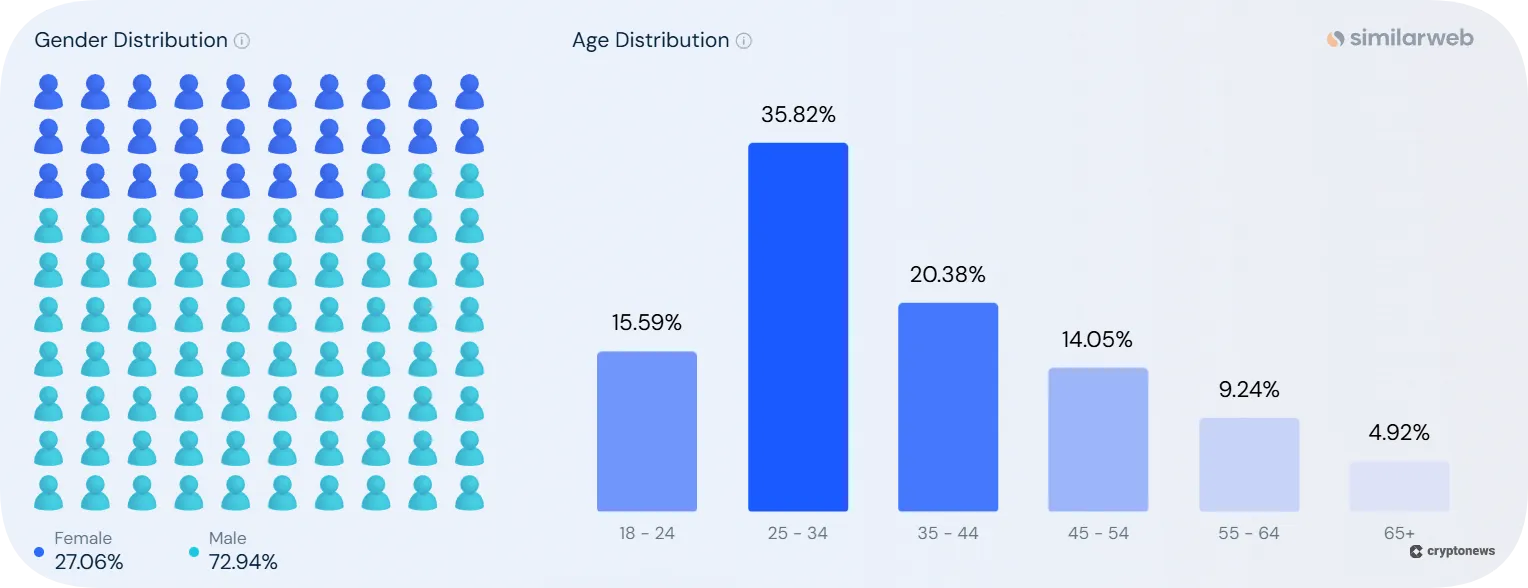
According to SimilarWeb data, over 70% of users on Polymarket and Kalshi are male, and users aged 25-34 represent the largest group.
Are Prediction Markets Reliable?
Reliability depends on many factors, such as platform infrastructure, adoption, volume, and regulation.
The most reliable prediction platforms should execute impeccably and host high-volume markets with negligible slippage. Therefore, when choosing a platform, you should ask yourself if its infrastructure is secure and check whether trading volumes are significant.
Well-calibrated markets should behave as true probability gauges over time. For example, outcomes priced at 70% should occur about 70% of the time across many events.
Prediction markets are often compared to polls and economic analysts, and they often outperform them, which happened with the U.S. elections in 2024, the New York elections, the Nobel Prize winner in 2025, and many other instances.
According to a Forbes article, research from the University of Pennsylvania and the Iowa Electronic Markets showed that “prediction markets often outperform expert forecasters because they aggregate dispersed information without ideology, public pressure, or narrative inertia.”
However, accuracy depends very much on liquidity and trading volumes. Even if a market is generally accurate, it can quickly become unreliable amid low liquidity, especially if prices are pushed around. Thin liquidity and coordinated trading can distort implied probabilities.
Factors that improve reliability:
- High liquidity and active participation
- Clear resolution rules
- Diverse, informed traders
Factors that reduce reliability:
- Thin markets (easy to move price)
- Ambiguous resolution criteria
- Herding, hype cycles, coordinated trading
- Fees/spreads that distort implied probability
Can Prediction Markets Be Manipulated?
Like any financial market, prediction markets can be manipulated, at least temporarily. The most common manipulation tactic is price-pushing, in which a trader or a closed group purchases a large number of Yes or No shares to drive the price higher or lower, creating the appearance of shifting probability so that others could follow suit.
Still, manipulation becomes less feasible in liquid markets with many traders. Such efforts require a lot of money, and other participants would quickly trade against the distortion anyway, bringing prices back to their fair value.
In fact, manipulation may create opportunities for informed traders, who can profit by taking the other side of irrational pricing.

Are Prediction Markets Illegal?
Prediction markets operate in a grey regulatory zone in most jurisdictions, but it wouldn’t be accurate to say they are completely illegal. Their legality depends on the country, product structure, and platform licensing, and some major jurisdictions, including the U.S., permit them.
For example, the U.S. treats prediction contracts like financial derivatives, which is why they are overseen by the CFTC. In other jurisdictions, these contracts are treated like sports betting or gambling products.
However, many countries, including some European Union (EU) states, still restrict this fast-growing market and will probably have to adjust their stance on prediction contracts as they become more popular.
In the EU, the crackdown on prediction markets began in 2024 when the French National Gaming Authority banned Polymarket, followed by Belgium, Poland, and Italy. These countries treat Polymarket activity as unlicensed gambling. So far, there are no licensed platforms in these countries.
Today, Polymarket remains restricted in countries like Australia, the U.K., Russia, and Thailand, among others. At the beginning of 2026, Hungary and Portugal also banned the platform.
👉 Learn More: Is Polymarket Legal in 2026? Regulations by Country and U.S. State
Meanwhile, some European countries, like Spain and Germany, allow Kalshi, another large prediction market app.
It’s worth noting that regulation also depends on the type of contracts. In the U.S., for example, regulators may treat contracts tied to sports outcomes like sports wagering, which is regulated at the state level and usually requires licensing. Therefore, states like Massachusetts and Nevada don’t allow Kalshi to offer sports products.
Some platforms may offer play-money demos or academic/research structures (such as CFTC no-action relief programs) to avoid being treated as full-scale gambling or derivative trading products. But again, the scope of these exemptions varies by jurisdiction.
An example is the Iowa Electronic Markets, which describes itself as an “online futures market where contract payoffs are based on real-world events such as political outcomes, companies’ earnings per share (EPS), and stock price returns.” The platform was built for research and teaching purposes only.
Given that enforcement and rules vary widely by jurisdiction, here is what you should do:
- Check local laws and the platform’s supported jurisdictions. For example, Polymarket shares a list of geo-blocked countries.
- Learn the KYC practices of each platform.
- Avoid using restricted services.
Why Regulation Is Complicated
We mentioned earlier that prediction markets sit at the intersection of gambling and investing, and this creates challenges when trying to fit them into regulatory frameworks. The situation is similar to the early days of crypto itself, when governments were adjusting their rules to deal with a new phenomenon.
While you may treat prediction markets as forecasting tools, financial watchdogs focus on the economic reality. For them, if people stake money and win or lose based on outcomes, this is about wagering, no matter the intent.
And it’s not only about wagering — prediction markets have multiple sides. Depending on the product, a single market can trigger rules under:
- Gambling and sports betting law: Some U.S. states don’t allow Kalshi or Polymarket to host sports betting without licensing.
- Derivatives regulation: The CFTC treats prediction contracts as derivative markets.
- Consumer protection: Jurisdictions may require platforms to implement marketing disclosures and fair dispute resolution mechanisms.
- Political event market bans: In January 2026, Portugal banned Polymarket, explaining that “under national law, betting on political events or happenings, whether national or international, is not permitted.”
Types of Prediction Markets
While you could argue that prediction markets are still in their early stage, there are dozens of platforms that come in all shapes and forms. There are several types based on how they run, how the money flows, and how outcomes are resolved.
We can distinguish the following types of prediction platforms.
💰 Real-Money vs. Play-Money Markets 🎮
The former requires users to stake actual funds, whether crypto or fiat. On the other side, play-money markets use virtual points with no real payouts. Given the financial incentives and stakes, real-money markets produce stronger signals and are more liquid.
🏛️ Centralized vs. Decentralized Markets 🔗
Centralized markets are run by companies and may offer a better user experience, although users have to trust the operator for custody and settlement.
Decentralized platforms use blockchain as their core infrastructure, eliminating intermediaries. Kalshi is a popular centralized prediction platform, while Polymarket is decentralized.
Blockchain-based platforms are regarded as more transparent, but they require some technical knowledge, such as setting up a crypto wallet or understanding oracles.
🎯 Binary vs. Multi-Outcome Markets 🤔
The same platform can host binary or multi-outcome markets. As shown in earlier examples, binary contracts settle as Yes or No, while multi-outcome markets split probability across multiple outcomes, e.g., “Which candidate wins the election?”
🌍 Public Markets vs. Private/Internal Corporate Markets 🔒
Public markets are open to everyone in jurisdictions that are not geo-blocked. Meanwhile, private markets are used within large companies and organizations to forecast outcomes such as financial performance and delivery timelines.
Here’s an overview of the different types of prediction markets:
| Liquidity | Transparency | Legal Risk | User Experience | |
|---|---|---|---|---|
| Real money | High | Medium-High | Higher | Similar to trading |
| Play-money | Low | Medium | Lower | Similar to gaming |
| Centralized | High | Medium | Medium-High | Smooth onboarding |
| Decentralized / on-chain | Varies | High | Medium-High | More complex |
| Binary (Yes/No) | Usually higher | – | – | Simple |
| Multi-outcome | Often fragmented | – | – | More complex |
| Public markets | Usually higher | Medium | Higher | Best for active trading |
| Private/internal markets | Varies | Low | Lower | Best for forecasting |
Major Risks and Downsides of Idea Futures
These prediction markets that host idea futures can transform the analytics and polling markets, but they carry some significant risk, especially for retail users.
Here are some of the key downsides you should know about.
You Can Lose 100% of Your Stake
If your prediction turns out wrong, you lose 100% of your stake when the market resolves. Therefore, there is no gradual drawdown like in traditional investing, unless you exit before the deadline.
Hidden Costs: Spreads, Fees, and Slippage
Prediction markets are still a bit of the Wild West, and while some platforms may not make it explicit, you should know that there are bid/ask spreads and platform fees that may affect potential profits. Also, you may encounter slippage in thin markets, which can lead to execution at worse prices than expected.
👉 Learn More: Polymarket Fees Explained
Counterparty and Platform Risk
Some platforms also introduce additional risks that are not common in self-custody trading. If it’s a centralized platform, it may involve custody risk, sudden geo-blocking, KYC requirements, and rule changes.
Also, any platform can experience outages and downtime during intense activity or due to underlying infrastructure issues. At the end of 2025, Polymarket went down due to a Polygon outage, prompting it to consider developing its proprietary Layer 2 network.
Resolution and Oracle Risk
Unlike typical financial markets, where prices may differ from platform to platform within a certain range, prediction markets need a final “truth” accepted by everyone to settle. If the resolution criteria are vague, results can be disputed, leading to a complex settlement process. This is why you should pay close attention to wording.
Even honest and neutral platforms can face controversy if real-world events don’t fit into binary outcomes.
Behavioral Risk
Most people underestimate behavioral risks, but they are real. Many users can invest with overconfidence, being sure they’re right. However, no amount of confidence should replace risk management. As with traditional investing, many users can’t stick to a strategy, falling prey to news-chasing and emotional trading, or trying to take revenge after losses.
Ethical Concerns
Some prediction markets may be controversial because of the question itself, which may touch on sensitive topics. Think about wars, violence, and disasters. Human suffering raises obvious ethical questions, especially when someone seeks to profit from it.
Turning tragedy into a tradable commodity is one of the issues most prediction markets will have to address. Some reputable platforms, like Kalshi, impose restrictions that block or remove sensitive topics.
Checklist: How to Read a Prediction Market Like a Pro
To avoid risks and ethical concerns, here is a brief checklist that will help you use Polymarket and other prediction markets like a professional trader:
- Check the exact contract wording and resolution source: Never assume anything. You should carefully read the question, conditions, deadline, and resolution source. Also, always confirm who decides the final outcome and whether you trust it.
- Look at liquidity metrics: The price itself may not reflect the reality. You should first check the market’s liquidity, volume, depth, and spread.
- Compare to external references: It’s always a good idea to compare prediction markets with existing polls and forecasts to understand the wider picture.
- Consider time to expiration: You should factor in deadlines, because short-term markets can behave differently. When a market approaches its expiry, and the potential result is still unclear, you see a burst in volatility and last-minute repricing.
- Use limit orders: Treat prediction markets as speculative trading and avoid thin markets if you’re new. Obviously, implement risk management. To reduce execution risks on prediction markets, use limit orders to avoid bad fills.
Final Thoughts on Prediction Markets
Prediction markets are the next big trend both in crypto and traditional finance, having a wider reach than previous trends like non-fungible tokens (NFTs) or the metaverse. They turn collective beliefs into a commodity, reflecting the probability of outcomes more precisely than experts and polls. This may be a turning point for investment and social analytics.
However, these markets don’t always provide perfect signals. Low liquidity, high spreads, and platform downtime can negatively affect prices, especially in thin markets. On top of that, regulations vary widely across jurisdictions. Therefore, the best approach for retail users is to check local rules and treat prediction markets as speculative instruments.
If you want to begin your prediction market journey, consider paper-trading or starting with small position sizes. Also, choose a platform that best suits your interests.
See the Best Prediction MarketsFAQs
What are some famous prediction markets?
What is the biggest prediction market?
How do prediction markets make money?
How do prediction markets decide and verify the final outcome?
What fees can you expect in prediction markets?
What happens if a prediction market is paused, canceled, or resolved incorrectly?
References
- Prediction Markets Trading Volume Chart (Dune)
- CLOB Introduction (Polymarket)
- Volodymyr Zelensky scraps Davos economic forum headlined by Trump after Russia strikes: ‘I choose Ukraine’ (New York Post)
- Zelensky to meet Trump in Davos as U.S. envoys head to Moscow (Axios)
- Kalshi cannot operate sports-prediction market in Massachusetts, judge rules (Reuters)
- Prediction markets could hit a trillion dollars in trading volume by the end of this decade, new report says (CNBC)
- Polymarket Demographics Chart (Similarweb)
- Kalshi Demographics Chart (Similarweb)
- The Polymarket Effect: How Prediction Markets Are Beating The Experts (Forbes)
- Geographic Restrictions (Polymarket)
- Kalshi is subject to Nevada gaming rules, judge finds (Reuters)
- Regulator orders Polymarket to be blocked (Radio Renascença)
2M+
250+
8
70







 in numbers

About Cryptonews
Our goal is to offer a comprehensive and objective perspective on the cryptocurrency market, enabling our readers to make informed decisions in this ever-changing landscape.
Our editorial team of more than 70 crypto professionals works to maintain the highest standards of journalism and ethics. We follow strict editorial guidelines to ensure the integrity and credibility of our content.
Whether you’re looking for breaking news, expert opinions, or market insights, Cryptonews has been your go-to destination for everything cryptocurrency since 2017.
