Spot vs. Futures in Crypto: What They Are and How They Differ?





When comparing spot vs futures in crypto trading, futures trading typically sees much higher trading volume. However, most of us begin our crypto trading journey with spot purchases, perhaps buying Bitcoin or Ethereum for the first time. In practice, neither type of trading is better than the other for every situation. Instead, each serves as a tool, and which of these you choose depends on your goals for each trade.
In this guide, we’ll compare spot vs futures in crypto, explaining how each works and when each of these trade types might be a better fit for a specific trade than the other. We’ll also detail the pros and cons of spot and futures, and briefly review some leading trading platforms you can use to get started. Let’s begin with some key takeaways that are essential to understanding the key differences in these trading types.
- In This Article
- Show Full Guide
Spot vs. Futures in Crypto: Key Takeaways
- Spot trading provides direct ownership of a cryptocurrency, whereas futures trading utilizes contracts that mirror the asset’s spot price but do not provide direct ownership of the underlying asset.
- Leverage used in futures contracts amplifies both gains and losses, making futures better suited to experienced traders.
- Futures trading offers more flexibility, allowing traders to go short during market downturns.
- Spot trading provides a straightforward approach to buying and selling, making it well-suited for both novice traders and seasoned long-term investors.
- Neither spot nor futures is the best tool for every type of trade. Each trading tool has its use case.
What Is Spot Trading in Crypto?
Spot trading in crypto refers to buying or selling a digital asset in a transaction where the asset changes hands. The name derives from “on the spot,” meaning the value is based on the current market conditions, right here and now (on the spot).
For example, if you buy Bitcoin on a crypto exchange, you’re exchanging another asset (often USD, another fiat currency, or even another cryptocurrency) for X amount of Bitcoin. The USD leaves your trading account, and you receive Bitcoin in exchange, which you can then transfer to a non-custodial wallet that you own.
The key takeaway and essential distinction is that you own the Bitcoin at the end of this spot purchase and can do with it as you please. Conversely, when selling on the spot market, you exchange your Bitcoin for USD or another asset at the current “on the spot” price. Settlement in spot trading is typically almost instantaneous, allowing for quick transactions and transfers.
To realize a profit from a traditional spot trade, the price needs to increase above the price at which you made the purchase. This structure differs from futures trading, which we’ll discuss next. Futures trading allows you to profit in either price direction.
What Is Futures Trading in Crypto?
Futures trading in crypto refers to buying or selling investment contracts based on the future price of an asset. The spot price serves as a reference point, enabling traders to speculate on whether the price will rise or fall based on current market conditions. Notably, futures trading allows traders to bet in either direction, making it useful for speculative trades or hedging other open positions.
For example, let’s say Bitcoin’s spot price is just below $100,000. The chart indicates that it has tested this level before and has thus far been unable to surpass the 100k mark. The chart also shows relatively low volume, suggesting that the market lacks conviction. This, along with other trusted indicators, suggests that Bitcoin may pull back from its current price level.
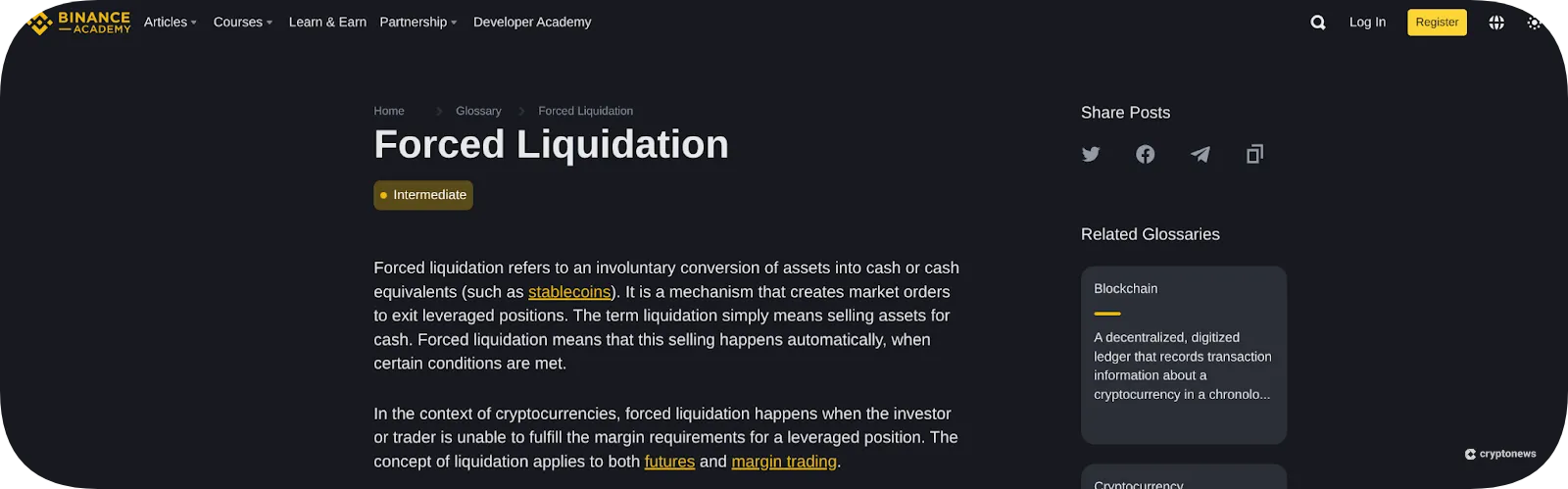
Futures trading allows you to open a short trade with leverage to profit from the expected short-term pullback. With leverage, even relatively small price moves can generate impressive returns. However, it’s important to note that futures trading often involves margin requirements and the risk of liquidation if the market moves against the trader’s position.
Most crypto platforms that support derivatives offer perpetual futures contracts, a type of contract that does not have an expiration date. If you think Bitcoin will lose half its value, you can keep the trade open indefinitely, as long as you maintain enough equity in the trade. Another type of futures contract, called expiration futures, uses an expiration date for the contract, typically on a quarterly basis. Expiration futures contracts are less common on centralized crypto exchanges and are often only available for Bitcoin and Ethereum.
Crypto Spot vs. Futures: Key Differences
While both crypto spot trading and crypto futures trading allow you to speculate on the future price, several key differences exist. These differences in structure determine which you should choose for a specific trading goal. We’ll explore the best use cases in a later section of this guide. First, let’s outline the key differences between crypto spot trading and crypto futures trading.
Asset Ownership
One key distinction between crypto spot and crypto futures centers on asset ownership.
In spot trading, when you buy an asset, you own it outright. For example, if you buy Ethereum (ETH), you can transfer your ETH to a wallet you control. You can then swap that ETH for a memecoin token on a decentralized exchange, use it to buy an NFT (non-fungible token), or stake your ETH to earn a yield. It’s yours. Of course, you can also sell your ETH later, with the profit or loss determined by the difference in price versus your acquisition cost.
By contrast, most futures contracts do not give you ownership of the asset. The exception is coin-settled futures, which, while rare, allow you to receive the actual cryptocurrency upon settlement if the contract is profitable. However, most platforms use perpetual futures settled in a stablecoin token, such as USDT or USDC. Regulated crypto futures on the Chicago Board Options Exchange (CBOE) use cash settlement.
With futures trading, in most cases, you never own the asset. Instead, you own a contract, the value of which is determined by the spot price.
Leverage
Another key distinction when comparing spot vs futures crypto trading centers on leverage. Traditional spot trading does not support leverage. $100 will buy $100 worth of whichever cryptocurrency you’re trading. By contrast, futures trading supports leverage. With 10x leverage, you can control a $1,000 trade with a $100 investment in the trade. Often, perpetual futures platforms support leverage as high as 100x for ETH and BTC, with smaller altcoins supporting 25x to 50x.
Leverage in futures trading makes this type of trade more capital-efficient. $100 powers a 10x $1,000 trade with futures, whereas $100 can only buy $100 worth of the base asset when using spot trading. However, leverage trading introduces risk and complexity to the trade as well. We’ll discuss risks associated with leverage in a later section.
Flexibility
In addition to more efficient capital utilization, futures trading also enables traders to trade the market in either direction. If you think the price will fall in the short term, you can open a short futures position to profit from the difference in price as the market swoons. Combined with leverage, a small amount of capital can do some heavy lifting regardless of market conditions, capturing outsized profits from natural market volatility.
However, spot trading retains one advantage in that it does not use funding fees. These periodic fees for perpetual futures can add to or reduce trade equity based on market imbalance (longs vs short positions). By contrast, spot trades are a simple exchange, incurring only standard trading fees.
Risk and Volatility
Futures trading introduces more risk compared to spot trading. Leading crypto assets aren’t likely to go to zero in the short term. A purchase made today may lose value, but you can still recover some of your capital if needed. However, with leveraged futures, your equity in the trade can vanish in seconds.
While the leverage available with futures trading can amplify gains, it also amplifies losses, and the latter can have a larger impact on your trading capital. Crypto’s natural volatility plays a significant role in this risk as well.
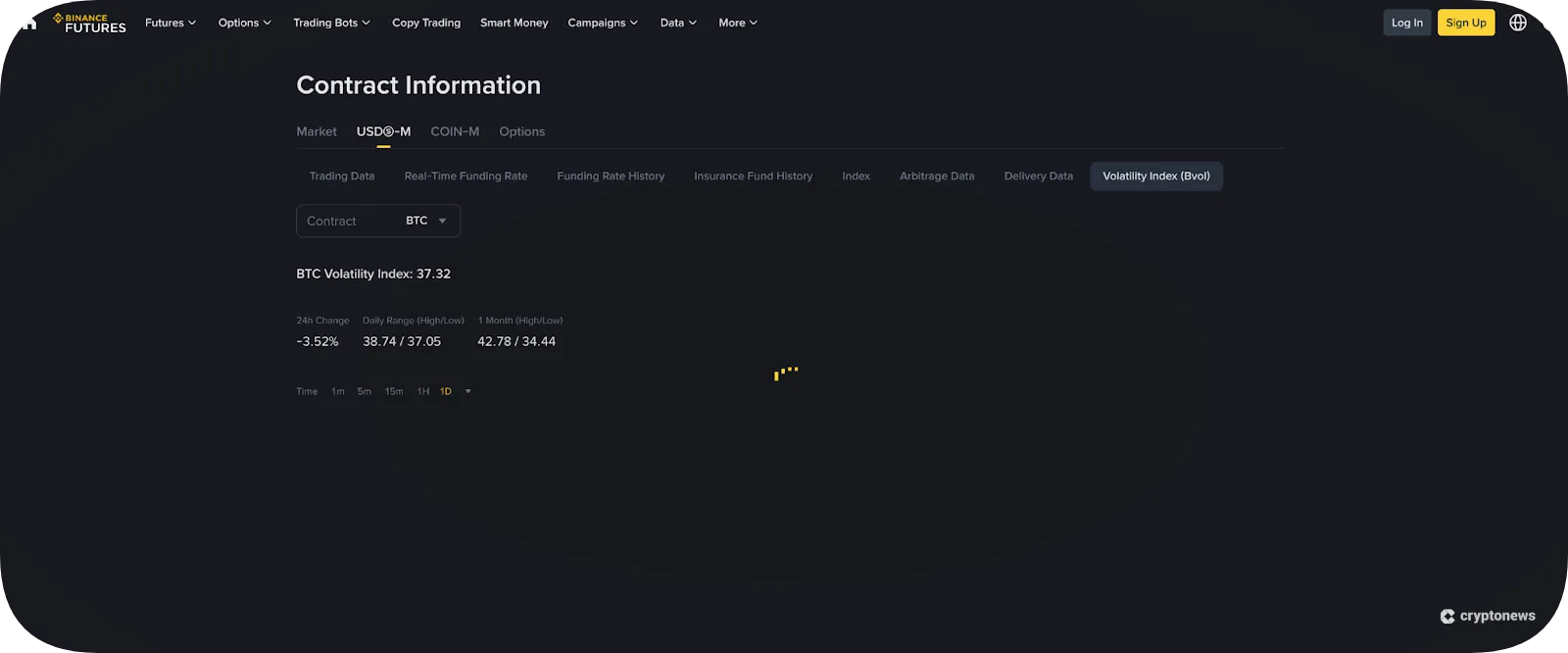
For example, let’s say you open a long position on Ethereum at 50x. The amount you commit to the trade is your initial margin. To keep the trade open, your equity in the trade must be at least 50% of the initial margin. This is called the maintenance margin. If the price of ETH falls by more than 1%, the exchange can liquidate your position, which means the trading platform closes the position and returns whatever is left over after fees.
Additionally, if the platform needs to liquidate your position, trading conditions will likely be unfavorable, which will compound the losses. High leverage on volatile assets can trigger liquidations based on relatively small market movements. This risk does not exist with traditional spot trading. Instead, you would simply see the loss or reduction in value on paper if the price dips.
Should You Trade Spot or Futures in Crypto?
Both spot and futures trading bring unique advantages, making each type of trading a better fit for specific trading goals. Let’s look at situations in which you could consider each of these options.
When to Use Spot Trading
Spot trading in crypto gives you ownership of the asset. Here are some common situations in which spot represents the best choice.
- New Traders: Spot trading offers a simpler structure. Although advanced trading platforms offer the same order types for spot vs futures crypto trades, the absence of leverage and funding fees makes spot trading much more accessible to new traders.
- Long-Term Investors: If you’re buying as a long-term investment, spot is the way to go. After making your purchase, you can withdraw the asset to a non-custodial wallet for safekeeping.
- On-Chain Use Cases: Cryptocurrencies have several valid use cases beyond price speculation. Spot trading lets you take custody of your crypto assets to spend or use in decentralized applications (dApps).
- Self-Custody: Assets used to back futures trades must remain on the trading platform. Hacks, breaches, and insolvency are all risks to consider. The 2025 Bybit hack ($1.4 billion) serves as a recent reminder of exchange risks. Spot trading lets you remove your assets from the platform immediately.
When to Use Futures Trading
Futures trading offers a more powerful toolset for advanced traders. Let’s explore situations where futures make a better choice.
- Capital Efficiency: Leverage enables your trading capital to go further. $100 used in a spot trade will buy $100 worth of crypto. However, that same $100 can power a $1,000 trade in a 10x futures position.
- Amplify Gains: The leverage available for futures trades reveals its real value in high-conviction trades. If you’ve researched all the relevant indicators and you feel confident that your call on price direction is correct, using leverage multiplies your gains if the trade goes your way.
- Hedging Other Positions: Futures also let you hedge long-term positions. If you have a long-term Bitcoin position but expect the market to fall, you can use a short futures position to capture profits from the downturn without selling your long-term holdings. This strategy also avoids triggering a taxable event that may occur if you sell your long-term position.
- Improved Liquidity: Futures markets typically exhibit higher trading volumes compared to spot markets. This improved liquidity can be crucial for less-traded altcoins, which may see wider spreads in spot markets.
- Bear Market Profits: Crypto bear markets can last for months or longer. While you can use spot trading to profit from short-term bullish reversals, futures trading is a better fit for this strategy and allows you to go short or long.
In summary, there isn’t a right or wrong trading tool for a given trader. Instead, the choice of which tool to use (crypto futures vs. spot trading) is situational. Next, let’s review some of the leading choices for crypto trading platforms.
Best Crypto Spot and Futures Trading Platforms
Similar to the way in which spot or futures might be the best choice, depending on the trade goals, the platform you choose is often best suited to specific trading goals. Newer traders may prefer a simpler platform, such as Best Wallet or CoinFutures, whereas more experienced traders may opt for an advanced trading platform like MEXC, OKX, or Binance. Let’s briefly review some of the leading exchanges and trading platforms, as well as their strengths for specific trades.
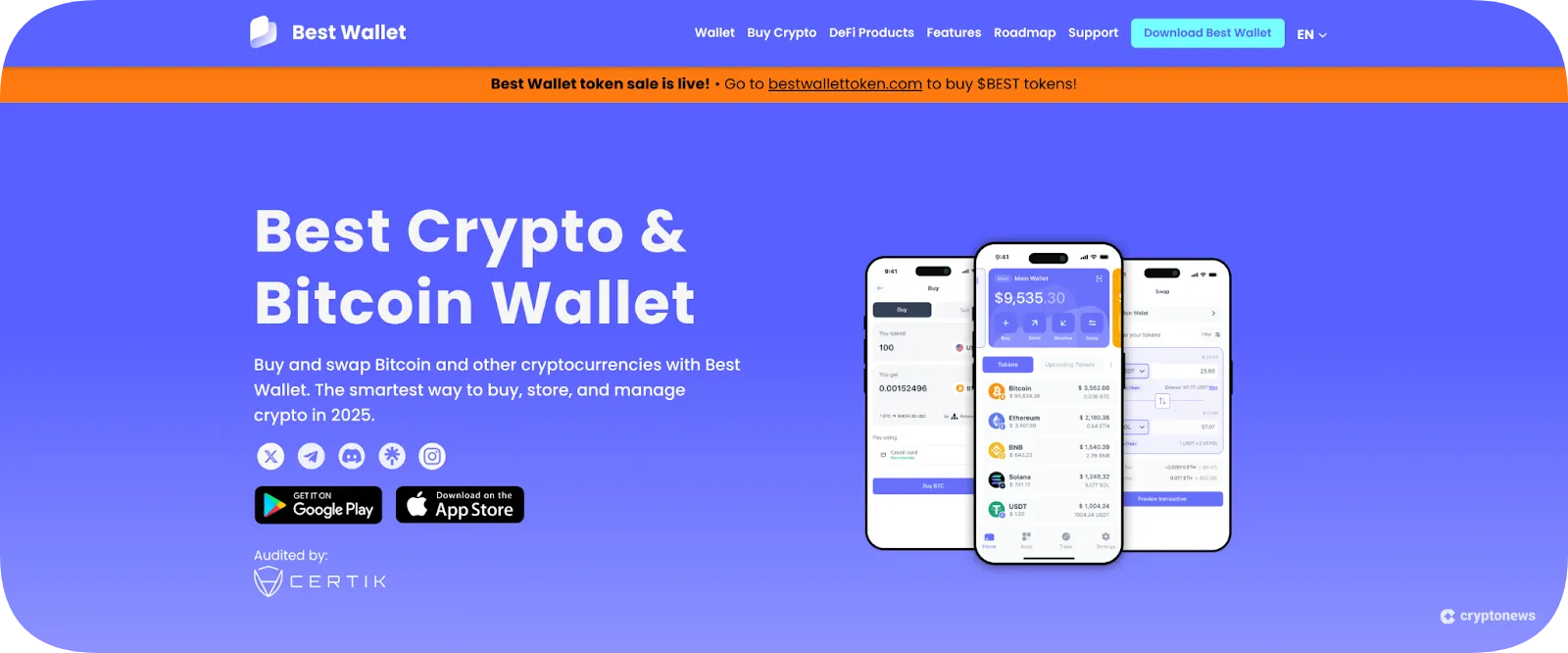
- Best Wallet (Spot): The Best Wallet app offers one of the easiest ways to get started for new traders, while also providing powerful features that experienced traders will appreciate. This mobile app, available for both Android and iOS, supports in-app spot purchases of leading cryptocurrencies and integrates top decentralized exchanges (DEXs), enabling users to swap thousands of tokens without leaving the app. Future roadmap features include derivatives trading (futures).
- CoinFutures (Futures): The CoinFutures app simplifies futures trading, allowing anyone to get started with just a few clicks. The platform does not require Know Your Customer (KYC) identification verification and supports trades as small as $1, making it easy to get started with futures trading.

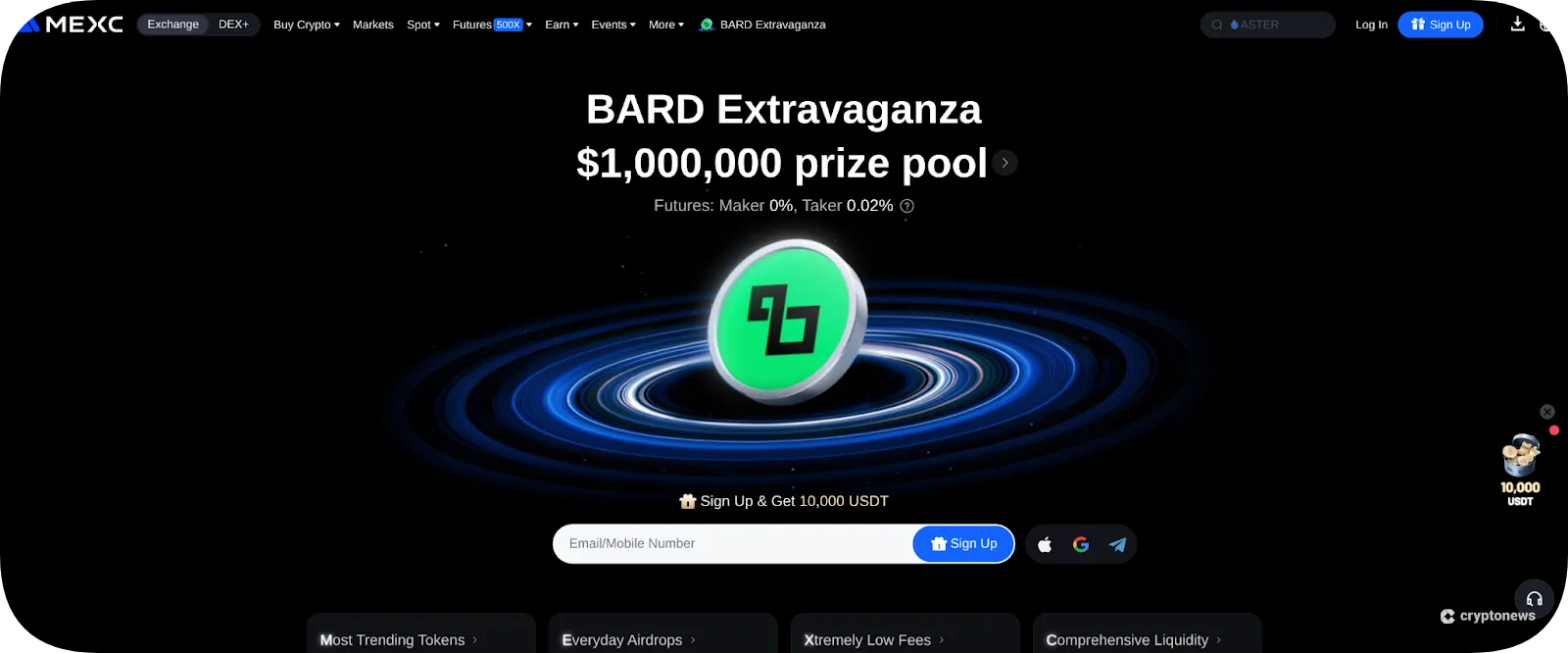
- MEXC (Spot and Futures): The MEXC exchange has rapidly grown to become one of the leading exchanges, now offering nearly 3,000 cryptocurrencies for spot trading. The platform also offers one of the widest selections of futures pairs.
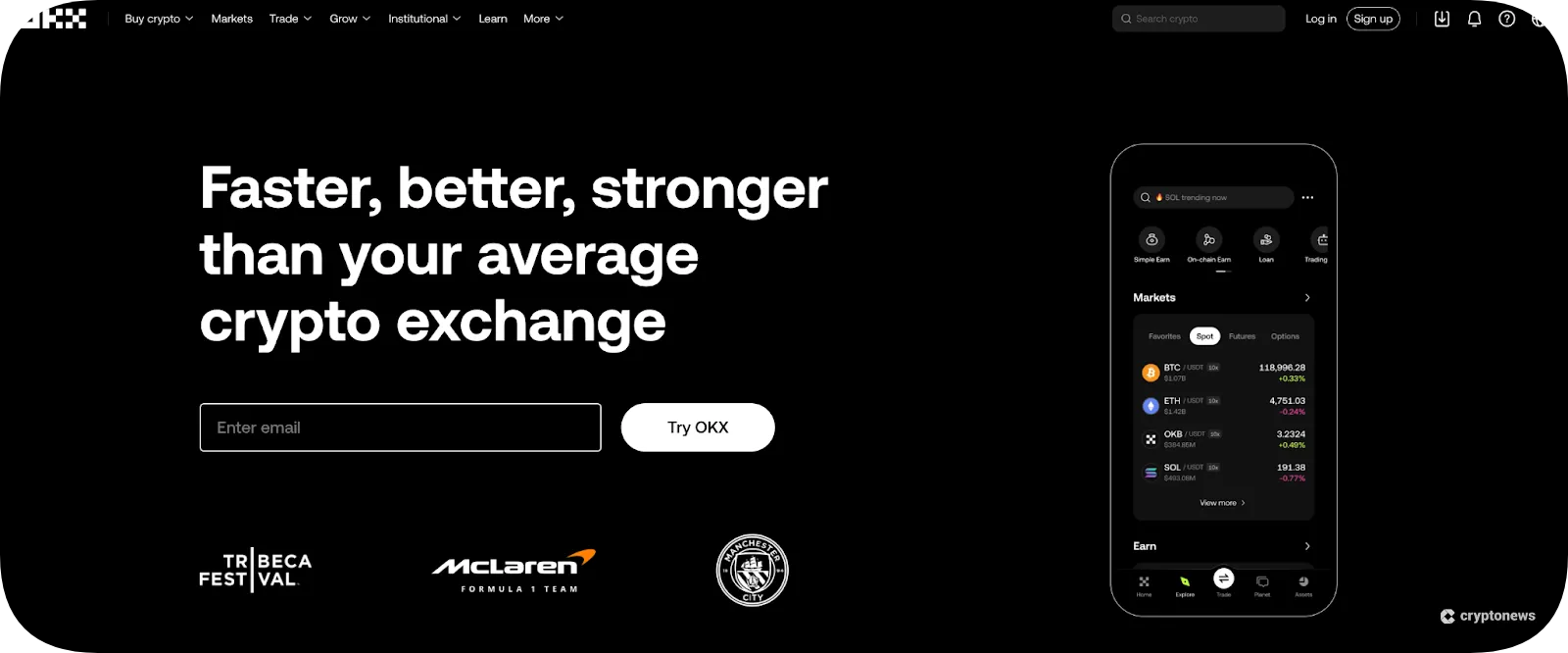
- OKX (Spot and Futures): The OKX exchange boasts outstanding liquidity for more than 350 cryptocurrencies and offers both spot and futures trading. Among its most popular features, the platform offers trading bots for both spot and futures trading. OKX also supports expiration futures as well as coin-settled futures, the latter of which can help long-term investors build a larger position.
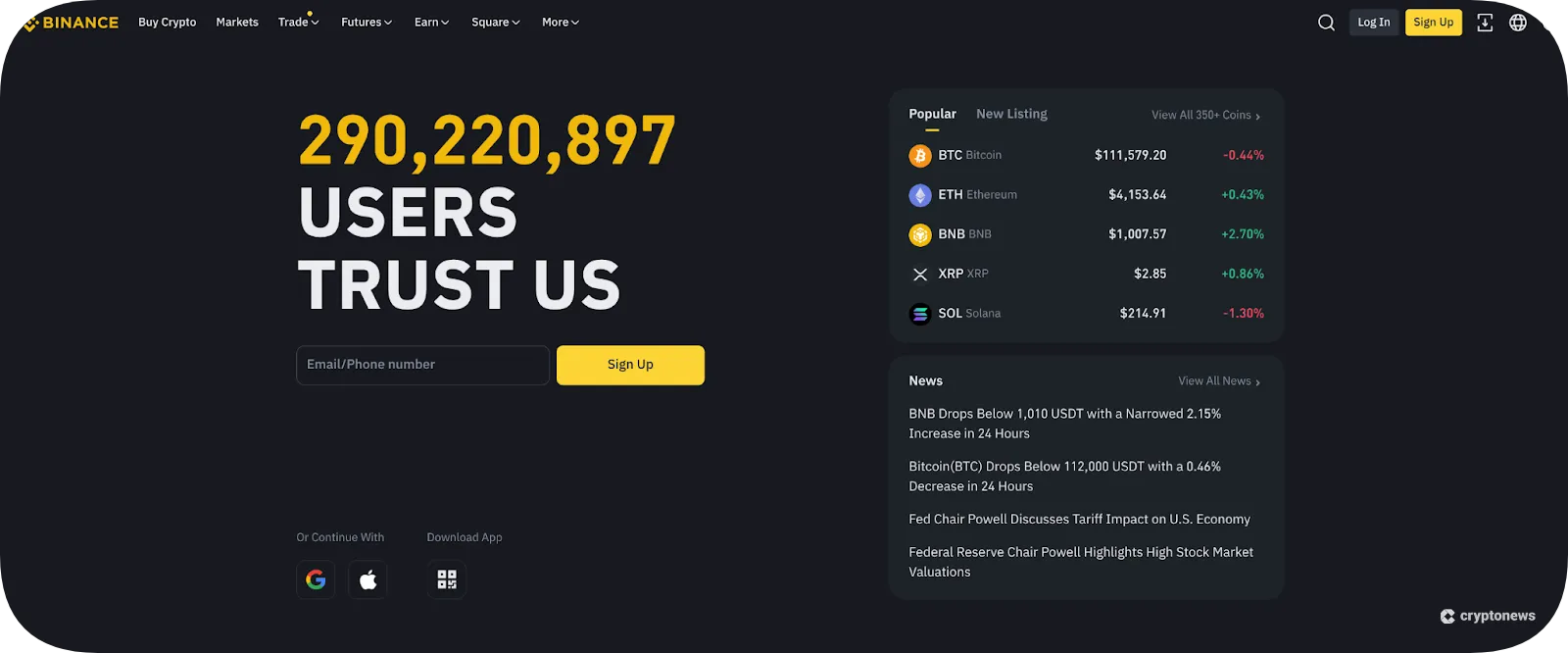
- Binance (Spot and Futures): As the largest crypto exchange by trading volume, Binance offers outstanding liquidity and a wealth of features for advanced traders. The platform offers both spot and perpetual futures, as well as expiration futures for BTC and ETH. Although geared toward experienced traders, the Binance platform offers a Futures Testnet to learn futures trading or test strategies. Binance also offers leveraged tokens, which offer similar advantages to futures trading without the complexity.
Pros and Cons of Crypto Spot Trading
Spot Trading is an easy and direct way to buy or sell cryptocurrency at current prices. Most traders begin their journey with spot trading, and long-term investors might never move on, but it has its pros and cons.
Pros
- Easy to understand, making it well-suited to beginners.
- Direct ownership of crypto assets for self-custody or use in on-chain activities.
- Reduced risk due to the lack of leverage.
- No funding fees; traders just pay trading fees
Cons
- Limited profit potential due to the lack of leverage.
- Inability to sell short in falling markets.
- Less efficient use of capital (a $1,000 trade requires $1,000 of capital).
Pros and Cons of Crypto Futures Trading
Futures trading in crypto can be more complex, making it often best suited for traders with some experience in spot trading. Let’s review the pros and cons of crypto futures trading.
Pros
- Capital efficiency through leverage: power larger trades with less capital.
- Futures support short selling, creating more profit opportunities in bearish markets.
- Crypto futures can hedge long spot positions during market downturns.
- Higher trading liquidity offers smoother trades with tighter spreads.
- A variety of available futures contracts provides better tools for specific trading goals.
Cons
- Amplified losses can wipe out an initial investment quickly in volatile markets.
- Liquidation risks can cause forced exits at inopportune times.
- Futures bring more complexity, making them better suited to experienced traders.
- Funding fees add another complex element that can be difficult to plan for in a trade.
Conclusion
Neither spot nor futures trading is the perfect tool for every job. Each has its advantages, depending on your trading goal. Consider spot trading if you’re new to trading, making a long-term investment, or want to use your crypto for on-chain activities. Futures are well-suited to short-term trades based on market volatility, hedging long-term positions, or profiting from prolonged market downturns.
Leverage remains the primary variable to consider. Higher leverage, coupled with increased volatility, introduces more risk to the trade. To mitigate risk, use leverage selectively and never invest more than you can afford to lose.
FAQs
What is better, spot or futures trading?
Do crypto day traders use spot or futures?
Can you get liquidated on spot trading?
Is crypto spot trading suitable for beginners?
Why do people trade crypto futures instead of spot?
References
- Understanding Futures Expiration & Contract Roll (cmegroup.com)
- Financially Settled Cryptocurrency Futures (cboe.com)
- The ByBit Heist and the Future of U.S. Crypto Regulation (csis.org)
- Should you hedge? (fidelity.com)
- Binance Testnet (testnet.binancefuture.com)
2M+
250+
8
70







 in numbers