

10+ Best Real-World Assets (RWA) Coins to Invest in 2026
We believe in full transparency with our readers. Some of our content includes affiliate links, and we may earn a commission through these partnerships. However, this potential compensation never influences our analysis, opinions, or reviews. Our editorial content is created independently of our marketing partnerships, and our ratings are based solely on our established evaluation criteria. Read More





The best real-world assets (RWA) cryptocurrency is Chainlink; although, other top picks include Ondo, Quant, Pendle, and other assets that span treasury markets, equities, and the commodities sectors.
RWA coins are the bridge from Web3 to real-world use cases. They leverage existing blockchain infrastructure and technologies, offering solutions to real-world problems, all while being the catalyst to the next era of finance.
This article lists the top 10 RWA coins after reviewing over 100 projects. We evaluated factors such as market relevance, adoption, market cap, and ecosystem strength.
Best RWA Crypto List
Here is a brief overview of the best RWA crypto tokens in the market today. We list them by market capitalization, chain, type, year launched, and the RWA type to show patterns in the top RWA markets.
| Project | Symbol | Market Cap | Type | RWAs | Launch Year | Chain |
|---|---|---|---|---|---|---|
| Chainlink |  LINK +2.14% LINK +2.14% |
$11.57B | Decentralized Oracle Network | Treasuries, Stocks, ETFs, Currencies | 2017 | Ethereum |
| Ondo Finance |  ONDO +4.24% ONDO +4.24% |
$3.74B | Tokenization Platform | Treasuries, Stocks, ETFs | 2021 | Ethereum |
| Stellar |  XLM +2.23% XLM +2.23% |
$9.79B | Layer 1 Chain | Stablecoins, Bonds, Funds, Commodities | 2014 | Stellar |
| Pax Gold |  PAXG +1.10% PAXG +1.10% |
$2.01B | Commodity Token | Gold | 2019 | Ethereum |
| XDC Network |  XDC +5.13% XDC +5.13% |
$1.13B | Hybrid Layer 1 | Commodities, Treasuries, Funds | 2019 | XDC Network |
| Tether Gold |  XAUT +1.04% XAUT +1.04% |
$1.14B | Commodity Token | Gold | 2020 | Ethereum, Avalanche |
| Plume |  PLUME +4.94% PLUME +4.94% |
$135.85M | RWA Layer 1 | Treasuries, Private Credit, Structured Products | 2024 | Plume, Ethereum |
| Centrifuge |  CFG +6.60% CFG +6.60% |
$80.53M | RWA Lending | Private Credit, Real Estate, Treasuries, CLOs | 2020 | Ethereum |
| Pendle |  PENDLE +8.56% PENDLE +8.56% |
$461.27M | Tokenization | Stablecoins | 2020 | Ethereum |
| Quant |  QNT +2.18% QNT +2.18% |
$951.51M | Tokenization | CBDCs | 2015 | Quant |
| Maple Finance |  MPL +111.16% MPL +111.16% |
$3.85M | RWA Lending | Private Credit, Treasury Pools | 2021 | Ethereum, Base |
| Algorand |  ALGO +2.62% ALGO +2.62% |
$782.53M | Tokenization | Carbon Credits, Treasuries | 2019 | Algorand |
| Canton | CC | $6.8BN | Tokenization | Repos, Treasuries | 2024 | Canton |
Top 10+ RWA Crypto Coins – Detailed Analysis
In this section, you’ll learn more about the RWA crypto projects summarized in the table. We’ll briefly review how each project works, what problems it solves, and how it contributes to the broader RWA space.
Here is the full list:
1. Chainlink – Decentralized Oracle Network for Real-World Data
Chainlink is a protocol of decentralized services, which includes: providing market data, verifiable randomness, proof of reserves, and cross-chain messaging, to name a few. It serves as middleware, or the bridge between blockchains and the outside world.
The Chainlink protocol expands its strategy to include real-world enterprises. Institutions rely on it for standardization, security, and compliance when tokenizing assets on the blockchain. Chainlink has worked with major institutions such as SWIFT (global payments network), Mastercard (electronic payments and private credit), Hong Kong’s central bank digital currency (CBDC), and ICE (Intercontinental Exchange), collaborating on blockchain and RWA-related initiatives.
Why is Chainlink a top pick?
Oracle services like Chainlink are an important and necessary component for bringing off-chain assets on-chain. Many projects will likely utilize Chainlink because of its reputation for compliance and security.
| Supported RWAs | Treasuries, Stocks, ETFs, Currencies |
| Chain | Ethereum |
| Price | $11.57 |
| Market Cap | $11.57B |
2. Ondo Finance (ONDO) – Tokenizing Treasuries, Stocks & Mortgage-Backed Securities
Ondo is a decentralized finance platform for real-world assets. It moves traditional assets on-chain, allowing crypto holders to access them globally. Ondo’s two main products are USDY, a tokenized note backed by short-term U.S. Treasuries and bank demand deposits, and OUSG, a token providing exposure to short-term U.S. Treasuries on-chain, designed for accessibility.
It also hosts hundreds of tokenized shares (e.g., Pfizer, Nvidia, and Netflix) as well as exchange-traded funds (ETFs). Ondo has a record $1.4 billion in total value locked (TVL), making it the third-largest RWA platform in DeFi. The native ONDO +4.24% token has traded within a horizontal channel over the past year, offering relative stability for investors.
Why is Ondo Finance a top pick?
It leads the tokenized Treasuries sector with over $1.4 billion in TVL and supports multiple RWAs across 10 chains.
| Supported RWAs | Treasuries, Stocks, ETFs |
| Chain | Ethereum |
| Price | $0.37 |
| Market Cap | $3.74B |
3. Stellar (XLM) – Leading Payment Chain with Tokenization Capabilities
Stellar is an open blockchain with a global payments strategy, as well as the tokenization of conventional assets. It contains the holdings of payments, such as stablecoins, and investment assets, like tokenized funds, bonds, equities, and commodities. Notably, Franklin Templeton BENJI operates through a series of chains, where Stellar has a share value of approximately 67%.
BENJI remains the largest RWA product on Stellar, accounting for 90% of its RWA value, but the network also hosts dozens of other assets, including Australian Digital Dollar, USDC, EURC, and several bonds and commodities issued by asset manager WisdomTree. XLM +2.23% has benefited from the rise of crypto payments and RWA trends, nearly quadrupling over the past year.
Why is Stellar a top pick?
One of the largest Layer 1 networks with strong payment rails and RWA adoption, hosting major tokenized assets like Franklin Templeton’s BENJI.
| Supported RWAs | Stablecoins, Bonds, Funds, Commodities |
| Chain | Stellar |
| Price | $0.19 |
| Market Cap | $9.79B |
4. Pax Gold (PAXG) – Tokenized Physical Gold with Regulated Custody
Pax Gold is an Ethereum-based token backed by gold, one of the most popular safe-haven assets. Offered by New York-based fintech Paxos Trust, the token provides a cost-effective way to own actual physical gold while holding it in a digital wallet. Each PAXG +1.10% unit is backed by one fine troy ounce of the yellow metal stored in LBMA vaults in London, UK.
PAXG offers a lower cost structure than holding LBMA 400 t oz bars or gold ETFs, charging zero storage fees. Gold is trading at a record high as of August 2025, driven by demand for refuge assets amid ongoing U.S. tariff policy tensions and geopolitical risks.
Why is Pax Gold a top pick?
A fully gold-backed token by a regulated custodian, offering investors digital access to physical bullion.
| Supported RWAs | Gold |
| Chain | Ethereum |
| Price | $4,637.68 |
| Market Cap | $2.01B |
5. XDC Network (XDC) – Enterprise-Grade Chain for Tokenized Trade Finance
XDC Network is an enterprise-grade Layer 1 chain compatible with the Ethereum Virtual Machine (EVM), supporting trade finance, RWAs, and enterprise applications. Its main goal is to help companies tokenize assets and trade finance instruments, helping them exchange data and assets more efficiently.
Some of the top RWA products on XDC Network are ComTech Gold (CGO), a gold-backed token, USTY token from Securitize, and several private credit assets. CGO’s TVL has maintained near-$12 million during most of the year, accounting for the largest share of XDC’s RWA value. With a market cap of $1.13B, XDC +5.13% has consolidated its position among the top 100 coins, gaining -.
Why is XDC Network a top pick?
A Layer 1 blockchain focused on trade finance and RWAs, experiencing real-world enterprise adoption.
| Supported RWAs | Commodities, Treasuries, Funds |
| Chain | XDC Network |
| Price | $0.030 |
| Market Cap | $1.13B |
6. Tether Gold (XAUT) – Digital Gold from the USDT Issuer
Tether Gold is another gold-backed token on Ethereum. It is issued by Tether, the company behind USDT, the largest stablecoin by market cap. Like PAXG, XAUT +1.04% represents ownership of physical gold. The reserves are stored in a private vault in Switzerland, although the exact location is not disclosed.
Since both track the price of gold, XAUT and PAXG tend to move together. Meanwhile, both tokens have grown their market caps in 2025, entering the top 100 list. XAUT and PAXG remain the largest gold-backed crypto assets, dominating the commodity RWA ecosystem.
Why is Tether Gold a top pick?
Offers exposure to physical gold, offered by the issuer of the largest stablecoin by market cap.
| Supported RWAs | Gold |
| Chain | Ethereum, Avalanche |
| Price | $4,626.81 |
| Market Cap | $1.14B |
7. Plume (PLUME) – Blockchain Built for Compliant RWA Tokenization
Plume is an EVM-compatible Layer 1 chain designed for RWAs. Its main goal is to simplify the tokenization process, bringing tangible assets like commodities, ETFs, real estate, and credit on-chain. Besides the blockchain network, it is developing on Plume Passport, a smart wallet designed for convenient management of RWAs, and Arc, an open-source full-stack tokenization engine for RWAs.
The largest RWA project on Plume is Nest Credit, which offers several tokens representing institutional funds, such as Nest Basis Vault (nBASIS) and Nest Treasury Vault (nTBILL). The total value of Nest products is over $70 million, while Plume’s TVL hit a record $266 million in mid-August 2025. The ecosystem is powered by the native PLUME +4.94% token, which is used for governance, staking, and gas fees.
Why is Plume a top pick?
A modular Layer 2 specializing in RWA tokenization, supporting compliance-friendly assets across both DeFi and traditional finance rails.
| Supported RWAs | Treasuries, Private Credit, Structured Products |
| Chain | Plume, Ethereum |
| Price | $0.013 |
| Market Cap | $135.85M |
8. Centrifuge (CFG) – Bridging Real Assets to DeFi via NFTs
Centrifuge is one of the earliest decentralized RWA platforms, leading the market for years before new rivals like Ondo and others emerged. It lets users tokenize real-world assets by turning them into NFTs, which can serve as collateral to raise funding from investors. The ecosystem runs on the CFG token.
In 2024, Centrifuge launched Janus Henderson Anemoy Treasury Fund (JTRSY), which invests in short-term U.S. Treasury Bills. It is licensed by the British Virgin Islands Financial Services Commission (FSC) and open to non-US investors. In 2025, it also tokenized Janus Henderson’s flagship AAA CLO strategy (JAAA), offering exposure to Collateralized Loan Obligations (CLOs). The combined value of the two funds is over $1 billion.
Why is Centrifuge a top pick?
One of the first RWA lending platforms, converting RWAs into NFTs used in DeFi collateral pools.
| Supported RWAs | Private Credit, Real Estate, Treasuries, CLOs |
| Chain | Ethereum |
| Price | $0.14 |
| Market Cap | $80.53M |
9. Pendle (PENDLE) – Decentralized Yield Tokenization Platform
Pendle is a yield tokenization platform and automated market maker (AMM). The platform separates a yield-bearing asset into two types of tokens: one with the principal value of the asset, and another representing its yield.
Traders can trade these tokens independently of each other on the Pendle AMM. The AMM creates a liquid market and a platform for price discovery for these novel tokens. RWAs like treasuries and yield-bearing stablecoins align with Pendle’s yield tokenization perfectly, as they generate yields. In fact, most of the RWAs on the platform are markets for yield-bearing stablecoins like Ethena’s USDe and Falcon Finance’s USDf.
Why is Pendle a top pick?
Many RWAs generate yield. As a result, Pendle is instrumental for creating liquid markets for such assets on-chain.
| Supported RWAs | Stablecoins |
| Chain | Ethereum and L2s |
| Price | $1.78 |
| Market Cap | $461.27M |
10. Quant – Bridges Blockchains, Governments, and Institutions
Quant is a platform that institutes multiple solutions to create an interoperable and novel financial system. It provides technologies to streamline the creation of programmable money, allow banks to transfer digital assets between payment systems, and automate systems through its universal API connector, Overledger.
Quant also provides services for launching central bank digital currencies (CBDCs) for governments. As a result, it builds its technologies with governance, compliance, KYC, and security in mind. Users hold the native token to pay for services on the platform. This gives the token and the platform utility for institutions that require reliable financial services.
Why is Quant a top pick?
Because institutions will require new methods for payment verification, Quant and the QNT token will have a strong utility.
| Supported RWAs | CBDCs, Payments |
| Chain | Quant |
| Price | $63.94 |
| Market Cap | $461.27M |
11. Maple Finance (SYRUP) – DeFi Asset Manager Offering Tokenized Credit Pools
Maple Finance is a DeFi capital marketplace aimed at institutional borrowers. It positions itself as an on-chain asset manager and operates similarly to Clearpool, but remains focused on private credit without expanding into broader RWAs. For lenders, Maple Finance offers multiple pools—High Yield and Blue Chip—where investors can deposit USDC or wrapped Bitcoin and Ethereum, targeting returns of roughly 4% to 10.4% APY.
Maple Finance’s total value locked reached a record $2.3 billion in mid-August 2025. SYRUP, the governance and utility token, gained momentum in Q2 2025. The platform reports over 100 institutional borrowers, with cumulative loans now exceeding $5.5 billion.
Why is Maple Finance a top pick?
Leading DeFi protocol that specializes in lending and treasury pools, providing yield opportunities through on-chain private credit markets.
| Supported RWAs | Private Credit, Treasury Pools |
| Chain | Ethereum, Base |
| Price | $0.38 |
| Market Cap | $3.85M |
12. Algorand (ALGO) – Blockchain Infrastructure for RWAs
Algorand is a Layer 1 blockchain designed for high throughput and low-cost transactions. It uses a pure proof of stake (PPoS) model for near-instant block confirmations. It supports DeFi applications, asset tokenization, and government-backed digital currencies.
Because of this, institutions use their network to tokenize and manage RWAs, such as government bonds, real estate, and carbon credits. Institutions use Algorand’s infrastructure to issue compliant, asset-backed tokens that represent off-chain assets.
Why is Algorand a top pick?
Governments and institutions utilize Algorand’s blockchain infrastructure to issue tokenized assets on-chain.
| Supported RWAs | Treasuries, Carbon Credits |
| Chain | Algorand |
| Price | $0.092 |
| Market Cap | $782.53M |
13. Canton (CC) – Fast-Growing RWA Platform for Repurchase Agreements
Canton is a relatively new RWA project. It is a Layer 1 blockchain whose mainnet launched in July 2024. However, its native coin went live in late 2025 and has grown rapidly since then, ranking 16th on CoinMarketCap with a record market cap of $7 billion at the end of January 2026.
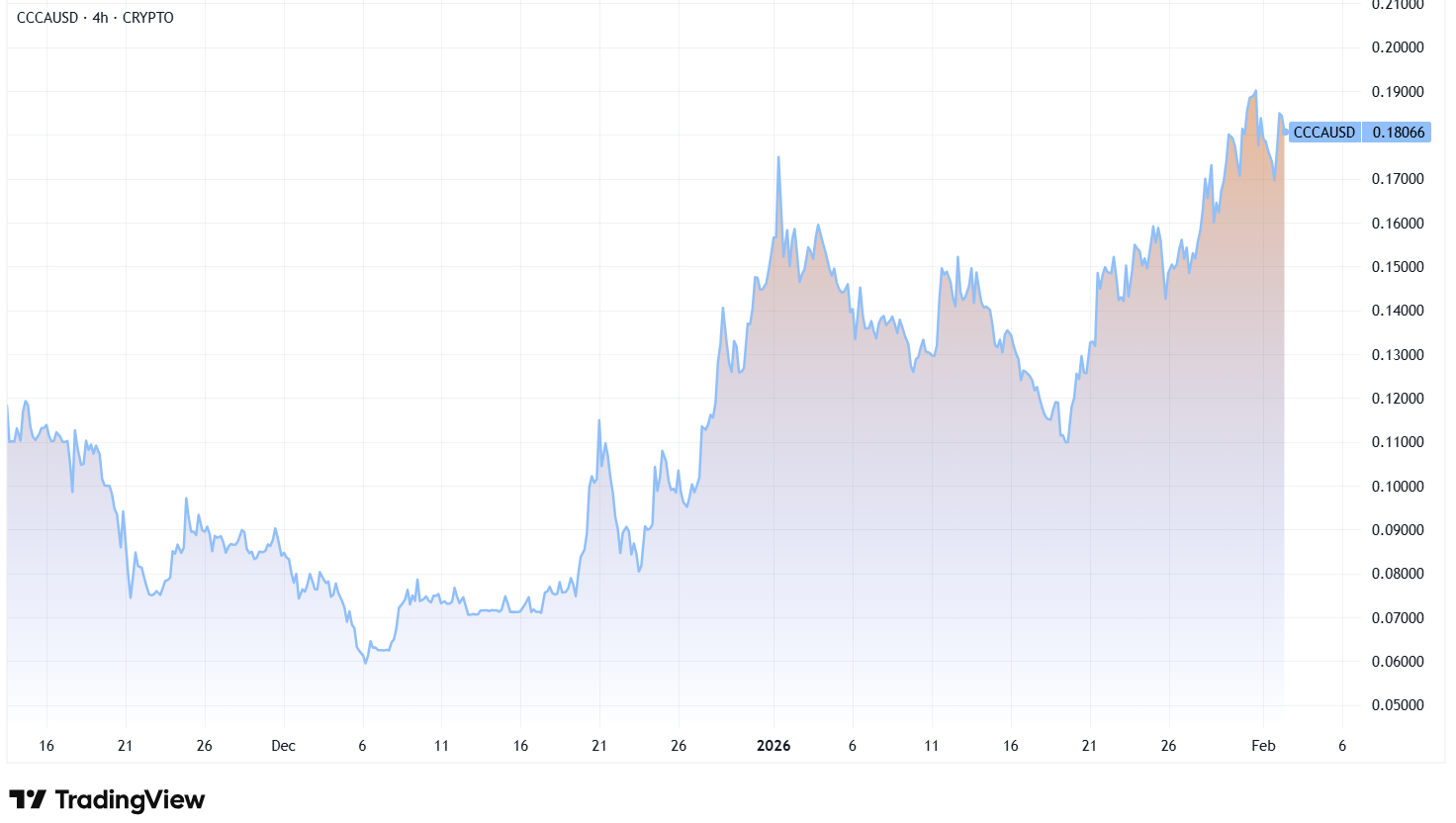
The RWA platform focuses on capital markets, particularly repurchase agreements (repos), which represent short-term collateralized loans used by banks and hedge funds. The network currently hosts over $330 million worth of repos. While Canton is a public chain, it prioritizes privacy and supports permissioned features for TradeFi use cases.
Why is Canton a top pick?
Canton is a fast-growing RWA project backed by partners like Bank of America, 21Shares, BP, Citi, Deloitte, Fidelity, Franklin Templeton, Goldman Sachs, Moody’s, Nasdaq, and Morgan Stanley, among others.
| Supported RWAs | Repos, Treasuries |
| Chain | Canton |
| Price | $0.18 |
| Market Cap | $6.8BN |
What is RWA Crypto? (The Trillion-Dollar Market Opportunity)
RWA crypto coins power blockchain protocols and projects that enable RWA tokenization and related services, either as their main focus or part of a broader range of solutions.
In addition, there are industry-agnostic chains offering RWA services. For example, Ethereum hosts the largest RWA ecosystem today, but the sector represents only a fraction of its large ecosystem that spans Web3, utility tokens, non-fungible tokens (NFTs), and other decentralized applications (dApps). This is why we didn’t count it as an RWA coin.
RWAs are one of the fastest-growing trends in 2025, expanding at a faster pace than popular markets like AI coins, NFTs, and even meme coins.
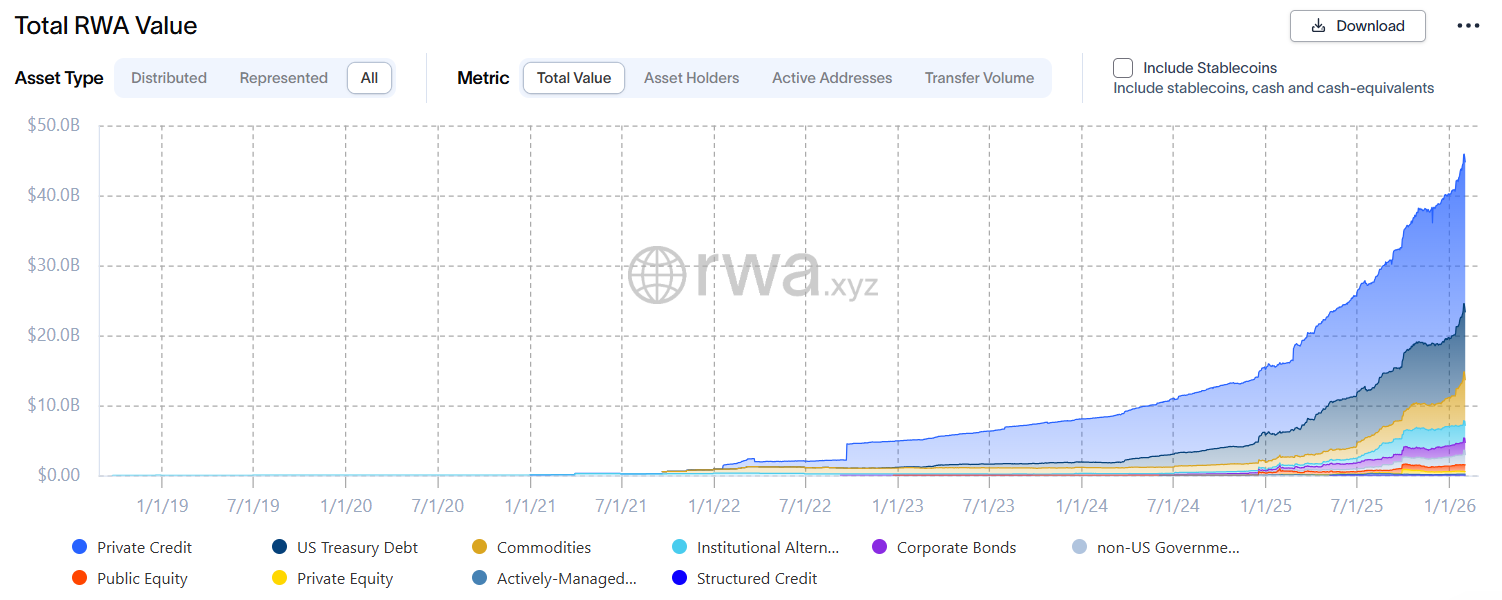
RWA.xyz data shows that the total value of RWAs, excluding stablecoins and Canton’s repos, was at a record $45 billion in January 2026.
What Are the Main Types of RWA Crypto Projects?
The five largest RWA categories are:
- Private Credit: These are tokenized loans issued by private lenders to individuals and institutions. Thanks to tokenization, these high-yield, often illiquid instruments become accessible to global investors. Some of the largest RWA platforms for private credit include Figure, Tradable, and Maple Finance.
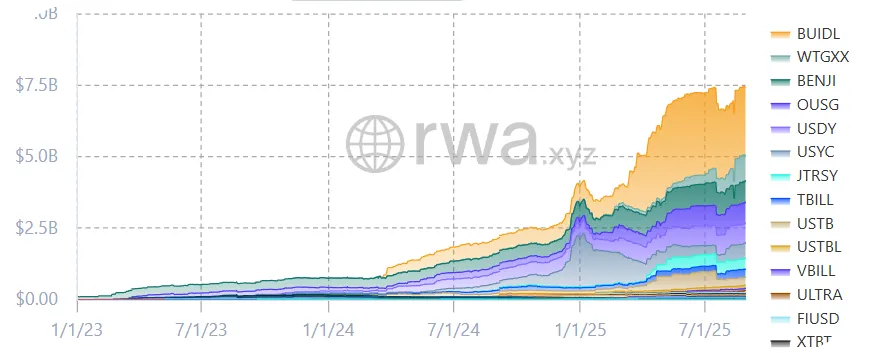
- U.S. Treasury Debt: They represent tokenized U.S. government bonds, such as Treasury bills. Popular RWA products giving exposure to U.S. Treasuries include BlackRock’s BUIDL and Franklin Templeton’s BENJI.
- Commodities: Tokens can represent commodities like gold or silver, tracking their prices on-chain. The two largest commodity RWAs are Paxos Gold (PAXG) and Tether Gold (XAUT), with a combined value of over $2 billion.
- Institutional Alternative Funds: These are tokenized shares of hedge funds, private equity, or other investment vehicles. Securitize offers the most diverse RWA ecosystem across institutional funds, hosting 14 products with a total value of nearly $650 million.
- Stocks: Investors can gain exposure to company shares directly on-chain. Stock-backed tokens enable 24/7 trading, fractional ownership, and global access. However, stock RWAs differ from security tokens. While both can be pegged to equities, security tokens are highly regulated and carry the same legal status as traditional stocks.
How Does RWA Tokenization Work?
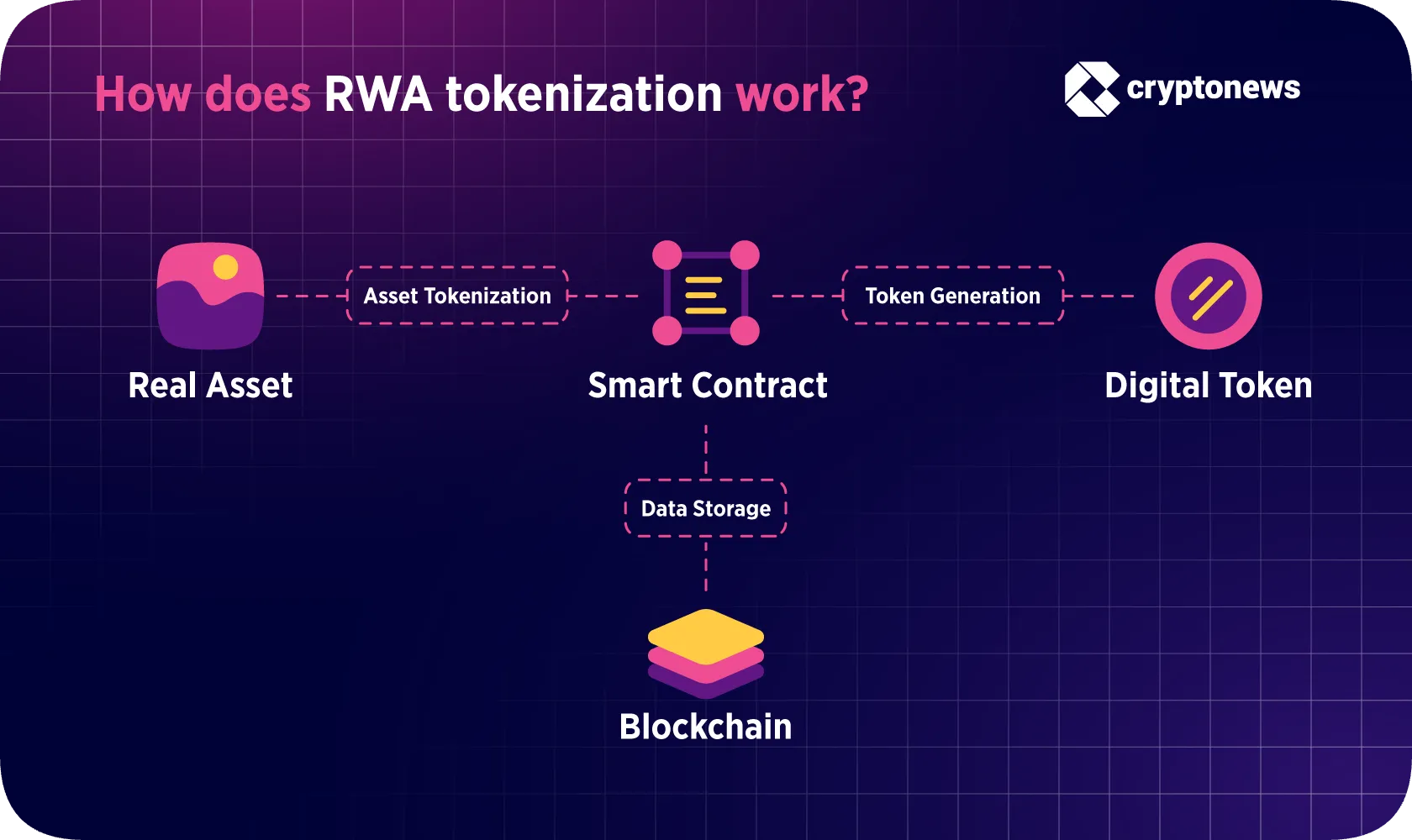
The RWA tokenization process involves three main steps: off-chain standardization, where the assets’ details are formalized; smart contract creation to record all the details on-chain; and the token’s distribution to secondary markets.
Why Real-World Asset Tokens Are Growing in 2026
RWAs are among 2025’s fastest-growing trends, with total value at record highs. Here are the key reasons real-world assets are so valuable today:
💼 Institutional Adoption
Large financial institutions and traditional firms are investing in tokenized RWAs, contributing to adoption and increased demand. For example, BlackRock’s BUIDL token, a $2.5 billion market, is held by less than 100 qualified U.S. investors, highlighting interest from institutions.
📈 Yield Opportunities
Retail and institutional investors are increasingly showing interest in stable, yield-generating assets, particularly tokenized U.S. Treasuries. Seven of the top ten tokenized RWA projects by market cap have U.S. Treasury exposure.
⚖️ Favorable Regulation
Regulators in key markets—the U.S., European Union, and parts of Asia—now provide clearer rules, drawing more capital into RWAs. Some products remain limited to accredited investors and vetted entities to meet compliance requirements.
🌍 Blockchain Benefits & Increased Awareness
Blockchain ensures global accessibility, built-in compliance, transparency, faster settlement, and lower costs. Meanwhile, traditional investors are more open to crypto adoption. For many, RWAs are a practical bridge between traditional finance and DeFi.
How to Invest in RWA Crypto Safely
Despite record growth in 2025, it’s not too late to invest in RWA crypto assets. To get exposure to this fast-growing trend, follow these simple steps:
1. Research the RWA Projects
Read the project’s whitepaper, regulatory disclosures, and any third-party audits. If the token represents securities or pays yields, confirm the issuer is licensed or regulated. Use a vetted project list to start, then verify details at the original sources.
2. Understand the Underlying Asset
Know exactly what backs the token—U.S. Treasuries, private credit, or commodities. Review how that asset has performed and the risks involved before buying. Make sure it fits your goals, timeline, and risk tolerance.
3. Verify Custodians and Issuers
Identify who holds and manages the real asset. For example, Paxos and Tether act as custodians for gold-backed tokens. Check that they publish regular updates and audits so you can confirm reserves and oversight.
4. Use Secure Wallets
Choose a secure wallet to store your RWA tokens. One of the best options is the Best Wallet, which supports tokens across more than 60 chains, including Ethereum and Solana. Besides offering robust security, Best Wallet also supports token swaps and portfolio management.
👉 Take a look at our pick of the best crypto wallets.
5. Start Small and Diversify
Begin with a small amount and spread your investment across different RWA categories and issuers. You can diversify into tokenized bonds, commodities, and private credit to reduce single-asset exposure.
6. Monitor Exposure and Regulatory Changes
Monitor your exposure to RWAs and rebalance your portfolio regularly. Also, RWA tokens often fall under securities laws, so make sure to follow updates from financial regulators like the U.S. Securities and Exchange Commission (SEC).
Advantages of Investing in RWA Tokens
RWAs offer many great opportunities for investors by bridging the gap between traditional finance and DeFi, including:
Diversification
Crypto investors can diversify their portfolios by allocating to traditional assets like bonds, real estate, or commodities directly on-chain. Check out our example of a balanced portfolio that also includes gold RWAs.
Stable Yields
Tokenized treasuries and private credit pools can deliver steady, lower-risk returns, offering investors a chance to benefit from a stable yield, eliminating risk
Access and Fractional Ownership
High-value assets can be split into small units, lowering the entry cost. A $1,000,000 home, for example, can be divided into 10,000 tokens so someone can start with $100. Blockchain rails also enable global participation, widening investor access.
Liquidity
Secondary trading of tokenized assets can improve liquidity compared to traditional markets. Real estate is a great example. Consider the traditional process of selling a property. It can take several months, if not years to find a suitable buyer.
With RWA tokenization, the real estate tokens can be listed on secondary markets, allowing people from all over the world to invest.
Risks of Buying Real-World Asset Crypto
Despite the advantages RWA assets bring, they also come with challenges worth keeping in mind, such as:
Regulations
While the regulatory landscape has become more favorable, RWA projects have to implement compliance mechanisms, implying additional costs and often reducing access for retail investors. Meanwhile, the rules for tokenized securities may differ from place to place, and future changes may impact investors.
Counterparty Risk
Crypto assets like Bitcoin and Ethereum are decentralized, but RWAs require trust in issuers and custodians. For example, investors should be confident that Paxos and Tether hold the reported gold reserves for their PAXG and XAUT tokens.
Liquidity Constraints
RWA tokens open doors for secondary trading, but markets need real buyers and sellers to work. Take a secondary market for 10-year mortgage-backed securities: if no one is bidding, an investor can’t exit early and must hold the position until the full 10 years pass.
Smart Contract Risk
Vulnerabilities in tokenization or DeFi protocols can expose investors to technical failures. Developers must use established blockchains and tokenization platforms to avoid loopholes.
What Will Happen Next for RWA Crypto?
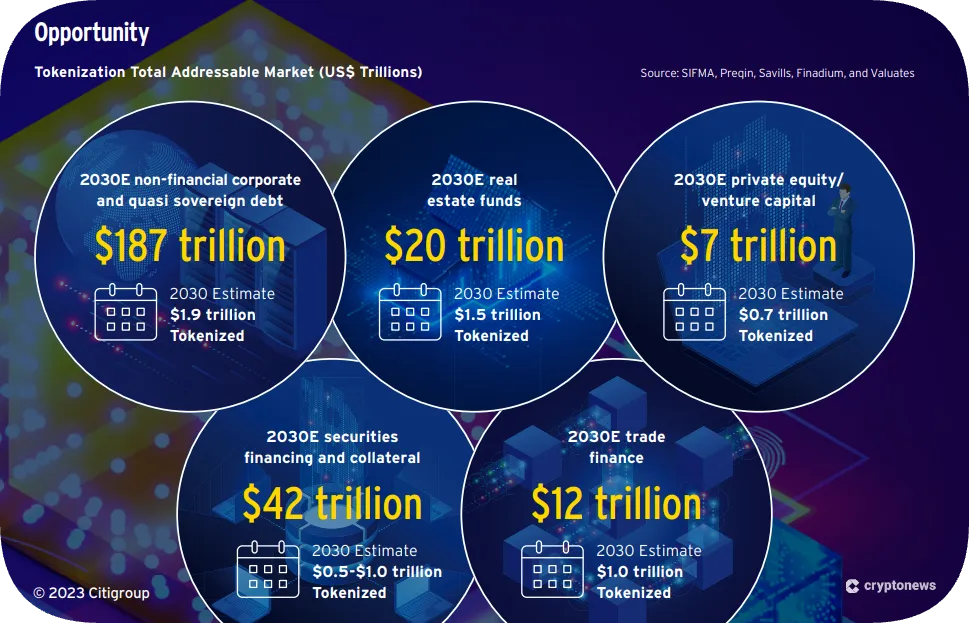
Tokenization is poised to become one of the biggest trends in crypto. Citigroup expects the market to reach up to $4 trillion by 2030, expanding by a factor of 80x. Corporate and government debt is projected to make up half of this value.
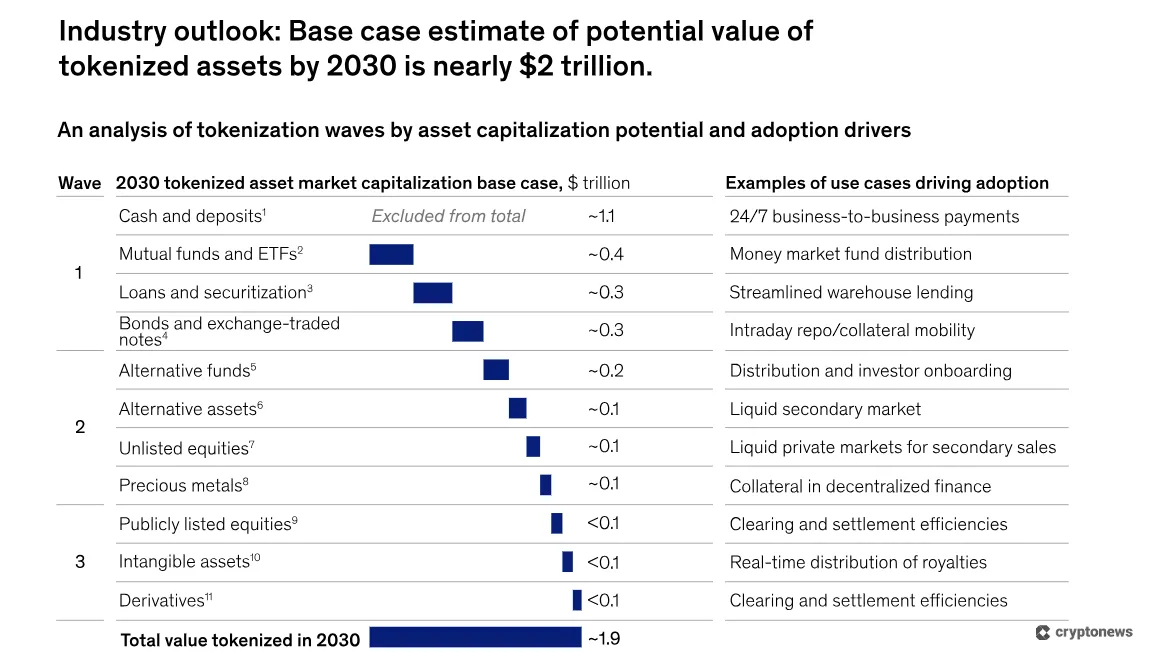
McKinsey & Co. also predicted that tokenization could reach between $2 trillion and $4 trillion by 2030. The management consulting firm anticipates that the most popular categories will be cash and deposits, bonds, mutual funds, and ETFs, as well as loans and securitization.
Upcoming RWA Token Launches
Aside from long-term market outlooks, several RWA projects are preparing to launch by the end of the year, including:
👉 If you want to diversify your exposure beyond RWA early-stage projects, check out the best presales across multiple use cases.
Verdict: What’s the Best RWA Project to Invest in Right Now?
Real-world assets are gaining traction in 2026 as investors seek exposure to traditional assets and yield opportunities, including U.S. Treasuries, commodities, and private credit. Meanwhile, stablecoins continue to account for about 8% of the entire crypto market, showing how RWA tokens already underpin much of DeFi’s activity.
Among the best RWA projects, Chainlink (LINK) stands out because it provides secure, decentralized oracle services that connect real-world data to blockchains. This role is especially important within the Ethereum and DeFi ecosystem as RWAs rely on accurate pricing, interest rates, and off-chain data to function.
Without Chainlink’s verified, real-time information, smart contracts across multiple chains (including Ethereum, BSC, and Solana) couldn’t work reliably, making RWA utility an important infrastructure layer, not just a temporary narrative.
FAQs
What is the biggest RWA crypto project?
Is RWA crypto safe to invest in?
How do RWA tokens make money?
Can I buy RWA tokens on Coinbase?
How big is the RWA market?
References
- RWA Value chart (RWA xyz)
- Tokenized Treasuries chart (RWA xyz)
- Tokenization Opportunity Diagram (Citigroup)
- Tokenization Industry Outlook (McKinsey)
2M+
250+
8
70







 in numbers

About Cryptonews
Our goal is to offer a comprehensive and objective perspective on the cryptocurrency market, enabling our readers to make informed decisions in this ever-changing landscape.
Our editorial team of more than 70 crypto professionals works to maintain the highest standards of journalism and ethics. We follow strict editorial guidelines to ensure the integrity and credibility of our content.
Whether you’re looking for breaking news, expert opinions, or market insights, Cryptonews has been your go-to destination for everything cryptocurrency since 2017.
