

Polymarket Fees Explained: Trading, Winnings, and Withdrawals
We believe in full transparency with our readers. Some of our content includes affiliate links, and we may earn a commission through these partnerships. However, this potential compensation never influences our analysis, opinions, or reviews. Our editorial content is created independently of our marketing partnerships, and our ratings are based solely on our established evaluation criteria. Read More





Polymarket is a decentralized prediction market where users can trade based on the outcome of real-world events, ranging from the price of cryptocurrency to elections, politics, and sports. Unlike traditional prediction markets, users can buy and sell “Yes” or “No” shares in USDC.
Despite the platform’s popularity, many misunderstand the fees associated with using it. Since it’s described as “no-fee,” most users assume that trading, profits, and withdrawals are all free of charge. This is partly true as there are some external costs that don’t come directly from Polymarket itself.
In this guide, we will clear up the picture and go through the fees you should be aware of when using Polymarket. We will break down the fee structure, how it works, and what to expect when placing bets.
- In This Article
- Show Full Guide

Polymarket Fees Overview
- Polymarket has no fees on most markets. It allows users to buy and sell shares without having to pay platform trading fees.
- There is no fee on winnings. When a market resolves, winning shares pay $1 USDC without Polymarket taking a cut.
- However, gas fees may apply during deposits, withdrawals, or external wallet transactions, but not during trading itself.
- Trading fees apply only in specific cases, mostly taker orders in 15-minute crypto markets.
- Taker fees are dynamic; they peak when odds are near 50% and fall as odds approach 0% or 100%.
- The platform doesn’t charge withdrawal fees either, but third-party services may charge their own fees.
- Compared to Kalshi, Polymarket is cheaper for casual and long-term traders.
Does Polymarket Have Fees?
This is where the confusion comes from, as technically, no. For most Polymarket markets, there are no trading fees needed to buy or sell shares. You can enter and exit positions without the platform taking a direct cut.
However, there are some applied fees in certain conditions, such as short-term 15-minute markets and aggressive (taker) orders. These taker trading fees vary based on market probability and other factors.
Additionally, you may encounter gas fees when depositing on Polymarket or withdrawing funds, or when performing blockchain transactions outside the platform, though these costs are not charged by Polymarket itself.
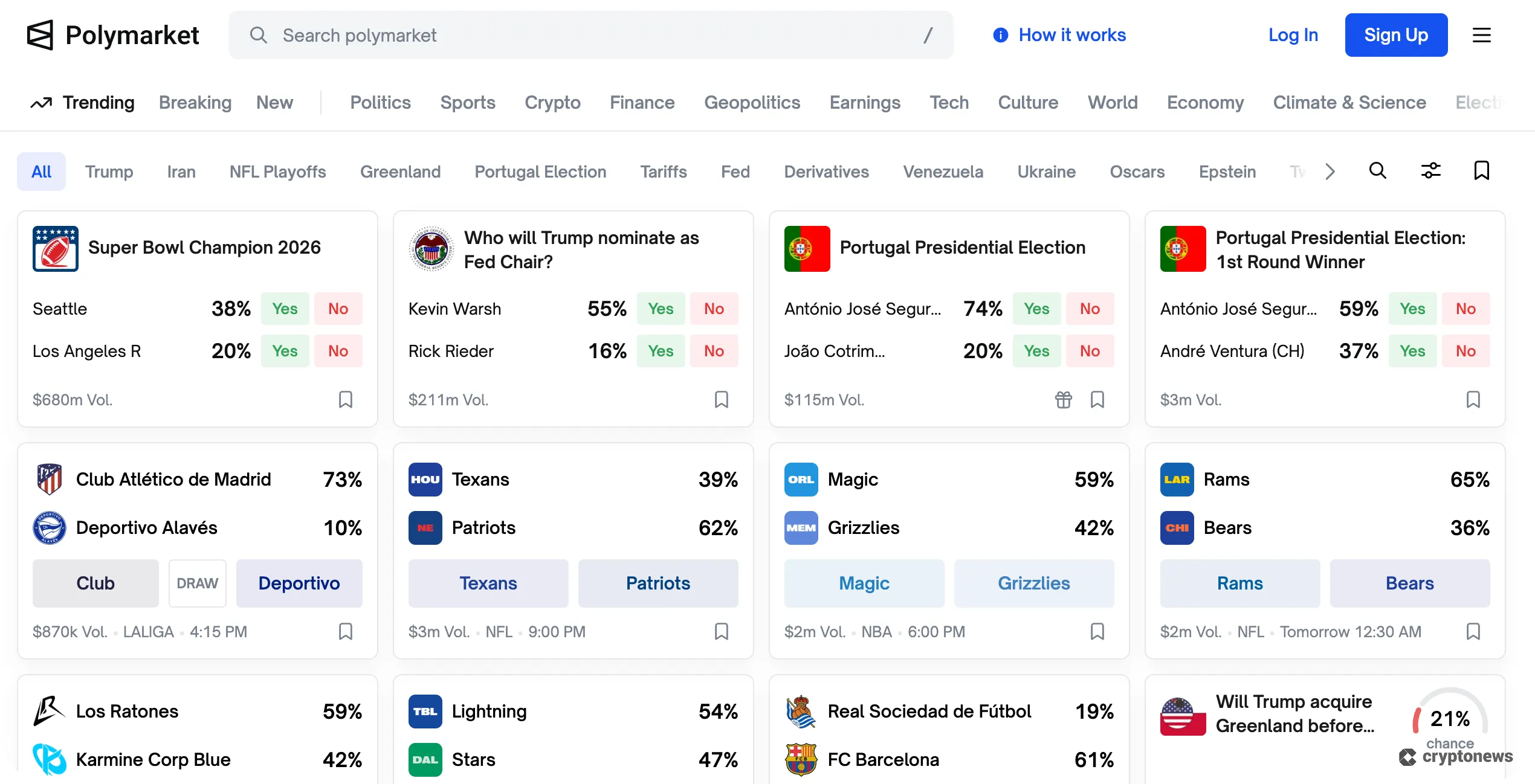
Polymarket isn’t like a traditional sportsbook, which usually embeds its fees into odds, making users pay indirectly on every bet, no matter if they win or lose. Meanwhile, crypto exchanges charge maker and taker fees on every trade, with fees changing depending on volume or user level.
Polymarket sits between these models. It operates as a marketplace where users trade with each other, rather than the platform acting as the counterparty to your bet. Prices are set by supply and demand instead of a house margin, trading volume, or a subscription plan, and fees are zero in most cases.
👉 Learn more about what Polymarket is and how it works
Polymarket Fee Structure Explained
Overall, Polymarket has a low-fee model with most markets remaining free as of August 2026. But there are specific fees that apply based on the type of market rather than the user tier or volume.
See, on Polymarket, fees change depending on trading actions, profit settlements, and transaction type.
Let’s break down the difference between the Polymarket fee categories.
| Fee Type | What It Applies To | Cost / Rate (2026) | When It Applies |
|---|---|---|---|
| Trading Fees (Taker) | Short-term 15-minute crypto markets | Dynamic, probability-based; highest near 50% odds (up to ~3% in some cases) | Only when placing aggressive taker orders |
| Trading Fees (Maker) | Liquidity providers | 0% (eligible for rebates funded by taker fees) | When placing limit orders that add liquidity |
| Profit / Winnings Fees | All settled positions | 0% | Always — Polymarket does not take a cut of winnings |
| Gas Fees (Polygon / Ethereum) | Deposits, withdrawals, and external wallet transactions | Network-dependent (often | Only when moving funds on-chain, not during trading |
| Relayer / Payment Fees | Deposits and withdrawals via third parties | Around 0.3% (minimums may apply) | Depends on payment method |
| Slippage (Indirect Cost) | Low-liquidity markets | Variable | Depends on market depth |
| U.S. Platform Taker Fee | Trades placed via the U.S. app | ~0.01% | U.S. app only |
The Cost to Trade on Polymarket
In most Polymarket markets, there are no trading fees at all. Users can buy and sell shares in standard or long-term markets without Polymarket charging them anything. This has been the experience of most users on the platform.
Fees show up only in 15-minute crypto markets where Polymarket charges taker fees while keeping maker orders free. The goal of this decision is to manage fast-moving markets while funding liquidity incentives.
The main difference is between maker and taker orders — in other words, how your order is filled:
- If you place a limit order and wait for someone else to trade with you, you’re a maker. You’re adding liquidity to the market.
- If you accept an offer that’s already there and trade instantly, you’re a taker because you’re accepting what’s available and removing liquidity.
One thing that confuses people is the phrase “Polymarket transaction fees,” which usually refers to the taker fees we’ve just discussed, not blockchain costs, which are different and paid in POL or ETH. These costs are usually for Polygon or Ethereum gas fees for on-chain actions like buying, selling, or approving wallet transactions.
Taker Fees on 15-Minute Crypto Markets
15-minute markets allow users to trade on very short-term crypto price prediction shares on Polymarket in assets like BTC or ETH. Since they move faster and attract high-frequency users, they are more susceptible to latency-based arbitrage and bot activity; hence, taker fees block this behavior.
In these markets, fees are charged only when you place an aggressive order that fills immediately. The fee is calculated based on the share price, which reflects the implied probability of the outcome.
Fees are the highest when probabilities are close to 50%, where uncertainty and trading activity are greatest, and they get lower when probabilities move closer to 0% or 100%.
The maximum effective fee rate is around 1.56%, though it may appear higher after rounding rules are applied. Polymarket rounds fees to predefined increments that can affect the final amount paid on each trade.
Maker Rebates Program: How Fees Are Recycled
The Maker Rebates Program explains how taker fees collected in 15-minute crypto markets are distributed. Instead of being kept entirely by the platform, these fees are redistributed to traders who provide liquidity.
These fees are usually distributed regularly and are considered rewards for participants who keep orders available on the book. This system results in tighter bid-ask spreads, more reliable fills, and deeper liquidity even when the market is volatile.
It’s important to note that rebate percentages are not fixed and can be adjusted based on market conditions and incentive goals. Polymarket can also adjust eligibility criteria at its own discretion.
Gas Fees on Polymarket
Polymarket operates using  USDC +0.06% on Polygon, an EVM-compatible network with low transaction costs. Gas fees are the fees required to execute transactions on Polygon and are ultimately paid in the network’s native gas token, POL.
For most users trading through the Polymarket web app, gas fees are abstracted away. Polymarket uses proxy wallets combined with a relayer architecture. Trades, order placements, cancellations, and conditional token framework (CTF) operations are executed by the relayer, which pays the onchain gas on the user’s behalf.
As a result, standard trading feels “gasless,” even though transactions are still settled on Polygon. However, gas fees do apply in certain scenarios:
- Direct EOA interaction: If you trade or interact with Polymarket contracts directly from an externally owned account (EOA), you must hold
 POL +1.28% to pay gas.
 - Deposits and withdrawals: Onchain transfers of USDC (especially bridging from Ethereum) incur standard network gas costs.
- One-time approvals or wallet deployment: Depending on the flow, these may involve gas, though they are typically relayed for standard users.
 POL
POL Polymarket Fees on Winnings & Profit
Polymarket does not charge a fee on winnings. Once a market resolves, winning shares pay out $1 USDC each, and losing shares expire worthless ($0). The platform does not take a cut at settlement.
Any costs you incur happen before resolution, not after. These may include taker fees in certain short-term markets or gas fees related to deposits, but the payout itself is always fee-free.
Your final profit depends mainly on the price you pay for shares and when you choose to sell them. On Polymarket, you don’t have to wait for a market to resolve to exit a position. You can buy shares at one price and sell them later if the market price rises.
If the price falls instead, selling early may reduce your profit or result in a loss, even though Polymarket doesn’t charge fees on winnings.
Withdrawal Fees & Payment Methods on Polymarket
Polymarket only supports the stablecoin USDC for deposits and withdrawals on its core platform, enabling direct wallet-to-wallet transfers. It doesn’t support internal balance in fiat or other payout currencies.
In terms of withdrawal fees, Polymarket itself doesn’t charge any fees. When you withdraw your winnings, you only need to pay the Polygon gas in POL or Ethereum gas in ETH, depending on the network you use.
Extra costs might show up if you use third parties or if you move funds through crypto on-ramps or off-ramps like Coinbase or MoonPay, as they apply their own fees. Coinbase often charges little to nothing, while MoonPay takes 1-2% as a processing fee. Remember, these charges come from the provider and not Polymarket itself.
Deposit fees work the same way. Polymarket doesn’t charge you when depositing USDC, but you still need to pay gas fees. If you use fiat bridges or relays, you should expect additional fees, which are often around $0.3% with a minimum charge.
Polymarket vs. Kalshi Fees
Poylmarket and Kalshi are both prediction markets, each with its own fee model:
- Polymarket keeps fees low by default, with most markets being fee-free.
- Kalshi uses a more traditional exchange-style model that charges trading fees on most contracts with rates based on expected earnings.
On Kalshi, makers pay less and can earn rebates, while takers usually pay more. It also applies payment-method fees because it runs on fiat rails rather than crypto.
Let’s compare the two platforms in terms of fee types and how they differ.
| Fee Type | Polymarket (Global) | Kalshi |
| Taker fees | 0% on most markets; up to ~3% on 15-minute crypto markets | Around 7% of expected earnings |
| Maker fees | 0% + maker rebates | Around 1.75% of expected earnings + rebates |
| Winnings fees | 0% | 0–10% depending on the market |
| Withdrawal fees | $0 platform fee + ~$0.10–$0.50 in gas | ~$2 flat fee |
| Deposit fees | $0 + gas or ~0.3% relayer fee | 0% ACH, ~2% debit |
| Network costs | POL/ETH gas (~$0.10–$0.50) | None (fiat-based) |
Let’s break down a quick cost example using a $100 contract:
- On a standard trade, Polymarket usually costs around $0.20 in gas, while Kalshi can charge up to $7 in taker fees for the same position.
- For high-volume makers, the difference narrows as Polymarket rebates can make trading almost free, while Kalshi rebates can reduce fees to around 1%.
For casual traders or anyone placing small trades, Polymarket is considered cheaper. For high-volume or professional traders who qualify for rebates, Kalshi can be a good alternative to Polymarket despite the higher base fees.
Visit PolymarketTaxes on Polymarket: Do You Have to Pay?
Yes. Profits from Polymarket can be taxable depending on where you live. In many countries, prediction market trading gains are treated like crypto capital gains rather than gambling income.
⚠️ It’s important to note that Polymarket doesn’t withhold taxes, issue tax forms, or report activity on your behalf.
It’s also important to distinguish between platform fees and taxes, as trading, taker, and gas fees reduce your net proceeds, while taxes apply to your realized gains. For example, if a share settles at $1 and you bought it at $0.40, the taxable gain is $0.60 per share, regardless of when fees were paid.
➡️ This might be a bit confusing, especially to beginners. That’s why it’s best to talk to a tax professional who understands crypto and Polymarket’s legality to guide you through the process.
Final Thoughts on Polymarket Fees
Polymarket keeps fees simple, with most markets being fee-free. They don’t take a cut of winnings or withdrawals. The only place where trading fees apply is in specific short-term crypto markets, and even then, they apply only to taker orders. Any other fees are based on standard blockchain costs or third-party services.
This fee model is best suited for casual traders, long-term event traders, and anyone who places limit orders. If you are not trading fast crypto markets aggressively, you’ll likely pay very little.
As always, make sure you trade responsibly, as prediction markets move fast, and low fees don’t reduce risk. You have to do your proper research when trading, understanding the odds, and only spending what you are comfortable losing.
👉 Learn More: Is Polymarket Legit? Safety & Risks Analysis
FAQs
How does Polymarket make money with no fees?
How does Polymarket betting work?
How does Polymarket determine odds?
Are there hidden fees?
Why do some markets have fees and others don’t?
Are fees likely to change in the future?
Is Polymarket cheaper than sportsbooks or Kalshi?
How does Polymarket pay out?
References
- Trading Fees (Polymarket Docs)
- Polymarket Introduces Taker Fees for 15-Minute Crypto Prediction Markets (Kucoin)
- Fees & Operating Hours (Polymarket Exchange)
- Proxy Wallet (Polymarket Docs)
- Relayer Client (Polymarket Docs)
2M+
250+
8
70






 in numbers

About Cryptonews
Our goal is to offer a comprehensive and objective perspective on the cryptocurrency market, enabling our readers to make informed decisions in this ever-changing landscape.
Our editorial team of more than 70 crypto professionals works to maintain the highest standards of journalism and ethics. We follow strict editorial guidelines to ensure the integrity and credibility of our content.
Whether you’re looking for breaking news, expert opinions, or market insights, Cryptonews has been your go-to destination for everything cryptocurrency since 2017.
