What Is a Token Generation Event (TGE) in Crypto?





A token generation event (TGE) is when a new token is created on an existing blockchain, such as Ethereum, Solana, or BNB Chain.
It represents the moment when the new token is minted to eventually be distributed to early investors, developers, and the public, according to the conditions of the broader token launch process.
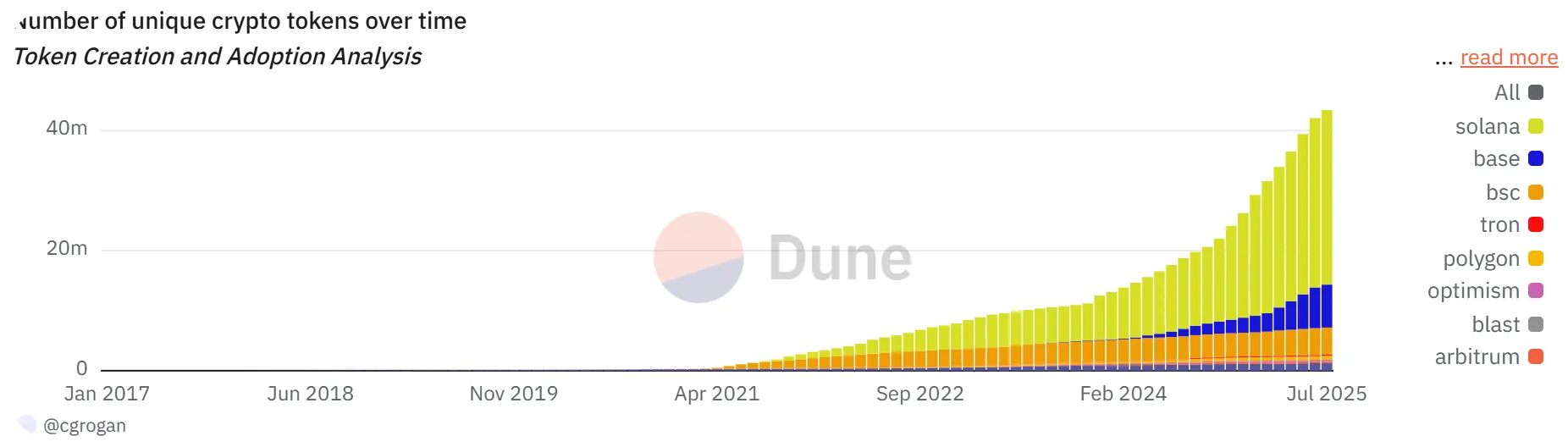
In 2025, the number of new coins and tokens is growing at a record pace, with monthly issuance consistently exceeding 2 million. However, only a few are relevant, which is why understanding TGEs is essential for newcomers and experienced investors.
In this article, we explain what a TGE is and why it is important for new crypto projects. By reading this, you’ll be able to cut through the confusion surrounding this key concept.
Key Takeaways
- A TGE marks the moment of token creation on a blockchain like Ethereum, Solana, or BNB Chain.
- TGEs are essential for all types of token sales, including crypto presales, and token launch processes.
- However, their broader meaning may also involve token minting combined with fundraising and distribution.
- When used broadly, TGEs differ from ICOs, IEOs, IDOs, and listings by being more straightforward and focusing on communities.
Token Generation Event – Meaning
Blockchains supporting smart contracts (self-executing programs) enable the creation of new tokens on top of them. Most often, these are proof-of-stake (PoS) chains like Ethereum, Solana, and BNB Chain. In contrast, the Bitcoin network doesn’t natively support token creation.
TGEs refer to the creation of new tokens and don’t cover the launch of native crypto coins on their own chains.
A TGE is the key moment of a broader token launch process. In strict terms, it refers to the exact point when tokens are minted through the smart contract. However, the crypto community often uses the term with a broader meaning that includes the minting of the token along with its initial distribution and fundraising event.
As mentioned, TGEs are gaining traction in 2025 due to a simplified token creation process. Thanks to platforms like Pump.fun, Solana currently accounts for about 70% of more than 40 million tokens created to this day.
Let’s explore TGE in more detail to see how they evolved and what their purpose is.
Where the Term Came From
The TGE term became popular during the 2017 boom of Initial Coin Offerings (ICOs), which are fundraising methods that help crypto projects distribute their tokens and raise capital from the public.
Projects like Bancor and 0x started to use the term to describe their public sales while distancing themselves from ICOs, which were treated as securities offerings and drew scrutiny from the U.S. Securities and Exchange Commission (SEC).
Over time, the TGE term extended its reach beyond just the smart contract mint, also referring to the public launch. Despite being often used interchangeably with token launches, TGEs technically describe the token minting process.
How a TGE Works
While the TGE represents the specific moment when the new token is created, it is part of a broader process that includes the following aspects:
1️⃣ Whitepaper and Tokenomics
Before the TGE, the project teams usually publish a whitepaper and define tokenomics, representing the main economic rules, including utility, supply, distribution, and allocation. Whitepapers help investors and the public get introduced to the project.
2️⃣ Smart Contract Code Written and Audited
The project team deploys a smart contract on a blockchain, stipulating the main rules, such as total supply, inflation rate, etc. The smart contract is tested and often audited by third-party firms for security.
3️⃣ Block Height or Timestamp Triggers Mint
Based on the conditions stipulated in the smart contract, token minting is triggered at a pre-defined block height or timestamp on the underlying chain. This is the TGE moment.
4️⃣ Initial Token Distribution
Once live, tokens are distributed to early investors, the team, advisors, treasury, or directly to the public (via an airdrop or exchange listing).
5️⃣ Vesting and Lock-Up Periods Start
The tokens allocated to the team or strategic investors are often locked and follow a vesting schedule to prevent immediate selling. It usually starts after the TGE and implies gradual unlocks at predetermined periods.
Core Purposes
The main goal of a TGE is to jumpstart a crypto project’s lifecycle through fundraising and community engagement.
Crypto projects can create their own tokens to serve as internal currencies, support branding, and unlock key utilities within their ecosystems. The raised capital is used to support platform development and incentivize engagement.
TGEs can bootstrap network utility and governance by distributing tokens that unlock access to platform features and voting rights.
Also, TGEs align incentives across all stakeholders, including founders, investors, developers, and users.
TGEs vs. Other Launch Mechanisms
In their broader sense, TGEs are one of several ways to launch a crypto token and raise funds, each with its distinct strategies, costs, and regulatory implications.
However, most of these alternative launch mechanisms also include a TGE moment anyway, making the technical event a key component across all methods.
It’s just that some crypto projects choose to extend the meaning of a TGE to cover their entire token launch process, either for marketing or regulatory reasons, which may create confusion among new crypto users.
Here is how these TGEs compare with other token launch mechanisms, such as direct listings, ICOs, IDOs, and airdrops.
| Method | Cost to Project | KYC Required (for Users) | Liquidity Speed | Target Users |
|---|---|---|---|---|
| TGE | Medium | Optional | Slow to Fast (if paired with launch) | Community, early investors |
| ICO | Medium to High | Often skipped, but more common today | Moderate to Fast | Retail and institutional investors |
| IDO | Low to Medium | Depends on the platform | Very Fast (DEX listings) | DEX traders, DeFi participants |
| IEO | High | Yes (via exchange) | Very Fast (CEX listings) | Exchange users |
| Direct Listing | High (listing fees, legal costs) | Yes (CEX rules) | Instant | Traders, retail investors |
| Airdrop | Low | Rarely | No liquidity, unless listed | Protocol users, Brand advocates |
Let’s explore each of these mechanisms in more detail to understand how they differ from TGEs.
ICO vs. TGE
TGEs are the most closely related to Initial Coin Offerings (ICOs), as the term was first popularized by projects looking to distance themselves from ICOs due to regulatory implications, but still adopting the same features.
An ICO is a fundraising event where investors deposit crypto in exchange for project tokens. ICO projects can start raising funds even before tokens are minted.
A TGE refers to the point where the tokens are created on-chain. It can be part of an ICO or a standalone event where tokens are either sold or distributed for free.
ICOs may be considered securities offerings in the U.S., while TGEs can be designed to avoid this by not selling tokens directly.
Popular ICOs include Ethereum itself, which raised over $18 million in 2014, Filecoin, EOS, Polkadot, and TON.
Difference Between TGE and Listing in Crypto
As mentioned, a TGE culminates with the on-chain token minting and distribution. In contrast, a direct crypto listing refers to making the token tradable either on a centralized exchange (CEX) through official approval or a decentralized exchange (DEX) by creating a liquidity pool.
Most often, there is a time gap between a TGE and the listing, during which tokens remain illiquid.
Listing on an exchange ensures price discovery, where the token value is determined by the supply/demand dynamic.
Meanwhile, TGEs only define the token’s supply, not its price.
CEXs like Binance, OKX, and Coinbase provide regular updates about upcoming token listings.
IEO/IDO vs. TGE
Initial Exchange Offerings (IEOs) and Initial DEX Offerings (IDOs) are token sales hosted by centralized and decentralized launchpads, respectively. These typically occur during or shortly after the technical TGE.
Unlike generic TGEs, IEOs and IDOs involve curated sales with whitelists, participant caps, and mandatory KYC, especially for IEOs.
They ensure immediate liquidity by integrating listing into the launch process.
It’s worth noting that IEOs and IDOs differ greatly from each other, as CEX listing fees may be higher and regulatory requirements stricter. Decentralized exchanges, on the other hand, are permissionless and more versatile.
Popular IEOs include Ethena (ENA), Ether.fi (ETHFI), Axie Infinity (AXS), Polygon (MATIC), and Injective (INJ).
Airdrop vs. TGE
Projects may opt for crypto airdrops to distribute tokens for free to early supporters or wallet snapshot holders.
Airdrops typically follow the TGE and don’t always provide immediate liquidity, except when an exchange listing follows it.
Projects can use sybil-resistance techniques like verifying wallet activity or ID proofs to ensure fair distribution and prevent abuse.
At the end of 2024, Hyperliquid (HYPE) distributed nearly a third of its token supply through an airdrop, becoming the most valuable on record. Other popular crypto projects that airdropped tokens include Uniswap (UNI), Arbitrum (ARB), and Bonk (BONK).
The TGE Lifecycle & Timeline
As mentioned earlier, a TGE is part of a broader token launch process that can have several steps. Let’s quickly explore the lifecycle of a TGE by breaking down each stage:
Pre-TGE Preparation
Before a token is minted on-chain, the team behind a crypto project has to first establish the main rules and increase awareness. It will focus on three main aspects at this stage:
1️⃣ Tokenomics Modeling
The team must finalize the tokenomics by defining the total supply, inflation/emission rates, vesting schedules, and utility features. These elements determine the token’s value proposition and sustainability.
2️⃣ Security Measures
The tokenomics parameters are encoded into the smart contract, and the team has to implement the highest security standards to make the project resilient against potential malicious behavior.
The most straightforward way is to hire reputable blockchain security firms to audit the smart contract to identify vulnerabilities. The smart contracts may also be made upgradable or managed via multisig wallets to reduce the risk of a single point of failure.
3️⃣ Community Build-Up
Meanwhile, the team ramps up community building by launching and growing online communities on X, Discord, and Telegram. It can also incentivize participation through testnet campaigns.
The Generation Event Day
The TGE day is determined in advance, and when the day comes, the token mint is triggered at a specific block height or timestamp.
However, it’s worth mentioning that this doesn’t happen automatically. On Ethereum, a team user or bot should call the function to trigger the TGE when the block height or timestamp is reached.
Public block explorers usually display a countdown to the TGE, using the block height or timestamp as reference, building excitement before token launch.
This phase may lead to network congestion and surging gas fees on Ethereum or similar chains. To reduce costs, some projects batch the mint or choose to launch on Layer 2 chains like Base or Arbitrum.
The contract address is announced when the token goes live, but this phase also attracts many scammers who release fake addresses. They hope to lure victims through phishing attacks, so users must be wary and engage with official channels only.
Post-TGE Actions
After minting, the project focuses on token distribution and liquidity provisioning. The tokens are distributed based on the allocation scheme and the list of presale participants. For liquidity, the project may seed pools on DEXs like Uniswap or partner with market makers for listings on CEXs.
Once the token reaches secondary markets, the TGE can be considered complete. The team still has to make sure to appear on aggregators like CoinMarketCap and CoinGecko to ensure token visibility.
After the TGE, the project can shift to community governance and ongoing development, with native tokens often providing voting rights and utility features across the ecosystem.
Technical Anatomy of a TGE
From a technical perspective, TGEs rely on blockchain-based smart contracts, with standards and security mechanisms dictating the token’s behavior.
We can highlight four key elements of a TGE’s technical anatomy.
1. Smart Contract Standards
Blockchains support multiple token standards for different types of tokens. For example, Ethereum’s widely used ERC-20 standard is best suited for most typical tokens, including utility tokens and meme coins. It also offers the ERC-721 standard for non-fungible tokens (NFTs).
Other chains offer similar standards, e.g., Solana hosts SPL tokens and BNB Chain has the BEP-20 standard.
Additionally, TGEs can use Ethereum’s ERC-20 while launching on a Layer 2 chain like Base or Arbitrum, thanks to their compatibility with the Ethereum Virtual Machine (EVM).
2. Mint Functions
The smart contract defines not only the token standard but also the main tokenomics aspects, including whether the token will have a fixed total supply minted at once or a mintable/burnable model where tokens are created and burned over time.
All the supply and inflation rules are transparently encoded in the smart contract through the mint, burn, and transfer functions.
3. Vesting Contracts and Cliff Logic
Many TGEs also integrate vesting contracts that encode lockups for early institutional investors, team members, and advisors. These contracts may include a cliff period (such as no tokens released for six months), followed by gradual unlocking based on a linear or custom schedule.
4. Security Mechanisms
To ensure increased safety, developers implement security practices like:
- Reentrancy guards to prevent recursive exploits
- Pausable modifiers that allow the team to halt contract functions in emergencies
- Ownership control for upgrading or disabling contract features after the TGE
Tokenomics & Economic Design
As mentioned earlier, tokenomics refers to the economic model that determines a token’s behavior. It’s like a company’s business model, touching upon aspects like token utility, distribution, supply, and inflation, among others.
A well-designed tokenomics model relies on game theory principles, incentivizing desirable behavior and discouraging bad actors.
Projects launching through a TGE must pay close attention to their tokenomics and its key aspects, which we’ll discuss in this section.
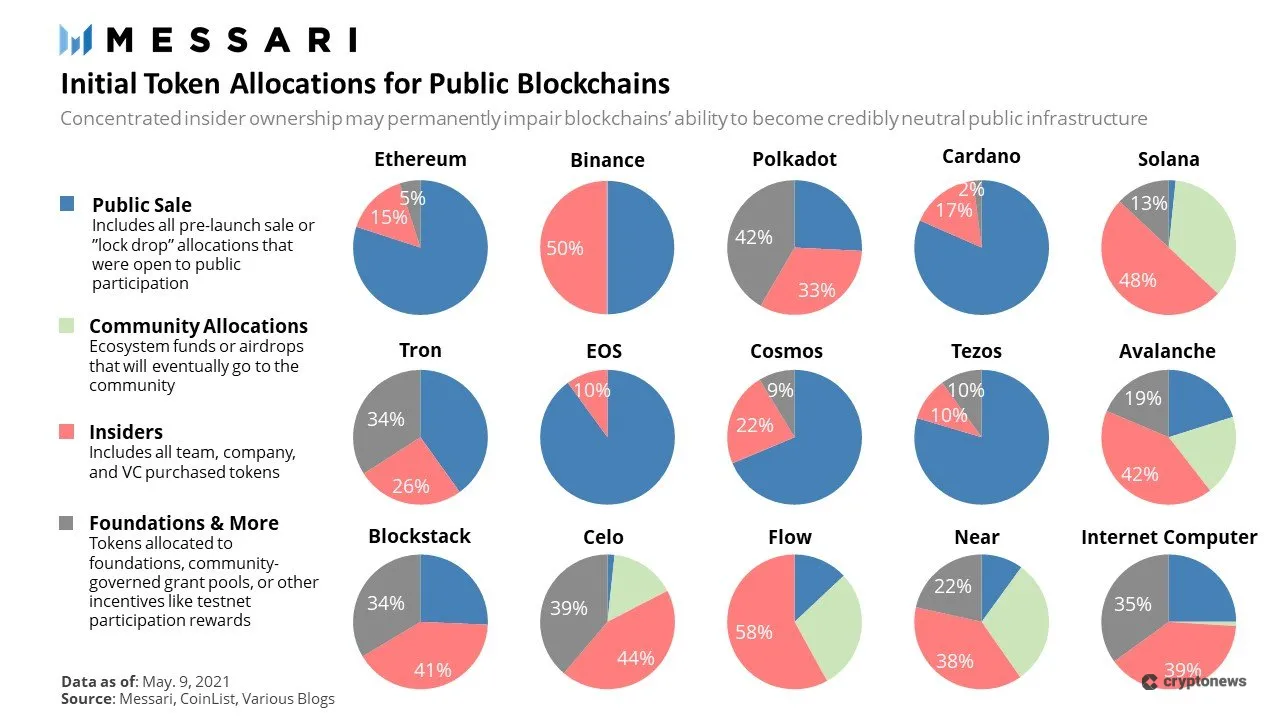
Allocation Buckets
The initial distribution of tokens is typically divided into several key buckets, including:
- Team: Reserved for founders, core developers, and contributors, often subject to vesting schedules.
- Investors: Early institutional backers, including seed and private sale participants.
- Treasury: The project may store tokens in a treasury for long-term sustainability.
- Ecosystem: Tokens can be allocated to grants and partnerships, ensuring ecosystem growth.
- Public: Distributed through sales, airdrops, or community incentives.
Here are some examples of initial token allocations:
Inflation/Deflation Parameters
Crypto projects can use special mechanisms to adjust token supply over time:
- Inflationary models usually include staking incentives and block rewards.
- Deflationary models may include token burns, buy-backs, and halving schedules that gradually reduce the circulating supply.
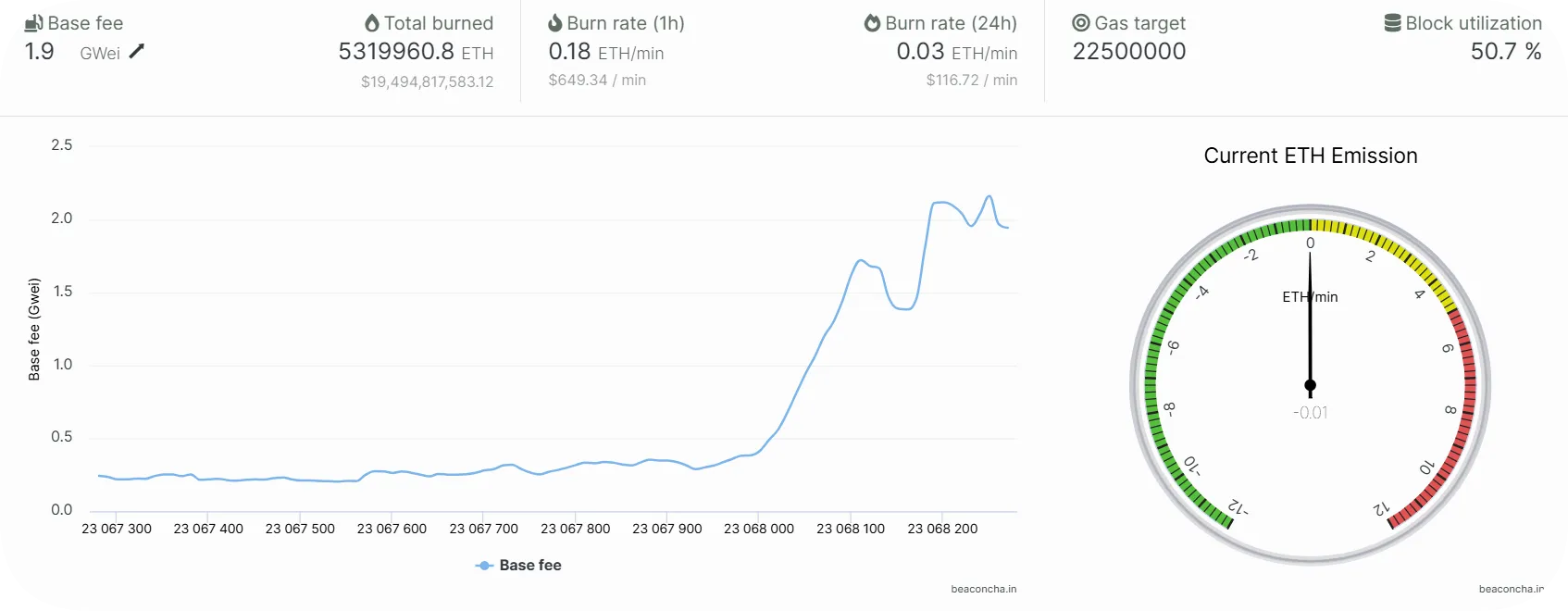
For example, after the introduction of the EIP-1559 upgrade on Ethereum, over 5.3 million worth of ETH from transaction fees has been burned, maintaining the inflation rate at zero.
 Utility & Demand Drivers
 Utility & Demand Drivers
Tokens attract interest when they have real utility within the project’s ecosystem, such as:
- Staking to earn yield, ensure security, or provide liquidity.
- Governance rights.
- Fee discounts or access to premium services.
Game-Theoretic Risks
As mentioned, balanced tokenomics integrates the best game theory practices. Poorly designed tokenomics may lead to risks like:
- High velocity: This happens when tokens circulate too quickly, being sold immediately instead of being held. This may be caused by weak incentives.
- Dump pressure: Without an adequate vesting schedule, early investors or airdrop recipients can create selling pressure.
- Whale dominance: This happens when a few top holders, aka whales, can manipulate the price or governance decisions.
Regulatory & Compliance Landscape in 2026
Global crypto regulations are very fragmented but continue to evolve.
In the U.S., the SEC remains ambiguous on the difference between security and utility tokens. Back in 2018, its head of the Division of Corporation Finance, William Hinman, pointed to the dual nature of digital tokens, but didn’t bring clarity.
Many crypto projects geoblock U.S. users to avoid legal risk.
Elsewhere, the European Union’s Markets in Crypto Assets (MiCA) regulation provides clearer guidance, classifying tokens into multiple categories. Dubai is another crypto-friendly jurisdiction, with its Virtual Assets Regulatory Authority (VARA) allowing registered TGEs.
Token launches that involve fundraising, especially IEOs, often require KYC/AML compliance. However, pure TGEs don’t impose KYC verification.
One key challenge for regulators is to differentiate between security and utility tokens, with the former being treated as securities and regulated as such. Crypto projects can use the Howey Test or the U.K.’s FCA guidelines to assess which classification suits their tokens.
TGEs are designed to avoid being treated as securities, offering utility tokens that provide users with access to certain services within their ecosystem.
Risks, Red Flags & Investor Due Diligence
Besides regulatory considerations, many crypto projects adopted TGEs due to the high prevalence of scams among ICOs. Back in 2018, Statis Group found that nearly 80% of all ICOs were scams.
⚠️ Rebranding to TGEs doesn’t eliminates the risk of scam or smart contract exploits.
Some of the most common types of scams are rug pulls, where the developing team, often anonymous, absconds with the crypto funds deposited by TGE participants. Common rug pull patterns include fully unlocked team allocations, anonymous founders, and rapid liquidity withdrawals after the TGE launch.
Sometimes crypto projects have good intentions but suffer from smart contract exploits due to poor security measures. For example, in May 2025, Alex Lab, a Bitcoin-oriented decentralized finance (DeFi) protocol on the Stacks chain, was depleted of over $4 million worth of crypto due to a flaw in its smart contract logic. It used treasury funds to reimburse users.
While not necessarily a scam, a major red flag is an overly aggressive emission schedule. If tokens are released too quickly without organic demand, the resulting inflation may put pressure on the price.
To evaluate a TGE’s legitimacy, investors should check several factors, including:
- Audit reports from reputable crypto security firms like Hacken, CertiK, ChainSecurity, OpenZeppelin, and Halborn.
- Proof of vesting via on-chain contracts.
- Clear governance model, especially for decentralized autonomous organizations (DAOs) projects.
- Transparent team and token distribution plans.
The crypto market is still poorly regulated and targeted by scammers, so investors must do proper due diligence to avoid significant losses.
Real-World Case Studies
As mentioned, the technical meaning of a TGE remains a core component of all types of public sales, including ICOs, IEOs, and IDOs.
That being said, many crypto projects have promoted their token sales as TGEs. Let’s explore a few of them.
Successful TGEs
Some of the most successful token sales branded as TGEs or resembling TGEs include:
⭐️ Uniswap (2020), the largest DEX by trading volume, branded token distribution as a TGE, highlighting the on‑chain creation of UNI tokens for liquidity providers and community members. The event wasn’t tied to a particular sale but rewarded users who had previously contributed to the protocol.
⭐️ Arbitrum (2023), one of the largest Ethereum Layer 2 networks held its TGE following years of organic ecosystem growth. Arbitrum allocated a large portion of its ARB tokens to the community through airdrops and incentives, holding its TGE in March 2023.
A conservative vesting schedule for team and investor allocations prevented early sell pressure, contributing to market confidence.
⭐️ Ethena (2024), a decentralized stablecoin protocol, marketed its public token issuance as a TGE. ENA tokens were minted in April 2024 and distributed to those who purchased and staked the USDe stablecoin.
Cautionary Tales
Not all TGEs age well. The infamous Bitconnect reminds investors how they can lose their savings due to unsustainable economics and a lack of transparency.
Another major fail was SushiSwap, where the anonymous founder “Chef Nomi” suddenly sold developer tokens, triggering a community backlash. While the project survived, the incident highlighted the importance of transparent vesting and decentralized governance.
Final Thoughts on TGEs
The Token Generation Event is the most important milestone when launching a crypto token, as it marks the moment the token is created on a blockchain.
The TGE term still causes some confusion, but crypto users should know that every type of token sale technically includes a TGE moment. Some projects expand the term to include fundraising, community engagement, and ecosystem growth.
As token creation accelerates in 2025, understanding how TGEs work will be critical for investors and developers.
The success of TGEs depends on well-designed tokenomics, smart contract security, and transparent governance.
Whether you’re participating in a public token sale like an ICO, claiming an airdrop, or assessing a new listing, you should know how the TGE can affect the token’s long-term sustainability.
FAQs
Can a project have multiple TGEs over its lifecycle?
How do TGEs impact the long-term price of a cryptocurrency?
How can I verify a TGE is legitimate and not a scam?
Are TGEs taxable events for crypto holders or investors?
References
- Number of Unique Crypto Coins Over Time (Dune)
- Initial Token Allocation Examples (Messari via X)
- Burned ETH Chart (beaconcha in)
- The Dual Nature of “Utility” Tokens and Dual Token Structures (Bloomberg Law)
2M+
250+
8
70







 in numbers

About Cryptonews
Our goal is to offer a comprehensive and objective perspective on the cryptocurrency market, enabling our readers to make informed decisions in this ever-changing landscape.
Our editorial team of more than 70 crypto professionals works to maintain the highest standards of journalism and ethics. We follow strict editorial guidelines to ensure the integrity and credibility of our content.
Whether you’re looking for breaking news, expert opinions, or market insights, Cryptonews has been your go-to destination for everything cryptocurrency since 2017.

 Ryan Glenn
 Camila Karam