World Bridge Currency (XRP) – What Does This Mean?





World Bridge Currency refers to XRP’s role as a digital intermediary for cross-border payments. It enables fast, low-cost conversion between different national currencies, serving financial institutions by reducing settlement times from days to seconds and eliminating the need for pre-funded accounts.
In this article, we will discuss important details regarding World Bridge Currency, as well as its advantages, risks and current news. Let’s find out more about XRP.
What is a World Bridge Currency?
A world bridge currency is a digital or FIAT currency that serves as a medium for financial transactions between different nations or institutions.
For example, Saudi Arabia, whose national currency is the rial, will use the U.S. Dollar when selling oil to foreign countries like China. This means that the USD is the bridge currency between the Riyal and the Yuan (China’s currency).
A bridge currency facilitates seamless transactions across different ecosystems with minimal bottlenecks. It acts as a global connector, reducing the friction and inefficiencies of cross-border trade and finance.
Ripple is leveraging its native token XRP to play a similar role in blockchain technology. XRP aims to act as an intermediary when settling payments with crypto between different currencies.
Will XRP Become The World’s Bridge Currency?
XRP has a real shot at becoming the world’s bridge currency, being one of the best crypto to buy currently. Its ability to settle cross-border payments in seconds for minimal cost is a considerable advantage. Growing institutional adoption and the potential to connect different CBDCs strengthen its case. Recent regulatory clarity also helps build confidence.
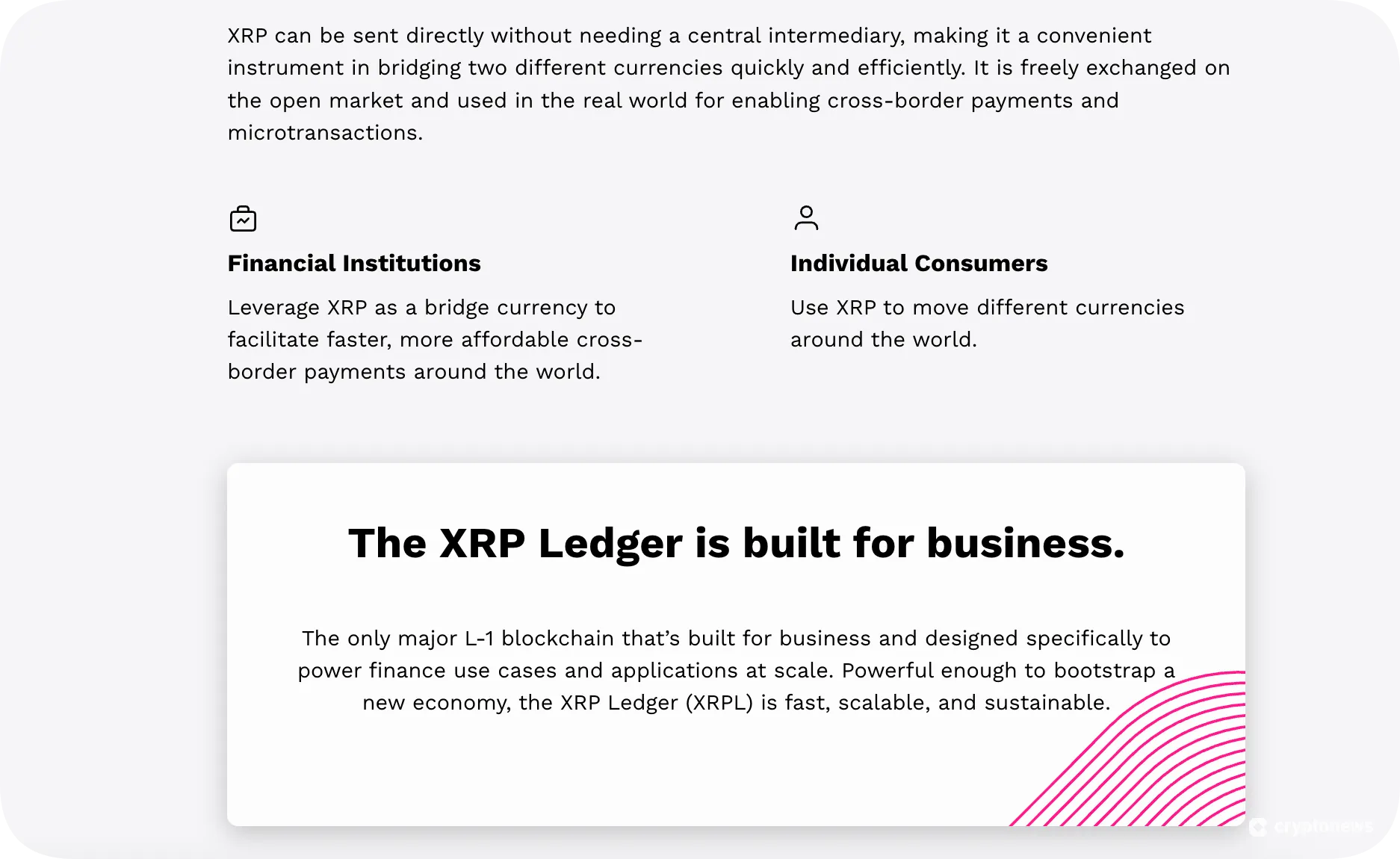
But it’s not a sure thing. Some of Ripple’s solutions don’t require using XRP, which could limit demand. It also faces competition from other blockchains and stablecoins. To truly succeed, XRP needs massive global adoption from financial institutions.
So while the potential is undoubtedly there, its success ultimately depends on overcoming these hurdles and achieving widespread use.
How Does XRP Facilitate Cross-Border Transactions?
Ripple has two distinct advantages over its nearest competitors, the RippleNet Protocol and On-Demand Liquidity, which position it as a well-known blue-chip crypto project.
The RippleNet Protocol
RippleNet is the protocol that enables cross-border transactions within the Ripple network. This system has been designed to facilitate payments for banks and other financial institutions by limiting traditional pain points of speed and cost.
RippleNet hopes to become a global payment system by allowing institutions to utilize its decentralized platform to settle transactions.
On-Demand Liquidity
Ripple has created a unique liquidity management solution called On-Demand Liquidity to ensure lightning-fast transactions. As the name implies, this pool of liquid XRP is built into RippleNet and removes the need for banks to pre-fund accounts.
However, there remain some risks. By leveraging XRP for liquidity, any spikes or drops in XRP could alter the overall value of the transactions.
What are the Advantages of XRP?
Ultimately, there are several advantages to using XRP as a bridge currency, and they are directly linked to a positive outcome for XRP price prediction. Here, we will explore some of them:
Transaction Speed
Ripple’s biggest rival is the Society for Worldwide Interbank Financial Telecommunications (SWIFT). The transaction speed of XRP ranges from 3-5 seconds, whereas SWIFT payments take anywhere between 1-4 working days.
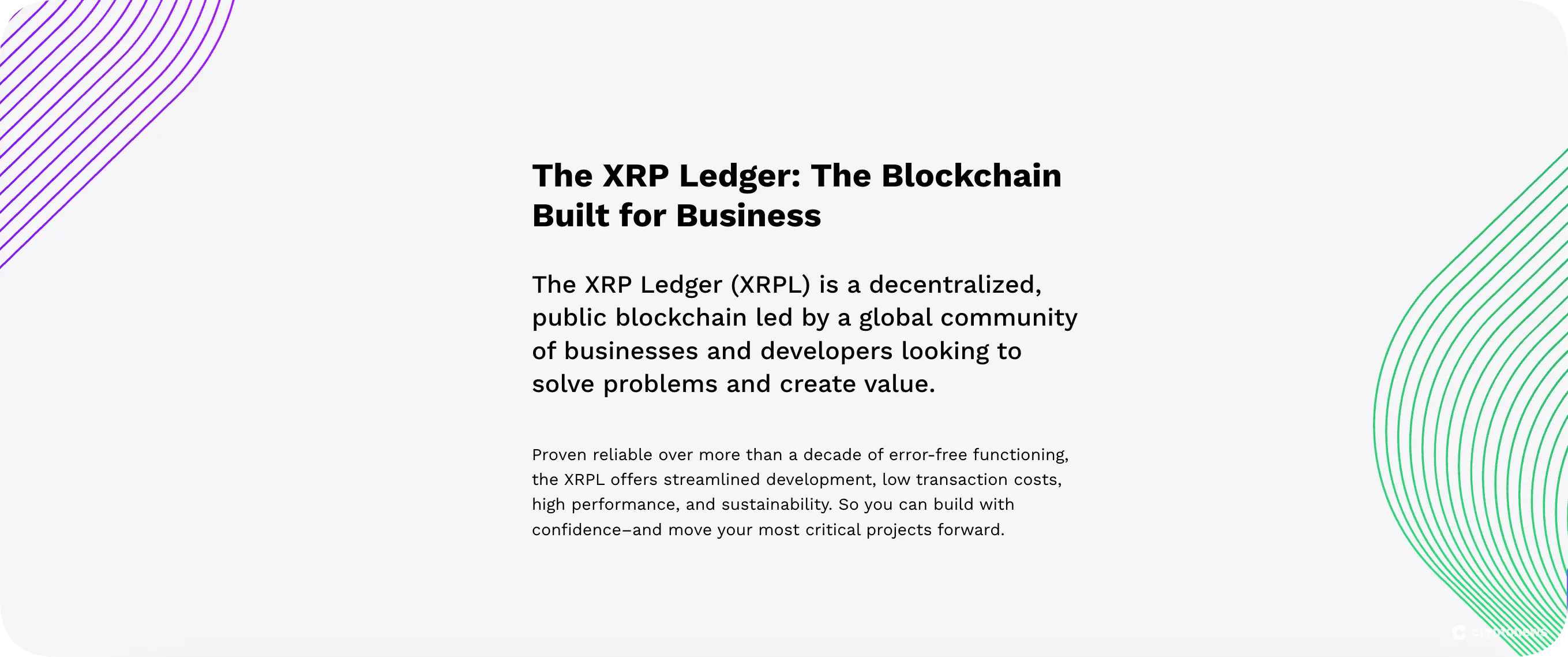
All RippleNet transactions are noted on the open-source XRPL ledger which can record up to 1,500 transactions per second.
Cost Structure
At 0.00001 XRP, the cost of transactions on the Ripple Network is considerably lower than its main competitors. In comparison, SWIFT payments usually charge 3-5% of the value of the transaction.
Efficiency
XRP’s primary efficiency is the number of transactions it can process, which is 1,500 per second or 90,000 per minute. Due to its on-demand liquidity pool, transactions are settled almost instantaneously without the need for institutions to pre-fund.
Sustainability
Ripple was the first blockchain to operate a carbon-neutral policy and does not use proof-of-work or proof-of-stake mechanisms to verify transactions. Ripple aims to become net zero by 2030.
Challenges Facing XRP’s Path to Becoming a Global Bridge
Ripple has faced several challenges over the years, leaving many people thinking that XRP might be dead, mainly due to regulatory battles and adoption difficulties.
Regulatory Challenges
The SEC’s lawsuit against Ripple concluded in August 2025. Ripple agreed to a $125 million penalty, ending the legal uncertainty. This settlement confirmed that XRP is not a security in secondary market sales, which provided the regulatory clarity the market had been waiting for.
This resolution immediately boosted investor confidence, causing XRP’s price to surge over 12%. It removes a major barrier to institutional adoption and even opens the door for potential XRP ETF approvals. This outcome allows Ripple to fully focus on developing XRP’s utility in cross-border payments.
Adoption by Financial Institutions
Major financial institutions are now actively adopting XRP for cross-border payments. Banks like Santander and Standard Chartered use it to settle transactions in seconds instead of days, cutting costs by up to 90%. This real-world utility is driving significant adoption and validating its role in global finance.
This growth is supported by regulatory clarity and Ripple’s expanding services. Its On-Demand Liquidity platform processed $1.3 trillion in 2025, while new ventures into stablecoins and CBDC interoperability are building even more institutional confidence. XRP is steadily transitioning from a speculative asset to critical financial infrastructure, even though it faces strong competition, especially from XLM.
Is XRP a Good Investment?
XRP could be a good investment if you’re comfortable with risk. It has strong fundamentals, like regulatory clarity from its settled lawsuit and growing use by major banks for cross-border payments. Some analysts even project significant price growth if key developments, like ETF approvals, happen.
However, you should be aware of its high volatility and competition from other technologies when buying XRP. A recent decline in its network activity is also something to watch. It’s best suited as a long-term hold for those who believe in its financial utility, not a quick trade. Always do your own research.
At present, XRP is trading at $1.49 which is substantially lower than its all-time high of $3.84 recorded in January 4, 2018. With the regulatory battle finished, any future rulings in XRP’s favor could see strong rallies in its favor and build the chances of becoming the world’s bridge currency.Conclusion
XRP’s journey toward the world’s bridge currency is marked by both promises and challenges. Its unique features, such as transaction speed and efficiency, position it as a frontrunner in the global digital currency landscape. However, overcoming regulatory hurdles and securing widespread adoption is imperative for XRP to realize its full potential.
FAQs
What is a world bridge currency?
Is XRP a global currency?
How high can XRP realistically go?
What is the future of XRP?
Did XRP get sued by the SEC?
References
2M+
250+
8
70







 in numbers