

Crypto Nodes That Pay: Nodes to Run For Token Rewards
We believe in full transparency with our readers. Some of our content includes affiliate links, and we may earn a commission through these partnerships. However, this potential compensation never influences our analysis, opinions, or reviews. Our editorial content is created independently of our marketing partnerships, and our ratings are based solely on our established evaluation criteria. Read More





Crypto nodes are key blockchain components that are essentially servers or computers that verify and keep an up-to-date record of transactions on the blockchain; some of the most popular examples are StrongBlock, Ethereum, Polkadot, and Avalanche.
This guide will explore the main types of crypto nodes that pay, detail the differences, and explain how they work, while also briefly breaking down the best masternodes. We will also review the best crypto nodes to run and validator node rewards to check out, allowing you to decide which could work best for you.
- In This Article
- In This Article
- Show Full Guide
List of Crypto Nodes That Pay in 2026
Below is our list of the best crypto nodes that pay, based on how much they cost to run. Note that the minimum stake/cost, hosting requirements, and ease of setup are for operating a node yourself. Utilizing a staking pool or service greatly reduces entry costs and technical requirements.
| Blockchain/Node | Earnings & APY | Minimum Stake/Cost | Ease of Setup | Best For |
|---|---|---|---|---|
| StrongBlock | Close to 33.2 STRONG yearly | 10 STRONG | Easy | Best for Passive Node Rewards |
| Ethereum | 3% to 4% | 32 ETH | Moderate | Best for Security |
| Polkadot | 12.09% | Dynamic | Moderate | Best for High Yield |
| Avalanche | Up to 9% | 2,000 AVAX | Moderate | Best for EVM DeFi Users |
| Flux | Variable FLUX rewards | 1,000 to 40,000 FLUX | Moderate | Best for Decentralized Web |
| Solana | Close to 7% | Close to 5,000 SOL | Hard | Best for High-Performance Validators |
ℹ️The data in this table is revised weekly.
The Best Crypto Nodes to Run Reviewed
Not all crypto nodes are created equal. To find the best nodes with a potentially high return on investment (ROI), we developed an appropriate methodology. Our analysis not only focuses on high-yield rewards but also takes into account node running costs and slashing penalties.
We also considered factors like staking requirements, payment frequency, and decentralization. This guarantees that these nodes provide both profitability and convenience. Let’s break down each one in detail.
1. StrongBlock – Most Beginner-Friendly Node
- Earnings/APY: Fixed 0.091 STRONG per day per node (~33.2 STRONG yearly, APY varies)
- Payment Frequency: Daily rewards, claimable at any time
- Payout Method: STRONG
- Minimum Stake/Cost: 10 STRONG tokens + gas fees to create a node
- Hardware and Hosting Requirements: None
- Slashing and/or Penalties: No slashing, but unpaid maintenance fees stop rewards ($14.95 per node monthly)
StrongBlock pioneered the Nodes-as-a-Service (NaaS) model, making node participation easy for non-technical users. Instead of setting up hardware, users create nodes through a web interface and earn daily STRONG rewards for securing blockchain networks. This allows users to enjoy income with minimal effort.

Unlike traditional validator nodes, StrongBlock eliminates hardware costs, cloud hosting, and complex configurations. Rewards are fixed at approximately 0.091 STRONG per day, and there’s no lock-up period or slashing risks. It’s ideal for investors seeking a simple, maintenance-free way to earn crypto without deep technical expertise.
However, 10 STRONG tokens are required upfront, and rewards depend on StrongBlock’s sustainability. A $14.95 monthly maintenance fee adds ongoing costs. If the price of STRONG is volatile or its price declines in value, it can impact your profitability. This could make long-term returns uncertain.
2. Ethereum – Most Secure Staking Network
- Earnings/APY: Typically ~ 4% APY. It can go as high as 6% with private order flow solutions like MEV-Boost.
- Payment Frequency: Every few minutes per epoch; about 6.4 minutes per cycle
- Payout Method: ETH
- Minimum Stake/Cost: 32 ETH
- Hardware and Hosting Requirements: 16 GB+ RAM, 1 TB SSD, stable internet, optional cloud hosting (AWS, Google Cloud)
- Slashing and/or Penalties: Equivocation and inactivity
Ethereum is the world leader in generalizable blockchains. It powers DeFi, smart contracts, and dApps. Running a node secures the network and earns rewards for validators. Unlike staking on an exchange, you have full control over your operation and do not incur counterparty risk. With Proof-of-Stake (PoS), validators play a central role in decentralization as well.
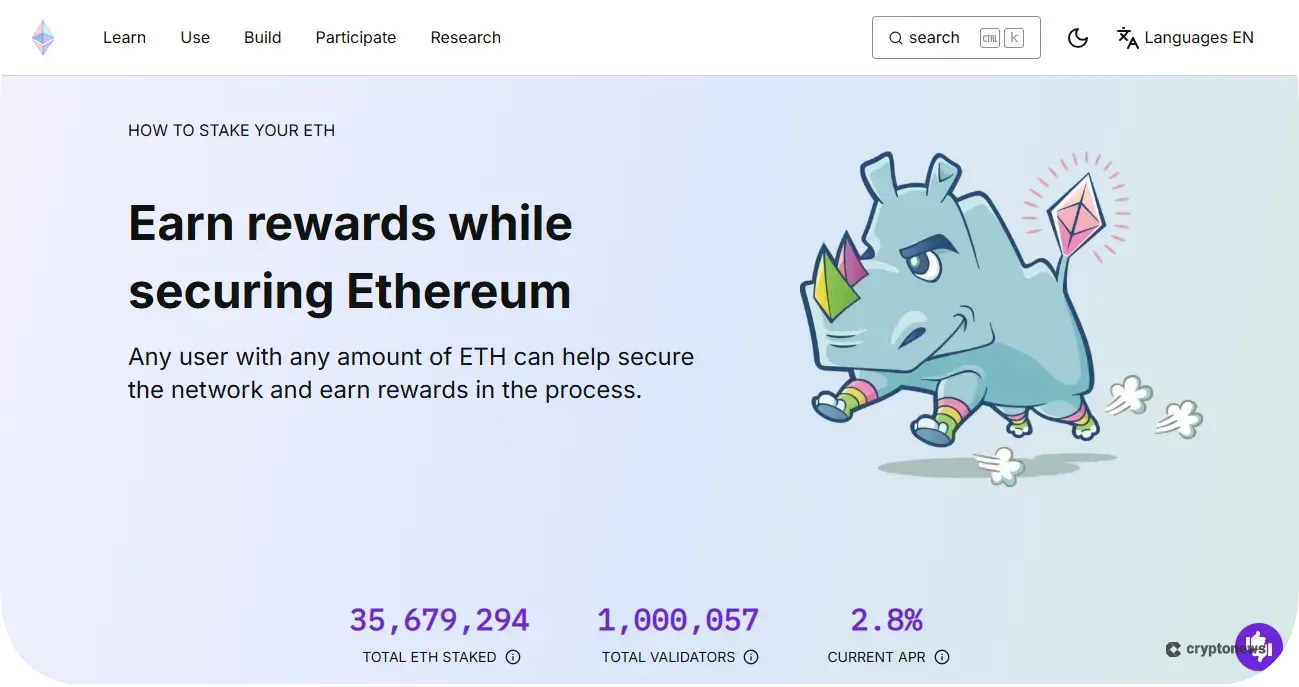
Ethereum has a reputation for security. Unlike newer chains, Ethereum’s infrastructure is over a decade old and battle-tested. Smaller blockchains may struggle with longevity, but Ethereum remains the industry standard thanks to its stability, institutional adoption, and lively developer ecosystem.
Running a node requires technical knowledge and 32 ETH, which is a high entry barrier. Third-party staking services like those offered by Coinbase and Binance eliminate this threshold, but staking with them means giving up control over the node. Validators risk slashing for downtime or misbehavior, and while cloud hosting simplifies setup, it adds costs. Despite risks, Ethereum remains one of the most secure and profitable long-term node investments for earning ETH staking rewards.
3. Polkadot – Best for High-Yield Staking
- Earnings/APY: Typically around 11.75% APY, depending on validator performance and network conditions
- Payment Frequency: Rewards distributed every 24 hours at the end of each Polkadot era
- Payout Method: DOT
- Minimum Stake/Cost: Varies; competitive nomination required to enter the active validator set
- Hardware and Hosting Requirements: 16 GB+ RAM, 160 GB SSD, multi-core CPU, stable internet, optional cloud hosting (AWS, OnFinality)
- Slashing and/or Penalties: Slashing for malicious behavior; penalties for extended downtime or improper validator configuration
Polkadot is a forerunner of the Layer 0 craze. It is a scalable, interoperable blockchain that connects multiple chains through parachains. As a result, validators primarily verify transactions and maintain consensus, but also secure cross-chain communications. Likewise, running a validator node contributes to the network’s security and earns DOT rewards.
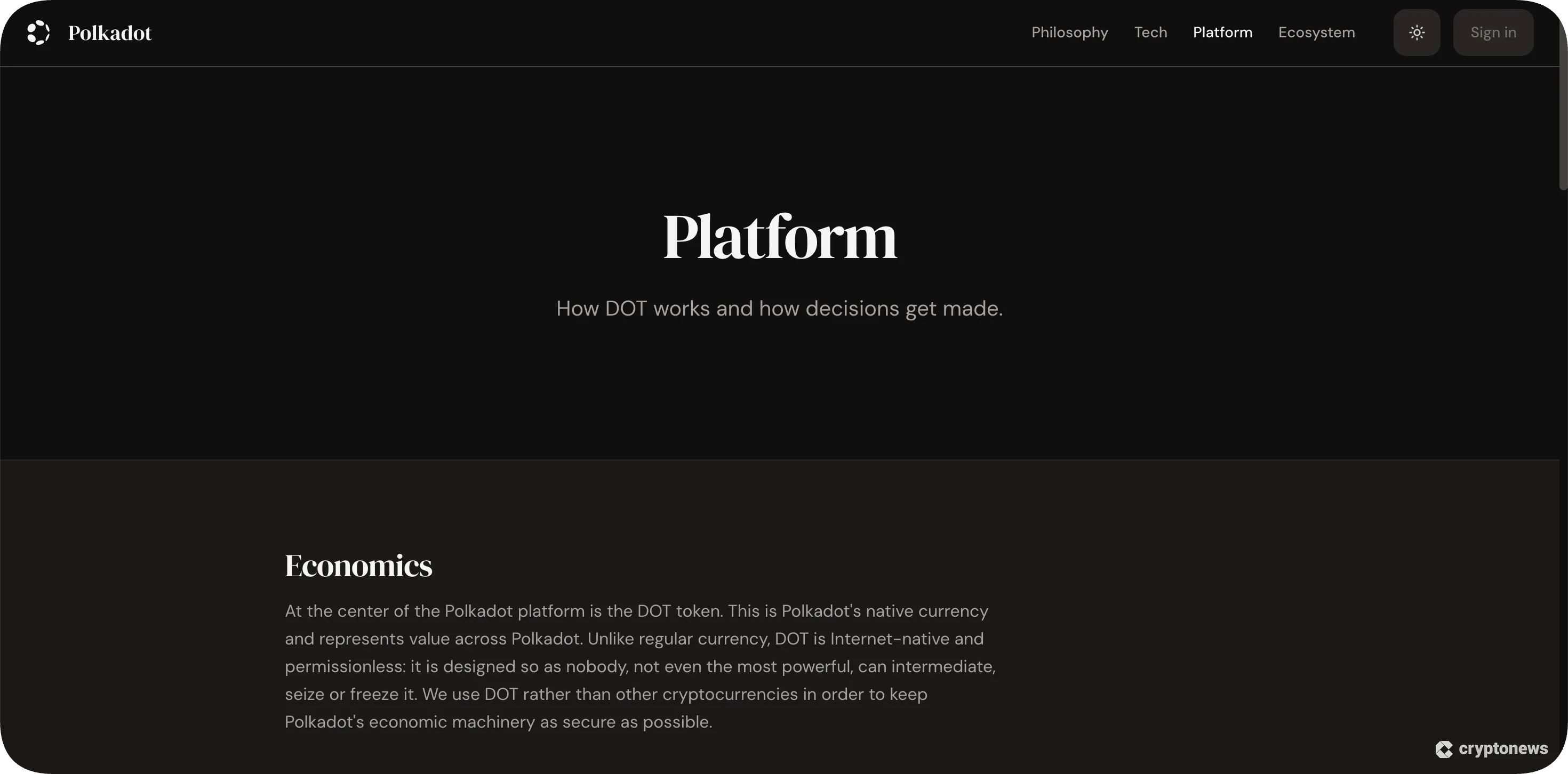
Polkadot nodes stand out for its shared security model, which allows validators to support multiple parachains simultaneously. Unlike some blockchains with rigid infrastructures, Polkadot’s Nominated Proof-of-Stake (NPoS) system enables more decentralized and efficient staking.
However, running a Polkadot node requires technical expertise, especially in the areas of Linux administration and networking. Unbonding DOT takes 28 days. This long wait time can be a pain for those in need of immediate liquidity. Still, validators benefit from a high APY (around 11.75%).
4. Avalanche – Best for High-Speed Validation
- Earnings/APY: Up to 9% APY, depending on staking duration and network conditions
- Payment Frequency: Rewards are paid at the end of the staking period (14-365 days)
- Payout Method: AVAX
- Minimum Stake/Cost: 2,000 AVAX for validators, 25 AVAX for delegation
- Hardware and Hosting Requirements: 8 vCPU, 16 GB RAM, 1 TB SSD, stable internet, optional cloud hosting (Google Cloud)
- Slashing and/or Penalties: Indirect liveness penalty, must maintain 80% uptime to receive rewards
Avalanche is a high-performance blockchain designed for speed, scalability, and low transaction fees. Running a validator node secures the network while earning AVAX rewards. Unlike delegation, operating a node provides full control, maximizing staking returns without relying on third-party services.
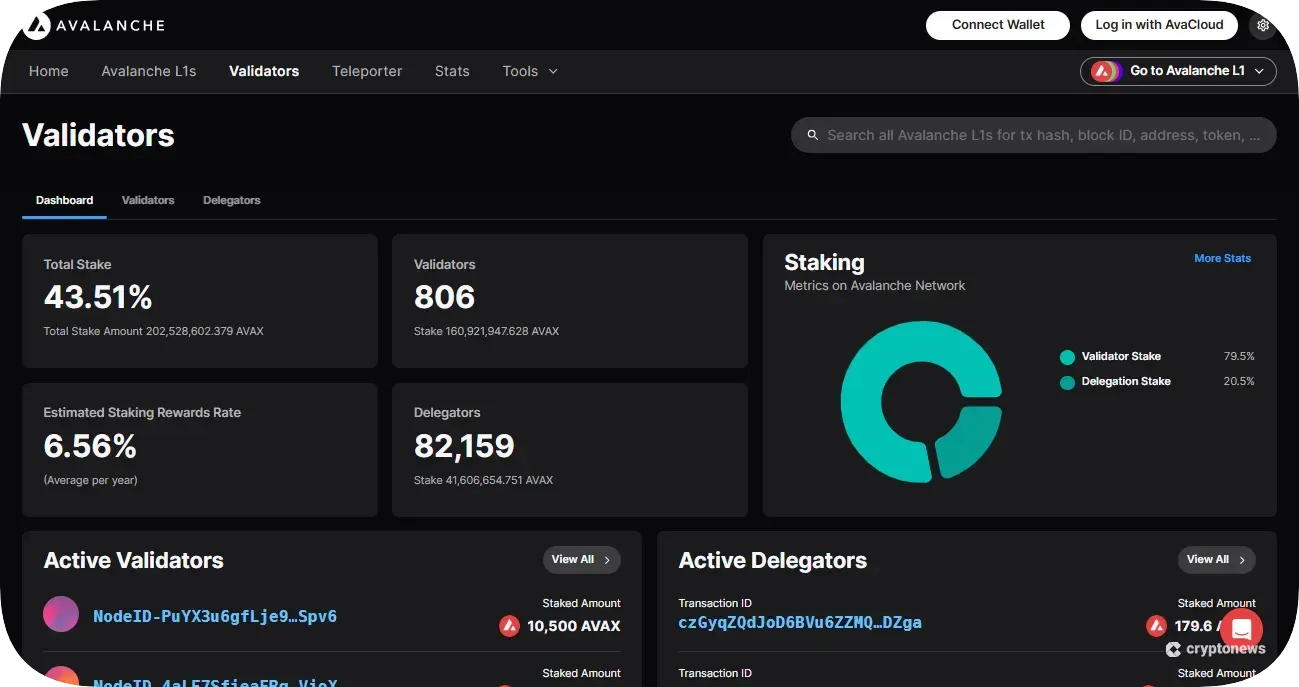
Avalanche is popular because of its high transaction throughput, sub-second finality, and flexible staking periods. Unlike some networks with rigid staking terms, Avalanche allows staking terms from 14 to 365 days. There’s no slashing, but validators must maintain 80% uptime to earn rewards.
Avalanche offers strong scalability, but long lock-up periods limit immediate needs for liquidity. Additionally, the 2,000 AVAX minimum stake is a high barrier to entry. Despite this, it remains a top-tier network for staking.
5. Flux – Best for Customizable Node Tiers
- Earnings/APY: Variable rewards; depends on node tier, uptime, and network participation
- Payment Frequency: When a node reaches the front of the queue (varies by tier)
- Payout Method: FLUX
- Minimum Stake/Cost: 1,000 FLUX (Cumulus), 12,500 FLUX (Nimbus), 40,000 FLUX (Stratus)
- Hardware and Hosting Requirements: Dedicated CPU, SSD storage, stable internet, increasing specs per tier, optional cloud hosting
- Slashing and/or Penalties: No slashing
Flux is a decentralized cloud infrastructure that powers Web3 applications and services. Running a Flux node provides computational resources to the network while earning FLUX rewards. Unlike traditional staking, node operators contribute to decentralized cloud hosting, making this an infrastructure-focused earning opportunity.

What sets Flux apart is its tiered node structure. Operators can choose from three levels — Cumulus, Nimbus, and Stratus — each with increasing hardware and staking requirements. Unlike other nodes that rely solely on financial staking, Flux nodes actively process workloads, making them essential to the ecosystem’s decentralized computing power.
Node operators must maintain uptime and meet performance benchmarks to earn rewards. The hardware costs and hosting fees for running a node can be high. This is especially true for Nimbus and Stratus tiers. Naturally, rewards vary based on network participation. This can impact the time it takes for new node operators to break even.
6. Solana – Ideal for Advanced Users
- Earnings/APY: Rewards vary, ~8% APY, depending on stake amount and validator commission
- Payment Frequency: Every epoch (~2-3 days), which depends on staking rewards and delegations
- Payout Method: SOL
- Minimum Stake/Cost: No official minimum, but ~5,000 SOL is recommended to attract delegations
- Hardware and Hosting Requirements: 12-core CPU, 256 GB RAM, NVMe SSD, high-speed internet
- Slashing and/or Penalties: No slashing
Solana is a high-speed blockchain designed to host decentralized applications. It was created to support internet capital markets, which require quick settlements for activities like high-frequency trading. Solana uses a novel mechanism, Proof-of-History, which takes an innovative approach to secure the blockchain.
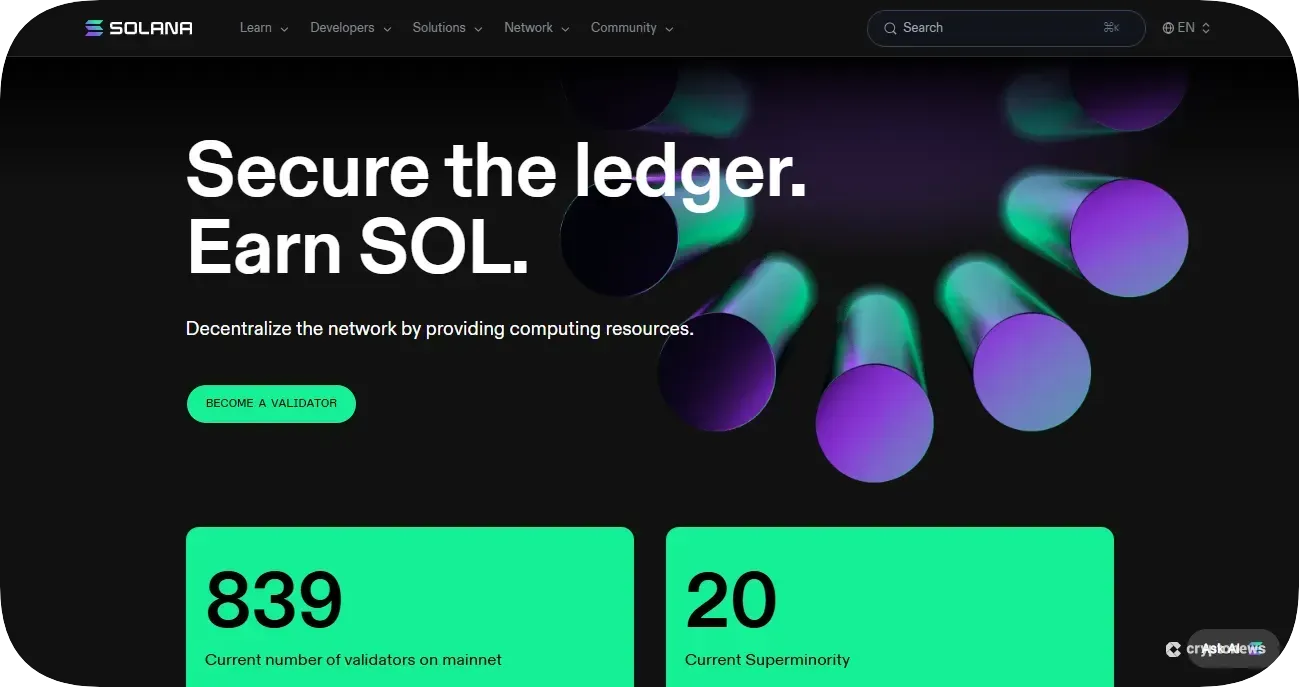
Unlike other networks, Solana validators require high-performance hardware. There’s no slashing, but uptime and reliability directly impact earnings. Validators set commission rates on delegated SOL, providing flexibility in earnings. The 2-3 day reward cycle ensures regular payouts, and the network’s high transaction throughput makes it a major player in Web3 infrastructure.
However, initial costs are high, with hardware and self-staking requirements making it expensive to start. Validators without sufficient delegations risk low profitability or losses due to operational costs. Despite this, Solana remains a top-tier choice among crypto nodes that pay.
What Are Crypto Nodes and How Do They Work?
Crypto nodes are the backbone of blockchain networks, like computers that store the full transaction history and enforce rules. They communicate to verify new transactions against this shared ledger. Full nodes check signatures and balances; others use consensus mechanisms like Proof-of-Work (PoW) to add validated blocks, decentralizing trust across the network.
Real-World Operation
Consider a Solana validator node:
- Requires enterprise hardware (128GB+ RAM, fast SSD)
- Runs software to sync and verify the entire blockchain
- Validates transactions/votes on blocks using Proof-of-History
- Earns rewards for maintaining security
This setup typifies how nodes physically operate: specialized machines executing protocol rules to keep chains secure and functional.
Node Types and Incentives
Beyond validators, lighter nodes (like Solana RPC nodes) serve data to apps without voting. Nodes requiring staked funds prioritize honest participation — financial stakes align incentives with network health. Proof-of-work nodes solve computational puzzles; others leverage stake size or reputation. All enforce decentralization through shared verification.
Types of Crypto Nodes
We briefly hinted at some of the main types of nodes above, but let’s look at the full list of crypto nodes.
Full Nodes
Full nodes store the entire blockchain history and validate transactions and blocks based on protocol rules. They play a key role in maintaining the security and accuracy of the blockchain network. Examples of full nodes include Bitcoin and Ethereum nodes, which hold complete blockchain data to validate and propagate transactions across the network.
Light Nodes
Light nodes do not store the entire blockchain history; they only download essential information. This includes block headers to confirm the validity of transactions. These nodes don’t require a lot of storage space, so they are more suitable for less powerful devices.
Some crypto wallets are light nodes, but most are not. Because of this, they can provide users with quick access to balances and transaction history without storing the entire blockchain locally.
Pruned Nodes
Next, we have pruned nodes, which are full nodes that store only a portion of the blockchain’s data. They initially download the entire blockchain history but delete the older, more unnecessary data. This reduces storage requirements while still allowing the node to validate new blocks. Bitcoin Core also runs a pruned node, ideal for users with limited disk space who still want to run a fully validating node.
Masternodes
Masternodes are specialized full nodes that often perform additional functions beyond basic transaction validation. These functions might include governing blockchain protocol changes or enabling specific features like instant transactions or privacy services.
Masternode operators have to stake cryptocurrency and receive rewards for maintaining the network in return.
Dash pioneered the masternode concept. To run a Dash masternode, you need 1,000 DASH as collateral. These masternodes support features like InstantSend for near-instant transactions and PrivateSend for enhanced privacy. In return, masternode operators can earn about 45% of block rewards.

Validator Nodes
Finally, we have validator nodes that are responsible for securing PoS blockchains. They verify and propose new blocks by staking a certain amount of cryptocurrency as collateral.
These nodes earn staking rewards in return for helping maintain the network’s integrity. Popular examples include Ethereum 2.0, Solana, and Polkadot validator nodes.
Remote Procedure Call Nodes
RPC nodes (from Remote Procedure Call) are specialized nodes that help the blockchain network communicate with external applications, wallets, and users. They are like messengers that send user requests to the blockchain and deliver the results back.
An RPC node can be a full or light node, with the condition that it can process RPC requests. They operate like servers and provide RPC endpoints in the form of web addresses (URLs) to access them.
Virtual Nodes
Virtual nodes are software-based simulations of blockchain nodes. These gamified systems enable users to set up mining or staking nodes without running hardware or validating transactions.
What to Consider When Running a Crypto Node
Selecting the right node balances technical needs, costs, and rewards. Bitcoin full nodes (like those run by Coinbase) require 500GB+ storage to secure the entire chain, while Solana RPC nodes (used by Phantom wallet) serve lightweight data queries.
Dash masternodes demand 1,000 DASH collateral but enable features like PrivateSend. Your hardware and goals dictate whether a pruned node (such as Bitcoin Core’s space-saving mode) or validator fits best.
💰 Initial Investment and Staking Requirements
Running a node usually requires a lot of capital up front. For instance, you have to stake 32 ETH for an Ethereum node. These upfront costs can create different classes of node operators where enterprise validators tend to dominate.
🎁 Rewards Structure
Naturally, rewards vary by chain and activity. Polkadot validators earn around 14% APR, while Dash masternodes claim 45% of block rewards. Avalanche offers rewards from 7%-10% APR, but includes transaction fees.
Before committing, compare models. For example, staking 32 ETH yields close to 3-5% annually, whereas running a Chainlink oracle node profits from data fees.
💸 Operating Costs
Operations costs vary by many factors, such as electricity and maintenance of hardware (in the case of PoW), and machine costs (for PoS nodes). Factor in enterprise internet (over $200/month) and backup power also matter; a single outage could slash rewards on PoS chains.
📊 Network and Market Conditions
Factors, such as fluctuating coin prices, can influence profitability. It is possible to receive a high percentage of rewards and still lose money because the value of those rewards progressively decreases. Networks that have decreasing usage are less optimal for node operators that seek consistent or profitable rewards.
Crypto Nodes vs. Staking: Which Is Better?
While running a crypto node can be profitable, staking often presents a simpler alternative with lower technical requirements. With staking, users lock up their tokens in a network to help validate transactions and maintain network security, earning rewards in return.
Unlike running a node, staking requires no hardware or extensive technical knowledge, making it a more accessible option for most investors. However, this convenience may come at a cost, as staking can be less profitable than running a node, with rewards being shared with the pool or service provider.

Methodology: How We Selected the Best Crypto Nodes That Pay
When selecting the best crypto nodes that pay, we focus on factors that impact profitability, sustainability, and security. Nodes require investment, technical setup, and ongoing maintenance. The rewards aren’t worth running if they don’t outweigh the risks and costs.
As such, our methodology evaluates earnings potential, costs, hardware requirements, and network security. Each criterion is weighted equally to provide a balanced, data-driven ranking of the best-performing nodes.
Earnings and ROI Potential (25%)
Assessing earnings and ROI potential is critical when selecting a crypto node that pays. Nodes require upfront investment and ongoing costs. If rewards don’t justify expenses, the node isn’t worth running.
To research this, we:
- Check the annual percentage yield (APY), reward structure, and payout frequency.
- Factor in token inflation, vesting periods, network demand, and compounding effects.
- Analyze historical earnings data from official sources, staking calculators, and blockchain explorers.
- Compare earnings against setup costs, hardware expenses, and unstaking penalties.
- Consider network congestion and fee volatility, which impact real returns.
- Look for data from validators and node operators.
- Verify rewards’ sustainability — high yields often signal unsustainable models.
In essence, we prioritize nodes with stable, long-term incentives backed by strong network fundamentals.
Costs and Barriers to Entry (25%)
Assessing costs and barriers to entry is crucial when choosing a crypto node since high costs can erase potential profits. First, we calculate the minimum stake or node purchase cost and factor in hardware, electricity, cloud hosting, and maintenance expenses. Then, we:
- Research unstaking penalties, lock-up periods, and withdrawal fees — these impact liquidity and risk.
- Compare costs to expected earnings to estimate the break-even point.
- Check historical price volatility — if token prices drop, returns shrink.
- Consider hidden costs like software licensing, security tools, and slashing risks.
- Gather data from official documentation, blockchain explorers, and operator reports.
To maximize long-term profitability, selecting nodes with manageable upfront costs, sustainable fees, and predictable expenses is best.
Technical and Hardware Requirements (25%)
Assessing technical and hardware requirements ensures that a node can be run efficiently and avoid penalties. Some nodes need high-performance CPUs, large RAM, and fast SSDs, while others work with basic cloud hosting.
To choose nodes that match varying levels of technical expertise and hardware budget, we:
- Review official documentation for CPU, RAM, storage, and bandwidth needs.
- Verify uptime requirements — missed validations can cut earnings or trigger slashing.
- Compare self-hosting vs. third-party staking services.
- Factor in maintenance, software updates, and security risks.
Network Stability and Security (25%)
Assessing network stability and security prevents losses from downtime, hacks, or protocol failures. Since an unstable network risks missed rewards, slashing, or node obsolescence, we prioritize networks with strong uptime, active maintenance, slashing protection, and robust attack resistance.
To select nodes with these characteristics, we:
- Check uptime history, consensus mechanism, and validator decentralization.
- Review past exploits, 51% attack risks, and governance security.
- Analyze developer activity, audit reports, and network upgrade frequency.
- Use blockchain explorers, community reports, and official documentation to verify security.
Conclusion
Running a crypto node can be a low-risk way to earn passive income, but if it were easy, everyone would do it. Startup and maintenance costs all impact your profitability.
Some nodes prioritize decentralization (e.g. Ethereum, Flux), others focus on staking flexibility (Avalanche, Polkadot), or ease of setup (StrongBlock). Before you run a node, take into account the technical requirements, operational expenses, and potential risks like slashing or long lock-up periods. With the right setup and strategy, running a crypto node can be a profitable long-term investment.
FAQs
Which crypto nodes pay the most?
How do you make money with a blockchain node?
Do crypto nodes actually make money?
How hard is it to run a crypto node?
Is it worth running a crypto node?
Do you need to stake crypto to run a node?
Can you run a crypto node from home?
References
- Spin Up Your Own Ethereum Node (Ethereum.org)
- How to Run an Ethereum Node (Ethereum.org)
- Polkadot Rewards Payout (Polkadot Docs)
- Polkadot Validator Payout Overview (Polkadot Wiki)
- Run a Polkadot Validator (Polkadot Wiki)
- Avax Validator Rewards (Avax)
- How much Flux will I earn? (Flux Wiki)
- Flux Nodes Info (Flux Node Info)
- FluxNode Infrastructure (Flux)
- Solana Foundation Delegation Criteria (Solana Foundation)
- How to Set Up a Solana Validator (Helius)
2M+
250+
8
70







 in numbers

About Cryptonews
Our goal is to offer a comprehensive and objective perspective on the cryptocurrency market, enabling our readers to make informed decisions in this ever-changing landscape.
Our editorial team of more than 70 crypto professionals works to maintain the highest standards of journalism and ethics. We follow strict editorial guidelines to ensure the integrity and credibility of our content.
Whether you’re looking for breaking news, expert opinions, or market insights, Cryptonews has been your go-to destination for everything cryptocurrency since 2017.
