

10 Best Layer 1 Crypto Projects for 2026





Many cryptocurrency investors prefer foundational Layer 1 networks – the base blockchains processing and securing transactions – over tokens built on them (ERC-20 or BEP-20 tokens). Leading examples include Ethereum, BNB Chain, and Ripple (XRP Ledger). These Layer 1s define their own consensus, governance, and transaction rules.
This guide analyzes the 10 best layer 1 crypto projects for investors. We explore each network’s performance, efficiency, scalability, use cases, and price action.
The Top Layer 1 Cryptocurrencies Ranked
Listed below are the 10 best layer 1 crypto projects to consider right now:
L1 Project
Symbol
Price
Market Cap
YTD Performance
Bitcoin
 BTC +1.94%
$77,654.20
$1.56T
-11.31%
Ethereum
 ETH +2.46%
$2,464.07
$296.26B
-17.35%
XRP Ledger
 XRP +0.87%
$1.49
$149.01B
-18.44%
Binance Smart Chain (BSC)
 BNB +1.92%
$700.81
$93.32B
-18.10%
Solana
 SOL +2.20%
$94.81
$59.80B
-23.61%
Stellar
 XLM +2.23%
$0.19
$9.79B
-2.80%
Bitcoin Cash
 BCH +0.06%
$268.84
$5.39B
-54.21%
Polkadot
 DOT 7.05%
$2.57
$1.11B
-0.57%
Kaspa
 KAS 0.66%
$0.028
$784.40M
-36.82%
Sei
 SEI +2.71%
$0.046
$467.79M
-58.67%
Analyzing the Best Layer 1 Tokens
Read on for our analysis of the top layer 1 blockchain projects listed above.
1. Bitcoin: The Original Layer 1 Blockchain, New All-Time High, and ETF Approval in 2024
Bitcoin remains the foundational Layer 1 blockchain, primarily functioning as a digital store of value. Its fixed supply of 21 million BTC and predictable issuance schedule drive this role. The April 2024 halving reduced block rewards to 3.125 BTC, accelerating scarcity.
Institutional adoption surged with SEC-approved spot Bitcoin ETFs; these funds now hold over $54.6 billion in assets, with BlackRock and Fidelity dominating inflows. This mainstream access fundamentally changed Bitcoin’s investor base, reducing retail dominance. Daily issuance covers just 35% of ETF demand post-halving, creating sustained supply pressure.
Key Highlights:
BTC +1.94%
Price action reflects these shifts. Bitcoin trades near $77,654.20 after hitting a new ATH of $126,173.18 in May 2025. Our analysts predict Bitcoin could reach $84,500.24 by 2027 and $113,590.19 by 2030.
2. Ethereum: Leading Smart Contract and dApp Network With Thousands of Secondary Tokens
Ethereum remains a leading Layer 1 blockchain, enabling developers to build decentralized applications (dApps) and smart contracts. Its security, decentralization, and robust ecosystem continue to attract projects—especially ERC-20 tokens, which leverage Ethereum’s infrastructure while paying transaction fees in ETH. However, Ethereum’s scalability challenges persist, with high gas fees during peak usage and competition from faster chains like Solana.
The network hosts thousands of projects, including major stablecoins (USDC, DAI), DeFi platforms (Uniswap, Maker), and metaverse applications (The Sandbox). Despite congestion, Layer 2 solutions like Arbitrum and Polygon are now integral to Ethereum’s strategy—not temporary fixes. Recent upgrades like Dencun (2024) and Pectra (May 2025) have slashed Layer 2 costs by around 90% and improved staking efficiency, making Ethereum more user-friendly.
Key Highlights:
ETH +2.46%
Ethereum’s market position is strong but evolving. It’s the second-largest cryptocurrency by market cap, with ETH prices hovering near $2,464.07. Spot Ethereum ETFs now hold around $33B in assets, driving institutional adoption. While Layer 2 solutions remain essential for scaling, Ethereum’s developer community and upgrades aim to balance security with efficiency against competitors.
3. XRP Ledger: The Future of Layer 1 Cross-Border Finance
Ripple operates on the XRP Ledger (XRPL), a Layer 1 blockchain launched in 2012. Designed for the interbank market, XRPL streamlines cross-border payments using XRP as a bridge currency, bypassing slow correspondent banking networks like SWIFT. This solves high costs and delays, especially for less common currency pairs.
Financial institutions like Bank of America and Standard Chartered use Ripple’s technology. Demand for XRP comes from its role in liquidity bridging, though transactions require holding XRP for only seconds. Recently, Ripple introduced RLUSD, a stablecoin now integrated into Ripple Payments. While some speculate RLUSD could reduce XRP’s utility, Ripple confirms a dual-token strategy: XRP remains the primary bridge asset, while RLUSD offers price stability for settlements.
Key Highlights:
XRP +0.87%
XRP’s circulating supply is approximately 58.6 billion tokens), with some held in escrow for strategic releases. After a - price increase in the last year due to regulatory clarity and inclusion in the U.S. crypto strategic reserve, XRP trades near $1.49.
4. Binance Smart Chain (BSC): Deflationary Layer 1 Cryptocurrency Supporting dApps and a Burning Mechanism
BNB powers the entire BNB Chain ecosystem, first created by Binance in 2017 for exchange fee discounts. Today it supports a full blockchain network handling DeFi, NFTs, and dApps through its efficient proof-of-staked authority system. This approach maintains decentralization while delivering fast, low-cost transactions.
The ecosystem now features opBNB for high-throughput dApps and BNB Greenfield for decentralized data storage. Over 2,000 active dApps operate across sectors like DeFi and gaming, with major platforms like PancakeSwap utilizing the chain’s sub-second transaction speeds.
Key Highlights:
BNB +1.92%
The project’s price growth stems from Binance’s market dominance ($35B daily volume) and recent technical upgrades. The burning mechanism now combines exchange profits with real-time transaction fees, steadily working toward halving the original 200M token supply.
5. Solana: Powering the Future of dApps and Web 3.0 Projects With Low Fees and High Scalability
Solana remains a leading Layer 1 blockchain, but the “Ethereum Killer” narrative has evolved as both chains serve different needs. Solana handles 65,000 transactions per second at near-zero fees—significantly outperforming Ethereum’s base layer. Its speed comes from Proof-of-History sequencing and parallel processing, making it ideal for high-frequency applications like DeFi trading and NFT minting. While Ethereum dominates institutional DeFi, Solana excels in retail-focused use cases due to its cost efficiency and sub-second finality.
The ecosystem has expanded dramatically, now hosting diverse projects beyond DeFi. You’ll find NFT marketplaces (Magic Eden), AI data networks (Grass), and viral social tokens like TrumpCoin and Fartcoin. Over 2,000 active dApps operate on Solana, with Total Value Locked (TVL) reaching $9.344 billion. Major upgrades like Firedancer aim to boost reliability after past outages and target 1.2 million TPS soon.
Key Highlights:
SOL +2.20%
Market-wise, Solana hit new all-time highs in late 2025 and currently trades near $94.81. It’s now the fifth-largest cryptocurrency by market cap, surpassing XRP. While still less established than Ethereum for enterprise use, its niche in consumer crypto (gaming, memecoins, mobile payments via Solana Seeker Phone) drives adoption.
6. Stellar: Cheap Fiat Cross-Border Payments and Tokenization of Real-World Assets
Stellar is one of the most diverse layer 1 crypto networks, focused on cross-border payments and asset tokenization. It processes fiat and crypto transfers in 3.5 seconds at near-zero cost, outperforming its earlier 5.8-second average. XLM tokens facilitate liquidity between currencies, including CBDCs like Ukraine’s e-hryvnia, which launched on Stellar in 2025.
Real-world asset tokenization drives growth. Through integrated KYC protocols, stellar supports compliant digital representations of currencies, commodities, and stocks. Recent milestones include Flipkart (Walmart’s India subsidiary) using Stellar for instant settlements and Franklin Templeton expanding its $380M tokenized treasury fund on the network.
Key Highlights:
XLM +2.23%
Corporate partnerships continue evolving. While MoneyGram sunsets its Stellar integration in 2024, new collaborators like DTCC (depository trust company) and Nubank strengthen institutional adoption. XLM trades at $0.19, with its niche in regulated finance remaining its core strength.
7. Bitcoin Cash: Medium-of-Exchange Aiming to Become the De Facto Payment Currency
Bitcoin Cash (BCH) is a Layer 1 payment-focused blockchain originating from Bitcoin’s 2017 fork. While Bitcoin solidified its role as digital gold, Bitcoin Cash prioritizes transactional utility with faster speeds and lower fees. This design stems from its larger block size, enabling quicker, cheaper payments ideal for everyday use.
Technically, BCH offers efficiency advantages over Bitcoin, processing transactions in seconds for under $0.01. Its current market cap is $5.39B, with BCH trading near $268.84. While still below its 2017 peak, recent developments like CashTokens (BCH-based tokens) and SmartBCH contracts expand its functionality beyond simple payments.
Key Highlights:
BCH +0.06%
Constant interest is maintained due to its niche appeal to users who prioritize affordability over Bitcoin’s maximal security. However, competition from Lightning Network and stablecoins challenge its payment-focused narrative. Ongoing upgrades aim to balance scalability with decentralization as BCH evolves beyond its “cheap Bitcoin” origins.
8. Polkadot: True Blockchain Interoperability Supporting All Forms of Digital Data
Polkadot is one of the best layer 1 crypto projects for blockchain interoperability. It enables different blockchains to share any data type—not just tokens. Its architecture connects diverse networks regardless of consensus models or standards. This goes beyond basic token swaps to include complex data exchanges between smart contracts, DAOs, and even NFT ecosystems across chains.
The network now supports over 100 parachains after recent upgrades like Agile Coretime and Elastic Scaling. DOT tokens secure these connections through “bonding”—locking tokens to validate cross-chain operations. Developers leverage this for multi-chain dApps, like NFT marketplaces spanning Ethereum and Cosmos ecosystems through Polkadot’s bridges.
Key Highlights:
DOT 7.05%
DOT trades near $2.57, down -31.90% in the last year after ecosystem expansion. While still 90% below its 2021 peak, network activity grows: daily transactions exceed 1 million. Its interoperability niche remains vital despite competition from Cosmos and LayerZero.
9. Kaspa: Innovative Layer 1 Network With Proof-of-Work Consensus in 1 Second
Kaspa is an innovative layer 1 blockchain that uses the proof-of-work consensus mechanism through its blockDAG architecture (GHOSTDAG protocol). Unlike linear blockchains, this processes multiple blocks in parallel, achieving 10 blocks per second with sub-second confirmations after recent upgrades. The kHeavyHash algorithm maintains energy efficiency while securing the network, balancing PoW’s robustness with unprecedented throughput for a decentralized ledger.
Market-wise, Kaspa trades near $0.028 with a $784.40M market cap. It’s accessible on major exchanges like MEXC, Gate.io, and Uphold, ensuring liquidity. While up - in the last year, it gained - in the last month, showing volatility amid broader market shifts.
Key Highlights:
KAS 0.66%
The ecosystem continues evolving with non-custodial wallets (KDX, Kaspium), hardware support (Tangem), and KRC-20 tokens enabling DeFi and asset tokenization. Recent initiatives like the “Powered by Kaspa” program target enterprise adoption, though real-world utility beyond payments and mining remains developing.
10. Sei: Newly-Launched Layer 1 Network Supporting 20,000 Transactions per Second
Sei is a newer Layer 1 blockchain launched in 2023. Its current market cap is $467.79M, and it trades around $0.046. SEI faces monthly sell pressure from token unlocks. Despite this, its trading-focused design attracts growth-oriented investors.
Technically, Sei prioritizes extreme speed. The upcoming Sei Giga upgrade targets 200,000 TPS and sub-400ms finality. It’s transitioning to an EVM-only architecture for developer efficiency. These upgrades aim to dominate high-speed trading applications.
Key Highlights:
SEI +2.71%
Ecosystem growth is accelerating. Total Value Locked hit $508.29M at the time of writing. Canary Capital filed for the first SEI staking ETF, signalling institutional interest. While token unlocks challenge short-term gains, Sei’s niche strengths remain compelling.
What Is Blockchain Layer 1?
Layer 1 blockchains are the core networks that power decentralized systems. These blockchains, such as Solana, have cryptocurrency (like SOL for Solana), which drives their operations. But the key feature is that they also allow other cryptocurrencies and decentralized applications (dApps) to be built on top of them.
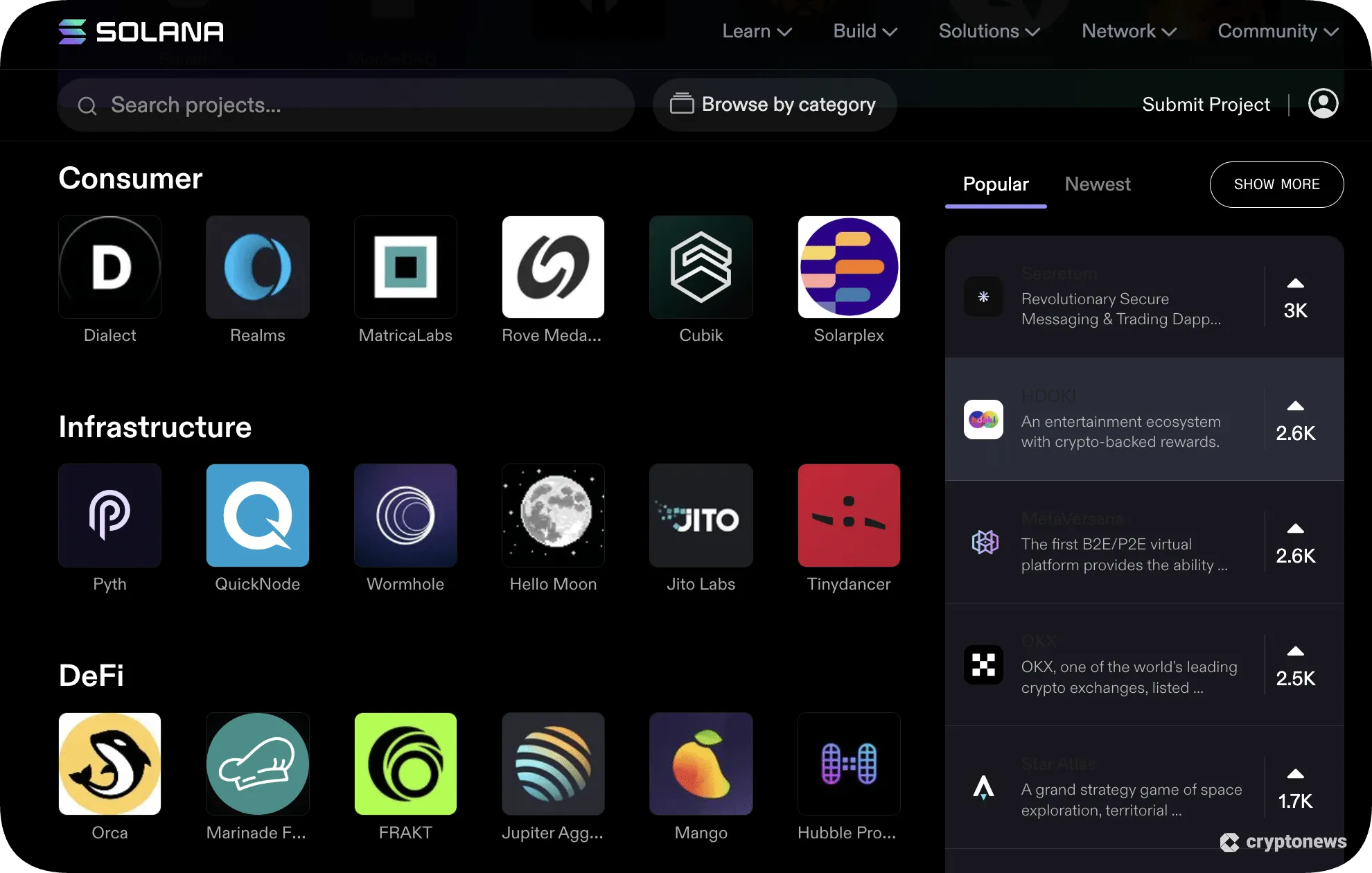
For example, Solana’s network supports other projects that use its code, but these projects have to follow the rules set by Solana. Here’s what happens:
- Solana-based cryptocurrencies must pay transaction fees in SOL, not their token.
- Other blockchains like Ethereum, BNB, and Cardano also work this way.
As more projects are built on these Layer 1 networks, the demand for their native tokens rises, creating value for these cryptocurrencies over time. Layer 1 blockchains also have governance systems that decide things like the consensus mechanism (proof-of-work or proof-of-stake).
In contrast, secondary cryptocurrencies built on Layer 1 networks, like ERC-20 tokens on Ethereum, don’t have control over governance or network decisions. They just follow the rules set by the Layer 1 blockchain they use. This is why Layer 1 blockchains attract investors—they have more control over their ecosystem and can be long-term projects.
How Layer 1 Networks Make Money
Layer 1 blockchains mainly earn money through transaction fees, which are paid in their native cryptocurrency. For example, dApps on Solana pay fees in SOL, and on the BNB Chain, they pay in BNB. This creates demand for the native token, which can drive its value up over time.
Key Features of a Layer 1 Blockchain
Layer 1 blockchains form the core infrastructure of blockchain ecosystems. They provide the foundation for transaction processing, security, and decentralization. These blockchains are crucial for the overall functioning of decentralized networks, supporting the creation of Layer 2 solutions and decentralized applications (dApps). Let’s explore the key features of a Layer 1 blockchain.
Ecosystem Foundation
Layer 1 blockchains are the base for Layer 2 solutions, decentralized applications (dApps), and other protocols. They establish the foundational layer that enables higher-level networks to operate. A Layer 1 blockchain supports scalability solutions, like rollups and sidechains, allowing faster transactions and greater throughput without altering the underlying protocol.
For instance, Ethereum and Solana offer environments for deploying dApps, with Ethereum providing an environment for decentralized finance (DeFi) and Web3 projects. Additionally, the data integrity and security provided by the base blockchain are essential for maintaining the accuracy and trustworthiness of these systems.
Native Cryptocurrency
Every Layer 1 blockchain has its native cryptocurrency, which plays a vital role in the network. These coins are used for various functions, such as paying gas fees and rewarding validators. For example, Ethereum uses ETH, Solana uses SOL, and Bitcoin uses BTC. The native cryptocurrency is essential for the operation of the blockchain, as it ensures that transactions are processed and that participants in the network are incentivized to maintain its integrity.
These native coins are also used for staking in proof-of-stake blockchains, such as Cardano and Cosmos, and for governance, allowing token holders to participate in network decisions.
Base Protocol Rules
The base protocol of a Layer 1 blockchain defines the rules for how the blockchain operates. This includes determining how transactions are validated, how blocks are produced, and the structure of smart contracts. For example, Bitcoin uses a UTXO (Unspent Transaction Output) model to validate transactions, while Ethereum uses an account-based system.
The protocol also specifies the parameters of block production, such as block size and time. Bitcoin, for instance, has a fixed block size of 1MB, while Ethereum’s block time is around 12 seconds. These rules are critical for ensuring the blockchain network’s stability, functionality, and scalability.
Decentralized Consensus Mechanism
Layer 1 blockchains rely on decentralized consensus mechanisms to agree on the state of the blockchain. These mechanisms ensure that all participants in the network agree on the validity of transactions and blocks. Bitcoin uses Proof of Work (PoW), where miners solve complex puzzles to validate transactions and secure the network.
After its transition to Ethereum 2.0, Ethereum now uses Proof of Stake (PoS), allowing validators to secure the network by staking ETH rather than using energy-intensive mining. Other blockchains, like Solana, use unique consensus mechanisms such as Proof of History (PoH) to achieve high throughput. These decentralized mechanisms are vital for maintaining the security, finality, and irreversibility of transactions within the network.
Blockchain Layer 1 vs Layer 2
Layer 1 and Layer 2 blockchains serve different but complementary roles in decentralized networks.
A Layer 1 blockchain, like Bitcoin, is the base network where transactions are processed and validated. Bitcoin uses proof-of-work, which takes about 10 minutes to confirm each transaction. Ethereum, another Layer 1, uses proof-of-stake, which offers faster and more efficient validation.
Layer 2 solutions, like the Bitcoin Lightning Network, sit on top of Layer 1 networks. They aim to improve scalability and speed. For example, the Lightning Network speeds up Bitcoin transactions by processing them off-chain from 10 minutes to seconds. Ethereum uses Layer 2 solutions like Polygon and Arbitrum to reduce fees and increase throughput, as Ethereum’s base network faces scalability issues.
In essence, Layer 1 blockchains handle core functions, while Layer 2 solutions enhance performance, making transactions faster and cheaper.
Why Invest in Layer 1 Blockchain Coins?
This section explains why layer 1 blockchain coins could be a great addition to your investment portfolio.
Invest in the Foundation of a Decentralized Network
A great analogy when exploring the layer 1 crypto projects is to consider ‘land’ and ‘buildings’. For example, a layer 1 network like Ethereum is the ‘land’. While ERC-20 tokens are the ‘buildings’ erected on Ethereum’s land. This means that Ethereum is the ultimate beneficiary.
It determines everything from network fees and consensus models to tokenized standards and circulating supplies. While ERC-20 tokens can build unique and innovative projects, they must adhere to Ethereum’s underlying code. From an investment perspective, Ethereum allows you to invest directly in its network, rather than opting for secondary projects.
Secondary Tokens Create Demand for Layer 1 Cryptocurrencies
We’ve established that most layer 1 blockchains allow other projects to build on their respective networks. This is hugely beneficial, as secondary projects create demand for the native network cryptocurrency. This is because transaction fees must be paid in the layer 1 token.
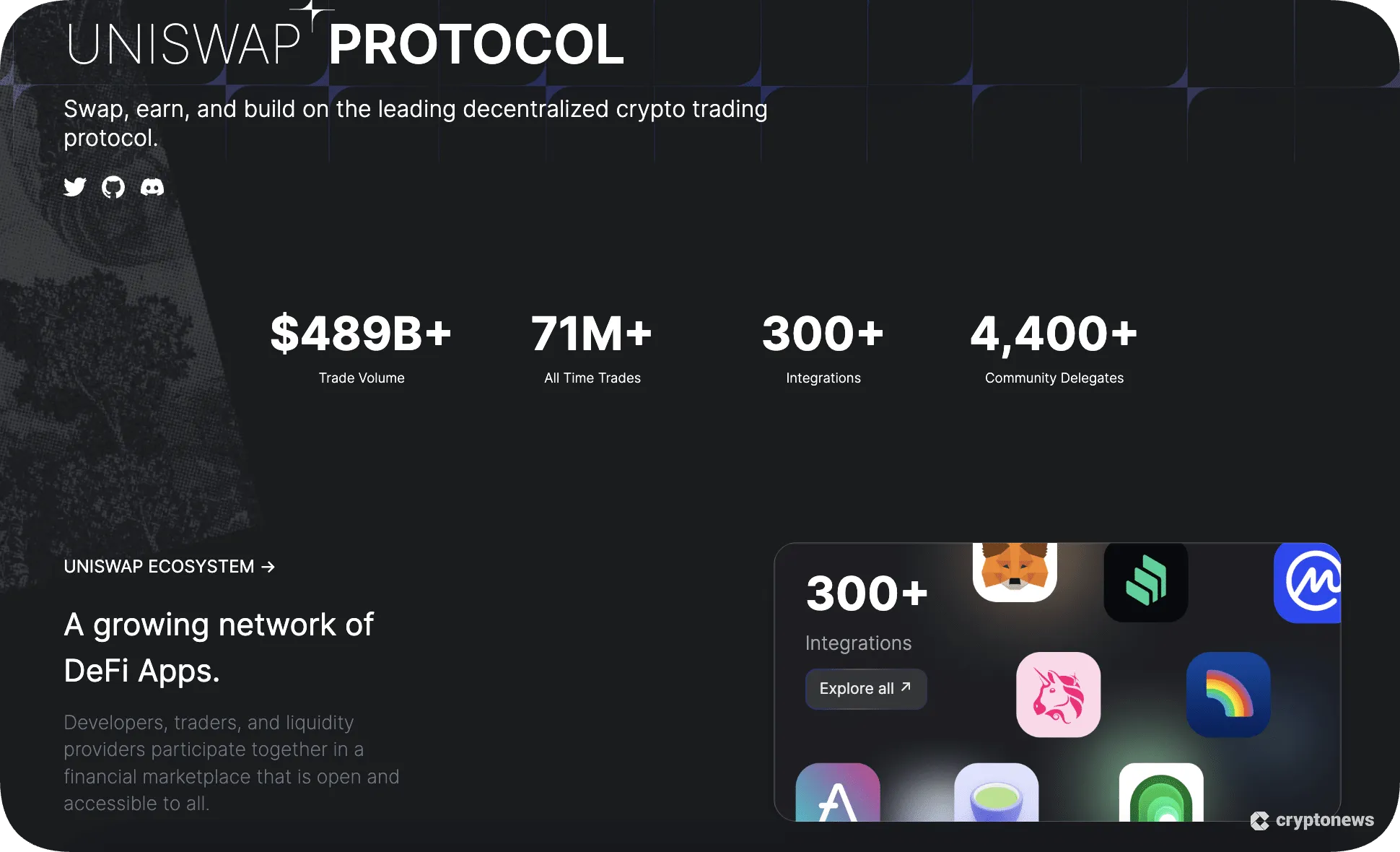
For example, consider a decentralized exchange like Uniswap, which is built on the Ethereum network. In the prior 24 hours, nearly $1 billion worth of trades have been conducted on Uniswap. Every time a trader swaps a cryptocurrency, they’ll need to pay fees in ETH.
Now, consider that thousands of dApps operate on Ethereum. That’s a significant amount of ETH required for the Ethereum ecosystem to function.
Similarly, consider Polkadot, which allows competing blockchains to share data and communicate without centralized providers. DOT tokens are required to engage in cross-blockchain transfers. In other words, developers must ‘bond’ DOT to use the Polkadot framework.
Layer 1 Networks and Decentralized Governance
- The best layer 1 crypto projects have created a democratic ecosystem. For example, the Ethereum Improvement Proposals (EIP) provide a governance framework for ETH holders.
- This includes the ability to make suggestions, ask for improvements, and even vote on key network changes. This is similar to stockholders voting in an Annual General Meeting, where the only requirement is to own at least 1 share.
- Many other layer 1 cryptocurrencies have similar systems. This includes Polkadot, Solana, Avalanche, Cardano, Tezos, and Near Protocol.
Conclusion
In summary, the best layer 1 crypto projects offer a more favorable upside when compared to secondary tokens. Layer 1 ecosystems set their own rules, whether that’s consensus, transaction fees, or governance proposals.
What’s more, secondary tokens must pay fees in the respective layer 1 cryptocurrency. This creates long-term demand. Before investing in layer 1 projects, make sure you conduct your own research and consider the risks.
Layer 1 Cryptos FAQs
What are the top layer 1 cryptos?
Which is the fastest layer 1 blockchain?
Is Dogecoin a layer 1?
References
- Ripple says U.S. banks will want to use XRP cryptocurrency after partial victory in SEC fight (CNBC)
- U.S. SEC has 8-10 filings of possible bitcoin ETF products (Reuters)
- Crypto execs say the bull run is underway and could lead to $100,000 bitcoin in 2024 (CNBC)
- Bitcoin price will hit $1.48 million by 2030, says Cathie Wood of ARK Invest (TheStreet)
- Ethereum Improvement Proposals (Ethereum.org)
2M+
250+
8
70







 in numbers

About Cryptonews
Our goal is to offer a comprehensive and objective perspective on the cryptocurrency market, enabling our readers to make informed decisions in this ever-changing landscape.
Our editorial team of more than 70 crypto professionals works to maintain the highest standards of journalism and ethics. We follow strict editorial guidelines to ensure the integrity and credibility of our content.
Whether you’re looking for breaking news, expert opinions, or market insights, Cryptonews has been your go-to destination for everything cryptocurrency since 2017.
