

Scaling Blockchain: All You Need to Know About Layer 1 and Layer 2





Explore why the crypto industry is talking so much about scalability, what Layer 1 and Layer 2 are, how they work, and why they are useful solutions, but still imperfect.
Why Do We Need Scaling Solutions?
Back in June 2010, the number of transactions occurring on the Bitcoin network didn’t surpass 100 per day. Now, in 2025, that number is nearly 750,000 transactions every day. Most blockchains have a limit on how many transactions can be processed at one time, which means users often have to wait and pay higher fees.

This situation is often compared with busy city roads that are always congested because they can’t accommodate the increasing number of cars. Similarly, when too many transactions happen simultaneously, the blockchain—just like our city streets—can become congested, slowing everything down.
The concept of scaling for blockchains began to gain attention after 2015 when experts proposed and implemented some of the first solutions. Nowadays, crypto projects keep exploring ways to make blockchain transactions faster and cheaper, and they have already made significant progress.
Yet, many blockchains still have a long way to go. Traditional payment systems can process more transactions much faster. Scaling solutions such as Layer 1 and Layer 2 help make the blockchain more efficient by managing the flow and speed of transactions.
What Are Layer 1 Scaling Solutions?
Layer 1 scaling solutions are changes made directly to the blockchain’s protocol. These can include increasing block sizes, changing how transactions are verified through consensus mechanisms, or splitting the database into multiple parts (a method called sharding) to process transactions faster.
Here’s a look at some of the main types:
Increasing Block Size
Bitcoin’s original 1 MB block limit prevented spam but couldn’t handle growing demand. This caused slow transactions and high fees. To solve this, projects increase block size – like adding highway lanes for more traffic.
Take Bitcoin Cash (BCH): it forked from Bitcoin in 2017, raising blocks first to 8MB, then 32MB. Bitcoin SV later expanded to 128MB. This scaling debate started early. Bitcoin’s creator Satoshi Nakamoto likely saw the limit as temporary. When the community split over solutions, larger-block supporters created Bitcoin Cash to prioritize speed and affordability.
Increasing Block Size Pros and Cons
Pros
- Faster processing: more transactions per block.
- Bigger blocks allow miners to process more transactions and earn more fees.
Cons
- Requires more advanced computing power, possibly pushing out smaller miners and centralizing the network.
- Bigger blocks can slow down the system during busy times.
Sharding
Sharding splits the blockchain’s data into smaller pieces, called shards, that can be processed in parallel. This means different nodes handle different transactions simultaneously. It’s almost like checkouts at a supermarket into multiple lines to speed up processing. For example, NEAR is one of the projects that uses real-time sharding. Ethereum had plans to use sharding but switched to Danksharding, a Layer 2 solution.
Sharding Pros and Cons
Pros
- Increased transactions per second (TPS)
- Faster transaction speeds
Cons
- Sharding reduces the number of nodes in each shard, which can lead to centralization.
- Independent operation of shards can cause inconsistencies in data recording.
Consensus Algorithm Enhancements
A consensus algorithm in cryptocurrency is a set of rules that allows all the computers in a network to agree on the same data. This system ensures that every transaction is verified and added to the blockchain securely. Proof-of-work (PoW) and proof-of-stake (PoS) are two popular types of consensus algorithms. Transitioning from PoW to PoS reduces the energy and time required for transaction processing.
For example, Ethereum switched on its proof-of-stake mechanism in 2022 to improve scalability and reduce energy consumption. According to the Crypto Carbon Rating Institution data, Ethereum’s energy usage dropped significantly right after the update.
Solana is also updating its core. In May 2025, developers proposed Alpenglow, a new consensus protocol with Votor and Rotor. It cuts block finalization to around 150 ms, roughly Web speed, by simplifying voting and data relay YouTube same time, Firedancer, a new validator client, is rolling out. It supports decentralization and performance. It’s only on around 5% of nodes, but adoption is growing.
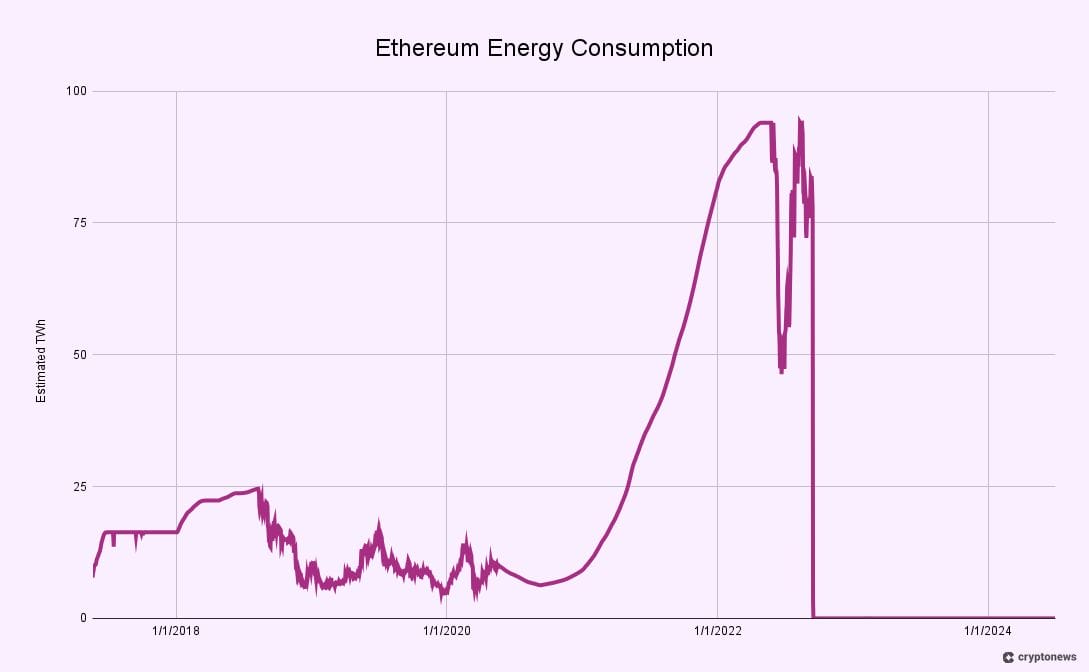
Changing Consensus Mechanism Pros and Cons
Pros
- Increased efficiency and speed
- Reduced energy consumption
- Enhanced scalability
Cons
- Complex transition process
- More vulnerable to certain types of attacks
- Centralization risks: validators are chosen based on their holdings
Segregated Witness (SegWit)
SegWit is a protocol upgrade that changes the way data is stored, allowing more transactions to fit within a block. It separates (segregates) transaction signatures (witnesses) from the rest of the transaction data. One example is that Merlin is building a Layer 1 sidechain that runs alongside Bitcoin. It supports parallel block processing to boost throughput without changing Bitcoin itself.
SegWit Pros and Cons
Pros
- Increased block capacity and reduced fees.
- Faster transaction verification.
- SegWit fixes transaction malleability, making it easier to implement Layer 2 solutions like the Lightning Network.
Cons
- Complex implementation.
- Not all parts of the network may adopt SegWit. It may lead to inconsistencies.
- SegWit’s introduction can cause a split in the community.
What Are Layer 2 Scaling Solutions?
Layer 2 solutions are additional layers built on top of the main blockchain. It is much like adding express lanes or new roads that divert and manage traffic more efficiently without altering the main roads. They handle transactions outside the blockchain and then record the final outcomes back to the main chain. This way, they significantly reduce the burden on the network, allowing it to process transactions faster and cheaper.
After the March 2024 Dencun upgrade, which aimed to enhance the scalability of Ethereum, the second-largest blockchain, Ethereum’s transaction fees significantly dropped. One reason for the decrease was that more activities shifted from Ethereum’s main blockchain (Layer 1) to Layer 2 solutions and other blockchains.
Types of Layer 2 Solutions
Rollups
Rollups bundle many transactions together on a Layer 2 chain and consolidate them into one transaction that gets sent back to the main Ethereum blockchain. This method splits the cost of the single, more expensive transaction among many users, making it more affordable and efficient than processing each transaction separately on the slower, primary blockchain.
Some examples are:
- Optimistic rollups are called optimistic because they assume all transactions are valid unless proven otherwise. They’re ideal for applications that don’t require every transaction to be processed instantly because there may be a delay while waiting for possible fraud proofs.
- Zero-knowledge rollups (zk-Rollups) bundle many transactions into a single one and validate them using cryptographic proofs.
Vitalik spotlighted new Layer 2 primitives, proto‑stacks, modular rollups, at ETHGlobal Prague in June 2025. He framed them not as theory, but as tangible tools under development. This links research to real-world Layer 2 scaling.
Pros and Cons of Rollups
Pros
- Increased scalability.
- Reduced costs.
- Transactions can be completed faster.
Cons
- Zk-Rollups are complex and can be expensive due to the advanced technology required.
- Security and centralization risks.
- Some zk-Rollups may not support all types of Ethereum smart contracts.
Sidechains
Side chains operate parallel to the main blockchain, allowing transactions and smart contracts to be processed independently. Essentially, a side chain is a separate blockchain that is attached to the parent blockchain via a two-way peg, which allows assets to be securely moved between the main blockchain and the side chain.
Assets are locked on the main blockchain, and a corresponding amount is then released on the side chain. This allows the side chain to operate with its own independent consensus algorithm, which can be tailored to specific needs, such as faster transaction speeds or enhanced privacy. Transactions are processed on the side chain, and then the results or final state can be reconciled with the main chain.
Some main examples are Liquid Network, which is a Bitcoin side chain, and Polygon is an example of a scaling solution for Ethereum.
Pros and Cons of Sidechains
Pros
- Transactions are finalized quickly, independent of the main chain’s processing times.
- It is possible to use advanced privacy measures. Users can make transactions anonymously.
- Security risks of sidechains don’t impact the main chain.
Cons
- Side chains don’t inherit the security of their main chains.
- It is difficult to transfer data between sidechains as they may not be compatible with each other.
- Risks of centralization.
State Channels
Side chains in blockchain technology allow users to make rapid, cost-effective transactions without overloading the main blockchain, and it works like this:
- Opening the channel: Users start by depositing funds into a smart contract on the main blockchain, like Ethereum. This acts as both a starting balance and a security deposit to ensure everyone acts honestly.
- Using the channel: Once the channel is open, participants can make numerous transactions among themselves. These transactions are not recorded on the main blockchain, which speeds things up and reduces costs. Instead, they sign and exchange these transactions privately, only updating the main channel state.
- Closing the channel: To close the channel, the last agreed state of transactions is submitted to the blockchain. The smart contract then checks this state, approves it, and returns the funds to the users based on the final transactions.
After numerous transactions, only the final state is submitted to the blockchain. This means instead of hundreds or thousands of transactions, only two transactions (one to open the channel, one to close it) touch the main blockchain, drastically reducing fees and congestion.
Pros and Cons of State Channels
Pros
- Reduced costs.
- High throughput.
- Transactions within a state channel do not need to be broadcast to the public blockchain.
Cons
- All participants in the state channel must be continuously online to respond to state updates and disputes.
- Complex setup.
- Adding or removing participants requires closing the current channel and opening a new one.
Nested Blockchains
A nested blockchain is a special kind of blockchain setup where smaller, individual blockchains operate under the umbrella of a main blockchain. This structure allows for more specific and localized processing, helping to manage tasks efficiently and keep the main blockchain less cluttered.
It works in a nested blockchain system, the main blockchain oversees and connects several smaller chains, each responsible for specific tasks or operations. These smaller chains handle their own transactions and data but report back to the main blockchain, which ensures everything runs smoothly and securely. The OMG Plasma project is an example of Layer 2 nested blockchain infrastructure.
Pros and Cons of Nested Blockchains
Pros
- Enhanced scalability.
- Efficient transaction handling.
- Reduced main chain load.
Cons
- Increased complexity.
- Possible security vulnerabilities.
- Dependency on the main blockchain.
Conclusion: Layer 1 or Layer 2?
Layer 1 and Layer 2 solutions both increase transaction speed and capacity. However, they face trade-offs described by the scalability trilemma: balancing scalability, security, and decentralization. While Layer 1 changes the core blockchain but may create security gaps or centralization, Layer 2 builds on top, improving daily use yet adding complexity. Since Layer-2 operators are often centralized, this also risks control. The crypto industry works to reduce these centralization and security concerns.
Significant changes are coming regarding these technologies. Solana’s Alpenglow and Firedancer upgrades push Layer 1 speed and decentralization. Ethereum’s Pectra upgrade, live May 7, 2025, improved staking, account abstraction, and gas efficiency. Vitalik’s announcements at ETHGlobal Prague show Layer 2 work is moving fast. Merlin Chain points to creative Bitcoin-sidechain scaling. Together, they bring theory into action.
2M+
250+
8
70








 in numbers




 Camila Karam
 Ihssan El Medkouri
 Anatol Antonovici