Who Is Satoshi Nakamoto? Identity Theories & Net Worth





Well over a decade after Bitcoin’s launch, mystery still surrounds the origins of the world’s most successful cryptocurrency. Who is Satoshi Nakamoto? The person or group credited with founding the Bitcoin protocol used this pseudonym in early communications, but then disappeared in 2011. We may never know Satoshi’s true identity, but several intriguing theories point to possible candidates. In this guide, we’ll explore some of the leading theories regarding Satoshi Nakamoto’s identity.
- In This Article
- In This Article
- Show Full Guide
Key Takeaways
- Launch milestones: First public email (Oct 31, 2008) → Bitcoin Genesis Block mined (Jan 3, 2009)
- Coins attributed to Satoshi: ~1 million BTC
- Last known public message: Farewell post on Apr 26, 2011
- Estimated net worth (July 2025): ≈ $110 billion (at $110K per BTC)
- Satoshi-linked wallets: Dormant ~14 years
Satoshi Nakamoto in Context: The Cypherpunk Roots of Cryptocurrency
The late 1980s to early 1990s saw the emergence of the cypherpunk movement, a loosely organized group of coders and privacy advocates who believed that cryptography could be a powerful tool for social and political change. At the heart of the philosophy lay one key concept: the use of encryption to protect freedom and privacy.
Bitcoin utilizes this structure today, employing encryption throughout the protocol and building upon the foundation established by the cypherpunks. The protocol uses cryptography to secure transactions while utilizing wallet addresses as pseudonymous identities on the Bitcoin network.
Conceptually, blockchain technology dates back to the early 1990s, with Bitcoin drawing inspiration from several earlier projects in the cypherpunk movement.
- In 1998, Wei Dai proposed b-money, a never-implemented distributed cash system. Bitcoin utilizes several core concepts from b-money, including collective bookkeeping, a peer-to-peer network, and the concept of money created through computational work.
- Also in 1998, Nick Szabo created Bit Gold, which utilized proof-of-work to create a digital currency.
- In 2002, Adam Back created Hashcash, a proof-of-work-based protocol to combat email spam.
In 2008, amid the backdrop of the Great Financial Crisis (GFC), which threatened to undermine the world’s economy, Satoshi Nakamoto published the Bitcoin whitepaper. Do we know who Satoshi Nakamoto is? No, Satoshi could be an individual or a group of people, although most of the Bitcoin community believes Satoshi is an individual who chose to remain anonymous. We may never know who created Bitcoin.
The nine-page Bitcoin whitepaper detailed how Bitcoin would work and the problem it aimed to solve: trustless value transfer without an intermediary. The whitepaper also detailed how Bitcoin would prevent double-spending while maintaining decentralization, a challenge that had plagued previous digital currencies.
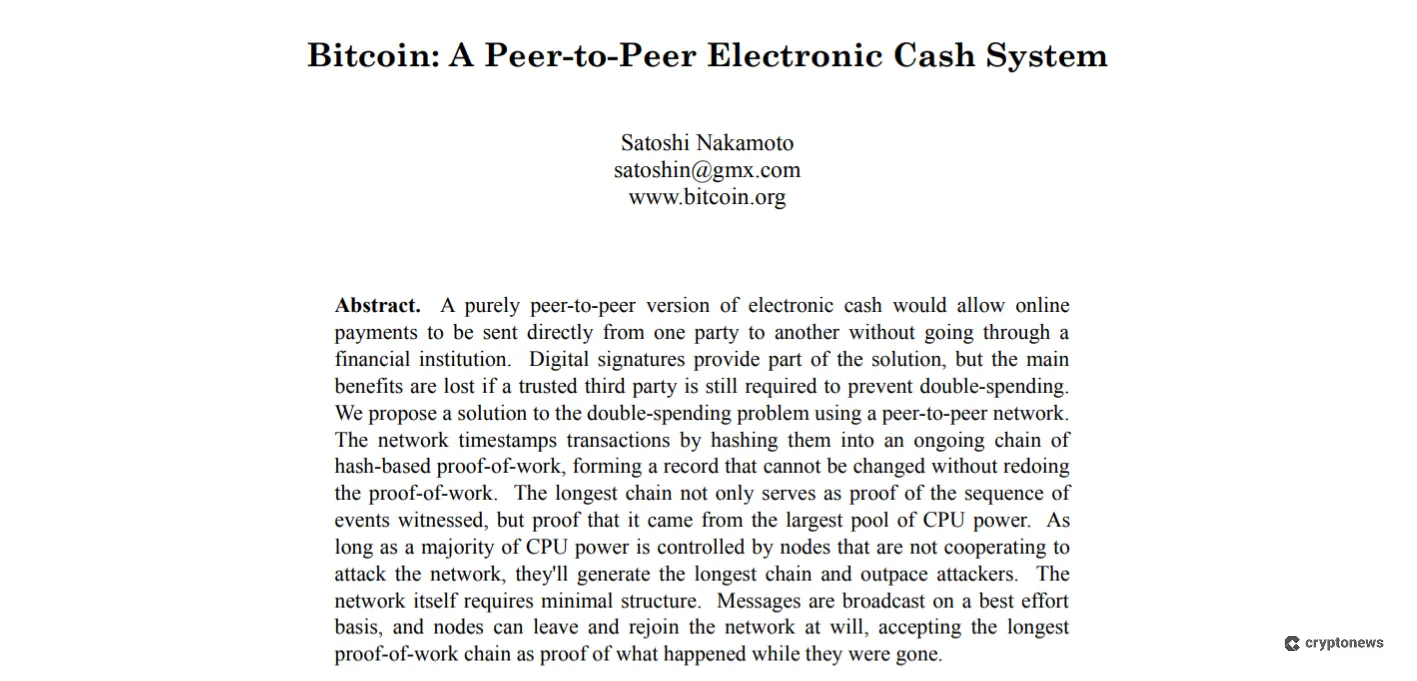
This relatively short document changed finance forever, creating a way for people to exchange value without an intermediary and providing inspiration for countless newer cryptocurrency projects that offered specialized functionality.
Timeline: Key Milestones in the Satoshi Era (2008-2011)
Satoshi first appeared in a cryptography mailing list called Metzdowd, where he posted a link to the Bitcoin whitepaper. This triggered a series of events that included discussions, code refinements, and testing and mining, culminating in Satoshi’s 2011 departure from the public eye.
- Oct 2008 – Whitepaper emailed to Cryptography Mailing List: After discussions on the mailing list, which included an exchange with Wei Dai, Satoshi posted a link to the Bitcoin whitepaper published at Bitcoin.org.
- Jan 2009 – Bitcoin v0.1 + Genesis Block: The first Bitcoin block (Block 0) contained a message: "The Times 03/Jan/2009 Chancellor on brink of second bailout for banks." The message mirrored a headline published in The Times, a British newspaper, on the same day the Genesis Block was mined. Many interpret this choice of message as both a political statement and a timestamp.
- Dec 2010 – Leaves Bitcointalk admin role: After a period of gradual withdrawal from discussions, Satoshi handed control of the Bitcoin source code repository to Gavin Andresen, who had become the de facto lead developer of the project.
- Apr 2011 – Farewell email: Satoshi’s last known public message on the Bitcointalk forum (12/12/2010) centered on technical details surrounding denial of service (DoS) attacks. He later stated that he’d “moved on to other things” in a 4/23/2011 email exchange with Mike Hearn, a Bitcoin developer.
What We Actually Know About Satoshi
While Satoshi Nakamoto’s identity remains a mystery, several clues give internet sleuths inspiration to keep searching for the elusive founder of cryptocurrency. Satoshi’s communications, coding style, and times during which he was active all provide clues. Wallet activity, PGP signatures, and email addresses add further speculation.
Linguistic Fingerprints
Satoshi’s linguistic fingerprint spans spelling and word usage. Satoshi often favored British spellings of words like “colour,” “defence,” and “grey.” However, he has used both American and British spellings, fueling speculation that Satoshi was a group of people rather than an individual author.
Timestamps on posts typically center on activity during the middle of the night in the UK, which corresponds to daytime hours in the US. This adds fuel to the fire for those who suspect that Satoshi was a group of people posting under the same username.
C++ coding quirks also provide potential clues to Satoshi’s background. Satoshi wrote the initial Bitcoin code using the C++98 standard, which was largely out of date by 2009 when Bitcoin launched. Satoshi also used Hungarian notation to comment code, although large sections of the code lacked comments, creating a towering wall of functions without a clear distinction. This style of coding has led some to speculate that Satoshi was an older programmer, and possibly self-taught.
Public PGP Key and Email Addresses
Satoshi used Pretty Good Privacy (PGP) to sign his email communications. Satoshi’s unique ID (0x633FB800) provided a way for recipients to verify that communications came from Satoshi, as only Satoshi held the private key needed to sign the messages. Bitcoin uses a similar structure, pairing public keys and wallet addresses with private keys used for signing. To date, no one claiming to be Satoshi has been able to sign a message with Satoshi’s PGP key.
Satoshi also used multiple email addresses. The email address associated with the whitepaper ([email protected]) was used in early mailing list discussions. Satoshi later used a paid, privacy-focused provider, using the email address [email protected], for communicating with Bitcoin developers.
Wallet Clusters
Unlike today, when Bitcoin mining is decentralized, Satoshi and Bitcoin collaborators mined the bulk of the early blocks. By some estimates, Satoshi mined over 1.1 million bitcoins, spread across more than 22,000 wallet addresses.
For example, one known Satoshi wallet holds 104 BTC, including a 0.185 BTC transfer in 2025, valued at over $20,000. This balance comes from a long history of tribute transfers. The original 50 BTC from the genesis block's reward is permanently unspendable due to a coding quirk, whether intentional or unintentional. A worldwide community watched Satoshi-era wallets for any signs of life. However, if Satoshi leaves these wallets untouched, the bitcoins are effectively burned, removed from circulation.
Is Satoshi Nakamoto a Billionaire?
On paper, Satoshi is a billionaire several times over. With an estimated 1 million+ bitcoins attributed to suspected Satoshi wallets, Satoshi Nakamoto’s net worth weighs in at about $110 billion, assuming a $110,000 BTC price. However, if any of the wallets believed to be Satoshi’s began selling or even appeared poised to sell, the market reaction would likely change Satoshi’s net worth estimate considerably.
This impressive stack of bitcoins attributed to Satoshi, approximately 5% of Bitcoin’s total supply, puts Satoshi, whether an individual or a group of people, among the richest people in the world.
- Elon Musk: $415 billion
- Larry Ellison: $270 billion
- Jeff Bezos: $225 billion
- Bill Gates: $165 billion
- Mark Zuckerberg: $150 billion
- Satoshi Nakamoto: $110 billion
Net worth valuations fluctuate, with assets often invested in stocks and real estate. However, Satoshi’s net worth is calculated only in bitcoins, making it the most volatile among the world’s richest people.
Leading Identity Theories: Who Is the Real Satoshi Nakamoto?
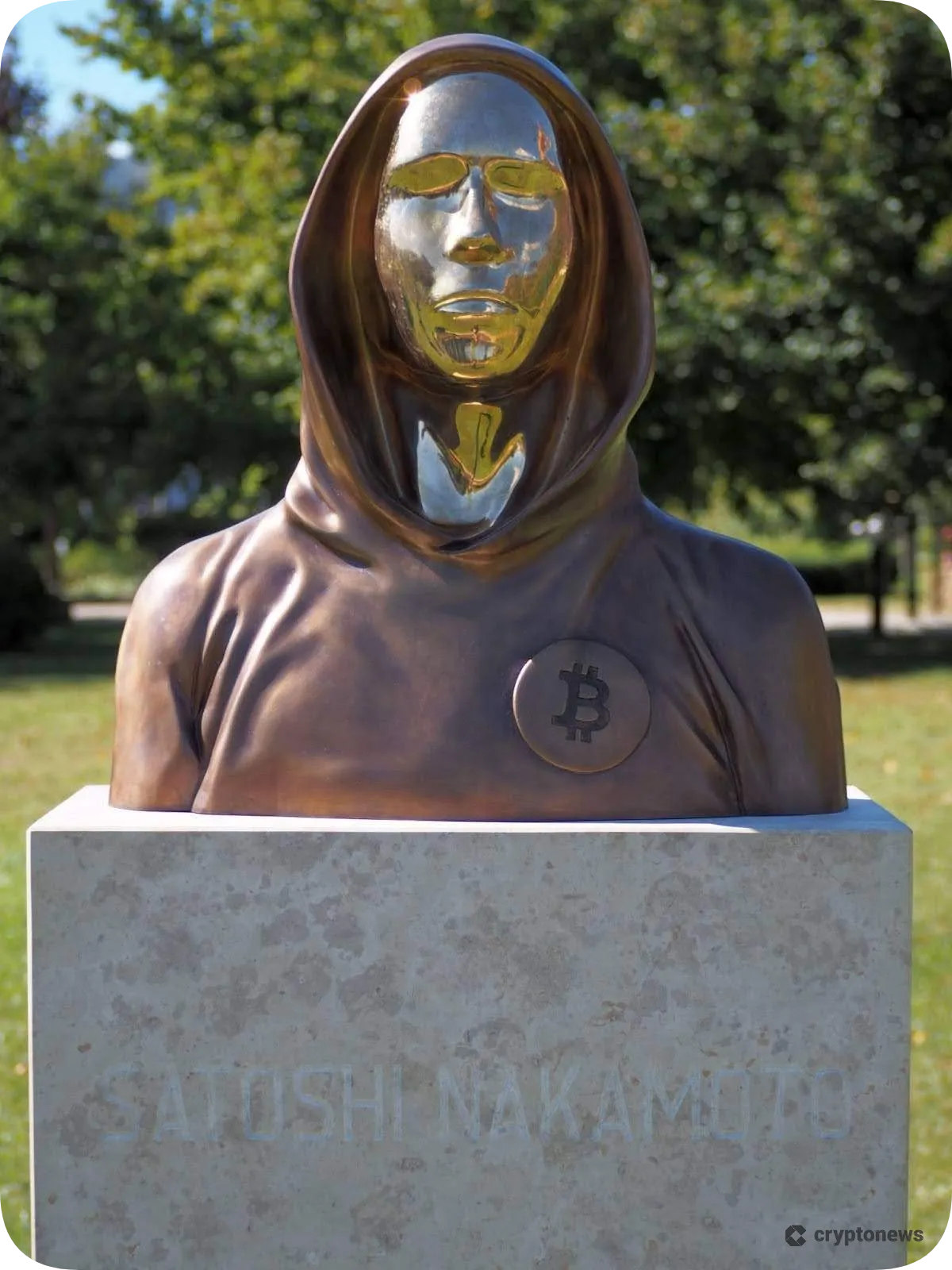
While dozens of possibilities have been proposed since Satoshi’s disappearance in 2011, six names have consistently come up as potentially being Bitcoin’s founder. In nearly all cases, the people thought by some to be Satoshi have the skills and background to be possibilities. However, in all cases, enough doubt exists to prevent any conclusion. The table below summarizes theories on the founder of cryptocurrency.
| Suspect | Evidence | Rebuttal |
|---|---|---|
| Nick Szabo | Szabo was the creator of Bit Gold, an earlier cryptocurrency project with similarities to Bitcoin, and has a writing style similar to that of Satoshi. | Consistent denials and no direct evidence pointing to his involvement in Bitcoin’s launch. |
| Hal Finney | Finney was a respected cryptographer and early Bitcoin collaborator; the first person to receive a Bitcoin transaction from Satoshi. | Hal Finney denied being Satoshi before Finney passed away in 2014. |
| Dorian Prentice Satoshi Nakamoto | A similar name brought Dorian, an engineer, to attention following a 2014 Newsweek article. | Dorian Nakamoto has denied being Satoshi, and no evidence ties him to Bitcoin’s creation. |
| Craig Wright | Wright claimed to be Satoshi in 2015, holds patents related to Bitcoin, and was involved in a lawsuit that alleged Wright was Satoshi. | Proof of Wright being Satoshi has since been discredited or deemed inconclusive. A 2024 UK court found that Wright is not Satoshi. |
| Len Sassaman | Sassaman was a well-known cryptographer, developer, and co-founder of the Cyphercon cypherpunk conference. Similarities in writing style fuel speculation. | Although Sassaman died in 2011, a few months after Satoshi’s last known message, no direct evidence ties Sassaman to Bitcoin’s creation. |
| Adam Back | Adam Back created a proof-of-work system called Hashcash, upon which Bitcoin’s proof-of-work consensus was based; early emails with Satoshi form a link. | Adam Back had repeatedly denied being Satoshi; public statements regarding Bitcoin’s scalability issues cast doubt on speculation that Adam Back is Satoshi. |
Who is the real Satoshi Nakamoto? In the following sections, we’ll explore each of these people in more detail, weighing the evidence, circumstantial or otherwise, in each case.
⭐️ Nick Szabo
For many speculators and researchers, Nick Szabo tops the list of people who could be Satoshi. Researchers at Aston University in England found uncanny similarities between Nick Szabo’s writing style and that of Satoshi’s whitepaper. An earlier attempt at a digital currency, Bit Gold, which shared several similarities with Bitcoin and expertise in cryptography, makes Nick Szabo a leading candidate to be Satoshi.
However, Nick Szabo has consistently denied being Satoshi, and no direct proof has ever emerged. Moreover, Satoshi reportedly seemed unaware of Bit Gold in early exchanges surrounding Bitcoin.
⭐️ Hal Finney
While many initial responses to Bitcoin on Metzdowd aired criticisms about the concept of Bitcoin and its structure, Hal Finney was among the first to respond positively. Finney later became the first person to receive a Bitcoin transaction from Satoshi. The first Bitcoin home node also belonged to Finney. He launched the node just one week after Satoshi launched the Bitcoin network.
Hal Finney connected his home node to the Bitcoin network (just Satoshi at the time) using an IP address from Temple City, California. Another person suspected to be Satoshi (Dorian Prentice Satoshi Nakamoto) lived just a few blocks away. Some suspect that Hal Finney was Satoshi, adopting the name of a nearby neighbor as his online alias.
Notably, Hal Finney denied being Satoshi, and several times conflicts confound the theory. For example, in one instance, timestamps show Satoshi involved in an email conversation with developer Mike Hearn at the same time Finney was running in a 10-mile race. Finney was also diagnosed with ALS in 2009, causing numerous health issues, including impaired hand movement, during a period when Satoshi was highly active online.
⭐️ Dorian Prentice Satoshi Nakamoto
A 2014 Newsweek article titled “The Face Behind Bitcoin" ignited a media frenzy around a California man whose birth name was Satoshi Nakamoto. Dorian had worked in the financial industry as well as on classified defense projects. During the interview, Dorian was quoted as saying, "I am no longer involved in that, and I cannot discuss it. It's been turned over to other people." Dorian later explained that the response was taken out of context.
Regardless of the too-easy-to-be-true name match and Dorian’s insistent denials of being Satoshi or being involved with Bitcoin in any way, dozens of reporters descended upon Dorian’s home. Largely speaking, the Bitcoin community immediately dismissed any possibility that Dorian Nakamoto was Satoshi of Bitcoin fame. However, Dorian’s proximity to Hal Finney’s home reignited speculation about the possibility that Finney was Satoshi.
⭐️ Craig Wright
The most controversial and contentious possibility proposed in the quest to find Satoshi centers on an Australian computer scientist named Craig Wright, who declared that he was Satoshi in 2015.
A 2018 lawsuit in Florida alleged that Wright had attempted to steal 1.1 million bitcoins and intellectual property related to Bitcoin software. The jury found against Wright, but no finding was made regarding whether Wright was Satoshi.
In a 2024 court case, a UK court found that Wright was not Satoshi (COPA v. Wright). Wright was given a suspended one-year prison sentence for filing a £900 billion lawsuit against developers following the COPA case in violation of court orders.
Notably, Wright launched the Bitcoin SV (BSV) chain (Bitcoin Satoshi’s Vision), a fork of the Bitcoin Cash Chain, which itself was a fork of Bitcoin.
⭐️ Len Sassaman
Len Sassaman was deeply involved in the cypherpunk movement and was a founder of the Cyphercon cypherpunk conference, an invitation-only event for leading cryptographers. At the time of his death, he had been pursuing a Ph.D. and had worked as a core developer for Mixmaster, an anonymous remailer protocol. Len also worked on PGP.
A deep understanding of cryptography and his locale (Belgium) led many to believe that Len Sassaman was Satoshi, particularly those who suspect that Satoshi was based in Europe. Writing styles showed similarities with Satoshi, and the timing of Len Sassaman’s death in 2011 also aligns closely with Satoshi’s disappearance.
However, several factors work against this theory. There is no direct evidence that Len Sassaman was Satoshi, and close contacts have expressed deep doubts. Additional counterpoints include Sassaman’s coding style, which was clean and well-notated, and his loud personality, which differed considerably from Satoshi’s online persona.
⭐️ Adam Back
As the inventor of Hashcash, the proof-of-work protocol upon which Bitcoin’s proof-of-work was based, Adam Back remains a popular candidate among Satoshi speculators. Back was one of the first people to receive an email from Satoshi, and Hashcash was cited in the Bitcoin whitepaper. Back’s involvement with the cypherpunk movement and privacy focus also align with the ideals that drove Satoshi.
Similar to other people suspected to be Satoshi, no direct evidence links Adam Back to Bitcoin’s creation. He has also repeatedly denied being Satoshi, stating that he lacked the coding skills to create Bitcoin. Later public statements point to a philosophical disconnect between Back’s views on Bitcoin’s scalability, creating more distance between Back and Satoshi. Adam Back went on to launch Blockstream, the company behind the Liquid Network, a Bitcoin sidechain.
⭐️ Other Fringe Candidates
Several other names remain part of the discussion regarding Satoshi’s true identity. These include Elon Musk and Twitter cofounder Jack Dorsey, the latter of whom is a well-known Bitcoin maximalist. Both have denied being Satoshi.
Paul Le Roux, a renowned criminal mastermind, also comes up in Satoshi speculation. Le Roux was a skilled programmer and used encryption to protect the illicit activities of his network. Much like Satoshi, Le Roux used aliases, eventually disappearing from public view. However, Le Roux’s persona remains a poor match for Satoshi, and no direct evidence ties him to Bitcoin’s creation.
Other candidates include Wei Dai, the creator of b-money, and Dave Kleiman, who had been an alleged partner with Craig Wright, a relationship that led to Wright’s first high-profile court case. In both cases, the stretched theories show frays when examined closely. Satoshi was initially not aware of Wei Dai’s work, being directed to him later by Adam Back. Dave Kleiman suffered from health issues during the time in which Bitcoin was being developed, making him an unlikely candidate.
Why Is Satoshi Hiding? Legal, Ideological & Personal Safety Concerns
Satoshi had several valid reasons to remain anonymous, ranging from regulatory uncertainty and personal risk concerns to philosophical moorings. Let’s discuss each of these in more detail.
Creating a new type of digital money doesn’t come without risk from regulators. Largely speaking, the Bitcoin project was wading into untested waters. Could the project become the target for prosecution or regulations that undermine the philosophy of peer-to-peer trustless transactions?
The U.S. Treasury Department's Financial Crimes Enforcement Network (FinCEN) requires many businesses that transmit money to register as money services businesses. Individual states have similar requirements, as do jurisdictions in other countries.
Another potential concern centers around tax liability. Today, the IRS treats Bitcoin mining revenue as income. At the time that Satoshi and other early collaborators began mining, there was no guidance at all on the tax treatment of crypto income or the tax on gains, both of which must be converted to dollar values to assess tax liability.
FinCEN also requires certain entities to comply with Anti-Money Laundering (AML) rules, which require reporting suspicious transactions. At the time, it was unclear whether Bitcoin would be subject to any jurisdiction. Furthermore, the concept of reporting transactions went against Bitcoin’s privacy goals.
Although decentralization is a core component of Bitcoin today, in the early days, mining was not decentralized by any measure. Satoshi’s stack of 1 million plus bitcoins serves as evidence that Bitcoin was not decentralized. However, as the project evolved and gained traction, decentralization became a reality, aligning with the initial goals outlined in the whitepaper. Satoshi famously said, “The project is in good hands,” in his last known email exchange.
Lastly, personal risk may have been a concern. Even if Satoshi hadn’t imagined BTC at over $100,000 each, holding 5% of the supply at any meaningful value makes Satoshi a target for bad actors who may threaten bodily harm.
Does Anyone (Maybe the NSA) Know Satoshi’s Identity?
Another popular theory centers on the idea that the National Security Agency (NSA) may know Satoshi’s identity or perhaps that Satoshi may have been working for the NSA. A 1996 paper published by the NSA titled “How to Make a Mint: The Cryptography of Anonymous Electronic Cash” discussed concepts very similar to Bitcoin.
The 2013 Snowden leak revealed the NSA’s initiative to weaken cryptographic standards and a specific interest in surveillance for Bitcoin. Many suspect the agency has also run stylometric research, comparing Satoshi’s digital fingerprints against databases. However, this has never been confirmed.
A 2025 Freedom-of-Information Act (FOIA) lawsuit by attorney James Murphy seeks to learn more about comments made by Department of Homeland Security (DHS) Special Agent Rana Saoudin in 2019 that suggested the US government had interviewed Satoshi and three other people, all located in California, who were involved with the creation of Bitcoin. However, the case is still ongoing, and no additional information has been provided.
Perhaps a more pressing question than who Satoshi is might be what happens if we do find Satoshi? It is possible that government agencies have already solved the mystery or that others with knowledge might come forward. The likelihood of these events remains unknown, but the implications could change the entire crypto ecosystem.
Bitcoin was created with privacy and financial autonomy in mind, utilizing a decentralized ledger to track wallet balances without the need for an intermediary or a central authority. The shadowy figure that Satoshi has become embodies the privacy and security ethos that the Bitcoin community now embraces. If Satoshi were unmasked, the value now held in Bitcoin would be in jeopardy, and not just for Satoshi’s 22,000+ suspected wallets. In nearly every imaginable outcome, the news would likely drive a market sell-off in all cryptocurrencies. Coinbase points to the possible risk to digital assets in its prospectus filing with the Securities and Exchange Commission (SEC), citing the possibility of Satoshi’s identity being revealed or transfers of Satoshi’s BTC assets.
Of course, Satoshi himself could also be at risk, given the enormous amount of bitcoins he’s thought to hold. Many in the community would prefer that Saotoshi never be unmasked.
How Smart Is Satoshi? Dissecting the Code & Economic Design
Bitcoin’s codebase leveraged several pre-existing concepts to create something new. Electronic cash had already been tried, and blockchain technology was not a new concept at the time. Still, Satoshi’s vision led to the creation of a new digital asset that did not rely on centralization or trusted third parties. The term trustless became part of the blockchain lexicon.
The protocol used elliptic-curve cryptography throughout. This powerful form of cryptography is used to generate a secure private key and its corresponding public key. From the public key, a one-way hashing process is used to create a wallet address that acts as a pseudonymous identity on the Bitcoin network. The private key proves ownership of blockchain assets. Hashes also create unique digital fingerprints to represent transactions and blocks within the chain, serving as links between subsequent blocks and making it cost-prohibitive to tamper with Bitcoin’s digital ledger due to its blockchain encryption.
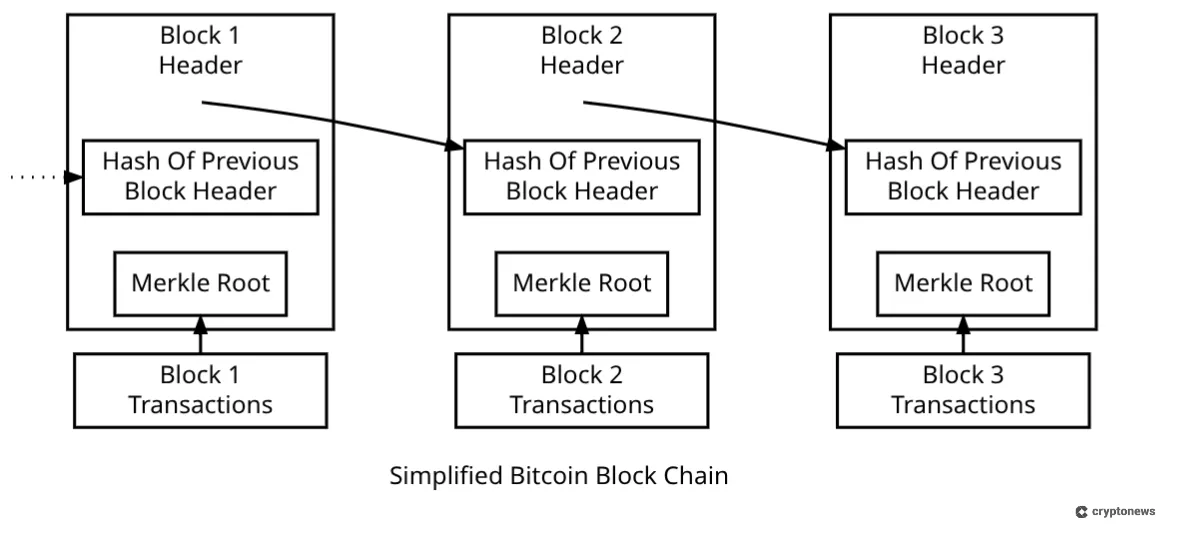
Although many would contest the coding elegance, sometimes described as spaghetti code, Satoshi introduced game theory brilliance with Bitcoin’s consensus layer and scarcity features. Miners compete to solve a hash that represents the hash values of the proposed block’s transactions, the previous block’s hash, and a nonce (a number used only once). The miner (or group) that solves the hash first wins the block subsidy as well as the fees paid to the network for transactions within the block. A periodic difficulty adjustment allows the network to maintain a block time of about 10 minutes.
Bitcoin also uses a finite number of bitcoins (21 million), with the rate of distribution through mining slowing over time. Approximately every four years, the mining subsidy halves in an event called the Bitcoin halving. This scarcity-by-design has helped propel BTC’s value from pennies in the early days to over $100,000 today.
Bitcoin Compared to Other Early Digital Cash Projects
Several other digital cash projects existed before Bitcoin, including E-gold, b-money (never launched), and Liberty Reserve, as well as projects that proved foundational to Bitcoin but did not involve a currency, such as Hashcash.
- E-gold and Liberty Reserve were both shut down by authorities due to their frequent use in illicit activities. Both currencies were centralized, run by companies.
- B-money, while never launched, shared many similarities with Bitcoin in its decentralized structure.
- Bit Gold, also never launched, shared Bitcoin’s decentralization goals, but proved vulnerable to sybil attacks in which bad actors could attack the network using multiple identities.
- Hashcash, contrary to its name, was not a currency. However, the proof-of-work system created by Adam Back to combat email spam served as inspiration for Bitcoin’s proof-of-work consensus.
The Cultural & Economic Impact of an Absent Founder
The absence of a figurehead for the Bitcoin project arguably helped foster Bitcoin’s wider adoption. The mythical founder led to countless documentaries, books, and Satoshi-branded merchandise, all of which helped promote Bitcoin’s awareness. Many even draw parallels to Banksy, an artist who chooses to remain anonymous, allowing fans to appreciate the art rather than the celebrity associated with it.
Satoshi’s absence also helped Bitcoin become decentralized. In the early days, Satoshi decided which suggestions to implement in the protocol. Now, Bitcoin utilizes a Bitcoin Improvement Proposal (BIP) workflow that empowers the global Bitcoin community to have the loudest voice.
Proposals are given the opportunity for public discussion, and core developers determine if proposals are technically sound. However, the Bitcoin full nodes have the final say. Significant changes to the protocol aren’t activated until the mining community signals its support by including a specific “bit” in mined blocks. This inclusion acts as a vote in favor. Nodes must also install the newer version of Bitcoin Core. A minority of full nodes staying on the older version of Bitcoin Core causes a fork in the chain.
While Satoshi’s absence fosters decentralization, the shadow he still casts can lead to price instability. Without knowing if Satoshi is alive or may ever need to access the wealth he’s amassed in bitcoins, the market’s heart skips a beat whenever Satoshi-linked coins move. An army of traders, analysts, and crypto sleuths closely tracks wallets from the Satoshi era for any movements.
Conclusion: Who Is Satoshi Nakamoto?
While several possibilities exist, we still don’t know who Satoshi is, and we may never know. Most theories about Satoshi Nakamoto’s identity center on people who were active in the cypherpunk movement, although some fall outside of this group, including Dorian Nakamoto, who may simply have a similar name. Of the people who have claimed to be Satoshi, none have convincingly proved their case.
Why did Satoshi disappear? Satoshi’s disappearance was anything but sudden. He had already handed the keys to Gavin Andresen and established a core development team. During this time, Satoshi also stepped away from the reins, becoming less active on discussion boards. By the time Satoshi said he had moved on to other things, Bitcoin was moving under its own momentum.
What remains unanswered is the why. Even if we never understand Sataoshi’s reasoning in stepping away from Bitcoin’s development, his choice to do so has an unmistakable effect on Bitcoin to this day. Satoshi stepping away led to true decentralization, a stated goal of the whitepaper. This move, which many see as altruistic, gives the worldwide Bitcoin community a voice in shaping what could be the next generation of money.
👉 Learn More: How to Buy Bitcoin
FAQs
Why is Satoshi Nakamoto a mystery?
Who owns the most Bitcoin today?
Could Satoshi’s return crash the market?
References
- The U.S. Financial Crisis (cfr.org)
- Bitcoin: A Peer-to-Peer Electronic Cash System (bitcoin.org)
- Subject: Citation of your b-money page (metzdowd.com)
- Bitcoin P2P e-cash paper (metzdowd.com)
- Added some DoS limits, removed safe mode (0.3.19) (bitcointalk.org)
- I've moved on to other things. (bitcoin.com)
- Who Owns the Most Bitcoin (2025) (arkm.com)
- Genesis Block Mining Address (arkm.com)
- Mystery Wallet Sends $20K to Satoshi Nakamoto’s Address – Accident or Tribute? (tradingview.com)
- The Enigma of Satoshi Nakamoto: Is Nick Szabo the Mastermind Behind Bitcoin? (medium.com)
- Judge awards $143 million final judgment following Kleiman v. Wright Bitcoin trial verdict (zdnet.com)
- Judge rules computer scientist not Bitcoin inventor (bbc.com)
- 3310. Anti-Money Laundering Compliance Program (finra.org)
- HOW TO MAKE A MINT: THE CRYPTOGRAPHY OF ANONYMOUS ELECTRONIC CASH (mit.edu)
- James Murphy Sues DHS to Uncover Satoshi Nakamoto Identity (shib.io)
- FORM S-1 Coinbase Global, Inc. (sec.gov)
2M+
250+
8
70







 in numbers

About Cryptonews
Our goal is to offer a comprehensive and objective perspective on the cryptocurrency market, enabling our readers to make informed decisions in this ever-changing landscape.
Our editorial team of more than 70 crypto professionals works to maintain the highest standards of journalism and ethics. We follow strict editorial guidelines to ensure the integrity and credibility of our content.
Whether you’re looking for breaking news, expert opinions, or market insights, Cryptonews has been your go-to destination for everything cryptocurrency since 2017.


 Camila Karam
 Ihssan El Medkouri
 Anatol Antonovici