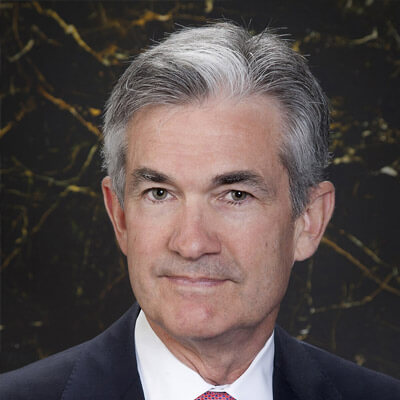
Jerome Powell
Jerome Powell is the Chair of the Board of Governors of the Federal Reserve System, the central bank of the United States. As the public face of U.S. monetary policy, he plays a decisive role in setting interest rates, overseeing financial stability, and guiding the regulatory environment that affects global capital markets. His decisions and public communications are closely watched by participants in the digital asset ecosystem, since shifts in liquidity, inflation expectations, and risk appetite have direct implications for assets such as Bitcoin and other cryptocurrencies.
Overview
Born in 1953 in Washington, D.C., Powell built a career across law, investment banking, and public service before joining the Federal Reserve. He was appointed to the Fed’s Board of Governors in 2012, then nominated as Chair and took office in 2018. He was later reappointed for a second four year term, scheduled to run through 2026. Powell is often described as a pragmatic and consensus oriented central banker, focused on financial stability, measured policy adjustments, and clearer communication with markets.
For the digital asset industry, Powell’s tenure has coincided with significant developments, including rapid growth of crypto markets, the rise of stablecoins, and the early policy debates around central bank digital currencies. While he is not a crypto focused policymaker, his views and the Fed’s broader approach have become important reference points for how traditional monetary authorities respond to digital innovation.
History and Background
Powell studied politics at Princeton University and later earned a law degree from Georgetown University. He began his career in corporate law before moving into investment banking at Dillon, Read & Co., where he worked on financing and transactions involving large corporations and infrastructure projects. In the early 1990s, he served in the U.S. Treasury Department in roles focused on domestic finance, including oversight of government debt management and aspects of financial regulation.
After leaving the Treasury, Powell spent time in private equity and policy research. His work at a Washington based think tank emphasized financial stability, funding markets, and the lessons of previous crises. This background shaped his approach at the Federal Reserve, particularly during periods of stress in money markets and banking, when the central bank deployed emergency facilities and balance sheet tools to maintain market functioning.
Role as Federal Reserve Chair
As Chair of the Federal Reserve, Powell leads the Federal Open Market Committee, which sets the federal funds rate and defines the stance of U.S. monetary policy. He also oversees decisions on the size and composition of the Fed’s balance sheet, including asset purchases and subsequent reductions. These tools influence borrowing costs across the economy, valuations of financial assets, and the relative attractiveness of cash versus risk assets.
Powell’s time as Chair has included several distinct phases. Early in his tenure, the Fed attempted to normalize interest rates after years of post crisis accommodation. The COVID 19 pandemic then triggered an abrupt reversal, with emergency cuts to near zero and large scale asset purchases in order to stabilize markets. A sharp rise in inflation that followed led to one of the fastest rate hiking cycles in decades, which tightened financial conditions and weighed on speculative assets, including many digital tokens.
Views on Crypto and Digital Assets
Powell has taken a cautious and differentiated view of digital assets. He has generally described cryptocurrencies like Bitcoin as highly volatile, speculative assets that function more as risk instruments than as money in the traditional sense. At the same time, he has acknowledged that innovation in payments, tokenization, and decentralized finance could have long term implications for the financial system and requires close monitoring.
On stablecoins, Powell has repeatedly argued that if tokens are to be widely used as a means of payment, they should be subject to robust regulation comparable to other forms of private money. This includes clarity on reserves, redemption rights, and risk management. Under his leadership, the Fed has worked alongside other U.S. agencies to outline the risks that stablecoins could pose to financial stability if they grow rapidly without adequate oversight.
With regard to a potential U.S. central bank digital currency, Powell has emphasized analysis and consultation rather than a rapid launch. He has framed a CBDC as a serious option that would require clear decisions on privacy, the role of commercial banks, and the design of the broader payments system. This cautious stance has positioned the Fed as a deliberate actor in CBDC discussions, rather than an early mover.
Impact on Digital Asset Markets
Although the Federal Reserve does not set policy specifically for cryptocurrencies, Powell’s decisions have had significant indirect effects on the sector. Periods of low interest rates and abundant liquidity have tended to support risk taking and valuations across technology and digital assets, while aggressive tightening cycles have contributed to drawdowns, deleveraging, and stress in some parts of the crypto market.
Market participants closely parse Powell’s press conferences, speeches, and testimonies for signals about the future path of interest rates and balance sheet policy. Shifts in expectations can lead to rapid repricing across asset classes, including Bitcoin, which many investors treat as a macro sensitive asset tied to real yields, the strength of the U.S. dollar, and broader liquidity conditions.
Risks and Considerations
In the context of digital assets, Powell’s approach highlights several key considerations. First, macro policy remains a dominant driver of cycles in speculative markets, so crypto projects and investors are exposed to the same shifts in financial conditions that affect equities and other risk assets. Second, stablecoins and tokenized forms of money are likely to face closer regulatory scrutiny as they grow, reflecting central bank concerns about payment systems, bank funding, and financial stability.
Finally, Powell’s tenure illustrates the balance central banks seek between supporting innovation and safeguarding the core functions of money and credit. For the crypto industry, this means that long term integration with global finance will depend not only on technology and market demand, but also on how policymakers like Jerome Powell choose to respond to the evolving landscape of digital assets.
