

What Is an Oracle in Blockchain?





Ever wondered how a smart contract knows the exact ETH price or whether it rained on a farmer’s field? It can’t peek outside the chain on its own. That’s where a blockchain oracle (sometimes called a crypto oracle) steps in.
Think of it as the secure courier that fetches real‑world facts — prices, weather, sports scores — and delivers them on‑chain in a tamper‑proof package. By plugging this trusted data feed into code, we let blockchains move from self‑contained ledgers to reactive systems that automate loans, insurance payouts, and much more.
In the next sections, we’ll unpack how oracles work, why decentralizing them matters, and where they’re already powering everyday Web3 magic.
Key Takeaway: What Are Blockchain Oracles?
Blockchains are isolated systems that cannot directly access outside information. A blockchain oracle acts as a bridge, connecting the blockchain to the external world. It fetches real-world data (like prices, scores, or weather) and delivers it securely onto the blockchain so smart contracts can use it.
Oracles retrieve information from external sources such as websites, sensors, or databases when needed. Crucially, they verify this data for accuracy, often by checking multiple sources or using proofs, before sending it to the blockchain. For example, an oracle tells a betting contract a verified soccer match result.
Oracles aren’t the original data source but trusted messengers. By bringing verified off-chain facts, smart contracts can react to real-world events, like issuing insurance payouts based on weather data. This gives blockchains vital “eyes and ears,” massively expanding their usefulness beyond their internal data.
How Do Blockchain Oracles Work?
A blockchain oracle bridges the gap between a blockchain and external data. When a smart contract needs off-chain information, it sends a request. The oracle service detects this request, fetches the data from an external source, verifies its accuracy, and securely delivers it back onto the blockchain for the contract to use.
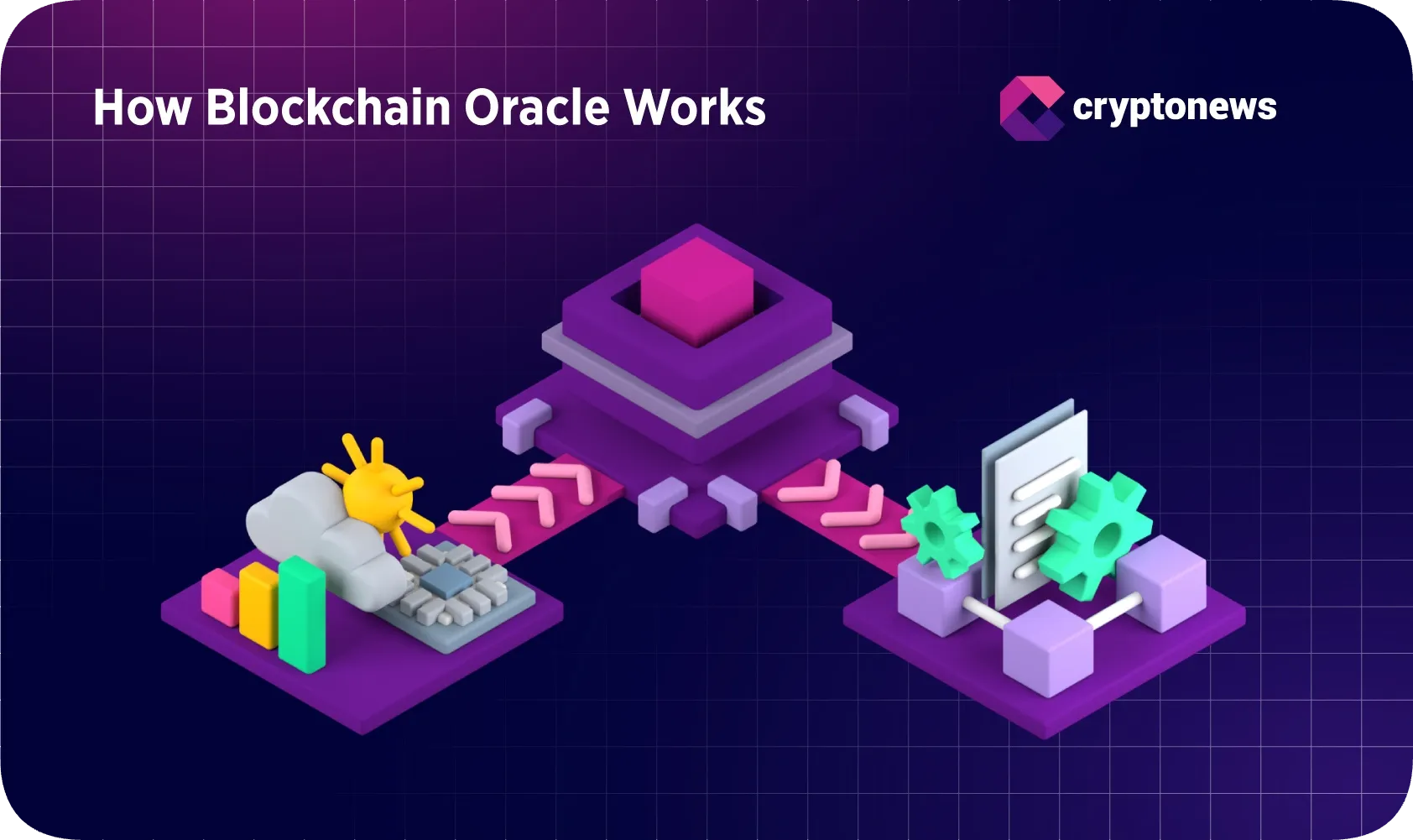
In practice, there are a few common patterns for how oracles operate:
Direct Request-Response
A smart contract asks for data (like a price quote). The oracle receives the request, retrieves the data from an API or database, and then posts a transaction with the answer back to the contract. This often happens asynchronously — the contract continues its execution only when the oracle’s response transaction arrives.
Publish-Subscribe (Stream)
Oracles can continuously push specific data updates to the blockchain, without an explicit request each time. For example, an oracle might publish the latest cryptocurrency prices every minute to a specific contract or storage location. Smart contracts can then subscribe to or read the latest available data when needed.
Immediate-Read
In some cases, an oracle might be consulted in real-time during contract execution for a quick decision (e.g., checking if a user is over 18). However, blockchain consensus that needs deterministic inputs usually involves the oracle’s prior on-chain update of that data.
To ensure clarity, let’s break down a typical oracle workflow into steps:
- Data Request: A smart contract (on Chain A) signals that it needs specific off-chain data. A user action or another contract event could trigger this.
- Oracle Selection: The oracle system (or network) picks one or multiple oracle nodes to handle the job. Multiple independent oracles might be chosen for redundancy and security in decentralized networks.
- Data Retrieval: The chosen oracle node(s) go to the external world to fetch the requested information. For example, they call a web API, query a database, or read a sensor.
- Verification/Consensus: If multiple oracles are involved, they compare results and may use a consensus mechanism to agree on the correct data (e.g., taking the majority value or the median of several values). If a single oracle is used, it might use cryptographic proofs or trusted hardware to guarantee that the data wasn’t tampered with.
- Data Delivery: The oracle sends the verified data back to the blockchain. This is usually done by the oracle node creating a transaction that calls a predetermined function on the smart contract, passing along the data.
- Contract Execution: Once the data is on-chain, the smart contract uses it to continue its execution. For instance, if the data were a temperature reading for an insurance contract, the contract would determine if a payout condition is met and execute the payout logic accordingly.
- Reward (if applicable): In many oracle networks, the oracle providers (nodes) receive a reward for their service. For example, in Chainlink, nodes are paid in LINK tokens for delivering data, incentivizing honest and reliable data delivery.
Blockchain oracles operate invisibly, typically within seconds/minutes. They fetch external data for smart contracts, using safeguards like timeouts or backup sources. Crucially, the delivered data is recorded on-chain for all nodes to see, ensuring consensus and preserving smart contract determinism. This secure pipeline allows contracts to react to the outside world reliably.
Types of Blockchain Oracles
Not all oracles are the same – they come in different flavors depending on what they do and how they do it. We can categorize blockchain oracles along several dimensions. Below are the major types of oracles and what sets them apart:
⚙️ Hardware and Software Oracles
Hardware oracles connect physical events to the blockchain. They use devices like sensors, scanners, or IoT hardware to detect real-world conditions (like location via GPS or temperature) and convert this into digital data. This allows smart contracts to react to tangible events, such as confirming a shipment arrived, to trigger payment.
Software oracles handle existing digital data from online sources. They fetch information from websites, databases, or APIs – like financial prices, weather reports, or sports scores – and deliver it on-chain. For example, they supply ETH/USD rates to DeFi contracts. Software oracles are more common, bridging Web2 data with Web3 contracts.
Examples highlight their roles: A hardware oracle uses a GPS sensor to report a package’s delivery. A software oracle calls an API to get election results for a prediction market. Hardware acts as the blockchain’s physical senses, while software integrates the vast data available on the internet.
Both types are crucial. Hardware enables trustless verification of offline events (such as delivery confirmation), while software provides access to essential online information (market prices, for example). Many blockchain applications combine hardware and software oracles to meet their specific needs for interacting with the physical and digital worlds.
➡️ Inbound and Outbound Oracles
Inbound oracles bring external data onto the blockchain. They are the most common type, feeding information like stock prices, sensor readings, or real-world events into smart contracts. This answers questions for the blockchain, such as confirming an off-chain payment occurred or reporting a temperature drop.
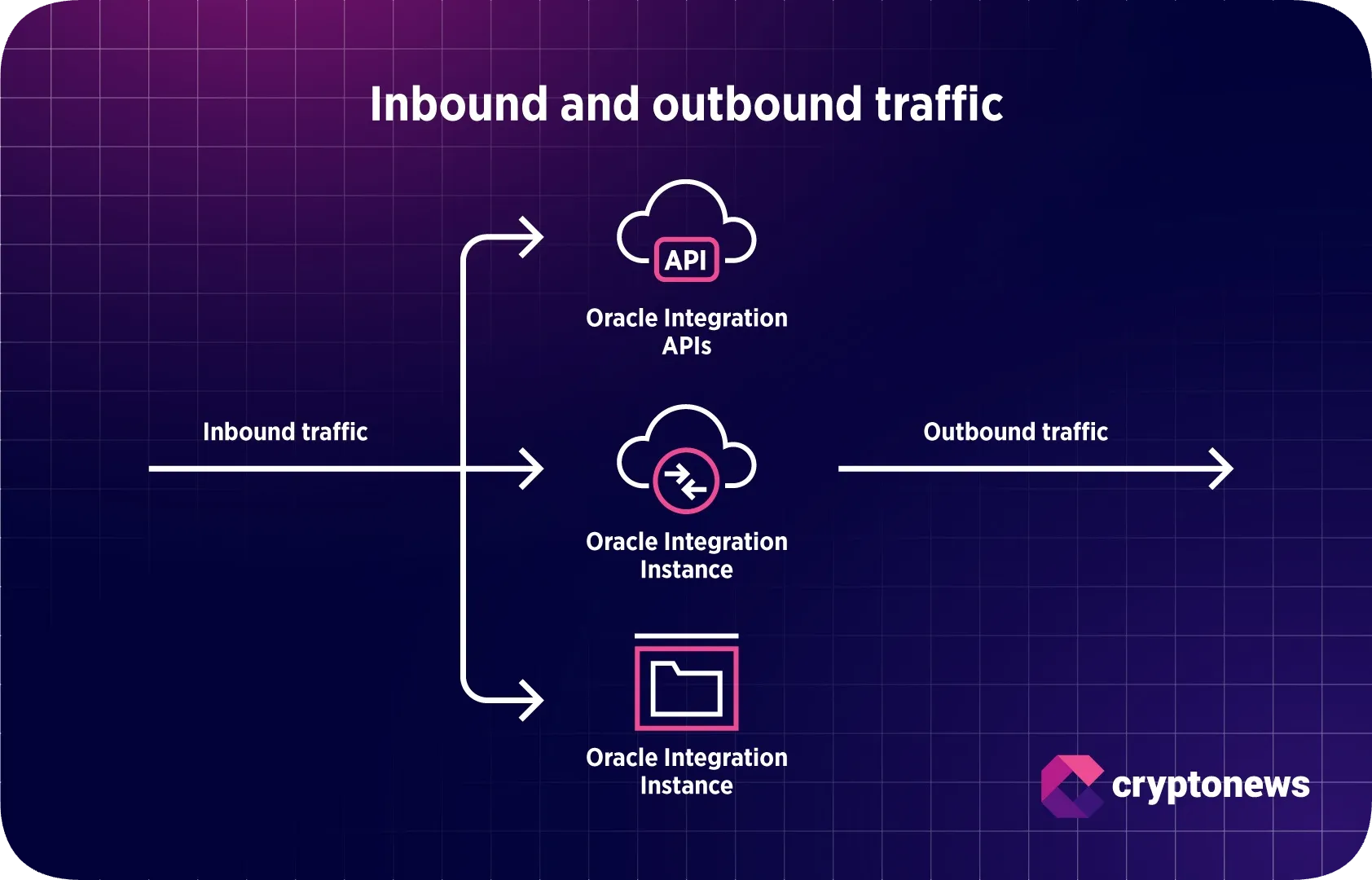
Outbound oracles send information from the blockchain to external systems. They enable smart contracts to trigger real-world actions, like instructing a banking API to release funds off-chain or commanding a smart lock to open after receiving an on-chain payment. They notify the outside world about on-chain events.
Oracles often support two-way communication, handling both inbound and outbound flows. For instance, an inbound oracle delivers rainfall data to the contract in crop insurance. If payout conditions are met, an outbound oracle informs a payment system to disburse funds to the farmer’s bank account.
In summary, inbound oracles supply off-chain data to blockchain applications, while outbound oracles convey on-chain results to external systems. Both directions are vital, working together to extend blockchain utility beyond its native environment and enable automated workflows crossing the boundary between the chain and the real world.
⭕ Centralized and Decentralized Oracles
A centralized oracle relies on one entity for data. This makes it fast and straightforward. But it creates a single point of failure. Your smart contract breaks if that oracle fails, gets hacked, or reports bad data. You must trust that one source, undermining blockchain’s trustless nature.
Decentralized Oracle Networks (DONs) use multiple independent nodes. These nodes gather and verify data. They agree on the correct value before sending it to your contract. Like blockchains, this reduces trust needs and risk. Resilience comes from not relying on one source.
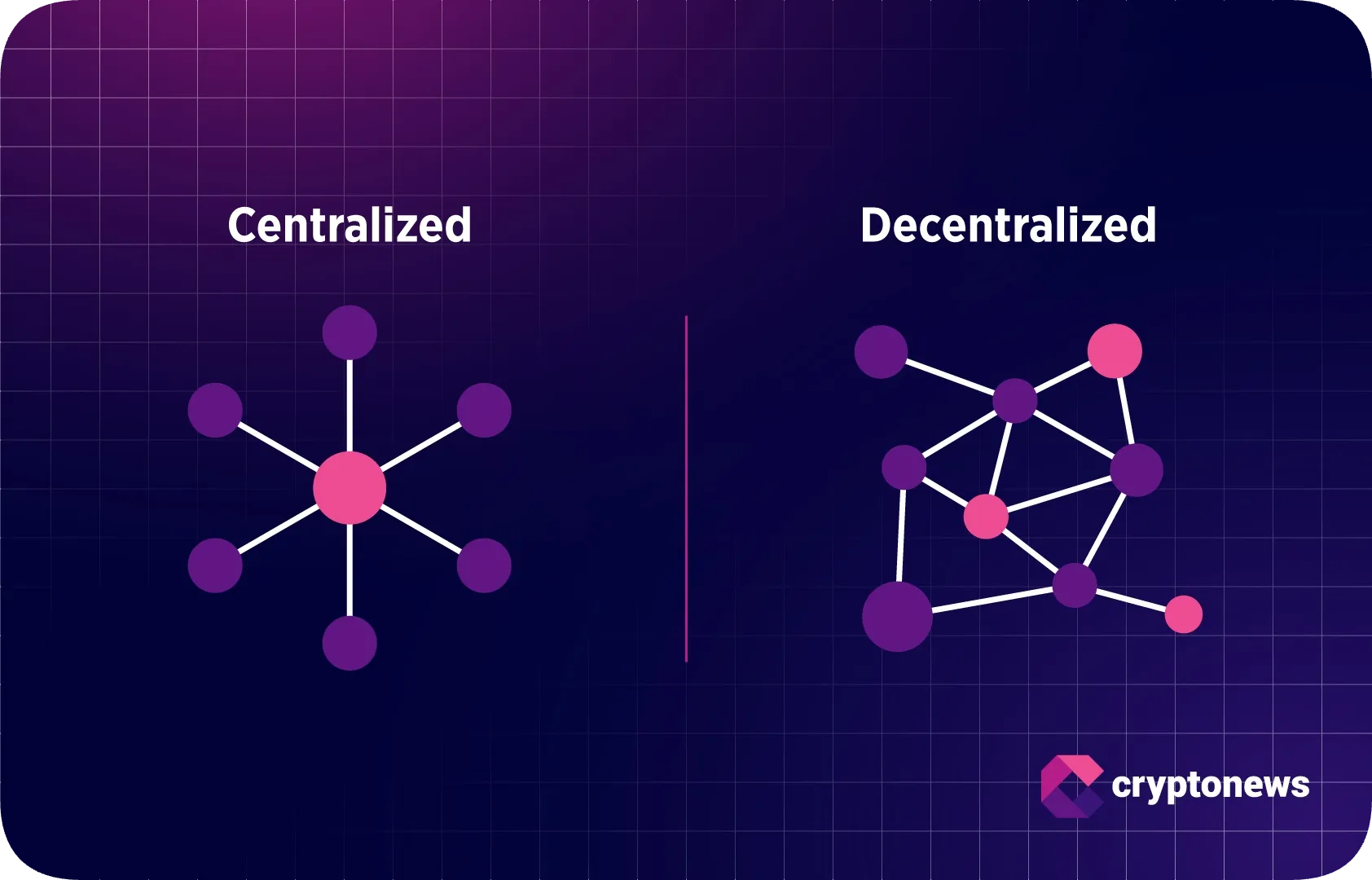
By avoiding one trusted provider, decentralized oracles preserve the blockchain’s security. They act like a crowd of witnesses, boosting data reliability. For example, Chainlink uses many operators. Most DeFi protocols pick these networks to resist manipulation, choosing strong security over simplicity.
These decentralized systems mirror blockchain consensus for data. Multiple parties check information, ensuring higher reliability. You trade some speed and complexity for crucial security, especially in high-value uses. This prevents the dangers of one oracle failing.
🧑🤝🧑 Consensus-Based Oracles
Consensus-based oracles require multiple participants to agree on data before smart contracts use it. Nodes or sources must confirm the information is accurate through an agreement process. This goes beyond basic data fetching, including human input or varied checks.
For example, prediction markets like Augur involve people betting on real-world outcomes. The honest crowd consensus decides the result for contracts. Chainlink’s price feeds also use agreement, combining many sources; odd results don’t distort the final value.
These systems prevent reliance on one source. Truth comes from group agreement, backed by reputation stakes or penalties. Nodes matching the honest majority stay trusted; others risk penalties. This creates incentives for accuracy.
The main benefit is stronger data integrity and attack resistance—corrupting many sources is harder than corrupting one. You trade this for higher costs and complexity due to coordination. This cost is often worth it for critical uses like finance, where secure data matters most.
🧍♂️Human Oracles
Human oracles provide expert judgments to blockchains, digitally signing their inputs for cryptographic proof. They bridge gaps where automated data is insufficient or human expertise is essential. Key applications include:
- Art Authentication: An appraiser verifies a painting’s authenticity for NFT tokenization; their signed verdict becomes the smart contract’s truth.
- Legal Arbitration: Arbitrators confirm real-world events (such as goods delivery) in disputes, using cryptography to ensure their identity and reduce fraud.
Using human oracles requires trust in the expert, particularly when reliable automated alternatives aren’t feasible. Trust can be reduced via cryptographic verification or multi-signature consensus (requiring agreement from multiple experts, for example).
Ultimately, human oracles enable blockchains to handle expertise-dependent tasks, proving that real-world solutions often blend oracle types, like hardware sensors, decentralized networks, and human judgment, to serve diverse needs while maintaining security.
What Can Blockchain Oracles Do?
Blockchain oracles dramatically expand the range of applications smart contracts can support. By connecting on-chain programs to off-chain data, oracles enable smart contracts to respond to virtually any real-world event or condition.
Below, we explore blockchain oracles’ key capabilities and provide straightforward explanations and examples for each.
Fetch Real-World Data
Blockchain oracles bring real-world data like prices, weather, or election results to smart contracts. This lets contracts execute based on actual events. Without oracles, contracts can’t react to the outside world.
For example, MakerDAO uses oracles (like Chainlink) to get live crypto loan prices. Crop insurance apps use oracles to check rainfall from weather APIs. If the raindrops are too low, the contract pays farmers automatically.
Beyond finance, oracles fetch shipping updates, stock prices, or health stats. This versatility lets smart contracts handle real-world conditions across many fields.
By feeding verified data on-chain, oracles enable contracts to automate complex responses to real events. This is necessary for apps that move beyond simple token transfers.
Execute Smart Contracts Based on Real-World Events
Oracles trigger smart contracts when real-world events happen. They detect off-chain occurrences and automatically start on-chain actions. This removes manual steps, linking real events to blockchain execution.
For example, Flight insurance pays automatically if a delay hits 2 hours. An oracle checks aviation data and triggers the payout. Similarly, wagers settle instantly when oracles confirm sports results.
Oracles can also initiate real-world actions. For example, paying rent on-chain might unlock a door via an IoT signal. This “if this happens, do that” automation transforms agreements, like paying farmers after verified low rainfall or releasing goods upon GPS-confirmed delivery.
Facilitate Cross-Chain Interoperability
Cross-chain oracles connect different blockchains, like Ethereum and Solana. They enable data sharing and asset movement between networks, solving fragmentation by letting smart contracts on one chain use data or trigger actions on another chain. You need this for a connected multi-chain ecosystem.
A real example is Chainlink’s CCIP, which transfers assets between chains. Say you want Ethereum tokens on Avalanche. First, tokens lock on Ethereum. An oracle verifies this lock. Then it signals Avalanche to mint equivalent wrapped tokens. The whole process relies on oracle verification.
These oracles also share data. Imagine a reputation score stored on Chain A. An oracle fetches it for a loan contract on Chain B. The contract uses it like native data, enabling smooth multi-chain apps.
They handle cross-chain triggers, too. For instance, an oracle spots a price spike on a Chain A exchange, which could instantly trigger a rebalance contract on Chain B. Projects like Pyth Network publish synchronized data (like prices) to many chains simultaneously.
In short, cross-chain oracles bridge blockchains like they bridge on-chain and off-chain worlds. They prevent data silos and scattered liquidity. This lets apps across networks work together seamlessly. You can’t have a multi-chain future without this glue.
Verify Real-World Identity
Oracles let blockchain apps check real-world identities and credentials privately. They confirm off-chain details like age or qualifications without exposing raw personal data. This allows smart contracts to enforce rules like KYC while keeping users pseudonymous through private checks.
A real example is a lending platform uses an oracle to check if someone qualifies for a loan. When Alice applies, the oracle privately reviews her credit history off-chain. Instead of sharing her score, it sends an on-chain proof like “score over 700.” The contract then lowers her collateral need based on this private confirmation.
These oracles also handle regulatory stuff like KYC for trading platforms. After you verify your identity off-chain, the oracle marks your wallet as “verified.” For voting systems, oracles can confirm voter eligibility by checking trusted sources like universities.
By saying just “yes” or “no” about credentials instead of sharing sensitive details, oracles enable secure identity-based apps — loans, compliant finance, voting — right on-chain. This connects real-world trust with blockchain automation while dodging privacy risks and manual work.
Complete Off-Chain Computations
Compute-enabled oracles handle complex tasks off-chain for smart contracts. They solve blockchain limits like high costs, slow speeds, or rigid environments. These oracles manage impractical work on-chain, like custom algorithms or data-heavy jobs, then return verified results. This massively expands what smart contracts can do.
For example, Chainlink’s VRF creates secure randomness off-chain (blockchains can’t do this natively) for lotteries or NFTs. It gives both the random number and a verification method, letting the contract check it’s real. Similarly, an oracle can run financial analysis off-chain if gas fees are too high, sending only the final result.
These oracles also tackle advanced cryptography. Generating zero-knowledge proofs (ZKPs) strains blockchains. Oracles compute these proofs off-chain. They make a compact proof; the contract checks it quickly on-chain. This keeps things private and efficient.
In short, compute oracles act as trusted off-chain helpers. They run jobs like random generation, big data crunching, or complex math. By sending back verifiable results, often using checks or redundancy, they let smart contracts use powerful computations safely. Services like Chainlink Functions show how this extends blockchain beyond its built-in limits.
Enhance Security and Reliability
Well-designed decentralized oracle networks boost blockchain security and reliability. They provide accurate, hard-to-change data for smart contracts and remove single points of failure by combining multiple sources. For example, one manipulated exchange price won’t break Chainlink’s combined feed, protecting DeFi protocols from bad inputs.
For example, the bZx hack in 2020 happened because it used one oracle price that flash loans manipulated. After switching to Chainlink’s decentralized oracle, bZx fixed this weakness. Other protocols using strong oracles resisted similar attacks. Chainlink even paid users back after an oracle problem, proving its reliability commitment.
Nodes fetch data securely using methods like TLSNotary or trusted hardware, guaranteeing that data stays unchanged during delivery. Many nodes prevent downtime — if one fails, others work. Public dashboards show performance, holding operators accountable for reliability.
Economic incentives align behavior: nodes stake tokens and lose them for lying, or earn rewards only for correct outputs. Constant innovation (like secure hardware) provides tested solutions. You avoid building risky custom oracles. Together, these make data trustworthy.
A secure oracle layer guards smart contracts against false or late information. Through decentralization, verification, and aligned incentives, modern oracles strengthen dApp security. They become vital trust-builders in blockchain, not weak spots.
Practical Use Cases of Oracles in Crypto
Oracles are not just theoretical concepts – they are already hard at work powering various blockchain applications. Let’s explore some real-world use cases in crypto where oracles are pivotal. These examples demonstrate how oracles enable new decentralized solutions across finance, supply chains, insurance, gaming, and more.
Decentralized Finance (DeFi) Price Feeds
Price oracles are essential for DeFi, providing accurate, real-time market data to lending platforms, stablecoins, DEXs, and synthetic asset protocols. These protocols rely on oracles to monitor asset prices for critical functions like determining collateral health, maintaining stablecoin pegs, and enabling synthetic asset tracking. Timely data is fundamental to DeFi’s operation.
Example: Lending protocols like Aave require current prices to assess whether a user’s collateral is sufficient. If the price drops too low, the oracle-fed data triggers automatic liquidation. Stablecoins like DAI similarly depend on oracles (Chainlink feeds, for example) tracking the ETH price to maintain their $1 peg through collateral management.
Decentralized exchanges and synthetic asset platforms also utilize price oracles. DEXs may use them to adjust pricing curves, while synthetic platforms track real-world asset prices (like stocks) on-chain. This allows synthetic tokens to mirror the value of their underlying assets accurately.
Robust decentralized oracles aggregate data from multiple exchanges via independent nodes, delivering median prices. This design is vital for security, preventing catastrophic protocol failures from single-source manipulation. Securing trillions in value, reliable price feeds are foundational to DeFi’s functionality and trust.
Supply Chain Management
Supply chain oracles input real-world data about goods, shipments, and conditions onto blockchains, enhancing transparency and trust. They bridge physical logistics with digital ledgers, enabling automated verification and immutable audit trails across complex supply networks. This reduces fraud and manual processes while improving traceability.
Example: In pharmaceutical logistics, IoT oracles track critical data: RFID scans log production batches, GPS sensors verify shipping routes, temperature monitors ensure safe transit conditions, and QR scans confirm pharmacy delivery. If anomalies occur (such as temperature breaches), smart contracts automatically flag issues or trigger penalties.
Real implementations include IBM Food Trust, where farm harvest and transport data is logged via oracles for food safety. VeChain uses RFID/NFC oracles to authenticate luxury goods by verifying provenance records at point-of-sale, combating counterfeiting.
In broader logistics, oracles enable automation: port entry logs or container weight sensors can trigger instant customs clearance or insurance payouts for delays. For instance, a delayed shipment detected via GPS may auto-activate compensation.
Supply chain oracles, combining hardware sensors and software, feed verified physical events into blockchains. This creates trust-minimized systems that streamline operations, ensure product integrity, and replace manual paperwork with transparent, automated tracking.
Insurance
Parametric insurance uses blockchain smart contracts to automate payouts when predefined real-world events occur, eliminating manual claims. Oracles provide the critical, trusted data about these events, enabling trustless execution. This model reduces fraud and administrative costs while ensuring transparency and instant compensation when conditions are met.
Example: Crop insurance against drought: A farmer buys an NFT policy linked to a smart contract holding funds. A weather oracle pulls verified rainfall data from stations/satellites. The contract automatically pays the farmer if seasonal rainfall falls below a set threshold. No claims process is needed – the oracle’s data directly triggers the payout.
Other applications include flight delay insurance (oracles detect delays via flight APIs for instant compensation) and natural disaster coverage (oracles report earthquake magnitudes or hurricane wind speeds to trigger catastrophe bond payouts). Health or auto insurance could similarly use oracles for hospital admissions or accident telemetry data.
By delivering verified event data from authoritative sources (weather agencies, flight trackers, seismographs), oracles enable fully automated, unbiased insurance. Smart contracts execute precisely based on oracle inputs, ensuring prompt payouts when due and preventing false claims. This transforms insurance into a transparent, efficient system.
Gaming and NFTs
Oracles enhance blockchain gaming and NFTs by providing verifiable randomness, real-world data integration, and off-chain connectivity. They enable dynamic gameplay, fair mechanics, and interactive NFT experiences, moving beyond static digital assets to create responsive, reality-linked applications. This expands creative possibilities in Web3 environments.
Example: Games like Axie Infinity use Chainlink VRF for loot distribution, ensuring fair, tamper-proof randomness in rewards. Dynamic NFT projects (Ethercards, for instance) leverage weather or price oracles to alter artwork based on real-world conditions — an NFT changes visuals if it rains in the owner’s location or updates athlete stats after a game.
Randomness oracles are critical for spawning loot, matchmaking, or critical hits, preventing developers from manipulating outcomes. Dynamic NFTs evolve using oracle-fed data: sports cards update with athlete performances, and collectibles can self-modify based on stock prices or dates. This blends real events with token behavior.
Fantasy sports dApps rely on oracles to deliver real-time player stats and match results, enabling on-chain scoring and automated payouts. Metaverse platforms integrate live data (e.g., stock tickers or weather) via oracles, syncing virtual worlds with reality. These use cases make experiences more immersive and trustworthy.
Oracles inject unpredictability and real-world interactivity into gaming/NFT ecosystems. They ensure fairness, enable living digital assets, and support innovative mechanics, laying the foundation for advanced Web3 experiences like AR/VR event integration and cross-game item portability.
Real Estate and Tokenization
Tokenization converts physical assets like real estate or art into blockchain tokens. Oracles are vital here, acting as bridges to feed essential off-chain data, such as valuations, legal status, or transaction confirmations, into the on-chain token system. This keeps the digital token accurately linked to the real-world asset it represents and its changing conditions.
In real estate tokenization, oracles automatically provide updated property appraisals to adjust yields or collateral values. They confirm rental payments via property management systems to trigger on-chain income distribution to token holders. Oracles enforce regulatory compliance, like verifying accredited investor status before token transfers occur.
Example: Platforms like RealT tokenize rental properties, using oracles to verify off-chain rent payments through property management software. Upon confirmation, the oracle triggers automatic stablecoin distributions to token holders. Security token platforms (e.g., tZERO) may use oracles to check real-time regulatory whitelists, validating each trade against compliance rules.
Beyond real estate, oracles verify insured status and location for tokenized art or collectibles. For asset-backed stablecoins, oracles attest to reserve holdings. They can sync with land registries, updating tokens upon off-chain property sales. Future uses include dynamic mortgage rates adjusting via oracle-fed indices.
Oracles anchor tokenized assets to reality by importing critical data, confirming real-world events, and ensuring compliance. They transform tokenization from a static claim into a dynamic, verifiable bridge between physical assets and blockchain, enhancing transparency and efficiency in traditionally opaque markets.
What Are the Biggest Crypto Oracles?
Over the years, many major oracle projects have emerged in the crypto space. These projects provide the infrastructure and networks to deliver reliable off-chain data to blockchains. Here are some of the biggest and most noteworthy crypto oracle solutions today:
1. Chainlink (LINK)
Chainlink is the dominant decentralized oracle network, serving as an industry standard. It uses a decentralized network of node operators to fetch, aggregate, and deliver real-world data (prices, weather, randomness) to blockchains. The LINK token compensates operators and secures the network.
Integrated into hundreds of DeFi projects, it secures billions in value and offers specialized services like VRF (verifiable randomness) and cross-chain support. Renowned for reliability during market volatility, Chainlink has processed trillions in transaction value and partners with institutions to bridge traditional and blockchain systems.
2. Band Protocol (BAND)
Band Protocol is a decentralized oracle built on its Cosmos-based blockchain (BandChain). It aggregates data via validators who stake BAND tokens to achieve consensus before delivering to multiple blockchains (e.g., BSC, Polygon).
Focused on cross-chain compatibility, it uses delegated proof-of-stake for speed and scalability. While less ubiquitous than Chainlink, Band is a top oracle alternative for DeFi, recognized for its market cap. Custom oracle scripts enable tailored data feeds for diverse applications.

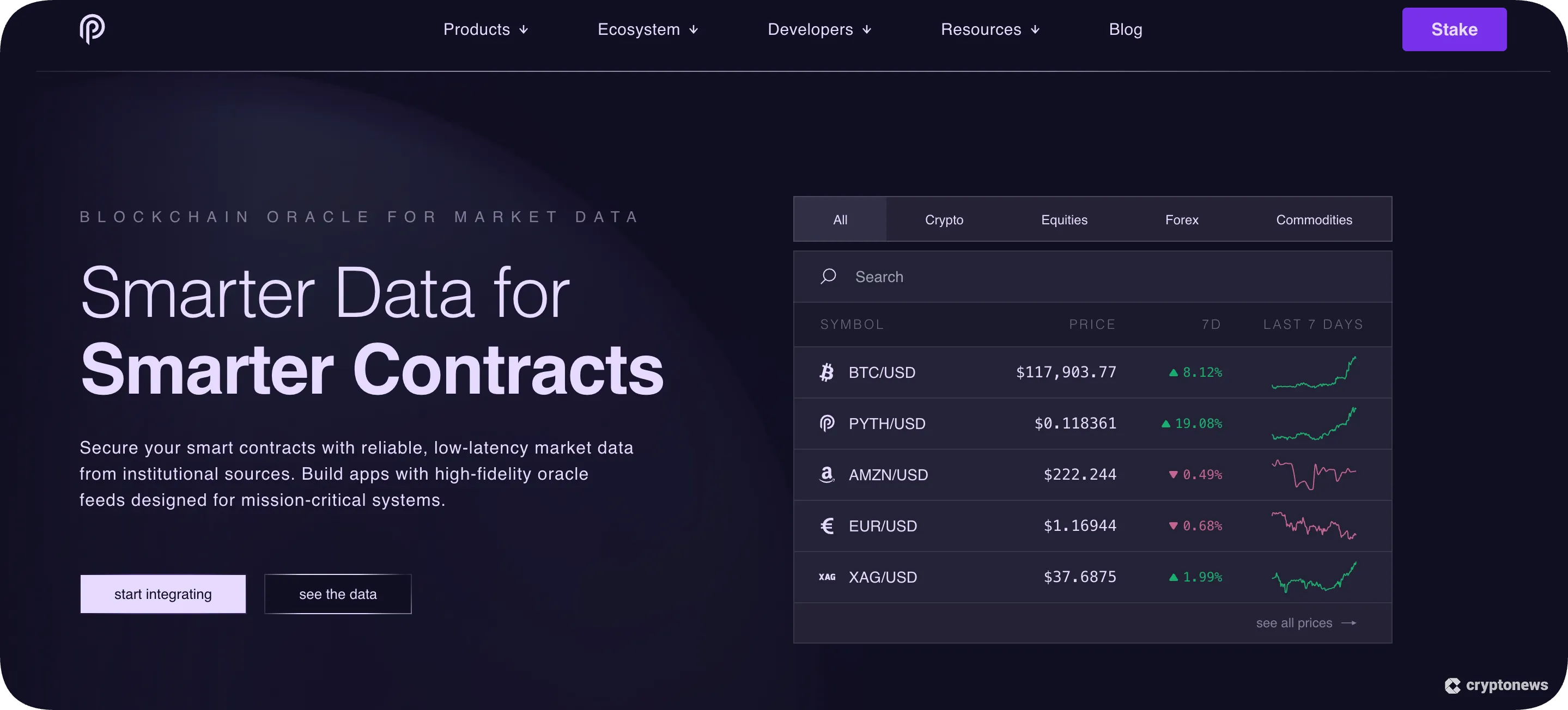
3. Pyth Network (PYTH)
Pyth specializes in ultra-fast (sub-second), institutional-grade financial market data. It sources prices directly from trading firms and exchanges (its partners) and broadcasts aggregated feeds across blockchains, initially Solana.
Pyth uses a unique model designed for high-frequency trading, where data providers submit prices for aggregation. Its focus on speed and premium data makes it a key oracle for DeFi protocols needing real-time market accuracy, expanding beyond Solana via cross-chain bridges.
4. API3 (API3)
API3 pioneers first-party oracles, enabling data providers (such as weather APIs) to run their nodes directly on-chain, eliminating third-party operators. Its “dAPI” model creates decentralized data feeds managed by providers themselves.
The API3 token facilitates governance, staking, and an insurance pool against faulty data. This approach ensures authenticity by sourcing data directly, appealing to API owners seeking blockchain monetization without intermediaries. API3 offers a complementary solution focused on data-source integrity and provider autonomy.
5. Tellor (TRB)
Tellor is a permissionless, Ethereum-based oracle relying on a decentralized mining/dispute system. Miners stake TRB tokens to submit answers to data queries. Other users can dispute incorrect submissions, triggering governance-led slashing if fraud is proven.
This crypto-economic model incentivizes honesty. While slower (minute-level updates) due to its on-chain design, Tellor appeals to projects prioritizing censorship resistance over speed. Its “Tellor X” upgrade is shifting towards a stake-based mechanism, maintaining its strong decentralization ethos.
6. Witnet
Witnet is an early decentralized oracle with a blockchain focusing on verifiable web data retrieval. Nodes earn WIT tokens to fetch and attest data via cryptographic proofs and consensus.
It emphasizes data integrity and security and is designed as a cross-chain solution (using bridges). Though less prominent than leaders like Chainlink, Witnet is respected as an original decentralized oracle project.
7. Provable (Formerly Oraclize) and Others
Provable is a pioneering centralized oracle service (since 2015), notable for providing cryptographic “authenticity proofs” that verify data came unmodified from a specific source. Early dApps were widely used before decentralized alternatives matured.
While less popular today due to its centralized model, Provable remains relevant for simple integrations where verifiable proofs and ease-of-use outweigh the need for complete decentralization. It serves as a foundational but legacy option.
Beyond major players like Chainlink, Band, Pyth, API3, Tellor, and Witnet, the oracle ecosystem includes diverse projects: DIA (crowdsourced data), RedStone (on-demand delivery), Nest (game-theory model), Augur (prediction markets), UMA (optimistic oracles), Flux (NEAR-specific), and DEX TWAPs.
While Chainlink dominates DeFi, others fill vital niches: Pyth for trading data, API3 for direct sourcing, Band as an alternative, and Tellor for decentralization. Projects choose oracles based on decentralization, speed, data quality, cost, and integration ease, with ongoing innovation addressing cross-chain and privacy needs.
Conclusion
Blockchain oracles bridge the gap between blockchains and the real world, enabling smart contracts to react to external data and events. This unlocks vital use cases like DeFi, insurance, and supply chains by solving the “oracle problem,” bringing off-chain truth into the closed blockchain system while striving to maintain security and trustlessness. Without them, smart contracts remain isolated and limited.
Oracles vary widely: hardware sensors, software APIs, input/output-focused, centralized or decentralized networks, and even human consensus. Modern solutions like Chainlink prioritize decentralized networks using consensus to ensure data accuracy and tamper resistance. Whether settling bets, paying insurance, or setting prices, their core function is providing trusted real-world truth to smart contracts, making them truly “smart”.
Oracles are evolving rapidly, tackling cross-chain interoperability, privacy (using zero-knowledge proofs), scalability, and integration with traditional systems. While introducing complexity, robust solutions mitigate risks. They are fundamental infrastructure, extending blockchain’s power beyond cryptocurrency into real-world applications. Oracles are the essential bridge ensuring blockchains operate with real-world awareness, unlocking vast possibilities.
FAQs
What is an oracle in simple words?
What do oracles do in crypto?
Is Chainlink an oracle?
What was the first blockchain oracle?
References
2M+
250+
8
70







 in numbers

About Cryptonews
Our goal is to offer a comprehensive and objective perspective on the cryptocurrency market, enabling our readers to make informed decisions in this ever-changing landscape.
Our editorial team of more than 70 crypto professionals works to maintain the highest standards of journalism and ethics. We follow strict editorial guidelines to ensure the integrity and credibility of our content.
Whether you’re looking for breaking news, expert opinions, or market insights, Cryptonews has been your go-to destination for everything cryptocurrency since 2017.
