
Verified Review
Published Updated

OKX is back in the US, and for American traders that's the headline. After a $505M DOJ settlement, OKX relaunched domestically in April 2025 via OKX Inc., a FinCEN-registered, San Jose-based entity. US users in eligible states get spot trading, free ACH funding, on-chain staking, and the self-custody OKX Wallet — but no derivatives, and New York and Texas stay excluded. Globally, OKX is a heavyweight: 300+ coins across spot, margin, futures, options, and staking, plus strong proof-of-reserves. Worth a serious look for low-fee order-book access; a harder sell if you're in an excluded state or want a simple buy-and-cash-out app.

Andrej Gjorgievski
Reviewed by
Nate Whitehill
Fact-checked by

OKX Overview

Key facts

Exchange Name OKX
Parent Company Aux Cayes FinTech Co. Ltd.
Launch Year 2017
KYC Yes
Total Assets 295+
Staking Yes
Copy Trading Yes
Derivatives Yes
Proof of Reserves Yes
Trading Fees 0.02% - 0.35%
Maker Fee 0.08%
Website okx.com/okb

Additional details

Languages English, Spanish, French, Chinese, Russian, Portuguese, Vietnamese, Indonesian, Ukrainian
Products Spot, Margin, Futures or Perps, Options, OTC, Simple-buy Broker
Payout Time Fiat: Instant - 3 days
Restricted Countries Afghanistan, Algeria, Bangladesh, Canada, El Salvador, Hong Kong, Guam, Northern Mariana Islands, …
Restricted States New York, Texas
Supported Cryptos Bitcoin, Tether, Ethereum, Ethereum Classic, Bitcoin Cash, …

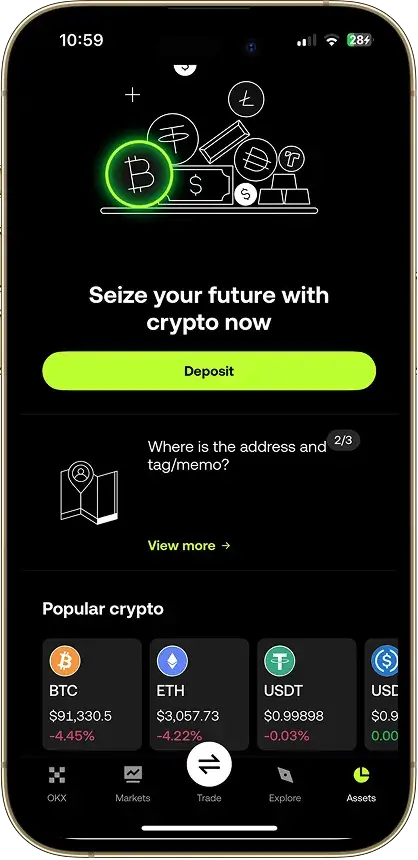
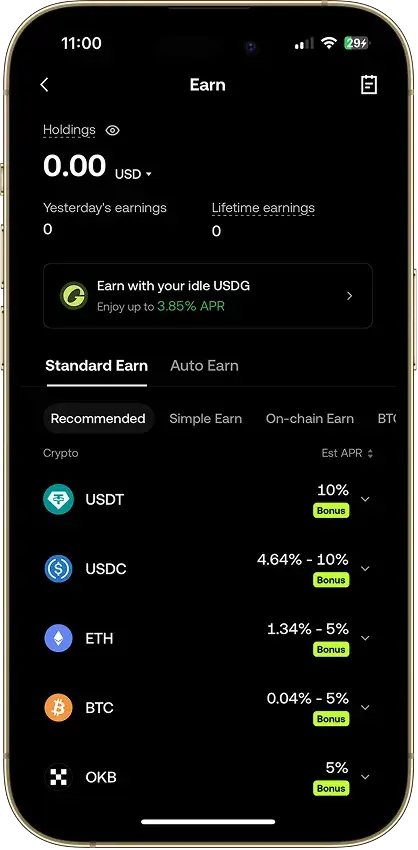
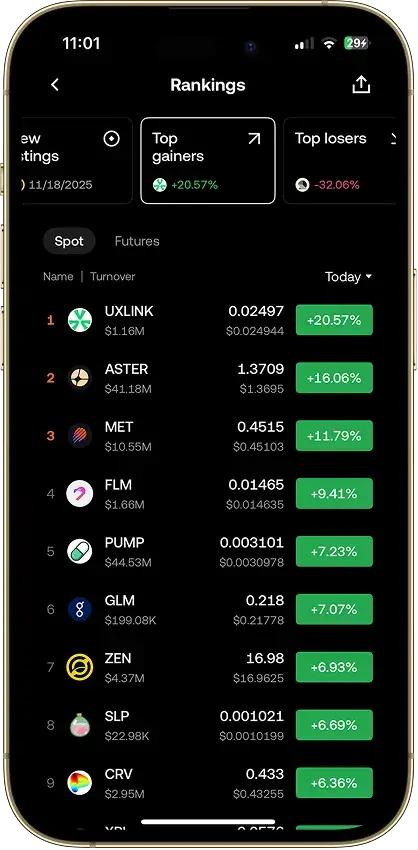
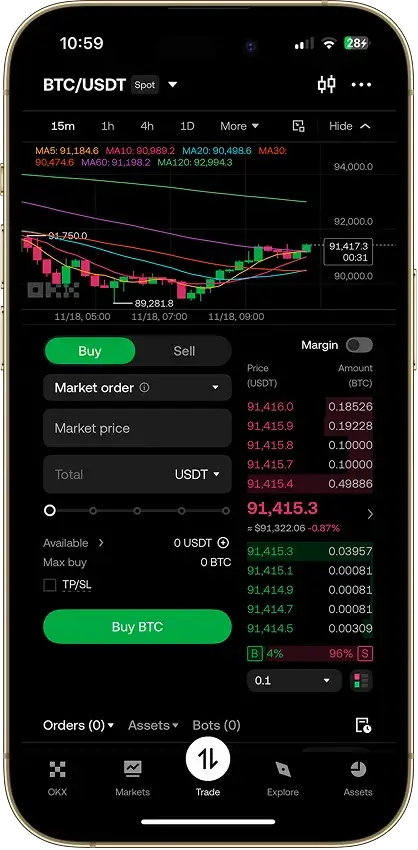
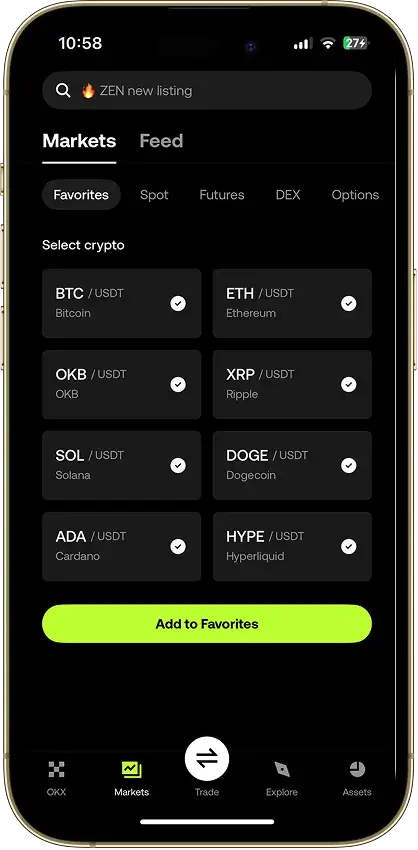
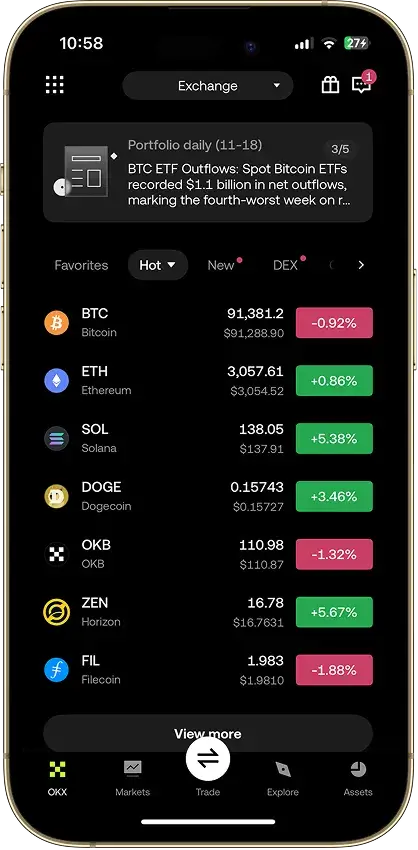
OKX Screenshots

OKX Pros and Cons

Pros

  • US entity licensed in 48 states plus Puerto Rico
  • Free ACH deposits, plus wire & debit-card funding
  • Monthly zk-STARK proof of reserves you verify
  • On-chain staking for US users: ETH, SOL, ADA+

Cons

  • No derivatives, margin or futures; NY & TX out
  • Too many surfaces for simple buy-and-hold
  • Card and checkout fees vary and lack clarity
  • Account reviews can freeze funds for days

Quick Decision: Is OKX Worth It?

OKX is worth it if you plan to use it like an exchange, not like a fintech app. For US users, that means spot trading on the order book, staking through Earn, and the bridge into OKX Wallet — a genuinely competitive package now that the licensed entity is live, though the entry-level 0.20%/0.35% US fee schedule rewards volume more than casual buying. Global traders get the fuller version: deep derivatives markets, automation strategies, and a fee structure that gets sharper as volume grows.

OKX homepage promoting a faster, better, stronger crypto exchange with a BTC/USDT mobile app preview

The friction starts when you try to use it like a beginner brokerage, funding with a card, clicking the first buy button you see, and expecting a straightforward bank withdrawal at the end. That path exists on OKX, but it's neither the cheapest nor the most reliable one, and whether it even works depends heavily on your jurisdiction.

Who OKX Is Best For And Who Should Skip It

OKX is not one product. It is a licensed US entity, a broader global exchange, a derivatives venue, an earn layer, an automation stack, and a separate OKX Wallet sitting next to it.

Beginner Buying First CryptoMedium fit. Usable, but the platform feels trader-first and can overwhelm fast.
Fee-Sensitive Spot TraderHigh fit. The order-book path is the part of OKX trading that makes sense.
Derivatives TraderHigh fit globally, no fit in the US. Futures, options, RFQ, and leverage tools are a real strength — but none of them are available on OKX US.
User Who Needs Bank Cash-OutMedium-high fit in the US via ACH and wire. Weaker in markets where the exit becomes crypto-first.
Altcoin HunterHigh fit. Asset breadth is wide and the wallet extends it further onchain.
Staking / Earn UserHigh fit. US on-chain staking covers major proof-of-stake assets; global Earn products are broader still, though terms vary by product and region.
Low-KYC UserPoor fit. KYC is central to how OKX works and can deepen over time.
User Who Wants Cleaner Tax ExportsHigh fit. Downloadable order, funding, trading, and statement history is solid, and OKX US issues Form 1099-DA for reportable dispositions.

OKX fits naturally for users who already know the difference between a quote path and a crypto order book, want more than a basic buy button, and may actually use staking, the API, or OKX Wallet rather than leaving those features untouched. That's where the OKX crypto stack feels more coherent than the homepage marketing does.

OKX gateway to crypto trading page featuring Trade, Trading bots, Earn and Copy trading options

The friction becomes too much when you need derivatives as a US resident, want a country-agnostic onboarding flow, or live somewhere the real product is trimmed back sharply. That's why OKX can be a genuinely good venue on both sides of the Atlantic and still be the wrong exchange for a New Yorker, a Texan, or a Canadian — all of whom are locked out entirely.

OKX US: Entity, States, Rails, And Taxes

US users should focus on the licensed US entity and its state-specific restrictions rather than the global OKX marketing. OKX Inc. relaunched American service in April 2025 after the parent company's $505 million settlement with the Department of Justice, and it operates under external compliance monitoring through 2027. The products, fiat rails, and eligible features in the US are a meaningful subset of what global OKX offers — and the gap is wider than the branding suggests.

US Operating EntityOKX Inc., registered as a Money Services Business with FinCEN, listed under NMLS #1767779, and licensed as a money transmitter in 48 US jurisdictions plus Puerto Rico
States With RestrictionsNew York, Texas, American Samoa, Guam, Northern Mariana Islands, and the US Virgin Islands
Spot Trading AccessYes. The exchange offers token-to-token and USD-to-token access.
Bank Funding AccessFree ACH deposits ($20–$20,000, credited immediately with a temporary hold while the transfer clears), domestic wire for larger amounts ($1M+ limits, 1–3 business days), and instant deposits with a US-bank-issued debit card in eligible states
Bank Cash-Out AccessUSD withdrawals via ACH and domestic wire in eligible states
Staking AvailabilityYes. OKX launched on-chain staking for US users in June 2025, initially covering ETH, ADA, SOL, ATOM, SUI, CRO, TRX, DOT, and POL. [VERIFY: state-level staking eligibility may still vary — confirm in your account]
Derivatives AvailabilityNot offered. Futures, options, margin, and leverage products are unavailable on OKX US pending regulatory approvals.
Card AvailabilityNot offered as a US exchange feature; OKX Card is currently an EEA and Australia product.
IRS ReportingOKX US issues Form 1099-DA for crypto sales and exchanges (gross proceeds for tax year 2025, with cost basis added for covered assets from 2026) and Form 1099-MISC for staking or rewards income of $600 or more. W-9 collection starts in 2026, with 24% backup withholding from January 1, 2027 for users who don't provide one.

The US version of OKX is a regulated, functional exchange for spot trading and staking in eligible states. It's not a replica of global OKX: derivatives are absent, the fee schedule for regular users is higher than the global one, and the product catalog is narrower. Comparing it directly to Coinbase's Exchange or Gemini's Exchange — both of which have longer-running domestic compliance infrastructure — is worth doing before committing. What OKX US now has that it didn't for years is a clean licensing story and real USD rails, which changes the calculation meaningfully.

Features And Services

OKX secure partner for crypto trading page highlighting proven reliability, transparent reserves, easy deposits and secure verification

OKX behaves more like a trading ecosystem than a single exchange screen. The core venue handles spot and — outside the US — derivatives, separate funding flows handle card or third-party checkout, the earn layer adds yield products, and OKX Wallet pushes the user into self-custody and onchain tools. Understanding which surface you're actually using — and what it costs — is the single most important thing to get right before you deposit.

Main App or Broker FlowSimple buy, convert, card or third-party funding, and regional cash-out friction
Advanced or Pro TradingSpot, futures, options, RFQ, copy, bots, APIs, and the real low-fee path — derivatives and copy tools are global-only
Wallet or Web3 ToolsOKX Wallet is self-custody, 130+ chains, DEX routing, and user-controlled keys
CardOKX Card is virtual only and app-only, and not available in the US. It is Visa or Mastercard depending on region. EEA card: Mastercard, EU + Norway, excludes Iceland and Liechtenstein, supports USDC and USDG, 0.1% conversion spread. Australia card: virtual Mastercard, Australia only, supports USDC, USDT, USDG, no ATM or cash-out.
Earn, Staking, or LendingSimple Earn, On-chain Earn, Stable Rewards, loans, and region-based eligibility; US accounts get on-chain staking for major proof-of-stake assets
Derivatives or LeverageFutures, options, margin, and leverage tools are deep globally, but unavailable in the US and restricted in several other countries

For most users, the product area that should drive the choice is the order-book side, not the easiest buy button. OKX trading is easiest to defend when you treat it as a serious trading venue rather than a beginner brokerage. That said, the breadth on offer — from automated bots to onchain DeFi routing — is genuinely hard to find bundled together anywhere else, even if US accounts only see part of it.

Supported Assets And Markets

OKX advanced trading platform showing a BTC/USDT chart, order book and futures grid trading tools

OKX is broad in practice, not just on paper — but that breadth still needs a region check. A listed coin, a live trading pair, and a cheap withdrawal route are three separate questions on any OKX crypto account, and assuming they all line up in your jurisdiction can lead to expensive surprises.

Listed Assets300+ cryptocurrencies.
Number Of MarketsThe public product stack spans spot, margin, futures, options, P2P, RFQ, and DEX routing, though one public market-count headline is not disclosed.
Fiat CurrenciesVaries by jurisdiction. OKX separates card, P2P, cash, and third-party funding by region instead of publishing one simple universal list.
StablecoinsUSDT and USDC are central globally, but EEA users cannot trade or use USDT on OKX. EEA users should treat USDC and USDG as the supported MiCA stablecoin path.
Blocked Markets In The USGlobal OKX does not map cleanly into the US. Residents of New York, Texas, American Samoa, Guam, Northern Mariana Islands, and the US Virgin Islands are excluded from OKX Inc., and the US spot catalog is narrower than the global listing.

This asset breadth makes OKX particularly appealing for altcoin hunters. The exchange covers far more ground than most domestic alternatives, and the OKX Wallet layer extends that further with onchain access to tokens that never appear on the centralized side. That said, always verify that the specific coin, pair, and network you need are actually available in your account — the global catalog and your regional catalog are not always the same thing.

Staking And Rewards

OKX Build your portfolio section showing live prices for BTC, ETH, USDT, XRP, SOL and LTC

Staking on OKX is a product branch, not a throw-in. The platform splits it across several surfaces — Simple Earn, On-chain Earn, Flash Earn, Stable Rewards, Dual Investment, and BTC Yield+ — giving users flexibility in how they deploy idle assets. US users get a narrower but real slice of this: on-chain staking launched domestically in June 2025 with an initial set of proof-of-stake tokens including ETH, ADA, SOL, ATOM, SUI, CRO, TRX, DOT, and POL. What you give up in return is a single, unified commission figure. OKX doesn't publish one clean number across all these products, which makes direct yield comparisons harder than they should be. Understanding what liquid staking actually means for your assets is worth doing before you commit funds to any fixed-term product.

Available AssetsOKX promotes Simple Earn, On-chain Earn, Flash Earn, Stable Rewards, Dual Investment, BTC Yield+, and wallet-based staking routes. US accounts get on-chain staking for major proof-of-stake assets.
Headline Yield RangeVaries widely by product, asset, and market conditions.
Platform CommissionNot disclosed as one universal global figure across all Earn surfaces.
Payout FrequencyVaries by product and asset.
Unstaking / UnbondingProduct dependent. Flexible and fixed structures do not behave the same way.
Regional LimitsVaries by jurisdiction and by specific yield product. US staking rewards of $600+ are reported to the IRS on Form 1099-MISC.

The staking offer is worth exploring if you want breadth and convenience under one brand. It's less attractive if you're optimizing purely for net yield and want to compare commissions side by side, since the multi-surface structure makes that harder. Also check regional eligibility before assuming any specific product is available in your account — certain earn products are restricted in some jurisdictions without much notice.

Wallet And Self-Custody Options

The exchange account is custodial by default, which means OKX controls the environment, enforces withdrawal controls, and can restrict account activity when compliance systems flag something. If you've never thought carefully about what that means in practice, our guide to custodial wallets is a good place to start.

OKX Wallet changes that model entirely. It's a self-managed wallet across 130+ native chains, with the user holding their own keys, routing into decentralized liquidity pools, and taking full responsibility for what happens on-chain. That means recovery, contract risk, wrong-network errors, and phishing attempts all sit with you — not with OKX support. For experienced users comfortable with non-custodial wallet setups, that control is the point. For users who've never managed a seed phrase before, the exchange side is still the safer place to start.

The key shift is responsibility. Inside the exchange, support and compliance controls shape what happens next when something goes wrong. Inside OKX Wallet, there is no backstop.

API And Programmatic Trading

The API doesn't matter much for casual buyers. For active traders, market makers, and anyone running automated strategies, it's a core part of why OKX competes seriously at the professional level.

REST APISupported as an official OKX product line for advanced and institutional trading workflows.
WebSocketMarket-data and low-latency connectivity are core to the same API stack.
SandboxDemo trading and simulated account API are supported. Simulated API calls use simulated account API keys and x-simulated-trading: 1
Order Types SupportedMarket, Limit, TP/SL, Post Only, Fill or Kill, Immediate or Cancel, Trailing Stop, Trigger, Scaled Order. X-Perps also supports Advanced Limit, Scale Limit, and Iceberg.
Key ControlsSub-accounts, API connections, passkeys, anti-phishing tools, and tight account-level security controls all matter here.

The REST API and WebSocket connectivity cover spot, margin, futures, options, and bot workflows — which is a meaningful breadth for a single integration, though US API access is limited to the products OKX US actually offers. Sub-account support also matters for traders running multiple strategies under one entity, since it allows clean separation of positions without requiring separate funded accounts. The one gap worth noting is the unclear public documentation around sandbox access; if you're building on the API, confirm testing environments directly with OKX before starting development.

Fees And Pricing

OKX is cheap where it counts and murkier where convenience takes over. For US users, the 2026 fee framework sets regular spot rates at 0.20% maker / 0.35% taker — well above the global schedule, though still workable for order-book trading. Globally, the order-book fee schedule is genuinely competitive at higher volumes. Either way, the moment you step off the order book and into Convert, Simple Buy, or a card checkout, the cost picture changes considerably — and not always in an obvious way.

Simple Buy Or SellCosts vary by card issuer, third-party provider, or local payment rail. Convert advertises zero trading fees and no slippage, but the whole quote still deserves a final check.
Advanced Maker Or TakerVolume-tiered and based on trailing 30-day trading volume. US regular users pay 0.20% maker / 0.35% taker; global regular users pay 0.08% / 0.10%. This is the low-fee core of OKX exchange pricing.
Card DepositRegional card charges can apply, and OKX says Visa card transactions can carry additional fees. US debit-card deposits are instant but check the fee before confirming.
Bank TransferUS ACH deposits are free; wires may carry bank-side fees. Elsewhere varies by jurisdiction — some markets get clearer cash deposit and withdrawal flows than others.
Crypto WithdrawalAsset and network specific. Always check the live withdrawal fee and enabled chain before sending.
Staking / Earn CommissionProduct dependent. OKX does not publish one simple commission number across every Earn surface.

The gap between “low-fee exchange” and “cheap in every use case” is on OKX, and it's easy to miss if you're moving quickly. Most users who complain about unexpected costs on OKX aren't paying more on the order book — they're paying more on a convenience path they didn't realize was priced differently.

Hidden Costs To Watch On OKX

The biggest hidden-cost risk on OKX isn't the base spot fee — it's landing on the wrong product surface for the job. OKX runs more than a dozen distinct surfaces under one brand: order-book trading, Convert, Simple Buy, card and third-party checkout, margin, perpetuals, options, copy trading, bots, Earn, P2P, and OKX Wallet. Several can quietly inflate the cost of a trade beyond what the headline fee table suggests.

The main cost traps fall into a few clear categories. Convert is one of the most common. OKX presents it as a simple swap tool, which makes it feel like trading — but it runs on a quoted path, not the live order book. For users who care about execution quality, that convenience premium can add up fast, especially on larger amounts.

Simple Buy and card checkout create the same problem from the funding side. The provider fees, card charges, and final quoted rate can all work against you, even when the visible fee looks small. That's why OKX can be one of the lowest-cost venues for an active trader and simultaneously expensive for a beginner using one-click flows.

Derivatives deserve a specific call-out for global users. OKX's perpetuals and margin products are a genuine strength, but perpetual futures carry funding payments on top of trading fees, and leveraged positions expose you to liquidation losses that dwarf any fee savings. Understanding what a margin call looks like before you use leverage on OKX isn't optional — it's the difference between a manageable loss and a wiped position. US accounts sidestep this entirely, since derivatives aren't offered domestically.

Beyond derivatives, a few other areas to watch: copy trading and bots can increase position churn if used carelessly, racking up fees through overtrading. Earn products carry lockup and liquidity risks that aren't always obvious from the yield headline. P2P disputes are resolved through OKX escrow, but pricing is set by the counterparty, and slower settlement can effectively cost you in spread. And once funds move into OKX Wallet, cost depends entirely on your chain choice and bridge route — OKX has no control over that, and neither do fee calculators.

The cheapest realistic path through OKX is straightforward once you know it: fund through the lowest-friction local rail available (free ACH in the US), use the order book instead of Convert or one-click checkout, avoid leverage unless you understand the full cost structure, and exit through a low-fee network or a supported local fiat rail.

VIP Tiers And Fee Discounts

OKX has a tiered fee system, and the best pricing is clearly aimed at higher-volume users — but the entry-level rates aren't prohibitive for ordinary traders either. The key variable is your trailing 30-day volume, which determines where you sit in the tier structure.

Regular User FeesUS spot: 0.2000% maker / 0.3500% taker. Global spot: 0.0800% maker / 0.1000% taker. Global futures: 0.0200% maker / 0.0500% taker.
First VIP LevelVIP 1 starts at $1M 30-day spot volume or $100K assets.
Highest VIP LevelVIP 9 starts at $5B 30-day spot volume or $500M assets.
Best Spot Fee-0.0050% maker / 0.0250% taker.
Best Futures Fee-0.0050% maker / 0.0100% taker.
Who Benefits MostActive traders, market makers, and institutions.

Most retail traders won't hit Tier 3 or above without consistent daily trading volume. At entry-level rates, global OKX is still competitive with most major exchanges on the order book, but not dramatically cheaper — and US regular rates sit closer to Coinbase Advanced territory than to global OKX. The fee edge becomes most noticeable once you're trading in meaningful size and the basis points start to compound. If you're currently on a platform with worse maker fees, OKX is worth the switch; if you're comparing it to Kraken or Binance at similar tiers, the differences are relatively small.

Deposits, Withdrawals, KYC And Availability

Getting money in and out is where users actually encounter friction — and where OKX's global branding can create misleading expectations. The product varies significantly by country. US users now have real USD rails through OKX Inc. (covered above), while what works cleanly in one jurisdiction elsewhere can be slow, expensive, or simply unavailable in another.

Bank TransferUS: free ACH ($20–$20,000) and domestic wire ($1M+ limits). Elsewhere varies by country and entity — some markets have cash deposit and withdrawal support, while others rely more on crypto or third-party rails.
CardUS-bank debit cards give instant USD deposits in eligible states. Other regions support cards too, but extra provider or card-related fees can apply.
PayPal / Third-Party WalletPayPal is available where supported for Buy Crypto or EUR deposits. Do not imply PayPal P2P support; OKX removed PayPal from P2P in 2023.
Crypto WithdrawalThe cleanest universal exit. Timing and cost still depend on network choice and whether extra review is triggered.

For US users, ACH in and ACH out is the cleanest loop, with wires reserved for larger amounts. Across most other regions, the most reliable way to fund an OKX account is to bring crypto in and trade from there. Bank rails exist in supported markets and work well where they're live, but confirming availability for your specific country before depositing is time well spent. Assuming the rails work because the platform is globally recognized is where users run into trouble.

Payment Rails, Networks, And Limits

Once money is inside OKX, the experience improves considerably. The exchange's liquidity is deep, the trading infrastructure is reliable, and moving assets between products is straightforward. The challenge is the on-ramp and off-ramp — and that's entirely determined by where you live.

Fiat Rails By Region

The best-value fiat rail is usually the local bank or low-friction local payment route where OKX actually supports it. In markets where that's missing, the platform becomes crypto-first by necessity rather than choice, which shifts the burden of finding a fiat exit somewhere else.

USFree ACH deposits and withdrawals, domestic wire, and US-bank debit-card deposits in eligible states; OKX Inc. excludes NY, TX, AS, GU, MP, and VI
EU or EEAFree EUR deposits and withdrawals by bank transfer; cards and local payment methods also available
UKProduct availability is more constrained, especially around derivatives, CeFi, and P2P services
RoWOn-chain deposits, P2P with 100+ payment methods, cards, and local third-party channels depending on jurisdiction

The P2P market is worth highlighting for users in markets without direct fiat rails. OKX's P2P layer supports over 100 payment methods and can cover a wide range of local currencies, but pricing is set by individual sellers, settlement isn't instant, and the dispute process — while backed by OKX escrow — can drag on. It's a genuine option, not a seamless one.

Withdrawal Networks And Fees

A supported asset isn't the same thing as a cheap withdrawal route. The network you choose matters more than the coin name on OKX, and the difference between a well-chosen withdrawal path and a poorly-chosen one can be significant.

BTC On-ChainNetwork-dependent. Better for moving BTC directly than for tiny cash-outs.
ETH ERC-20Widely recognized, but often the more expensive route during congestion.
USDT Low-Fee NetworkOften the cheapest stablecoin exit when a low-fee chain is enabled on your account.
USDT ERC-20More universal, but usually the costlier USDT withdrawal path.
Other Important NetworkUSDC or Solana-based exits can cut cost if both jurisdiction and destination support them.

Stablecoin exits on low-fee chains like TRC-20 or Solana are often the most cost-efficient route for users who aren't exiting directly to fiat. Just confirm that the destination exchange or wallet supports the same network before sending — a USDT transfer on the wrong chain is one of the more common and entirely avoidable mistakes in crypto.

Verification Levels And Withdrawal Limits

OKX's KYC process is layered, not one-time. Initial verification opens the core product, but as activity grows or risk systems flag something, additional documentation may be required. This is standard at major exchanges — but OKX is explicit that restrictions during review can pause login, withdrawals, deposits, and trading simultaneously.

Account CreatedEmail or phone setup alone does not open the full product. Funding and advanced features still depend on identity checks.
Identity VerifiedGovernment-issued photo ID and a live selfie or facial-recognition step. This is the normal path into smoother buying, transfers, and advanced features.
Payment Method VerifiedBank, card, or third-party method checks vary by rail and country. US bank linking runs through partners like Plaid.
Additional Review Or RestrictedProof of address, source-of-funds or source-of-wealth documents, questionnaires, and other compliance review. OKX says additional verification is normally reviewed within 24 hours after submission.

The 24-hour review window sounds short, but user reports suggest that more complex restriction cases can take considerably longer. If you're planning to move large amounts or trade actively, completing identity verification fully before funding, rather than waiting for a restriction to trigger the process, is the smarter approach.

Is OKX Safe? Security, Custody And Proof Of Reserves

OKX's reserve transparency and account security controls are genuinely strong relative to most centralized exchanges. That doesn't make it risk-free — it means the risks are more visible and better documented than most.

Controls

OKX offers login password, email verification, authenticator app, mobile verification, face verification, passkeys, anti-phishing codes, and withdrawal address allowlisting as core account protections. That's a complete control stack for a high-volume exchange. The platform also promotes AI-driven fraud detection, phishing defense, and always-on threat monitoring at the infrastructure level. In practice, the most common account compromise vector at any exchange isn't a platform breach — it's a user handing over credentials through phishing. The anti-phishing code and withdrawal allowlisting features on OKX directly address that, and enabling both is strongly recommended.

Custody And Insurance

The exchange account is custodial. OKX controls the environment, handles the KYC and withdrawal controls, and can restrict or review the account when risk systems fire. Its proof-of-reserves page splits holdings between exchange wallets and third-party custody, which is a useful transparency step beyond the black-box reserve claims more common across the industry.

The limitation is the same as any custodial model: users depend on OKX's operations, compliance decisions, and custody controls rather than on their own keys. OKX does not market exchange balances as insured bank deposits, and users should not treat the platform like an FDIC-backed account — a point OKX Inc.'s own state disclosures make explicitly. What it offers is transparency and operational track record — not a guarantee.

Proof Of Reserves Or Audits

This is one of OKX's clearest differentiators. The platform publishes its proof-of-reserves reports on a monthly cadence — the 43rd edition landed in May 2026 — and claims a 1:1 reserve of all account assets against $26.26B in primary holdings. Users can verify both wallet ownership and their own inclusion in the liability set using zk-STARK-based cryptographic tooling and public wallet addresses. That's a meaningful standard above what most exchanges publish.

The important context is that proof of reserves is a point-in-time snapshot, not a live guarantee. It confirms the exchange held sufficient assets at the time of the report, but it doesn't freeze those conditions forward. That said, a verifiable monthly cadence is far more useful than a static claim, and OKX's setup compares well against peers like Kraken and Binance on this specific dimension.

App, UX And Customer Support

OKX's interface reflects its priorities clearly. It's built for traders, organized around trading tools, and layered in ways that reward users who take the time to learn the product. That's an asset for experienced users and a genuine obstacle for beginners who just wanted a simple way in.

OKX create account page prompting the user to select their country or region to trade with confidence

UI And Navigation

The desktop and mobile interfaces share the same character: dense, capable, and structured around the professional trading experience. Finding the order book, managing positions, or switching between products is fast once you know where to look. The challenge is that “once you know where to look” isn't a given — new users often end up on Simple Buy or Convert when they'd be better served by the order book, simply because those surfaces are more prominent on first login.

The separation between the exchange and OKX Wallet also deserves mention. They share a login but operate as distinct environments, which is the right architecture for managing custody risk — but it can be confusing if you're moving between them without understanding the difference between an exchange balance and a self-custody balance.

Mobile App

The mobile app is a first-class product, not a trimmed-down version of the desktop experience. Funding, trading, support, verification, and wallet actions are all accessible from the front of the app, which matters for active traders who work primarily from their phones. The density that makes the desktop interface feel powerful translates to a busier screen on mobile, but the navigation logic is consistent across both platforms. If you find the app overwhelming, drilling into one product area at a time — starting with the spot trading screen — is the practical way in.

Reliability And Status Page

OKX's status page is public, product-specific, and updated with issue writeups and maintenance posts rather than just a generic “service disruption” banner. During periods of high market volatility, when deposit and withdrawal queues at exchanges can slow significantly, having a place to confirm whether a delay is platform-wide or account-specific saves a lot of unnecessary support tickets.

Status Page QualityPublic and product-specific
Outage CommunicationIssue descriptions and maintenance posts are published
Known Trading Or Transfer DelaysDeposit and withdrawal status can be checked from the status page
Maintenance CommunicationScheduled maintenance windows are posted publicly

The status page doesn't prevent issues — it just makes them easier to diagnose. That transparency is more valuable than it might seem when you're waiting on a withdrawal and trying to figure out whether something is wrong on your end or theirs.

Customer Support

OKX support runs around 24/7 help, ticket tracking, and a live chat system, with escalation paths that include video-call support for more complex cases. The help center is broad and reasonably current, covering most common account, verification, and trading questions with documented steps rather than generic redirects.

Where support is less reliable is in the edge cases. Promo and referral disputes, P2P transaction issues, and account restriction reviews are consistently the categories where user complaint volumes are highest and resolution timelines are longest. These cases often require human judgment on OKX's end rather than an automated fix, and the queue for that can be slow. If your support need fits a standard category, response times are generally reasonable. If it's a restriction review or a disputed P2P transaction, the timeline is harder to predict.

OKX Category Scores

These scores highlight how this review performs in specific categories, with each score tailored to the focus of that category.

Category
Note
Score
Monthly proof-of-reserves and account tools are strong, but regional entity complexity keeps it below the most conservative safety picks.
8.7
Near-top futures fit with deep derivatives coverage, unified margin, strong tools, and clear fee tiers.
9.3
Strong global OTC and RFQ-style fit with deep liquidity, though regional access and entity details matter.
8.9
Strong native copy trading with good trader discovery, risk controls, fees, and app execution.
9.0
Best category fit for active global traders because fees, liquidity, charts, order controls, and derivatives depth are all strong.
9.4
Good earn coverage and Web3 access, but region and product complexity make it less clean than Kraken or Coinbase.
8.6
Best options-specific score because it offers a fuller options venue with strong structure, tools, and derivatives depth.
9.3
OKX

Final Verdict

OKX is a strong choice for active traders who want low fees, deep liquidity, and a unified account that shares collateral across products. The platform adds an integrated Web3 wallet and publishes monthly proof of reserves. It suits users in regions with full product access who value pro tools and transparent fees. Trade‑offs include regional limits on retail derivatives in the UK and EEA, higher base spot fees in the EEA, KYC requirements, and no deposit insurance on crypto. If those are acceptable, OKX offers a capable and transparent venue for day‑to‑day trading.

OKX
Overall Score
7.8 / 10
Very Good

Licensed US relaunch with clear PoR, Wallet and exchange under one login, Deep global toolset for bots and copy trades

Why it stands out

  • US entity licensed in 48 states plus Puerto Rico
  • Free ACH deposits, plus wire & debit-card funding
  • Monthly zk-STARK proof of reserves you verify
  • On-chain staking for US users: ETH, SOL, ADA+

What to consider

  • No derivatives, margin or futures; NY & TX out
  • Too many surfaces for simple buy-and-hold
  • Card and checkout fees vary and lack clarity
  • Account reviews can freeze funds for days
Affiliate Disclosure

Disclaimer: CryptoSlate may receive a commission when you click links on our site and make a purchase or complete an action with a third party. This does not influence our editorial independence, reviews, or ratings, and we always aim to provide accurate, transparent information to our readers.


FAQ

Is OKX safe?

OKX is more transparent than most rivals on reserves and account-level security. It publishes user-verifiable monthly proof-of-reserves reports, supports passkeys and withdrawal allowlisting, and maintains a public status page. In the US, it operates through OKX Inc., a FinCEN-registered money services business licensed as a money transmitter in 48 jurisdictions. Those are meaningful trust signals, but they don’t eliminate custodial or jurisdiction risk. If your local version of OKX is narrower than the global platform, the protection that transparency provides applies only within the scope of what your account can actually access.

What are OKX fees?

OKX fees depend heavily on which product surface you use. US regular users pay 0.20% maker / 0.35% taker on spot under the 2026 fee framework, while the global order book runs a volume-tiered maker/taker schedule starting at 0.08%/0.10% that’s genuinely competitive for active traders. Convert, Simple Buy, and card checkout all carry different cost structures that aren’t always visible in the headline fee table. The practical rule: OKX trading fees are most defensible on the order book, least defensible on the fastest convenience path.

Does OKX require KYC?

Yes, and it treats verification as an ongoing process rather than a one-time upload. Standard identity verification requires a government-issued photo ID and a live selfie or facial-recognition step. As accounts grow in activity or trigger risk signals, OKX may request additional documentation, proof of address, source-of-funds letters, or formal questionnaires. Completing KYC fully before funding, rather than after a restriction fires, is the better approach.

Which coins does OKX support?

OKX supports 300+ cryptocurrencies on the centralized exchange and extends that considerably further through OKX Wallet, which covers 130+ native chains for self-custody and onchain trading. The US spot catalog is narrower than the global listing, so check that your specific asset is available in your account.

How long do OKX withdrawals take?

Crypto withdrawals are primarily driven by network speed, plus any compliance review if OKX’s risk systems flag the transaction. Standard withdrawals on fast networks like Solana or TRC-20 are typically fast once processed. US ACH withdrawals settle in 1–3 business days, and wires are usually faster for large amounts. Fiat cash-out timing elsewhere varies significantly by local rail and country. If your account is under active review, withdrawals, deposits, trading, and login can all be paused simultaneously until the review completes.

How to cash out from OKX?

The cleanest route is whichever one your jurisdiction actually supports. US users in eligible states can withdraw USD directly by ACH or domestic wire. Where local fiat withdrawal isn’t live, which covers a lot of markets, most users convert to USDT or USDC on a low-fee network and complete the fiat conversion at a local exchange or payment service. Always check the specific network fee and confirm the destination supports that network before initiating a withdrawal. US users should also remember that sales are reported to the IRS on Form 1099-DA.

Where is OKX available?

US access is available through OKX Inc., the licensed domestic entity, but excludes New York, Texas, American Samoa, Guam, the Northern Mariana Islands, and the US Virgin Islands. Canada is on OKX’s restricted-location list, with no workaround. Outside those restrictions, OKX operates globally. But the product you receive varies significantly by region, particularly around fiat rails, derivatives eligibility, and staking products.

Does OKX offer staking, a card, or advanced trading tools?

Yes, but availability isn’t uniform across markets. US users get on-chain staking (launched June 2025) covering major proof-of-stake assets like ETH, SOL, and ADA. Globally, staking and earn products span several surfaces (Simple Earn, On-chain Earn, Flash Earn, and others), advanced trading tools cover bots, copy trading, and a full API, and OKX Wallet provides self-custody and onchain access across 130+ chains. Card and pay products are currently EEA and Australia features, not US ones. Confirm what’s live in your specific account before building a strategy around any of these features.