

Best NFT Marketplaces in 2026: Top Platforms for Beginners & Pros
We believe in full transparency with our readers. Some of our content includes affiliate links, and we may earn a commission through these partnerships. However, this potential compensation never influences our analysis, opinions, or reviews. Our editorial content is created independently of our marketing partnerships, and our ratings are based solely on our established evaluation criteria. Read More





Some of the best NFT marketplaces in 2026 include OpenSea, Foundation, SuperRare, Blur, and Magic Eden.
NFT marketplaces are online platforms for buying and selling non-fungible tokens (NFTs), blockchain-based assets representing ownership of digital or physical items.
These platforms connect NFT creators and holders directly with buyers, offering a peer-to-peer experience. They are often the sole intermediary, charging a fee for every NFT trade.
If you want to buy NFTs for collectibles, Web3 games, or investment, it’s important to understand which marketplace to use. Some marketplaces may be specialized, operate on specific chains, or charge different fees for the same assets.
This article examines the best NFT marketplaces today. Our experts reviewed over 50 platforms and compiled the best ones for different needs.
Key Takeaways
- NFT marketplaces allow users to buy, sell, and create NFTs. They can specialize in certain types of NFTs or host a diverse range of assets.
- OpenSea is the best NFT marketplace for beginners, Foundation and SuperRare are the best for seasoned artists, and Blur is the best platform for active NFT traders.
- You should select an NFT marketplace based on its supported chains, transaction fees, liquidity, reputation, adoption rate, and payment options.
Best NFT Marketplaces Compared
Here is a quick comparison of the top NFT marketplaces today:
| Platform | Types of NFTs | Supported Chains | Buyer Fees |
|---|---|---|---|
| OpenSea | Art, collectibles, music, metaverse, gaming, domain names, utility | Ethereum, BNB Chain, Solana, Polygon, Avalanche, Ronin, +10 others | 2.5% |
| Foundation | Art | Ethereum | 5% |
| SuperRare | Art | Ethereum | 3% |
| Blur | Art, collectibles, music, metaverse, gaming, domain names | Ethereum, Blast | 0% |
| Magic Eden | Art, collectibles, music, metaverse, gaming, domain names, utility | Solana, Ethereum, Bitcoin, Polygon, Base, Sei, Abstract | 2% |
| JPG Store | Utility, art, gaming | Cardano | 2% (sellers) |
| Rarible | Art, music, gaming | Ethereum, Polygon, Solana, Tezos, Celo, Arbitrum, +6 others | 1% |
| BlueMove | Art, gaming, collectibles | Sui, Aptos | 2% |
| Element Market | Art, collectibles, music, metaverse, gaming, domain names | BNB Smart Chain, Ethereum, Polygon, Avalanche, OP, Arbitrum, +8 others | 0.5% (sellers) |
| Treasure Marketplace | Metaverse, gaming | Ethereum, Arbitrum | 2.5% (sellers) |
| GetGems | Telegram usernames, art, gaming, music, collectibles | TON | 0% |
| Ronin Market | Gaming | Ronin | Small gas fee |
Data is updated every two weeks.
Best NFT Marketplaces in 2026 Reviewed
We’re about to briefly review the top NFT marketplaces for different use cases. When selecting these platforms, we paid attention to their reputation, user experience, and trading volume. These were the main criteria in our research methodology.
Many specialized platforms focusing on a single collection or ecosystem didn’t make this list.
Here are the best NFT marketplaces to check out in 2026:
1. OpenSea – Best for Beginners
OpenSea is the first and still the largest NFT marketplace in terms of trading volume. It supports all types of NFTs across more than 20 networks, including Ethereum, along with all of its major Layer 2 rollups, Solana, BNB Chain, Berachain, and Soneium. Launched in 2017 on Ethereum, it has expanded its ecosystem, processing nearly $40 billion worth of NFT transactions.
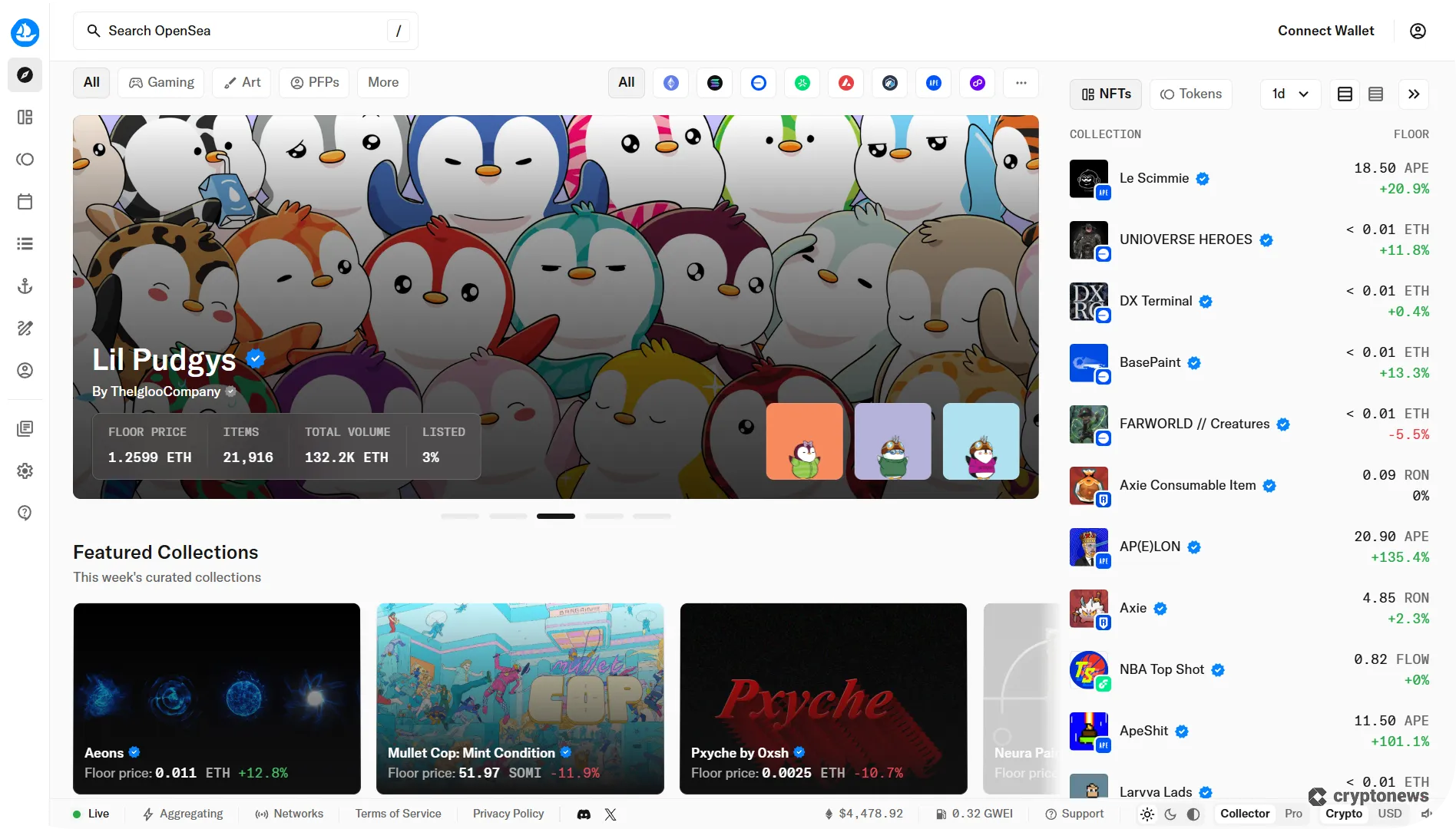
The platform offers an intuitive interface designed to be accessible for beginners, a major reason why its popularity hasn’t faded over the years. In September 2025, it accounts for over half of all NFT trades and is used by nearly 500,000 traders worldwide — 10x more than the second most active platform. Traders prefer it for its diverse NFT selection, advanced filter options, P2P interactions, and full control over assets.
Pros
- Huge variety of NFTs
- User-friendly interface
- Multi-chain support
Cons
- Fees can be significant due to gas (on Ethereum) and marketplace commissions
- Crowded marketplace that may host fraudulent content
👉 Learn More: OpenSea NFT Marketplace Review 2026
2. Foundation – Best for Artists
Foundation is an Ethereum-based NFT marketplace focusing on digital art. Unlike one-stop shop platforms like OpenSea, Foundation is highly curated and hosts invite-only artists. If OpenSea is the YouTube of NFTs, where anyone can create and share them, Foundation is like TED Talks, curated and selective. It showcases creators who bring unique digital art.
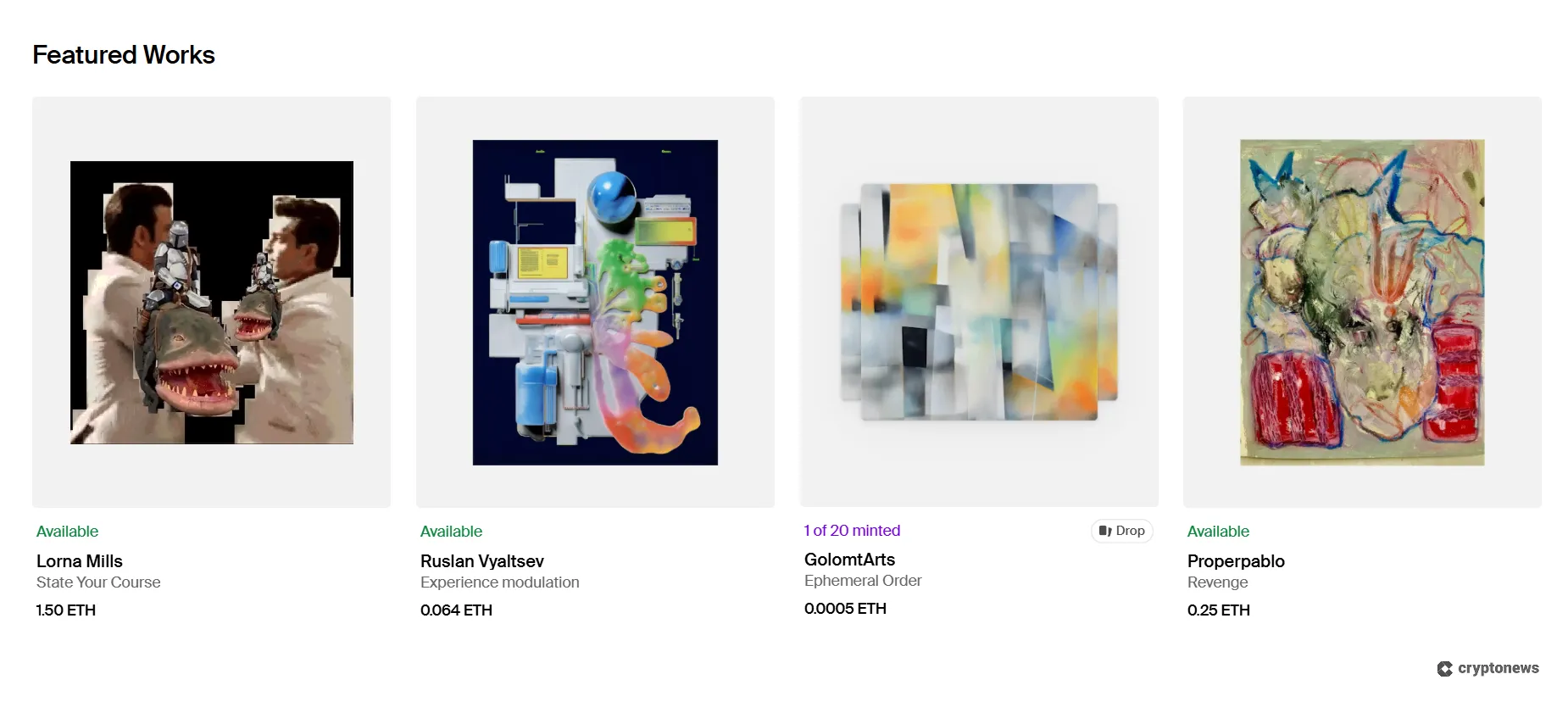
Due to its invite-only model and focus on quality, the average NFT price is currently around $800, much higher than only about $50 on OpenSea. Foundation is great for established artists who need a more exclusive environment to exhibit and sell their original work. Here, traders can discover unique digital art by browsing through galleries, exhibitions, and drops.
Pros
- Great marketplace for artists who want to create their brands online
- Clean and intuitive interface for artists and traders
- 10% royalties on all secondary sales
Cons
- Accepts only ETH for payments
- 15% fees for digital artists
3. SuperRare – Best for High-End Art Collectors
SuperRare is another invite-only NFT marketplace that focuses on digital art; it’s even more exclusive than Foundation. It’s often dubbed the Christie’s of NFT art, with the average historical NFT price exceeding $13,000. This platform is best for high-end collectors with a keen eye for digital art. Like Foundation, SuperRare supports Ethereum NFTs only.
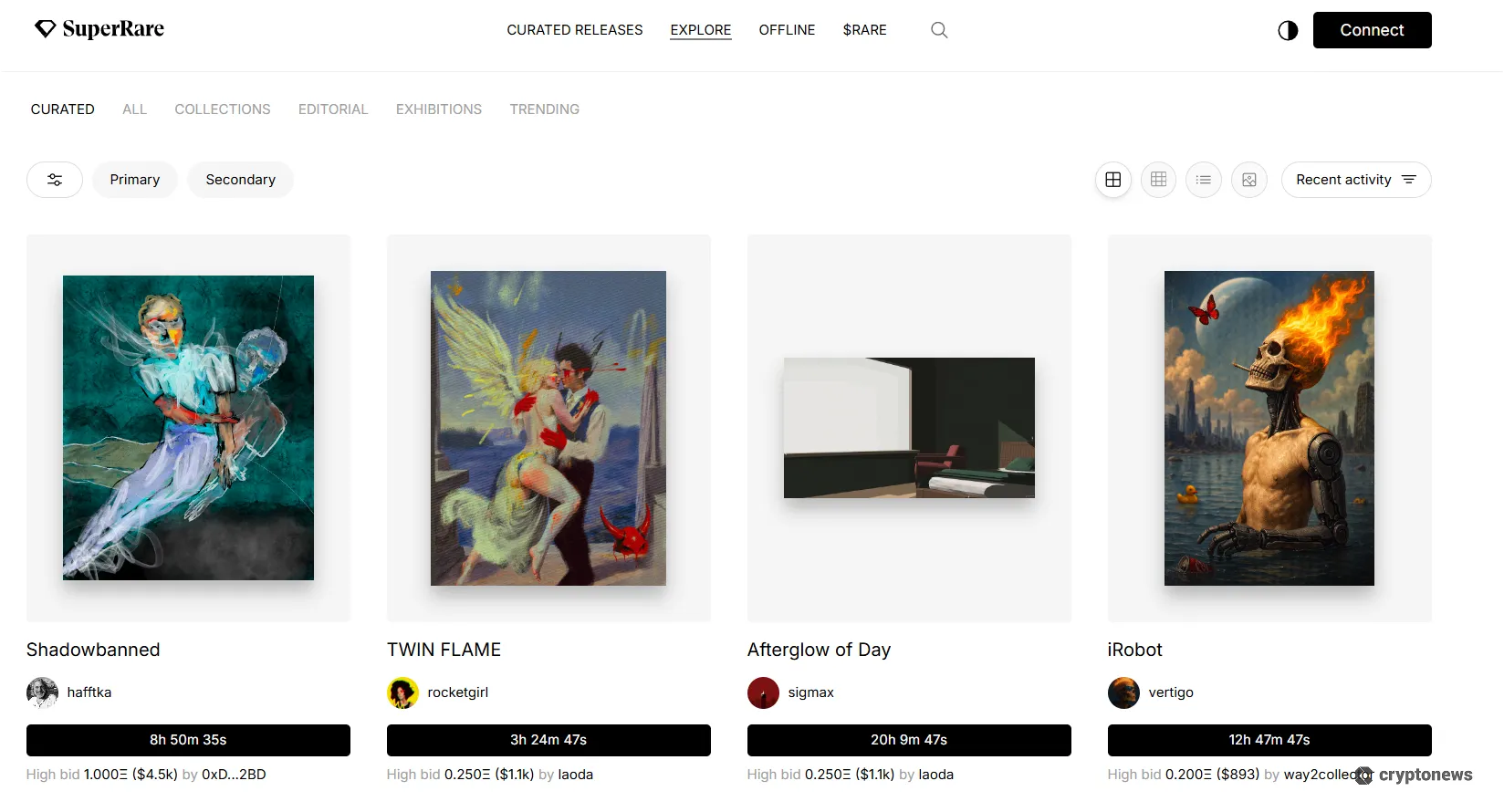
The marketplace has collaborated with major brands like Gucci, Samsung, and Sotheby’s. In 2025, SuperRare rolled out several upgrades to improve curation features and user experience. It also enhanced the staking mechanism for its native token, RARE, but that hasn’t prevented its ongoing price decline since a hacker exploited a loophole in its smart contract and stole $730,000 worth of tokens.
Pros
- Great platform for high-quality digital art and high-end collectors
- Fair compensation for artists
- Strong brand and discoverability for digital artists
Cons
- High NFT prices
- 15% fees on primary sales plus gas fees
4. Blur – Best for NFT Traders
Blur was designed as an NFT marketplace for professional traders. It has quickly grown in popularity due to its 0% fees, multiple airdrops, generous rewards for its BLUR token, and aggressive marketing. In 2023-2024, it used to dominate the NFT space, overcoming OpenSea and occasionally boasting over 80% of NFT volumes.
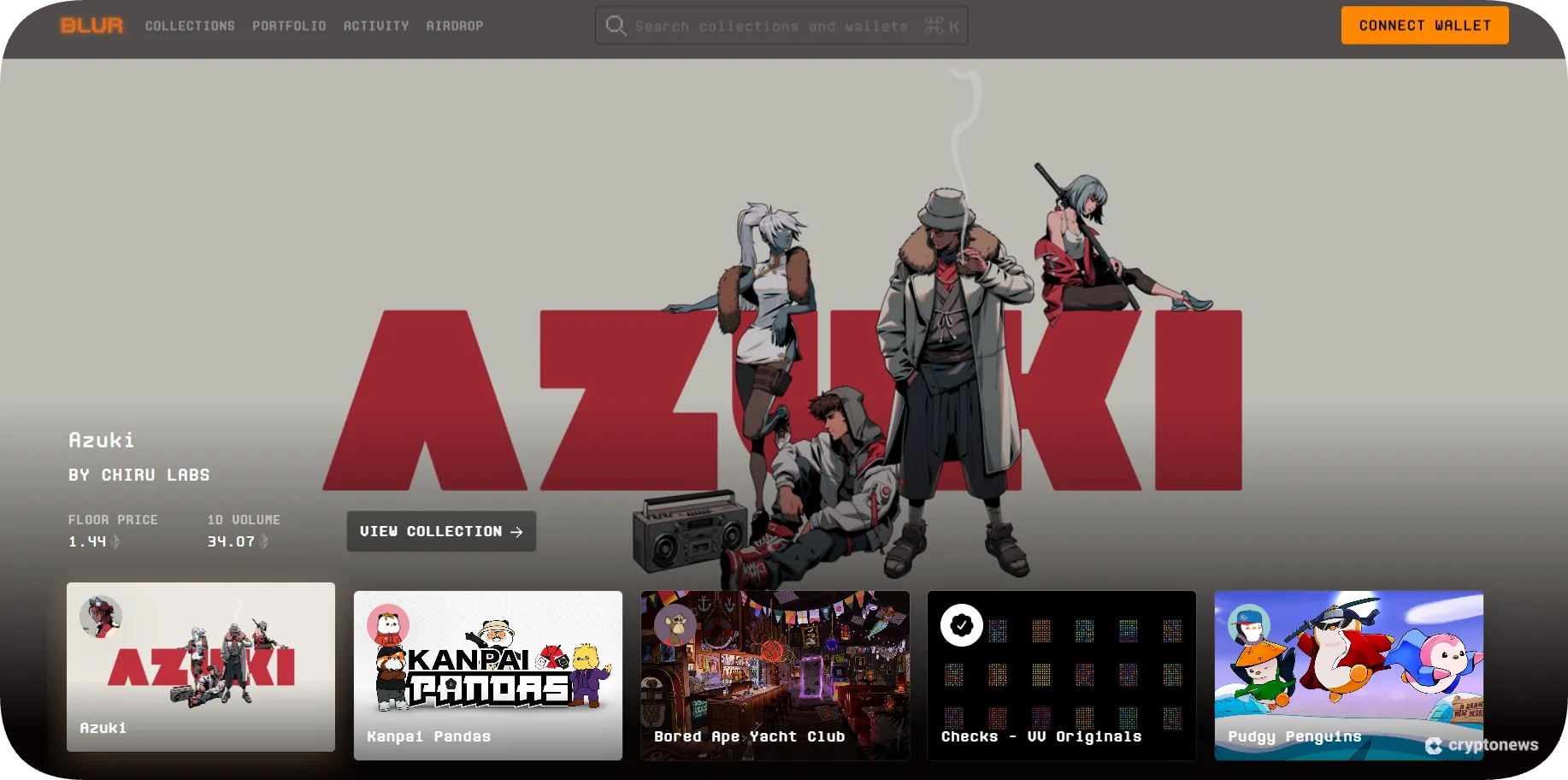
With 0% fees, users can buy and sell NFTs more conveniently and build complex trading strategies. Blur launched on Ethereum at the end of 2022 and eventually expanded to Blast, a Layer 2 scaling solution for Ethereum. Thanks to its diverse NFT selection, it still has a high trading volume, but the average NFT price of $1,600 is quite high.
Pros
- Blur enables quick NFT sniping and sweeping
- Offers real-time price feeds, analytics, and portfolio management tools
- Serves as an NFT aggregator, displaying listings from other platforms
Cons
- Not beginner-friendly
- Limited to the Ethereum ecosystem
5. Magic Eden – Best Solana NFT Marketplace
Magic Eden used to be the go-to platform for Solana NFTs, but it has expanded to multiple chains, including Ethereum, Polygon, BNB Chain, Base, Sei, Abstract, and Bitcoin. It was one of the first platforms to adopt Bitcoin NFTs by launching a dedicated ordinals marketplace. Magic Eden hosts over 8,000 NFT collections, many of which are affordable for regular investors.
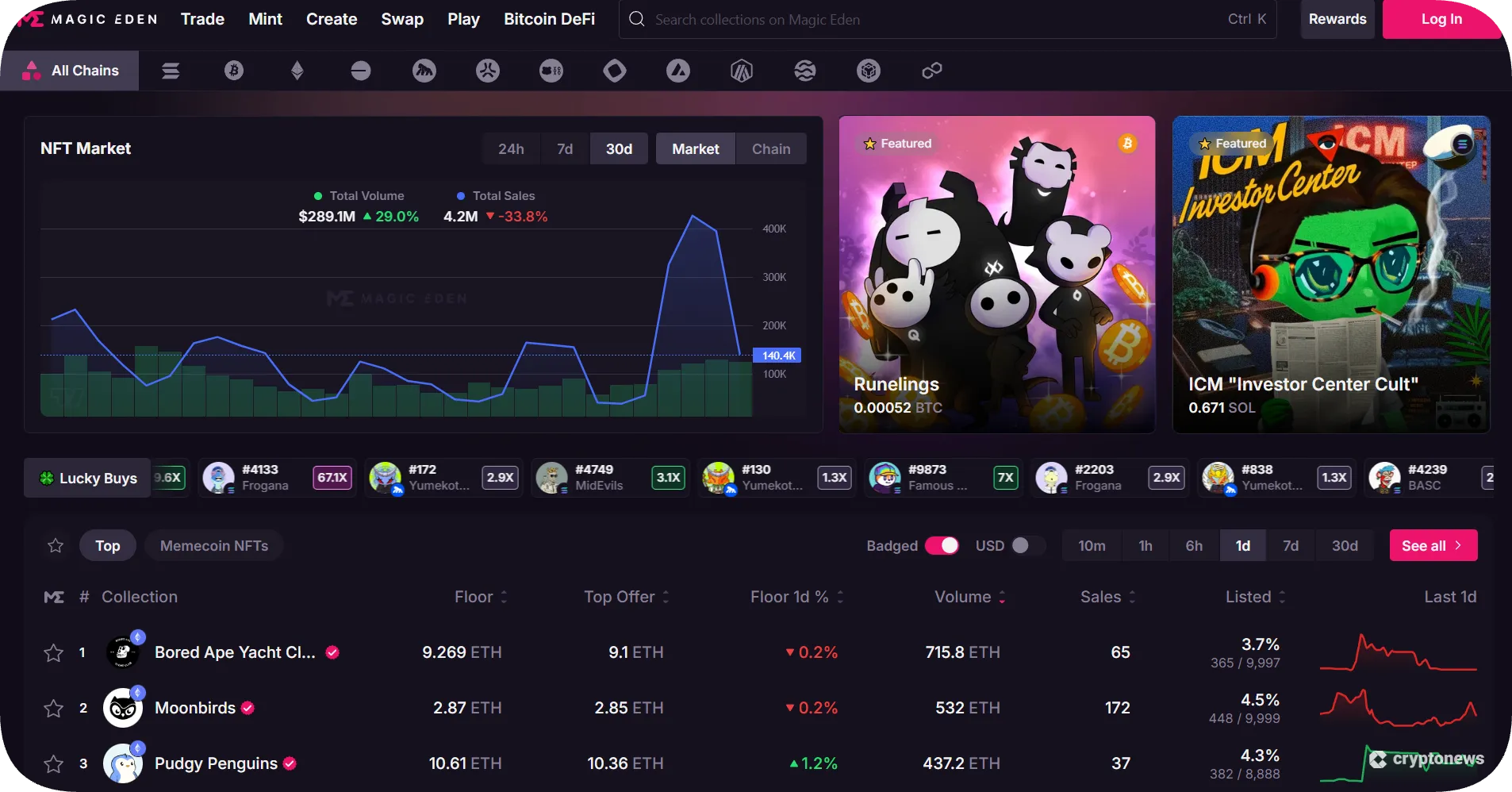
While supporting multiple chains, many investors go to Magic Eden to explore Solana-based collections. The platform attracts users with its accessible NFT prices, ease of use, decent transaction fees of 2%, and a dedicated launchpad for new projects.
Pros
- Supports multiple major chains
- High liquidity and affordable NFT prices
- Great creator and analytics tools
Cons
- Higher risk of low-quality NFTs with copied content
- The mobile app doesn’t offer all features, such as minting
6. JPG Store – Best Cardano NFT Marketplace
JPG Store is the largest NFT marketplace on Cardano. It is built exclusively for Cardano and hosts a wide range of NFTs, including art, gaming, and utility NFTs. The platform also enables anyone to create and mint NFTs by connecting a supported wallet, such as Yoroi, Lace, or Begin. NFT buyers pay a small fee of 0.2-0.4 ADA, while sellers pay 2% of the sale price.
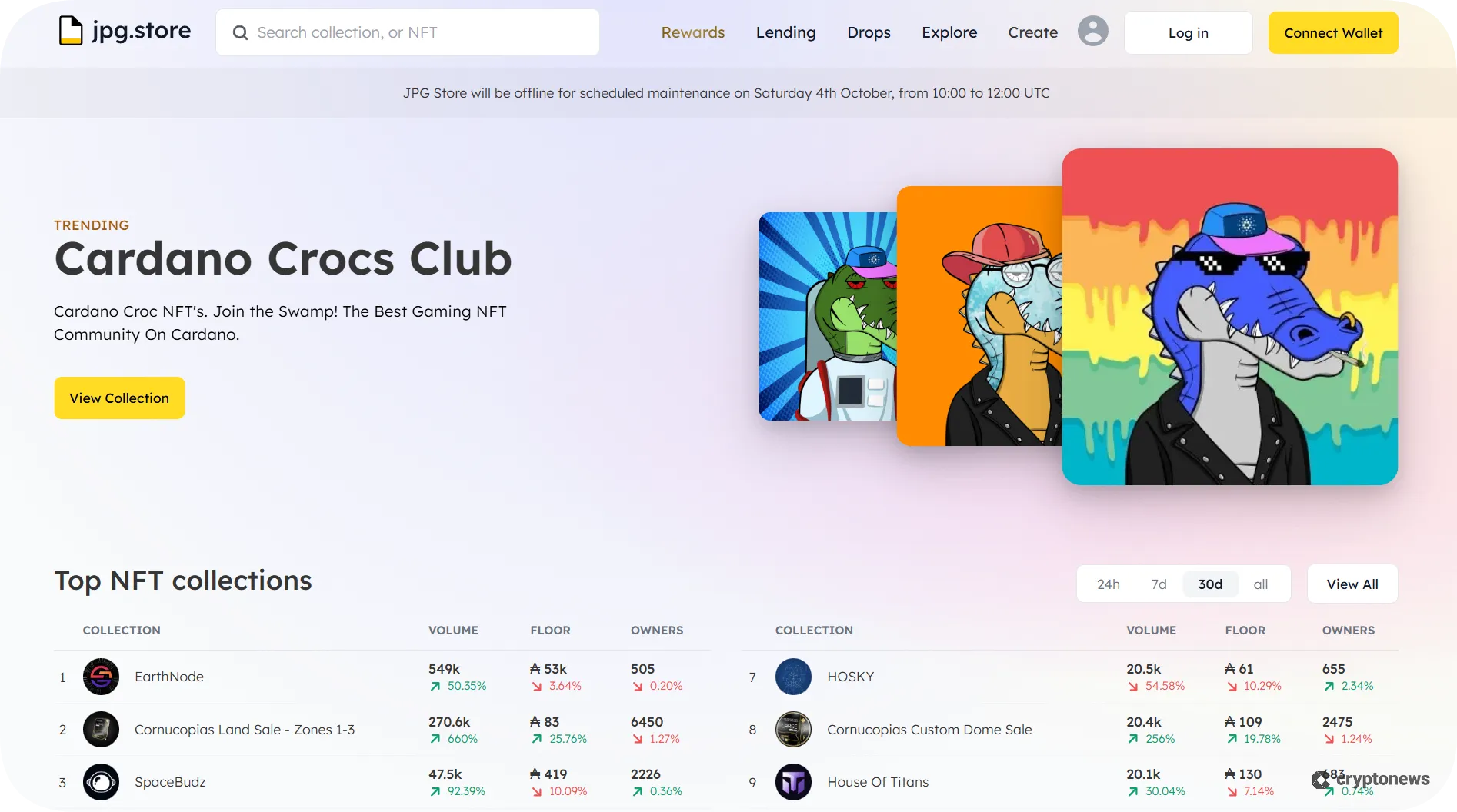
Currently, the most traded NFTs on JPG Store are EarthNode NFTs, which represent ownership of so-called EarthNodes – validator nodes that power the World Mobile network. It is promoted as the first blockchain-based mobile network owned by the people. Another popular collection right now is Cornucopias Land NFTs, which represent virtual land within the Cornucopias game world.
Pros
- Largest and most active NFT marketplace on Cardano
- Available on web and mobile, both offering beginner-friendly interfaces
- Great variety of NFTs at affordable prices
Cons
- It doesn’t support other chains besides Cardano
- Low NFT trading volumes compared to Ethereum marketplaces
7. Rarible – Best Polygon NFT Marketplace
Rarible is a multi-chain NFT marketplace that allows users to mint and trade different NFTs, including art, collectibles, music, and in-game items. It stands out for its creator-focused model, enabling artists to set up to 50% royalty fees.
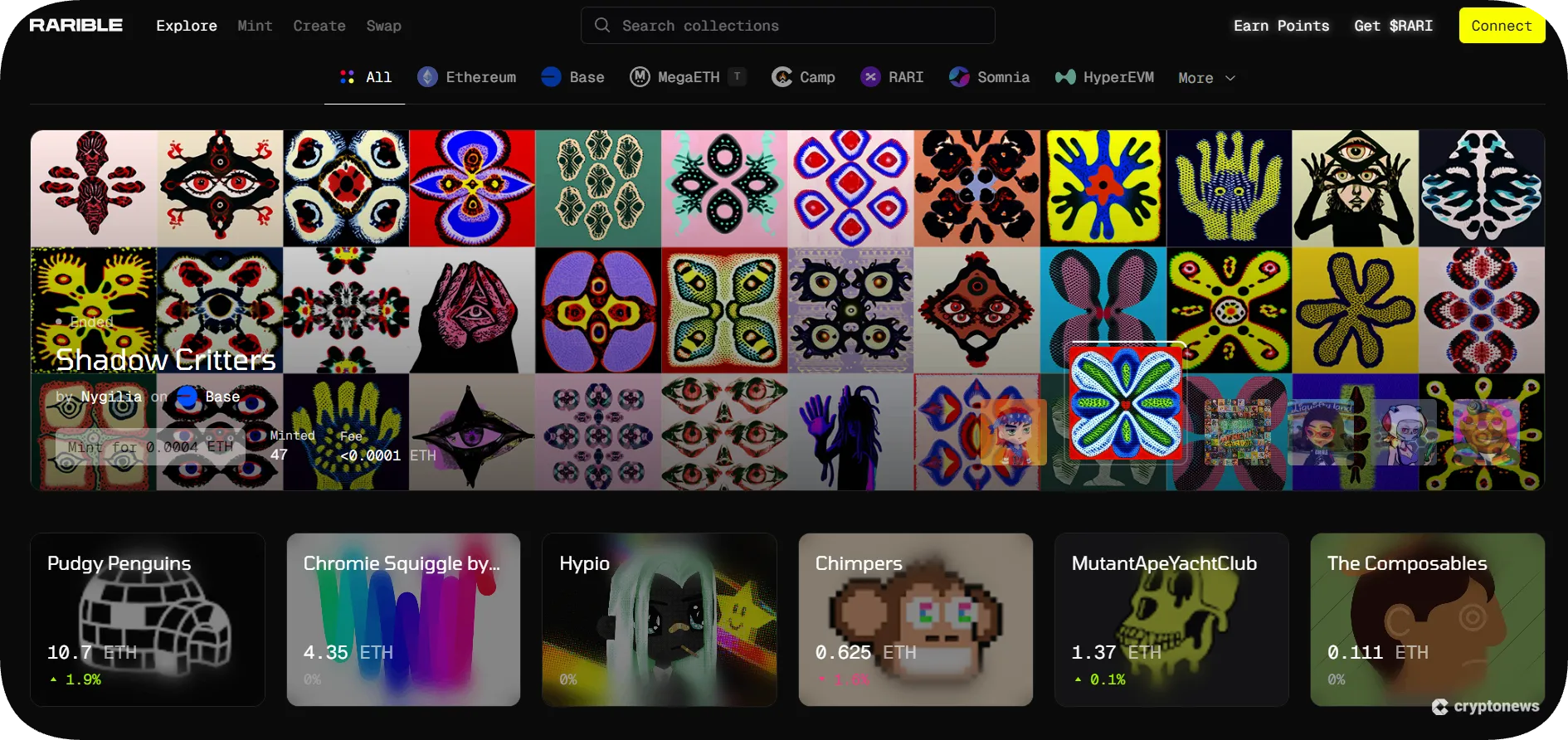
The great thing about Rarible is that it hosts NFTs across less popular chains, including Polygon, Base, Tezos, Celo, Aptos, Somnia, and HyperEVM. Many prefer Polygon for its superior performance compared to Ethereum. The great variety of NFTs across multiple chains and use cases makes Rarible a top platform for beginners and advanced NFT traders, while creators benefit from the built-in minting feature.
Pros
- Multi-chain NFT marketplace that supports less popular chains
- High royalty fees of up to 50%
- Governed by the community through the native RARI token
Cons
- Rarible has drawn scrutiny over potential wash trading
- The mobile app doesn’t support all features
👉 Learn More: Rarible NFT Marketplace Review 2026
8. BlueMove – Best Sui NFT Marketplace
BlueMove is the leading NFT marketplace on the Sui network and also operates on Aptos. Both Sui and Aptos are high-speed blockchains developed on top of Facebook’s abandoned Diem project (formerly known as Libra). Thanks to their superior performance, BlueMove is able to offer low-cost NFT trading and minting.
The platform operates as a community-first NFT marketplace, distributing all revenue to those who stake the MOVE token. It charges a 2% fee on all NFT trades, collected in SUI or APT, and redistributes to MOVE stakers. However, despite dominating the Sui and Aptos networks, BlueMove’s NFT trading volumes have been relatively low this year, with the platform waiting to shine again.
Pros
- Clean interface and user-friendly experience
- Rewards active users with the native MOVE token
- Users can participate in governance by staking MOVE
Cons
- Doesn’t support other chains beyond Sui and Aptos
- Very low trading volumes in 2026, while MOVE is down 99% year-to-date
9. Element Market – Best Binance Smart Chain (BSC) NFT Marketplace
Element Market is promoting itself as the first community-driven NFT aggregator and the largest NFT marketplace for BNB Smart Chain (BSC) and Ethereum Layer 2 chains. Thanks to its versatility, it has become one of the largest NFT platforms by trading volume in 2025. During the past month, it has dominated NFT trading on chains like BSC and Avalanche. It also supports 25 more chains, including Layer 2s like Arbitrum, Base, Optimism, Polygon, Linea, opBNB, Mantle, Scroll, Merlin, Bitlayer, Starknet, and Abstract.
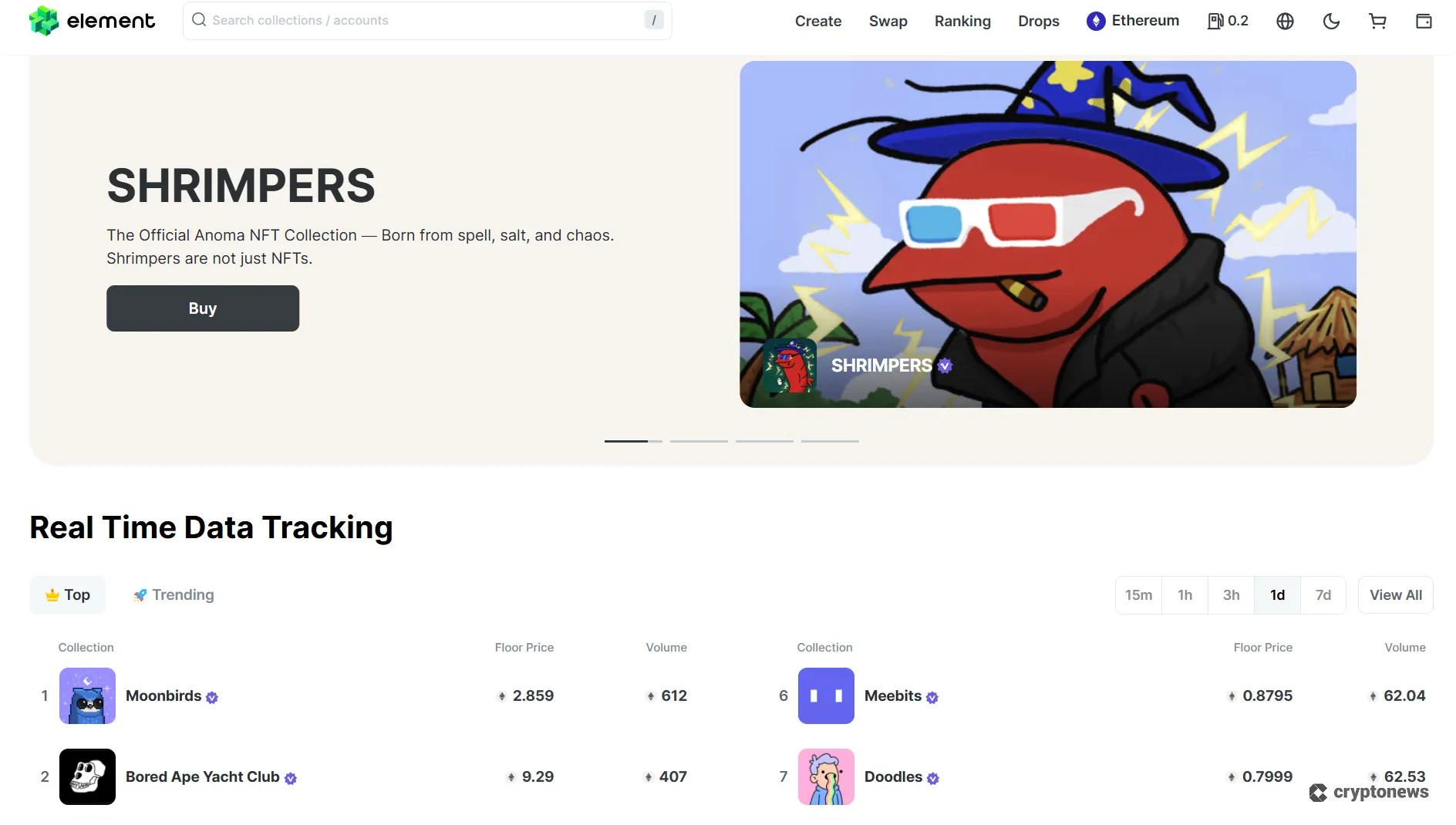
The platform aggregates liquidity and NFT listings from several top marketplaces, including OpenSea. Still, it also enables users to create NFTs and list them exclusively on Element. The marketplace has experienced rapid adoption thanks to its focus on Layer 2s, dominating networks like Linea, opBNB, Mantle, and others.
Pros
- Multi-chain support with a focus on Layer 2 networks
- Serves as an NFT aggregator, offering increased liquidity
- Offers an NFT-as-a-Service solution to let users create their own marketplaces
Cons
- It’s newer than competitors and has a limited track record
- The platform’s extensive features make it more complex for new users
10. Treasure – Best Arbitrum NFT Marketplace
Treasure is an NFT marketplace supporting Ethereum and Arbitrum. It focuses on the gaming ecosystem built on Arbitrum, hosting AI-native NFT collectibles. The platform is powering a cinematic universe where each NFT asset becomes an intelligent entity capable of creating value. The Treasure ecosystem is fueled by the native MAGIC token, which is used for governance and paying compute and on-chain services employed by AI agents.
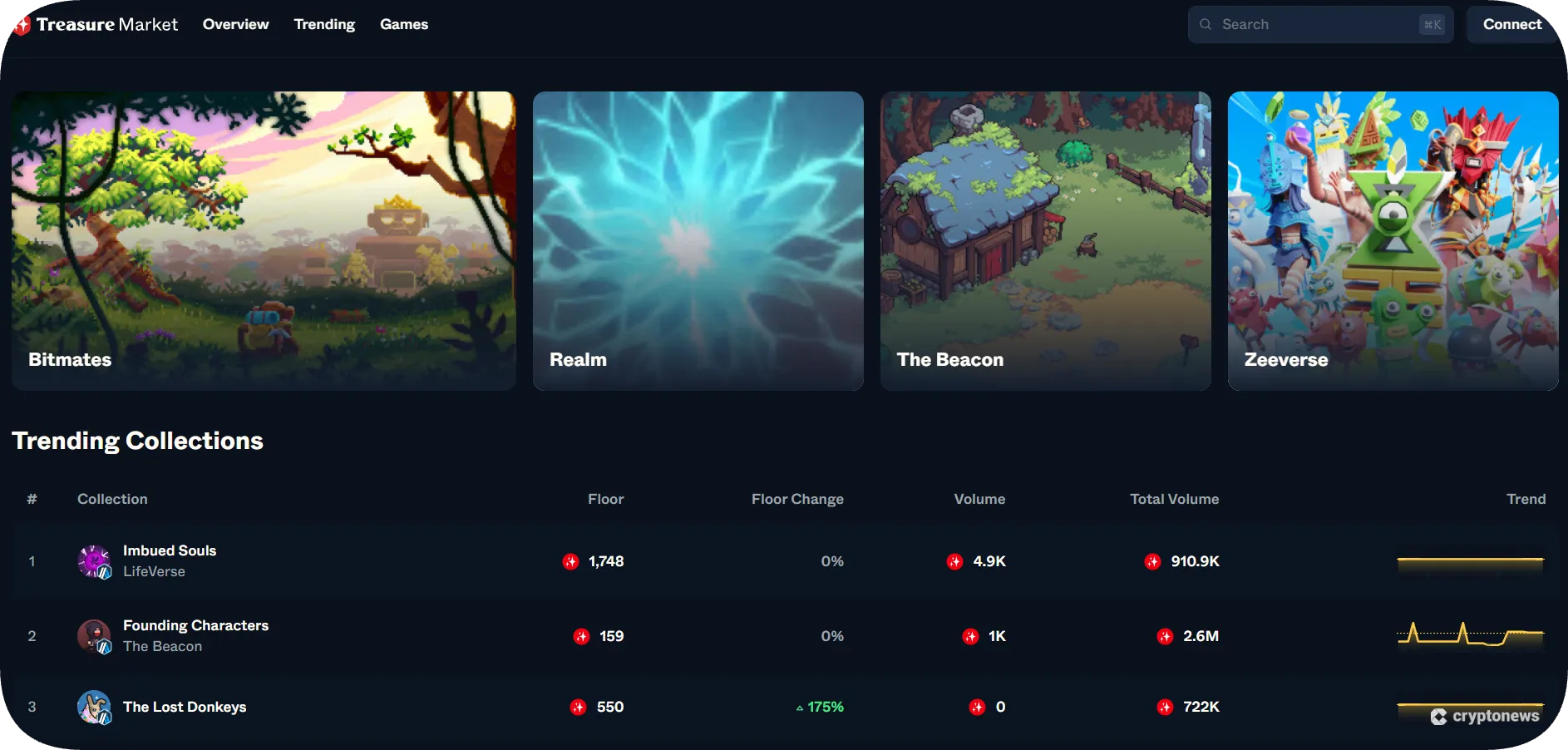
NFT traders should not confuse Arbitrum-based Treasure with the alleged TreasureNFT scam, which promised AI-driven NFT trading with monthly returns of 30%. The legitimate Treasure marketplace has likely been affected by the fraudulent scheme resembling its name, as trading volumes have declined significantly in 2026.
Pros
- Community-driven marketplace governance by a DAO
- Arbitrum-based NFT marketplace with an AI twist
- Specializes in gaming and metaverse NFTs
Cons
- Focuses mainly on Arbitrum only
- Low NFT trading volumes and declining price of native MAGIC token
11. Getgems – Best TON NFT Marketplace
Getgems is an NFT marketplace built on The Open Network (TON) chain, which is associated with Telegram. It allows users to mint and trade NFTs and collections by focusing on Telegram’s massive user base worldwide. The platform hosts many types of NFT collectibles, but some of its most popular collections consist of Telegram usernames and anonymous Telegram numbers.
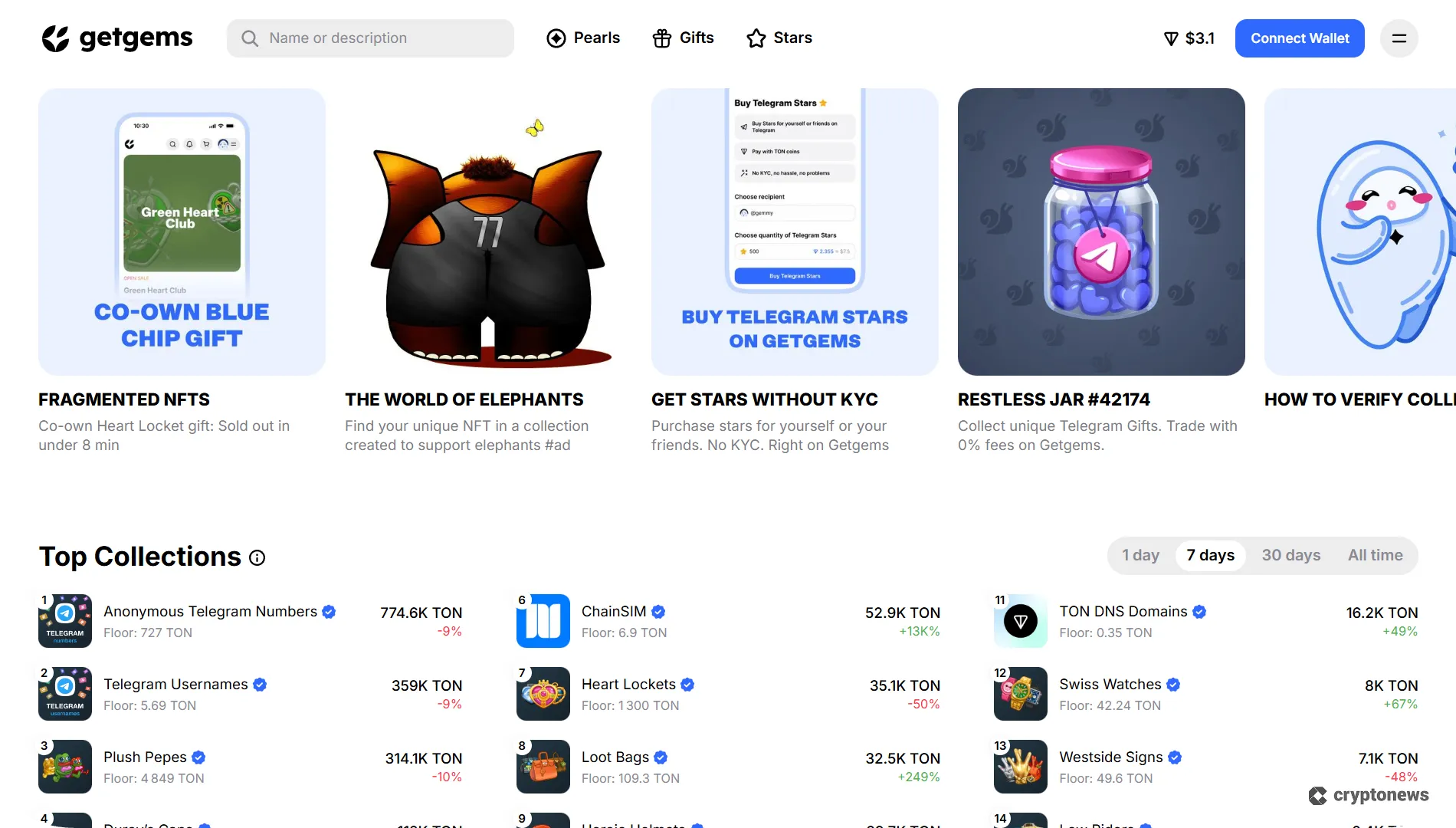
The marketplace greatly emphasizes mobile users, offering a beginner-friendly experience. In addition, the platform allows users to buy Telegram Stars, which serve as an in-app currency for Telegram. Thanks to the underlying TON network, NFT minting and trading are more cost-efficient than on Ethereum.
Pros
- Leverages Telegram’s user base
- Beginner-friendly and focused on mobile use
- Hosts NFTs with real utility, such as Telegram usernames
Cons
- Relies too much on Telegram’s success
- Only TON assets are supported
12. Ronin Market – Best for Gamers
Ronin Market, formerly known as the Mavis Marketplace, is the largest NFT marketplace for the Ronin chain, focusing on Web3 gaming. The network hosts popular titles like Axie Infinity, Ronkeverse, Moki Genesis, and Pixels. Their popularity made Ronin the fourth-largest chain by NFT volume, remaining behind only Ethereum, Solana, and Bitcoin. Ronin Market is Ronin’s official NFT platform.
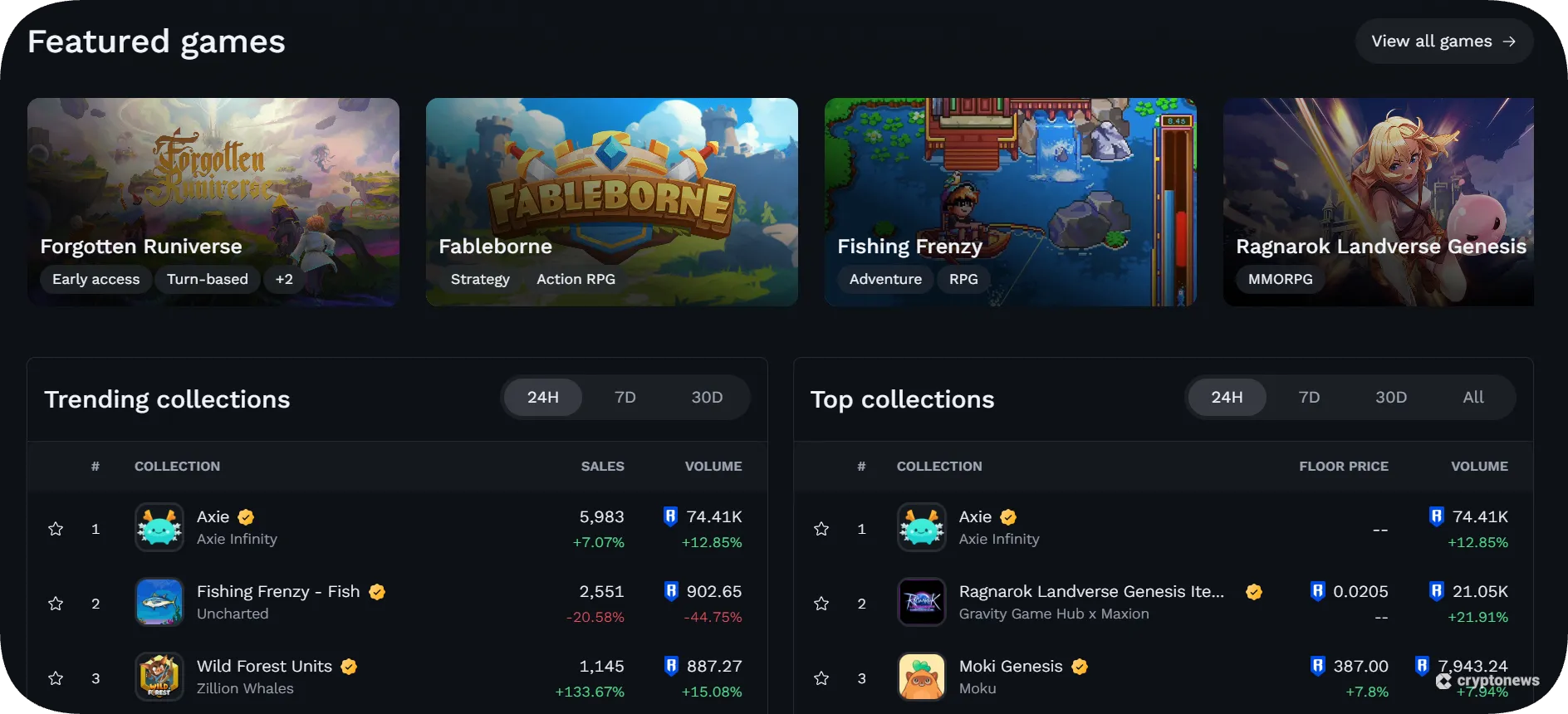
The current average price for in-game items is only about $3, much cheaper than most artworks. In 2022, the Ronin chain suffered one of the biggest hacking attacks in crypto, when hackers stole $625 million worth of ETH and USDC. However, the network came back stronger in the following years.
Pros
- Gaming-oriented NFT marketplace with affordable prices
- High-speed and low-cost transactions on Ronin
- Popular Web3 games like Axie Infinity
Cons
- Exclusive for the Ronin chain
- Success is tied to Ronin-hosted games
What Is an NFT Marketplace?
An NFT marketplace lets users buy and sell non-fungible tokens (NFTs). Some platforms also enable users to create NFTs from scratch by connecting them to an underlying chain for smart contract deployment.
In general, any blockchain supporting the smart contract feature can host NFTs. Ethereum has several token standards dedicated to these assets, with ERC-721 being the most widely used one.
These marketplaces simplify all NFT-related processes. They provide an interface to help users mint new NFT tokens on the underlying chain and list them for sale. While ownership data is recorded on-chain, the content part is displayed on the marketplace, be it digital art, an in-game item, or a song.
Speaking of NFT types, marketplaces can specialize in specific use cases, such as art, gaming, real estate, or collectibles, or they can be universal and host a wide range of assets.
Examples of specialized NFT marketplaces include:
- CryptoPunks: An Ethereum-based marketplace for CryptoPunks, a digital collection of 10,000 unique pixel characters.
- Decentraland: A marketplace for virtual land and in-game assets used in the eponymous metaverse.
- NBA Top Shop: A centralized platform where basketball fans buy, sell, and trade tokenized video highlights of NBA games.
- Courtyard: An Ethereum-based marketplace for physically-backed NFTs representing real-world collectibles.
All-in-one platforms include OpenSea, Magic Eden, and Element, all of which support a wide range of NFTs across multiple chains.
NFT marketplaces can also be categorized as:
- Primary marketplaces, where users mint (create NFTs from scratch) and sell them for the first time, often through drops or auctions. Many specialized NFT platforms function as primary markets.
- Secondary marketplaces, where users resell existing NFTs (often with built-in royalty mechanisms).
Some platforms, such as OpenSea, function as both primary and secondary markets.
NFTs in 2026: Are They Still Profitable?
In 2026, NFTs aren’t really profitable, as the market has drastically declined since its peak in 2021. However, you can still come across individual collections that perform well.
Cryptoslam data shows that weekly trading volumes hit a record $2.2 billion in August 2021, while the number of unique NFT buyers peaked at 585,000 in February 2022. Since their glory days, NFTs have lost over 95% in trading activity, which is also associated with a drastic decline in NFT prices.
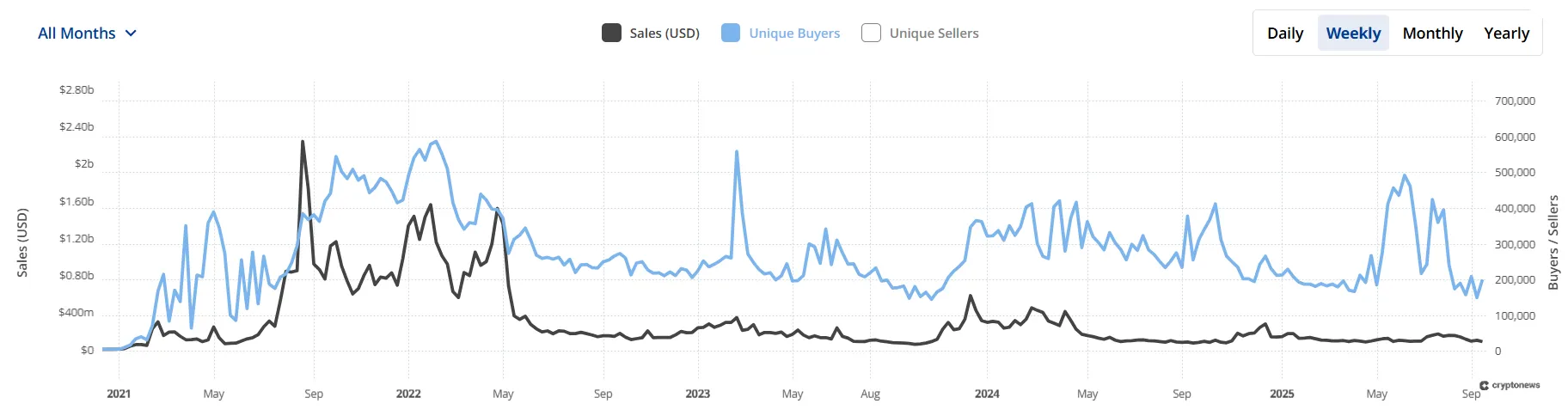
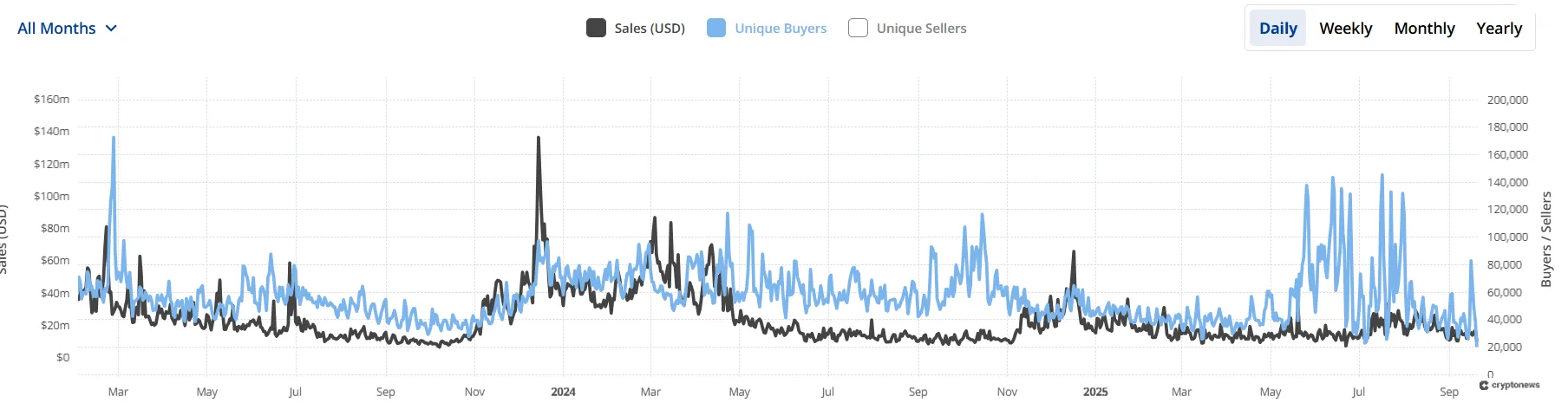
Still, the market has slightly recovered in 2025, performing better than in Q2 and Q3 of 2024. In July 2025, the number of daily unique buyers hit the highest level in over two years.
As of today, the risk associated with NFTs seems to outweigh their potential upside, especially for newcomers looking to speculate on price without fully understanding the nuances of the ecosystem.
Instead of speculative exposure, NFTs are becoming more integrated into gaming, AI, and enterprise applications. The market is shifting from speculative art drops to utility-based NFTs. The spike in unique buyers and transactions amid low USD volumes reflects an organic adoption of utility NFTs across broader audiences.
In gaming, NFTs power in-game economies, which are being used for characters and resources. In enterprise apps, NFTs are used to tokenize patents, supply chain segments, and real estate. Newer standards, like ERC-7857, open the door to intelligent NFTs (iNFTs), designed specifically for artificial intelligence (AI) use.
Asset-backed NFTs have also increased in popularity. Over the past month, Courtyard has been the third-largest marketplace by trading volume after OpenSea and Blur, reflecting increased interest in tokenized card collectibles.
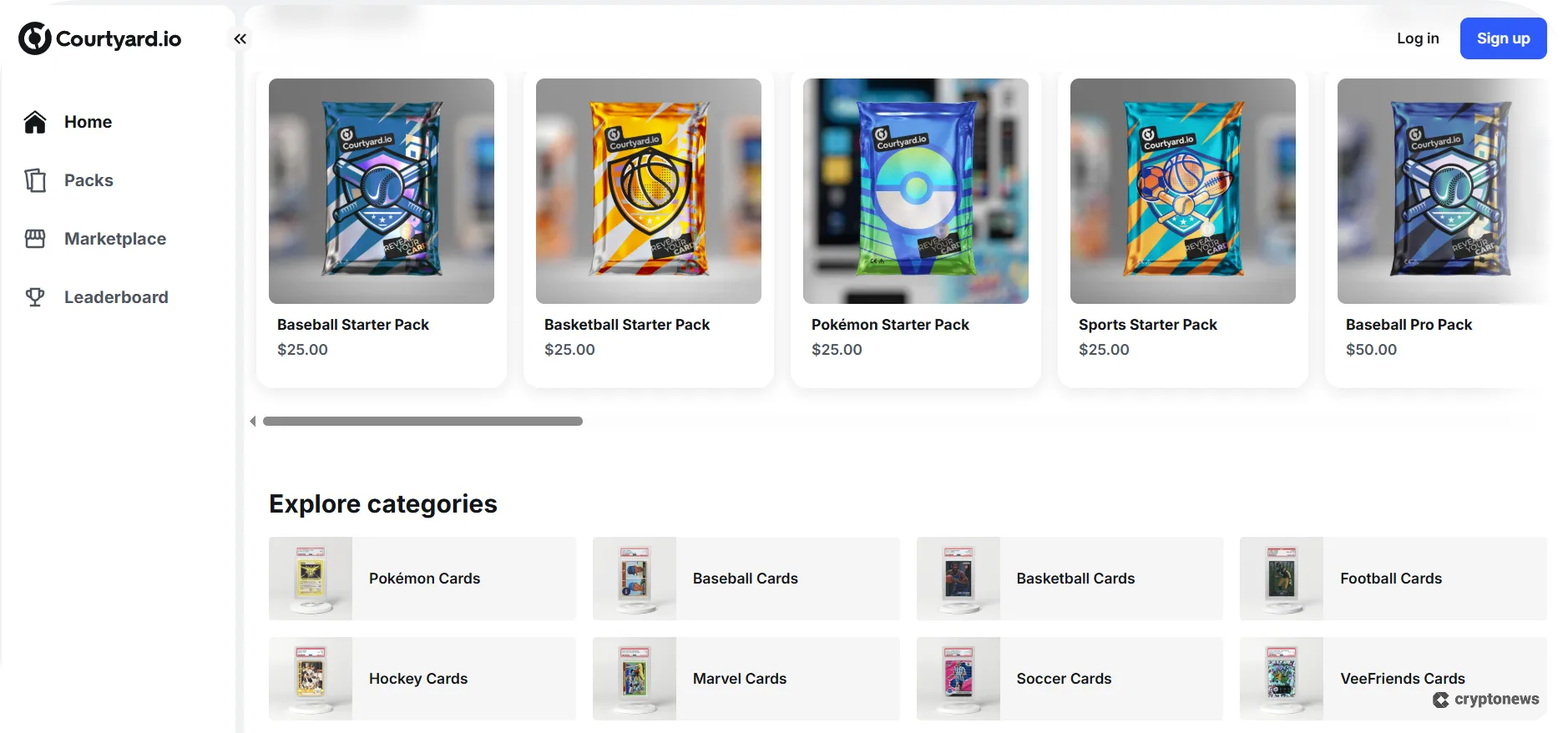
In the future, the NFT market will likely be dominated by utility NFTs, iNFTs, and asset-backed NFTs.
As NFTs are less profitable in 2026, you may consider other crypto investment opportunities with high upside potential. Check out the top crypto presales that can thrive this year.
Key Factors to Consider Before Choosing an NFT Marketplace
If you want to invest in NFTs or maybe tokenize your digital content and put it for sale, you should pick the marketplace that matches your needs. Let’s explore some key factors to consider.
🔗 Blockchain & Token Support
To begin with, you should check whether the marketplace supports the underlying chain you need. If you’re an investor interested in specific NFT collections, start by checking which chains they are on.
If you’re a creator, you can first choose the right blockchain to mint your NFTs, as this will determine fees, speed, and extra features. This will also define which marketplaces you can list your NFTs on.
Here are some of the major chains and the top NFT marketplaces associated with them:
- Ethereum: OpenSea, Blur, Magic Eden, Rarible, SuperRare, Element Market, Foundation, XYX2, OKX NFT, LooksRare
- Solana: Magic Eden, Solanart, SolSea, Tensor, OpenSea
- BNB Chain: PancakeSwap, Element Market, OpenSea
- Bitcoin: Magic Eden, OKX NFT, Unisat
- XRP Ledger: xrp.cafe, bidds, Xmart
- Cardano: JPG Store, Cardahub, Flint NFT
- Avalanche: Element Market, OpenSea, NFTKEY
- Tron: NFTone, TronEnergy
- Aptos: BlueMove, TradePort, Rarible
- TON: Getgems, Fragment, Marketapp, xRare
- NEAR: Paras 2.0, MITTE, Mintbase
💸 Fees & Royalties (Gas Fees, Transaction Costs, and Creator Royalties)
Most marketplaces charge fees, while those operating on Ethereum incur significant gas costs. A few platforms, such as Blur, charge 0% fees and generate revenue through other means.
Many platforms allow creators to set royalty fees, which they earn from each secondary sale. NFT issuers may be interested in marketplaces that allow them to set high royalties.
🛡️ Security & Reputation (Rug Pull Risks, Scams, KYC, and Platform Audits)
Needless to say, security should be a top priority when selecting an NFT marketplace, as NFT scams, rug pulls, and fake collections are common even today. Look for platforms with proven track records, smart contract audits, and positive reviews.
In 2024, NFT-related fraud cost investors about $1.5 billion. Common frauds included fake and counterfeit collections, wash trading, phishing scams, and rug pulls.
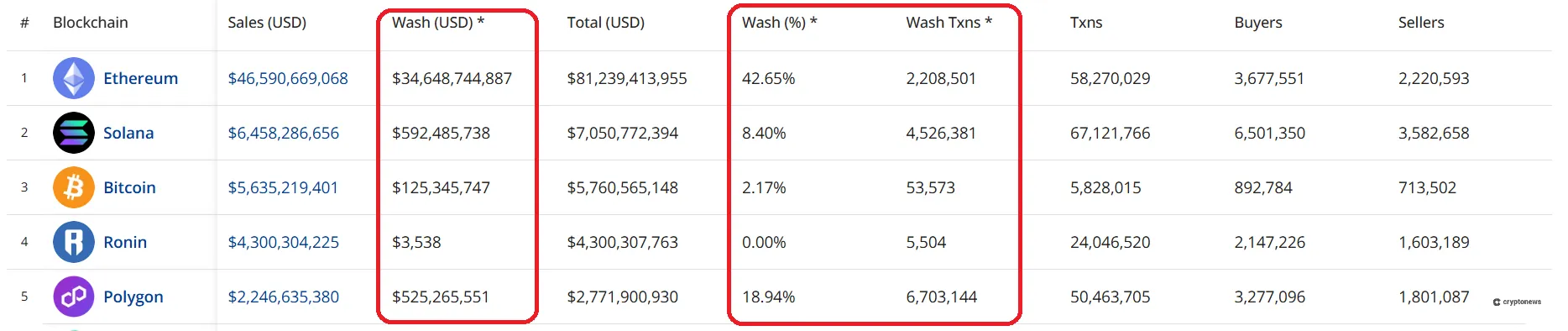
Ethereum attracts the highest volume of wash trading, a practice where malicious actors buy and sell the same NFTs to create a false impression of high demand. Over 40% of all Ethereum NFT deals were wash trading practices, totaling over $80 billion.
🖥️ User Experience
A top marketplace should be intuitive for both NFT buyers and creators. Beginners may prefer platforms with smooth onboarding and a simplified buying experience. OpenSea is often regarded as the best NFT marketplace for beginners.
💧 Liquidity & Community
Given that NFTs are unique assets, liquidity is crucial. Active marketplaces offer higher chances of finding buyers or sellers on the other side more rapidly. High liquidity and community engagement mean better price discovery and trading experience. Therefore, check metrics like trading volumes, active users, and the number of trades.
In the second half of 2025, OpenSea, Blur, Courtyard, CryptoPunks, Magic Eden, and Element Market have the highest volumes among NFT platforms, according to DappRadar.
💳 Supported Wallets & Payment Methods
Different marketplaces support different wallets and payment options, which are usually dictated by the underlying chain. For example, if the platform supports Ethereum NFTs, then it’s most likely compatible with MetaMask.
Some platforms allow users to buy NFTs with credit cards, making them convenient for beginners.
How to Get Started on an NFT Marketplace
To get started on an NFT marketplace, you should first set up a wallet like MetaMask. This wallet supports all networks compatible with the Ethereum Virtual Machine (EVM), including Ethereum and most of its Layer 2 rollups, Avalanche, BNB Chain, and others.
Then you can go to the marketplace and simply connect your wallet.
Here is how you can buy your first NFT on OpenSea, the most popular platform:
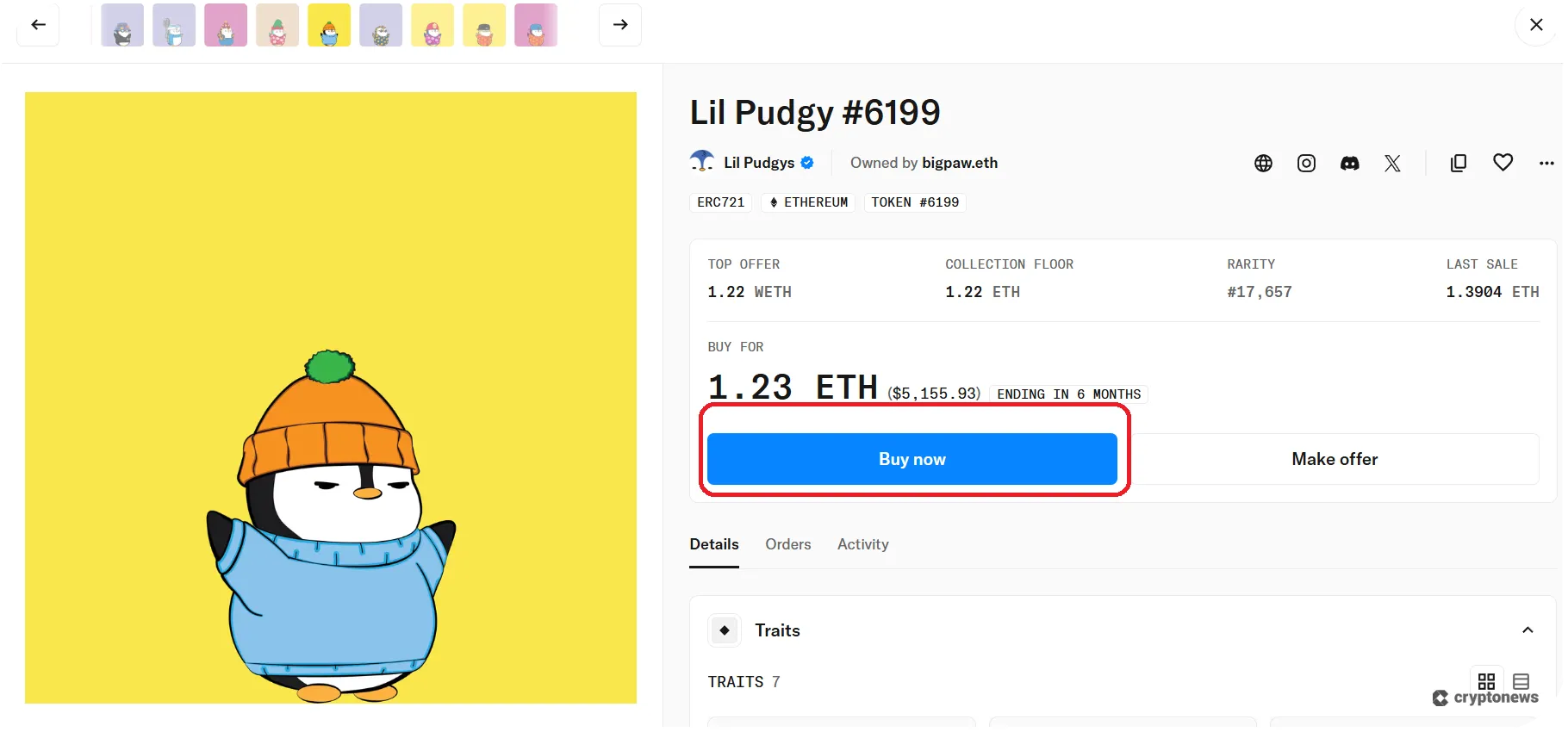
- Step 1: Go to the OpenSea site and choose the NFT you like by browsing through collections. Click on the specific NFT that you picked and hit “Buy Now.”
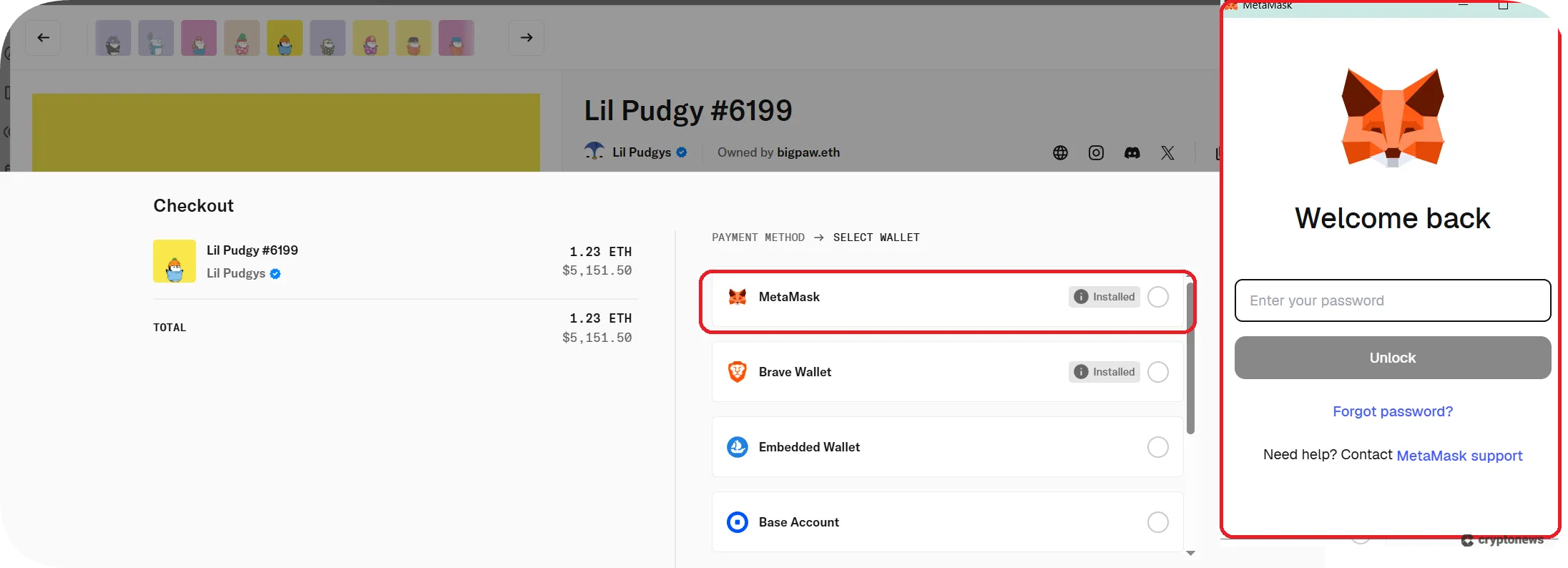
- Step 2: Clicking on “Buy now ” will require you to connect your wallet. Enter the password and approve OpenSea on your wallet.
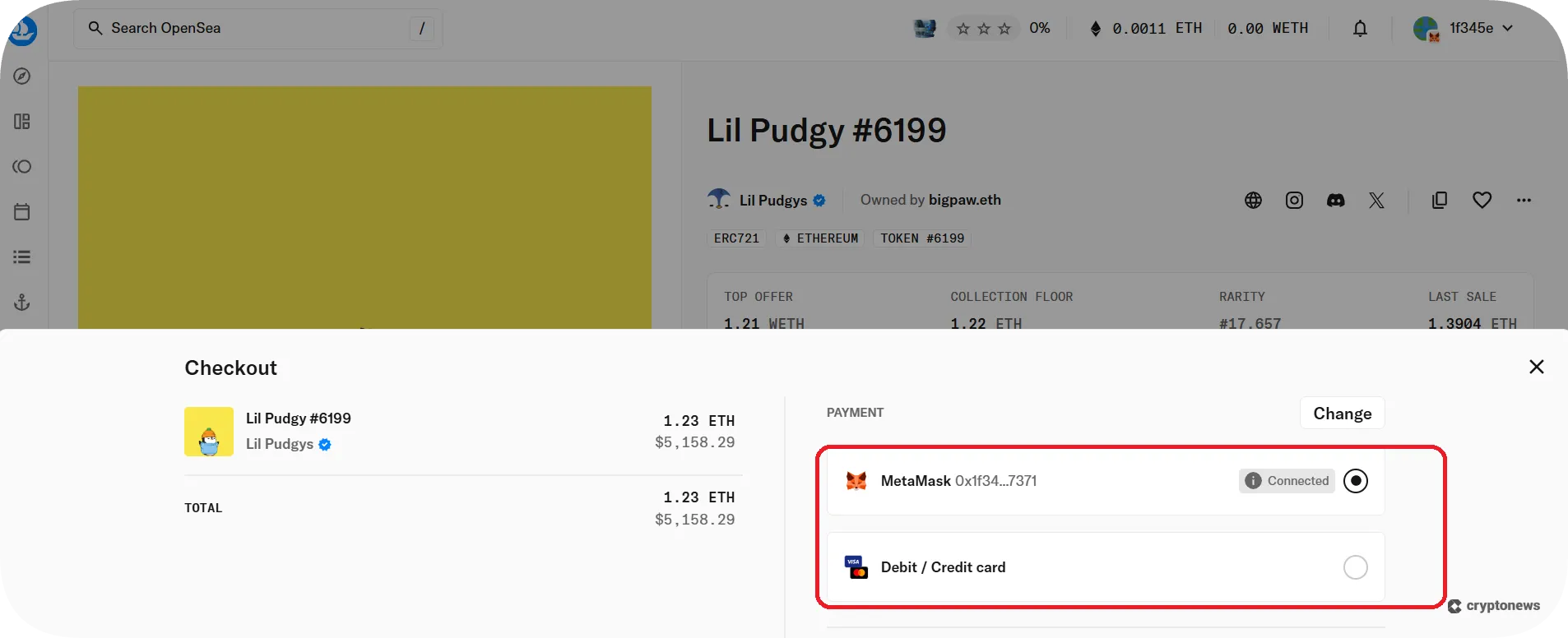
- Step 3: With your wallet connected, you can choose whether to pay with crypto or with a card. If you want to buy with crypto, you must first load your wallet with cryptocurrency like ETH. You can do this on centralized platforms like Binance or Coinbase and then transfer the crypto to your non-custodial wallet.
- Step 4: Next, review the fees, which may include gas costs and the processing commission. Add payment details if you pay with your card and confirm the purchase. If you pay with your wallet, simply confirm the transaction.
Congrats! Now you have your first NFT! It will be stored in your wallet.
The marketplace allows creators to mint NFTs and sell them on its platform. If you’re a creator, you can go to OpenSea Studio and build your NFT by inserting an image and choosing a name, symbol, and the underlying chain.
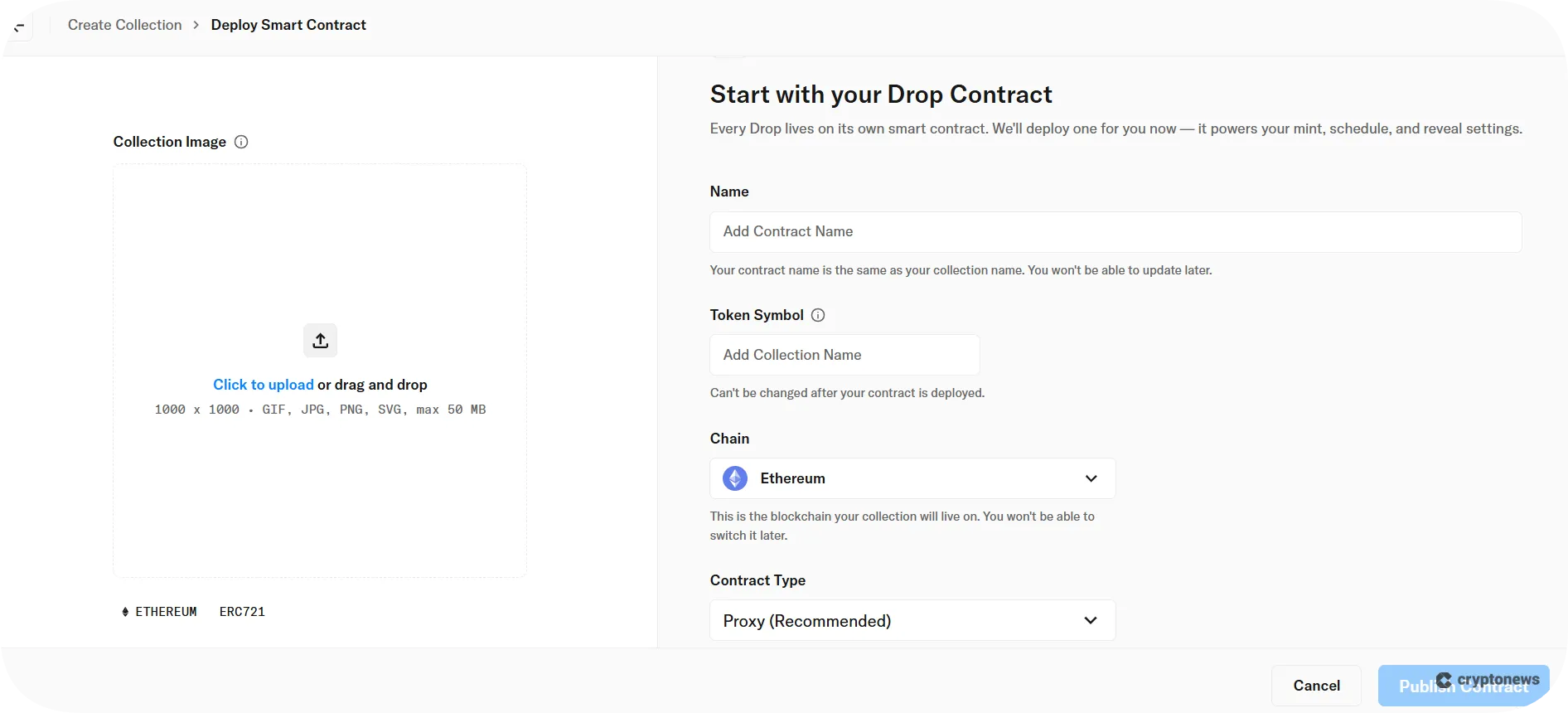
Once ready, you can easily list your NFT for sale.
Final Thoughts on NFT Marketplaces
NFT marketplaces are less active than during the sector’s peak in 2021, but they still offer the same great features for buying, selling, and creating NFTs. A wide range of NFT platforms cater to different audiences, from first-time buyers to high-end art collectors and seasoned Web3 gamers.
OpenSea remains the most popular NFT marketplace among beginners thanks to its ease of use, NFT diversity, and multi-chain support. At the same time, platforms like Foundation and SuperRare focus on more curated NFTs.
If you’re new to the space, use marketplaces with intuitive interfaces, multi-chain support, transparent fees, and broad community adoption. If you’re a creator, look for platforms offering royalty control and deep liquidity.
In the end, there’s no single “best” NFT marketplace, as your ideal choice depends on the NFTs you’re dealing with. Try a few top platforms to see what fits your goals best.
FAQs
Are NFTs still worth it in 2026?
Can I buy NFTs without crypto?
Which NFT marketplace has the lowest fees?
What are gasless NFT marketplaces, and how do they work?
Is OpenSea or Rarible better?
How do NFT marketplace royalties work for creators?
References
- NFT Volume and Buyers charts (Cryptoslam)
- NFT Marketplace data (DappRadar)
- NFT Wash Trading Chart (Cryptoslam)
- Mysterious Pak NFT Project Generates $91.8 M. in Sales on Nifty Gateway (ArtNews)
- Ronin Network: What a $600m hack says about the state of crypto (BBC News)
2M+
250+
8
70





 in numbers

About Cryptonews
Our goal is to offer a comprehensive and objective perspective on the cryptocurrency market, enabling our readers to make informed decisions in this ever-changing landscape.
Our editorial team of more than 70 crypto professionals works to maintain the highest standards of journalism and ethics. We follow strict editorial guidelines to ensure the integrity and credibility of our content.
Whether you’re looking for breaking news, expert opinions, or market insights, Cryptonews has been your go-to destination for everything cryptocurrency since 2017.
