

10 Best NFT Wallets for 2026: Tested and Reviewed
We believe in full transparency with our readers. Some of our content includes affiliate links, and we may earn a commission through these partnerships. However, this potential compensation never influences our analysis, opinions, or reviews. Our editorial content is created independently of our marketing partnerships, and our ratings are based solely on our established evaluation criteria. Read More





Based on our research, Coinbase is the top option for NFT enthusiasts. This hot wallet supports NFTs on all major networks, plus it comes with an integrated NFT gallery. You can also mint NFTs and connect the wallet to popular marketplaces, such as OpenSea and Magic Eden.
We tested over 40 providers to find the best NFT wallet, so you can buy, receive, store, and manage non-fungible tokens with ease. We gave an advantage to software and hardware wallets that support multiple blockchains and NFT standards, as well as those that let you connect to NFT marketplaces directly from the wallet. Our methodology also included testing their security features and compatibility with mobile devices, desktop computers, and browser extensions.
Keep reading to learn more about Coinbase Wallet and other top-rated NFT wallets that found a place on our list.
- In This Article
-
- 1. Coinbase Wallet (Now Base App) – The Overall Best NFT Crypto Wallet
- 2. MetaMask – Best NFT Wallet for Ethereum NFTs
- 3. Zengo – The Best NFT Wallet for Security
- 4. Ledger Stax – Best Premium NFT Wallet
- 5. Cypherock X1 – Best NFT Wallet for No Seed Phrase Vulnerability
- 6. Tangem – Best NFT Wallet for Diversification
- 7. Binance Wallet – Best NFT Wallet for Binance Users
- 8. OKX Wallet – Best Crypto Wallet for NFT Creators
- 9. SecuX Nifty – Best NFT Crypto Wallet For Cold Storage
- 10. Phantom Wallet – Best Wallet for Selling NFTs
- In This Article
-
- 1. Coinbase Wallet (Now Base App) – The Overall Best NFT Crypto Wallet
- 2. MetaMask – Best NFT Wallet for Ethereum NFTs
- 3. Zengo – The Best NFT Wallet for Security
- 4. Ledger Stax – Best Premium NFT Wallet
- 5. Cypherock X1 – Best NFT Wallet for No Seed Phrase Vulnerability
- 6. Tangem – Best NFT Wallet for Diversification
- 7. Binance Wallet – Best NFT Wallet for Binance Users
- 8. OKX Wallet – Best Crypto Wallet for NFT Creators
- 9. SecuX Nifty – Best NFT Crypto Wallet For Cold Storage
- 10. Phantom Wallet – Best Wallet for Selling NFTs
- Show Full Guide
The Top NFT Crypto Wallets Compared
Take a look at our table to find out how our top-rated NFT wallets compare to each other.
| Wallet | Wallet Type | Supported NFT Types | Supported Coins & Networks | Best For |
| Coinbase Wallet | Software / non-custodial | Ethereum, Polygon, Solana, Arbitrum, Optimism, and more | 10,000+ assets / all EVM-compatible networks | Overall best NFT wallet |
| MetaMask | Software / non-custodial | Ethereum, BNB Chain, Base, Avalanche, Polygon | All ERC-20 tokens / EVM-compatible networks | Ethereum NFTs |
| Zengo | Software / non-custodial | Ethereum and Polygon | 380+ coins / 6 networks | Hot storage security |
| Ledger Stax | Hardware / non-custodial | Ethereum and Polygon | 5,500+ coins / 15+ networks | Best premium NFT wallet |
| Cypherock X1 | Hardware / non-custodial | Ethereum and EVM-compatible NFTs | 9,000+ coins / 15+ networks | No seed phrase vulnerability |
| Tangem | Hardware / non-custodial | Arbitrum, Avalanche, Base, BSC, Chiliz, Cronos, Ethereum, Fantom, Moonbeam, Moonriver, Optimism, Polygon, Solana | 16,000+ coins / 85 networks | Diversification |
| Binance Wallet | Software / non-custodial | Ethereum, BNB Chain, Polygon, Solana, Avalanche | All ERC-20, BSC-20, and BRC-20 tokens / 38 networks | Binance users |
| OKX Wallet | Software / non-custodial | OKTC, Ethereum, Bitcoin, Polygon, Solana, Aptos, Avalanche C, Immutable X, Arbitrum One, Optimism, Klaytn, zkSync Era, BNB Smart Chain, SUI, Arbitrum Nova, LINEA, Base | 10 million assets / 130+ networks | NFT creators |
| SecuX Nifty | Hardware / non-custodial | Ethereum, Polygon, Binance Smart Chain (BSC), Solana | 10,000+ coins / 12 networks | Cold storage |
| Phantom Wallet | Software / non-custodial | Solana, Ethereum, Polygon | No limits / 7 networks | Selling NFTs |
The Best NFT Crypto Wallets in 2026 Reviewed
Now that you’ve learned which providers made it to our list, check out our detailed reviews to find out what to expect from each wallet. Our reviews will cover their NFT-related features and services, and main strengths and weaknesses.
1. Coinbase Wallet (Now Base App) – The Overall Best NFT Crypto Wallet
Coinbase Wallet, now known as Base App, is our top pick for the best NFT wallet. It’s a non-custodial software wallet that supports NFTs on Ethereum, Polygon, Solana, Arbitrum, Optimism, and many more networks. You’ll get to list your NFTs on Opensea, Magic Eden, Blur, and LooksRare, and create or mint a gallery. The wallet features an integrated NFT gallery that supports ERC-721 and ERC-1155 tokens, and it provides spam token management tools.
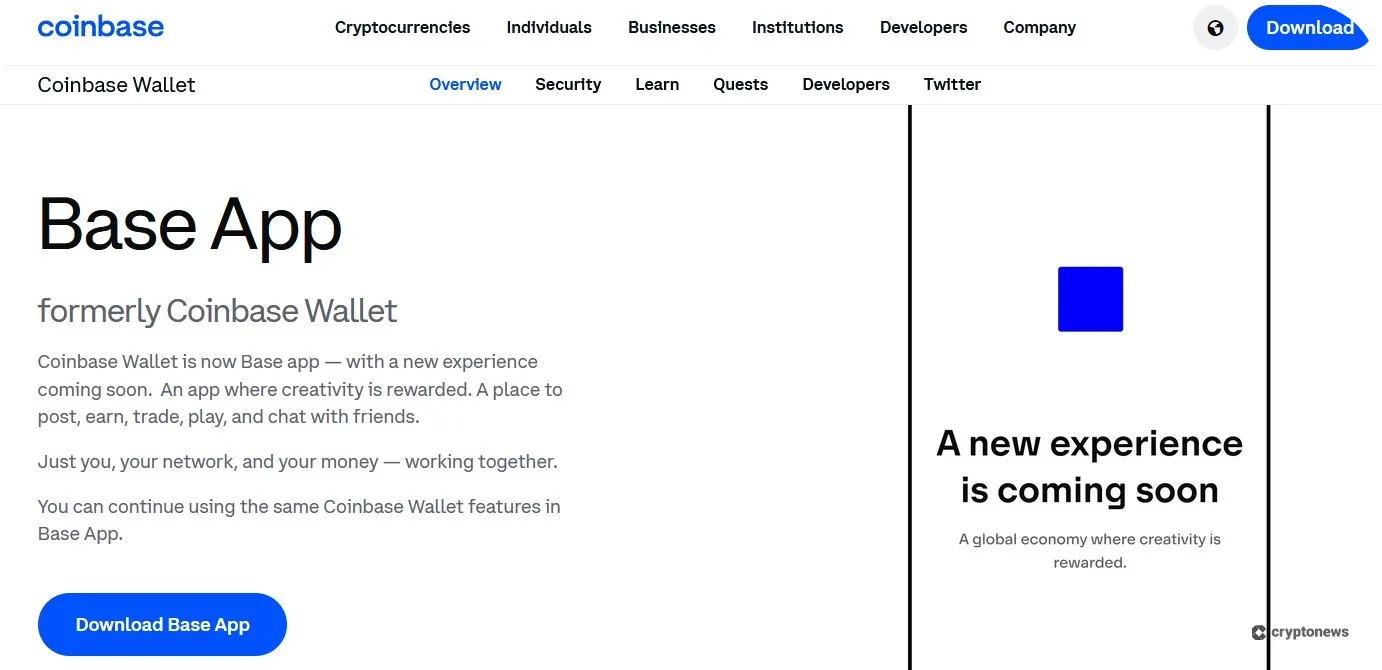
Coinbase Wallet is suitable for beginners and NFT creators due to its ease of use and NFT creation tools. What’s more, the Base app is integrated with the Zora protocol, meaning you’ll be able to tokenize your posts.
On the downside, the wallet doesn’t support OpenSea NFTs created through lazy minting that follow the ERC-1155 standard. Moreover, you’ll only be able to store image and GIF NFT formats. At the time of writing, the Base app is in beta, with more functionalities coming soon.
Coinbase Wallet Key Takeaways
- Create or mint a gallery – You can use the wallet to create NFTs and upload files to create a mint for the gallery.
- Spam token management tools – The Base app automatically hides NFTs that Coinbase has flagged as spam.
- Tokenization – The Base app is integrated with the Zora protocol, meaning you’ll be able to tokenize your posts.
Pros
- Supports NFTs on all major networks
- Built-in NFT gallery
- Integrated with the Zora protocol
- Non-custodial wallet
- Seamless integration with the Coinbase exchange
Cons
- Currently supports only GIF and image NFT formats
2. MetaMask – Best NFT Wallet for Ethereum NFTs
MetaMask is a non-custodial hot wallet that lets you buy, sell, and create NFTs as well as interact with NFT marketplaces like OpenSea, LooksRare, Blur, Zora, and Foundation. The wallet supports Ethereum, BNB Chain, Base, Avalanche, and Polygon NFTs. You can manage your NFTs with MetaMask Portfolio, a standalone app that lets you manually import ERC-721 and ERC-1155 NFTs.
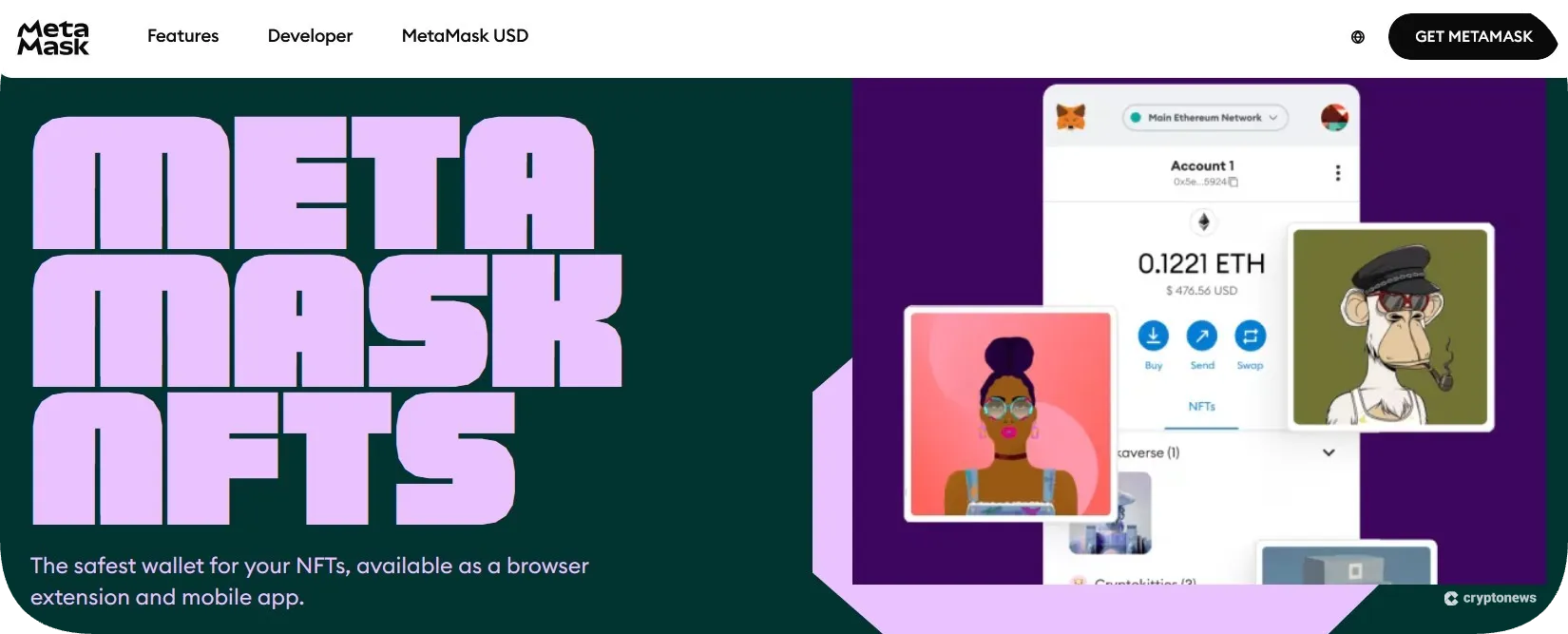
MetaMask is integrated with Daylight API, enabling you to claim airdrops and NFT mints directly from the wallet. Daylight API uses different social factors to find relevant NFTs tailored to your interests. You can tap the Explore page to check if you’re eligible for airdrops and NFT receipts. You can also integrate Metamask with hardware wallets, like Ledger and Trezor.
MetaMask is available as a mobile app (Android and iOS) and a browser extension for Chrome, Firefox, Brave, Opera, and Edge. However, we noticed a few differences between the mobile app and a browser extension. For example, you won’t be able to see your NFTs natively on the browser extension, which is not the case with the mobile app.
MetaMask Key Takeaways
- MetaMask Portfolio – Standalone app that lets you manage your NFTs, manually import ERC-721 and ERC-1155 NFTs, and connect to NFT marketplaces.
- Claim airdrops and NFT mints – You can claim airdrops and NFT mints directly from the wallet thanks to its integration with Daylight API.
- Integration with hardware wallets – Supports some of the best cold storage wallets like Ledger, Trezor, Keystone, and NGRAVE ZERO.
Pros
- Supports Ethereum, BNB Chain, Base, Avalanche, and Polygon NFTs
- Connects to the top NFT marketplaces
- Can be integrated with a wide range of hardware wallets
- Integrated with Daylight API
Cons
- Sending NFTs is only supported for ERC-721 tokens
- No support for Solana NFTs
3. Zengo – The Best NFT Wallet for Security
Zengo caught our attention thanks to its non-custodial nature and strong security measures. On that note, Zengo uses a 3-factor authentication mechanism and MPC technology, which makes it one of the most secure software wallets. It lets you store and view Ethereum and Polygon NFTs, connect to marketplaces like OpenSea and Blur, and remove spam NFTs from your gallery.
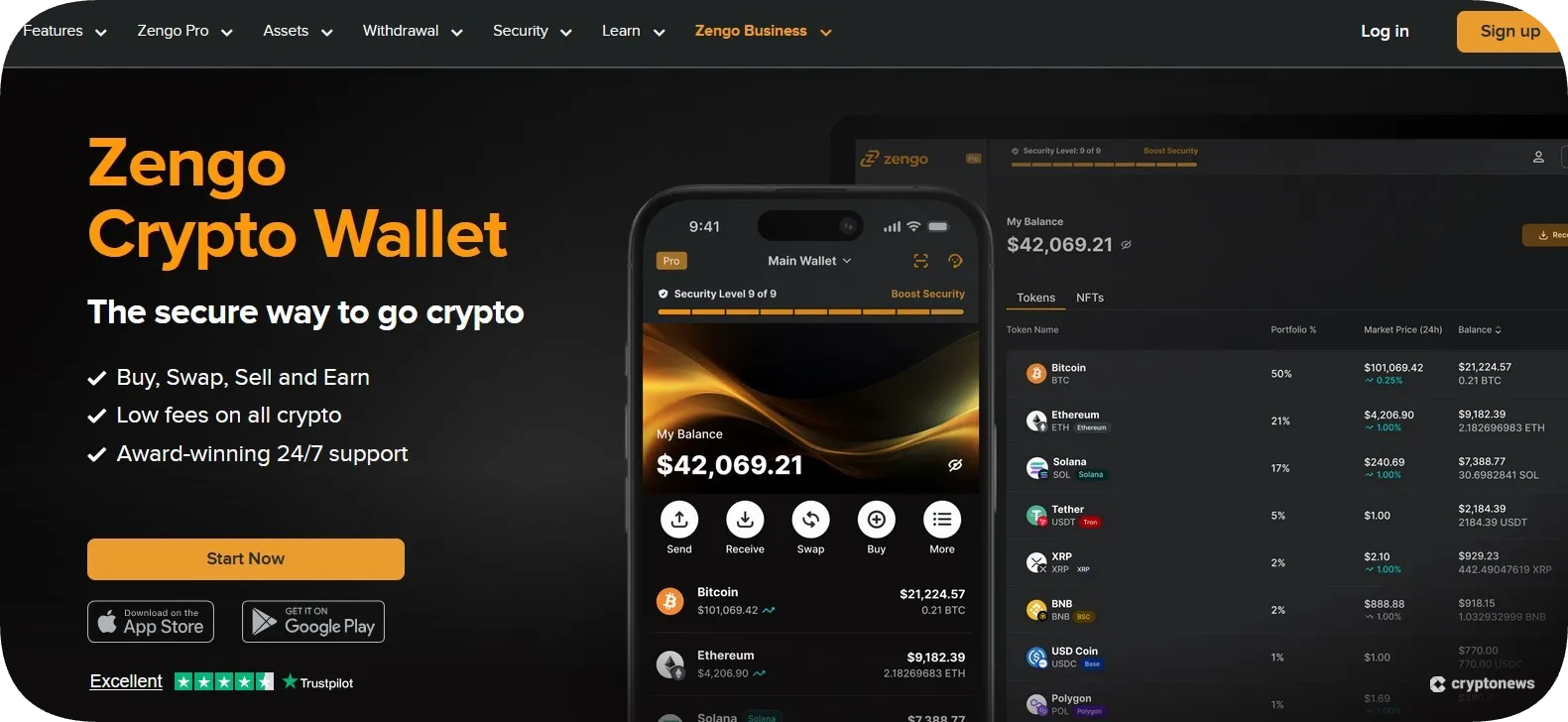
Zengo supports NFTs built on ERC-721 and ERC-1155 token standards as well as SBTs (Soul Bound Tokens). On the downside, we noticed that it only supports JPG, GIF, and SVG file formats, which means that audio and video NFTs only have a temporary placeholder visual.
On a positive note, Zengo is ideal for beginners since it comes with a dedicated NFT gallery that you can use to view, manage, and store NFTs. The wallet is also compatible with both mobile devices and desktop computers. To conclude, this non-custodial wallet should be your go-to wallet if you prefer secure and simple hot wallets that support Ethereum and Polygon NFTs.
Zengo Key Takeaways
- NFT spam filter – This filter removes spam NFTs from your gallery.
- Built-in NFT gallery – You can view the details of every individual NFT in your gallery and track the history of your transactions.
- Secure wallet recovery – Zengo is powered by multi-party computation (MPC) technology, meaning it doesn’t use a seed phrase. This eliminates one of the key security vulnerabilities wallet users face.
Pros
- Built-in NFT spam filter
- Integrated NFT gallery
- Supports Ethereum and Polygon NFTs
- Utilizes a 3-factor authentication mechanism
Cons
- Supports only JPG, GIF, and SVG NFT file formats
- Comparatively few supported NFT networks
4. Ledger Stax – Best Premium NFT Wallet
Ledger Stax is a premium cold wallet known for its stackable design, curved E ink® secure touchscreen, and customizability. For example, you can stack multiple wallets on top of each other, view NFTs on its touchscreen, and select any NFT from your gallery to use it as a lock screen image. You can also use its companion app, Ledger Live app, to store Ethereum and Polygon NFTs.
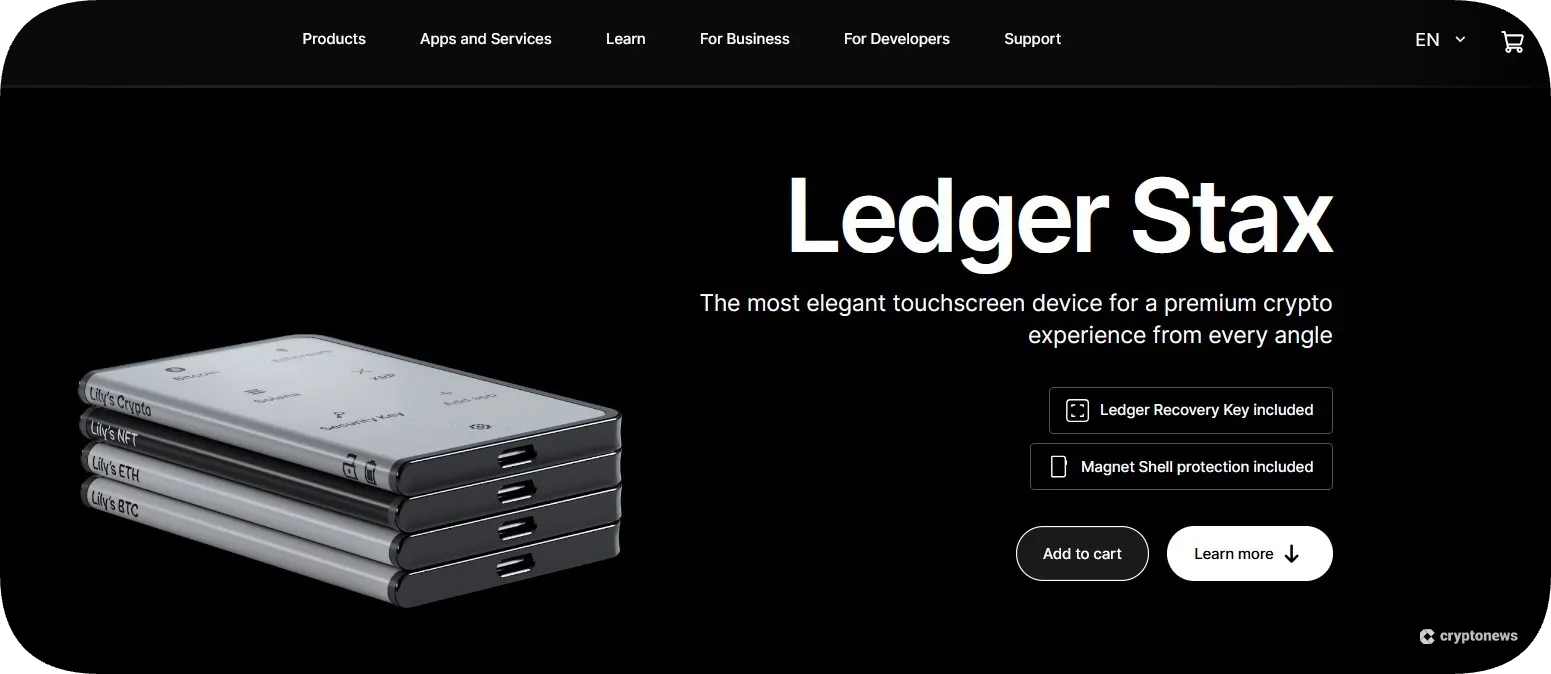
However, NFTs on other blockchains require using a compatible third-party wallet. This is not a significant drawback since Ledger Stax is compatible with 50+ third-party providers. This non-custodial wallet also supports an unlimited number of NFTs, which makes it ideal for investors who want to expand their NFT collections.
You can connect the Ledger Stax to NFT marketplaces like OpenSea, Rarible, and Magic Eden via WalletConnect, as well as install up to 100 apps. The wallet utilizes Clear Signing, a security feature that lets you verify transactions before approving them. In addition to that, you can take advantage of its NFT filter that will automatically hide scam NFTs from your gallery.
Ledger Stax Key Takeaways
- NFT filter – Automatically hides scam NFTs from your gallery.
- Customization – Select any NFT from your gallery to use it as a lock screen image.
- Stackable design – You can stack several wallets on top of each other.
Pros
- Supports Ethereum and Polygon NFTs
- Compatible with 50+ third-party wallets
- Curved E ink® secure touchscreen
- Utilizes Clear Signing
Cons
- No support for Solana NFTs
- A bit expensive
5. Cypherock X1 – Best NFT Wallet for No Seed Phrase Vulnerability
Cryperock X1 is the best NFT cold wallet for security-conscious users and those who prefer to interact with Ethereum and EVM-compatible NFTs. This non-custodial hardware wallet uses Shamir Secret Sharing. This technology splits your private keys into five parts stored on the X1 cards that come with the main X1 vault device. This eliminates the need for a seed phrase, which is a common attack vector.
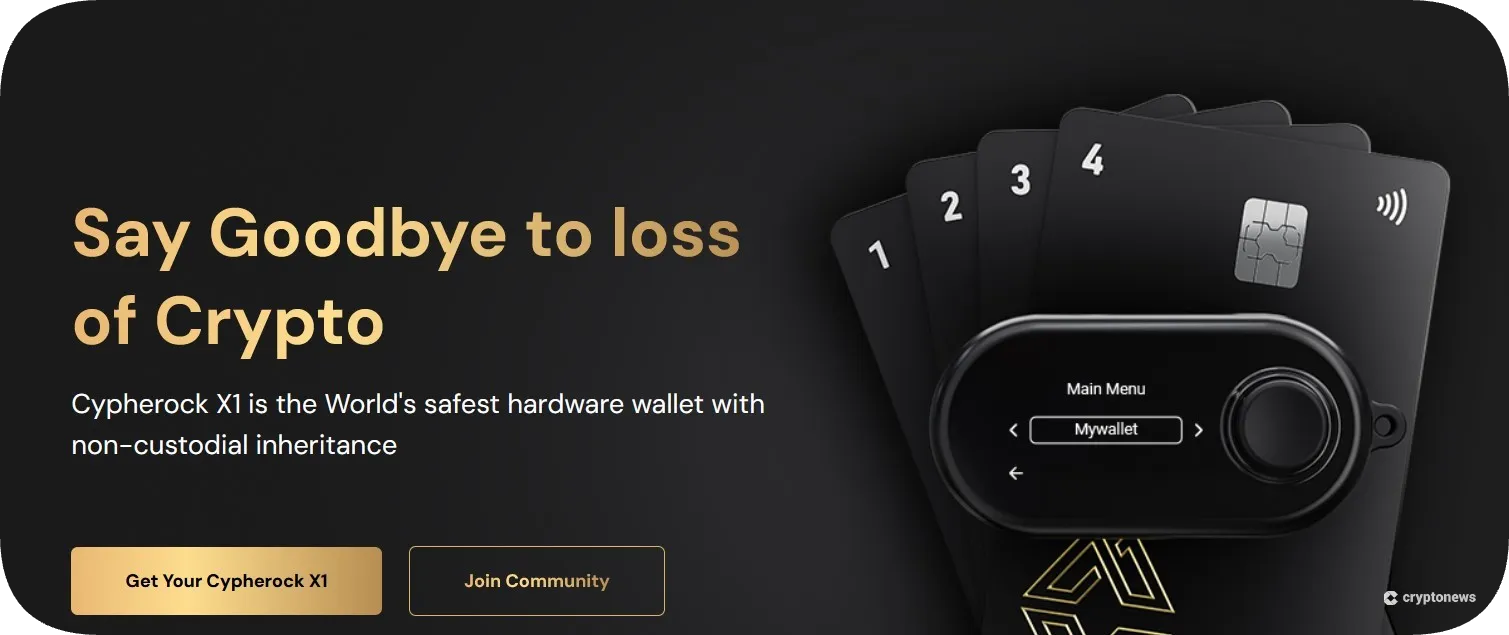
Moreover, you can stamp the cards with your own NFTs to make them more personal, which makes this wallet suitable for businesses. You can use the wallet to buy NFTs from popular marketplaces like OpenSea via its companion app, cySync, which is compatible with Windows, Mac, Linux, Android, and iOS devices.
On the downside, Cypherock X1 doesn’t have a built-in NFT gallery or a spam filter. Plus, it lacks NFT storage for ERC‑721 and ERC‑1155 tokens.
Cypherock X1 Key Takeaways
- Decentralized security – The wallet uses Shamir Secret Sharing to split your seed phrase into five parts that will be stored on the X1 cards. This will protect your NFTs from hacks, fraud, and theft.
- WalletConnect integration – You can gain access to popular NFT marketplaces via WalletConnect and manage your portfolio using its companion app, cySync.
- Personalization – You can personalize your X1 Cards with NFTs.
Pros
- Supports Ethereum and EVM-compatible NFTs
- Uses Shamir’s Secret Sharing technology
- No seed phrase backup required
- Supports every BIP39-compatible wallet
- Built-in inheritance feature
Cons
- Doesn’t support native storage for ERC-721 and ERC-1155 NFTs
6. Tangem – Best NFT Wallet for Diversification
Tangem is a non-custodial cold wallet that supports NFTs on 10+ networks, including Arbitrum, Avalanche, Base, Solana, and Ethereum, as well as NFTs built on ERC-721 and ERC-1155 token standards. This makes it ideal for investors who wish to diversify their portfolios. It also offers wallets tailored for specific NFT collections. For example, a Fungify NFT Index wallet is designed to hold private keys for accessing your NFT accounts.
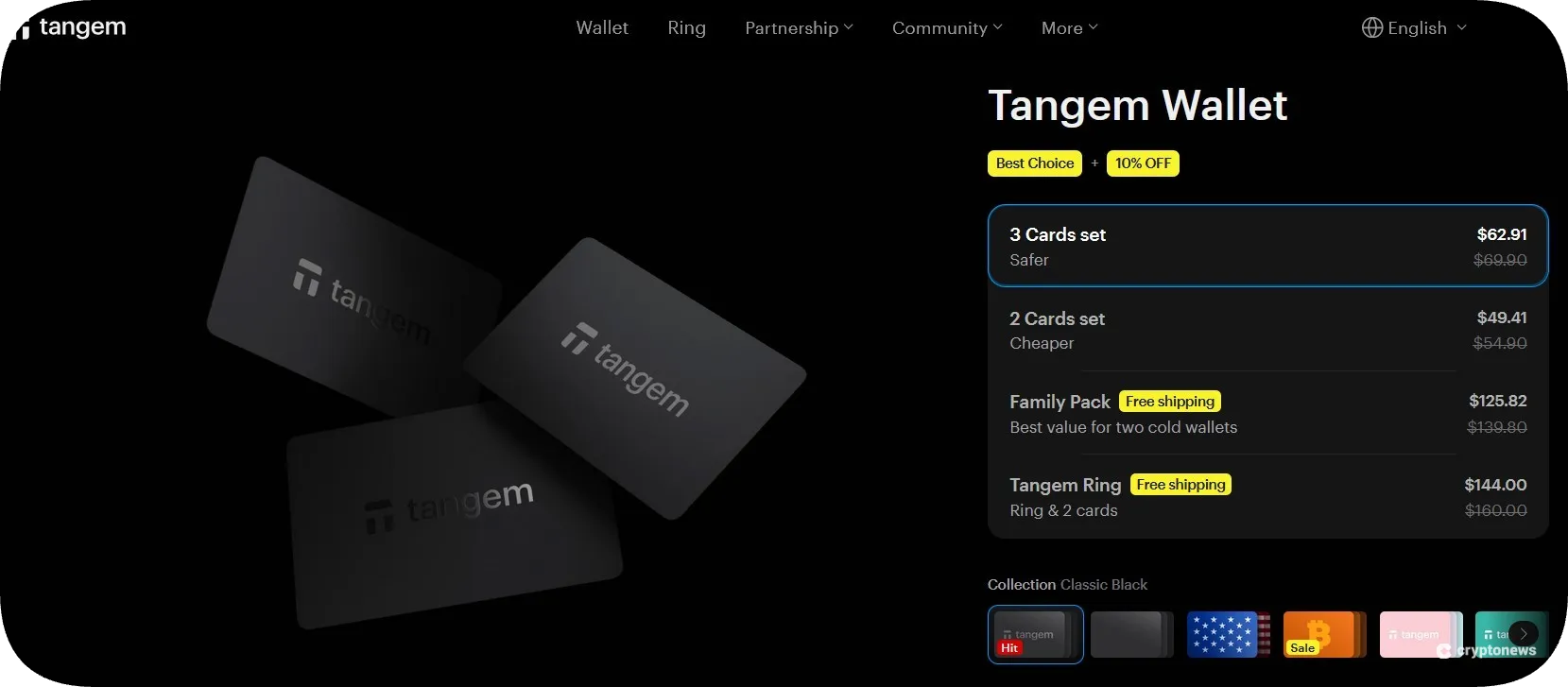
Tangem is a mobile wallet that uses NFC technology, so you’ll need a smartphone with full NFC support. The wallet is audited by Kudelski Security and Riscure, and it comes with a 25-year warranty, which is rare for hardware wallets that usually come with a 1-2 year warranty.
At the time of writing, Tangem doesn’t support sending frozen NFTs, cNFT, and pNFT standards on the Solana network. However, according to Tangem, these features will be added in upcoming updates.
Tangem Key Takeaways
- NFTs on multiple blockchains – Tangem supports NFTs on Arbitrum, Avalanche, Base, BSC, Chiliz, Cronos, Ethereum, Fantom, Moonbeam, Moonriver, Optimism, Polygon, and Solana.
- Tailored for specific NFT collections – Tangem offers wallets tailored for specific NFT collections.|
- Smart private key backup – Your private key will be generated offline and stored on the card. This eliminates the need to use a seed phrase.
Pros
- Supports NFTs on multiple blockchains
- Offers wallets tailored for specific NFT collections
- Compatible with Android and iOS devices
- Comes with a 25-year warranty
Cons
- Lack of a built-in feature for trading, buying, and selling NFTs
- Doesn’t support sending frozen NFTs, cNFT, and pNFT standards on the Solana network (these features will be added in upcoming updates)
7. Binance Wallet – Best NFT Wallet for Binance Users
Binance Wallet is a self-custody hot wallet integrated within the Binance exchange app. This means that you won’t have to use a separate app to view, send, and hold NFTs. The wallet uses MPC technology to divide the private keys into key shares, which are stored in different locations. The wallet supports NFTs on Ethereum, BNB Chain, Polygon, Solana, and Avalanche. It also supports ERC-404 tokens, which blend ERC-20 and ERC-721 token standards to enable fractional ownership of NFTs.
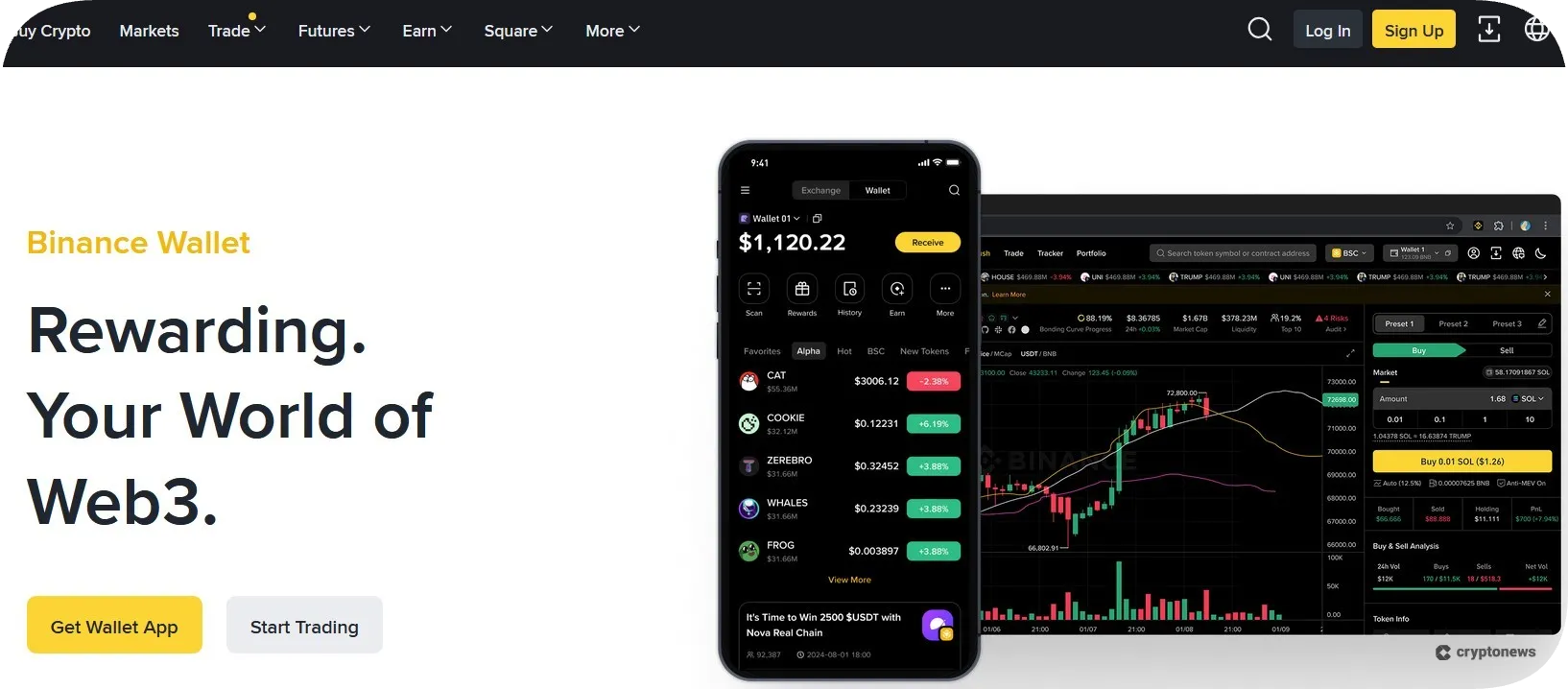
The wallet has a built-in dApp browser, which gives you access to NFT marketplaces without using WalletConnect. Plus, you’ll have access to the Binance NFT marketplace, where you’ll get to create and trade NFTs. What’s more, you’ll be able to manage, buy, or sell NFTs directly from the wallet.
On the downside, only Binance exchange users can use this wallet, and there’s no desktop app, although the provider recently released a browser extension.
Binance Wallet Key Takeaways
- Built-in dApp browser – Gives you access to NFT marketplaces directly from the wallet.
- Support for ERC‑404 tokens – The wallet supports ERC-404 tokens to enable fractionalized NFT collections.
- Integration with the Binance NFT marketplace – a native marketplace where you can create and trade NFTs.
Pros
- Supports NFTs on Ethereum, BNB Chain, Polygon, Solana, and Avalanche
- Fully integrated within the Binance app
- Powered by MPC technology
- Enables fractional ownership of NFTs
Cons
- Only available to Binance users
- Not the most beginner-friendly option
8. OKX Wallet – Best Crypto Wallet for NFT Creators
OKX Wallet is a non-custodial hot wallet that supports 10 million tokens across 130+ networks, while its NFT marketplace works with multiple blockchains, such as Ethereum, Solana, OKTC, Polygon, and Binance Smart Chain. You can buy, sell, and list NFTs on the OKX NFT marketplace for free and participate in NFT drops. The marketplace also supports compressed NFTs (cNFTs) on Solana.
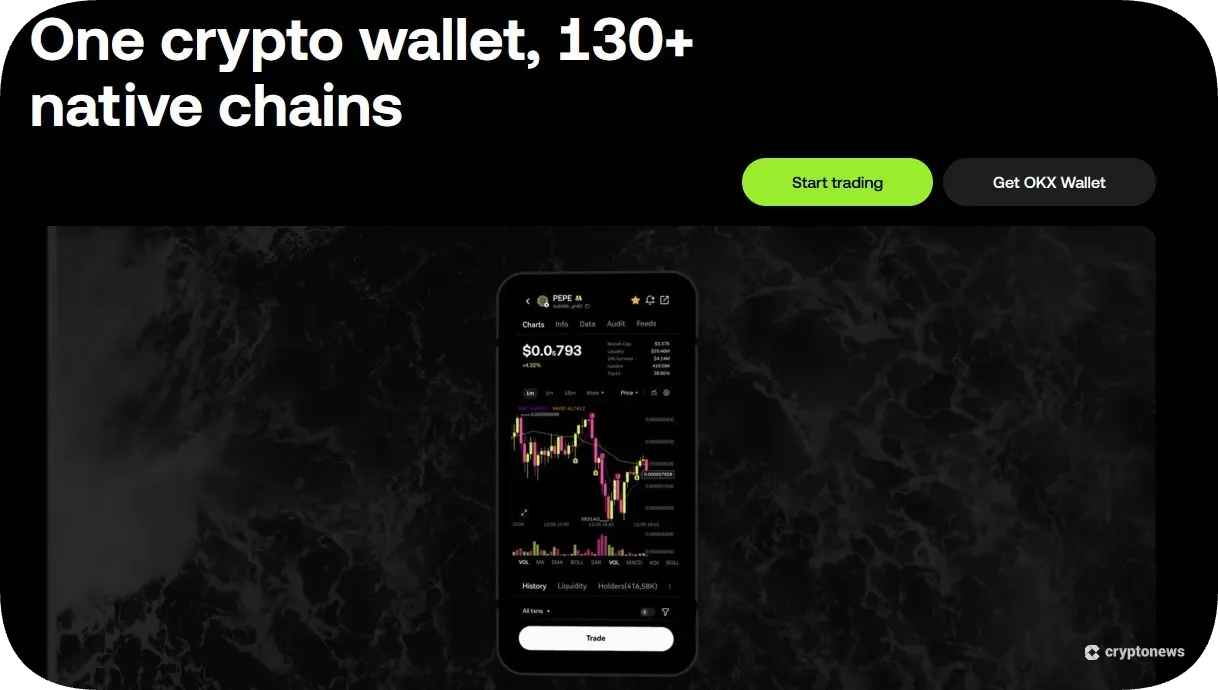
What makes this wallet ideal for NFT creators is its NFT Studio, which will allow you to create your own NFTs on OKC, Ethereum, BSC, or Polygon. You can upload images, videos, or audio files (up to 100 mb each) or use its AI-powered tool to create and mint NFTs without coding. The wallet is compatible with Android and iOS devices, and it comes as a browser extension for Chrome, Brave, Edge, and Safari.
Since OKX Wallet offers a large number of features, beginners may find it overwhelming. Moreover, we noticed that there is no dedicated NFT spam filter, which is a bit disappointing.
OKX Wallet Key Takeaways
- Integrated NFT marketplace – The OKX NFT marketplace works with Ethereum, Solana, OKTC, Polygon, BNB Chain, Avalanche C, Immutable X, Aptos, Arbitrum One, Optimism, Klaytn, Arbitrum Nova, and zkSync Era.
- AI-powered tool for minting NFTs – Use AI tools to create and mint NFTs without coding.
- NFT drops – A platform that will enable you to discover top-tier NFT collectible offerings.
Pros
- Create NFTs by uploading images, videos, or audio files (up to 100 mb each)
- Features an AI-powered tool for minting NFTs
- Supports Compressed NFTs (cNFTs) on Solana
Cons
- No dedicated NFT spam filter
- You can create NFTs only on OKC, Ethereum, BSC, and Polygon
9. SecuX Nifty – Best NFT Crypto Wallet For Cold Storage
SecuX Nifty holds the title of the world’s first NFT hardware wallet. This non-custodial wallet supports NFTs on Ethereum, Polygon, Binance Smart Chain (BSC), and Solana. You can use it to receive, send, share, view, and manage your NFTs. The wallet also has an integrated NFT gallery where you can store your NFT collections. In addition to that, you can use its companion app for access to popular NFT marketplaces while keeping your private key offline.
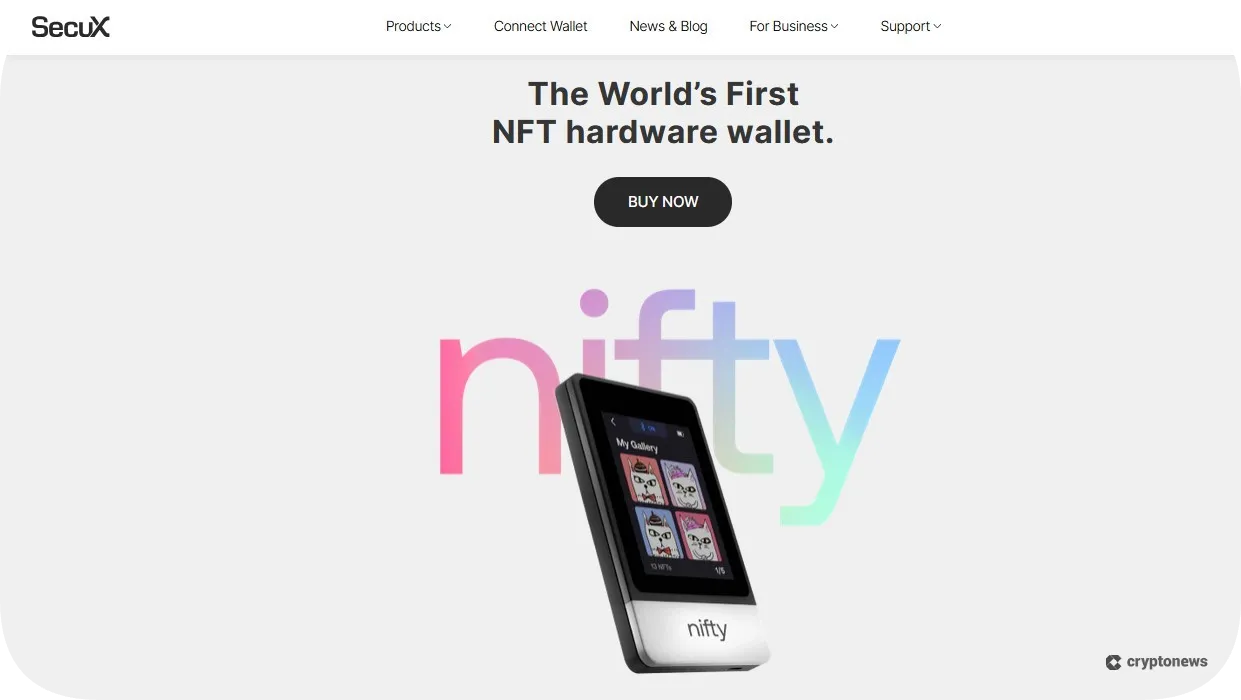
The wallet uses a CC EAL5+ Secure Element chip to protect your private key and clear-view signing to prevent blind signing. SecuX Nifty is compatible with Android and iOS devices, with a desktop version coming soon. Unlike other SecuX models that support up to 500 accounts per chain, Nifty comes with a limited account capacity (single account per chain), which is a bit of a letdown.
On a positive note, the wallet only displays NFTs that are owned by the private key stored within the device. This ensures that only NFTs that you own will be visible on the screen.
SecuX Nifty Key Takeaways
- Personalized NFT gallery – The integrated NFT gallery will allow you to store NFT collections and customize the viewing options.
- True ownership display – The wallet only displays NFTs that you own, minimizing scam opportunities.
- Clear-view transaction signing – You can check transaction details before signing.
Pros
- Supports NFTs on Ethereum, Polygon, Binance Smart Chain (BSC), and Solana
- Visual verification
- Offline key storage
Cons
- Limited account capacity (single account per chain)
- Lacks biometric authentication
10. Phantom Wallet – Best Wallet for Selling NFTs
Phantom Wallet is a hot wallet that supports Solana, Ethereum, and Polygon NFTs as well as compressed NFTs (cNFTs) on the Solana blockchain. This non-custodial wallet stands out with its Instant Sell feature, which lets you sell NFTs at the best possible price by aggregating bids from popular NFT marketplaces like Blur, OpenSea, LooksRare, Magic Eden, and Tensor. Moreover, you’ll get paid right away without having to wait for your offer to be accepted. You can also burn unwanted Solana NFTs in exchange for a small deposit of SOL.
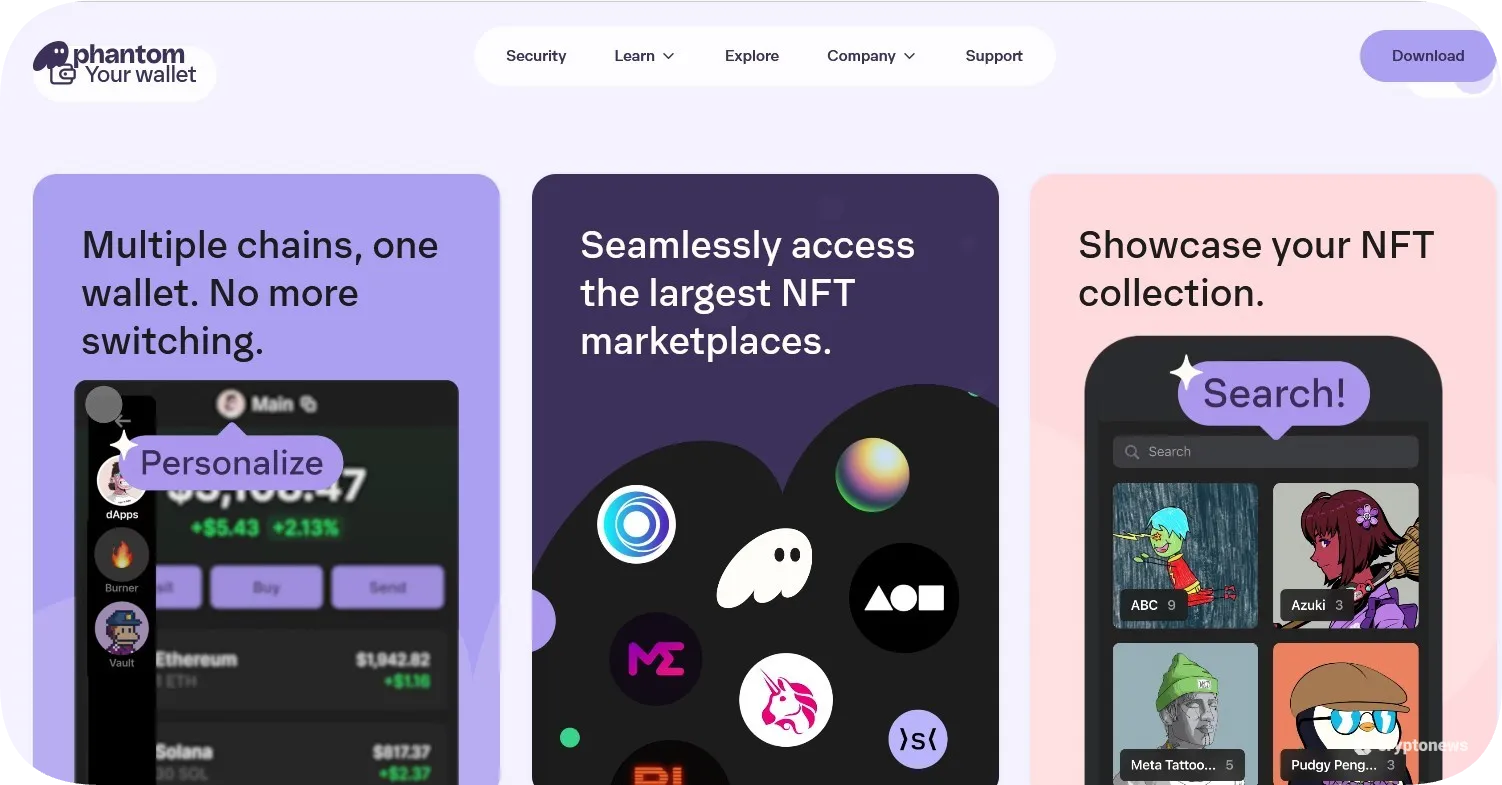
Phantom Wallet has an integrated NFT gallery, which you can use to manage NFTs. Plus, you can personalize your account by setting your NFTs as avatars. This software wallet can be integrated with Ledger hardware wallets, which increases its security. Another feature that makes this wallet stand out is Shortcuts, which gives you quick access to links associated with your NFTs, such as their social media channels and staking platforms.
On the downside, you won’t be able to burn ETH, Polygon, and Magic Eden verified NFTs. What’s more, Phantom Wallet doesn’t have a live chat option.
Phantom Wallet Key Takeaways
- Instant Sell – Aggregates bids from popular NFT marketplaces to enable you to sell NFTs at the best possible price.
- Burn unwanted Solana NFTs – Burn unwanted Solana NFTs in exchange for a small deposit of SOL.
- Shortcuts – Get important links associated with your NFTs, such as links to their social media channels and staking platforms.
Pros
- Supports compressed NFTs on the Solana blockchain
- Built-in NFT gallery
- Can be integrated with Ledger hardware wallets
Cons
- You won’t be able to burn ETH/Polygon NFTs and Magic Eden verified NFTs
- No live chat option
- Doesn’t support 2FA
What is an NFT Wallet?
NFT wallets allow you to store, manage, buy, and sell non-fungible tokens (NFTs) in different forms, from images and GIFs to videos and audio. Keep in mind that they don’t store the actual media, but their credentials, such as smart contract addresses and token IDs. Most NFT wallets support NFTs built on ERC-721 and ERC-1155 token standards. However, they may also support ERC-404 tokens and compressed NFTs.
Unlike traditional crypto wallets, NFT wallets usually come with an integrated gallery that lets you view and manage your NFT collections. They may also come with tools tailored for NFT management, such as NFT spam filters and minting services. You’ll also get to connect NFT wallets to dApps and NFT marketplaces via WalletConnect or built-in dApp browsers, so you can buy and sell NFTs directly from the wallet.
What Types of NFT Wallets Are There?
NFT wallets can be software (hot) and hardware (cold):
- The best hot wallets, like Coinbase Wallet, MetaMask, and Zengo, are free to use. They come in the form of mobile and desktop apps and browser extensions. You only need to download them, and that’s it. Hot wallets are connected to the internet, which means they store your private key online, making them more vulnerable to hacks. However, they are more beginner-friendly than cold wallets.
- Cold wallets, like Cypherock X1, Ledger, and Tangem, are physical devices that store your private keys offline, which makes them safer than hot wallets. They also come with companion apps compatible with Android and iOS devices. Hardware wallets are less convenient since you’ll have to connect them to hot wallets to make transactions. They can also be quite expensive. For example, Ledger Stax costs $399.
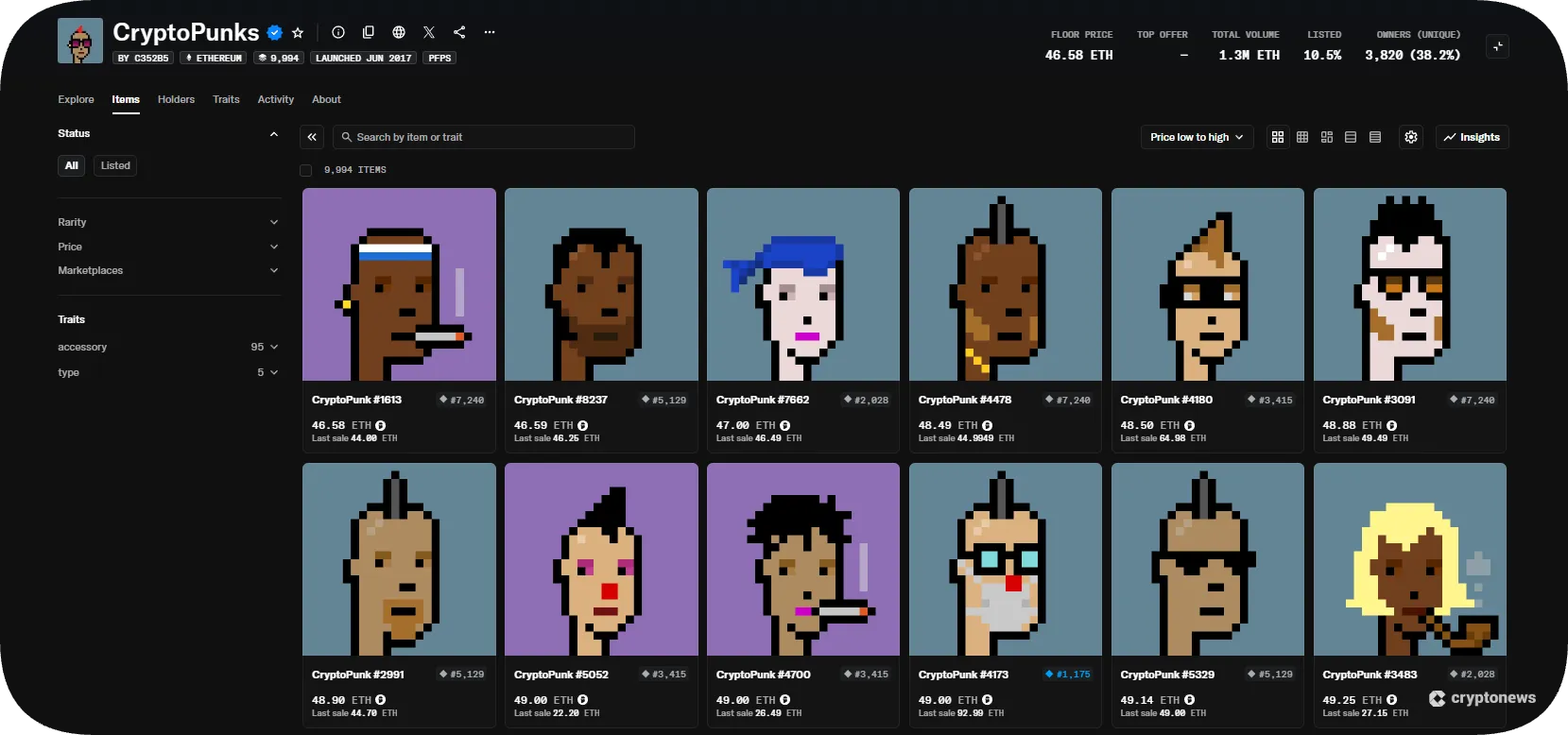
NFT wallets can also be custodial and non-custodial. The main difference between custodial and non-custodial wallets is how they handle your private keys. If you use custodial wallets, a third-party (usually a crypto exchange) will hold your private key, while with non-custodial wallets, you’ll have full control over your private key.
- Custodial wallets are more convenient for beginners because they reduce the risk of permanent loss. If you forget your password, you can easily reset it. On a negative note, to use them, you’ll have to go through the KYC process, which means you’ll have to share your personal information.
- Non-custodial wallets ensure that only you have access to your private key. However, if you lose it, you’ll also lose access to your funds. These wallets offer greater anonymity because they don’t require KYC verification. They also provide full access to DeFi, NFTs, and dApps, which makes them more suitable for experienced traders.
Why Use a NFT Wallet?
The best NFT wallets will enable you to manage NFTs across multiple blockchains, connect to popular NFT marketplaces, like Opensea, Magic Eden, and Rarible, and showcase your digital collections. Moreover, you’ll be able to check who created a specific NFT, which will help you verify its authenticity. Creators also benefit by using NFT wallets because they allow them to tokenize and sell their art and earn royalties.
For example, in December 2021, an NFT called the Merge was sold for $91.8 million on the Nifty Gateway NFT marketplace, which made it the most valuable NFT in the world.
NFTs are used in the gaming industry, where they represent in-game assets, which means that you’ll be able to sell them for real-world value. You can also use NFT wallets to create unique artwork and give it as a gift. The most popular platforms for gifting NFTs include OpenSea, Rarible, SolSea, and Foundation.
How to Set Up and Use an NFT Wallet
In this segment, we’ll show you how to set up and use an NFT wallet in a few easy steps. We’ll use our number one pick, Coinbase Wallet, as an example.
Step 1: Download the Coinbase Wallet App
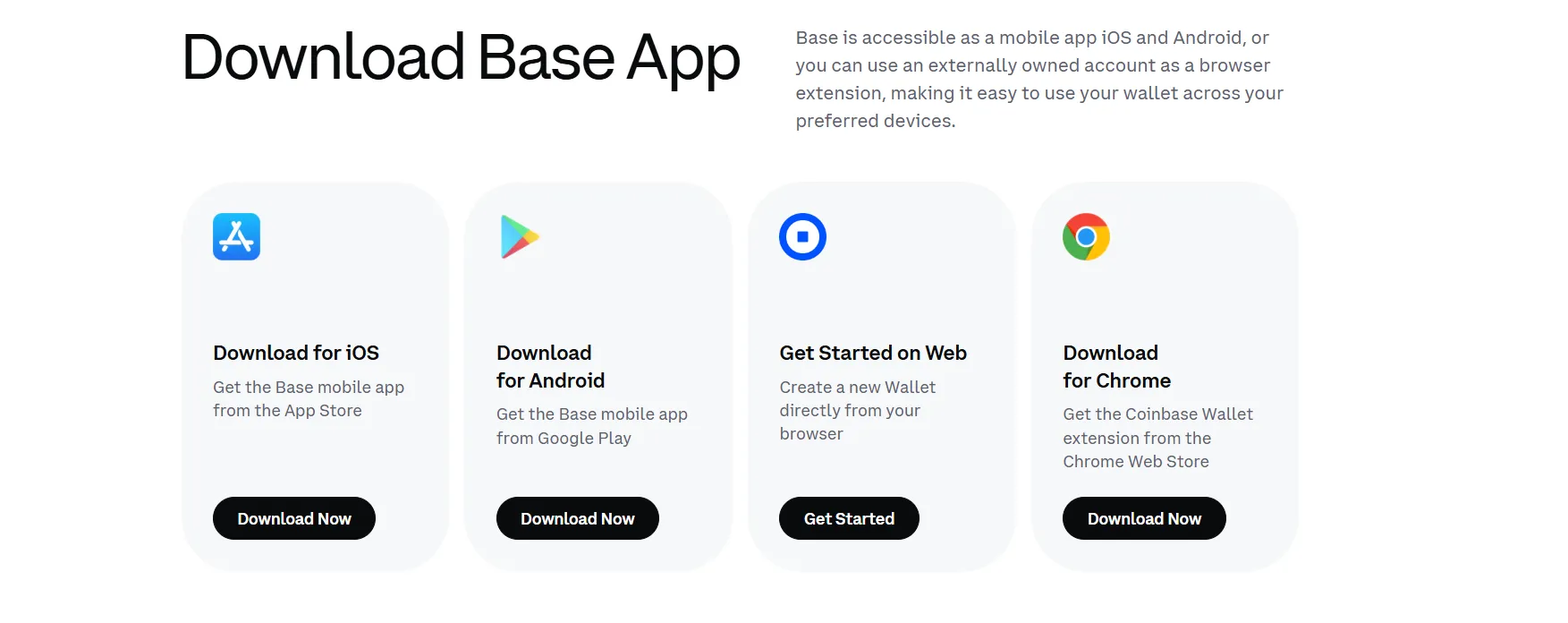
Go to the official Coinbase Wallet website and tap the Download button. You can choose whether to get its iOS/Android app or browser extension.
Step 2: Create and Back Up Your Wallet
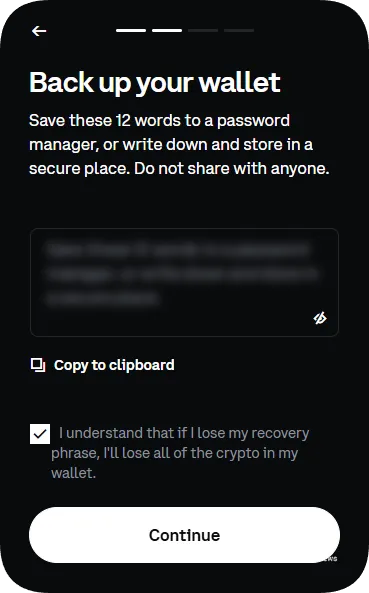
Open the app on your mobile device or browser and create a new wallet. You’ll receive a 12-word seed phrase that you should write down, store somewhere safe, and never share with anyone. Coinbase Wallet will also ask you to create a strong password for your account.
Step 3: Fund Your Wallet
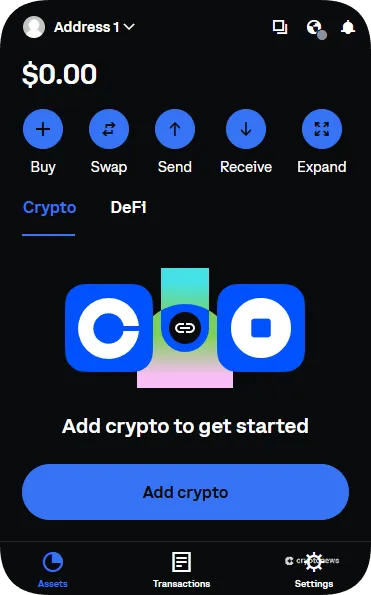
If you want to buy NFTs, you’ll need to fund your wallet. Coinbase Wallet lets you do so with both crypto and fiat. You can also connect the app to the Coinbase exchange for maximum convenience.
Step 4: Use the Wallet
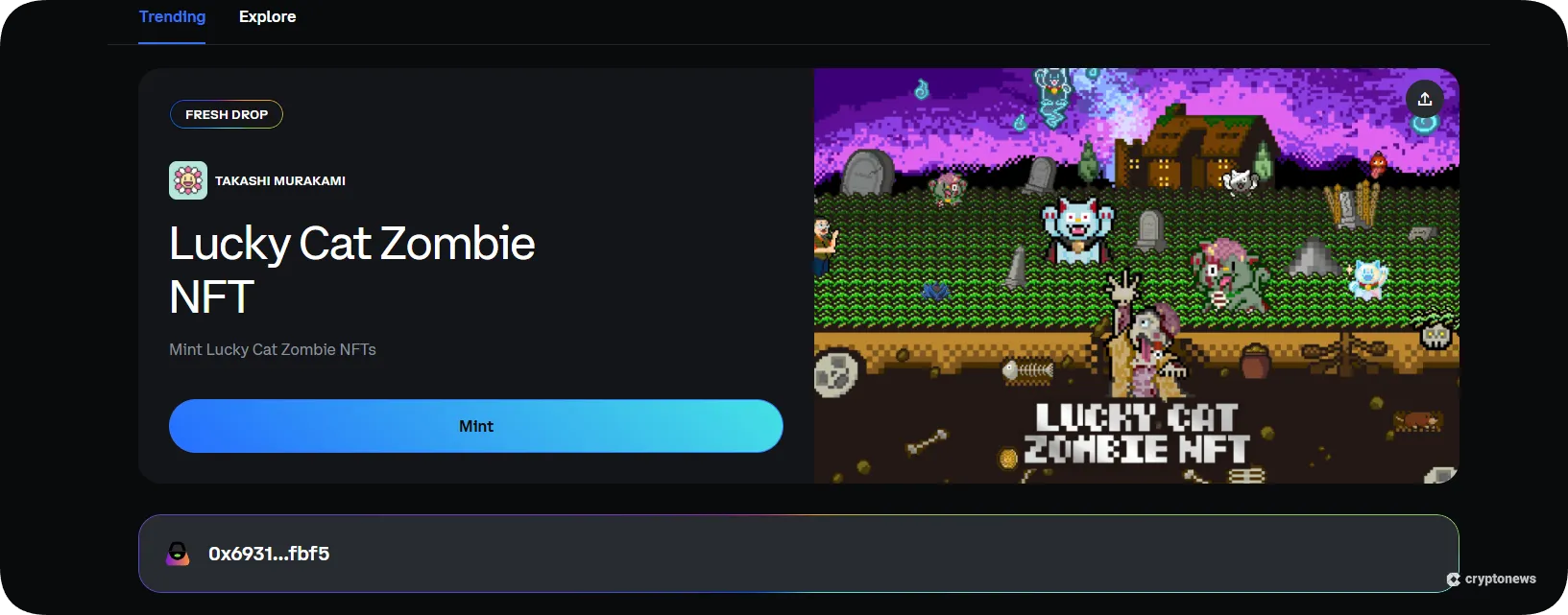
Your wallet is all set up now. You can use it to browse NFT marketplaces, buy, transfer, store, sell, and even mint NFTs.
How to Keep Your NFT Wallet Safe
The world of NFTs is prone to hacks and scams, which is why it’s essential to keep your wallet’s private key safe. The most common threats include malicious NFT contract scams and fake dApps and websites.
Scammers often use fake websites and minting contracts to impersonate real projects. They may even create fake versions of popular NFTs to trick users into buying them, even though they are worthless copies. To protect yourself from these types of scams, verify the contract address of the NFT you want to buy. To do that, go to the details section, find the linked contract address, and open it on a blockchain explorer, such as Etherscan.
You should also avoid interacting with suspicious dApps and unknown airdropped NFTs. That’s because scammers may launch fake NFT airdrops to collect your personal information. For example, in 2023, scammers managed to steal $1.25 million by launching 1,354 fraudulent NFTs on the Polygon network, mimicking legitimate airdrops from RocketPool, ApeCoin, Polygon, Uniswap, and Aave.
Some of the safest crypto wallets utilize advanced security measures to keep your NFTs safe. For example, Phantom Wallet will enable you to burn unwanted Solana NFTs in exchange for a small deposit of SOL. Zengo features an integrated NFT spam filter that removes spam NFTs from your gallery, while Coinbase Wallet uses an ERC-20 scam token detection system.
Methodology: How We Ranked The Best NFT Wallets
We ranked the aforementioned wallets based on the following methodology:
NFT Features (30%)
Our list contains wallets that support minting, managing, storing, buying, and selling NFTs. We also included wallets that will enable you to connect to popular NFT marketplaces, like OpenSea, Blur, and Magic Eden, as well as those that support NFTs built on ERC-721 and ERC-1155 token standards.
In addition to that, we listed wallets that support ERC-404 tokens and compressed NFTs on Solana, to help you buy NFTs at a much lower price.
Multi-Chain Support (20%)
Another important factor we took into account when ranking NFT wallets was their compatibility with multiple blockchains. On that note, we listed wallets that support NFTs on Ethereum, Polygon, Solana, and other popular blockchains to help you build a diversified portfolio. Multi-chain wallets will also give you greater flexibility. I.e., you’ll get to choose a network with lower gas fees.
Device Compatibility (15%)
The best NFT wallets must be compatible with multiple devices, so you can trade NFTs from the comfort of your home or on the go. This is why our list contains hot and cold wallets that come with companion apps that are available as mobile and desktop apps and as browser extensions.
For example, Zengo is primarily a mobile wallet that’s compatible with Android and iOS devices. However, this wallet recently got a desktop app as well. On the other hand, Metamask will offer you to use your wallet on multiple browsers – Chrome, Firefox, Brave, Opera, and Edge.
Security (20%)
NFT wallets must utilize strict security measures since you’ll be connecting them to dApps and NFT marketplaces that are vulnerable to scams and fraud. This is why we gave an advantage to hot and cold wallets that use advanced security features, such as spam token management tools and NFT spam filters, as well as those that are audited by reputable firms, like Kudelski Security and Riscure.
Ease of Use (15%)
The best NFT crypto wallet must have an intuitive interface that makes finding and managing NFTs easy. On that note, the wallets on our list have integrated NFT galleries, built-in dApp browsers, and well-designed companion apps that will allow you to manage your NFT collections directly from the wallet.
For example, SecuX Nifty has a built-in NFT gallery that will enable you to customize the viewing options, while Phantom Wallet will enable you to burn unwanted Solana NFTs from your gallery.
Conclusion – What is the Best NFT Wallet in 2026?
Finding the best NFT wallets shouldn’t be a complicated task if you know what to look for. First, opt for wallets that support minting, managing, storing, buying, and selling NFTs. Secondly, give an advantage to wallets that support NFTs on multiple blockchains and that are compatible with mobile devices, desktop computers, and browser extensions. And finally, choose wallets that use advanced security measures and that are easy to operate.
That said, based on our research, Coinbase Wallet checks all the boxes with its intuitive interface and strong security measures. You can use it to store NFTs from major blockchains and connect to popular NFT marketplaces like OpenSea and Blur. The wallet also features a dedicated NFT gallery, plus it’s compatible with both mobile devices and browsers.
Visit Coinbase WalletFAQs
Can I view and manage my NFTs on multiple devices?
Is the Coinbase NFT Wallet safe?
How do I cash out my NFTs?
What is the best blockchain for NFTs?
References
- What is MPC (Multi-Party Computation)? (Fireblocks)
- What is ERC-721? (Coinbase)
- Shamir Secret Sharing in Hardware Wallets: How Does it Work? (Cypherock)
- What is ERC-1155? (Coinbase)
- What is NFC? Your Ultimate Guide to How it Works and What it Does (Taoglas)
- What Is ERC-404? (Binance Academy)
- What is Fractional NFTs (Tangem)
- What are compressed NFTs? (Alchemy)
- Top 10 Most Expensive NFTs Ever Sold (2025 Edition) (Brand Vision)
- Over $1.2 Million Stolen in NFT Airdrop Scams on Polygon (Binance)
2M+
250+
8
70




 in numbers

About Cryptonews
Our goal is to offer a comprehensive and objective perspective on the cryptocurrency market, enabling our readers to make informed decisions in this ever-changing landscape.
Our editorial team of more than 70 crypto professionals works to maintain the highest standards of journalism and ethics. We follow strict editorial guidelines to ensure the integrity and credibility of our content.
Whether you’re looking for breaking news, expert opinions, or market insights, Cryptonews has been your go-to destination for everything cryptocurrency since 2017.
