

8 Best Tether (USDT) Wallets for 2026
We believe in full transparency with our readers. Some of our content includes affiliate links, and we may earn a commission through these partnerships. However, this potential compensation never influences our analysis, opinions, or reviews. Our editorial content is created independently of our marketing partnerships, and our ratings are based solely on our established evaluation criteria. Read More


We tested over 35 stablecoin wallets, both hot and cold, to find the best USDT wallet to let you store and trade with Tether without any hassle. We ranked our prospects based on their security and in-wallet trading features, ease of use and user experience, and their support for multiple Tether token standards.
According to our research, Best Wallet is the top USDT wallet in 2026, as it supports USDT on the ERC20, BEP20, and SPL protocols. Plus, it offers Tether Gold and Euro Tether and lets you swap USDT on several blockchains via its integrated DEX.
- In This Article
-
- 1. Best Wallet - Overall Best USDT Wallet
- 2. Cypherock X1 - Best USDT Wallet for Cold Storage
- 3. Zengo - Best USDT Wallet for Beginners
- 4. Ledger Stax - Best Tether Wallet for Users With Diversified Portfolios
- 5. Margex Wallet - Best Wallet for USDT Staking
- 6. TronLink Wallet - Best USDT Wallet for Trading TRC20 Tokens
- 7. MetaMask - Best USDT Wallet for Interactions With dApps
- 8. Phantom Wallet - Best USDT Wallet for Swapping
- In This Article
-
- 1. Best Wallet - Overall Best USDT Wallet
- 2. Cypherock X1 - Best USDT Wallet for Cold Storage
- 3. Zengo - Best USDT Wallet for Beginners
- 4. Ledger Stax - Best Tether Wallet for Users With Diversified Portfolios
- 5. Margex Wallet - Best Wallet for USDT Staking
- 6. TronLink Wallet - Best USDT Wallet for Trading TRC20 Tokens
- 7. MetaMask - Best USDT Wallet for Interactions With dApps
- 8. Phantom Wallet - Best USDT Wallet for Swapping
Show Full Guide
Best USDT Wallets Shortlisted

 Best For Seedless, Hardware-Based Storage
 Safe Wallet with Staking and dApps
 Best Hardware Wallet for Security
The Top Tether Wallets Compared
After hours of research, we identified the seven best hot and cold wallets for USDT holders. Here’s how they compare to each other.
| Wallet | Wallet Type | Supported Coins/Networks | USDT Token Standards | In-Wallet Trading | Best For |
| Best Wallet | Software / Non-custodial | 1,000+ / 60+ networks | ERC20, BEP20, SPL | Yes | Overall best USDT wallet |
| Cypherock X1 | Hardware / Non-custodial | 9,000+ / 15+ networks | ERC20, BEP20, TRC20, SPL | Yes | Cold storage |
| Zengo | Software / Non-custodial | 380+ / 6 networks | ERC20, BEP20, TRC20 | Yes | Beginners |
| Ledger Stax | Hardware / Non-custodial | 5,500+ / 15+ networks | ERC20, TRC20, BEP20, SPL | Yes | Portfolio Diversification |
| Margex Wallet | Software / Custodial | 85+ / 10 networks | ERC20, BEP20, TRC20, SPL | Yes | Staking USDT |
| TronLink Wallet | Software / Non-custodial | 10,000+ / 4 networks | TRC10, TRC20, TRC721, ERC20, BEP20 | Yes | TRC20 tokens |
| MetaMask | Software / Non-custodial | All ERC-20 tokens on all EVM-compatible networks | ERC20, BEP20 | Yes | dApp Interaction |
| Phantom Wallet | Software / Non-custodial | No limits / 7 networks | SPL, ERC-20 | Yes | Swapping |
The Best USDT Crypto Wallets in 2026: Full Reviews
Now that you’ve seen our list, let’s get into more detail. In this segment, we’ll review each wallet in detail to help you find the one that best suits your trading style.
1. Best Wallet – Overall Best USDT Wallet
Best Wallet is a non-custodial software wallet that supports USDT on ERC20, BEP20, and SPL token standards, which allows sending USDT from Ethereum to BNB Chain and Solana and vice versa. Moreover, you can swap USDT on Base, Ethereum, Polygon, and Binance Smart Chain via its integrated DEX, which aggregates prices of multiple liquidity pools in real time.
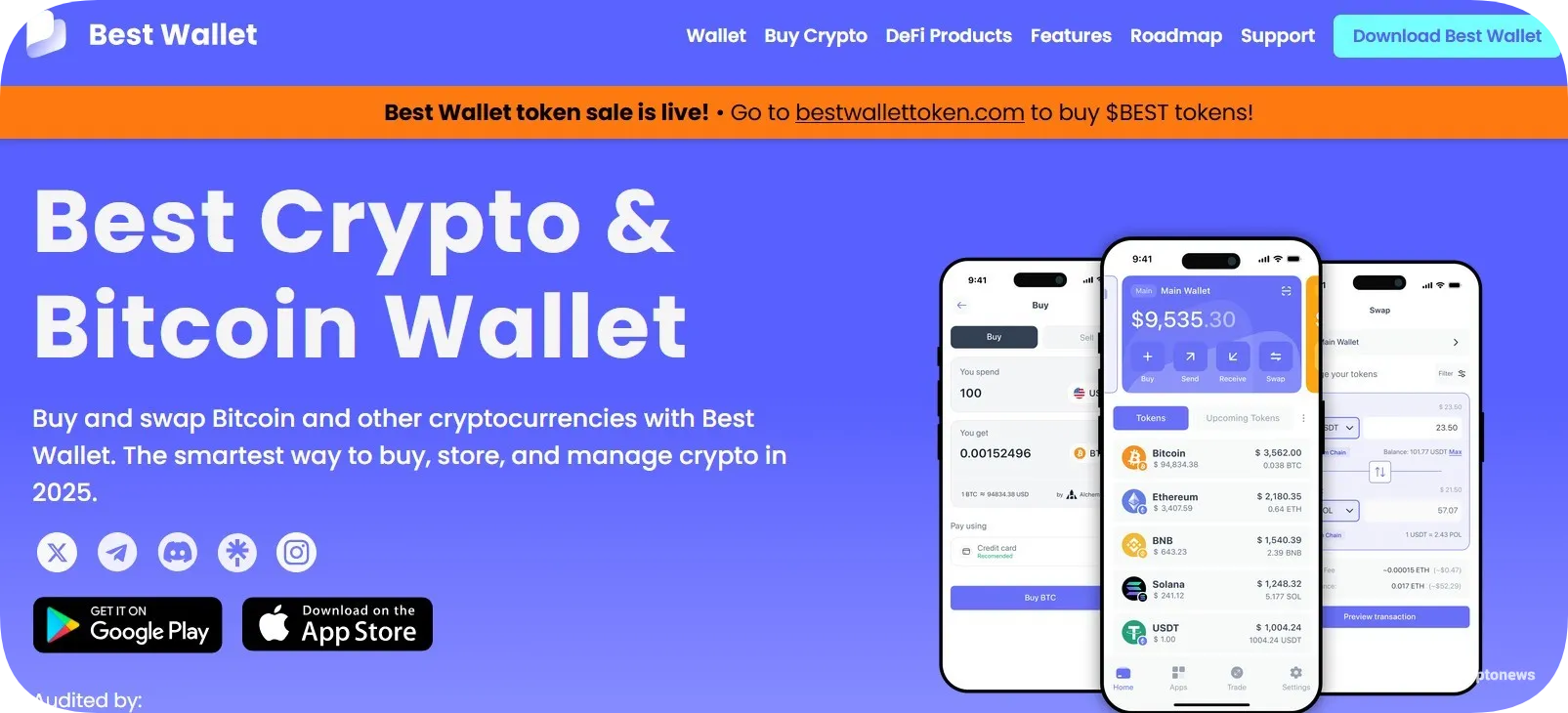
We also noticed that Best Wallet supports Tether Gold (XAUT) and Euro Tether (EURT), enabling you to expand your portfolio to commodity-backed and euro-backed assets. However, what makes Best Wallet shine is its upcoming tokens page. You can use USDT to buy popular presale tokens before they hit the major exchanges.
Best isn’t the only wallet that offers such options. For example, Binance Wallet will also give you access to new tokens (Binance Alpha). However, to participate in Binance Alpha events, you’ll have to accumulate points, while Best Wallet doesn’t set any conditions. On the downside, some of its features are still in development, such as derivatives trading and a staking aggregator.
Best Wallet Key Takeaways
- Cross-chain swaps: Swap USDT on Base, Ethereum, Polygon, and Binance Smart Chain directly from the wallet.
- Upcoming tokens page: Use USDT to invest in hot presale tokens.
- Integrated DEX: BEST DEX aggregates prices from multiple liquidity pools in real time to find the most competitive rates.
Pros
- Supports USDT on ERC20, BEP20, and SPL token standards
- Supports XAUT and EURT
- Presale dashboard
- Supports cross-chain trading
- No KYC requirement
Cons
- Some of its features are still in development
2. Cypherock X1 – Best USDT Wallet for Cold Storage
Cypherock X1 is one of the best cold storage crypto wallets. This non-custodial wallet uses Shamir’s Secret Sharing to eliminate the need for seed phrases by splitting the private key into five parts. To make a transaction, you just need to tap your X1 cards on the X1 Vault. You can also take advantage of the Cypherock Cover feature that lets you recover your tokens in case you lose your PIN or want to transfer your assets to your heirs.
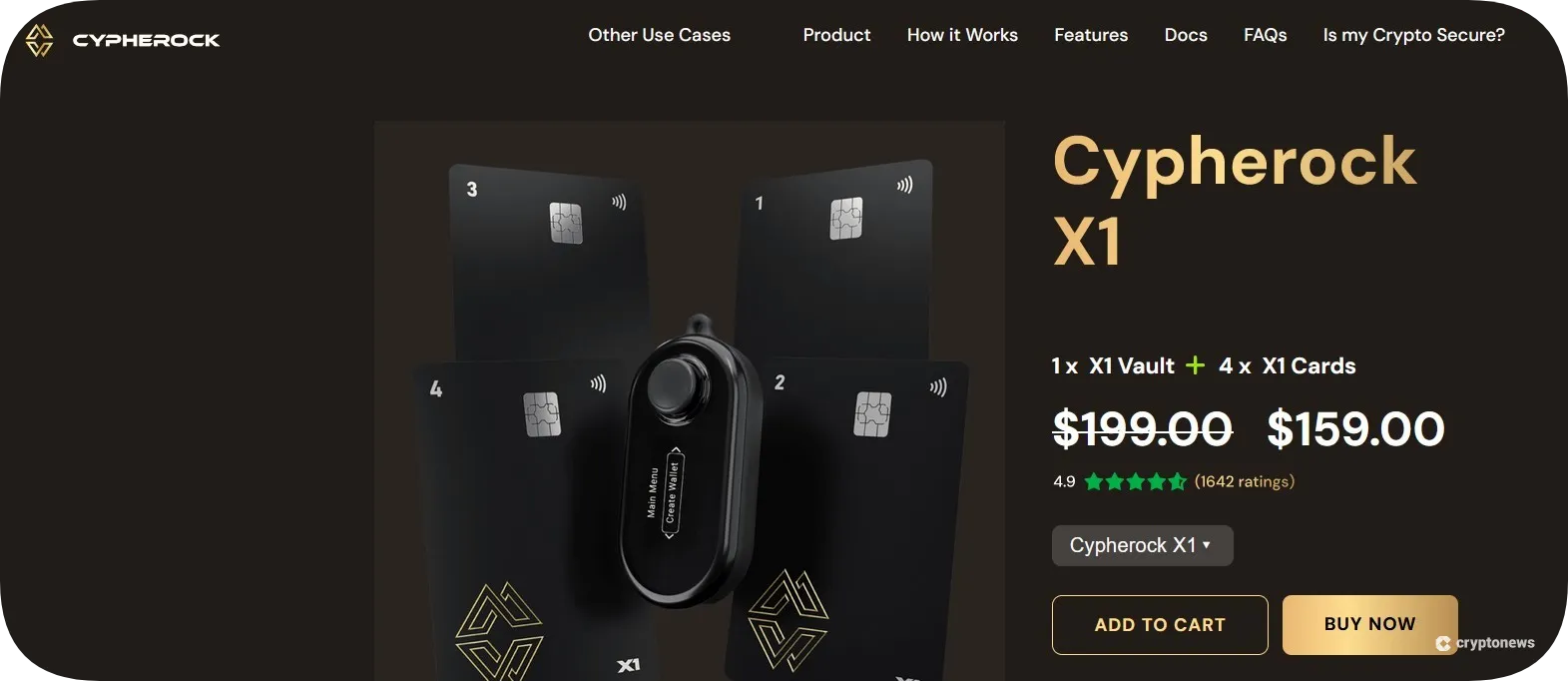
Cypherock X1 supports USDT on Tron, Ethereum, Avalanche, Solana, Arbitrum, and Polygon, as well as synthetic stablecoins backed by Tether, such as GFUSDT, AMUSDT, and FUSDT. The wallet has a native app called cySync, which lets you connect to 15+ dApps, swap USDT across 15+ blockchains, track your USDT holdings in real-time, and buy Tether with fiat.
In addition to that, Cypherock X1 is compatible with all BIP39 wallets. On the downside, the wallet cannot be directly integrated with crypto exchanges, which makes it unsuitable for frequent traders.
Cypherock X1 Key Takeaways
- Cypherock Cover: This feature lets you recover your tokens in case you lose your PIN.
- cySync app: Use the app to connect to 15+ dApps, swap USDT across 15+ blockchains, track your USDT holdings in real-time, and buy Tether with fiat.
- Compatibility with BIP39 wallets: Import seed phrases from your existing BIP39 wallets, such as MetaMask, Phantom, Ledger, and Trezor.
Pros
- Supports USDT on Tron, Ethereum, Avalanche, Solana, Arbitrum, and Polygon
- Supports synthetic stablecoins backed by Tether
- Eliminates the need to use seed phrases
- Audited by Keylabs
Cons
- Cannot be directly integrated with crypto exchanges
- Small display
3. Zengo – Best USDT Wallet for Beginners
Zengo is a non-custodial hot wallet that supports USDT on Tron, Polygon, Optimism, Ethereum, BNB Smart Chain, and Arbitrum. You can send and buy USDT on the ERC20, BEP20, and TRC20 token standards with a credit/debit card, Apple and Google Pay, bank transfers, or PayPal. You can also swap TRC20 tokens on multiple blockchains.
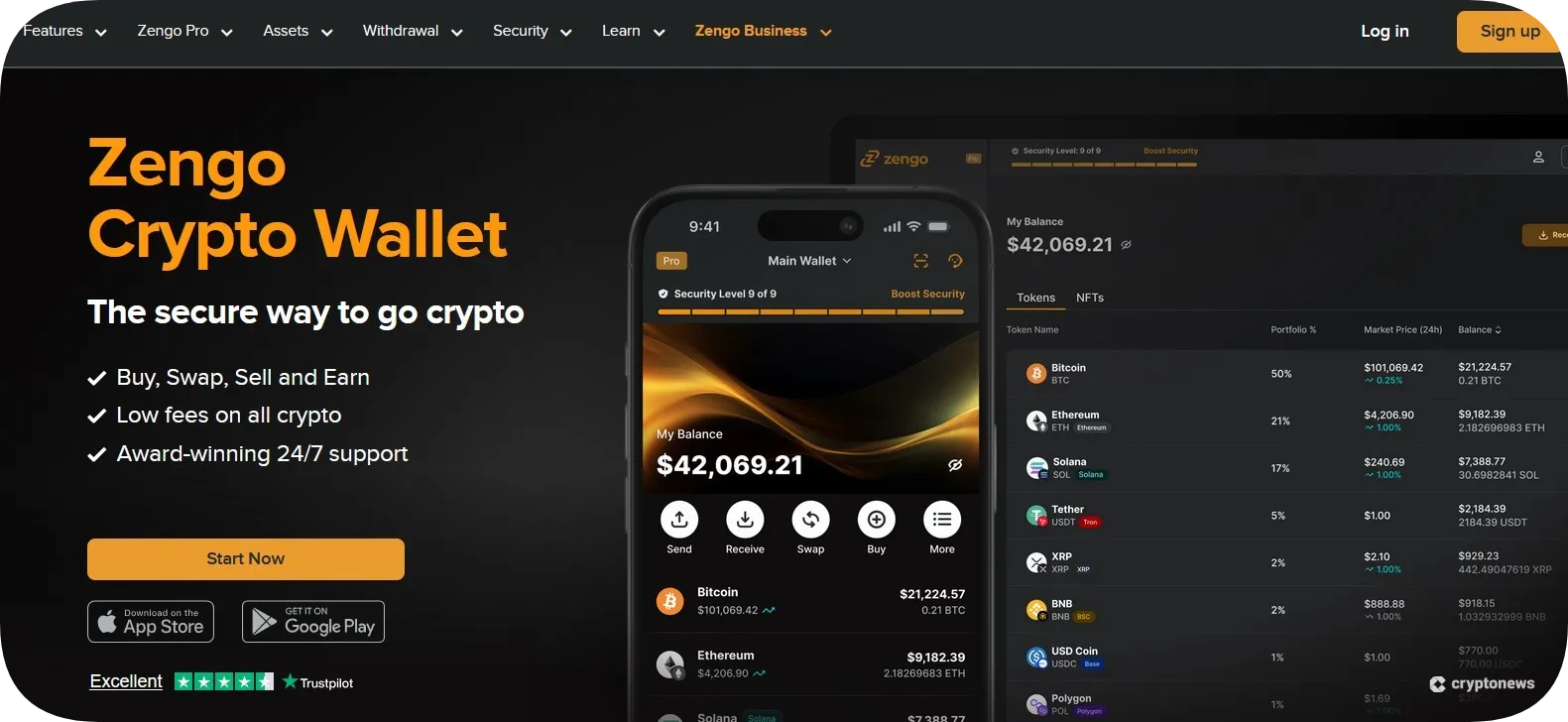
Zengo is ideal for beginners as it eliminates the need to use seed phrases. Instead, it utilizes Multi-Party Computation (MPC) technology to split the private key into two shares, stored on your device and Zengo’s servers. Moreover, Zengo utilizes advanced security measures, such as biometric and 3-factor authentication.
Thanks to its integrated portfolio tracker, you can monitor your USDT holdings directly from the wallet and get information on the latest market trends. When compared to other wallets, Zengo charges higher fees for buying USDT, which range between 1.5% and 3.75%, depending on the payment provider. You can get a 50% fee discount, but you must subscribe to Zengo Pro, which costs $129.99 per year.
Zengo Key Takeaways
- Direct USDT purchases: Buy USDT directly from the wallet using a credit/debit card, Apple and Google Pay, bank transfers, or PayPal.
- Swap USDT across multiple networks: Zengo supports USDT on multiple blockchains, including Tron, Polygon, Optimism, Ethereum, BNB Smart Chain, and Arbitrum.
- Keyless security: Zengo uses MPC technology to eliminate the need for seed phrases.
Pros
- Supports USDT on Tron, Polygon, Optimism, Ethereum, BNB Smart Chain, and Arbitrum
- Supports USDT on ERC20, BEP20, and TRC20 token standards
- Buy USDT directly from the wallet using various payment options
- Multi-Party Computation (MPC) technology
- Available as a mobile and desktop app
Cons
- High fees for buying USDT
4. Ledger Stax – Best Tether Wallet for Users With Diversified Portfolios
Ledger Stax is the latest model of Ledger wallets. It comes with a magnetic design, enabling you to stack multiple wallets on top of each other, and a 3.7″ curved E ink touchscreen. Ledger Stax supports 5,000+ tokens, including USDT on ERC20, TRC20, BEP20, and SPL token standards, making it an ideal option for portfolio diversification. Like Best Wallet, Ledger also supports Tether Gold (XAUT) and Euro Tether (EURT).
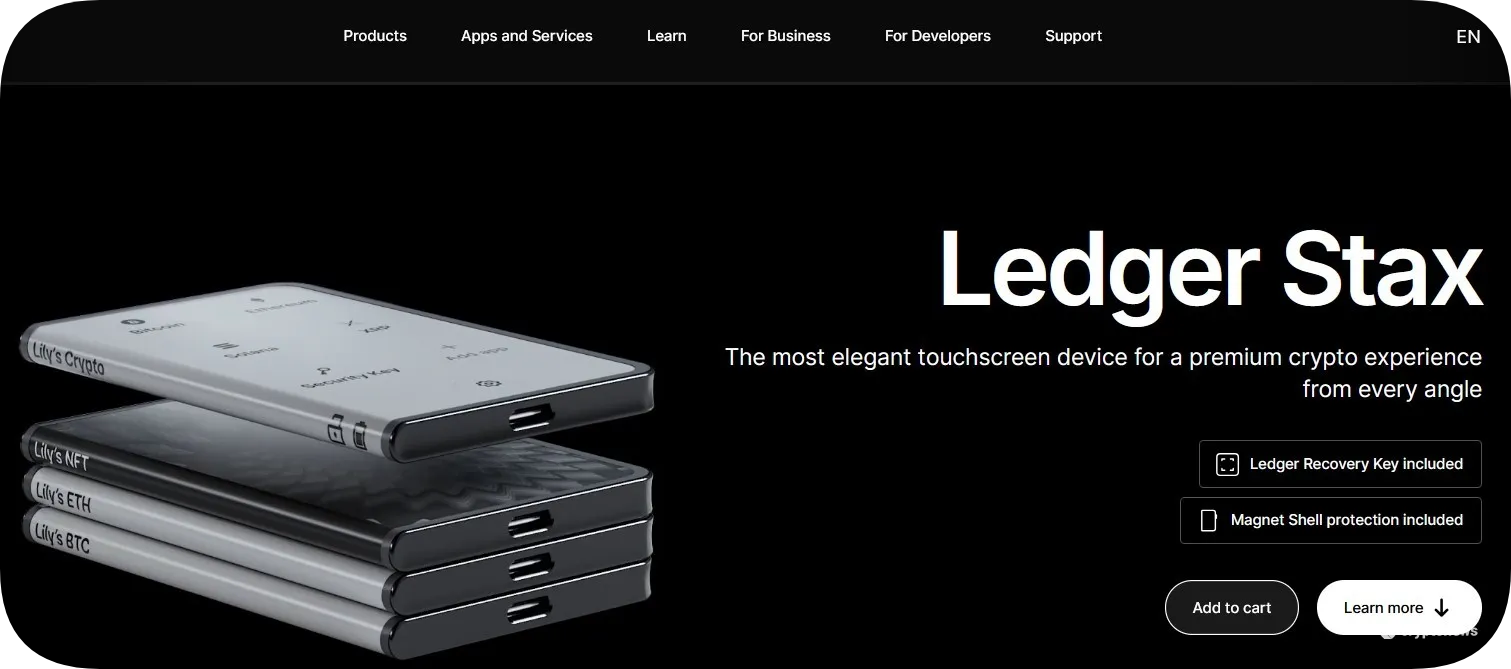
Ledger is partnered with Coinify, meaning you can buy USDT with a credit/debit card or a bank transfer, while its swap feature aggregates liquidity from providers like Uniswap, Changelly, and 1inch. The Ledger Live app is available on desktop and mobile devices. You can also install up to 100 apps and connect with 50+ third-party wallets, such as MetaMask, MyEtherWallet, and Talisman.
On the downside, Ledger Stax has a total capacity of 1.8MB, meaning you can install only 10 apps, which is rather limiting. The wallet is also a bit pricey at $399.
Ledger Stax Key Takeaways
- Ledger Live app: Use the app to swap, sell, and buy USDT with a credit/debit card or a bank transfer.
- 3.7″ curved E ink touchscreen: A large display reduces the risk of sending USDT to the wrong address.
- Compatibility with 50+ third-party wallets: Ledger Stax is compatible with 50+ third-party wallets, like MetaMask, MyEtherWallet, and Talisman.
Pros
- Supports USDT on ERC20, TRC20, BEP20, and SPL token standards
- Supports Tether Gold and Euro Tether
- Stackable design
- Large E ink display
Cons
- Limited app storage
- A bit pricey
5. Margex Wallet – Best Wallet for USDT Staking
Margex is recognized as one of the best crypto margin trading platforms as it supports a wide range of tokens as collateral, including USDT. You can also trade perpetual futures settled in Tether. Margex has an integrated custodial wallet that supports USDT on ERC20, BEP20, TRC20, and SPL token standards.
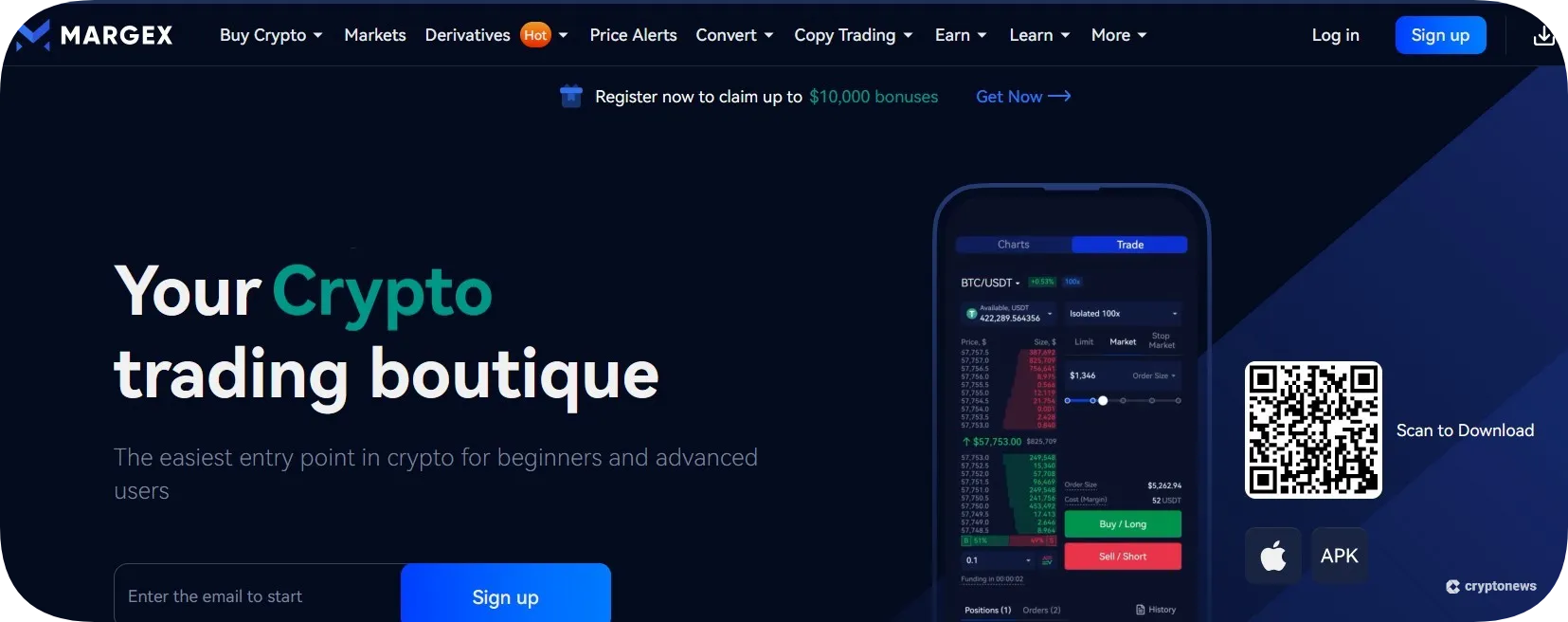
What makes this wallet stand out is its built-in staking feature. While most crypto wallets rely on external dApps for staking, Margex enables you to stake Tether directly from the wallet. The staking rewards offer up to 7% APY. Moreover, there is no lock-up period, and you can use your staked tokens as margin.
On the downside, this is a custodial wallet, meaning you won’t have full control over your assets, which may deter experienced users. Moreover, the wallet has comparatively high minimum withdrawal limits, which for USDT on ERC20 and TRC20 token standards stands at 26 USDT.
Margex Wallet Key Takeaways
- Built-in staking with no lock-up periods: Stake USDT directly from the wallet and earn up to 7% APY.
- Perps settled in USDT: Trade perpetual futures settled in Tether with up to 100x leverage.
- Live Demo: Practice your trading skills risk-free.
Pros
- Supports USDT on ERC20, BEP20, TRC20, and SPL token standards
- Staking USDT comes with up to 7% APY
- Perpetual futures are settled in Tether
- Use staked USDT tokens as margin
- Two mobile apps (for derivatives and copy trading)
Cons
- Custodial wallet
- High minimum withdrawal limits
6. TronLink Wallet – Best USDT Wallet for Trading TRC20 Tokens
TronLink Wallet is a non-custodial wallet that fully supports the TRON network and its staking mechanisms. This means you’ll pay lower transaction fees and execute faster transactions, which is especially beneficial for frequent USDT traders. The TRON blockchain also holds the largest circulating supply of USDT, making TronLink Wallet a suitable choice for USDT/TRC-20 trading.
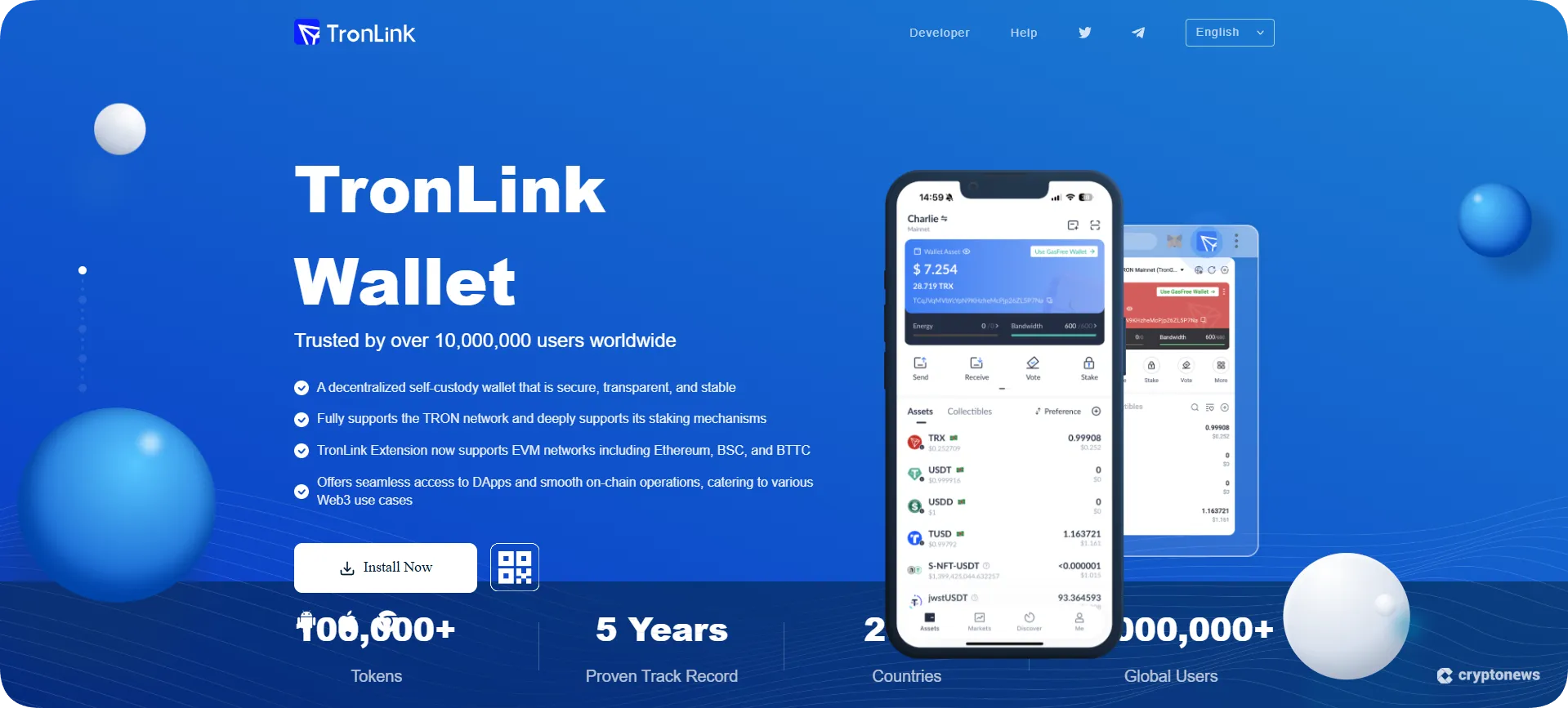
This software wallet supports all TRON token standards – TRX, TRC10, TRC20, and TRC721, while its browser extension supports EVM-compatible networks like Ethereum, Binance Smart Chain, and BitTorrent Chain. Thanks to its multichain HD wallet structure, you can use a single mnemonic phrase to manage assets across TRON, Ethereum, BSC, and BTTC networks. You can also use its integrated Web3 browser to connect to DEXs, staking platforms, and TRON DeFi apps.
On the downside, TronLink Wallet doesn’t have a built-in fiat on-ramp feature. This means you can’t buy USDT with fiat. Instead, you need to connect to third-party payment providers.
TronLink Wallet Key Takeaways
- Multichain HD wallet structure: Manage assets on TRON, Ethereum, BSC, and BTTC networks using a single mnemonic phrase.
- Integrated Web3 browser: Connect to DEXs, staking platforms, and TRON DeFi apps directly from the wallet.
- Biometric payments: Sign transactions using facial recognition or fingerprint authentication.
Pros
- Supports TRX, TRC‑10, TRC‑20 and TRC‑721 tokens
- Interact with TRON DeFi apps
- Can be linked to Ledger wallets
- Available as a mobile app and Chrome extension
Cons
- Doesn’t have a built-in fiat on-ramp feature
- No desktop app
7. MetaMask – Best USDT Wallet for Interactions With dApps
MetaMask is a non-custodial software wallet that supports ERC20 tokens on all EVM-compatible networks, including USDT on BEP20 token standards. The provider recently partnered with Transak to enable buying stablecoins, like USDT, USDC, and mUSD, directly from the wallet. You can also swap USDT across Ethereum, Solana, Linea, Base, and Arbitrum.
What we liked most about MetaMask is its Gas Station feature, which lets you pay gas fees with USDT instead of ETH. This feature is also available on dApp transactions. Moreover, Metamask lets you connect to 100+ decentralized applications. Plus, you can create your own dApps and build your own MetaMask extensions.
However, if you want to trade USDT on the Tron network (TRC20), you should opt for another wallet. Plus, we noticed that some of its features, such as advanced swaps, are only available on its web app.
MetaMask Key Takeaways
- Gas station: Pay gas fees with USDT instead of ETH.
- Buy stablecoins directly from the wallet: Buy USDT using traditional payment methods like credit/debit card, bank account, Apple Pay, Google Pay, and PayPal.
- Hardware wallet integration: Metamask can be integrated with Trezor, Ledger, Lattice, Keystone, NGRAVE ZERO, and AirGap Vault.
Pros
- Supports USDT on ERC20 and BEP20 token standards
- Pay transaction fees with USDT
- Buy Tether directly from the wallet
- Connect to 100+ decentralized applications
Cons
- Doesn’t support USDT on the TRON network
- Advanced swaps are only available on the web app
- Doesn’t support BTC/USDT trading pairs
8. Phantom Wallet – Best USDT Wallet for Swapping
Phantom Wallet is a non-custodial hot wallet that supports an unlimited number of tokens across Solana, Ethereum, Polygon, Base, Sui, Monad Testnet, and Bitcoin (Native/Taproot). You can trade USDT on SPL and ERC20 token standards or use its in-app swapper to exchange USDT for other coins.
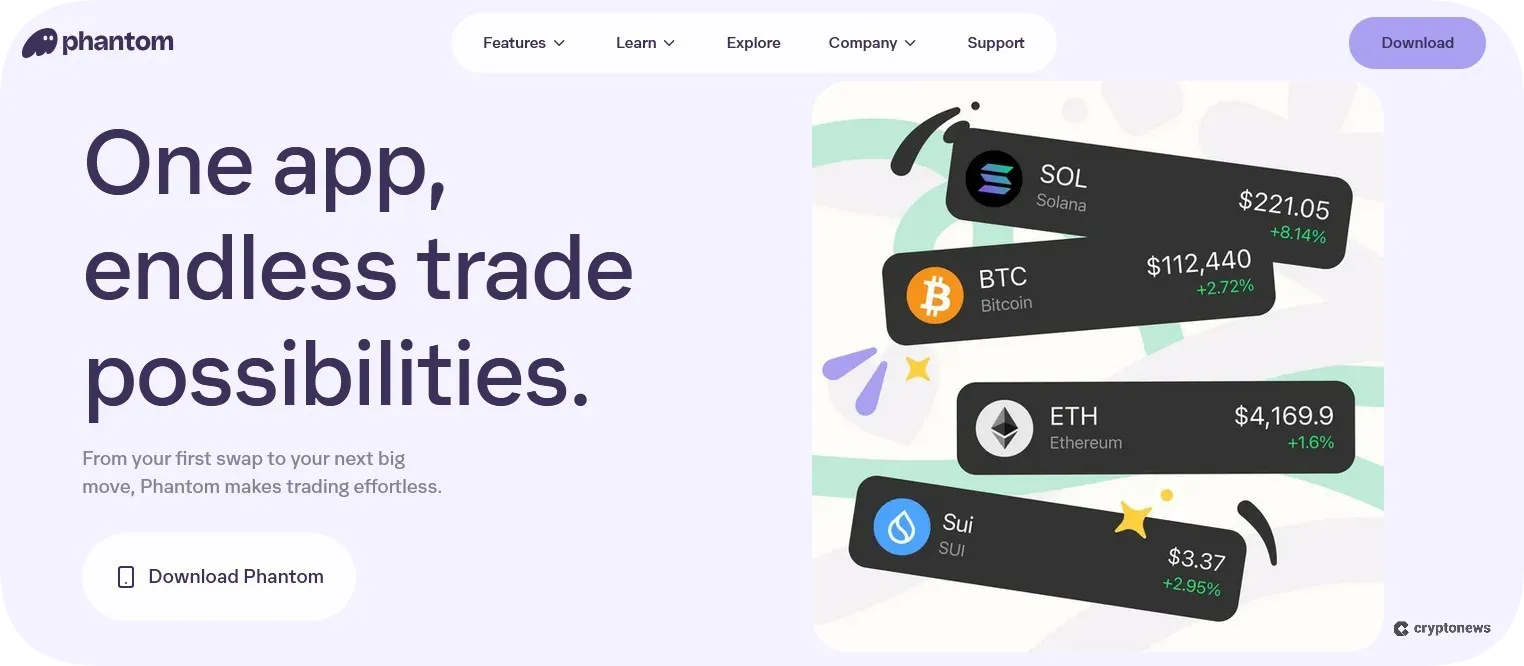
Its standout feature is the Crosschain Swapper, which enables swapping over 30 tokens, including USDT, for USDC. This feature is powered by LiFi, a bridge and DEX aggregation protocol that generates liquidity from 38+ DEXs, 30+ chains, and 18+ bridges. Phantom wallet charges a fixed swap fee of 0.85%, which is quite low when compared to its competitors. For example, you’ll pay up to a 1% fee when swapping tokens on the Coinbase Wallet.
Phantom wallet also lets you trade perpetual futures with up to 40x leverage. You can fund your perps account with USDT, USDC, PSOL, and SOL. On the downside, the wallet doesn’t support USDT on the BEP20 and TRC20 token standards.
Phantom Wallet Key Takeaways
- Crosschain Swapper: Swap over 30 coins and tokens, including USDT for USDC.
- Perpetual futures: Use USDT to fund your perps account and trade futures with up to 40x leverage.
- Hardware wallet integration: Phantom Wallet can be integrated with Ledger.
Pros
- Supports USDT on SPL and ERC20 token standards
- Built-in swapper
- Competitive swap fees
Cons
- Doesn’t support USDT on the BEP20 and TRC20 token standards
- Bitcoin is not supported for swapping or bridging
- Limited number of supported networks
What is a USDT Wallet?
USDT wallets are designed for storing, sending, and receiving Tether on networks like Ethereum (ERC20), Tron (TRC20), and Binance Smart Chain (BEP20). Since they’re focused on Tether, USDT wallets offer lower fees and faster transactions (especially on the Tron network) than traditional crypto wallets. A good USDT wallet also lets you purchase Tether directly from the app, interact with dApps, and conduct swaps.
Types of USDT Wallets
The best USDT wallet can be custodial or non-custodial and software or hardware (aka hot/cold wallets).
- Custodial wallets, like Margex, control your private keys, which means you’re delegating part of the responsibilities for your funds to a third party. These wallets are more suitable for beginners because they can be recovered more easily if you forget your password.
- Non-custodial wallets, like Best Wallet, give you full control over your keys and USDT holdings. They’re more suitable for experienced traders who want to gain full access to DeFi protocols, NFTs, and dApps. However, if you lose your seed phrase, you’ll also lose access to your funds.
Tether wallets can also be either software (hot) or hardware (cold):
- Software wallets are used for frequent trading and are highly convenient, but they hold your private keys on internet-connected devices, which makes them more susceptible to hacks and malware.
- Cold wallets, on the other hand, store your private keys offline, making them more secure and suitable for long-term storage. They can get expensive, however, and the setup is usually cumbersome for beginners.
Why Are USDT Token Standards Important?
Token standards are sets of rules that determine how a token is minted, issued, and managed on a specific blockchain. The most common token standards on Tether include ERC20, TRC20, and BEP20. The ERC20 token standard is used on the Ethereum blockchain, the TRC20 standard is used on the Tron blockchain, while the BEP20 standard is used on the Binance Smart Chain.
Each token standard offers different benefits. On that note, TRC20 tokens provide faster and more cost-effective transactions than ERC20 tokens. For example, the fees for transferring USDT on the Tron network vary between $0.20 and $3.40, while transaction fees on Ethereum can go up to $50. On the other hand, the fees to trade BEP20 tokens range from $0.053 to $1.
Next, TRC20 and BEP-20 tokens support ~2,000 transactions per second, while ERC20 tokens average at around 15 transactions per second. However, TRC20 tokens support fewer dApps than ERC20 and BEP20 tokens, which makes them less suitable for DeFi enthusiasts.
How to Use a USDT Crypto Wallet?
In this segment, we’ll explain how to create an account and trade USDT on Best Wallet, given that this provider took the number one spot on our best USDT wallets list.
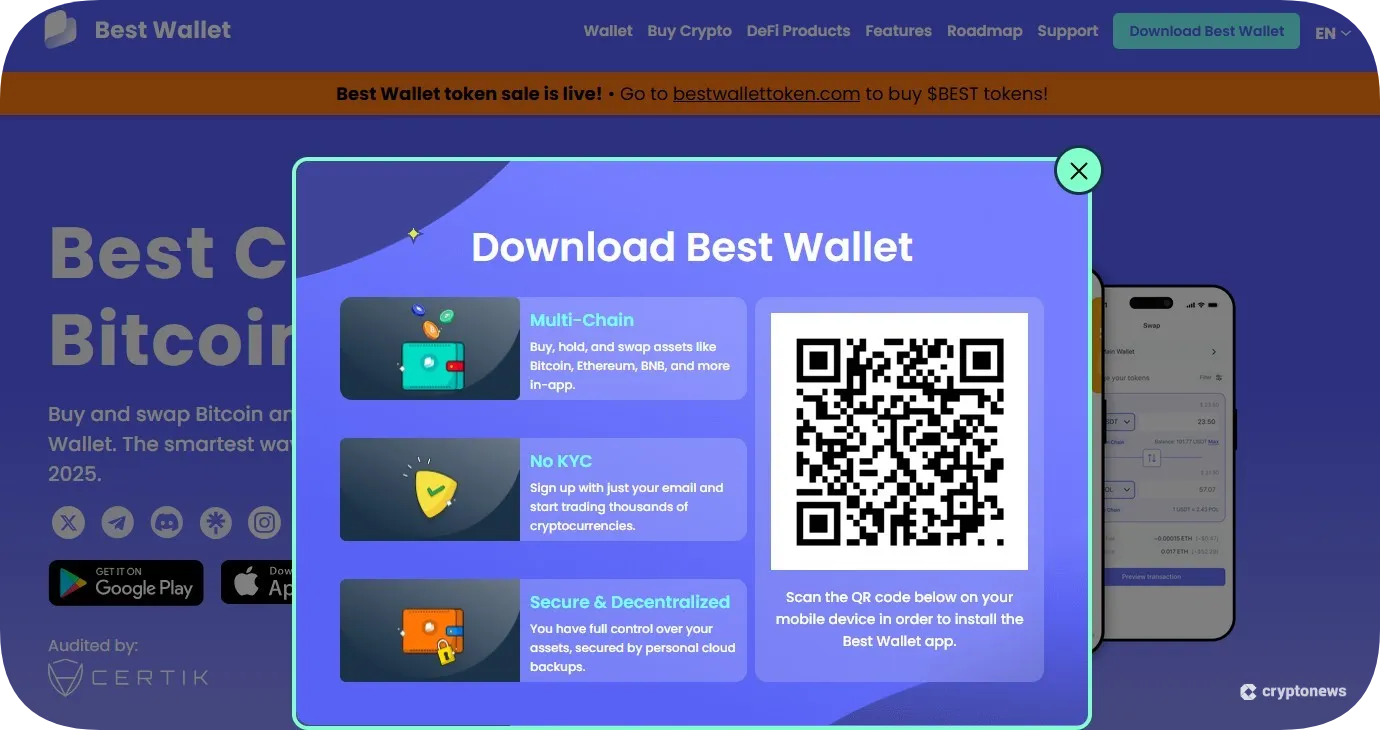
Step 1: Download the Best Wallet App
Visit the Best Wallet website or the Google Play/App Store and download the wallet on your Android or iOS device.
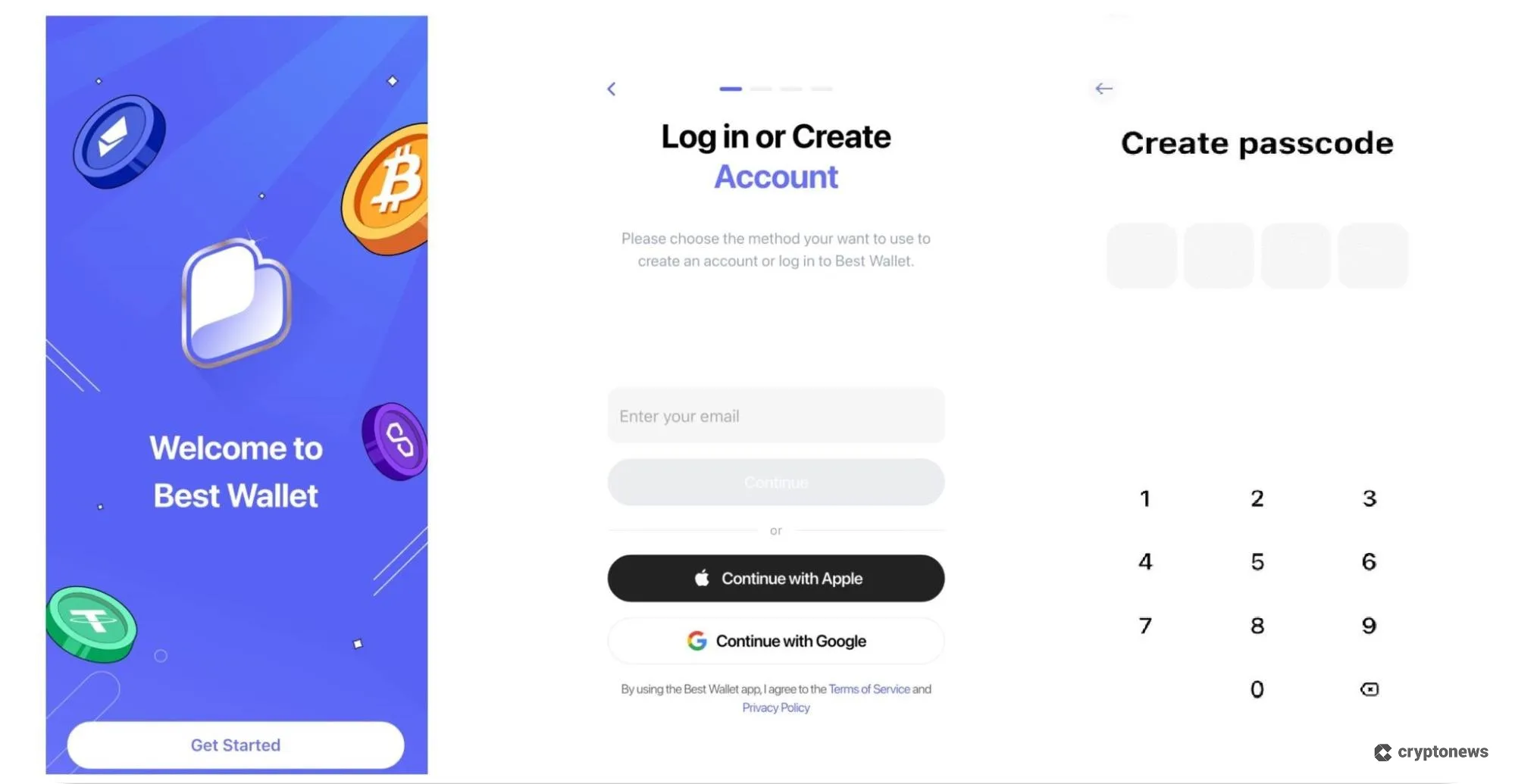
Step 2: Create an Account
Open the Best Wallet app, tap the Get Started button, enter your email, and create a 4-digit passcode.
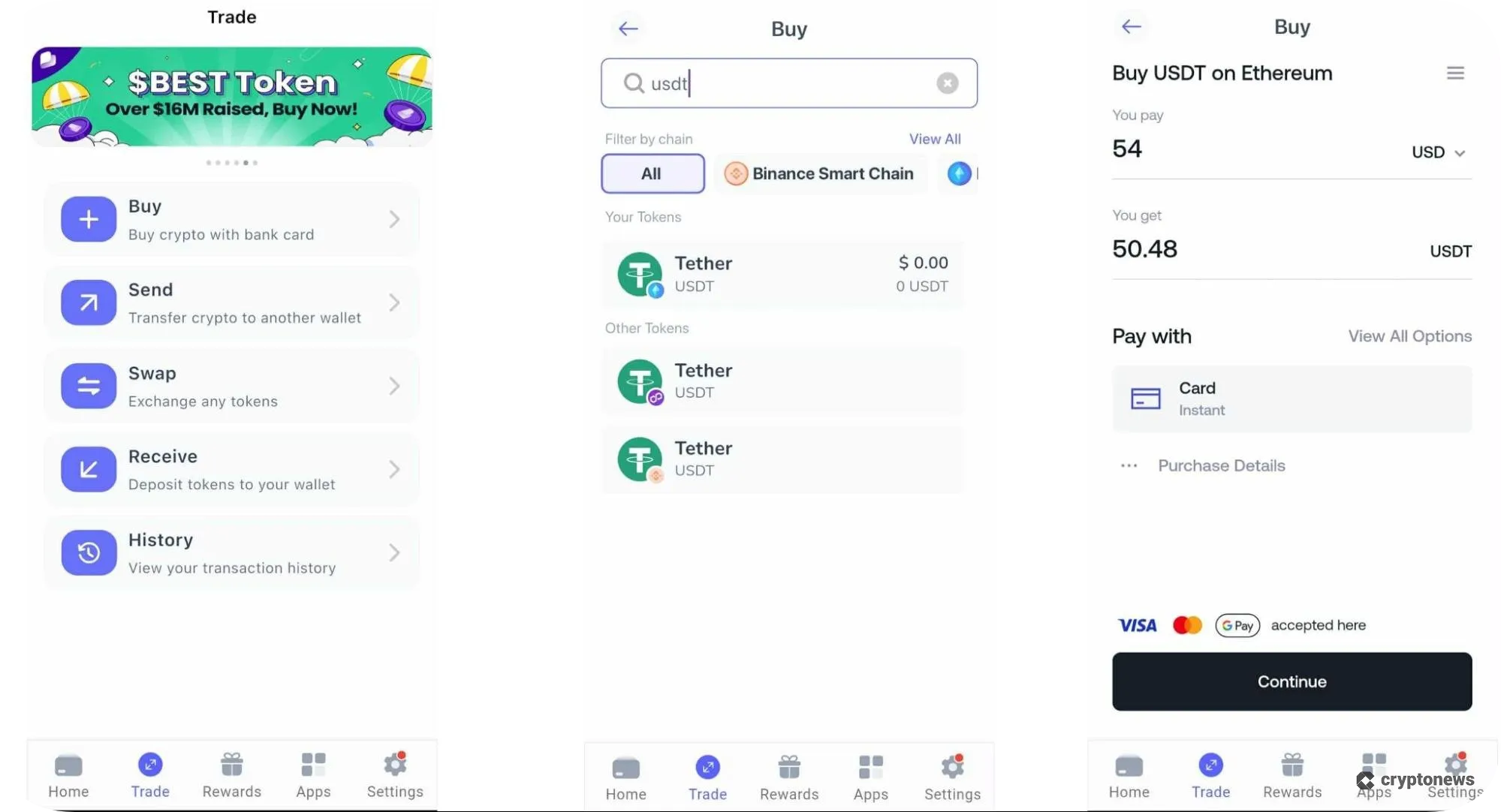
Step 3: Buy USDT
Tap the Trade button and select the Buy option from the list. Type USDT in the search bar, enter the amount you wish to buy, and select a payment method.
How to Keep Your USDT Wallet Safe?
Tether wallets are often targeted by hackers because USDT is one of the most used stablecoins in the world. The most common attacks include phishing, fake wallet apps, and wallet drainers.
Phishing is a method used by hackers to trick wallet users into sharing their private keys by impersonating the wallet provider. Keep in mind that legitimate wallet providers will never contact you or ask you to share your private key. To protect your wallet from phishing attacks, enable two-factor authentication (2FA) and store your private keys offline.

To avoid these types of attacks, use wallets that offer advanced security features, such as a Web3 firewall and scam scanners.
Is It Safe to Hold USDT?
Holding USDT comes with many benefits. First, this stablecoin is pegged to the US dollar (it maintains a ~$1 price), which eliminates the price fluctuations of assets like Bitcoin and Ethereum. I.e., converting your crypto assets to USDT protects you from market volatility.
Secondly, USDT is widely accepted, meaning you can use it as a base or a quote currency in crypto trading pairs. Tether also acts as a bridge between fiat and crypto. You can convert US dollars into USDT to buy digital assets or participate in DeFi.
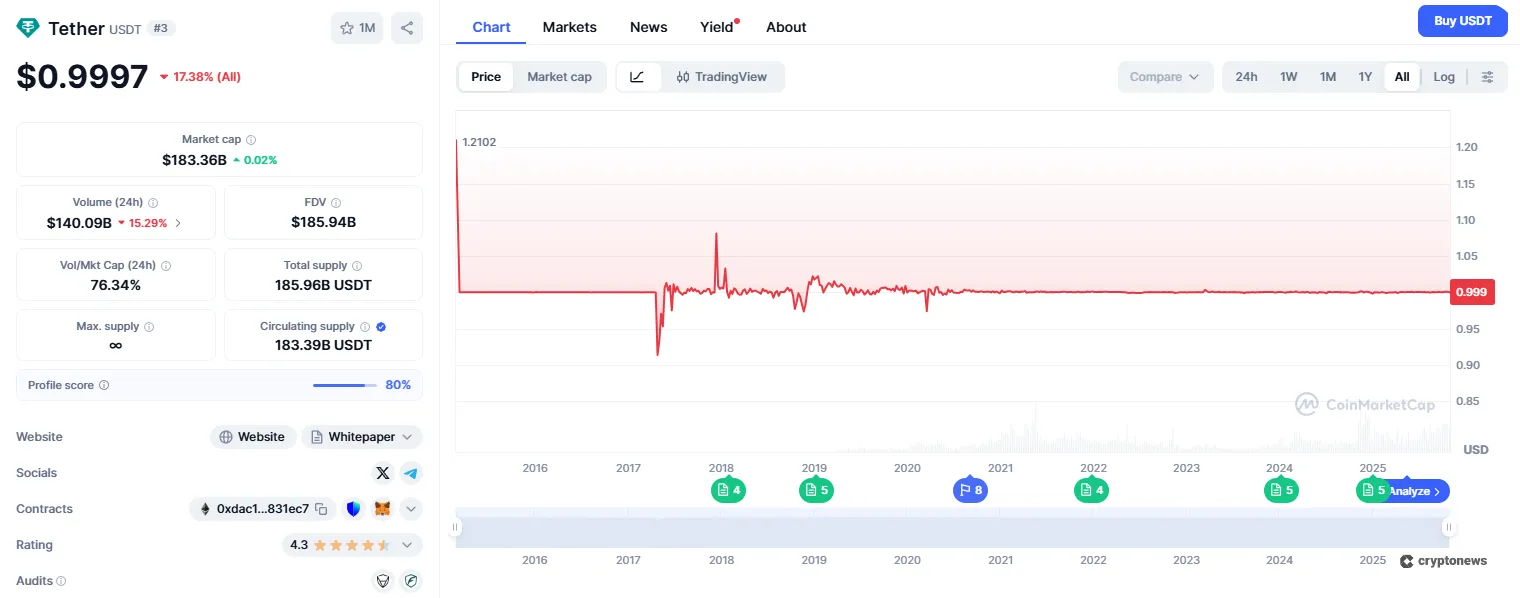
However, trading USDT comes with certain risks. Namely, stablecoins can depeg (deviate from their price target) due to low liquidity, poor collateralization ratios, regulatory changes, and unfavorable market conditions. For example, in May 2022, during the collapse of TerraUSD, Tether depegged to $0.95, while TerraUSD lost almost all of its value and never regained its peg to the US dollar.
So, is it safe to hold USDT? Yes, if you want to hedge against short-term volatility. However, long-term investors should also consider USDC, as its reserves are fully backed by cash, including investments in SEC-registered money market funds.
Methodology: How We Ranked The Best USDT Wallets
To single out the best wallets, we used the following criteria:
USDT Token Standards Support (30%)
Wallets that support USDT on ERC20, TRC20, and BEP20 token standards ranked higher on our list, as they offer more flexibility. For example, USDT on the Binance Smart Chain and Tron offers faster transactions and lower fees, while USDT on the Ethereum network enables access to a wide range of DeFi services.
Security (30%)
All wallets on our list utilize advanced security measures to keep your USDT holdings safe. We also checked their security scores on CertiK, Coinspect, and Certified, as well as their code on GitHub, to confirm their legitimacy. In addition to that, we gave an advantage to non-custodial wallets that can be integrated with both hot and cold storage solutions.
In-Wallet Trading (20%)
Finding the best USDT wallet app was our next task. On that note, we downloaded hot wallets on our desktop and mobile devices to find out which trading features they support. Wallets that support in-app trading, swapping, and staking ranked higher on our list, as well as those that support direct USDT purchases. When it comes to hardware wallets, we downloaded their companion apps (cySync and Ledger Live) to evaluate their features and trading operations.
User Experience (20%)
Our list contains USDT crypto wallets that are intuitive and easy to set up and use. Besides personally testing the wallets, we also took into account the experiences of other users. For example, we read user reviews on Google Play, App Store, Trustpilot, and Reddit to find out if traders had any issues with the wallets and to assess their overall satisfaction.
Conclusion – What is The Best USDT Wallet?
USDT is available on various networks, including Ethereum, Binance Smart Chain, and Tron. This means that the best Tether wallet must support multiple token standards (ERC20, BEP20, TRC20) to provide greater flexibility. Tether wallets must also be safe and easy to use.
Best Wallet took the title of the best wallet for Tether holders due to its support for USDT on ERC20, BEP20, and SPL token standards, integrated trading features like swaps and the upcoming tokens page, and advanced security measures. Moreover, this non-custodial hot wallet supports Tether Gold and Euro Tether, enabling you to diversify your portfolio with commodity- and euro-backed assets.
Visit Best WalletFAQs
Can I transfer USDT to my bank account?
Which blockchain is best for USDT transfers?
Is converting USDT to USD taxable?
Who is behind USDT?
What are the risks of using USDT?
Which USDT wallet app is best for beginners?
References
- What is MPC (Multi-Party Computation) (Fireblocks)
- CertiK
- Coinspect
- Certified
- The best USDT networks for payments in 2025 (Now Payments)
- Why do stablecoins depeg? (Coinbase)
- The world’s biggest stablecoin has dropped below its $1 peg (CNBC)
2M+
250+
8
70





 in numbers

About Cryptonews
Our goal is to offer a comprehensive and objective perspective on the cryptocurrency market, enabling our readers to make informed decisions in this ever-changing landscape.
Our editorial team of more than 70 crypto professionals works to maintain the highest standards of journalism and ethics. We follow strict editorial guidelines to ensure the integrity and credibility of our content.
Whether you’re looking for breaking news, expert opinions, or market insights, Cryptonews has been your go-to destination for everything cryptocurrency since 2017.
