

Does Coinbase Report to the IRS? (2026)
We believe in full transparency with our readers. Some of our content includes affiliate links, and we may earn a commission through these partnerships. However, this potential compensation never influences our analysis, opinions, or reviews. Our editorial content is created independently of our marketing partnerships, and our ratings are based solely on our established evaluation criteria. Read More





Coinbase is required by law to report your transactions to the IRS. The information on your tax return must be the same as the information reported by Coinbase; otherwise, you could pay a penalty (usually 20% of the underpayment). Failure to report crypto transactions to the IRS can also result in fines of up to $100,000 and 5 years in prison.
With that in mind, in this guide, you’ll find out how Coinbase transactions are taxed and which tax forms the exchange sends to the IRS. You’ll also learn how to gain access to your tax documents and how to report your Coinbase taxes to the tax authorities in the United States.
Key Takeaways
- Coinbase reports to the IRS by issuing 1099 forms.
- If you earn more than $600 in crypto income from sources like trading, staking, and referral bonuses, Coinbase will issue a Form 1099-MISC.
- Form 1099-DA is used to report crypto sales and exchanges.
- You’ll get Form 1099-B if you traded Futures via Coinbase Finance Markets.
- Form 1099-DIV is issued to US customers who earned over $10 in dividends or capital gain distributions from investments.
- Taxable events on Coinbase include selling crypto for fiat, trading one crypto for another, using crypto to pay for goods and services, receiving crypto as a payment, earning staking rewards or interest, receiving airdrops or bonuses.
- Non-taxable events include buying crypto with fiat and holding it, donating crypto to a qualified tax-exempt charity or non-profit, receiving crypto as a gift, sending crypto as a gift (up to $18,000 per recipient), and transferring crypto between wallets/accounts.
- Your gain/loss report only includes transactions made on the Coinbase account. Transactions from Coinbase products, external wallets, and DEXs must be entered separately.
- You can access your tax documents on Coinbase by logging into your account and navigating to the Taxes section.
- For the 2026 tax year, Coinbase will begin reporting both gross proceeds and cost basis.
Does Coinbase Report to the IRS?
Yes, Coinbase reports its customers’ tax information to the IRS using Forms 1099-MISC, 1099-DA, 1099-B, and 1099-DIV. For example, if you’ve earned more than $600 in crypto income, you need to report your transactions to the IRS using Form 1099-MISC. If your earnings are below the $600 threshold, you still need to report them on your tax return.
You must also report your sales and exchanges to the IRS using Form 1099-DA. If you trade futures via Coinbase Finance Markets, you must report your transactions using Form 1099-B, while Form 1099-DIV is issued to customers who earned $10 or more in dividends or capital gain distributions from certain investments.
Coinbase provides tax forms early in tax season, usually by Jan. 31st of the following calendar year. You can view and download your tax reports from the Coinbase Tax Center.

How Are Coinbase Transactions Taxed?
The IRS classifies cryptocurrencies as property, not currency. This means that all crypto transactions are considered a taxable event and must be reported to the IRS. That said, taxable events on Coinbase include:
- Selling crypto for fiat
- Trading one crypto for another
- Using crypto to pay for goods and services
- Receiving crypto as a payment
- Earning staking rewards or interest
- Receiving airdrops or bonuses
On the other hand, non-taxable events include buying crypto with fiat and holding it, donating crypto to a qualified tax-exempt charity or non-profit, receiving crypto as a gift, sending crypto as a gift (up to $18,000 per recipient), and transferring crypto between wallets/accounts.
Check out this table to find out what events on Coinbase are taxable and what you’ll need to report:
| Event | Taxable? | Coinbase Report Form | Required Action |
|---|---|---|---|
| Selling crypto for fiat | Yes (as capital gain/loss) | Form 1099-DA gross proceeds | Form 8949, then Schedule D |
| Buying crypto with fiat and holding it | No | None | Check the “No“ box in response to the digital asset question on your tax return |
| Trading one crypto for another | Yes (as capital gain/loss) | Form 1099-DA gross proceeds | Form 8949, then Schedule D |
| Using crypto to pay for goods/services | Yes (as capital gain/loss) | Form 1099‑DA | Form 8949, then Schedule D |
| Receiving crypto as a payment | Yes (as ordinary income) | Form 1099‑MISC (if over $600) | Schedule C (Form 1040) or Schedule 1 (Form 1040) |
| Earning staking rewards or interest | Yes (as ordinary income) | Form 1099‑MISC (if over $600) | Report as miscellaneous income |
| Receiving airdrops or bonuses | Yes (as ordinary income) | Form 1099‑MISC (if over $600) | Report as miscellaneous income |
| Donating crypto to a qualified tax-exempt charity or non-profit | No | None | Report as a non-cash charitable contribution |
| Receiving crypto as a gift | No | Form 3520 (if over $100,000) | Keep records of the transfer |
| Sending crypto as a gift | No | Form 709 (if over $18,000) | Keep records of the transfer |
| Transferring crypto between wallets/accounts | No | None | Keep records of the transfer |
Crypto transactions are taxed as capital gains or ordinary income, depending on their nature. For example, staking and mining rewards, as well as referral bonuses, are treated as ordinary income. Selling crypto for cash, converting it to another crypto, and spending crypto on goods and services are treated as capital gains or losses.
What Tax Forms Does Coinbase Send to the IRS?
As mentioned above, crypto can be taxed as ordinary income or as a capital gain/loss. Coinbase will send you an IRS form based on your activity (e.g., earning crypto rewards or selling crypto for cash). Coinbase will also report the gross proceeds from your crypto sales and exchanges.
For example, if you sold BTC for $5,000, this will be your gross proceeds. Beginning Jan. 1, 2026, Coinbase will report your cost basis, i.e., the original value of your coins when you bought them, plus any associated costs like fees.
Here are the tax forms Coinbase sends to the IRS:
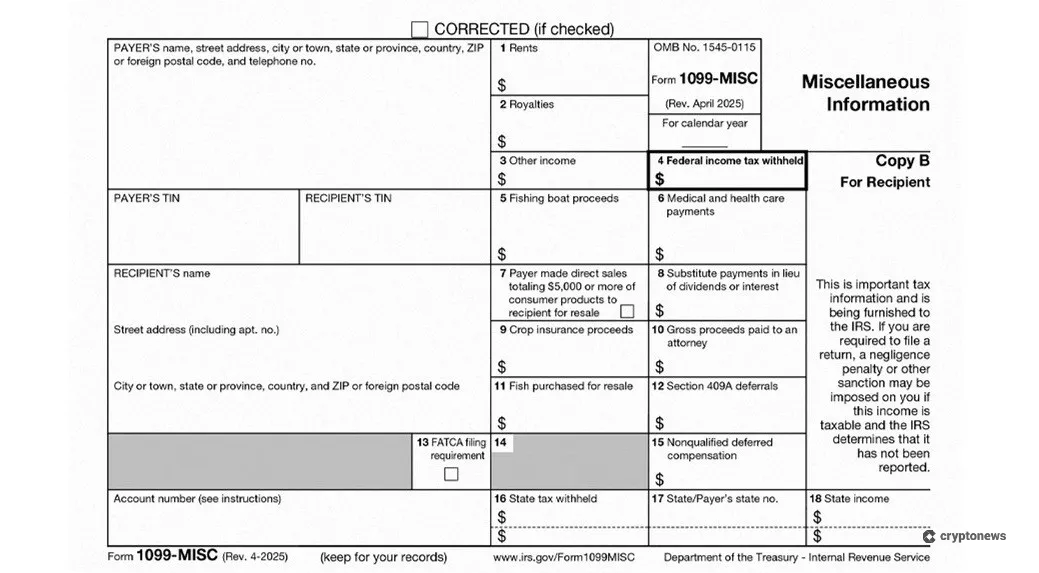
Form 1099-MISC
If you earn more than $600 in crypto income from sources like staking, earning rewards, and referral bonuses, Coinbase will send you a Form 1099-MISC. You must register your transactions as miscellaneous income. This also applies to incomes below $600.
Form 1099-DA
Form 1099-DA is used to report crypto sales and exchanges. Coinbase will report gross proceeds from crypto sales and exchanges for the 2025 tax year. For the 2026 tax year, Coinbase will begin reporting both gross proceeds and cost basis.
Form 1099-B
You’ll get Form 1099-B if you traded futures via Coinbase Finance Markets.
Form 1099-DIV
This form is issued to US customers who earned over $10 in dividends or capital gain distributions from investments.
How to Access my Coinbase Tax Documents?
You can access your tax documents on Coinbase by logging into your account and navigating to the Taxes section. Click your profile icon, then tap the Manage Account button. Now, tap the Taxes button. In this section (under Documents), you’ll find your account statements, gain/loss summaries, and raw transaction history available in PDF or CSV.
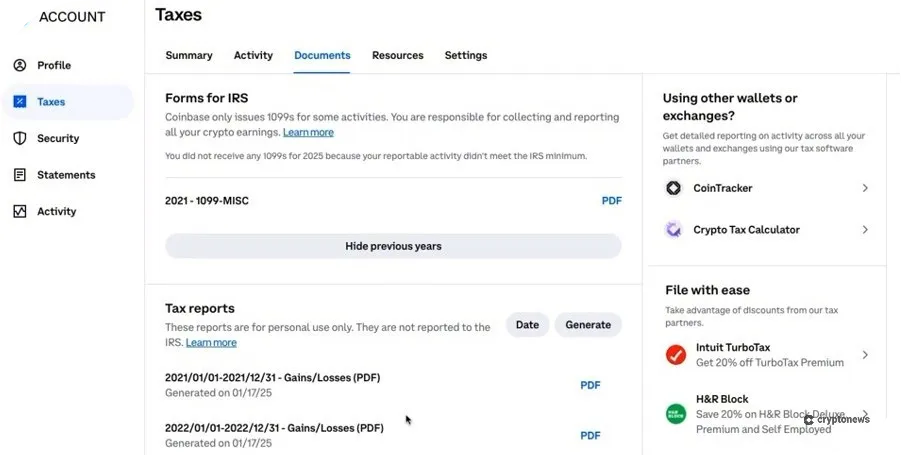
Coinbase also reports your Base App (Coinbase Wallet) income, such as USDC reward payouts. However, it won’t appear under MISC income in the Tax Center. I.e., your gain/loss report only includes transactions you make on your Coinbase account.
This means that the total on your form may be higher than the one displayed on Coinbase’s Tax Center’s dashboard. Transactions from external wallets and DEXs won’t be reported on the forms either. You must enter them separately on your tax return.
What to Do With My Coinbase Tax Forms?
Once you receive the tax forms from Coinbase, you need to use this data to calculate your capital gains/losses using the appropriate tax forms. You can do this manually or with the help of crypto tax calculators. Even if Coinbase doesn’t send you a tax form, you still need to report your taxable income.
Here’s what to do with Coinbase’s tax documents:
- Download your tax documents: Log in to your account and navigate to the Taxes section. Select the tax year and download the forms in PDF or CSV.
- Review the forms and correct any mistakes: Make sure the information on the forms is correct, including your name, address, and SSN. You should also check if your transaction history matches Coinbase’s reported income. If the forms are incorrect, contact Coinbase’s support team and request a correction.
- Calculate your gains and losses: Determine the cost basis and proceeds for each trade to determine your capital gains/losses. Don’t forget to include your transactions from the Base app, as well as trading history from other exchanges and external wallets.
- Complete the necessary IRS forms and file your tax returns: For example, if you sell crypto for fiat, you must fill out Form 8949, then Schedule D. After that, attach the forms to your main federal tax return (Form 1040) and file with the IRS before the deadline (Apr. 15, 2026).
- Keep your records: Keep the records of your crypto transactions in case the IRS initiates an audit.
How Do I Report My Coinbase Taxes to the IRS?
As mentioned above, to report your Coinbase taxes to the IRS, you must gather your documents and file specific IRS forms to report your ordinary income and capital gains/losses on your federal income tax return.
You can calculate your gains/losses manually or using crypto tax software, such as Koinly or CoinLedger. Alternatively, you can use Best Wallet, which is a non-custodial wallet that integrates with tax apps like CoinTracking, Crypto Tax Calculator, Blockpit, and Kryptos.
Here’s how to report your taxes to the IRS:
Step 1. Download a Tax App
Install a tax app or Best Wallet on your mobile device, create an account, and download your transaction history from Coinbase as a PDF or CSV file.
Step 2: Import your Coinbase Tax Records
Apps like Koinly connect directly to Coinbase to calculate your taxes. Best Wallet, on the other hand, supports CoinTracking, Crypto Tax Calculator, Blockpit, and Kryptos. Choose the app that suits you best and import your transaction data. The tax app will determine your gains/losses or ordinary income based on the provided data.

Step 3. File Your Tax Return
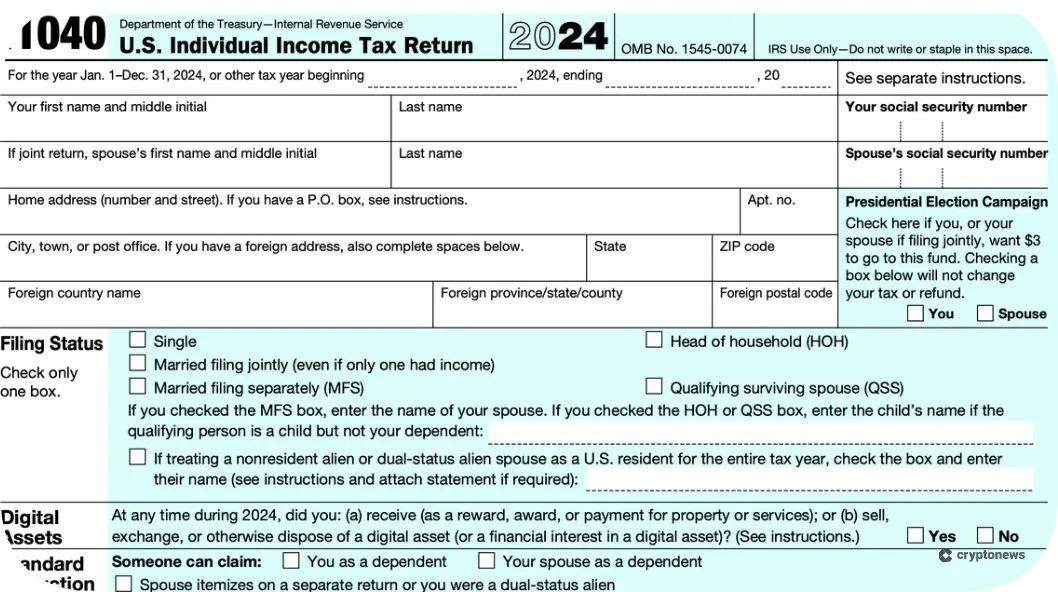
Import the tax summary into your tax filing software, such as H&R Block or TurboTax. The software will then generate the necessary IRS forms. Check the box by answering “Yes” to the digital asset question on Form 1040, and file your tax return with the IRS via email.
Conclusion
Does Coinbase report to the IRS? Yes. Coinbase reports to the IRS by issuing 1099 forms (Forms 1099-MISC, 1099-DA, 1099-B, and 1099-DIV). Taxable events on Coinbase include selling crypto for fiat, swapping, using crypto for payments, earning staking rewards, and receiving airdrops or bonuses. I.e., Coinbase reports your gross proceeds from crypto sales and exchanges, as well as crypto income over $600 generated from staking rewards, airdrops, or referral bonuses. In 2026, Coinbase will also start reporting your cost basis.
Keep in mind that your gain/loss report only includes transactions made on the Coinbase account. Transactions from Coinbase products (Base App and Coinbase Prime) and external exchanges must be entered separately. You can view and download your tax reports from the Coinbase Tax Center.
FAQs
Can the government see my Coinbase account?
Do I have to report crypto less than $600 on Coinbase?
Does Coinbase report to the IRS if you didn’t sell?
Will Coinbase send me a 1099 form?
What happens if I don’t report my profits on Coinbase?
Does Coinbase send a 1099-B?
What is a 1099-DA form?
What to do if my Coinbase 1099 forms are inaccurate?
What happens if I didn’t receive a 1099 form from Coinbase?
References
2M+
250+
8
70





 in numbers

About Cryptonews
Our goal is to offer a comprehensive and objective perspective on the cryptocurrency market, enabling our readers to make informed decisions in this ever-changing landscape.
Our editorial team of more than 70 crypto professionals works to maintain the highest standards of journalism and ethics. We follow strict editorial guidelines to ensure the integrity and credibility of our content.
Whether you’re looking for breaking news, expert opinions, or market insights, Cryptonews has been your go-to destination for everything cryptocurrency since 2017.
