


 OKX Wallet Review 2026 - Security, Fees, Features Explored
- Supports cryptos from over 130 blockchains
- Available as both mobile app and browser extension
- Offers top security measures such as biometric authentication and token warnings
OKX Wallet is a decentralized crypto wallet that offers non-custodial storage on over 130 blockchains, including Bitcoin, Ethereum, and Solana. The wallet is a standalone product that’s completely separate from the main OKX exchange, ensuring users control their cryptocurrencies through encrypted private keys.
We evaluated the OKX Wallet on mobile and browser devices to assess security, privacy, supported assets, core features, and user-friendliness. Discover our findings in this OKX Wallet review and learn how it compares with other hot wallet providers in 2026.
Our Take on OKX Wallet
Overall, OKX Wallet is a reputable and secure wallet provider that offers non-custodial storage. With 130+ compatible blockchains with custom token additions, the wallet supports millions of coins and tokens. While beginners may find some features intimidating, the built-in trading and earning tools appeal to experienced users.
Security controls include encrypted private keys and biometrics, alongside real-time warnings for suspicious tokens and dApp connections. The wallet is completely free on mobile and browser devices, although third-party protocols like swaps and staking may come with additional charges.
OKX Wallet Pros and Cons
OKX Wallet offers several standout benefits, including wide asset support on over 130 blockchains. Whether you’re storing popular cryptocurrencies like Bitcoin (BTC) and Dogecoin (DOGE) or newly listed tokens from the Polygon or Base networks, the wallet ensures all investments remain manageable in one place. It also appeals to experienced traders who want direct access to dApps like Uniswap and Raydium, and yield products like staking and yield farming.
Novice investors may not suit some built-in features, and the wallet’s lack of support for traditional payment methods alienates first-time buyers. Customer support is also sub-par, with some users reporting waiting times of several hours. OKX does not offer native desktop software either — a key drawback for those who prefer dedicated Mac or Windows functionality.
Pros
- Store any digital asset from over 130 blockchains
- Available as a mobile app and browser extension
- Security features include biometrics and token warnings
- Its non-custodial design ensures investors own and control their assets
- Direct access to Web 3.0 features like DeFi, NFTs, and staking
- Provides market analysis for millions of tokens
Cons
- Some features may be too complex for beginners
- Lack of desktop software for Mac and Windows
- Long support delays during busy periods
- Users can’t buy or sell crypto with fiat money
- Not as secure as a hardware wallet
What is OKX Wallet?
Let’s start this OKX Wallet review with a brief overview of how the wallet works.
Launched in 2022, OKX Wallet is a non-custodial wallet that allows users to send, receive, and store cryptocurrencies in a private and safe environment.
Downloaded as an iOS/Android app or browser extension, the wallet ensures crypto investors retain full control of their digital assets. The self-custody framework provides users with encrypted private keys — this means third parties, including OKX, cannot access the wallet, freeze funds, or restrict transactions.
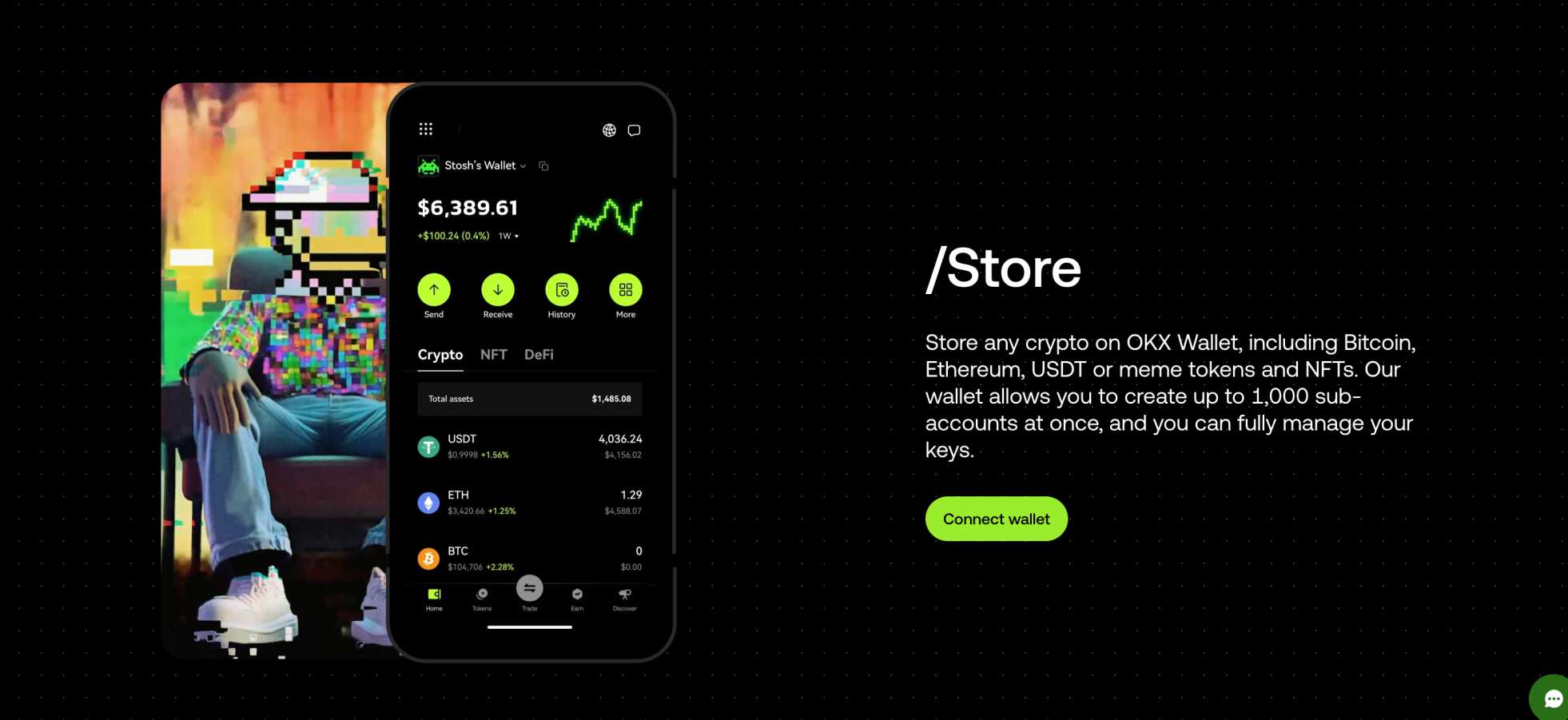
OKX Wallet supports over 130 blockchains and networks, and users can store millions of cryptocurrencies, from mega-caps like BTC and Ethereum (ETH) to new tokens that trade solely on decentralized exchanges (DEXs).
Research shows that OKX Wallet is more than just a crypto wallet, as it comes packed with built-in features. Users can swap cryptocurrencies, earn passive yields, analyze trending markets, and trade NFTs without leaving the wallet interface. The software also connects with decentralized applications (dApps) like Uniswap and Decentraland, reflecting an all-in-one ecosystem for the Web 3.0 era.
In terms of accessibility, OKX Wallet is available globally, so unlike the main OKX exchange, it cannot restrict users based on their location.
OKX Wallet Security Review
As a non-custodial provider, security features are the most important aspect to consider. OKX cannot help recover lost or stolen funds, as only the user controls their private keys. This dynamic makes OKX users 100% responsible for protecting their assets.
This section explores key safety controls that help keep your funds secure.
Encrypted Private Key and Secret Passphrase
Private keys are unique to your OKX Wallet. They’re encrypted then stored on the browser or smartphone, allowing users to approve blockchain transactions on their device.
Due to their long and complex nature (64 hexadecimal characters), traditional private key management is often cumbersome and risky. That’s why OKX Wallet also provides a 12-word backup passphrase.
Users are advised to write down the passphrase on a sheet of paper to avoid potential hacking threats. OKX asks users to reenter selected words to ensure they’ve been correctly logged.
Biometrics
OKX Wallet also requires biometrics as an additional security method. The mobile app uses fingerprint ID or facial recognition, depending on what’s used currently by your smartphone. Desktop users also get biometric security via passkeys or mobile verification. Another option is password logins, although this method is less secure.
Open Source and Security Audits
As one of the best crypto wallets, OKX’s software is open source. This transparency ensures the software is battle-tested and that anyone can review its code via GitHub. In theory, any potential vulnerabilities will be discovered early by the wider developer community.
Reputable security firms like CertiK and SlowMist frequently audit OKX Wallet, too, providing additional safeguards for wallet users.
Security Monitoring Filters
The browser and mobile applications have a built-in security monitoring tool. The system evaluates wallet connection requests to detect potential threats. This includes dApp and website connections, which are among the biggest risks for wallet users — malware and viruses may allow hackers to access the wallet and steal the stored cryptocurrencies.
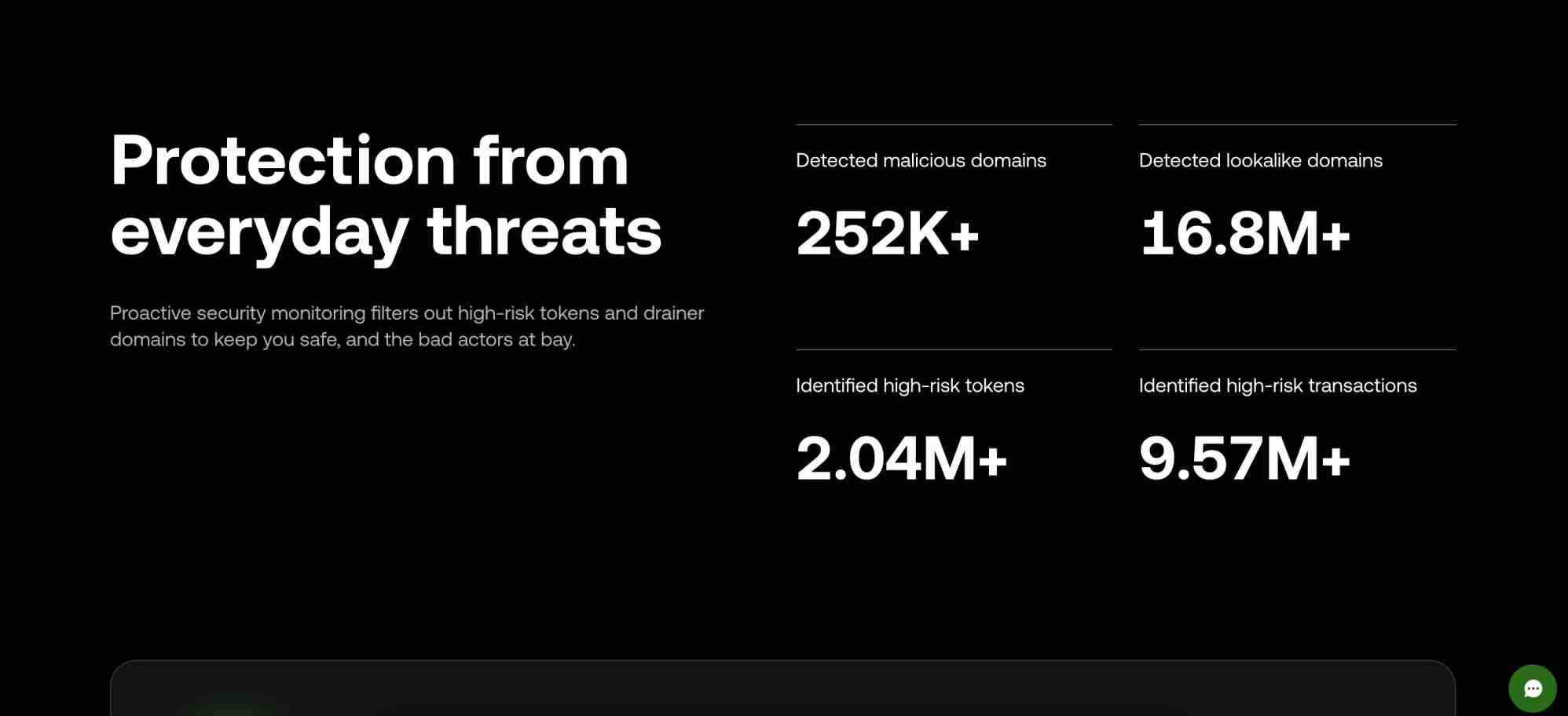
According to OKX, the security system has detected over 252,000 malicious domains and nearly 17 million lookalike domains.
The monitoring tool also filters out high-risk tokens. New crypto projects often send their tokens to random blockchain addresses, and while all are not malicious, scammers use this tactic to drain wallet balances. OKX has identified over 2 million high-risk tokens since its inception, helping users avoid potential scams.
However, the security filter isn’t 100% accurate — users must carefully assess wallet connections rather than rely exclusively on the system.
Ensuring Safety When Using the OKX Wallet
A Chainalysis study found that over $40 billion worth of crypto scams occurred in 2024, including wallet hacks.
OKX Wallet’s non-custodial mechanism means users must take responsibility for their digital assets. Wallet best practices include never sharing the backup passphrase or storing it on an internet-ready device.
Avoid clicking suspicious links or connecting the wallet to unverified dApps. Never engage with randomly deposited tokens and double-check wallet addresses when you transfer funds.
Experts also recommend updating the OKX Wallet app when prompted. This step ensures the app reflects any new security updates.
OKX Wallet Supported Coins and Networks
With OKX Wallet supporting more than 130 blockchains and networks, it’s a great choice for storing diversified portfolios in one safe place. It supports the best cryptocurrencies to buy, including Bitcoin, Ethereum, XRP (XRP), Solana (SOL), Cardano (ADA), Tron (TRX), DOGE, and Stellar (XLM).
OKX Wallet is compatible with popular layer-2 networks like Base, Arbitrum, Polygon, and Linea.
Users can add custom tokens to all available networks, which means OKX effectively supports millions of digital assets. As such, you can add brand-new cryptocurrencies to the wallet balance in seconds — just copy and paste the unique contract address before transferring the tokens.
As we discuss later in this OKX Wallet review, the software’s multi-chain framework allows token swaps across different blockchains, eliminating the need to transfer funds to and from centralized exchanges. This feature solidifies the wallet’s reputation as an all-in-one Web 3.0 ecosystem.
OKX Wallet Features
This section unpacks OKX Wallet’s core features, including how they work and why to use them.
Self-Custody
Self-custody wallets like OKX offer true asset ownership. Unlike bank and stock brokerage accounts, investments bypass centralized custodianship. Any cryptocurrencies stored in OKX Wallet are fully controlled by the device holder, allowing them to avoid counterparty risks like frozen balances or blocked transactions.
You never need approval to send or receive funds, as the wallet connects directly to the respective blockchain. Not even OKX can access your wallet balance, even if it wanted to. The encrypted private keys remain stored on the user’s device, which gives them the sole capability to approve transactions.
Swaps
One of OKX Wallet’s best features is built-in swaps. The browser and mobile wallet have a built-in aggregator that connects with over 400 DEXs from 30 network ecosystems. This includes Uniswap and SushiSwap on Ethereum, as well as popular Solana DEXs like Jupiter, Orca, and Raydium.
The swap system is simple and cost-effective — users enter the “To” and “From” tokens and the conversion amount.
The wallet’s routing tool ensures traders get the best exchange rate in the market. If needed, it splits orders across two or more exchanges based on the available liquidity. Everything is handled behind the scenes in real-time, with most users receiving their newly purchased tokens in seconds. OKX does not charge extra fees, as it merely obtains quotes from compatible DEXs.
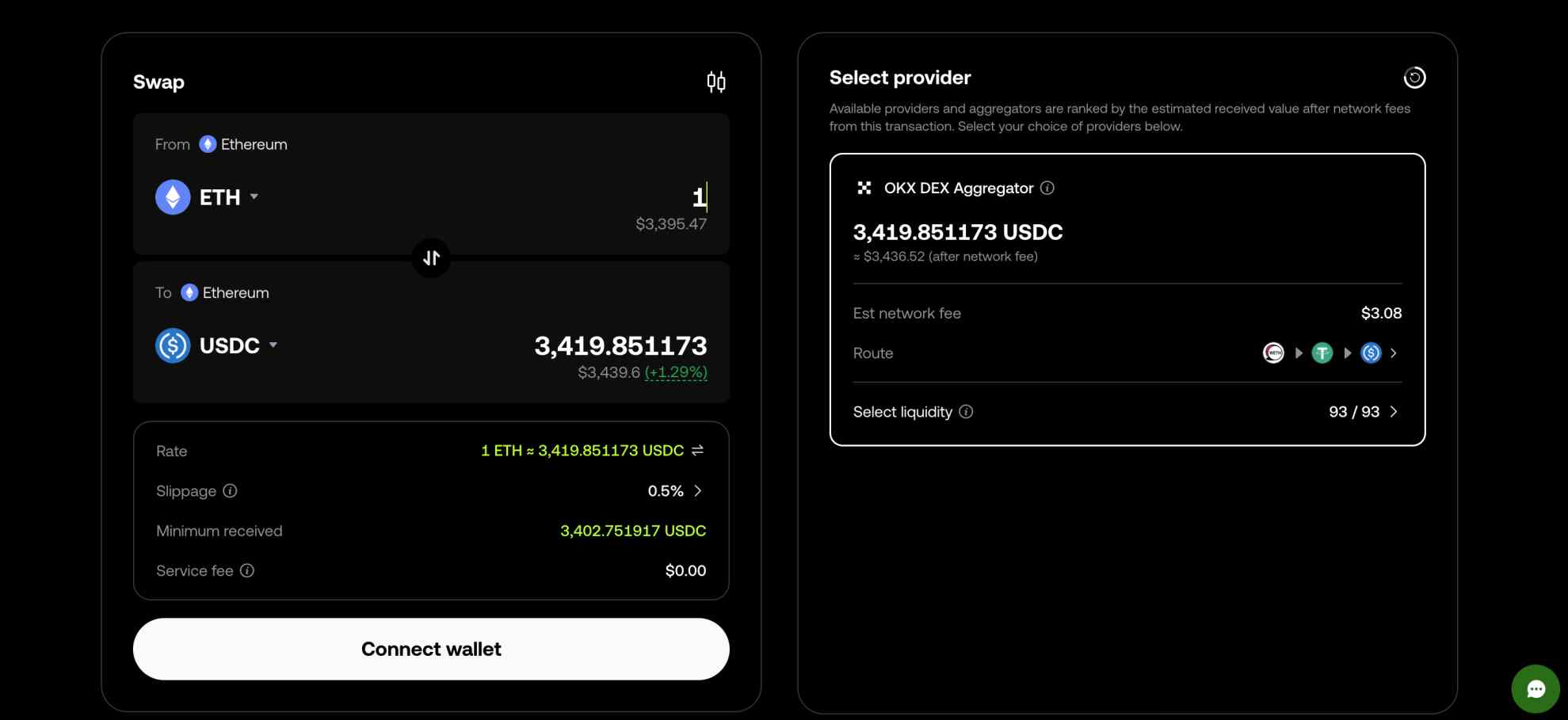
Another swap feature is the cross-chain bridge, which lets users trade cryptocurrencies on different network standards.
For example, suppose the user wants to trade ETH (Ethereum blockchain) for SOL (Solana blockchain). While these cryptocurrencies operate on independent blockchains, the wallet uses decentralized bridges to support near-instant conversions. This mechanism ensures crypto traders never relinquish control of their private keys, keeping the entire swap process non-custodial.
Can You Connect OKX Wallet to the Main OKX Exchange?
OKX lets users in some regions connect their Web 3.0 wallet to its main centralized exchange. This only works if the main OKX account is verified, meaning a completed KYC process.
Wallet holders lose their self-custody status when connecting to the exchange, so it’s best to trade within the wallet interface.
Staking
OKX Wallet’s aggregator tool extends to decentralized finance (DeFi) products, with thousands of built-in ecosystems supporting passive yields. Users earn additional income on cryptocurrencies that would otherwise sit idle in the wallet balance, potentially creating compound returns over time.
One of the most popular DeFi methods is crypto staking. Users can stake a wide range of digital assets, with stablecoins like Tether (USDT) and USD Coin (USDC) yielding up to 10.39% and 26.89%, respectively. Staking terms, including APYs and minimum lock-up requirements, vary based on the liquidity pool.
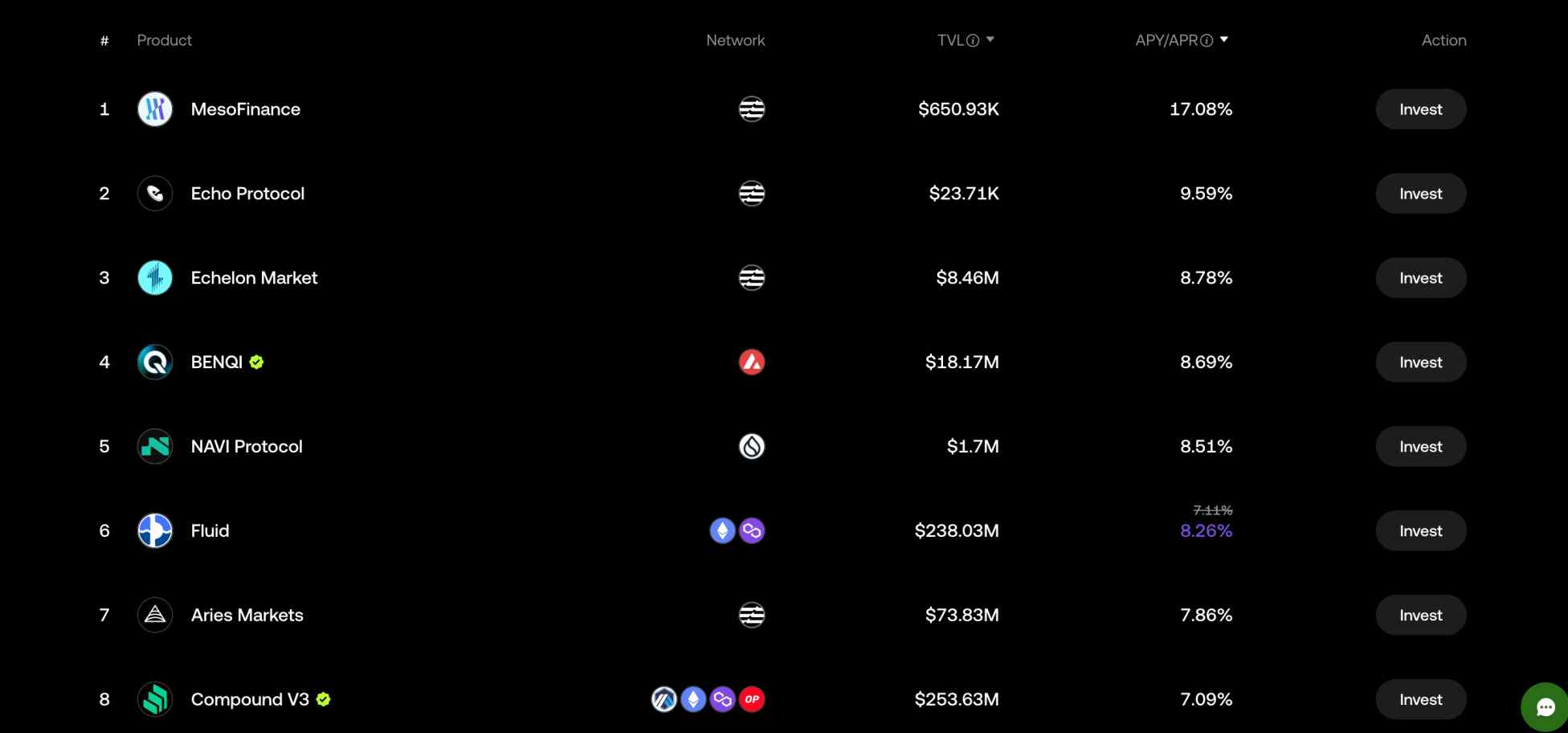
Users can also stake proof-of-stake coins like SOL and ETH, as well as meme coins such as Bonk (BONK) and FLOKI (FLOKI). Just enter the crypto you want to stake and review the available pools, yields, and liquidity.
Loans
Wallet users can borrow cryptocurrencies on-chain without using traditional lenders. No credit checks or application processes are required — borrowers allocate stored digital assets as collateral.
The loan feature supports just three cryptocurrencies: USDC, Sui (SUI), and Aptos (APT). USDC loans are the most competitive, with NAVI Protocol charging interest rates of just 0.48%. This built-in lending protocol offers a maximum loan-to-value (LTV) of 80%, representing loans of up to 800 USDC for every 1,000 USDC deposited as collateral.
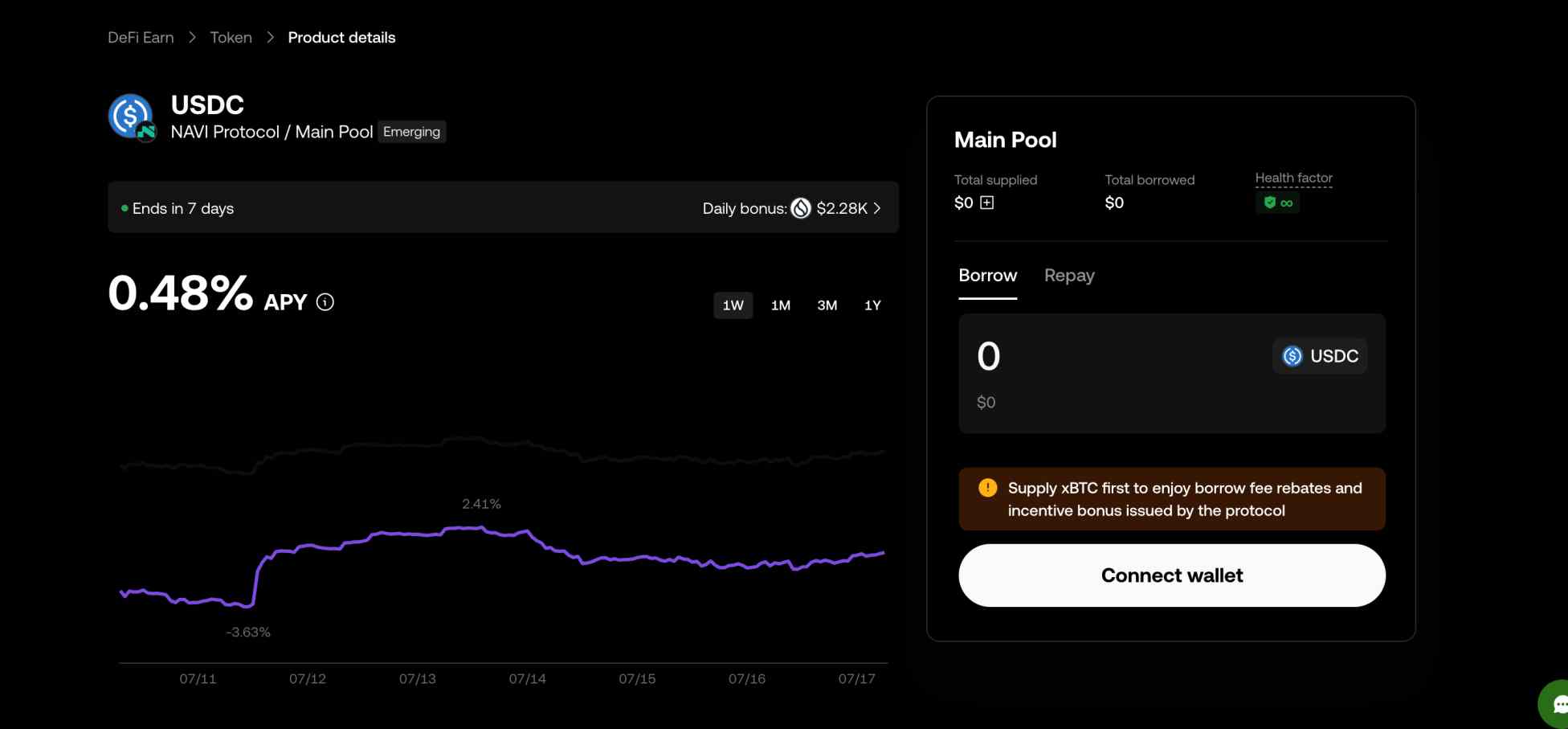
Although crypto loans let investors increase market exposure without liquidating existing holdings, they’re not risk-free. OKX Wallet protocols may liquidate your collateral if the LTV ratio exceeds the agreed threshold. This risk rises if your collateral is a volatile asset and the broader crypto market experiences wild pricing swings.
Market Analysis
OKX’s data-rich market insights help users discover the next 1000x crypto. The dashboard imports data for millions of tokens across the most traded ecosystems, from Base and TON to Ethereum, Solana, and BNB Chain.
Users can explore cryptocurrencies based on a wide range of market metrics, including price performance, trading volume, liquidity, and market capitalization. OKX Wallet also categorizes tokens by top searches and trending, helping traders explore potential gems before they explode.
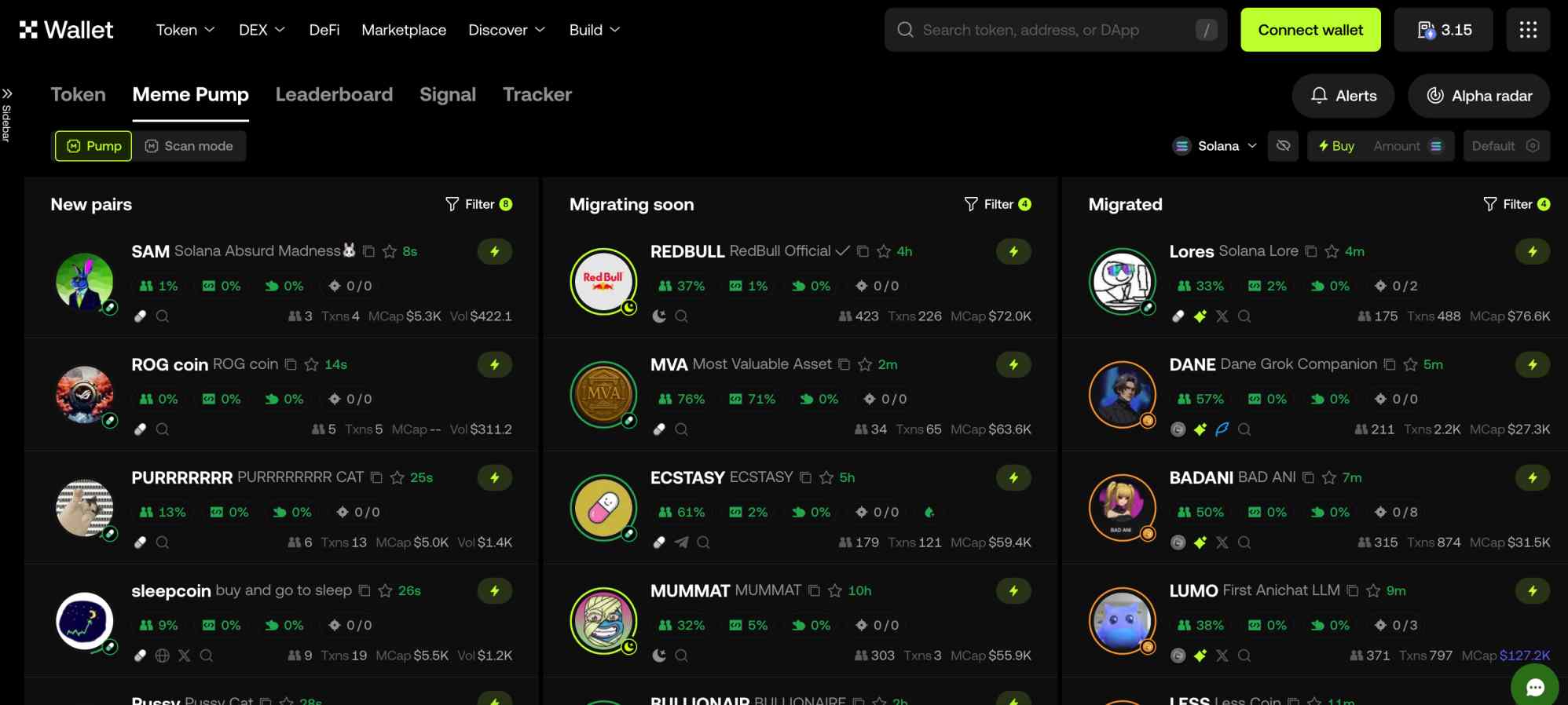
Once you’ve found a suitable token, clicking the “Buy” button takes you directly to the swap form. After selecting the payment asset, a smart contract deducts it from the wallet balance and deposits the new token a few seconds later.
High-risk, high-reward traders might appreciate the Meme Pump feature. Available on the market analysis dashboard, this feature connects users to Pump.Fun tokens — the highly speculative Solana meme coin casino.
OKX Wallet dApp Support
Our OKX Wallet review discovered several different ways to connect with Web 3.0 dApps.
The safest option is to engage with pre-approved applications. Click “Discover”, “Dapps”, and use the category filters to explore what’s available.
Popular categories include AI agents like ai16z, Virtual Protocols, and MyShell, plus DEXs such as Uniswap, 1inch Network, and Pancakeswap. DeFi users may also like restaking dApps, with OKX Wallet supporting EigenLayer, Puffer Finance, and ether.fi.
Users can also search for dApps manually. This method is also secure, as OKX only displays pre-approved projects.
If the required dApp doesn’t appear, other options exist. You can use the built-in dApp browser by entering the protocol’s URL. However, this is risky, as connecting to the wrong URL could leave your wallet balance exposed to cybersecurity scams like phishing and malware.
A safer alternative is to use the WalletConnect feature with a secondary desktop device. Users visit the dApp on a desktop web browser, scan its QR code with their smartphone camera, and approve the connection via OKX Wallet.
Remember that a scam dApp could drain the wallet funds, so carefully review applications before proceeding. In our view, it’s best to stick with the vetted dApps shown in the OKX Wallet interface.
OKX Wallet Fees
The wallet’s core features are completely free to use. This includes downloading the wallet app or browser, and receiving and storing cryptocurrencies.
When transferring coins or tokens to another wallet address, users pay the dynamic network fee (gas). OKX does not add any additional markup on outgoing transactions. Users can also customize what gas fees they pay — increasing them often results in faster transactions, as the network prioritizes them. Reducing fees isn’t recommended, as transactions may remain pending for long periods.
Fees also apply when using built-in features like token swaps and DeFi yields. OKX aggregates prices from third-party DEXs, so users do not pay additional commissions. The wallet provider may earn commissions from partnered DEXs, although it doesn’t publish this information publicly.
As per its non-custodial structure, all transactions are on-chain. This dynamic means users cover network fees whenever smart contracts move funds.
Is OKX Wallet User-Friendly?
OKX Wallet offers a smooth and reliable experience across all available device types, including the iOS and Android apps, and the browser extensions for Chrome, Firefox, and Edge.
Extensions use a similar 9:16 aspect ratio to the app, appearing on the right-hand side of the browser for quick access. Some features (like DeFi pools) securely open a new browser tab, where users complete their tasks on a full-screen dashboard.
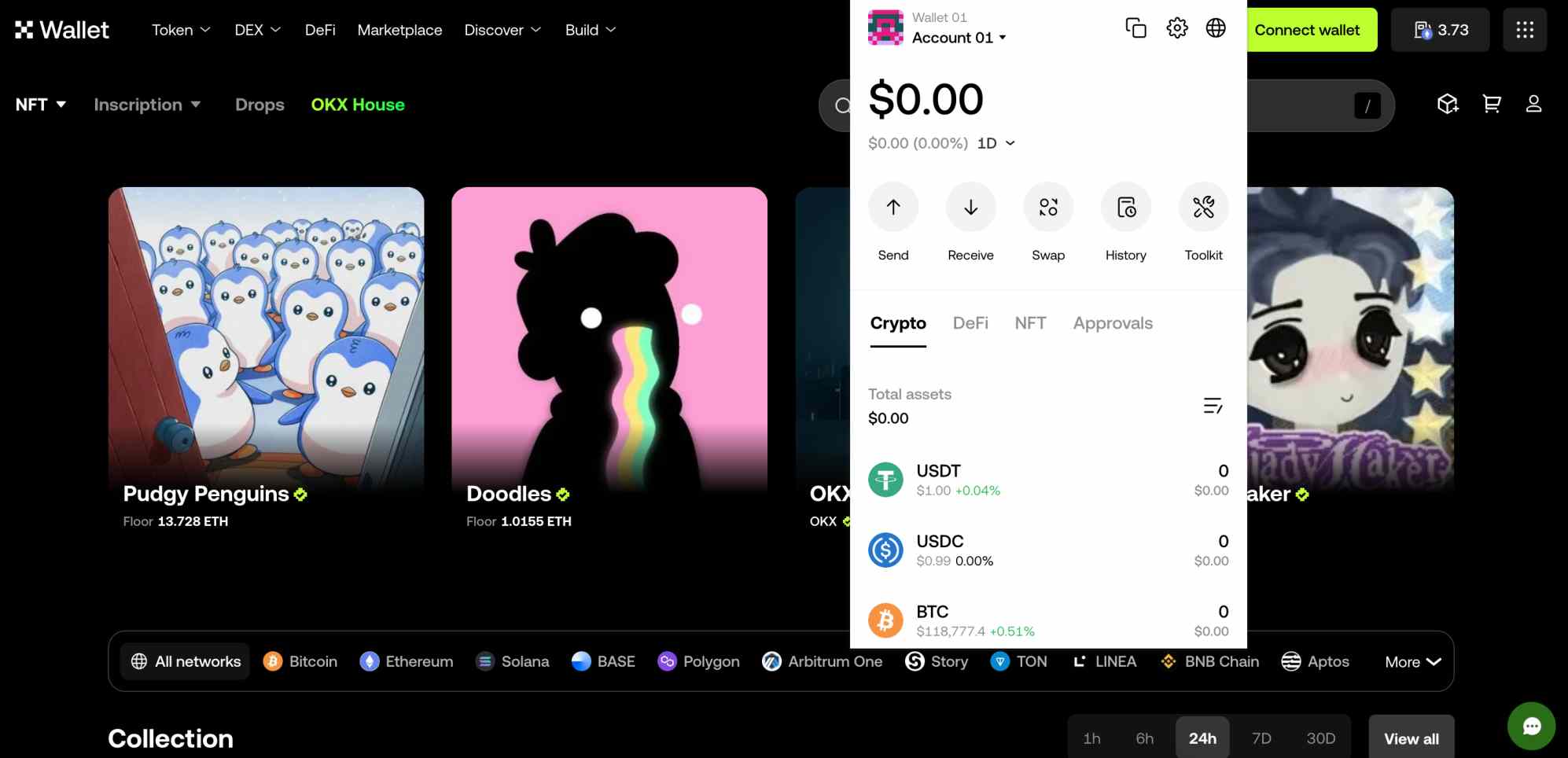
OKX guides users through the wallet set-up process to ensure a beginner-friendly experience. This includes securing the backup passphrase, with OKX asking users to reenter three of the 12 words. Depositing cryptocurrencies is also simple. Users select the asset, followed by “Receive”, as the wallet displays a unique address. Sending cryptocurrencies to another wallet address works similarly, but in reverse.
Trading tokens within the wallet interface also suits inexperienced investors. After tapping the “Swap” button, a simple conversion form appears. You enter the digital assets to trade and the amount, and OKX matches you with the best-priced liquidity pool. Swaps finish in under a minute, and they do not use market or limit orders like on traditional exchanges, simplifying the process further.
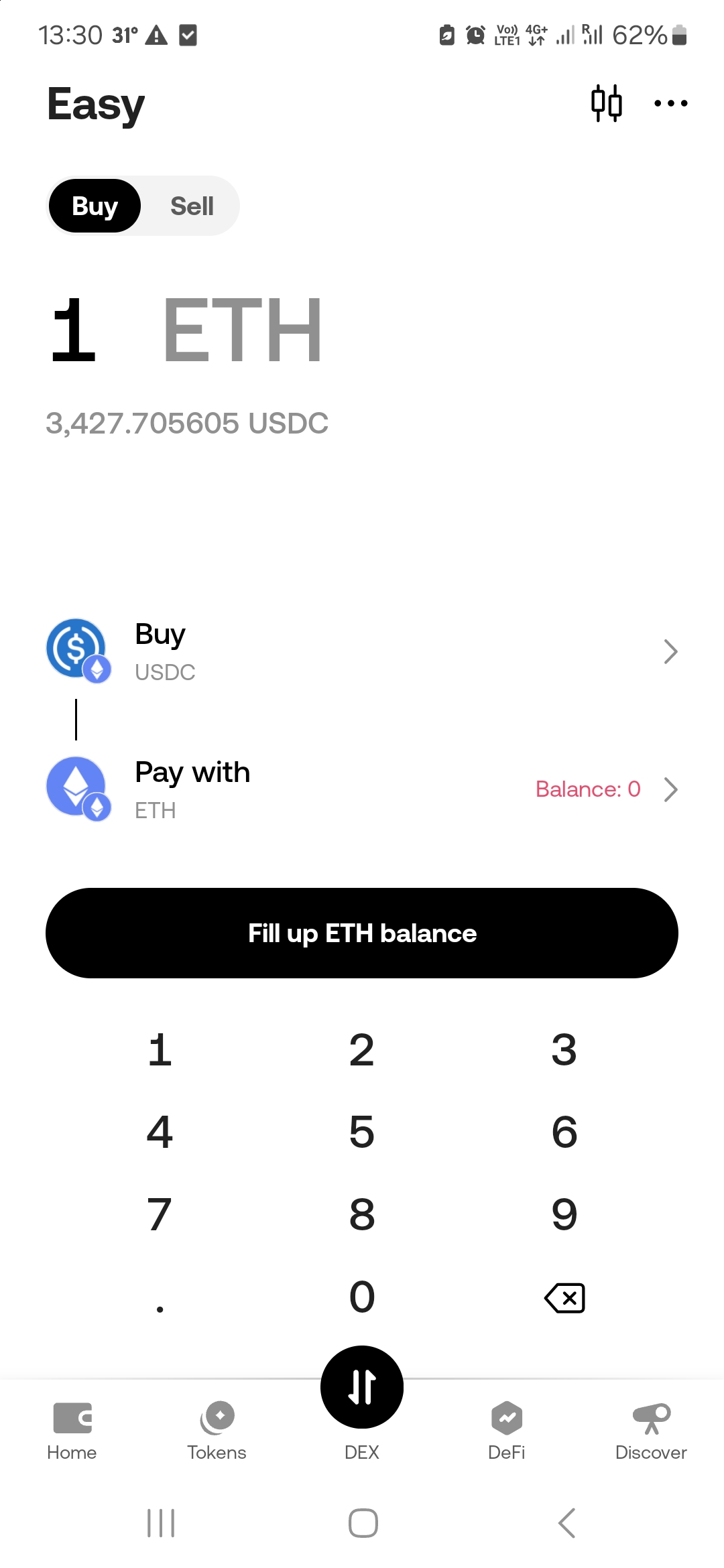
However, our OKX Web3 Wallet review found that novice crypto investors may find some features intimidating. The market analysis dashboard, for instance, covers millions of cryptocurrencies from different ecosystems, including nano-cap meme coins from Pump.Fun. Beginners may be tempted to purchase these tokens because of short-term price performance, not knowing that they could be scams.
DeFi tools, while comprehensive, present similar risks. The wallet does not display risk warnings about staking pools with thin liquidity or long lock-up terms.
Ultimately, OKX Wallet’s feature-rich ecosystem is a better fit for intermediate-to-advanced traders seeking seamless access to the Web 3.0 markets. Investors who simply want to store cryptocurrencies long-term may find that other wallet providers offer a more straightforward setup.
OKX Wallet Customer Support
OKX offers a dedicated support centre for its decentralized wallet. Topics include everything from getting started and securing backup passphrases to security and fees, with most user queries covered via extensive guides.
For real-time support, OKX Wallet offers a live chat feature 24/7. Users are initially asked to select their country of residence, which some users may find a drawback. This is because OKX is a decentralized and private wallet, so asking for even basic information, such as nationality, goes against its non-custodial framework. That said, you can enter any country and still access the chat box.
The bigger disadvantage is that during busy periods, it can take several hours until an agent joins the chat. Specific times vary depending on the team’s workload. Crypto investors encounter this issue with many free wallet services — non-custodial providers like OKX have millions of users, and their fee-free nature means limited resources to offer tier-one support.
Another option is to request assistance on the OKX Discord channel, although other users provide feedback rather than the OKX itself.
OKX Wallet vs Other Top Crypto Wallets
OKX Wallet offers many advantages over other crypto wallet providers, especially regarding supported blockchains and access to Web 3.0 markets. It falls short in other areas, such as built-in fiat facilities and support for derivative products like perpetual futures. OKX Wallet is also less secure than hardware wallets, as these devices store cryptocurrencies in cold storage.
Here is a table that compares OKX Wallet with other popular wallets:
| Wallet | Wallet Type | Supported Chains | Custom Tokens? | Security Features | Compatibility |
| OKX | Non-custodial | 130+ | Yes | Biometrics, open-source code, suspicious token warnings | Mobile and browser |
| Best Wallet | Non-custodial | 60+ | Yes | Two-factor authentication, biometrics, PIN | Mobile |
| Zengo | Non-custodial | 40+ | No | MPC technology, three-factor authentication | Mobile |
| Margex Wallet | Custodial | 36 coins and tokens only | No | Cold storage, daily withdrawal timeframe, two-factor authentication | Mobile and browser (centralized) |
| Binance Wallet | Non-custodial | Any standard available on the main Binance exchange | Yes | 24/7 security audits, MPC technology, | Mobile |
How to Get Started With OKX Wallet
This section of our OKX Wallet review explains how to get started. Read on to secure your wallet in under five minutes.
Step 1: Download OKX Wallet
Visit the OKX Wallet website and click “Get the Wallet App”. Then select your preferred device type and operating system/browser.
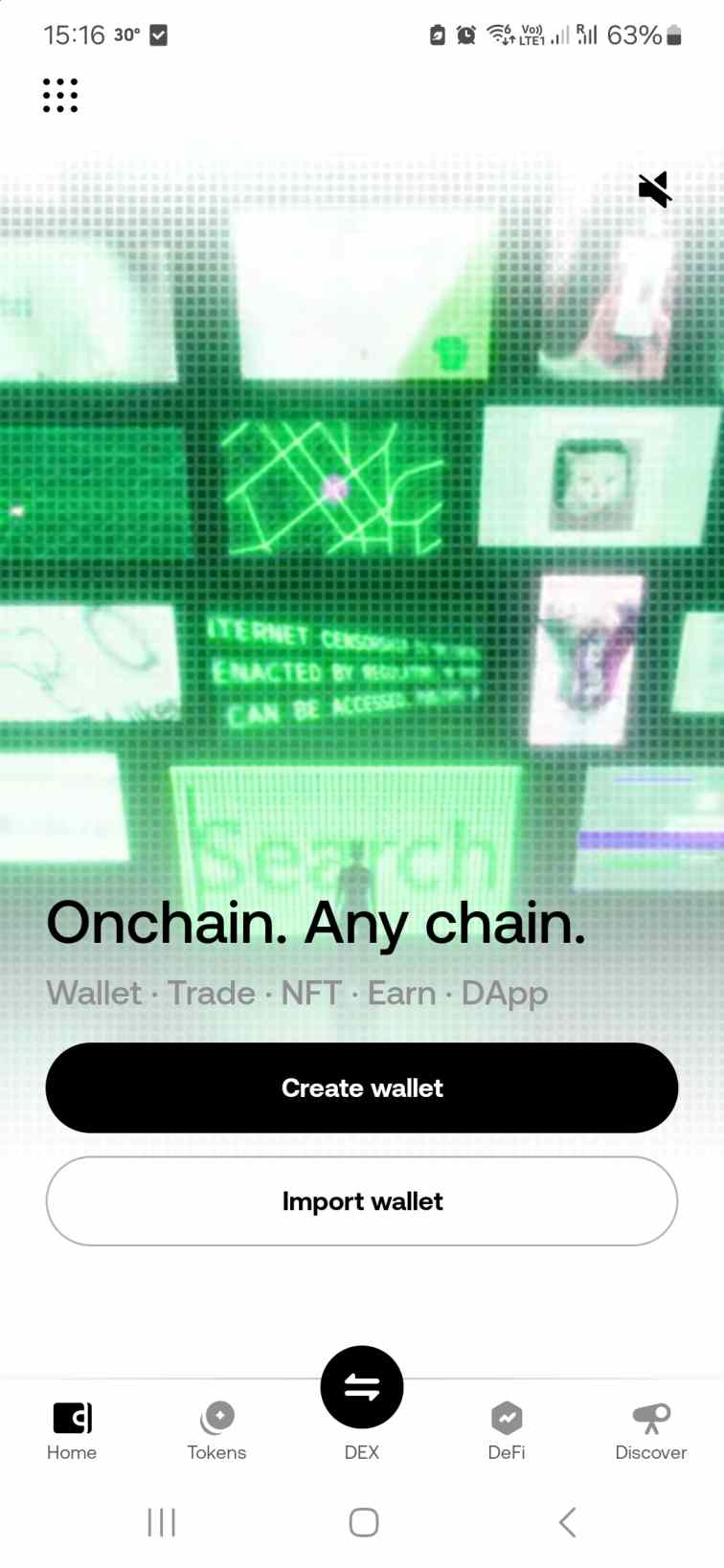
In this walkthrough, we’re using the Android app, although other wallet versions follow the same steps.
Visit OKX WalletStep 2: Complete Security Steps
Open the wallet application and select “Create Wallet”. Choose between biometrics (recommended) or a password. Biometric credentials depend on the device type. The OKX app uses fingerprint ID or facial recognition, while browser extensions require mobile verification (e.g., passkeys).
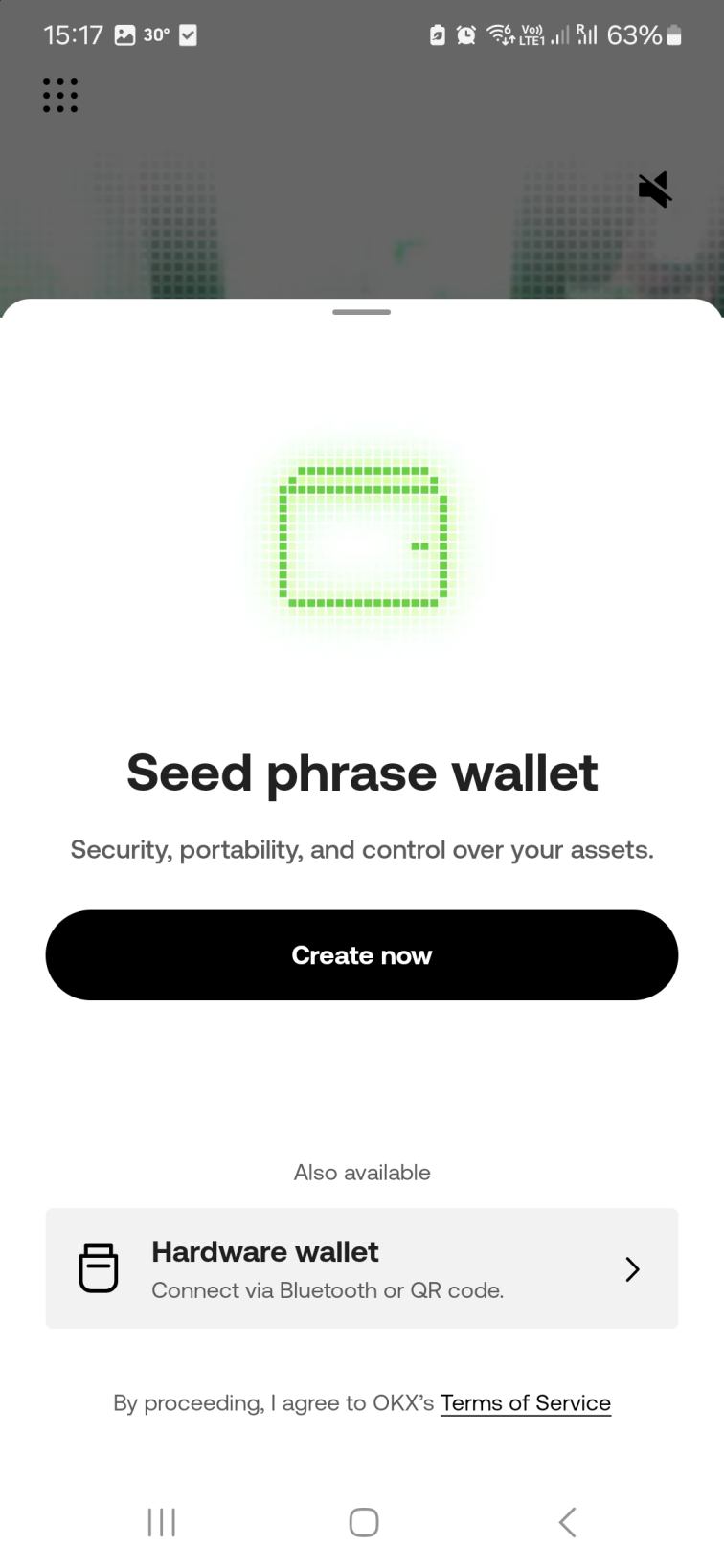
Now for the important part — securing the backup passphrase. OKX displays 12 randomly generated words, which you must write down on a sheet of paper. Ensure they’re written in the correct order, as the passphrase will not work if recovery is needed. OKX then asks you to enter three of those words as an extra security precaution.
Your OKX Wallet is now secure and ready to use.
Step 3: Receive Crypto
OKX Wallet supports crypto deposits only, so buying digital assets with a credit card or e-wallet isn’t possible. This is only possible on the main OKX exchange, which requires extensive KYC procedures.
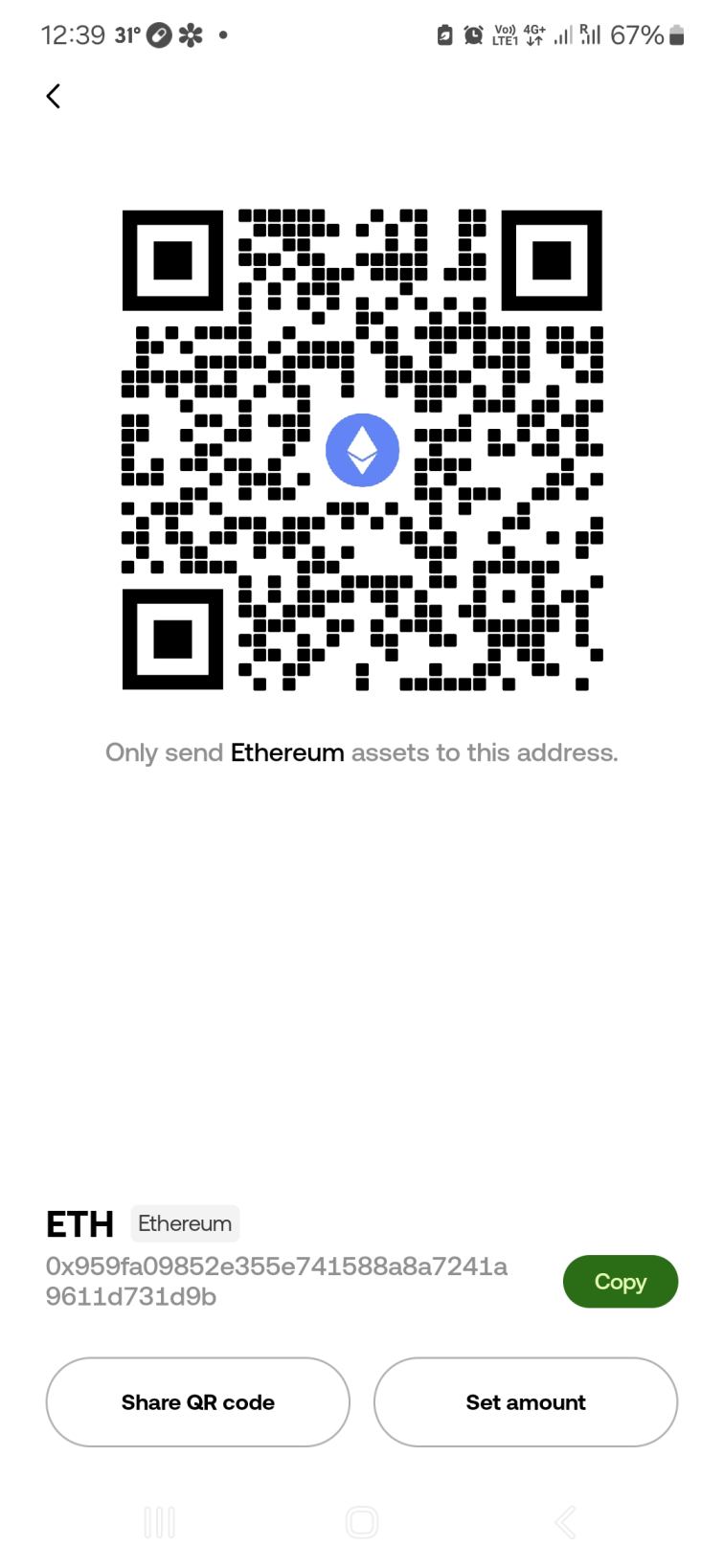
To transfer crypto to OKX Wallet, tap the “Home” button, followed by the asset you want to deposit. Then click “Receive” to reveal the wallet address. Transfer cryptocurrencies to that address from another location, such as an online exchange.
Step 4: Send Crypto
To send cryptocurrencies to another wallet address, click the coin or token name. Tap the “Send” button and paste the destination address in the required field.
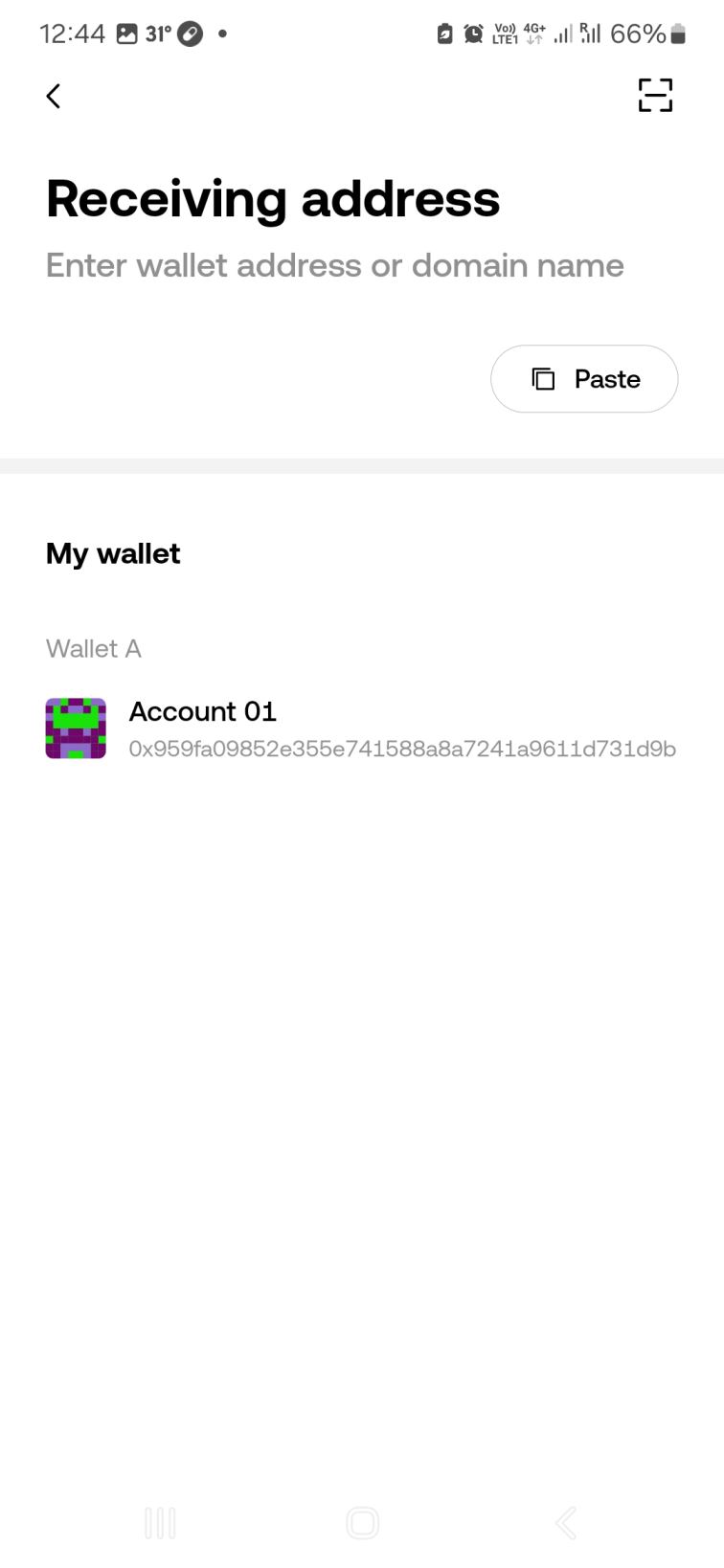
An even quicker method is to use the built-in scanner. Get the required wallet address on another device and scan the QR code. OKX Wallet auto-populates the address, which ensures you avoid mistakes.
Confirm the transfer, and the assets leave the wallet balance immediately.
OKX Review Final Thoughts
Our extensive OKX Crypto Wallet review shows the wallet is a good fit for intermediate-to-advanced users. It comes packed with Web 3.0 features like staking, cross-chain swaps, and collateralized loans, as well as a built-in gateway to speculative Pump.Fun tokens.
The non-custodial wallet is also ideal for storing cryptocurrencies on multiple chains — OKX Wallet is compatible with 130+ network standards. Ultimately, if you’re looking to access the broader crypto ecosystem in one safe place and eliminate reliance on centralized platforms, OKX Wallet is a solid storage solution.
Visit OKX WalletOur Methodology: How We Tested and Reviewed OKX Wallet
We used extensive research methods to compile this OKX Wallet review and ensure findings remain accurate and impartial. The team evaluated supported blockchains and networks, and whether the interface enables custom token additions. We tested core wallet functions on all available device types and operating systems, including sending and receiving assets on different token standards (e.g., ERC-20, BEP-20). These tests helped us verify navigation ease, speed, and reliability.
The methodology also tested each built-in feature, including swaps, staking, and market analytics. We compared key metrics like fees, spreads, and APYs with other wallet providers to make an informed decision. Research also covered security features to generate an overall safety score, alongside public documentation like third-party audits and GitHub feedback.
FAQs
Can I use OKX Wallet without verification?
What are the disadvantages of OKX Wallet?
Can I use OKX Wallet in the USA?
What kind of wallet is OKX?
References
- 2025 Crypto Crime Trends: Illicit Volumes Portend Record Year as On-Chain Crime Becomes Increasingly Diverse and Professionalized (Chainalysis)
- Custodial vs non-custodial wallets: What’s the difference? (MoonPay)
- What investors need to know about ‘staking,’ the passive income opportunity at the center of crypto’s latest regulation scare (CNBC)
- Pump.fun’s Streams Show the Dark Side of Memecoin Trading (Bloomberg)


