

What Is a Multisig Wallet? Security & Setup Guide





A multisig wallet is a crypto wallet that requires multiple private keys to approve transactions, not just one. This “M-of-N” setup mandates several independent sign-offs, preventing single points of failure. By distributing control, multisig wallets drastically reduce hack risks and human errors, making them essential for securing high-value crypto assets or shared funds.
In this guide, we’ll explain why multisig matters, key concepts and types of multisig wallets, how they work under the hood, and provide step-by-step guidance on setting up and managing a multisig wallet securely.
Key Takeaways
- Requires multiple signatures to prevent theft from single compromised keys, eliminating failure points.
- Enables group-managed funds like DAO treasuries, where no individual can move assets alone.
- Maximally secure when configured, but demands managing multiple keys and coordination between signers.
- On-chain approval records show which signers authorized transactions, ensuring transparency and duty separation.
- Initial configuration and ongoing coordination take effort, but deliver robust multi-layered asset protection long-term.
Multisig Meaning & Key Concepts
A multisig (multiple-signature) wallet requires multiple private keys to sign and authorize a single transaction. Unlike traditional single-signature wallets controlled by one key holder, multisig distributes control. Several keys must collaborate to spend funds, significantly enhancing security against theft or loss.
Single-signature wallets offer simplicity but create a single point of failure. Losing or compromising the sole key means losing funds. Multisig wallets eliminate this risk by demanding multiple approvals. Funds remain secure even if one key is lost, as others can still meet the signing threshold.
Key terms define a multisig operation. A cosigner (or copay) holds one private key and participates in approvals. The quorum is the minimum number of signatures required, also called the threshold. This is denoted as “M-of-N”, where ‘n’ is the total number of keys created and ‘m’ is the threshold needing signatures.
For example, a 3-of-5 multisig has five cosigners. Any three must sign to move funds. If fewer than three sign, the transaction fails. This ensures no single cosigner can act alone, enforcing collective decision-making.
Shared custody describes how multisig distributes control. When different people or devices hold keys, no individual can access funds without the others. Businesses use this for team-managed treasuries, while individuals might spread keys across devices. Even self-custody benefits from this distributed security model. Implementing multisig adds complexity versus single-sig setups.
Managing multiple keys and coordinating cosigners requires effort. Transactions take longer as approvals are gathered. However, this trade-off delivers robust protection: thieves must compromise several keys simultaneously, which is vastly harder than stealing one.
Bitcoin multisig uses specialized address types like P2SH (starting with “3”) or P2WSH (complex “bc1” addresses). These encode the multi-key requirement in their locking scripts, though the exact setup isn’t visible until funds are spent.
Ultimately, multi-sig functions like a vault needing several keys turned simultaneously. It shifts security from guarding one secret to managing distributed control, drastically reducing risk for valuable or shared assets despite requiring more coordination.
How Do Multisignature Wallets Work?
Multisignature wallets still follow the basic transaction lifecycle of any crypto wallet, but the signing process involves multiple steps and parties. Here’s how a typical multi-sig transaction flow works:
- Initiation: A cosigner creates a transaction (amount, recipient), but it’s only partially signed, missing the required threshold. This creates a file like Bitcoin’s PSBT.
- Co-signature collection: The partial transaction is shared with other cosigners (via wallet software, file, or QR). They review and add their signatures if valid.
- Finalization & broadcast: Once enough signatures (M-of-N) are collected, the transaction is finalized into the blockchain format and broadcast to the network’s mempool.
- Mining & confirmation: Miners/validators include the fully signed transaction in a block. Once confirmed on-chain, funds move. The blockchain record shows the multisig was satisfied.
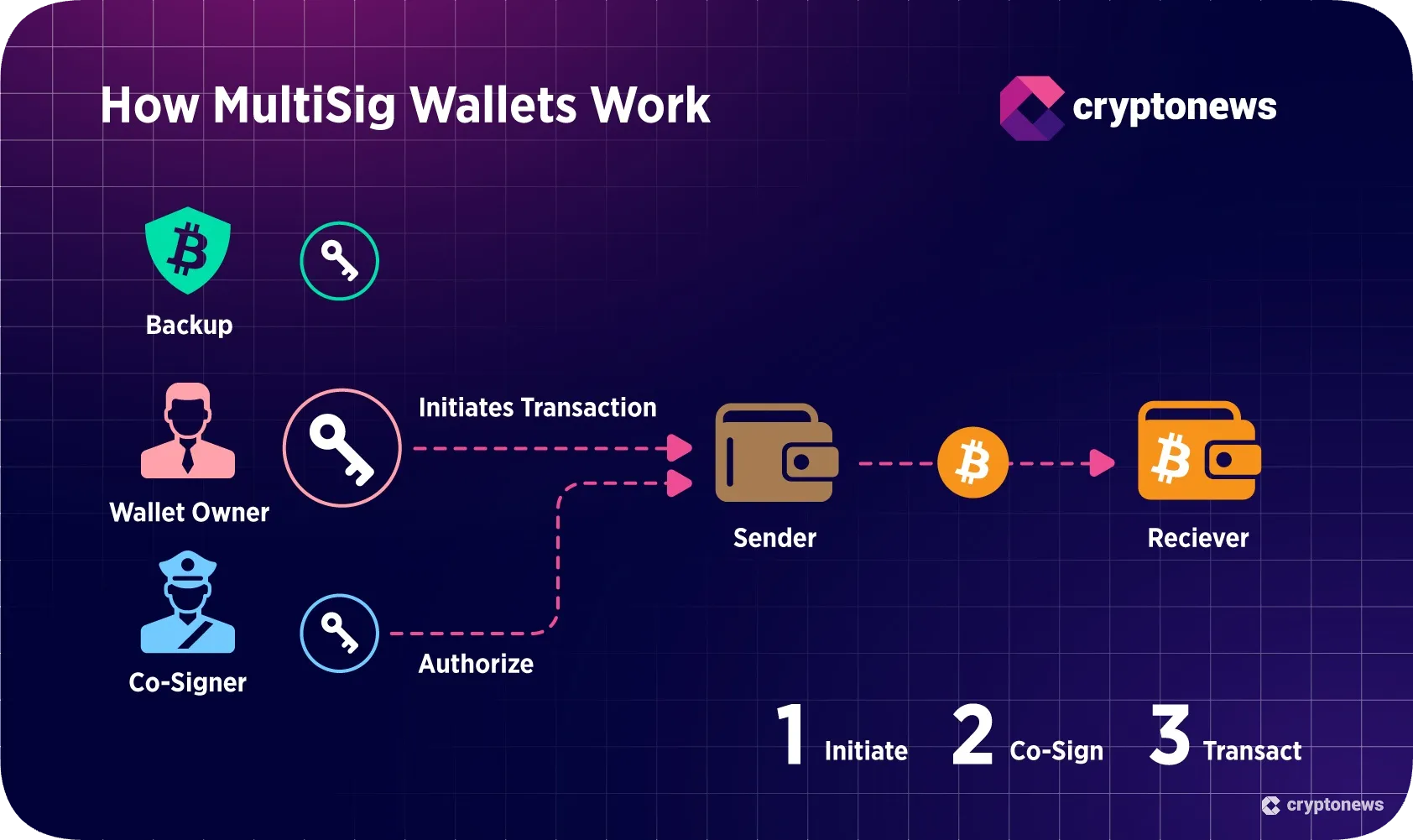
Bitcoin supports multisig natively via its scripting system (using opcodes like OP_CHECKMULTISIG). Funds are locked in special addresses (P2SH/P2WSH) with embedded rules requiring m signatures from n predefined public keys. The network itself enforces these rules.
Ethereum lacks native multisig addresses. Instead, it uses smart contract wallets. These contracts hold funds and code mandating multiple approvals from owners before executing transfers. Approvals are often collected off-chain, with one on-chain transaction submitting all signatures to trigger the transfer.
Multisig transactions cost more than single-signature ones. On Bitcoin, this happens because they contain multiple signatures and keys, making the transaction physically larger. Since fees are based on size, bigger transactions mean higher fees. Ethereum works differently. Using a multisig contract like Gnosis Safe has two main costs: a significant upfront fee to deploy the contract itself, and an extra fee every time you execute a transaction to verify signatures and run the contract’s logic. While techniques like off-chain signatures can help, gas costs remain higher than simple transfers.
Transaction speed has two phases. Once a multisig transaction is fully signed and broadcast to the network, it is confirmed as fast as any regular transaction because miners or validators process them the same way. The real bottleneck happens before broadcasting. Getting all the required signers to approve takes time. Coordinating people across different time zones, schedules, and manual reviews can create delays that have nothing to do with the blockchain. Think of it as waiting for everyone in a group to sign off on a document before you can send it. Additionally, some smart contract features, like time delays for security, intentionally make this pre-broadcast phase longer.
Also, here are some of the main points clarified before we dive deeper into some concepts:
- Cosigner: Holder of one private key authorized to sign transactions for the multisig wallet.
- Quorum/threshold (M): The minimum number of signatures (M) required from the total keys (N) to authorize a transaction.
- M-of-N: The multisig configuration (e.g., 2-of-3 means 3 keys exist, any 2 must sign).
- Shared custody: Distribution of key control among multiple parties/devices, ensuring no single entity can move funds alone.
Types of Multisig Wallets
Multisig wallets require multiple approvals to move funds, but implementations vary. Below are key categories based on technical design, key management, and advanced features.
Bitcoin Script-Level
Bitcoin handles multisignature natively through its scripting language, embedding rules directly into addresses. You use wallet software (such as Electrum and Sparrow) to create addresses requiring M-of-N signatures. Transactions include all the necessary signatures in their data, making them larger and slightly costlier than single-signature transfers.
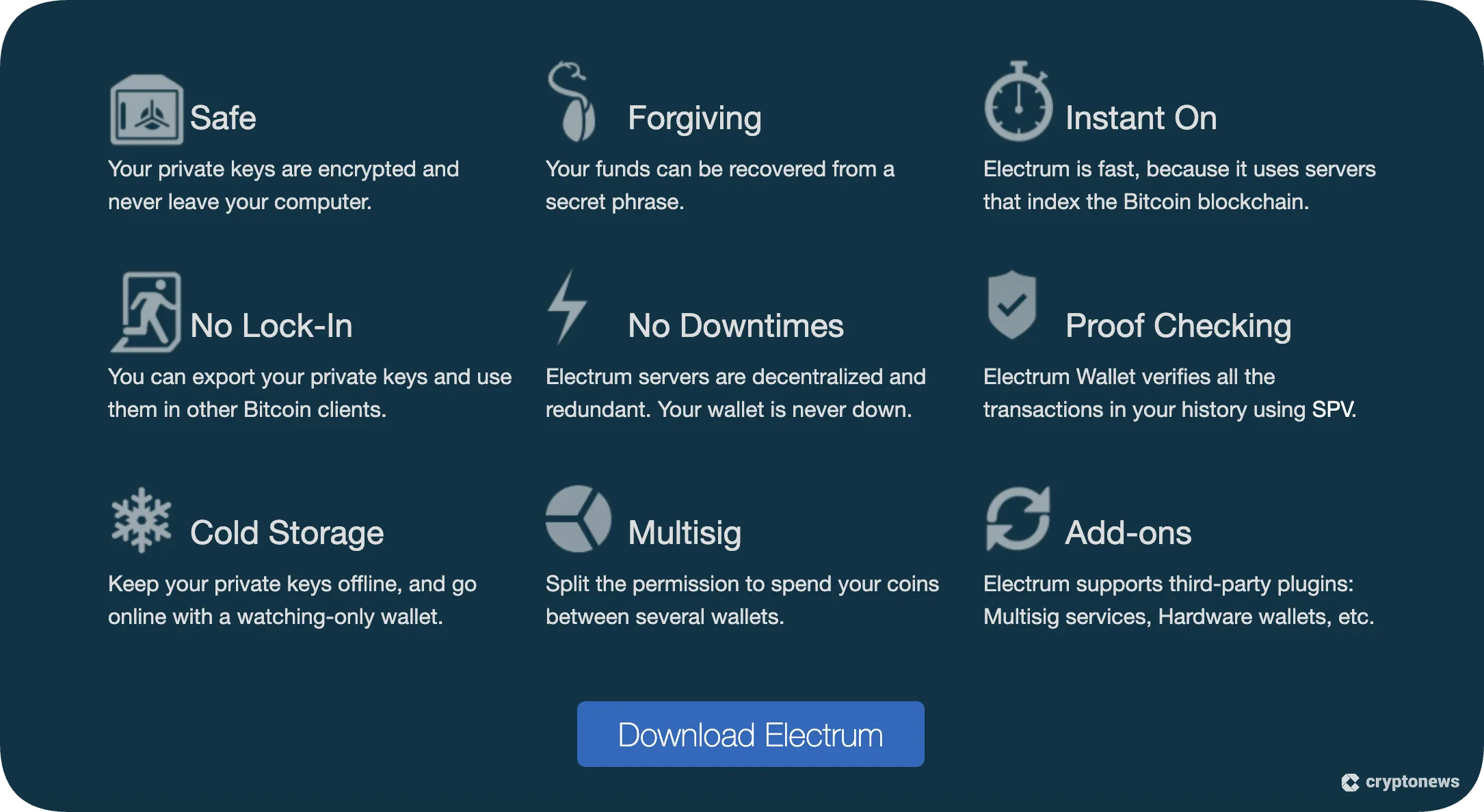
Example:
A user sets up a 2-of-3 wallet with keys on a Ledger, Trezor, and mobile phone. Any two devices must sign to spend funds. Services like Casa simplify this setup while letting users retain key control.
Multi-Signature Ether Wallets
Ethereum multisig wallets are smart contracts, not simple accounts. You deploy a contract defining owners and a threshold. Spending requires proposing a transaction, collecting off-chain/on-chain approvals, and executing it – all managed by the contract’s code. This adds flexibility (adding owners, for example) but introduces smart contract risk and higher gas fees.
Example:
Decentralized Autonomous Organizations (DAOs) widely use Gnosis Safe (now “Safe”). A 4-of-7 Safe might hold a DAO’s treasury, requiring four members’ approvals per transaction. BitGo offers a similar 2-of-3 contract for institutions.
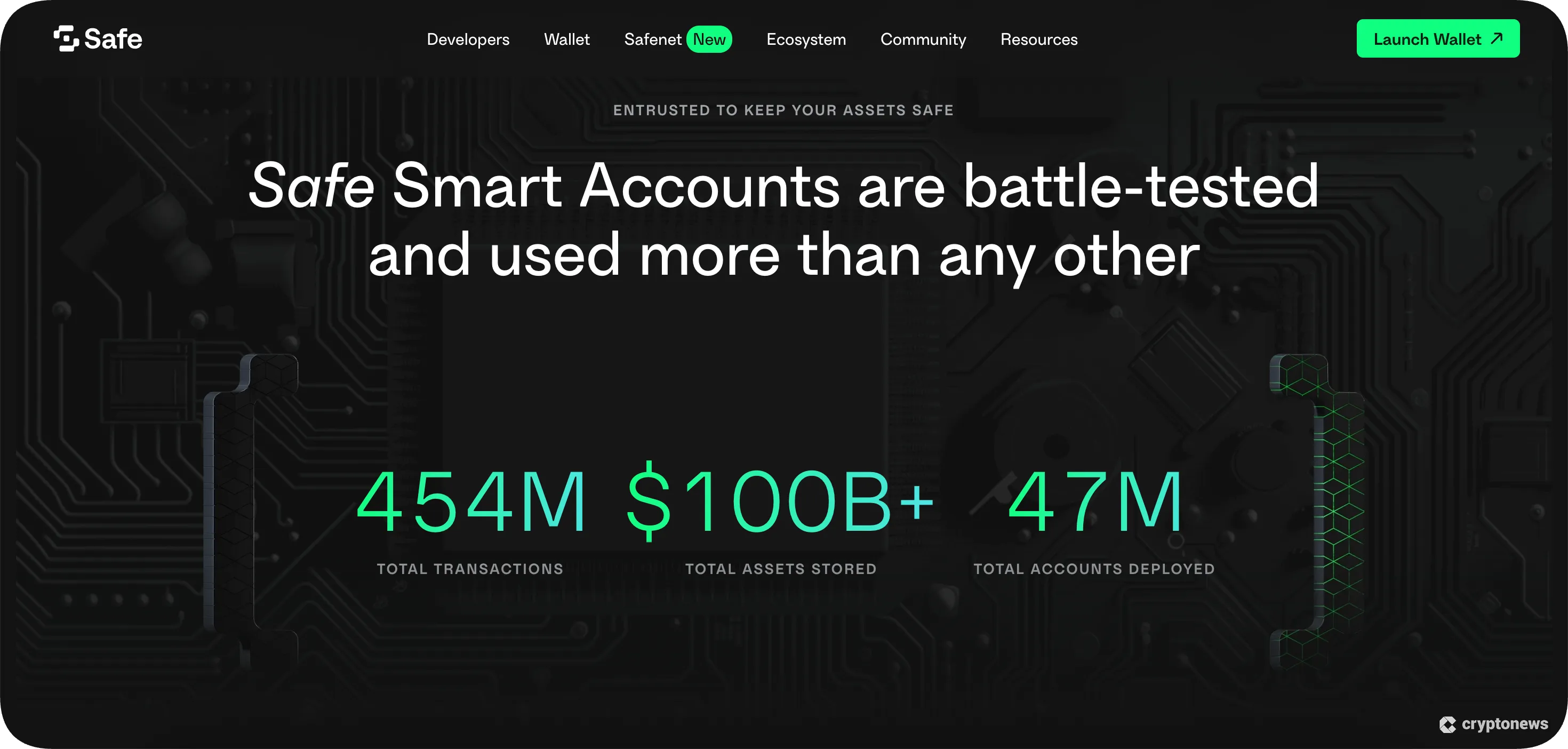
Custodial vs Self-Custodial
Self-custodial multisig means you (and cosigners) hold all private keys. Tools like Electrum or Sparrow help manage setups, but you’re responsible for security and coordination. Custodial multisig involves a trusted third party holding ≥1 key, simplifying setup and recovery but requiring trust in that provider.
Example:
For self-custody, a family stores keys on their hardware wallets. For custodial, Coinbase Vault holds two keys (one offline), and the user holds one. Withdrawals need two signatures.
Hardware-Assisted vs Software-Only
Hardware-assisted multisig stores each key on a separate device (such as Ledger and Trezor). Signing occurs securely on the device, isolating keys from online threats. Software-only multisig uses keys in apps (phones, PCs), which is easier but riskier if devices are compromised.
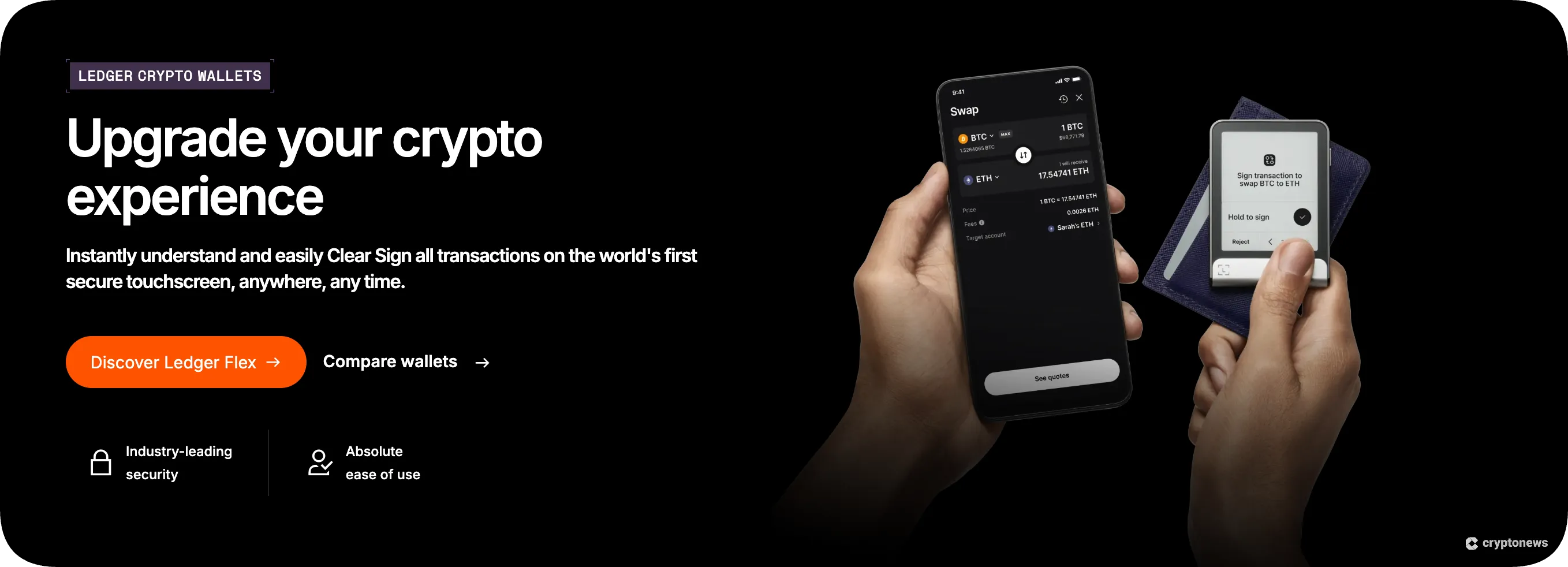
Example:
A hardware setup could use a Ledger + Trezor + Coldcard in 2-of-3 mode. Software-only might involve three phones running BlueWallet in a 2-of-3 configuration.
Threshold, Social-Recovery, and Timelocked Variants
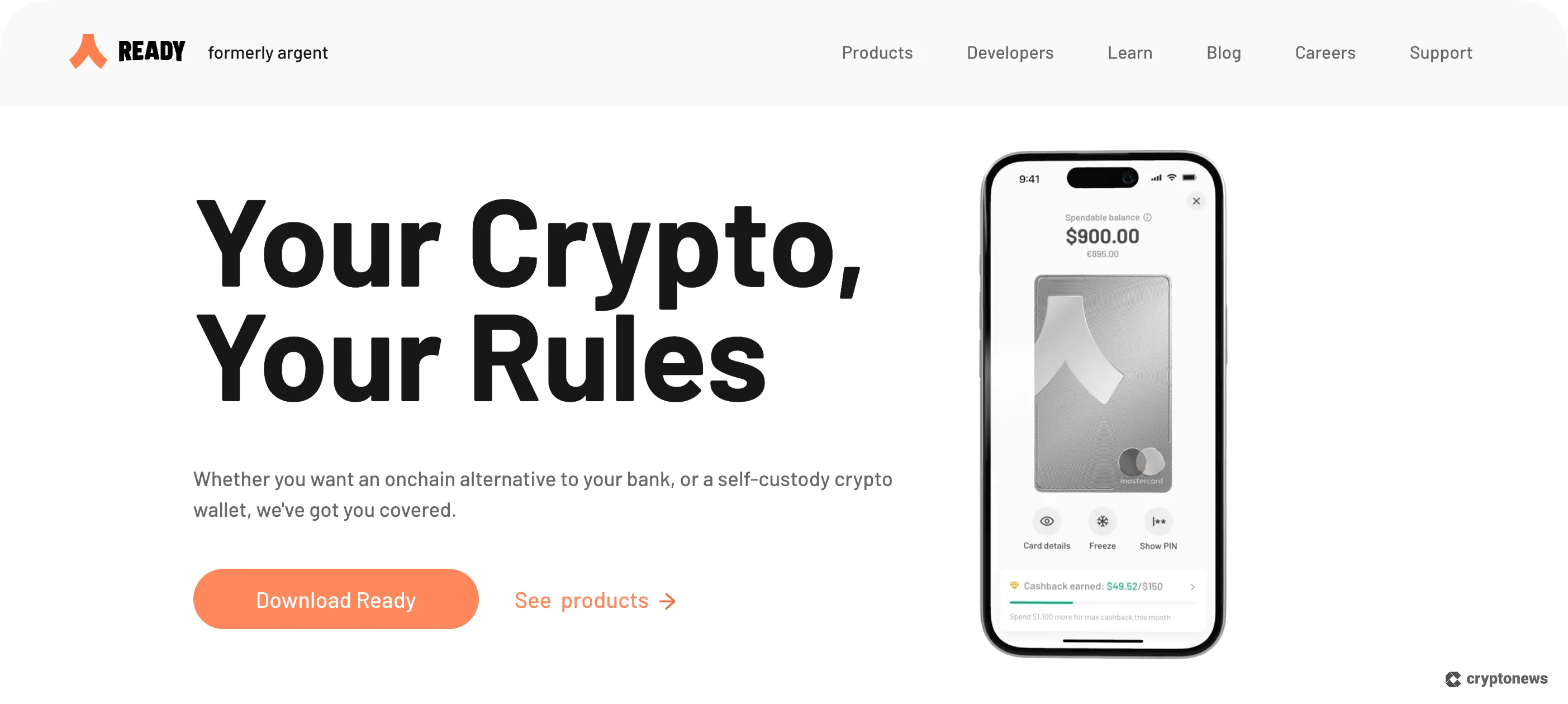
Threshold schemes (like MPC) allow collaborative signing without exposing keys. Social recovery (Ready, previously called Argent, for example) uses “guardians” to restore access if you lose your key; daily spending needs only one signature. Timelocks add delays (such as: “funds need 2-of-3 signatures now, but 1-of-3 after 90 days”).
Example:
Ready lets you assign friends as guardians for wallet recovery. Bitcoin scripts can enforce timelocks, like allowing a backup key to move funds after 30 days if the two main keys are lost.
Why Use a Multisignature Crypto Wallet?
Multisig wallets exist to solve some critical issues in crypto custody and enable scenarios that single-key wallets struggle with. Here are the main reasons and benefits for using a multisig wallet:
✅ Enhanced Security
Multisig wallets eliminate single points of failure. Unlike standard wallets, where one compromised key loses everything, multisig requires breaches across multiple keys. For example, storing keys on three separate hardware wallets means thieves must physically access two devices simultaneously, which is extremely unlikely.
Malware can’t drain funds alone since transactions need additional approvals. Even losing one key isn’t catastrophic if your threshold allows recovery with the remaining keys. This layered security makes multisig essential for large holdings.
✅ Shared Control & Trust
Multisig enables collaborative custody without centralized trust. Businesses use it for treasuries, requiring multiple executives to approve transfers. Families adopt it for inheritance planning, ensuring funds need two signers.
DAOs rely on it for community-governed treasuries. Escrow services use neutral arbitrators in 2-of-3 setups. Funds can’t move unilaterally, and parties can recover assets even if one participant disappears.
✅ Accountability & Governance
Every transaction leaves an auditable blockchain trail showing which signers approved it. Charities prove two trustees authorized expenditures. Companies enforce the separation of duties, where one employee initiates payments and another approves them. Auditors verify compliance by checking on-chain signatures. This mirrors corporate dual-authorization policies while leveraging blockchain transparency.
✅ Phishing & Scam Protection
Multisig acts as a human firewall against scams. If one signer gets tricked by a fake “urgent transfer” request, the transaction still needs other approvals. A cosigner can halt suspicious requests by refusing to participate. Attackers must compromise multiple people simultaneously, drastically reducing success rates.
✅ Compliance & Insurance
Institutions increasingly mandate multisig. Insurers offer better rates for multisig cold storage due to reduced hack risks. Regulatory frameworks like SOC2 require it to prove controlled asset access, making multisig a professional standard for handling third-party funds.
Risks, Trade-Offs & Limitations
Multisig wallets are powerful, but they’re not without downsides and risks. It’s important to understand these trade-offs:
- The setup is complex, and using it feels clunky: Managing multiple keys and devices confuses non-tech users. Setting it up right takes careful work. Backing up every key and the wallet’s setup details is essential. If you mess this up, recovery becomes a nightmare. Using it daily also means more steps than a simple wallet.
- Losing keys can still lock your money forever: Multisig protects you if you lose *one* key. But lose more keys than your setup allows (like losing 2 keys in a 2-of-3 wallet), and your funds are gone permanently. Replacing a lost key isn’t simple either; you usually need to move all funds to a brand new wallet using the keys you still have.
- Smart contracts can have unfixable bugs (Especially Ethereum): If your multisig uses a smart contract, a coding error can cause disaster. Remember the Parity wallet bugs? They locked up millions permanently. Use only well-tested, audited contracts. Also, if signers refuse to cooperate due to disagreements, funds can get stuck (“politically locked”).
- Transactions cost more money: Signing with multiple people creates bigger transactions. This means higher fees, especially on Bitcoin during busy times. Ethereum multisig actions also cost extra gas for the contract work.
- People can be the weak spot: If enough signers team up maliciously (like 3 people in a 3-of-5 setup), they can steal the funds. This process is called collusion. Choosing a higher threshold (say 5-of-7) makes collusion harder but increases the risk of being locked out by lost keys. Also, if keys aren’t truly independent (stored together or controlled by one company, for example), you lose the main security benefit. It becomes a single point of failure again.
In short, Multisig boosts security by requiring multiple approvals, but it trades simplicity for this protection. The most significant risks involve user error during setup, permanent loss if too many keys vanish, unfixable smart contract flaws, higher costs, and threats from dishonest signers or poor key separation. Handle it carefully.
How to Tell Whether a Wallet Is Multisig
How can you identify if a given crypto wallet or address is multisig? This is a valuable question for your wallets (to verify their type) and when observing other addresses (for example, forensics or curiosity). Here are a few clues and methods:
Setting Up a Multisig Wallet: Step-by-Step Tutorial
Setting up a multisig wallet requires a bit of planning and careful execution. Here’s a general step-by-step guide using a Bitcoin 2-of-3 multisig as an example:
Step 1: Choose Setup
Pick your multisig wallet software (like Electrum or Sparrow) and decide your key setup: how many total keys (N) and how many need to be signed (M). A common choice is 2-of-3. Decide who holds each key – different people or your own devices. Use hardware wallets for the best security. Plan clearly: “Alice, Bob, and Carol each hold one key; any two can sign.”
Step 2: Generate Keys
Create each key’s seed phrase separately and offline on its device (hardware wallet recommended). Securely back up each seed phrase (paper/metal). Treat each backup as critically as a single-sig wallet. Add passphrases if desired. Generate fresh seeds; don’t reuse old ones – label keys privately (e.g., “Key A”). You need N working private keys with backups.
Step 3: Exchange Xpubs & Create Wallet
Share each key’s public extended key (XPUB) – never the private seed. Input all N XPUBsinto your multisig software and set the threshold (M). The software creates your multisig address. Crucially, verify the setup matches on all signers’ devices if possible. Ensure everyone sees the same multisig address/fingerprint. This prevents errors or tampering.
Step 4: Save Wallet Config
Immediately back up the wallet’s configuration details: the list of XPUBs, derivation path, and threshold (M-of-N). This might be a “redeem script” or “descriptor.” Store this backup securely (it reveals addresses but can’t spend). Give a copy to each cosigner for redundancy. You need this + the seeds to recover the wallet later.
Step 5: Test with a Small TX
Send a tiny amount ($10) to your multisig address. Confirm it arrives. Then, try spending it back out. Initiate the spend, gather the required M signatures using your planned method (e.g., connect devices, share files), and broadcast. Confirm the spend succeeds on-chain. This tests keys, the signing process, backups, and setup before moving significant funds.
After testing, document the signing procedure for all cosigners, especially non-technical ones. Keep devices updated and secure. Plan for key loss: if one key is lost in a 2-of-3, use the two remaining keys to move funds to a new multisig wallet with a replacement key. Practice this recovery drill. Each cosigner must also verify that their seed backup works. Setting up multisig requires significant initial effort and coordination, but following these steps methodically builds a far more secure foundation than a single key. The hardest part is often coordinating the key exchange and verification.
Multi-Signature Crypto Wallet Day-to-Day Management
Using a multisig wallet means coordinating with others for transactions. Typically, one person initiates the payment: they enter the details in the wallet app, creating a partially signed transaction. Then, the required cosigners step in. They get notified (often via app alerts or messages) to review and approve the transaction. Always double-check the amount and recipient before signing. Once enough signatures are gathered, the transaction broadcasts automatically.
Remember, transactions can time out – don’t let them sit half-signed for too long, or you might need to restart the process. Cosigners should also know how to decline suspicious requests.
People change roles. Updating the wallet depends on the system if someone leaves your organization or if you need to add a new signer. On Ethereum (like Gnosis Safe), you can often adjust signers directly via a multisig transaction. On Bitcoin, you can’t simply edit the existing setup. You must create a new multisig wallet with the updated signer list and move all funds using the current keys. This requires having enough current signers available to approve the move. Do this proactively if a key holder leaves or a key is compromised.
Plan for emergencies. If a signer loses their device or key, act quickly. If you still have enough keys to meet the threshold, your funds are safe for now, but you’ve lost your safety margin. Use the remaining keys to move funds to a new multisig with a replacement key as soon as possible. If a key might be exposed, pause activity and move funds immediately. Everyone should know who to contact if their device is lost or compromised. Set up watch-only access for stakeholders – this lets them see balances and incoming transactions using just public info, providing oversight without signing power. Tools like Electrum (Bitcoin) or Etherscan (Ethereum) make this easy.
Balance convenience and security. Using a mobile app for approvals is handy for smaller, frequent transactions. However, a phone is less secure than a hardware wallet confirmation. Consider policies requiring at least one highly secure, offline hardware key for larger transfers. Keep software and firmware updated across all signers, but coordinate these updates to avoid compatibility issues. It’s important to regularly test your setup with small transactions to ensure everything still works smoothly. While multisig adds steps compared to a single key, it quickly becomes routine and offers much stronger asset protection.
How to Remove Multisignature From a Wallet?
What if you set up a multisig and later decide to return to a simple single-signature wallet? Or perhaps dissolve the shared wallet because the purpose has concluded? There’s no magic “turn off multisig” button. You have to move the funds out of the multisig into a new wallet with the desired single signature (or a different multisig setup).
Here’s how to effectively “remove” multisig:
- Export funds to new single-sig: Create a new 1-of-1 wallet address. Use the existing multisig to send all funds to this new address in one or a few transactions, requiring approval from all current signers. Once confirmed, the multisig is empty. Securely archive old multisig data and document the group’s consensus decision.
- Re-deploy contract (Ethereum): For Ethereum multisig contracts, execute a transaction to reduce the signature threshold to 1 and remove all owners except the intended single controller. This reconfigures the multisig into a 1-of-1 wallet, requiring existing signer approval. Alternatively, simply send all funds to a new single-sig EOA.
- Risks & audit: Downgrading to single-sig significantly reduces security by eliminating multisig protection against key loss/theft. Carefully assess necessity versus alternatives. Always audit the new setup before moving funds: verify secure seed backup, correct destination address, and test with a small amount. Understand heightened risk during temporary consolidation.
- Legal and governance approvals: If funds involve multiple stakeholders, formally document the dissolution decision. Obtain explicit written agreement from all required signers (or governed majority) approving the plan and identifying the new controller/address. This often requires formal governance approvals to prevent disputes, treating it like closing a joint account.
- Executing the transition: Coordinate the transfer when all signers are available. Initiate and approve the transaction, sending funds to the new address or reconfiguring the contract. Verify funds arrive and are accessible in the new single-sig wallet or that the re-deployed contract functions as 1-of-1.
- Clean-up: The empty multisig persists (Bitcoin addresses remain, Ethereum contracts exist). Signers should archive or clearly label the old wallet as decommissioned in their interfaces, but retain records for historical/audit purposes. Securely manage old keys according to the archival plan.
Effectively removing multisig involves either exporting funds to a new single-sig address via a transaction approved by all current signers or, on Ethereum, re-deploying the contract with a 1-of-1 signer by changing its threshold and owners. Both methods require the final cooperation of the existing multisig quorum.
Critically, this downgrade significantly reduces security by removing the multisig safety net, making funds vulnerable to single points of failure like key loss or theft. Auditing the new single-sig setup before dissolving the quorum is essential, including verifying secure seed backups, accurate destination addresses, and testing with small amounts.
Furthermore, obtaining formal legal/governance approvals is very important if stakeholders share funds. This requires documented consensus, ideally written agreement from all necessary parties, approving the specific plan and controller, potentially involving corporate governance processes to prevent future disputes. Execute the chosen method when signers are available, verifying successful completion. Afterwards, clean-up involves securely archiving the old multisig configuration while retaining records. Treat this transition with the utmost seriousness due to the permanent security reduction.
Real-World Multisig Wallet Examples & Case Studies
To better understand how multisig is used, let’s look at a few real-world examples and scenarios:
- BitGo 2-of-3 Institutional Custody: BitGo pioneered institutional multisig custody, securing over $60 billion via its 2-of-3 model. Clients hold one key, BitGo holds another, and a third backup key enforces policies like spending limits. Transactions require two signatures, preventing BitGo from acting alone and protecting against client key compromise. This model, adopted widely post-Mt. Gox offers audit logs and compliance features, validating multisig for exchanges and funds across Bitcoin, Ethereum, and other assets.
- Gnosis Safe DAO Treasury; Role-Based Policies: Gnosis Safe (now Safe) is the standard multisig for Ethereum DAO treasuries, like MakerDAO’s reserves. It requires majority signer approval for transactions, integrates with DAO governance for signer management, and supports role-based policies via modules (spending caps for specific keys, for example). Its security prevented internal fraud at DAO Maker, as a rogue actor couldn’t bypass multisig. User-friendliness and support for ERC-20s/NFTs make it essential for NFT collectives and DeFi projects.
- Ledger-Nano-plus-Sparrow Personal 2-of-3 with Distributed Hardware: Individuals achieve maximum security via distributed 2-of-3 multisig: one Ledger at home, one Trezor in a bank vault, and a Coldcard backup at a relative’s. Using Sparrow Wallet, spending requires accessing two locations (home and bank, for example). Geographic distribution and diverse hardware brands prevent single-point failures (theft/disaster). Discipline is key – storing all devices together negates the security benefits.
- Notable Hacks Avoided Because of Multisig vs Single-Sig Breaches: Multisig has repeatedly prevented major losses. The Poly Network hack ($613M) resulted from a leaked single-sig key controlling contracts; multisig governance could have blocked it. Single-sig phishing compromises often drain funds instantly, while multisig requires broader breaches.
- Statistics of Bitcoin in Multisig: On-chain analytics indicate that multisig adoption is rising significantly. By 2024, over 20% of Bitcoin addresses were multisig, up from around 10% in 2021. While exact volume figures vary, a substantial portion of Bitcoin (notably exchange cold storage) is secured this way. Ethereum mirrors this trend, with billions in Gnosis Safes for DAO treasuries and VCs, cementing multisig as a security best practice.
Each of these examples underscores a theme: multisig is about trust management – either distributing trust among multiple people or devices, or establishing a higher threshold for actions to protect against mistakes and malice. Whether it’s a Fortune 500 company securing treasury funds with BitGo, or a grassroots DAO using Safe to manage a community fund, or a holder safeguarding their life savings across hardware wallets, multisig provides a reliable framework to do so.
Conclusion: What Is a Multi-Signature Wallet?
A multi-signature wallet enhances cryptocurrency security by requiring multiple independent keys to approve transactions. This shared consensus model prevents a single point of failure, ensuring no individual mishap or bad actor can compromise funds alone. It replaces sole control with mandatory teamwork, aligning better with secure practices and collaborative governance structures for asset management.
While offering significant benefits like theft prevention, loss protection, and transparent fund control, multisig increases complexity and reduces convenience. Setup demands careful handling of multiple keys, and transactions require slower multi-party approvals. The system’s effectiveness depends entirely on user diligence; poor organization or backup failures can undermine its robust security advantages.
For beginners with small holdings, multisig may seem excessive. However, as assets grow or involve multiple stakeholders, it becomes a vital security upgrade, like moving from a simple lock to a sophisticated system. Ultimately, multisig provides safety in numbers, dramatically reducing single points of failure and offering top-tier resilience for valuable digital assets through layered oversight.
👉 Learn More: 14 Best Anonymous Crypto Wallets With No KYC in 2026
Multi-Signature Wallet FAQs
How can I tell if a wallet is multisig?
Is a multisig wallet safe?
Are multi-signature Ether wallets different from Bitcoin multisig?
What happens if one cosigner loses their key?
Can a multisig wallet hold and transfer NFTs?
References
2M+
250+
8
70







 in numbers

About Cryptonews
Our goal is to offer a comprehensive and objective perspective on the cryptocurrency market, enabling our readers to make informed decisions in this ever-changing landscape.
Our editorial team of more than 70 crypto professionals works to maintain the highest standards of journalism and ethics. We follow strict editorial guidelines to ensure the integrity and credibility of our content.
Whether you’re looking for breaking news, expert opinions, or market insights, Cryptonews has been your go-to destination for everything cryptocurrency since 2017.
