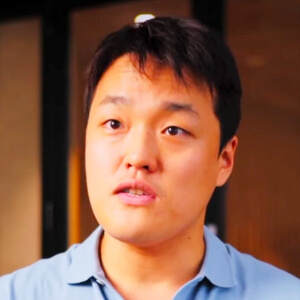


Do Kwon (Kwon Do-hyung) is a South Korean software engineer and co-founder of Terraform Labs, the company behind the Terra blockchain, the algorithmic stablecoin TerraUSD (UST), and the associated cryptocurrency Luna. Once celebrated as a high-profile crypto founder, he later became one of the most prominent figures in the sector’s enforcement wave after the 2022 collapse of TerraUSD and Luna wiped out tens of billions of dollars in value and triggered global regulatory and legal actions.
Overview
Born in 1991 in Seoul, South Korea, Kwon studied computer science at Stanford University and worked as a software engineer before entering the crypto industry. Terraform Labs, founded in 2018, sought to build a payments-focused ecosystem around algorithmic stablecoins and DeFi applications. At the peak of the Terra ecosystem, UST and Luna were widely traded, integrated into multiple protocols, and promoted as a scalable alternative to collateral-backed stablecoins.
Following the failure of UST in May 2022, Kwon faced civil and criminal cases in multiple jurisdictions, including South Korea and the United States. After a period as an international fugitive and his arrest in Montenegro, he was extradited to the U.S., pleaded guilty to fraud charges, and in December 2025 was sentenced to a lengthy prison term related to the Terra collapse.
Early Life and Career
Kwon attended Daewon Foreign Language High School in Seoul before enrolling at Stanford University, where he received a Bachelor of Science in computer science. Early in his career, he worked at technology companies, including time at Apple and Microsoft, focused on software and infrastructure engineering.
Before Terraform Labs, Kwon founded Anyfi, a wireless mesh networking startup that explored peer-to-peer connectivity. His background in distributed systems and networking fed into his later interest in decentralized protocols and blockchain-based payment systems, eventually leading him to the concept of algorithmic stablecoins and programmable money.
Terraform Labs and the Terra Ecosystem
Terraform Labs, headquartered in Singapore and South Korea, launched the Terra blockchain with the goal of supporting a family of fiat-pegged stablecoins used in everyday payments. TerraUSD (UST), pegged to the U.S. dollar, was designed as an algorithmic stablecoin whose peg was maintained through an arbitrage mechanism with Luna, the network’s volatile asset.
The Terra ecosystem grew rapidly in 2021 and early 2022, supported by high-yield DeFi applications such as Anchor Protocol, which offered double-digit returns on UST deposits. At its height, UST’s market capitalization exceeded tens of billions of dollars, and Luna ranked among the largest cryptocurrencies by market value. Kwon cultivated a strong online presence, often dismissing critics of algorithmic stablecoins and positioning Terra as a core component of the emerging “decentralized money” stack.
Collapse of TerraUSD and Market Impact
In May 2022, TerraUSD lost its dollar peg during a period of market stress and heavy selling. The algorithmic stabilization mechanism failed to restore UST to parity, triggering a hyperinflationary spiral in Luna as new tokens were minted to absorb selling pressure. Within days, UST and Luna had effectively collapsed, erasing nearly all of their combined market capitalization.
The Terra failure contributed to a broader downturn in digital asset markets, amplifying liquidity problems at leveraged funds, lenders, and trading firms that held significant exposure to UST and Luna. The episode became a defining case study in the structural risks of algorithmic stablecoins and complex yield schemes that rely heavily on confidence and reflexive market incentives.
Legal Issues, Arrest, and Extradition
Following the collapse, South Korean prosecutors opened investigations into Terraform Labs and its executives, eventually issuing an arrest warrant for Kwon on alleged violations of capital markets law. Interpol issued a red notice, and authorities in multiple countries sought information on his whereabouts.
In March 2023, Kwon was arrested in Montenegro after attempting to travel using falsified documents. He was convicted in Montenegro for document forgery and served a short prison sentence there while courts considered competing extradition requests from South Korea and the United States. After protracted legal proceedings, Montenegro’s justice minister ultimately approved extradition to the U.S., where Kwon faced federal fraud charges tied to the Terra collapse.
Civil Enforcement, Bankruptcy, and Sentencing
In parallel with criminal proceedings, the U.S. Securities and Exchange Commission brought a civil enforcement case against Terraform Labs and Kwon, alleging that they misled investors about the stability of UST and the real sources of demand for the Terra ecosystem. In 2024, a U.S. jury found Terraform Labs and Kwon liable for securities fraud, and the parties later agreed to a large monetary settlement, including disgorgement and civil penalties.
Terraform Labs filed for Chapter 11 bankruptcy in the United States, initiating a wind-down process and negotiations over creditor recoveries. Courts in other jurisdictions, including Singapore, also addressed issues related to Terraform’s insolvency, creditor actions, and recognition of the U.S. bankruptcy plan.
After his extradition to the U.S., Kwon pleaded guilty in 2025 to federal fraud charges linked to misrepresentations about TerraUSD and the Terra ecosystem. In December 2025, a U.S. federal judge sentenced him to 15 years in prison, characterizing the case as involving large-scale deception and widespread investor losses.
Significance for the Digital Asset Ecosystem
Do Kwon’s rise and fall have become emblematic of the boom-and-bust dynamics of the crypto sector’s 2020–2022 cycle. The Terra collapse reshaped regulatory views on algorithmic stablecoins, risk disclosures, and the use of aggressive yield incentives to drive growth. It also influenced legislative and enforcement priorities around the world, with authorities focusing more closely on stablecoin design, cross-border jurisdiction, and the accountability of founders.
For developers, investors, and policymakers, the Terra saga underscores the importance of stress testing token models, clearly communicating risks, and aligning economic incentives with long-term sustainability. Kwon’s case, from high-profile founder to convicted felon, remains one of the clearest examples of how failures in design, governance, and transparency can translate into both systemic market damage and severe personal legal consequences.

