
Jobs, food, and oil: The key drivers that could re-accelerate inflation
CryptoSlate's latest market report dives deep into the potential forces that will most likely keep inflation rising in the coming months.

Introduction
Inflation in the U.S. has shown signs of slowing down, but that doesn’t mean the global market is safe yet.
The U.S. inflation rate has experienced a temporary deceleration, dropping on a month-to-month basis. While this trend might seem like a relief to some, economists and market analysts are wary of the underlying factors that could cause inflation to re-accelerate.
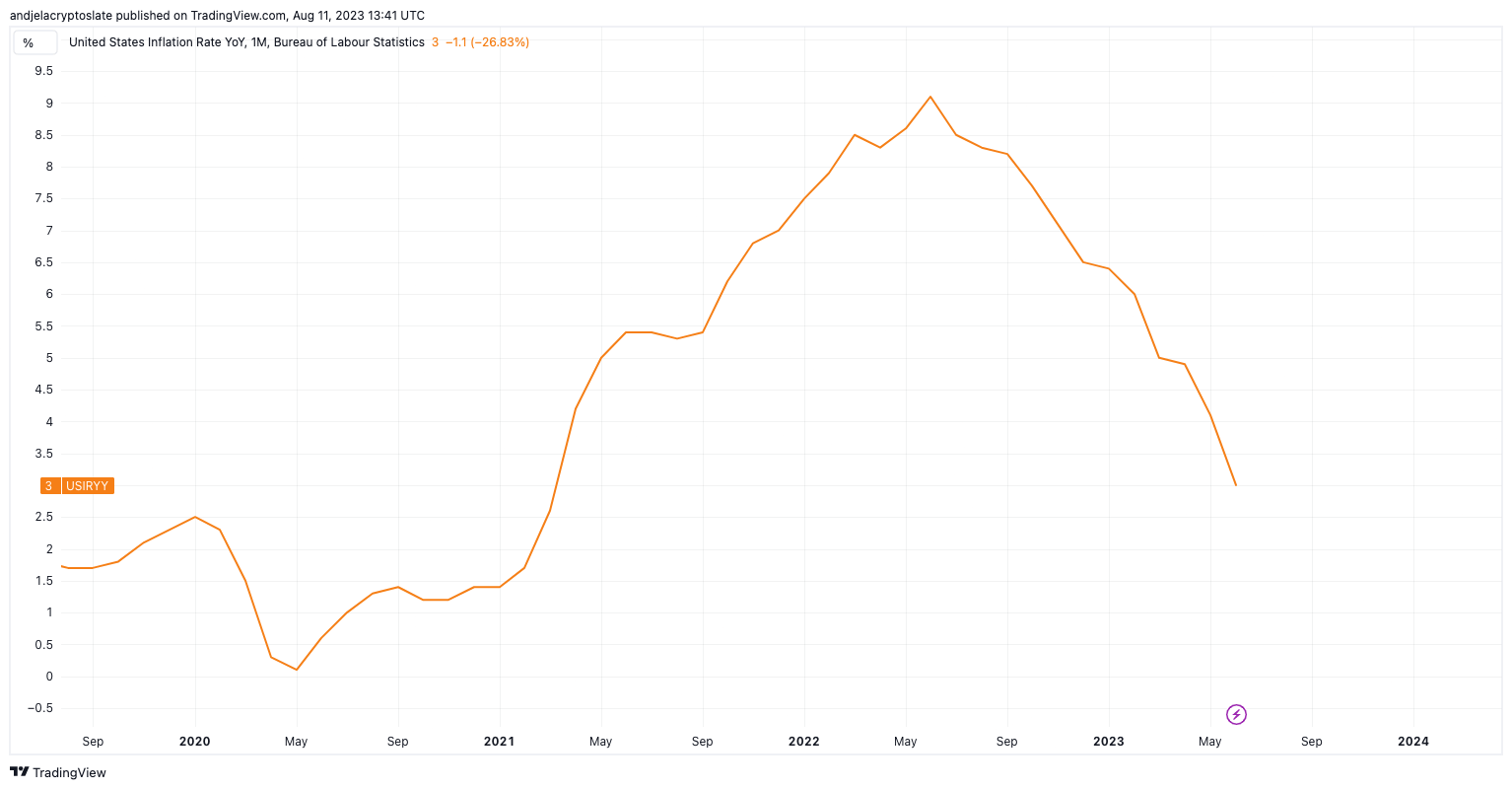
Several indicators, including fluctuations in the jobs market, rising food prices, and volatile oil and gas prices, are converging in a complex economic landscape. These factors, coupled with central bank policies and consumer spending patterns, create fertile ground for inflation.
The global market is also showing signs of instability, with changes in key commodities and currencies showing this uncertainty.
In this report, CryptoSlate will dive deep into these factors, providing a comprehensive analysis of the current state of inflation in the U.S. and the potential forces that will most likely keep inflation rising in the coming months.
Jobs market
The U.S. job market is showing mixed signals, with unemployment rates marginally decreasing but still not at pre-pandemic levels. The labor force participation rate remains below the desired threshold, indicating that many potential workers are still out of the job market.

There are many challenges the job market faces, including a significant mismatch between the skills required by employers and those possessed by job seekers. This has led to a situation where many positions remain unfilled, despite a large number of job seekers. This is evident in the latest data from the Department of Labor (DOL), which showed the U.S. economy added only 187,000 new jobs in June, far fewer than expected. DOL data also showed there were 1.6 job openings for every unemployed person as of June.

The current state of high demand for skilled labor and the shortage of qualified candidates has led to an increase in wages. Employers are willing to pay more to attract the right talent, and this has contributed to wages growing to 6% in June from 5.8% in May and 5.6% in April.

If wage growth continues to outpace inflation, it will lead to increased consumer spending and demand for goods and services, pushing inflation higher.
For inflation to decrease, the job market needs to reach a state of equilibrium where supply meets demand. This means reducing unemployment to natural levels and increasing labor force participation.
Food prices
Food prices have increased significantly in the U.S., contributing to the overall inflationary pressures.
According to data from Truflation, economists are expecting prices of imported food to increase by another 0.83% in July, marking a 4.17% annual increase. The 0.83% expected rise represents an acceleration of the trend when compared to June.
These expectations are in line with the information from the U.S. Census Bureau, which showed food services and retail sales for drinking places saw a 9.9% YoY increase in June.
The main factors driving up food prices in the U.S. are the increase in import tariffs, rising food production costs, and supply bottlenecks. Ongoing food crises happening around the globe are yet to hit U.S. consumers but are expected to have a notable impact on food prices.
Namely, the price of rice in Asia is the highest it has been in almost 15 years, with Thai white rice reaching $648 per ton — the most expensive it has been since October 2008. In July, India extended its ban on certain rice exports to control local prices. However, the ban led to panic buying in some countries, as it exacerbated worries over a potential global shortage.

The price surge is set to increase stress in the global food market, which has already seen diminished supply due to the war in Ukraine. The stress felt by Asian consumers is likely to impact other countries as well and could add to the inflationary pressure on U.S. foods.
Oil and gas prices
Oil and gas prices have seen significant price fluctuations in the past several months.
Saudi Arabia has decided to extend its oil production cut for at least another month. This voluntary cut of one million barrels per day will continue through September, with further extensions to support the stability of oil markets possible in the future. This marks the second time the kingdom has extended this cut since June, a move that is set to drive gasoline and other energy prices even higher.
Simultaneously, Russia has unveiled plans to reduce oil exports by 300,000 barrels per day in September. These decisions have had immediate repercussions on oil prices. US oil prices witnessed a 1.6% increase, reaching $81.05 a barrel, while Brent crude, the global benchmark, surged by 1.5% to $84.50 a barrel. Despite these moves being anticipated by the market, they have solidified the upward trend in oil prices.

For US consumers, these international decisions have translated to a rise in pump prices, reaching nine-month highs. The national average for regular gas escalated to $3.82 a gallon, marking a 28-cent surge over the past month. Experts believe that prices could rise to $4 per gallon.
In Europe, fears over possible supply distribution in Australia led to a massive spike in natural gas prices. Prices for gas futures on the Dutch Title Transfer Facility (TTF) hub, a European benchmark, rose almost 40% on Aug. 9.

Conclusion
While there are countless factors currently contributing to inflation in the U.S., the jobs market, food prices, and oil and gas prices are the key indicators flashing warning signs.
The job market, while showing signs of recovery, still faces challenges in matching supply with demand, leading to wage growth that could further fuel inflation. Food prices have surged, with notable increases in imported foods and global commodities like rice, driven by factors ranging from tariffs to global crises.
The oil sector has been experiencing volatility, with major producers like Saudi Arabia and Russia making decisions that have direct implications on global oil prices. European natural gas prices soared in August, further increasing inflationary pressure in the U.S.
For inflation to slow down and ultimately halt, the job market needs to find an equilibrium between wage growth and productivity, food prices need to stabilize, and oil and gas production needs to increase for prices to calm down.
However, given the current dynamics and the interconnectedness of global markets, the possibility of inflation re-accelerating remains high.
More Market Reports