

What Is Crypto Margin Trading?
We believe in full transparency with our readers. Some of our content includes affiliate links, and we may earn a commission through these partnerships. However, this potential compensation never influences our analysis, opinions, or reviews. Our editorial content is created independently of our marketing partnerships, and our ratings are based solely on our established evaluation criteria. Read More





Many trading platforms offer margin accounts, meaning you can trade crypto with leverage. This enables traders to enter positions with considerably more than they originally deposited, often at 100x or more.
However, trading on margin is also risky – being liquidated can result in significant losses.
So, what is crypto margin trading? In this guide, we cover everything beginners should know before getting started. We explain how margin and leverage work, what risk management controls are required, and how fees can impact potential profits.

Best Crypto Futures & Options Trading Platform

What is Crypto Margin Trading and How Does It Work?
Let’s start with an overview of how margin trading crypto accounts work. In a nutshell, margin allows traders to amplify their positions. For example, let’s say you want to go long on Ethereum, meaning you believe its price will increase. You have $1,000 in your trading account. The platform has a minimum margin requirement of 10%.
Therefore, if you wanted to open a position worth $10,000, you’d only need to put up $1,000. Put otherwise, you’re trading with a leverage of 10x, as you’re multiplying your available funds by 10 times. Margin trading is increasingly becoming popular, as investors can enter larger trades without needing a sizable account balance.
However, most traders lose money when trading on margin – especially beginners without an understanding of risk management. This is because of the ‘margin call,’ which happens when the leveraged position declines by a certain percentage. If you don’t add more funds to your margin trading account, and the position continues to lose money, you’ll be ‘liquidated.’
This is the worst-case scenario. Forced liquidation means the trading platform automatically closes the position. In doing so, you lose the original margin that you risked. In addition, margin trading can be expensive, as interest fees are charged on leveraged positions. This is often charged hourly or daily, meaning investing long-term isn’t viable.
Important Crypto Margin Trading Terminology to Know
Understanding key terminology will give you a deeper understanding of what crypto margin trading is. This section takes a deep dive into margin, leverage, liquidation, collateral, and other must-know concepts.
Margin
Margin is the minimum amount you need to enter a trade. It’s expressed as a percentage and based on the amount of money you have in the trading account. Margin requirements are the lowest when trading large-cap coins like Bitcoin and Ethereum. Conversely, the requirements increase when trading lower-cap coins.
What’s more, there is the ‘initial’ margin and the ‘maintenance’ margin. Understanding both terms is crucial.
Initial Margin
The initial margin, also known as collateral, is the amount you need to execute the trade.
- For example, let’s say you want to trade Bitcoin.
- Your chosen platform has a minimum margin requirement of 2%.
- Therefore, you only need to put up 2% of the total stake.
- You’re confident that Bitcoin is undervalued, so you want to risk $100,000 on a long position.
- You’d need an initial investment margin of $2,000, which is 2% of the total stake.
As per the above example, you were able to execute a $100,000 position even though you only have $2,000 in the trading account. The best crypto margin trading exchanges often have even lower requirements, meaning you can often amplify your balance by 100x or more.
Maintenance Margin
The maintenance margin is the minimum amount you need to keep the leveraged trading position open. Let’s stick with the same example to explain the point.
- So, you’ve entered a $100,000 position on Bitcoin, with an initial margin of $2,000.
- The exchange has a margin maintenance requirement of 1%.
- 1% of $100,000 is $1,000. Therefore, your maintenance margin must not dip below this amount.
Now, the maintenance margin will originally match the initial margin, so that’s $2,000. This means you’ve got double the minimum requirement. However, the maintenance margin will rise and fall depending on how the position is performing.
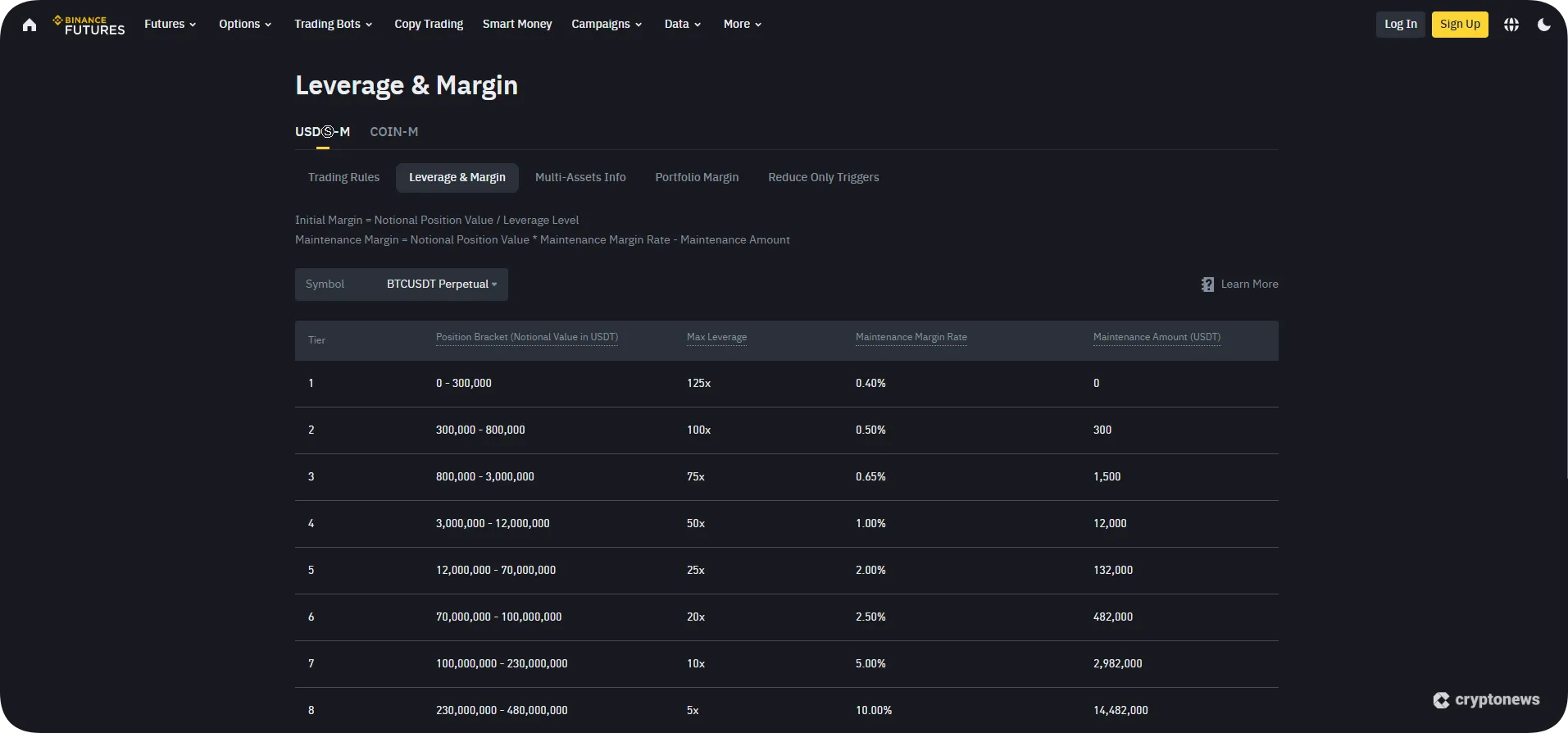
For example, you went long on Bitcoin. If the Bitcoin price increases, so will your maintenance margin level. However, if the Bitcoin price declines, this will reduce the margin requirement in real terms. And, if you get too close to the minimum requirement, you’ll receive a margin call.
Margin Call
A margin call is a notification from the trading platform. It informs you when your margin maintenance is approaching crucial levels. In the above example, we mentioned that the minimum margin balance is $1,000. In this instance, you might receive a margin call when the balance drops to $1,100.
If you receive a margin call, you can do one of two things:
- Do Nothing: It isn’t mandatory to react to margin calls. You can elect to leave the margin position open. If the position value begins to increase, you might have avoided liquidation. This means your position won’t be closed by the platform.
- Add More Margin: Alternatively, you can elect to add more margin to the maintenance balance. This gives you breathing space, as you’re moving further away from the liquidation point.
Whether or not you should add more margin depends on your risk tolerance and available capital. For example, you could add more margin but the position value continues to decline. This means you can still be liquidated – and you’ll lose more money than you originally risked.
Some platforms will allow you to cross-margin trade. Cross-margin trading allows you to move some of your margin from one margin account to another to satisfy your margin requirements.
Leverage
Now you understand how margin works; we can move on to leverage. In simple terms, leverage is the ‘multiplier’ you get when trading on margin.
- For instance, suppose you enter a $5,000 position with a 20% margin. This means your initial margin requirement is $1,000. As such, you’re getting leverage of 5x – as the $1,000 margin is amplified to $5,000.
- In another example, let’s say your total position size is $50,000.You put up a 1% margin, so that’s $500. This converts to a leverage of 100x, as the $500 margin is amplified to $50,000.
Here’s a table showing common margin percentages alongside their respective leverage multiplier:
| Initial Margin | Leverage |
| 1% | 100x |
| 2% | 50x |
| 5% | 20x |
| 10% | 10x |
| 20% | 5x |
| 25% | 4x |
| 50% | 2x |
As you can see, the leverage multiple increases as the initial margin declines. However, this also reduces the maintenance margin, meaning higher leverage levels increase the risk of being liquidated.
Note: Leverage can also be expressed as a ratio. A leverage of 100X would have a leverage ratio of 100:1.
Liquidation
When margin trading crypto, liquidation is the biggest risk. It’s something we hear about a lot in the crypto trading industry because an increasing number of retail traders have access to high leverage limits.
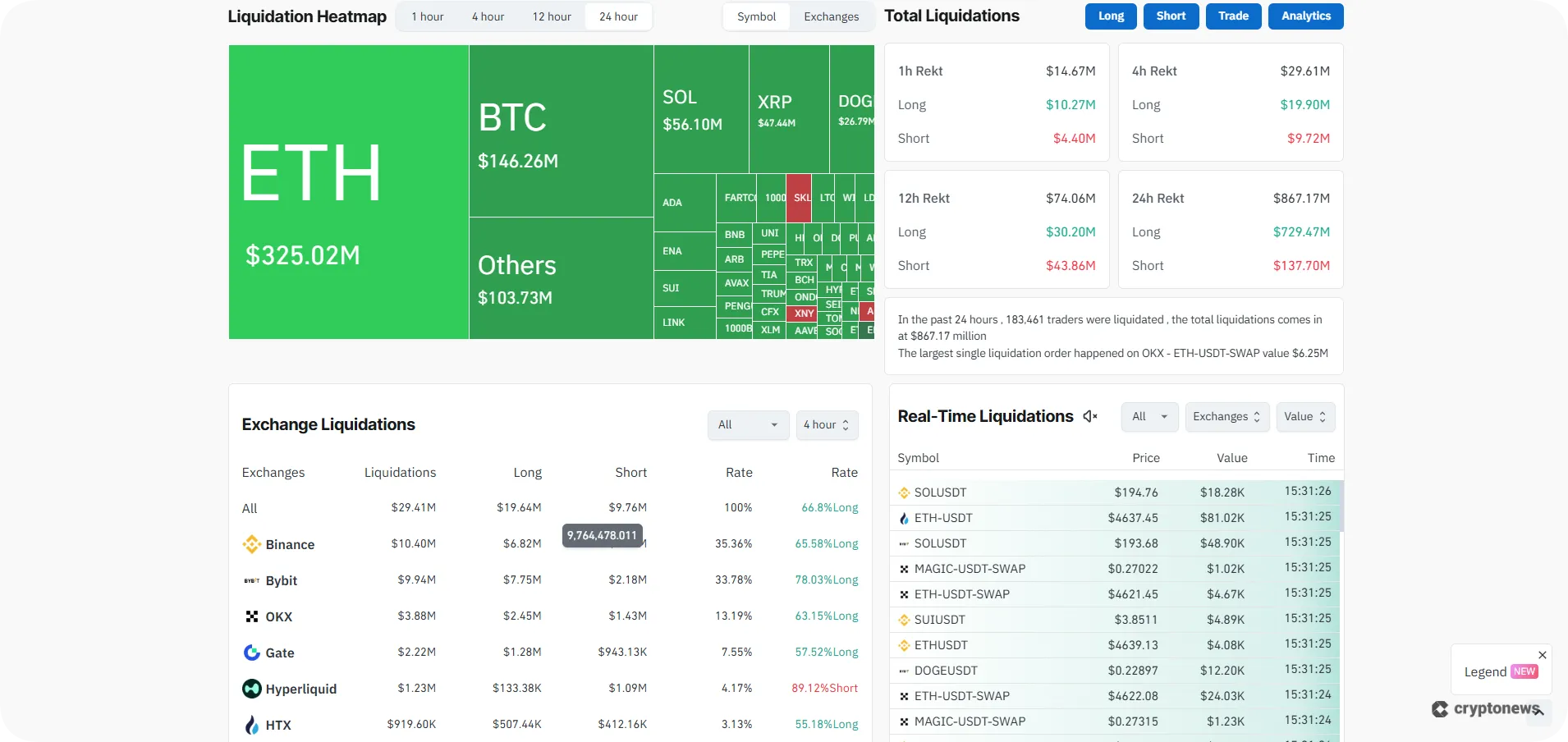
In basic terms, liquidation means your margin trade is automatically closed by the platform. This happens after the margin call. However, if the financial markets are extra volatile, you might not even receive a margin call – meaning you’re liquidated before being able to act.
The liquidation point happens when the maintenance margin is depleted.
- For example, let’s say you’re long on Ethereum.
- Your initial margin was $5,000. The maintenance margin requirement is $4,000.
- This means the trade will be liquidated if it declines by 20%.
- Ethereum is down 15%, and you receive a margin call.
- You ignore the margin call, and Ethereum declines by another 5%.
- As such, your maintenance drops below $4,000 – so the Ethereum position is liquidated.
- This means your initial margin of $5,000 is kept by the platform.
As we will explain in more detail shortly, setting up stop-loss orders can vastly reduce the risks of being liquidated.
Borrowing Rate
Margin trading can be expensive. In addition to standard trading commissions, you’ll have to pay interest on the borrowed funds. After all, you’re amplifying your initial margin by several multiples, meaning you’re borrowing capital from the trading platform.
For example, suppose the position size is $15,000, and you put up a 10% margin. This means the initial margin is $1,500, so you’re borrowing $13,500. Interest is charged on that $13,500 – just like taking out a loan from the bank.
The borrowing rate is usually determined by the Annual Percentage Rate (APR). However, this is typically broken down into a daily rate, as margin trading is a short-term strategy. Some platforms quote an hourly borrowing rate.
- To offer some insight, Binance currently charges an hourly interest rate of 0.00014696% when borrowing Bitcoin. This converts to an APR of 1.29%.
- Binance charges higher rates when trading altcoins. For example, Solana comes with an APR of 4.20%, which is an hourly rate of 0.00047963%.
Importantly, every time the borrowing rate is implemented, it’s deducted from your margin maintenance. This will inch you closer to the liquidation point, which is why margin trading crypto is only suitable for short-term positions.
How to Get Started With Margin Trading Crypto
Now that you know the basics of margin trading, let us show you how to open your first position step-by-step. We’ll use CoinFutures for this guide, as the platform is suitable for both beginners and experienced traders.
Step 1: Download The CoinFutures App
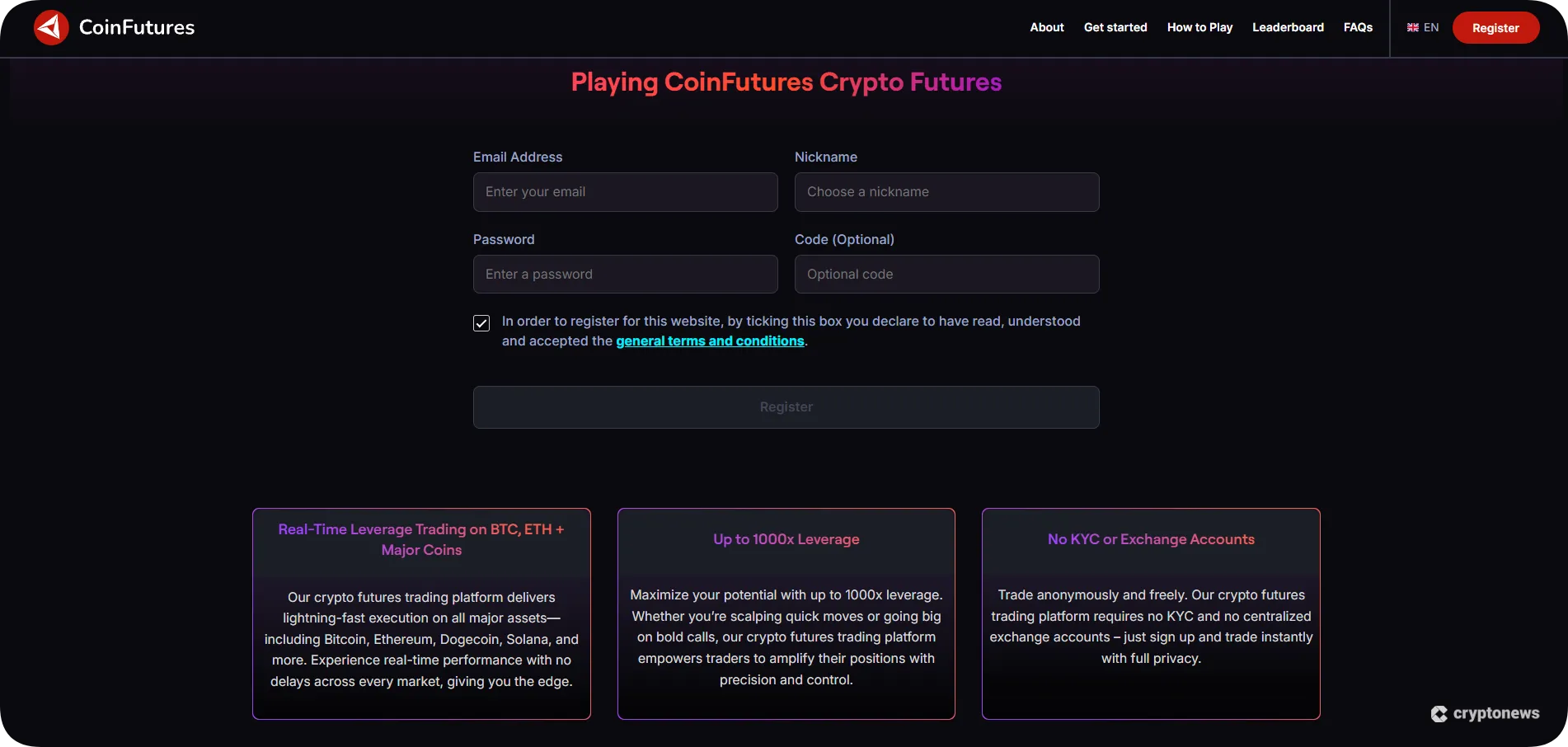
Visit CoinFuture’s official website and hit the Download button to install the app on your PC or smartphone. Next, create an account by entering your email and password.
Step 2: Fund Your Account
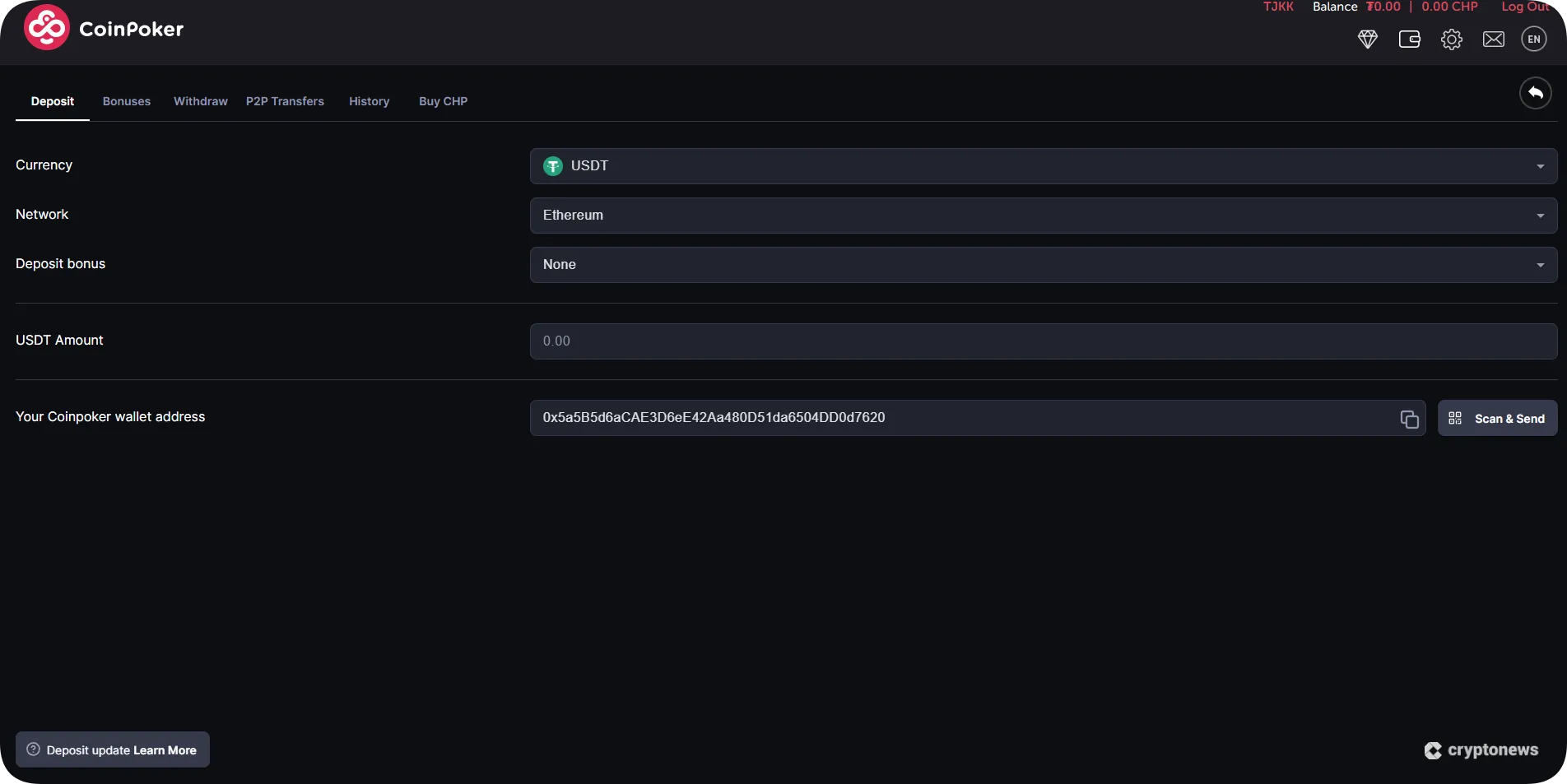
Fund your account with crypto, such as USDT, USDC, ETH, BTC, BNB, SOL, or fiat. You can also use a credit card, Apple Pay, Google Pay, and PIX to make a deposit. This will be your margin for your future trades.
Step 3. Place Your Trade
Navigate to the Crypto Futures tab and select the coin you wish to trade. Click on the Up or Down icon to select the price direction – these correspond to long and short positions, respectively. Next, set the wager, leverage, and mode (auto or manual), and hit the Place Bet button.
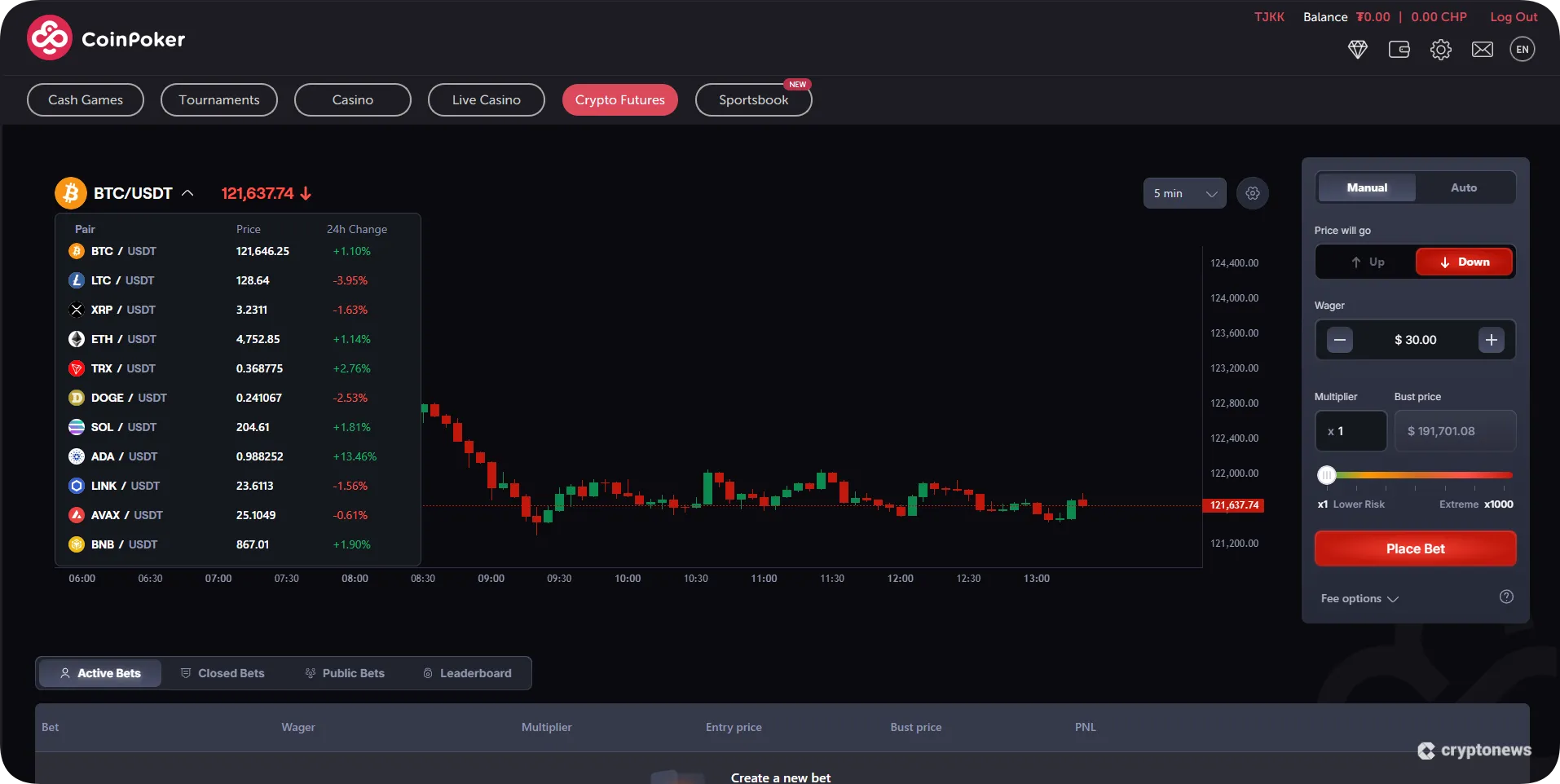
Your position is now open, and all you need to do is monitor and manage it until you’re happy with your profits or have decided to minimize your losses.
Managing Your Margin Positions
Now that you know how to get started, let’s explain what margin positions are and how to manage them.
First things first, the ‘position’ is the margin trade you’re placing. It covers the direction and size of the order, including both the initial margin and the borrowed funds. However, there are different types of margin positions:
Long Position
Entering a long position means you’re bullish on the respective crypto pair. For example, if you’re long on Ethereum, it means you believe the ETH/USD price will rise. Entering a long position requires a ‘buy order.’
Short Position
If you believe the crypto pair will decline in value, you’d need to enter a short position. Also known as short-selling, you’ll make money if the price goes down. For instance, you believe that Bitcoin is overvalued. You decide to short Bitcoin by placing a BTC/USD sell order.
Going Short on Margin
- Margin trading services and platforms make it seamless to enter short positions, meaning you can profit from declining prices.
- This is because most platforms offer perpetual futures, which simply track the value of the respective asset.
- As such, it’s just a case of placing a sell order.
- To cash out a short position, you’d need to place a buy order.
Position Size
The position size is the total value of the margin trade. For example, let’s say you have an initial margin of $2,000, and your margin requirement is 5%. This means the total position size is $40,000. This includes your $2,000 margin and $38,000 in borrowed funds. When calculating margin fees, it’s based on the borrowed funds only, not the total position size.
Equity
You’ll also see an ‘equity’ balance when trading crypto with margin. Put simply, this is the amount you’ll receive if you were to close the position. It’s calculated by subtracting the borrowed money from the total position value. The equity will rise and fall based on how the position is performing.
- For example, let’s say your total position value is $10,000. $2,000 is the initial margin, so you’ve borrowed $8,000.
- Original Equity = $10,000 (position size) – $8,000 (borrowed funds) = $2,000
- After a few hours, the position size has risen from $10,000 to $15,000
- New Equity = $15,000 (position size) – $8,000 (borrowed funds) = $7,000
So, if you were to cash out the above trade, you’d receive $7,000. Your initial margin was $2,000, so that’s a profit of $5,000.
Profit/Loss
You’ll also see a profit or loss figure when trading with margin, depending on how the position is performing.
Unrealized P/L
The unrealized profit or loss is based on existing positions. It’s what you will receive if you close the trade immediately.
- You can calculate the unrealized profit or loss by subtracting the initial margin from the equity
- For example, we’ll say the equity is currently $10,000
- Your initial margin was $6,000
- This means your unrealized profit is $4,000.
Realized P/L
The realized profit and loss work the same, but are based on a position that’s already been closed. This gives you the bottom line after commissions, fees, and the initial margin.
Stop-Loss Order
Risk management is crucial when trading crypto on margin. One of the best crypto tips is to place a stop-loss order; never execute a leveraged trade without one.
Stop-loss orders allow you to exit a losing position before the losses get out of hand. You’ll need to provide the trading platform with your exit price.
- For example, you’ve placed a long position on BTC/USD. The position is opened at $60,000
- You want to limit potential losses to 5%
- 5% of $60,000 is $3,000
- Therefore, this should be subtracted from the entry price, as you want BTC/USD to increase
- This means your stop-loss order price should be $57,000
So, if the BTC/USD price increases and you cash out, you’ve made a profit. However, if the BTC/USD decreases – and it hits $57,000 – your stop-loss order will be triggered. This means the BTC/USD position will be closed automatically.
Crucially, the stop-loss price must come before the liquidation price.
- For example, suppose you’re short on ETH/USD
- The liquidation price on ETH/USD is $3,000
- This means the stop-loss order should be above $3,000
- If you were long on ETH/USD, it would need to be below $3,000
- Otherwise, your position will be liquidated before the stop-loss order can trigger
Ultimately, you’ll avoid burning through your trading balance by deploying stop-loss orders. Make sure you choose a stop-loss level that aligns with your risk tolerance.
Take-Profit Order
You’ll witness enhanced volatility when margin trading crypto. For example, if you’re trading with 10x leverage, profits and losses will be amplified by 10 times. This happens in real time, meaning you should have a clear exit strategy before executing positions. This is where the take-profit order can assist.
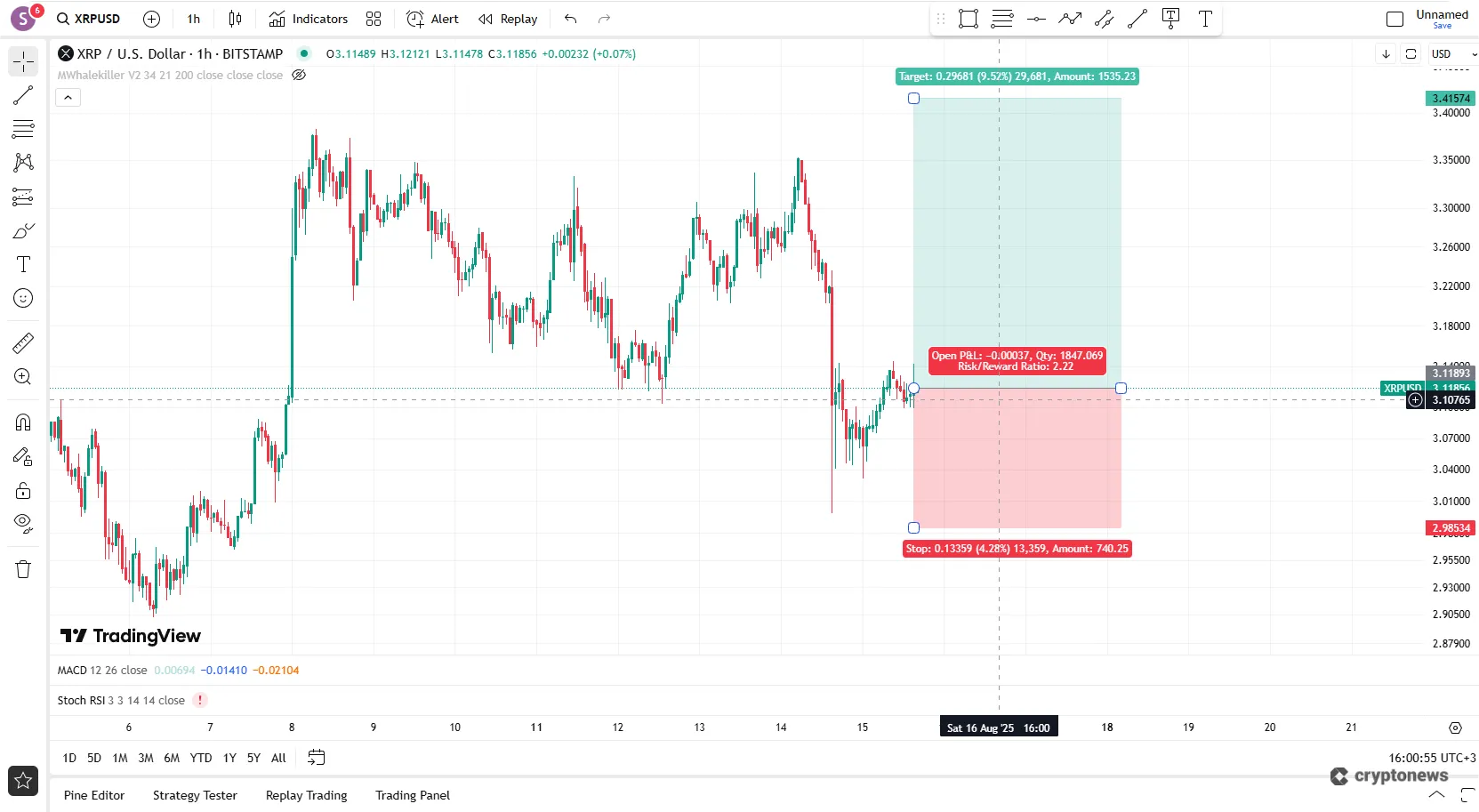
Similar to stop-loss orders, take-profit orders instruct the platform to close a position when it reaches the target price. But instead of reducing losses, you’ll lock in your profits.
- For example, suppose you enter a long XRP/USD position at $0.70
- You want to make 10% gains
- 10% of the $0.70 is $0.07
- Therefore, your take-profit price should be set at $0.77
So, if the XRP/USD price increases to $0.77, the platform will close the trade automatically.
Stop-Loss and Take-Profit Orders Aren’t Guaranteed
- While stop-loss and take-profits are crucial for risk management purposes, they’re not guaranteed.
- After all, when exiting a position, there needs to be another market participant to match the order at your determined price point.
- This won’t always be possible – especially if you’re trading smaller-cap coins or the markets are experiencing extreme turbulence.
Pros and Cons of Margin Trading
The benefits and drawbacks of margin trading are summarized below:
- Trade with considerably more than you have in your trading account
- Margin requirements are often as low as 1% – sometimes even less
- Ideal for crypto traders who don’t have a lot of upfront capital
- Traders can realize significant profits with a small initial investment
- Also suitable for trading strategies that target small profit margins
- Low barrier to entry – margin accounts are available globally
- Traders can often open a margin account with a few dollars
- Margin trading is high-risk
- You’ll lose your initial margin if you’re liquidated
- High fees are charged on the borrowed funds
- There’s no guarantee that stop-loss orders will be matched
- Smaller-cap coins come with higher margin requirements
Are There Fees on Crypto Margin Trading?
There are several fees to consider when trading crypto on margin. First, traders should be aware of the trading commission. This is charged ‘per slide’ – meaning commissions are paid when opening and closing trades. What’s more, the commission is based on the total position value. This includes the initial margin and the borrowed funds.
- For example, suppose your chosen platform charges a 0.1% commission on perpetual futures
- Your initial margin is $5,000. Your borrowed funds are $35,000. The total position value is $40,000
- Based on a 0.1% commission, you pay $40 to open the margin trade
- You close the trade when it’s valued at $60,000
- This means the closing commission is $60
- In total, you paid $100 in commission on this margin trade
Another fee to look for is the borrowing rate. This is the interest you pay on the borrowed funds. This is sometimes displayed as the APR. However, most margin platforms charge borrowing fees every hour. This will be charged pro rata. The borrowing fees will be deducted from your margin maintenance, so ensure you’re fully aware of what you’re paying.
Can I Trade Crypto on Margin With No KYC?
It’s often possible to trade crypto on margin without completing a Know Your Customer (KYC) process. This means you can open an account with an email address, so no personal details will be collected. However, there might be times when KYC requirements can’t be avoided.
For example, suppose you join MEXC, which offers a KYC-free registration process. You can retain your anonymity by depositing digital assets like crypto. However, if you want to deposit fiat money, the payment processor will ask for a government-issued ID. Similarly, KYC requirements can also kick in when deposit or withdrawal limits are breached.
Ultimately, it’s best to assume that KYC checks can be implemented at any time. Exchanges must comply with anti-money laundering laws – even if they’re based overseas. Refusing to complete a KYC verification check often means you won’t be able to withdraw your account balance.
Do I Pay Tax on Crypto Margin Trades?
Crypto tax calculations and rules will vary from one country to the next. If you’re based in the US, the rules are somewhat similar to standard crypto investments. You’ll pay capital gains when you make a profit. And you can offset capital losses on losing trades. What’s more, capital gains and losses are only considered once they’re realized.
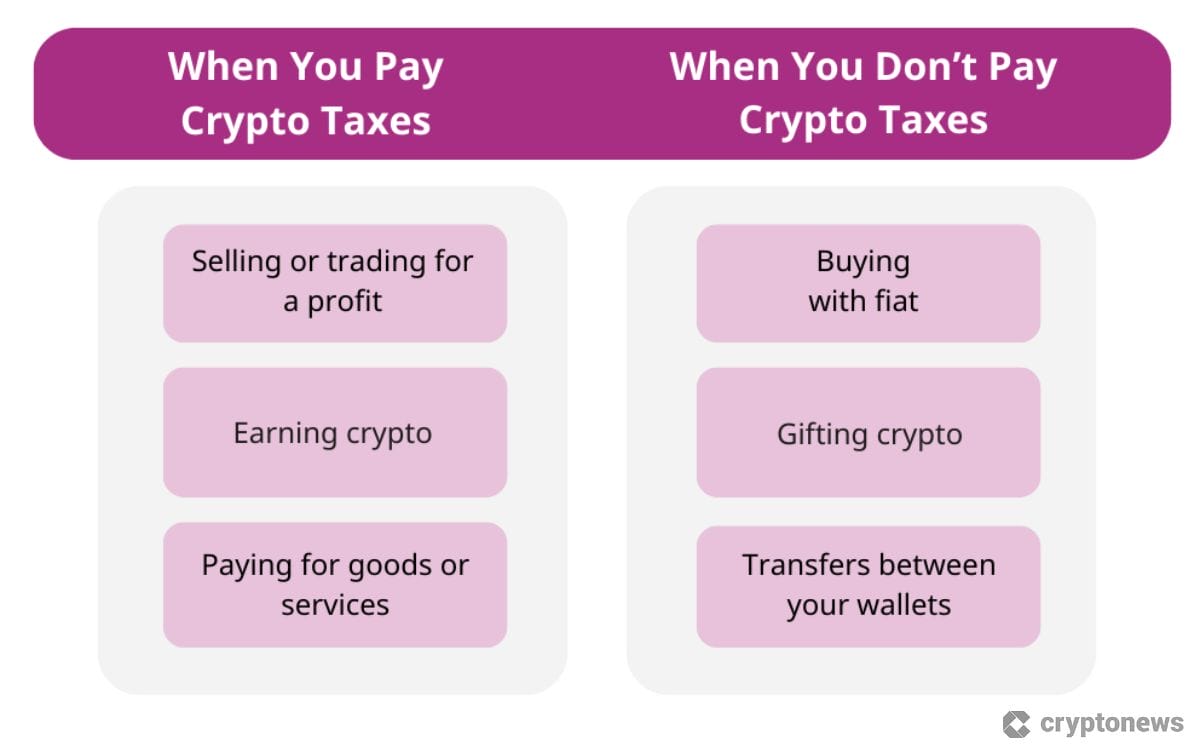
This means the margin position has been closed fully. Now, the key difference for US traders is how capital gains are taxed. As per the IRS, futures profits utilize the 60/40 rule. This means that 60% of the profits are taxable at long-term capital gains rates. And 40% at short-term capital gains rates.
Naturally, it’s important to keep adequate records of your margin trades – especially if you’re an active trader. What’s more, different rules will apply in other countries, so it’s best to speak with a qualified tax advisor.
Is Crypto Margin Trading Legal?
Just like taxation, the legalities of crypto margin trading will depend on the country of residence and whether the trader is considered a retail or professional client. For example, the US has strict rules about margin trading – the platform must be approved by several regulatory bodies, including the National Futures Association.
In the UK, retail clients can no longer trade crypto derivatives. This includes all forms of margin trading, including futures and CFDs. These rules don’t apply to qualified professional traders.
All that said, enforcing margin trading rules can be challenging. Many crypto margin exchanges allow users to register without KYC requirements. This means traders from prohibited countries often bypass domestic restrictions. This isn’t advised, as you might have issues when it comes to requesting a withdrawal.
Final Thoughts on Crypto Margin Trading
Crypto margin trading is a huge growth market – especially with retail clients who have limited capital. Many platforms have minimum margin requirements of just 1% – meaning traders can amplify positions by 100x. Others, like CoinFutures, go even further by offering up to 1,000x leverage.
However, most traders lose money when trading with high leverage, so caution is advised. Always implement crypto trading risk management strategies, including stop-loss and take-profit orders.
FAQs
What is crypto margin trading?
Are crypto margin trading and leverage trading the same thing?
Is crypto margin trading profitable?
Is crypto margin trading legal in the US?
What happens if you lose a margin trade in crypto?
What is the best margin trading exchange for crypto?
References
- Nearly $1 Billion Liquidated Across Crypto Market (TradingView)
- The KYC process explained (SWIFT)
- Gains and Losses From Section 1256 Contracts and Straddles (IRS)
- FCA bans the sale of crypto-derivatives to retail consumers (FCA)
2M+
250+
8
70







 in numbers

About Cryptonews
Our goal is to offer a comprehensive and objective perspective on the cryptocurrency market, enabling our readers to make informed decisions in this ever-changing landscape.
Our editorial team of more than 70 crypto professionals works to maintain the highest standards of journalism and ethics. We follow strict editorial guidelines to ensure the integrity and credibility of our content.
Whether you’re looking for breaking news, expert opinions, or market insights, Cryptonews has been your go-to destination for everything cryptocurrency since 2017.
