

5 Ways to Short Bitcoin in 2026 – Complete Guide
We believe in full transparency with our readers. Some of our content includes affiliate links, and we may earn a commission through these partnerships. However, this potential compensation never influences our analysis, opinions, or reviews. Our editorial content is created independently of our marketing partnerships, and our ratings are based solely on our established evaluation criteria. Read More





If you think the current price of Bitcoin is a bit optimistic or the market is due for a correction, you can consider shorting crypto markets like Bitcoin. In traditional markets, shorting an asset (betting on a downturn) can be more difficult depending on your location. However, in crypto trading, you have some additional options.
In this guide, we’ll discuss how to short Bitcoin and the reasons why short-selling Bitcoin can be a useful trading strategy.
- In This Article
- In This Article
- Show Full Guide
What is Bitcoin Short Selling?
Short selling is a trading strategy that bets on a downturn in market prices. When short-selling stocks, for example, you would borrow shares to sell and then buy back the shares to cover and close out your short position. In other words, you make money from selling high and buying low, assuming your trade works according to plan.
Crypto markets offer some additional ways to short the market, which we’ll cover in a bit. But regardless of which method you choose, the strategy still centers on profiting from a market downturn. This can be useful toward two key goals: profit from downtrends and hedging.
The first reason to short Bitcoin is straightforward: you can profit from market downturns. If the market price is at $120,000 and your charts indicate that BTC should revisit support at $105,000, you could earn $15,000 in profit on a 1 BTC position.
Leverage (borrowing) can increase this return, but it also comes with its own risks, which we’ll cover in more detail later.
Hedging allows you to play both sides of the market, potentially offsetting losses if the market goes against your other open trades. For example, you might have a long position in Bitcoin and use leveraged futures to make a short bet in the event the market turns downward.
Hedging acts like insurance in this respect. However, once you have a safe profit level, you may not need to hedge your position.
How Does Bitcoin Shorting Work?
Although there are several ways to short Bitcoin or profit from downturns, let’s discuss how the traditional method works in five basic steps:
1. Predict a Drop in Bitcoin’s Price
Several indicators can point to a possible drop in price. Examples include a drop in trading volume while prices keep going up, the Relative Strength Index (RSI) standing at overbought levels, price failing to break resistance multiple times, etc.
2. Borrow Bitcoin
Once you’re convinced that Bitcoin will see a downturn, the next step is to borrow Bitcoin for the short trade. You might want to hold your long positions, or you might not have an open Bitcoin position. To sell short, you’ll need to borrow Bitcoin.
Note: To borrow Bitcoin, you’ll need to provide collateral.
3. Short-Sell Bitcoin at the Current Market Price
Use a market or limit order to place a sell order for Bitcoin. On platforms that support this traditional short-selling method, borrowing and selling may be combined.
4. Repurchase BTC at a Lower Cost
You can watch the price action to choose your repurchase cost with a manual order. Alternatively, you can set a limit order to automatically close your position using triggers to lock in profits or reduce losses if the market turns against your trade.
5. Pocket the Difference as Profit
When you close your position, you earn the difference in price from the level at which you opened the short trade to the point where you close out your trade. For example, if you short 1 BTC at $125,000 and BTC falls to $115,000, you earn $10,000 on the trade, minus the fees.
How to Short Bitcoin: 5 Different Methods
While crypto markets offer more ways to short Bitcoin and other crypto assets, the methods available to you can vary based on your location and local regulations. We cover five different ways you can short crypto below. However, some may not be readily available in all regions of the world.
In the U.S., for example, you’ll have fewer options due to regulatory restrictions. Decentralized trading platforms and inverse ETFs offer alternative options, providing an easy way to enter and exit a short position. Other available options in many markets include Contracts for Difference (CFDs) or options trading.
1) Margin Trading
In some of the best margin trading exchanges, you borrow Bitcoin to sell using other assets as collateral. This collateral provides a “margin” of error, meaning your collateral will cover losses if the market turns against your trade. Using lower amounts of leverage can help reduce risk to your collateral; however, lower leverage also limits your profit opportunities.
For example, CoinFutures offers margin trading with up to 1,000x leverage. This leverage limit is far more generous than many other platforms, but using lower leverage can be much safer in fast-moving markets like Bitcoin. If the trade loses money, your collateral could be liquidated to close out the trade and recoup the value of the borrowed BTC.

On CoinFutures, you can choose an entry point for your short position using a limit or market order. You also have the option to close your position automatically using price triggers.
2) Short Bitcoin ETFs
ETFs make it possible to short Bitcoin without risking more than you invest in the trade and without risking other collateral. If you put $100 into a short Bitcoin ETF, for instance, $100 is your maximum exposure. Short ETFs, also called inverse ETFs, take the other side of a trade automatically without the need to borrow. Instead, the price of the ETF reflects the profit or loss.
If you have a trading account with a stock brokerage, you can enter or exit an inverse ETF position with a few clicks. However, beware of settlement rules for your jurisdiction. In the U.S., the Comptroller of the Currency (OCC)’s 2024 rule lets you use funds from a closed trade one day after the transaction.
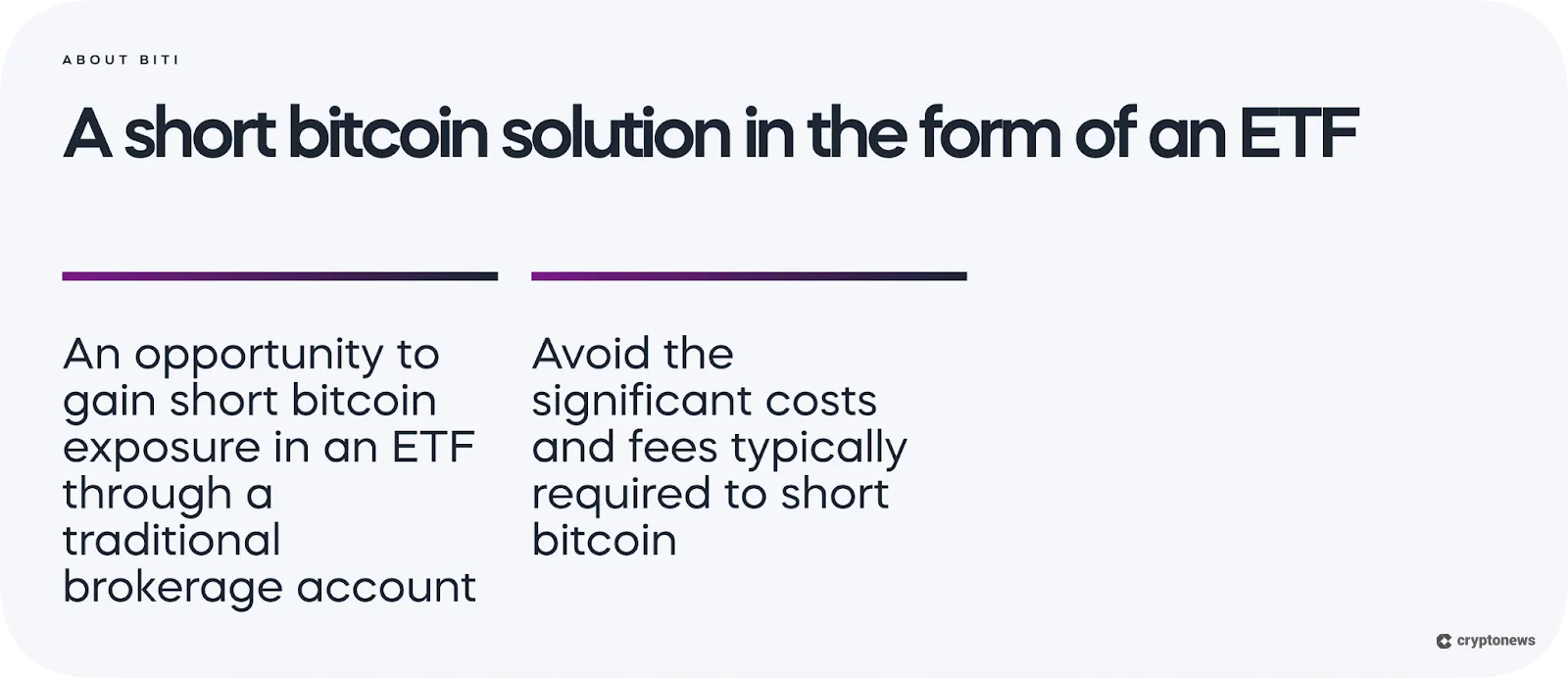
The ProShares Short Bitcoin Strategy ETF provides a simple way to short Bitcoin without putting margin assets at risk.
As an alternative for crypto natives, some platforms offer leveraged tokens to short crypto. Binance discontinued its leveraged tokens in 2024, but you can still find similar tools on other platforms outside the US.
For example, Kucoin offers BTC3S, a 3x leveraged BTC short ETF token specific to the exchange. In the case of these leveraged tokens, the token undergoes rebalancing to maintain a 50/50 value in the trading pair while keeping 3x leverage. In plain English, if the trade goes against you, your equity in the token drops. Profitable trades earn three times the profit compared to non-leveraged trades, with fewer fees.
3) Bitcoin Futures
Futures trading offers yet another way to short Bitcoin by betting on the future price. Traditional futures have an expiration date and allow you to buy or sell contracts for Bitcoin. However, the contracts settle in various currencies.
CME Group Bitcoin futures contracts, for example, settle in USD. Trading traditional futures also requires approval from the trading provider to trade crypto derivatives. For this reason, many choose to trade futures on crypto exchanges, and perpetual exchanges, in particular, have become very popular.
Perpetual exchanges let you short Bitcoin without borrowing Bitcoin and don’t have expiration dates. Instead, you purchase the perpetual contract (long or short) and earn a profit based on the price difference if the trade goes your way.
Coinbase now offers perpetual futures to non-US customers, allowing you to take a short or long position using other assets as collateral. Binance, Bybit, and MEXC are also popular options for perpetual futures trades.
As another alternative, decentralized platforms like Hyperliquid let you trade perpetual futures using smart contracts from anywhere in the world, although the terms of service may restrict certain jurisdictions. With decentralized exchanges, you’re trading from one of the best crypto wallets of your choice, rather than trading with USD on a centralized exchange.
4) Bitcoin Options
Options do what they say on the tin: offer the option to buy or sell at a certain price. For example, a $120,000 put option for BTC allows you to sell BTC for $120,000 even if the price falls to $100,000. If the price rockets to $150,000 instead, your loss is limited to the cost of the option, not the $30,000 price difference. You don’t have to exercise the option.
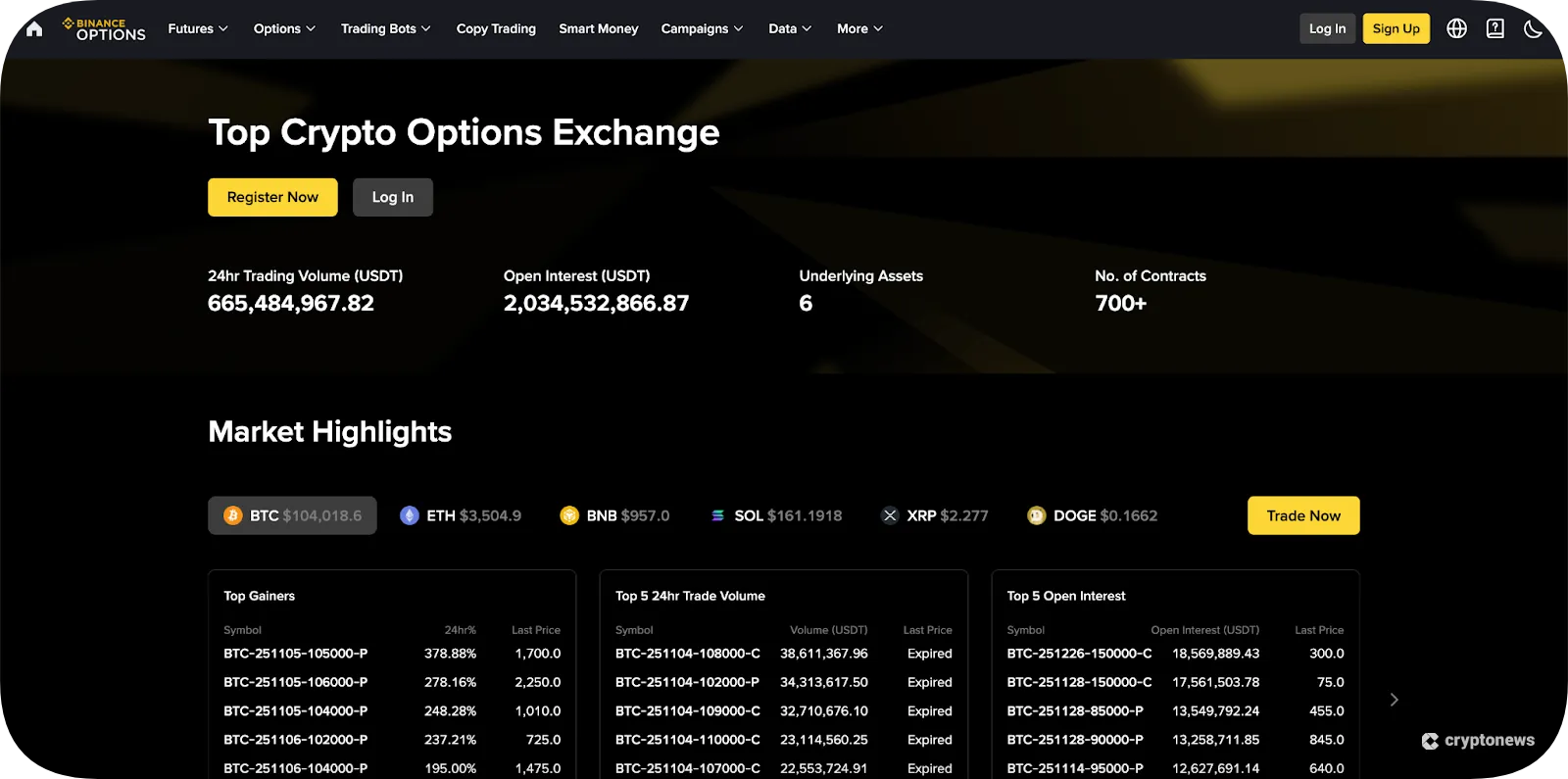
Options trading through traditional brokerages requires approval by the provider, so many crypto options traders use one of the top crypto options exchanges like CoinFutures, OKX, or Binance.
Options trading also introduces a new series of terms.
- Call options: the option to buy at a set price
- Put options: the option to sell at a set price
- Strike price: The price at which you can exercise the option
- Expiration date: the date on which your contract becomes void.
However, European options (used by Binance, for example) treat the expiration date differently. The expiration date instead reflects the date on which you can exercise your right to buy or sell at the set price.
You can also sell your options before expiration. However, as the expiration date draws closer and the price direction becomes clearer, it’s possible your options will be worth less than when you purchased them, or that you may not find a buyer at all.
5) Bitcoin CFDs
While one of the easier ways to short Bitcoin, CFDs (Contracts for Difference) are one of the more controversial ways to trade. Instead of taking a position on the actual asset, you’re just betting on the price, earning the difference in price if the trade goes your way. When the trade closes, no Bitcoin changes hands. Trades settle in traditional currencies.
The availability of CFDs depends on your location. For example, PrimeXBT supports short selling through CFDs. However, this type of trade isn’t supported in all markets, with the US being one example.
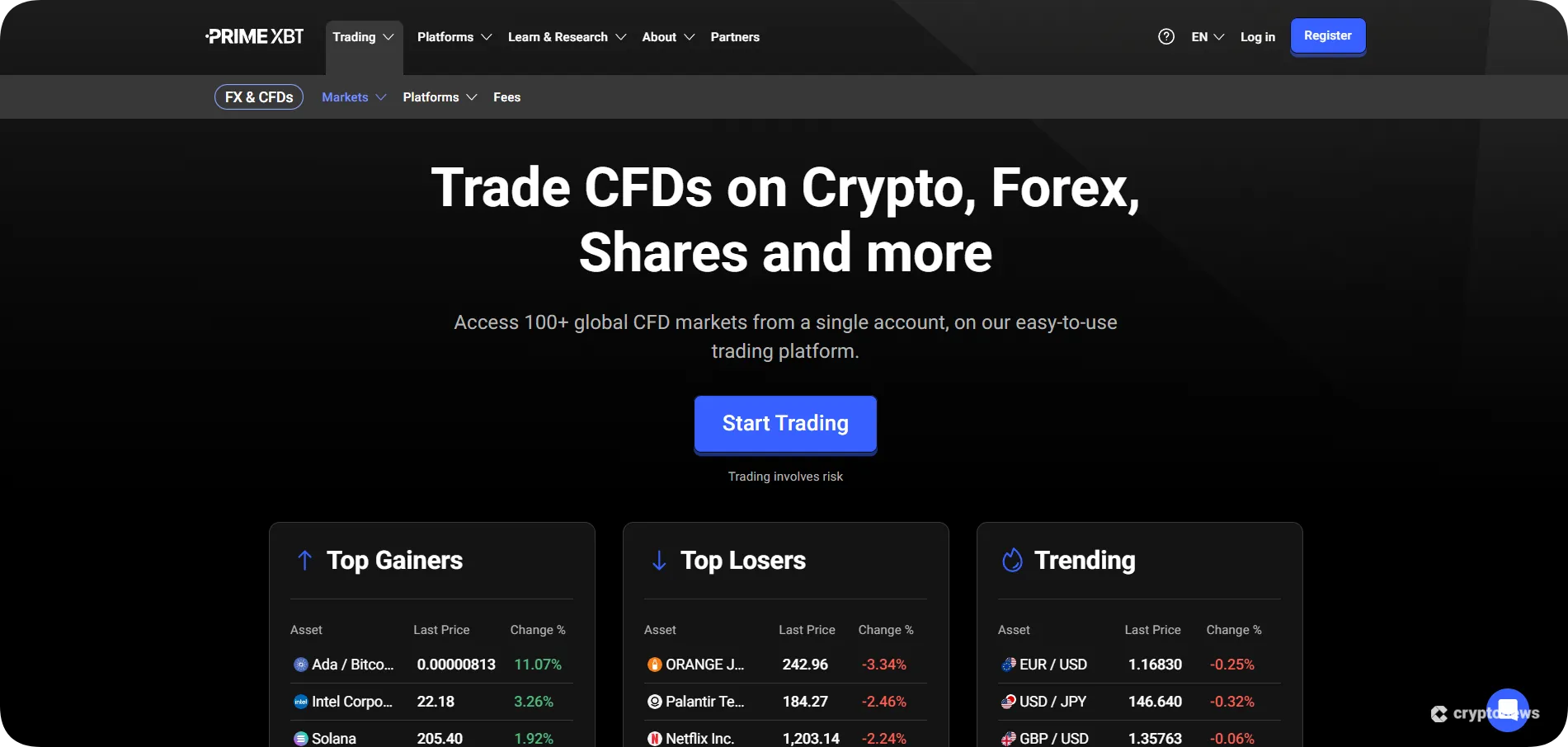
While CFDs don’t confer ownership of the asset at the end of a long trade, they offer a viable option for short-selling assets like Bitcoin. Most CFD brokers also offer leverage, which lets you amplify your gains from your short trade.
As a caveat, the Financial Conduct Authority (FCA) in the U.K. warns that more than 90,000 people lost over £75 millions in the last 4 years when investing in CFDs.
How to Short Bitcoin on CoinFutures: Step-by-Step
To illustrate how to short Bitcoin, we can use CoinFutures as an example. The platform offers perpetual futures on Bitcoin and 10 other popular assets and allows leverage of up to 1,000x without requiring you to provide personal information:
Step 1: Open an account
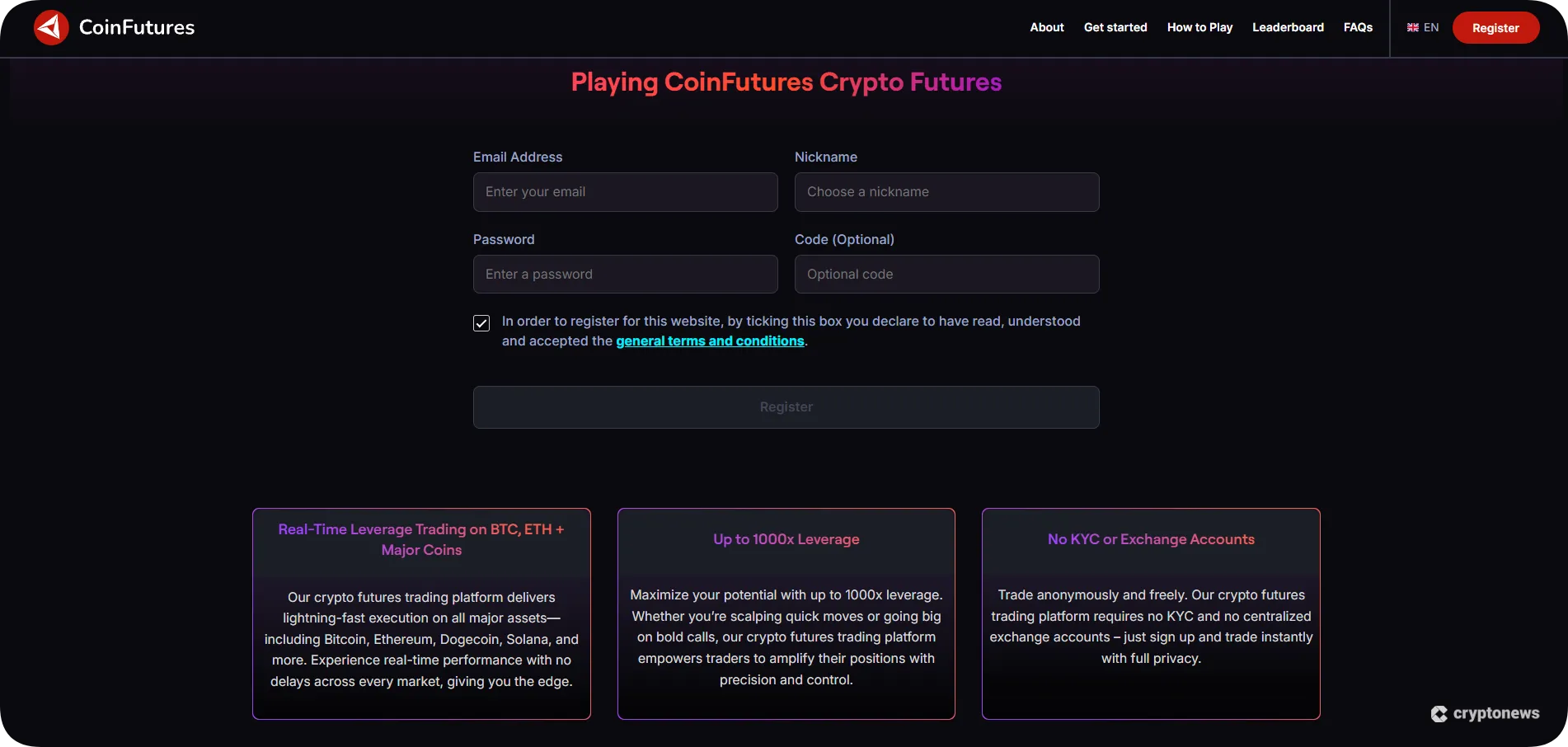
Visit the official CoinFutures website to open an account. You’ll need to provide basic information such as your email address and password. The platform doesn’t require KYC verification.
Step 2: Download the app and fund your account
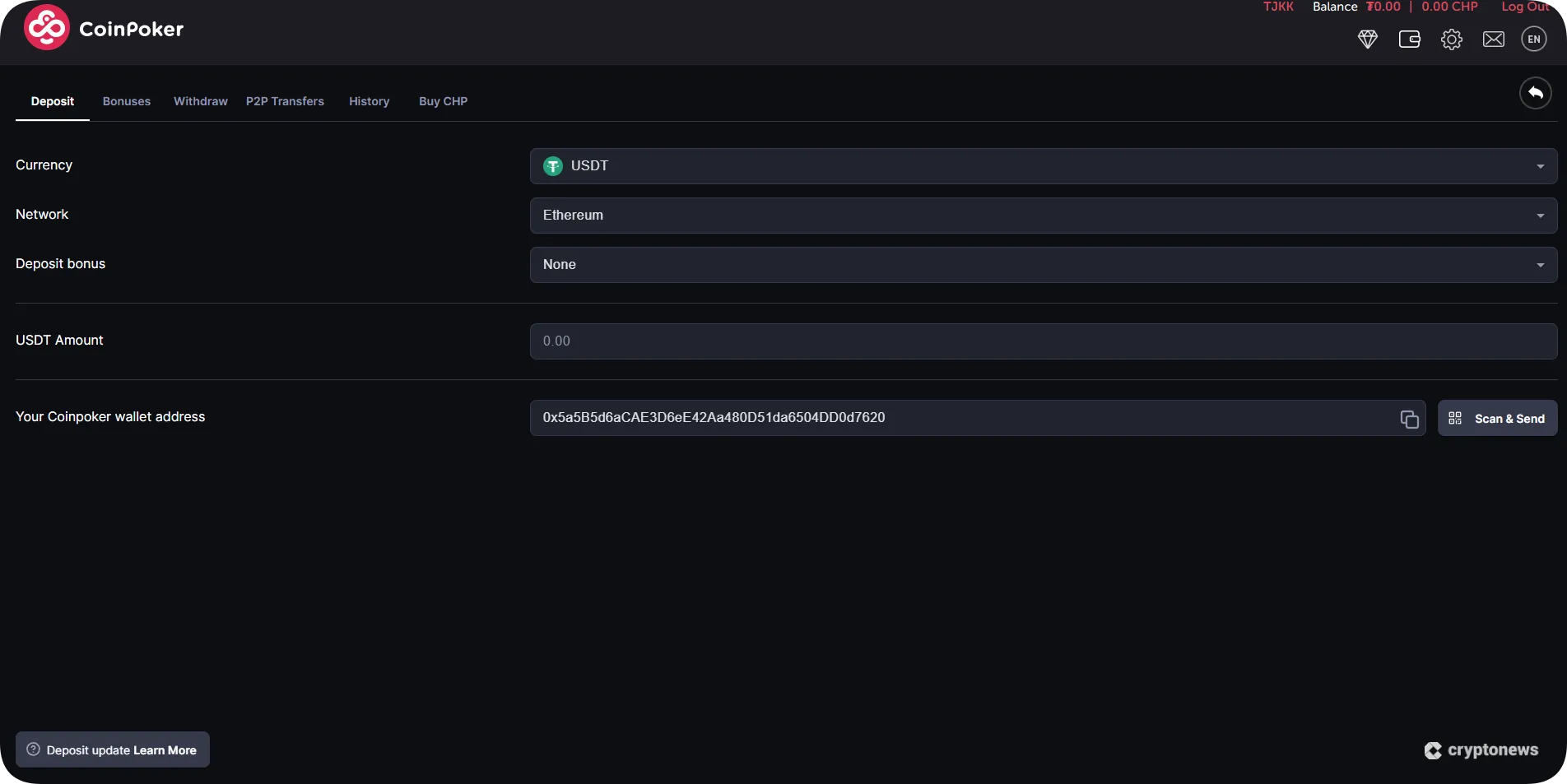
CoinFutures is available on both desktop and mobile. After you’ve installed it on your device, simply click the wallet icon on the upper right to fund your account. You can do so with crypto, credit card, bank transfer, and Apple/Google Pay.
Step 3: Find Bitcoin or another crypto you wish to short
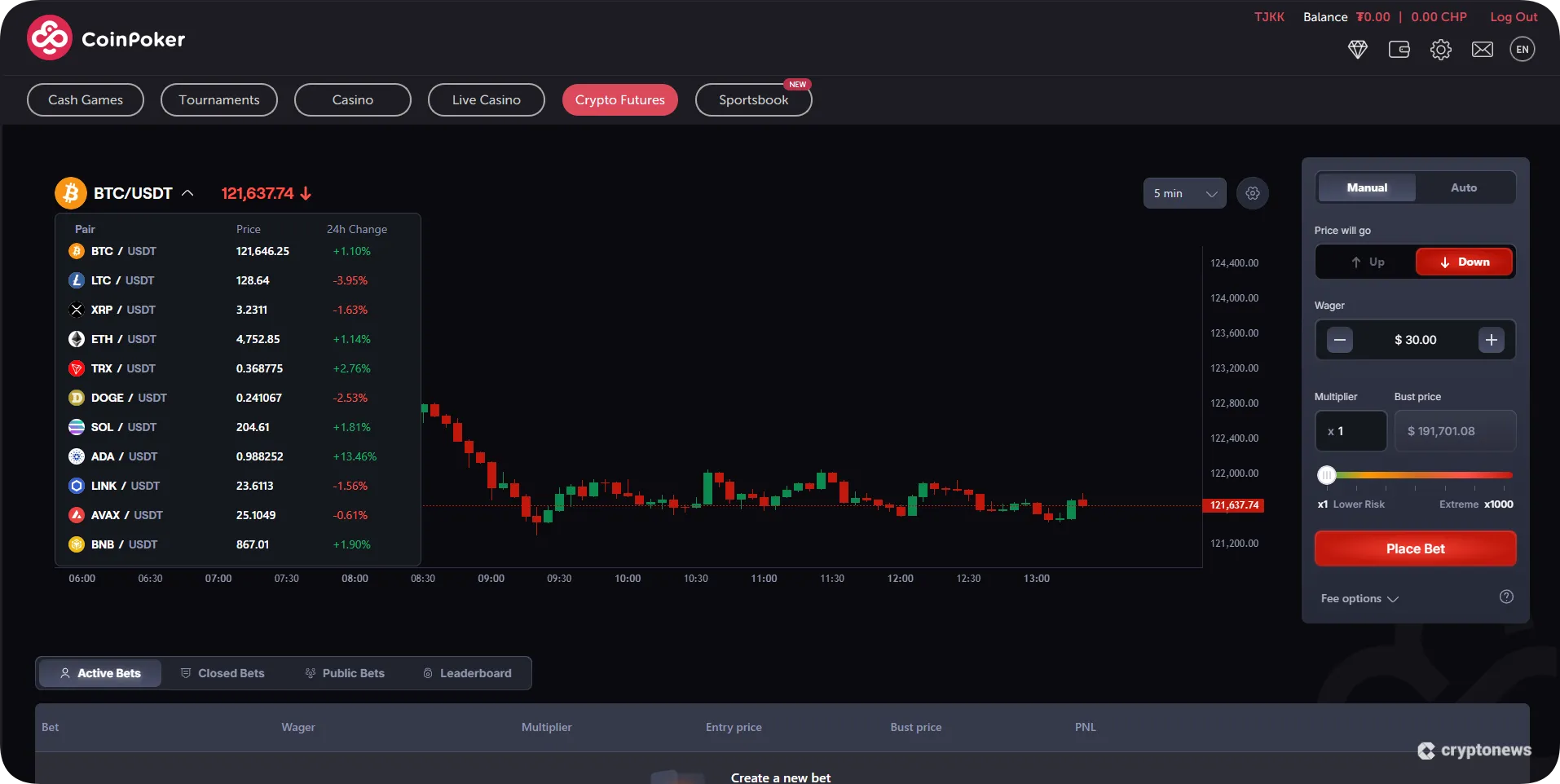
Next, click the Crypto Futures tab and pick the BTC/USDT trading pair – it’s usually selected by default. Apart from Bitcoin, you can also trade 10 other assets, such as Solana, Ethereum, Ripple, Chainlink, and more.
Step 4: Set up your short trade
On the right side, you’ll find the trade details. In this case, you’ll want to choose the Down option, meaning that you’re betting that Bitcoin’s price will decrease. You may also want to set stop-loss and take-profit orders, so your position automatically closes after the price has reached a predetermined point.
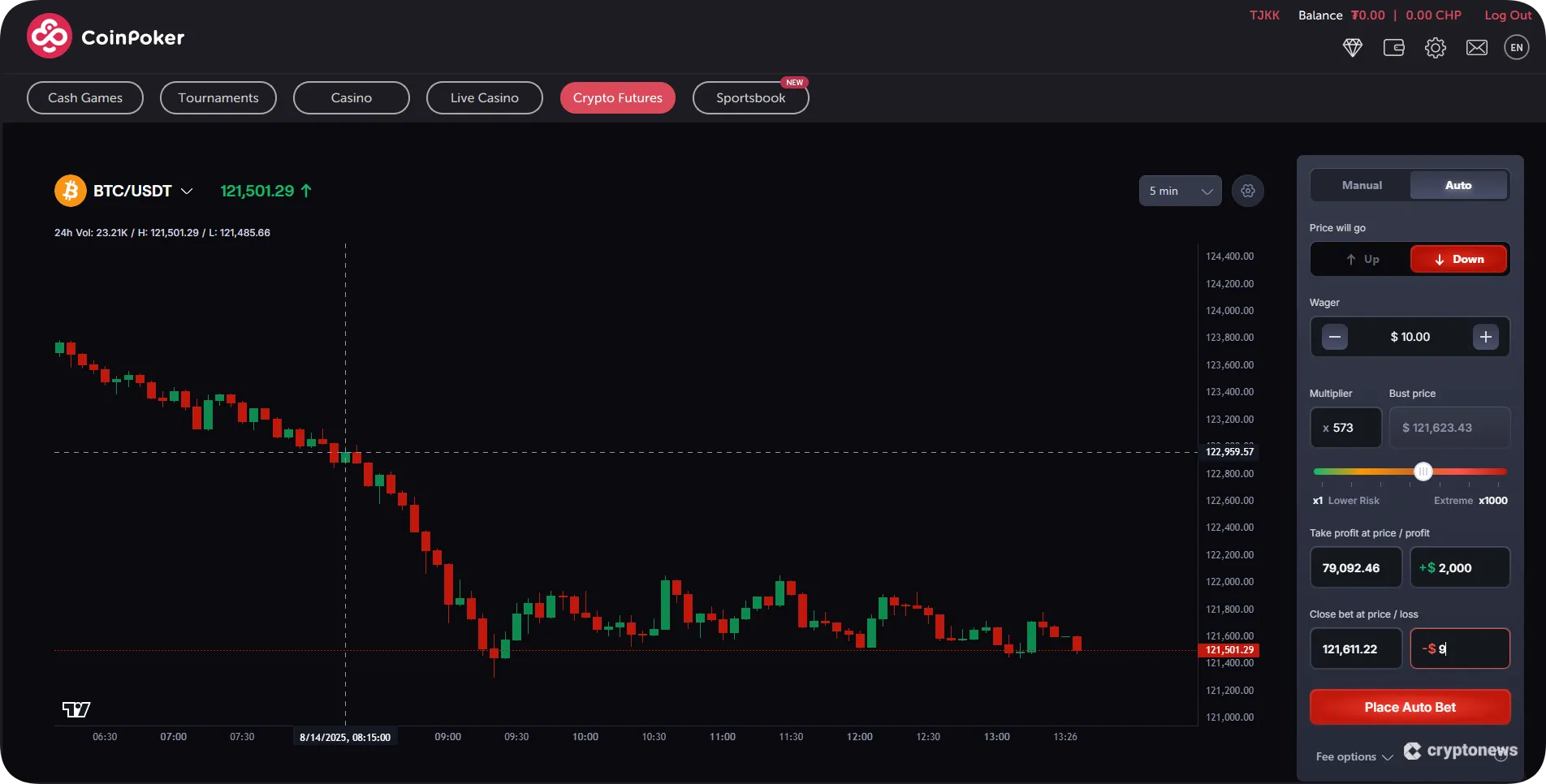
Enter your trade amount in USDT. With leverage, you’ll use your deposited funds as collateral for the short trade. This allows you to trade a larger position and amplifies your gains. On the other hand, it puts your collateral at risk and amplifies your losses as well.
Step 5: Complete and Manage Your Trade
If your order looks correct, complete the order. Open orders will be shown below the price chart, with an option to close your position or add additional orders to close your position when BTC reaches a price you define.
Visit CoinFuturesAdvantages of Shorting Bitcoin
When the price of Bitcoin decreases, a well-timed short trade captures gains while the rest of the market rides the price down.
Short-selling Bitcoin can provide several potential advantages:
- Profit from Price Declines: When short-selling, you profit from the difference between the selling price and the lower price of the asset when you close the position.
- Portfolio Diversification: Similar to how you might mix assets in your portfolio to diversify your holdings, you can also diversify your portfolio by mixing market sentiments. Perhaps you’re bullish on tech stocks but bearish on crypto. Shorting Bitcoin can help you diversify your portfolio to reflect both investment expectations.
- Opportunities for Active Traders: Active traders with reliable indicators can make money on either side of the trade by trading long or short, depending on market conditions.
Risks of Shorting Bitcoin
Shorting Bitcoin or other cryptocurrencies comes with some risks as well. Generally, risks center on leverage trading, but market timing can be a risk as well.
- Unlimited Losses: With some types of short trades, it’s technically possible to lose more than you invest in the trade. Whatever you’re shorting can have unlimited upside if the price continues north, but the downside for long trades is limited to your investment amount. The asset value can’t go below zero. However, most types of short trades limit your risk to the margin you offer as collateral, closing the trade once the value of your trade falls to a certain threshold.
- Margin Calls and Liquidation: Short trades with borrowed funds can be subject to margin calls, which are requests to increase your collateral. In practice, no one will call you, although you might get an email if you’re using a centralized platform. When the trade reaches a certain low-margin threshold, your collateral will be liquidated to close the trade.
- Timing Risk: Market news or even just mixed signals can cause Bitcoin to move in an unexpected direction. Shorting may bring more risk in this situation compared to holding Bitcoin through temporary market volatility.
What Trading Strategies Is Bitcoin Shorting Used For?
The simplest strategy for short-selling Bitcoin is a one-sided trade. However, various short-selling methods can be used in more sophisticated strategies and can help investors protect themselves. For instance, you can pair short positions with long positions in the same asset or different assets. Let’s explore some of the strategies traders can use.
Long/Short Trading Strategies
Bitcoin’s price movements often move the broad crypto market. However, crypto markets don’t always move in lockstep. If you think the BTC market is losing steam and may turn, but also see an uptrend for key altcoins, you can use a long-short strategy to profit from both sides.
In this scenario, you might short BTC while going long on SOL or whichever asset you think is due for an upswing. Traditionally, some capital invested in BTC rotates to altcoins following a big BTC runup.
Portfolio Hedging
Shorting Bitcoin or another crypto can also help you hedge your portfolio to protect against downside risk. For example, if Bitcoin falls by $10,00, you lose that entire amount (on paper) without hedging. However, if you take a smaller short position, you can reduce the downside risk.
Put options are a popular way to accomplish this strategy, but you can also use futures, CBDs, or margin trades. However, hedging through short-selling strategies can also slow overall gains in an upward-trending market.
When Should You Consider Shorting Bitcoin?
Short-selling often comes with greater risk compared to buying long, so it’s essential to choose your opportunities wisely. Several market conditions could suggest an opportunity to profit from shorting Bitcoin, but consider the big picture and do your research before opening a trade.
Possible trading opportunities can come from overbought conditions, bearish chart patterns, stubborn resistance that suggests a fall in prices, or even market news that could create selling pressure.
Overbought Conditions
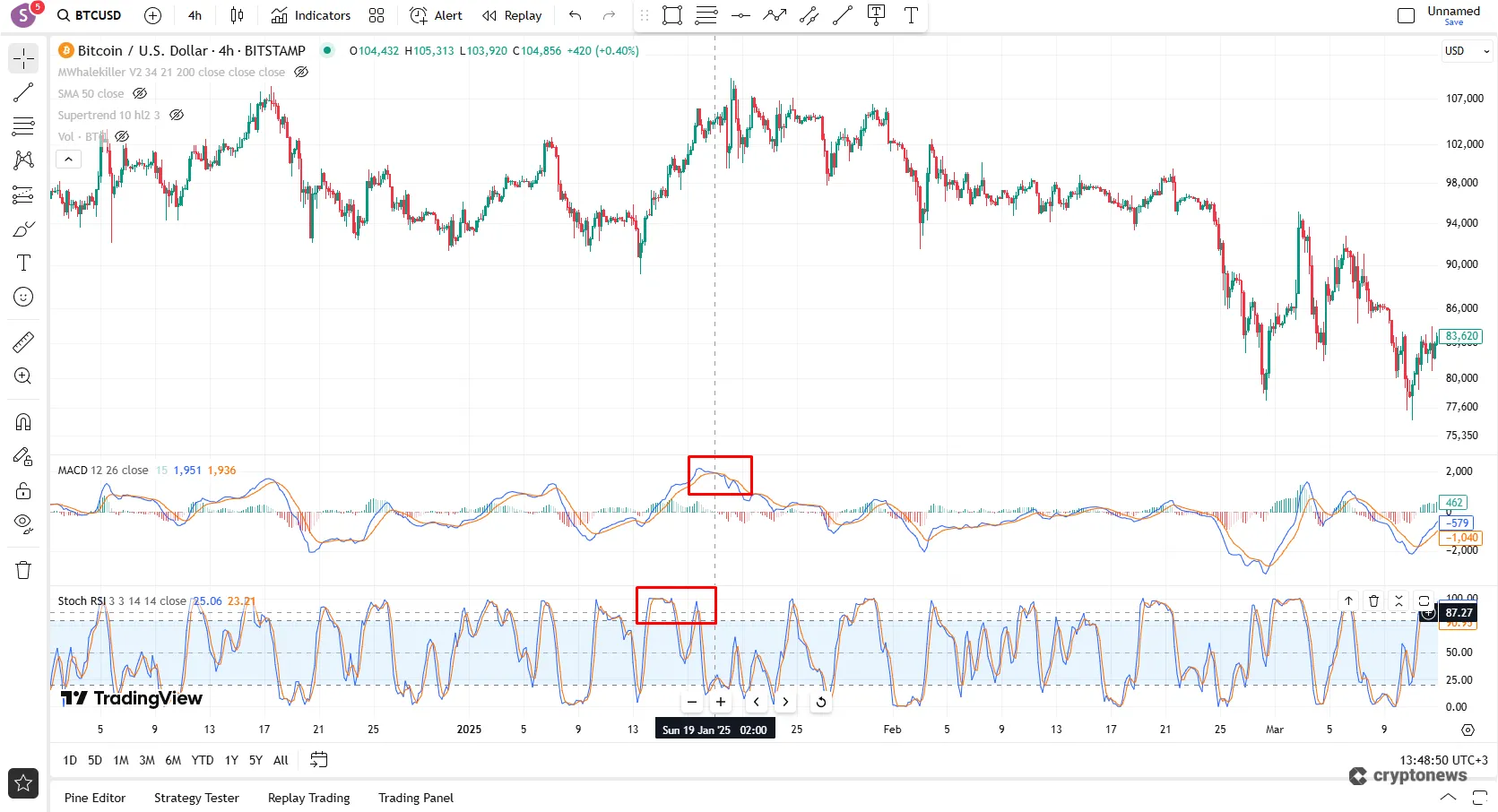
Market exuberance can lead to overbought conditions, suggesting that the asset price may be ready for a correction. Two commonly used technical indicators to investigate overbought (or oversold) conditions are the RSI (Relative Strength Index) and stochastics. In the chart below, there were signs before the pullback in BTC’s price. However, it’s best to utilize additional indicators to confirm or disprove price movement theories.
Strong Price Resistance
Bitcoin’s previous all-time high was $126,173.18 in October 6, 2025, before falling to $77,654.20 since. While Bitcoin has recovered and even set new all-time highs since that crash, resistance at the previous all-time highs is proving difficult to break through convincingly. If you expect a larger pullback before BTC makes another try for new all-time highs, you might consider shorting at resistance.
Bearish Chart Patterns
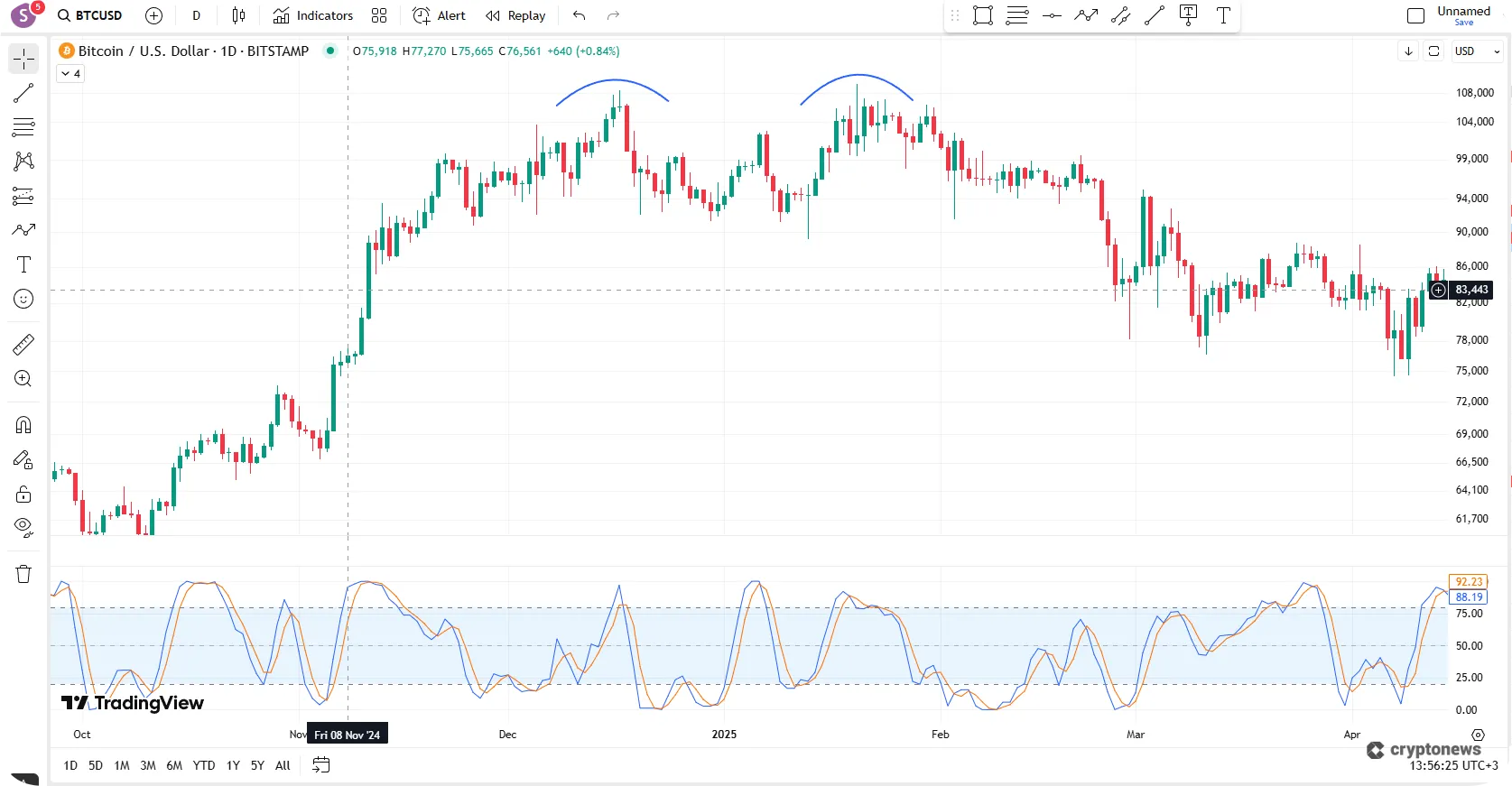
From candlestick patterns to oscillators like MACD, chart patterns, and indicators often tell a price story before it unfolds. In the example below, a double top pattern signals a pullback, although it is always safer to seek confirmation with additional trading indicators.
Negative News or Events
News and events can lead to a change in market sentiment or even dramatic dips as leveraged positions are liquidated by sudden price moves. There may be an opportunity to capitalize on bad news through short selling.
November 2025’s “Crypto Black Friday” hit the digital-asset world with shocking speed. In less than a day, over $19.5 billion in leveraged positions were wiped out as automated liquidations rippled through exchanges. Bitcoin, which had been trading above $116,000, tumbled roughly 8%, pulling the rest of the market down with it.
Analysts blamed a perfect storm of factors: panic selling after news of steep new U.S. tariffs on China, fears of a more aggressive Federal Reserve, and unusually thin trading liquidity. The stress spilled into stablecoins, some of which briefly lost their dollar pegs, while major exchanges slowed or crashed under the strain.
This was crypto’s most dramatic sell-off in years and a clear reminder of how quickly sentiment can reverse. Those positioned defensively or prepared to short profited from the downturn, while others faced significant losses.
Conclusion
Shorting Bitcoin lets you take the other side of the trade to make a profit during market downturns. Other common uses for short trades are as a hedge against unexpected market moves or as a way to diversify your holdings.
While shorting Bitcoin or other assets can be profitable, many ways to profit from these trades bring risks of their own, often related to leverage or unfortunate timing.
Remember, short selling is an advanced trading strategy and should be used with caution. Consider using a platform that offers a demo account to practice against real-world prices before making trades with real funds.
Visit CoinFuturesFAQs
Can you short Bitcoin?
Is shorting crypto risky?
Is there a Bitcoin short ETF?
What is the best way to short Bitcoin?
References
- Introducing Perpetual Futures (coinbase.com)
- Notice of ESMA’s Product Intervention Renewal Decision in relation to contracts for differences (esma.europa.eu)
- BITCOIN FUTURES – CONTRACT SPECS (cmegroup.com)
- FCA warns investors in CFDs risk losing out on protections (FCA)
- Crypto markets rebound after $19 billion wipeout leaves traders reeling (Fortune Crypto)
2M+
250+
8
70





 in numbers

About Cryptonews
Our goal is to offer a comprehensive and objective perspective on the cryptocurrency market, enabling our readers to make informed decisions in this ever-changing landscape.
Our editorial team of more than 70 crypto professionals works to maintain the highest standards of journalism and ethics. We follow strict editorial guidelines to ensure the integrity and credibility of our content.
Whether you’re looking for breaking news, expert opinions, or market insights, Cryptonews has been your go-to destination for everything cryptocurrency since 2017.
