

Is ZKP Legit or a Scam? A Detailed Review
We believe in full transparency with our readers. Some of our content includes affiliate links, and we may earn a commission through these partnerships. However, this potential compensation never influences our analysis, opinions, or reviews. Our editorial content is created independently of our marketing partnerships, and our ratings are based solely on our established evaluation criteria. Read More





ZKP (ZKP) introduces a new Layer 1 ecosystem with a zero-knowledge proof consensus mechanism. Scheduled to launch in 2027, the privacy-focused blockchain operates a peer-to-peer mining model for artificial intelligence (AI) data sets.
As the auction-style presale spans 450 days, some crypto communities question the startup’s credibility. So, is ZKP legit, or should investors consider other opportunities?
We researched the project extensively, including a thorough examination of its whitepaper, roadmap, objectives, fundraising structure, and use cases. Explore our ZKP findings before you join the presale event.
Is ZKP a Scam or Legit Crypto Presale?
Research indicates that ZKP has “EOS” vibes, given that its presale event lasts 450 days. The auction-style process asks investors to contribute cryptocurrencies without knowing the cost basis. The dashboard calculates the coin price based on the previous day’s rise, so the community faces a wide disparity in project valuations.
The technology itself appears promising, especially as demand for privacy solutions and AI processing continues to grow. However, early backers must wait until mid-2027 for the mainnet launch, and potentially longer for the token generation event (TGE).
- Extended Presale Event: Each presale window opens for 24 hours, and with 450 individual cycles, investors must wait until at least March 2027 for the event to conclude.
- Coin Price Disparity: The unusual presale process lacks transparency and predictable pricing. After each daily round, the total capital raised sets the coin price. This structure may cause community rifts, as some investors pay substantially more than others, even if they only bought a day apart. Price disparity also causes potential coin dumps at the TGE, as some participants may face significant upside.
- TGE and Mainnet Concerns: The long presale timeline creates liquidity and opportunity risks. Investors cannot unlock their ZKP coins until Q1 2027 at the earliest. The mainnet is expected to launch in July 2027, so despite the long wait, presale backers are likely to receive their coins before full functionality becomes available.
- Pay-to-Earn Model: Like many top DePIN coins, ZKP relies on decentralized operations, where the community contributes AI processing tasks to earn tokenized rewards. However, stakeholders must purchase specialist devices called Proof Pods, which cost $249. Purchases unlock basic earnings; device owners must pay $100 to upgrade to the next level. With up to 300 upgrades available, the pay-to-play model is extremely expensive, which potentially results in limited sales.
- Future Identity Reveal: ZKP operates under an anonymous company structure, with no publicly available information about its founders or core team members. The project states that in June 2026, the founders will release their identities in a grand reveal. This unconventional strategy raises credibility concerns, as we see no benefit in delaying the process.
- Hype-Driven Marketing: ZKP documents present a serious Layer 1 venture with long-term use cases, yet its website leans heavily on hype-driven content. The material showcases presale countdown timers to encourage urgency, as well as unrealistic Proof Pods profits without verifiable evidence to support the claims.
What is ZKP?
ZKP is an early-stage crypto startup that develops a native Layer 1 blockchain. The decentralized network uses zero-knowledge proof as its underlying consensus mechanism, which enables secure and private transactions.
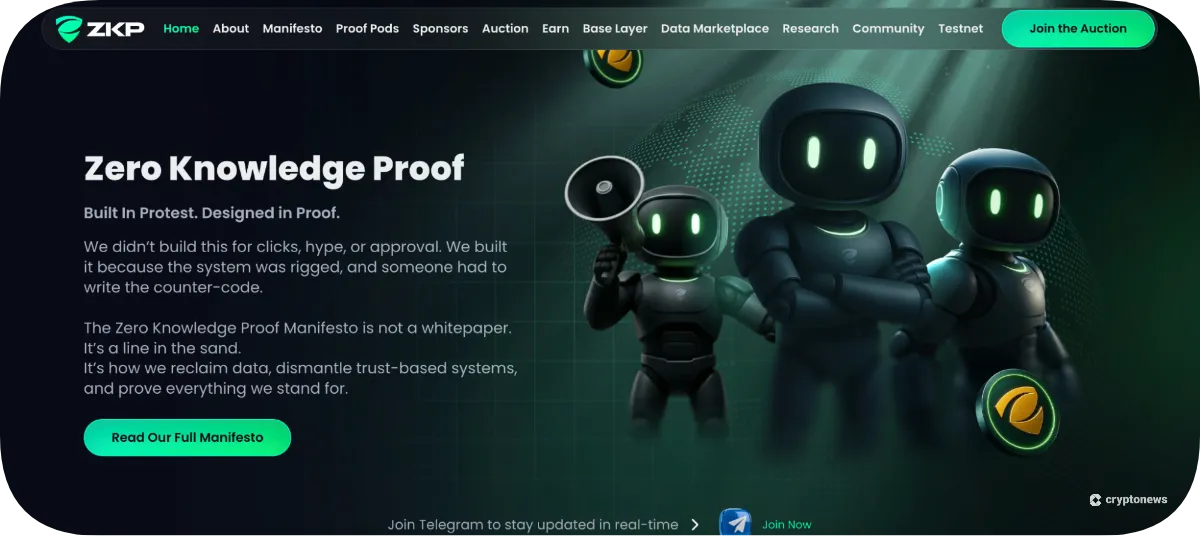
The technology promotes true anonymity, as the public ledger hides transaction data, such as the transacting parties. ZKP targets the high-growth AI sector, as its hardware devices help end users process data sets in a peer-to-peer environment.
- Proprietary Technology: ZKP builds its Layer 1 technology from the ground up. The zero-knowledge proof feature enhances privacy within decentralized ecosystems, as the ledger reveals limited transaction information.
- Decentralized AI Markets: The blockchain specializes in AI data sets, where it connects end users with global contributors. Data providers complete tasks via specialist devices, which enables them to earn ZKP coins. Conversely, as end users need ZKP coins to request AI computation, the project’s economic model is potentially self-sufficient.
- Proof Pods: The startup manufactures and sells Proof Pods for $249 per device, which contributors need to generate ZKP income. Ranging from 1 to 300, the tiered structure drives the revenue system. Contributors spend $100 per tier upgrade to multiply their ZKP rewards. The pay-to-earn infrastructure requires up to $30,000 to maximize payouts.
- Use Cases: ZKP coins primarily serve as a peer-to-peer currency. Customers pay AI processing fees in the digital asset, which the system distributes to Proof Pods owners proportionately. Holders also stake ZKP to generate additional rewards.
Revealing the Team Behind ZKP
An anonymous team currently runs the ZKP project, which aligns with its privacy-focused technology. Anonymity isn’t necessarily a red flag, as many new cryptocurrencies operate opaque team structures.
The unusual aspect is that ZKP teases a full team reveal in June 2026, over six months after its presale launch date. In our view, the founders could have released their identities before the fundraising campaign to build credibility. In their defence, they plan to test their own technology by seeing if anyone can identify them via clues within the protocol.
Transparent Web3 projects, particularly those behind innovative technologies, often secure significant funding. By postponing the reveal, the presale could face limited traction
ZKP’s Technology & Use Cases
ZKP’s technology is largely theoretical at this stage. Its Layer 1 network launches in June 2027, per the roadmap. The blockchain serves a peer-to-peer ecosystem for decentralized AI data, and it relies on the zero-knowledge proof concept for enhanced privacy standards.
The AI workflow requires significant adoption, especially from data contributors. Proof Pods, which the project already sells to the public, connect to the ZKP network remotely. However, device owners generate no income until the mainnet launch.
The whitepaper outlines robust security frameworks and, despite its privacy features, full legal compliance with existing data legislation like the General Data Protection Regulation (GDPR).
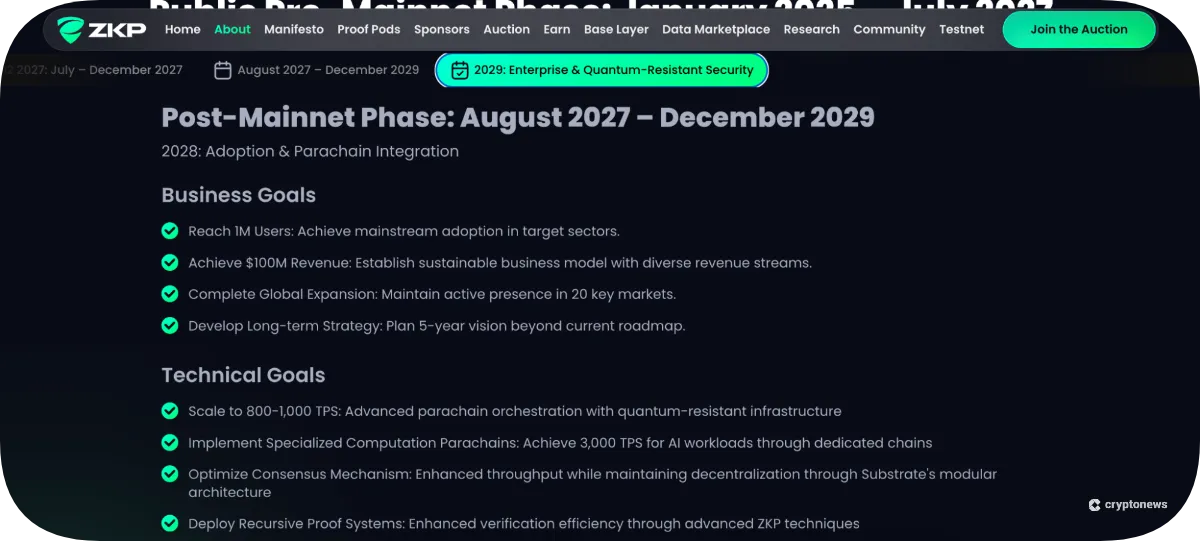
Yet, our research highlights inefficient transaction processes. Scalability is one concern, as the roadmap targets just 100–200 transactions per second (TPS) at the 2027 mainnet event. While scaling objectives rise as the development timeline progresses, the project aims for just 800–1,000 TPS (quantum-resistant) and 3,000 TPS (operational) by 2029.
We also remain sceptical about the Proof Pods framework. End-users, such as AI developers and model trainers, require computational tasks from ZKP contributors. The blockchain relies on real customers who purchase Proof Pods, and despite paying $249, these contributors get basic-level status.
To advance to level 2, customers must purchase a $100 upgrade, which repeats until they reach level 300. This payment system raises concerns, given that Proof Pods offer no reliable profit guarantees. The ZKP price also plays a major role in earning potential. Declining prices directly impact income, so even level 300 members could lose money.
Are ZKP’s Tokenomics Sustainable?
ZKP is a proprietary network initiative, so its native coins use a unique blockchain structure. The team announces technical information about the coin’s storage requirements closer to the mainnet launch.
| Category | Allocation (ZKP) | % of Supply | Vesting / Notes |
|---|---|---|---|
| Total Supply | 257,142,857,143 | 100% | Capped supply; no inflation |
| Presale Allocation | 90,000,000,000 | 35% | 450 daily auctions; 200M/day; proportionate allocation |
| Mining Rewards | 141,000,000,000 | 55% | Rewards for Proof Pod operators; ROI depends on tier and post-TGE price |
| Community & Ecosystem Reserves | 10,000,000,000 | 4% | Supports development, research, grants |
| Exchange Listings & Liquidity | 8,000,000,000 | 3% | Portion locked up to 18 months to reduce volatility |
| Team & Strategic Advisors | 8,000,000,000 | 3% | 12-month cliff; linear vesting over 3 years; milestone-based |
Regarding supply dynamics, the project creates 257,142,857,143 ZKP coins. The tokenomics confirm a capped supply, so unlike proof-of-stake models, ZKP holders avoid inflationary pressures.
The team allocates the coin supply across five core divisions.
The presale system releases 90 billion ZKP, which reflects 35% of the supply. It sells 200 million ZKP daily across 450 auction events. The full 24-hour batch is sold daily, as ZKP allocates the 200 million coins proportionately based on the total capital raised.
ZKP Presale Vesting
Alongside the extended presale process, participants face vesting terms at the TGE. They receive 50% of the purchased ZKP at the exchange launch, and the remaining 50% unlocks linearly over five months.
This drawback adds further liquidity restraints, as ZKP investors cannot trade vested tokens until the system releases them.
141 billion ZKP (55%) goes to the mining rewards mechanism. Those who purchase and operate Proof Pods receive these coins over time. The return on investment (ROI) depends heavily on the user’s tier level and the ZKP price after the TGE.
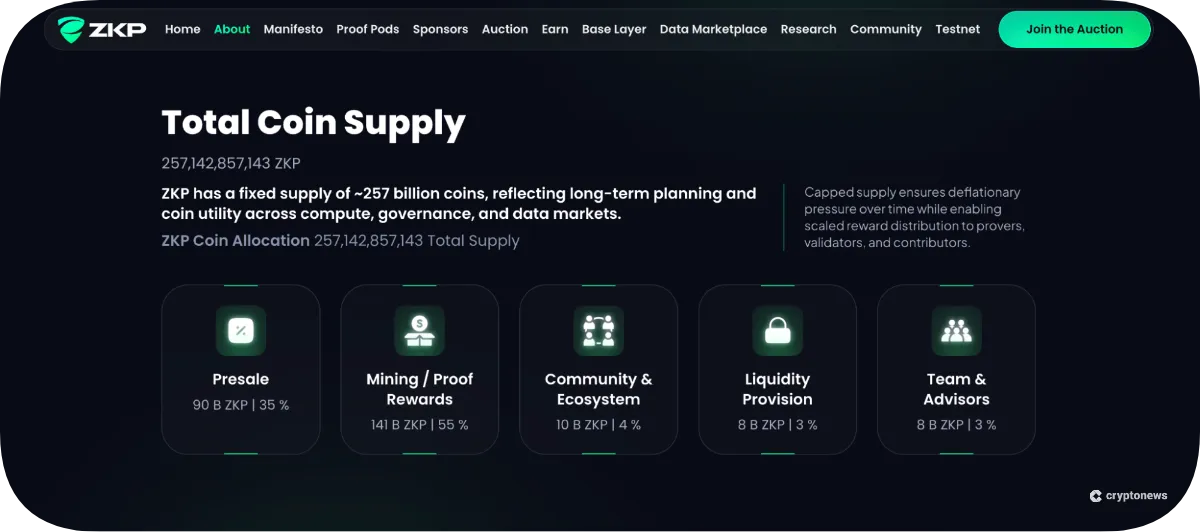
ZKP also allocates 10 billion ZKP (4%) for community and ecosystem reserves. The funds support development growth, research partnerships, and industry grants.
8 billion (3%) ZKP helps fund exchange listings, including the TGE. Documents state that a smart contract locks a small percentage of those coins for up to 18 months to mitigate market volatility.
The team and strategic advisors receive the remaining 8 billion ZKP (3%). Vesting schedules lock the coins for 12 months, and a linear structure releases them gradually over three years. The founders claim that their allocation ties to key project milestones like validator growth and marketplace activation.
How Realistic is ZKP’s Roadmap?
ZKP has an extensive roadmap that targets full completion in 2029. During the auction sale, the development team releases a wide range of network objectives. Comprehensive testnet results feature proof-of-space integration, EVM-compatible pallets, and dual consensus verification.
Although these roadmap goals inspire confidence, the core mainnet launch occurs in June 2027. Investors who join the presale early wait up to 15 months for the event to conclude, and another five months for the mainnet product.
Because the mainnet activates the peer-to-peer infrastructure, Proof Pods owners generate income on their purchase. This outcome relies on existing end users who purchase AI tasks with ZKP. Without paying customers, the Proof Pods model lacks sustainability.
By the end of 2029, ZKP aims to onboard 200,000 platform users. ZKP claims that these projections yield $10 million in annual revenue based solely on ecosystem fees and enterprise services.
Is ZKP Audited to Ensure Safety?
According to the ZKP website, “smart contract audits are currently being conducted by Certik”. The audit process helps investors evaluate risk, as without it, contracts could contain vulnerabilities or malicious code.
As with many ZKP features and specifications, stakeholders must trust the team’s promises. Our research confirms that CertiK has not publicly confirmed an ongoing audit, so we cannot verify whether the team’s claims are legitimate.
Similar to the delayed identity reveal in June 2026, the founders could have launched the public sale after the CertiK audit.
This shortcoming raises the question: Is ZKP safe? While the audit omission does not necessarily make ZKP a scam, it raises additional competency concerns.
ZKP Marketing: Pure Hype or Genuine Community?
Legitimate blockchain projects highlight technical capabilities and real use cases, yet ZKP’s marketing materials lean on hyperbolic language. Terms like “it’s a protest in code” and “this isn’t hype. It’s history” lack true substance.
The auction’s countdown timer encourages urgency, and the presale dashboard displays charts with baseless price projections. Speculative meme coins use similar tactics to create FOMO. Regulators may view these materials as misleading, which hinders ZKP’s legally compliant promises.
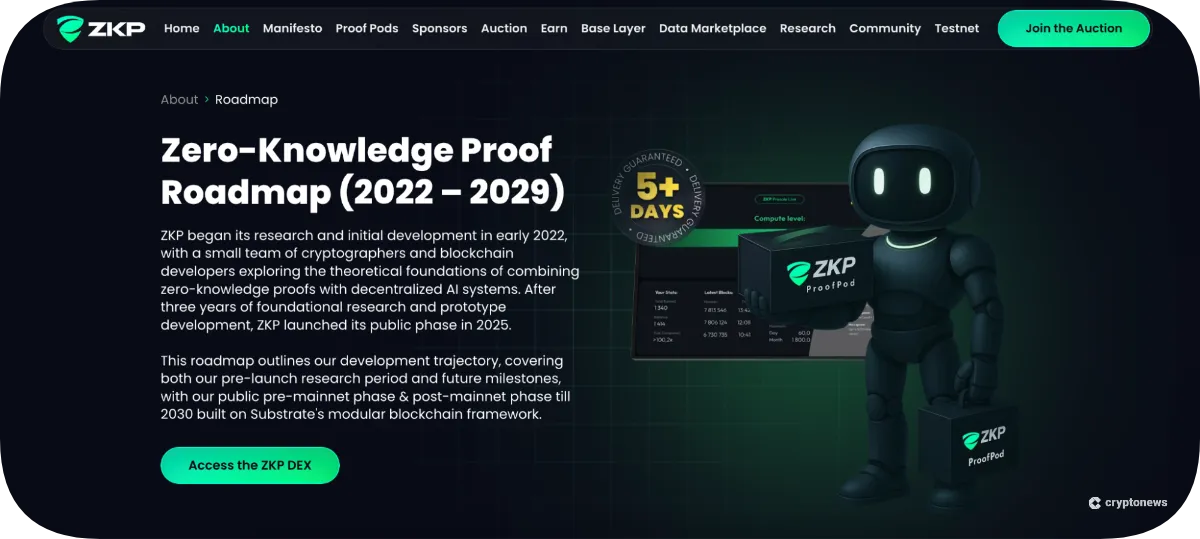
ZKP employs similar marketing tactics to promote its Proof Pods devices. It explains that consumers receive their specialist hardware in just five days, which enables them to immediately connect to the zero-knowledge proof network. However, the device generates no earning potential until the 2027 mainnet launch.
The startup also promises increased revenues when contributors upgrade their tier level. The process requires $100 per upgrade, and with up to 300 upgrades available, consumers must spend a significant amount of funds to achieve the highest tier.
Top Alternative Crypto Presales to Consider
ZKP’s comprehensive whitepaper outlines innovative technical objectives, but we cannot ignore the identified red flags. From a 450-day presale event without a consistent cost basis to the aggressive pay-to-earn model, ZKP’s investment thesis lacks value.
Unusually long timeline events pose critical risks, too. Presale backers must wait until at least February 2027 for the TGE, and even then, the vesting agreement unlocks just 50% of the purchased coins.
We researched other presales campaigns to identify legitimate ZKP alternatives. According to our analysis, these are the best crypto presales to consider in 2026.
Bitcoin Hyper (HYPER)
Bitcoin Hyper (HYPER) launches a Bitcoin (BTC) Layer 2 network in Q1 2026. The technology enables fast and scalable transactions, since the network reduces BTC block times from 10 minutes to seconds.
It also allows BTC holders to access decentralized finance (DeFi) products such as staking and lending. This innovative feature unlocks Bitcoin yields without compromising on decentralization. The Layer 2 relies on a Canonical Bridge, so platform users retain ownership of their BTC coins. Smart contracts unlock the original BTC when users leave the Bitcoin Hyper ecosystem.
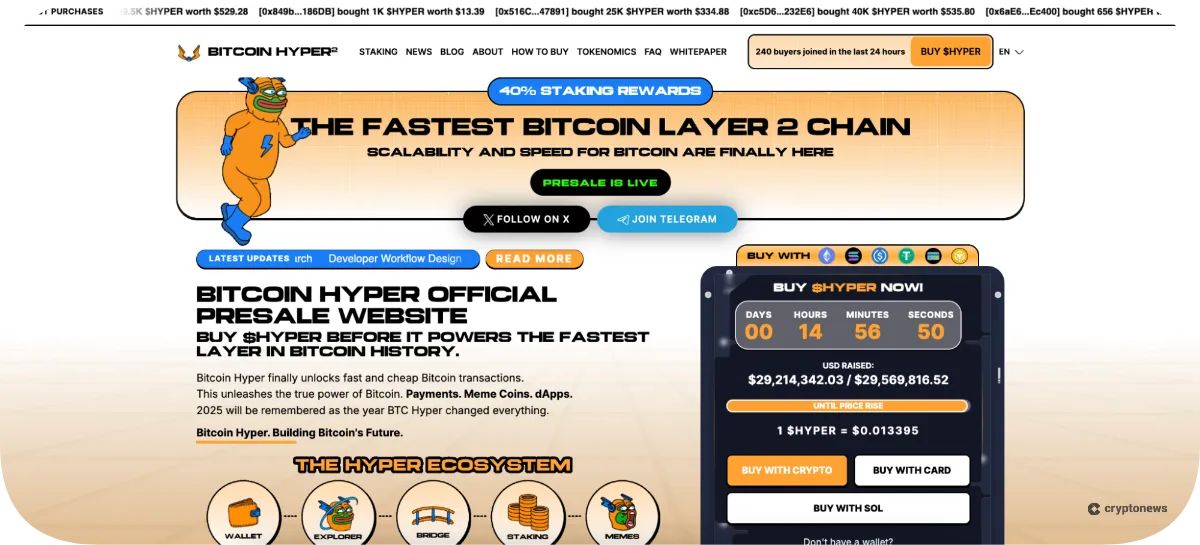
The presale project offers HYPER tokens at a reduced rate, and investors have purchased over $29 million since the event launched in May 2025. When the campaign ends (Q1 2026 at the latest), the founders list HYPER tokens on decentralized and centralized exchanges.
Visit Best WalletMaxi Doge (MAXI)
Maxi Doge (MAXI) is a no-nonsense presale event that provides exposure to a speculative meme coin. While it shares similarities with Shiba Inu (SHIB), Floki (FLOKI), and other top dog-themed cryptocurrencies, compared with these projects, presale investors buy MAXI at a tiny valuation.
We estimate a $42 million fully diluted valuation (FDV) at the exchange listing, which provides a favorable risk-reward profile for early backers. Based on meme culture and community strength, Maxi Doge is themed around a degen trader that specializes in 1000x perpetual futures. The project artwork resembles a jacked Shiba Inu dog breed fueled by Red Bull cans.
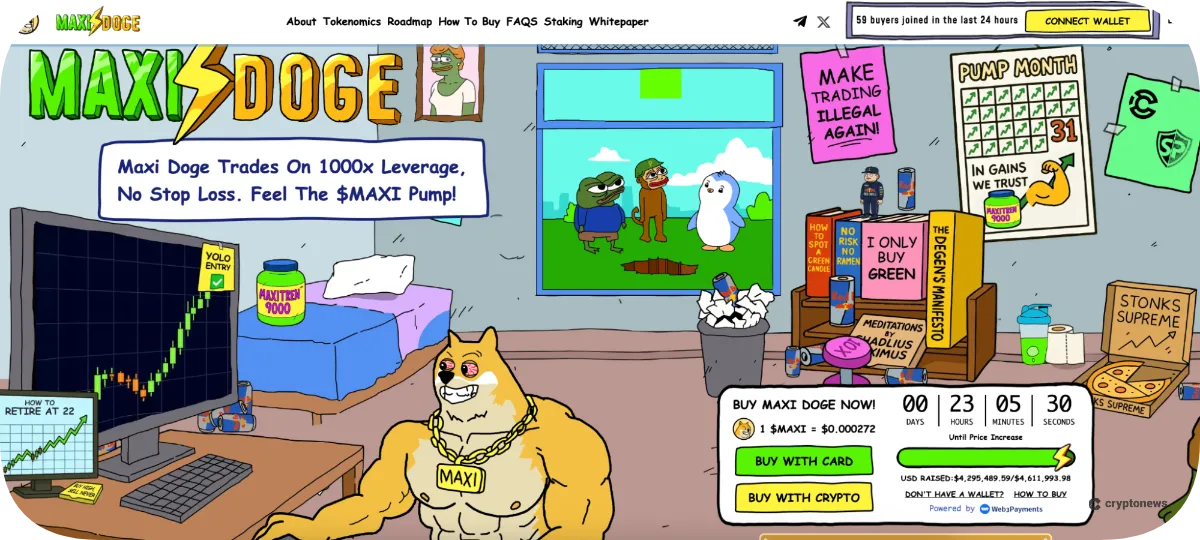
Some analysts cite the project’s strong tokenomics, which include a capped supply and an audited smart contract. As the project reserves 40% of that supply for global marketing, MAXI could be one of the fastest-growing cryptocurrencies in 2026. The tiered presale structure increases the token price every few days, and participants have invested nearly $4.3 million.
Visit Maxi DogePepenode (PEPENODE)
Pepenode (PEPENODE) launches a mining simulation game in early 2026. The gamification project allows users to earn passive rewards as they increase mining outputs. The skill-based concept requires players to build mining rooms, customize servers, purchase nodes, and boost facilities.
The mine-to-earn ethos revolutionizes existing mining processes, which depend on expensive ASIC devices and unprecedented energy consumption. Pepenode users need no hardware or technical expertise, as they earn mining income in exchange for time and effort.
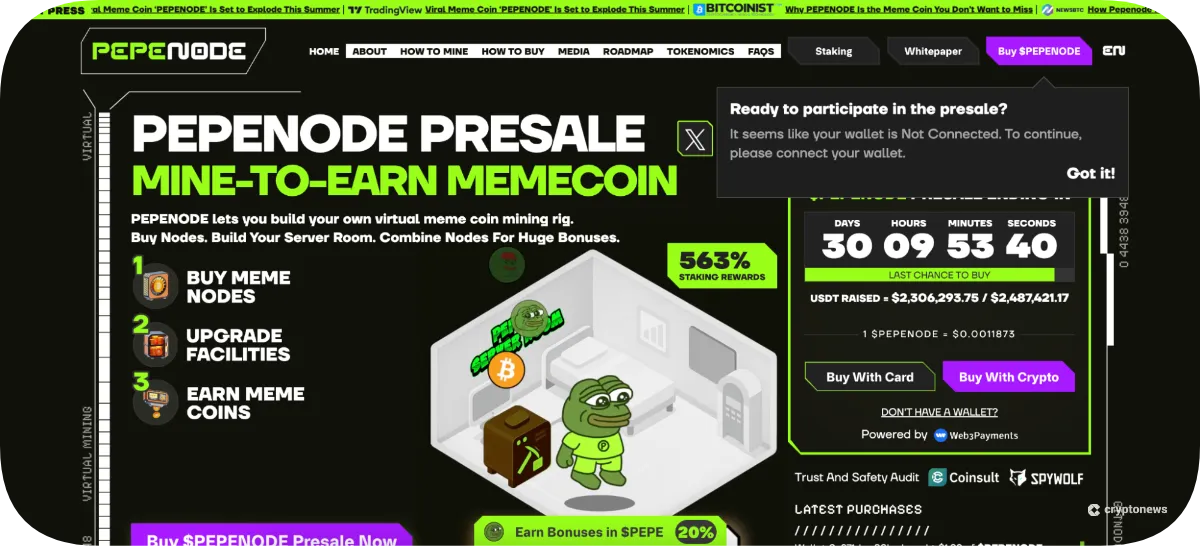
The ecosystem releases mining payouts in the native PEPENODE token, although later in the roadmap, users also earn top meme coins like Pepe (PEPE). The Pepenode presale sets no minimum purchase requirements, and it lets participants stake their tokens immediately. The staking feature offers dynamic APYs of 529%.
Visit PepenodeConclusion: is ZKP Legit or a Scam?
While ZKP could be a legitimate Layer 1 blockchain, the identified red flags create significant risk without sufficient upside potential. The auction process lasts 15 months, and presale investors receive only 50% of their ZKP coins at the exchange launch. The remaining assets are unlocked over a period of five months, which could extend into 2028.
The long roadmap schedule confirms a mainnet release no earlier than July 2027; however, full functionality is expected to arrive two years later. Although the project currently sells $249 Proof Pods devices, consumers earn no mining income until the mainnet goes live.
Given these concerns, prospective investors may consider other Web3 opportunities. Read our presale investing guide to explore genuine ZKP alternatives.
👉 To learn more about ZKP’s future, read our Zero Knowledge Proof (ZKP) Price Prediction 2025-2030.
Explore the Best Crypto PresalesFAQs
Who runs ZKP?
Is ZKP safe?
When will the ZKP presale end?
References
- ZKP Whitepaper (PDF)
- A blockchain start-up just raised $4 billion without a live product (CNBC)
- Zero-knowledge Proofs (IBM)
- What is a blockchain consensus mechanism? (Kraken)
2M+
250+
8
70






 in numbers

About Cryptonews
Our goal is to offer a comprehensive and objective perspective on the cryptocurrency market, enabling our readers to make informed decisions in this ever-changing landscape.
Our editorial team of more than 70 crypto professionals works to maintain the highest standards of journalism and ethics. We follow strict editorial guidelines to ensure the integrity and credibility of our content.
Whether you’re looking for breaking news, expert opinions, or market insights, Cryptonews has been your go-to destination for everything cryptocurrency since 2017.
