
Historical patterns repeat as Bitcoin declines before halving
Bitcoin sees a 10% dip ahead of the halving, following a pattern of pre-event drawdowns.



Quick Take
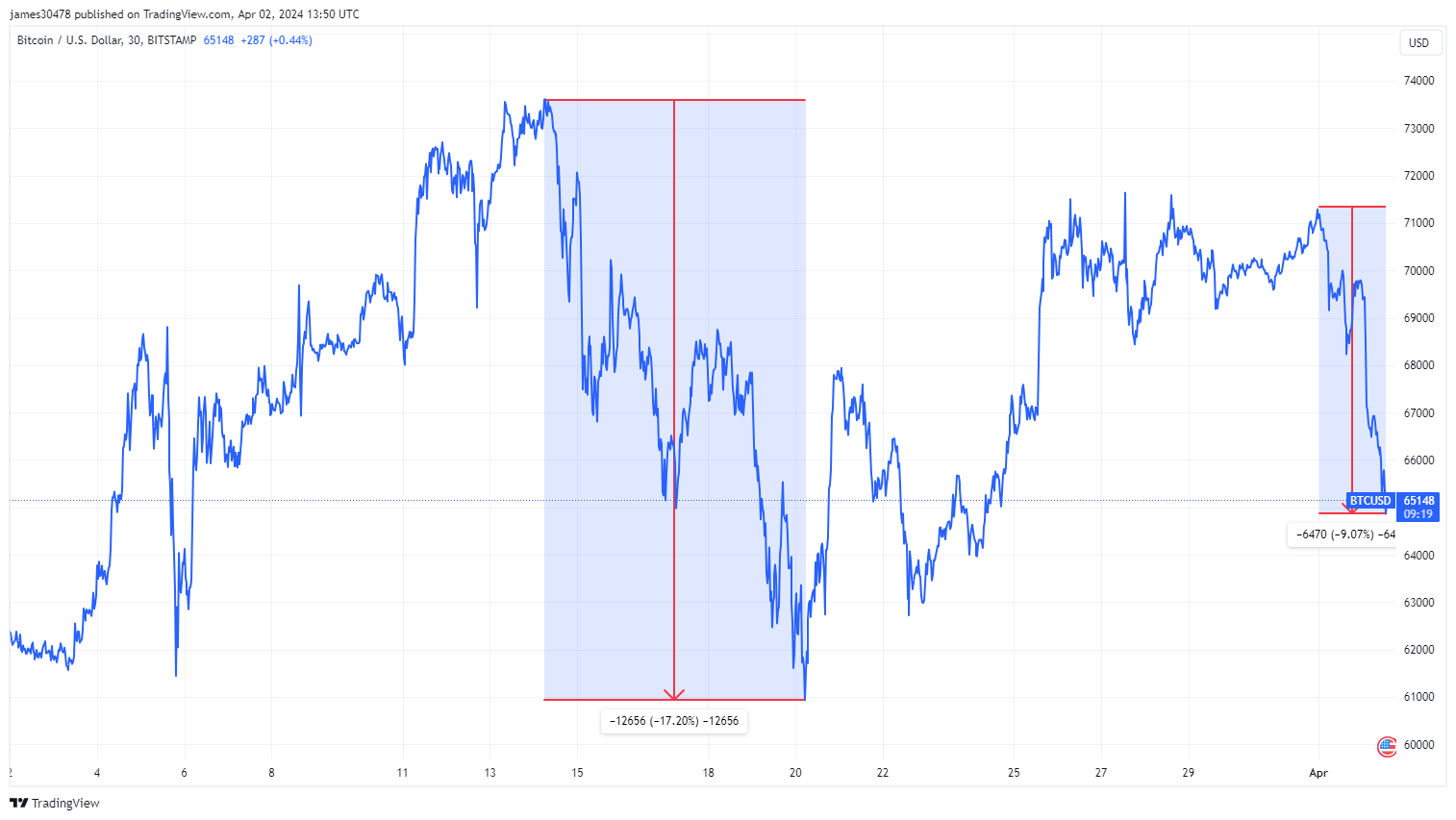
With the halving event looming roughly 18 days away, Bitcoin is showing a predictable downturn. It has dipped below $65,000, marking a 12% decline from its all-time high and nearly 10% lower since the beginning of April.
In a pattern reminiscent of March, when Bitcoin reached its peak, it promptly retreated to around $60,000, experiencing a 17% decrease.
Historical data reveals drawdowns of comparable or larger magnitude preceding prior halving events.
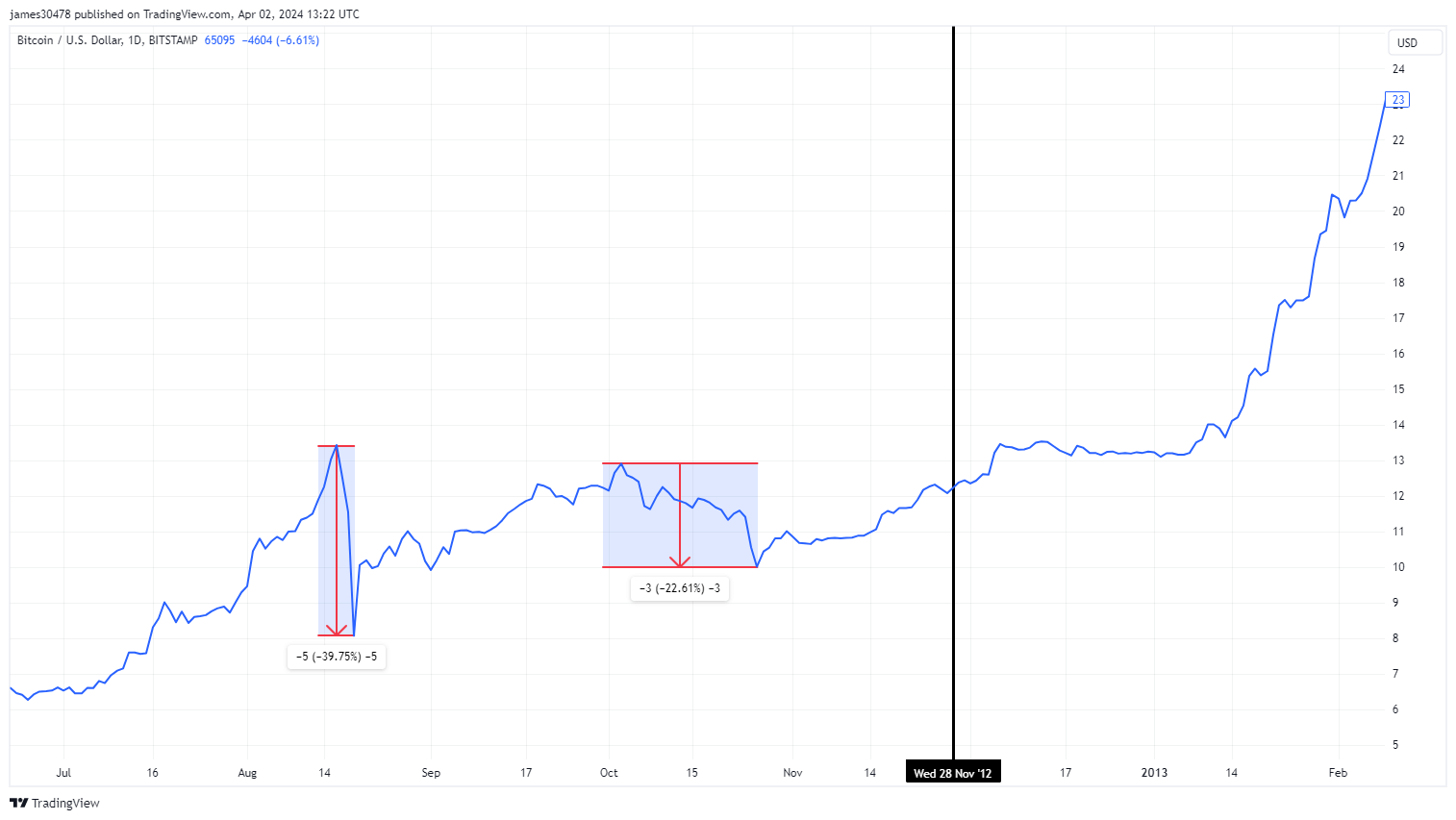
For instance, before the first halving in November 2012, Bitcoin experienced a 40% decline in August and a 23% drop in October of the same year.
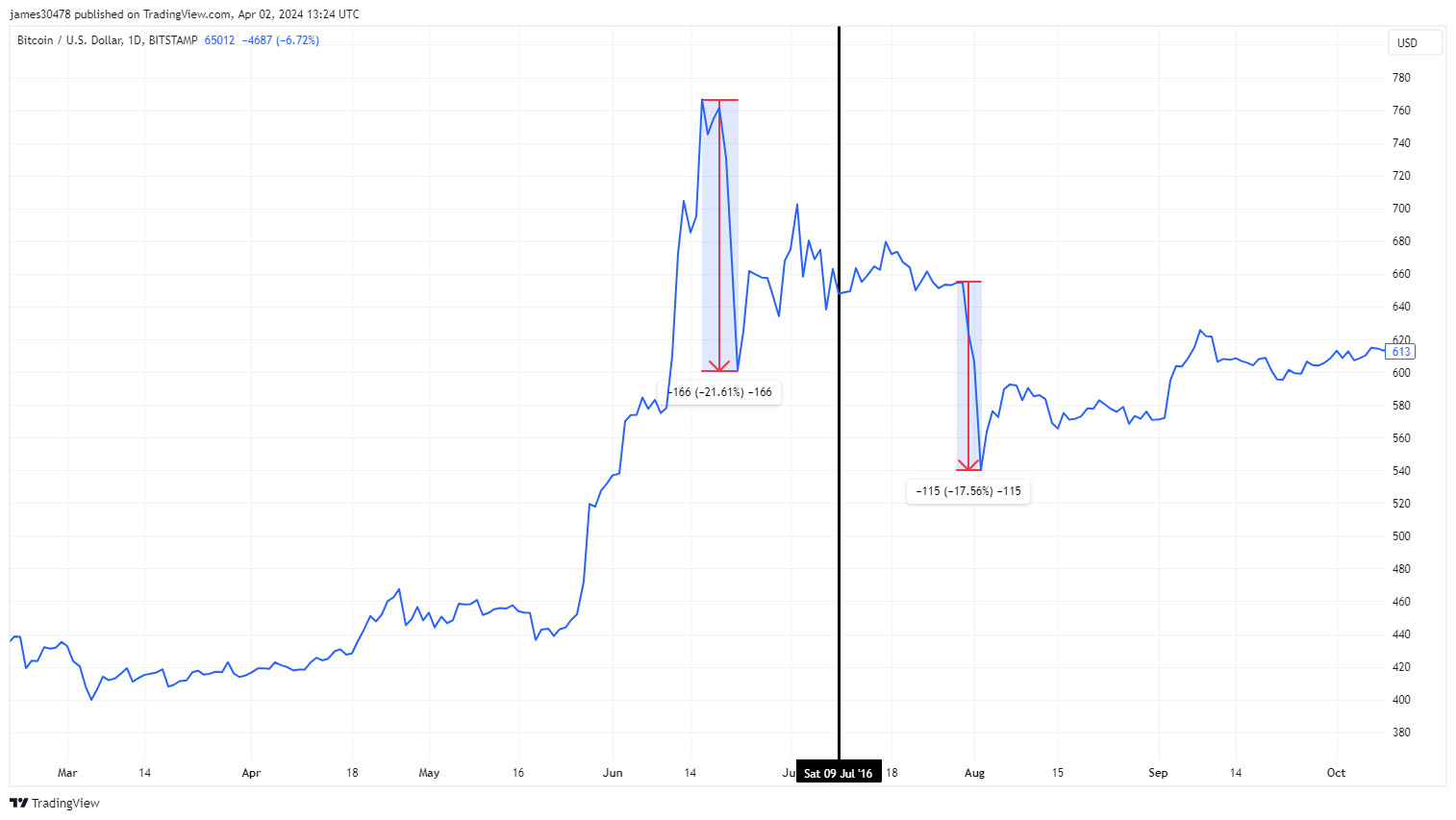
Leading up to the second halving in July 2016, Bitcoin encountered a 22% decrease in June, followed by an 18% decline in August after the halving.
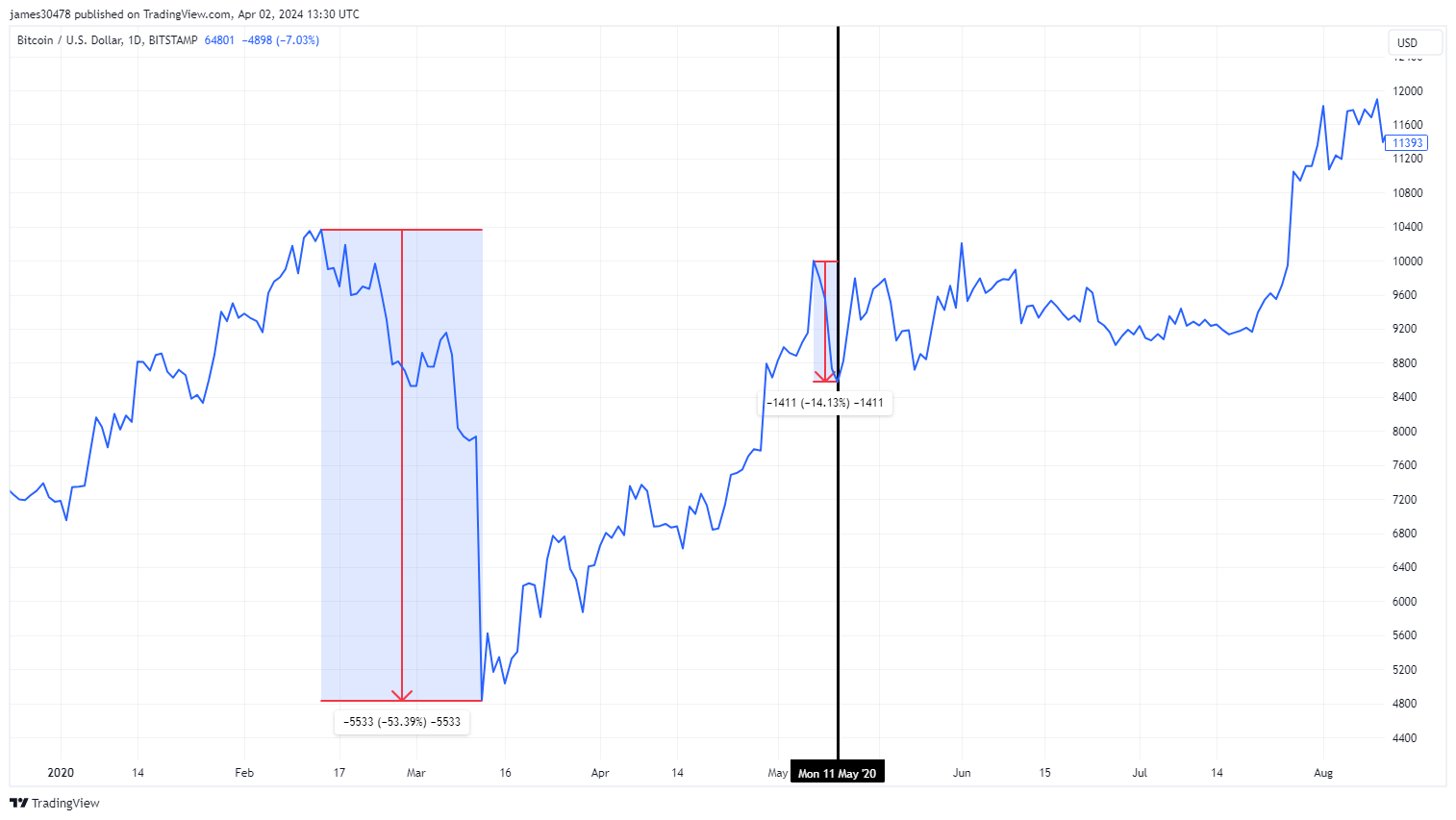
The 2020 halving in May was followed by an anomalous 53% crash attributed to the impact of COVID-19. However, Bitcoin had fully recovered from the significant crash within the same month.
Meanwhile, Bitcoin experienced a 14% decline just before the halving.
Though this volatility may concern some investors, it aligns with the characteristic fluctuations observed during halving periods.