

Best Crypto Hardware Wallets 2026
We believe in full transparency with our readers. Some of our content includes affiliate links, and we may earn a commission through these partnerships. However, this potential compensation never influences our analysis, opinions, or reviews. Our editorial content is created independently of our marketing partnerships, and our ratings are based solely on our established evaluation criteria. Read More





The security of your assets is everything, which is why finding the best hardware wallets in 2026 is of key importance. These devices ensure you have the best possible protection for your digital assets. We reviewed over 40 crypto hardware wallets from a user perspective, using a hands-on research methodology to select the top picks.
Our methodology was based on their security and reliability, supported assets and compatibility, user experience, portability and quality, and price. After testing the wallets, we concluded that Cypherock X1 sweeps the competition in all of the above metrics. This cold wallet uses advanced cryptographic techniques to manage your private keys. You can also use it to trade 9,000 coins and tokens and interact with major DeFi applications, which makes it suitable for long-term investors with diversified crypto portfolios.
That said, take a look at our list of hardware wallets to find the one that best suits your needs:
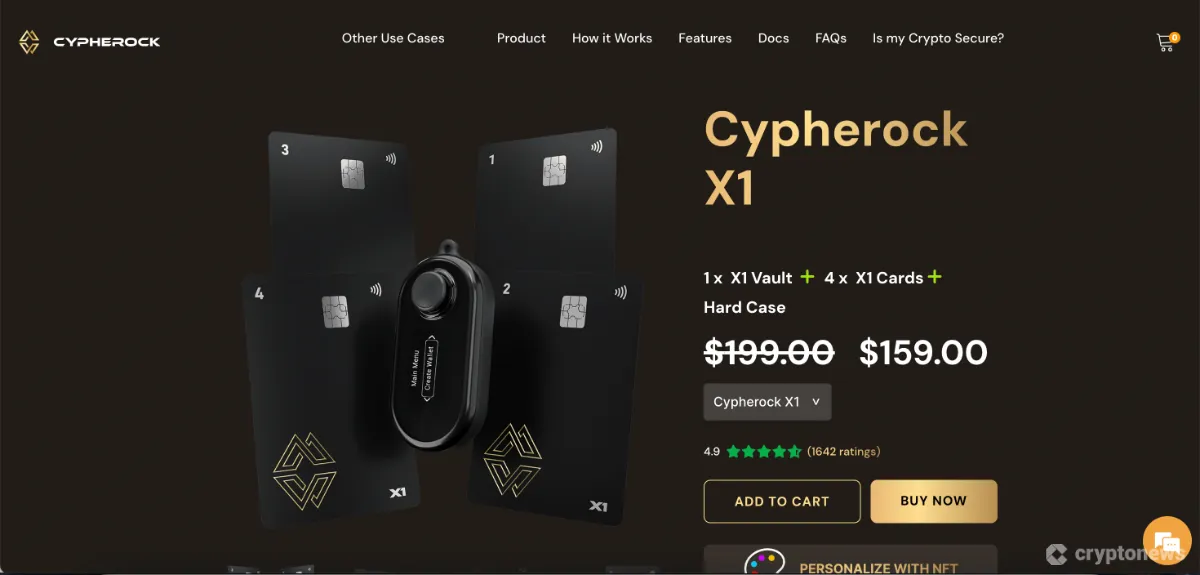
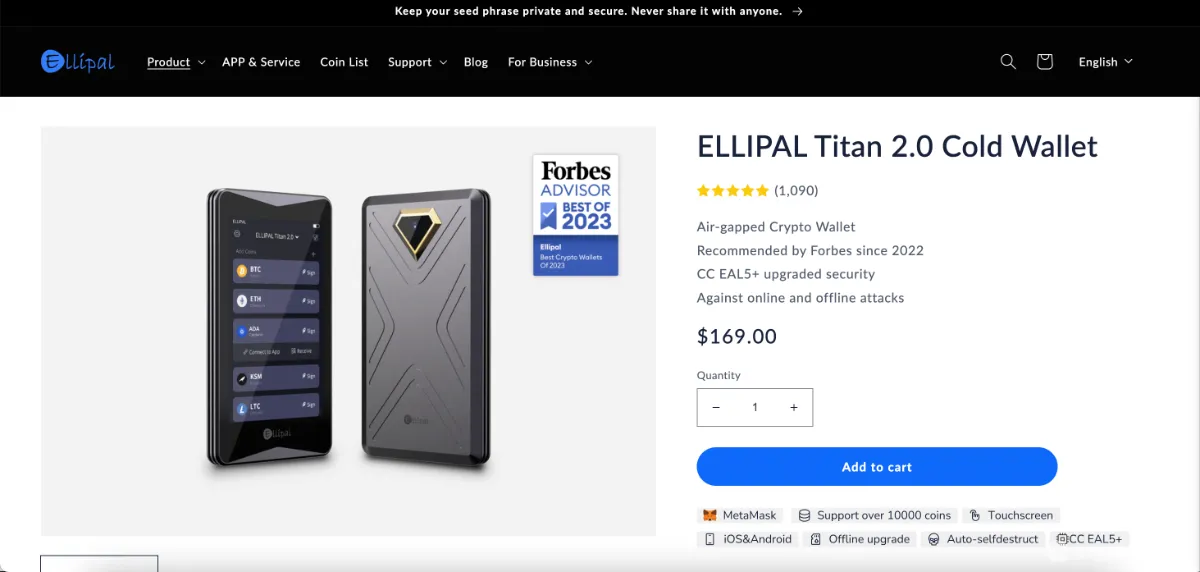
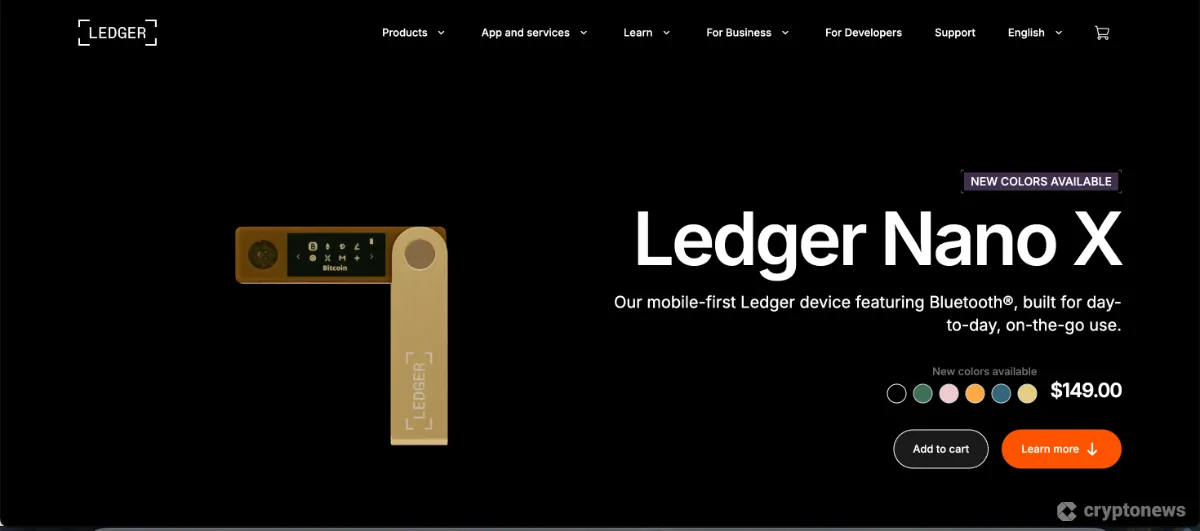
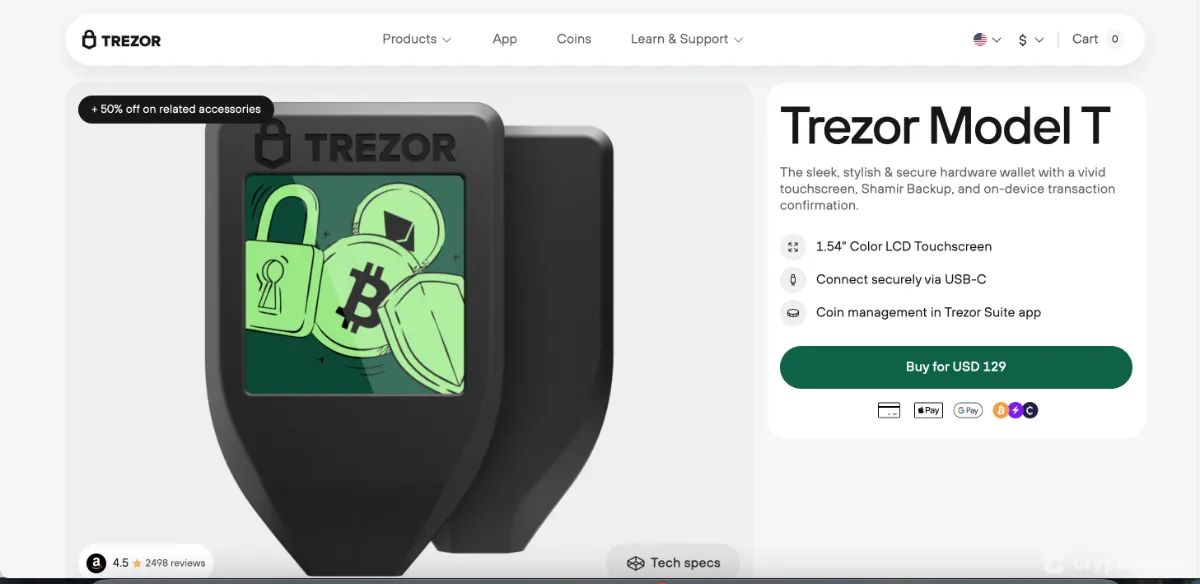
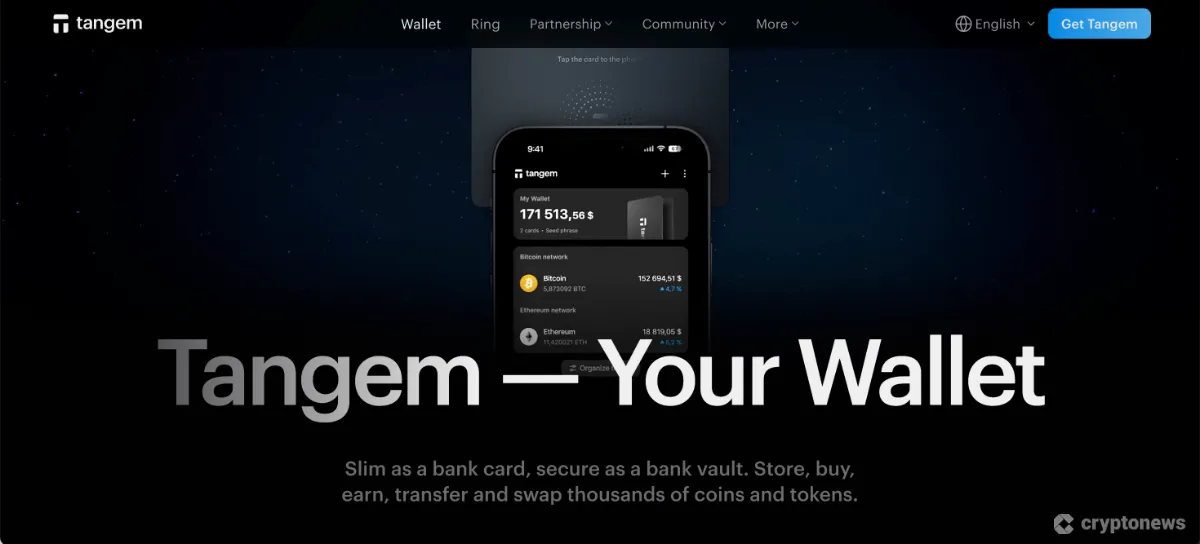
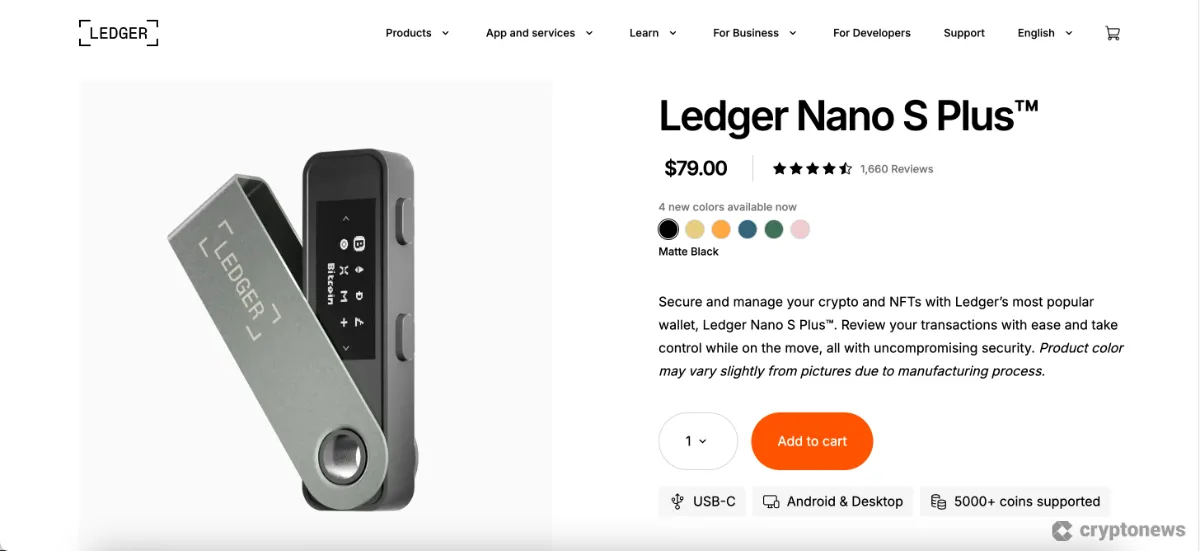
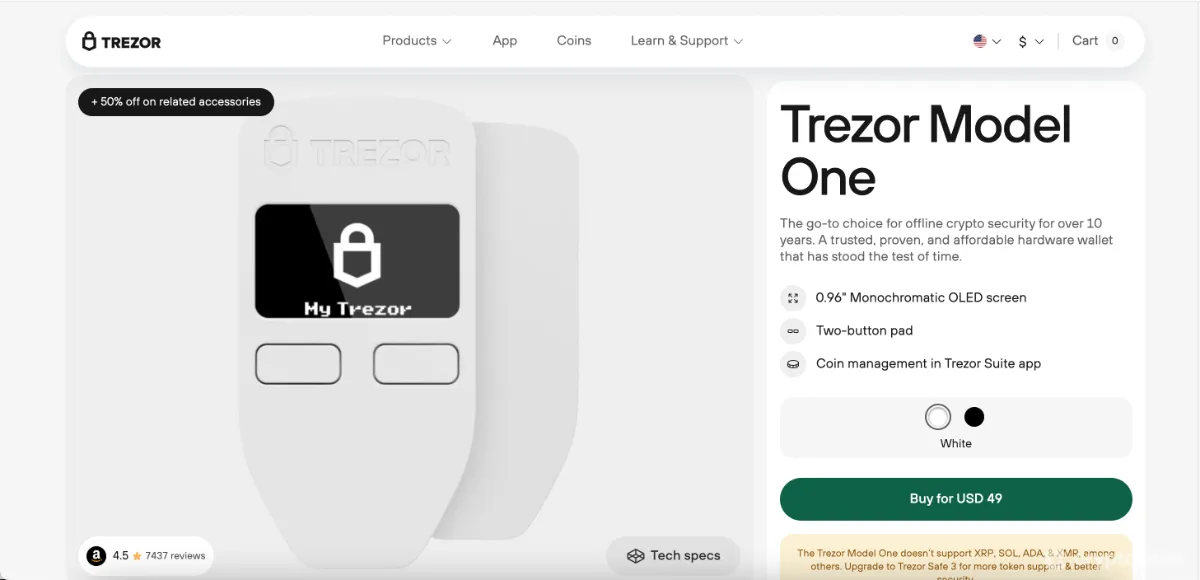
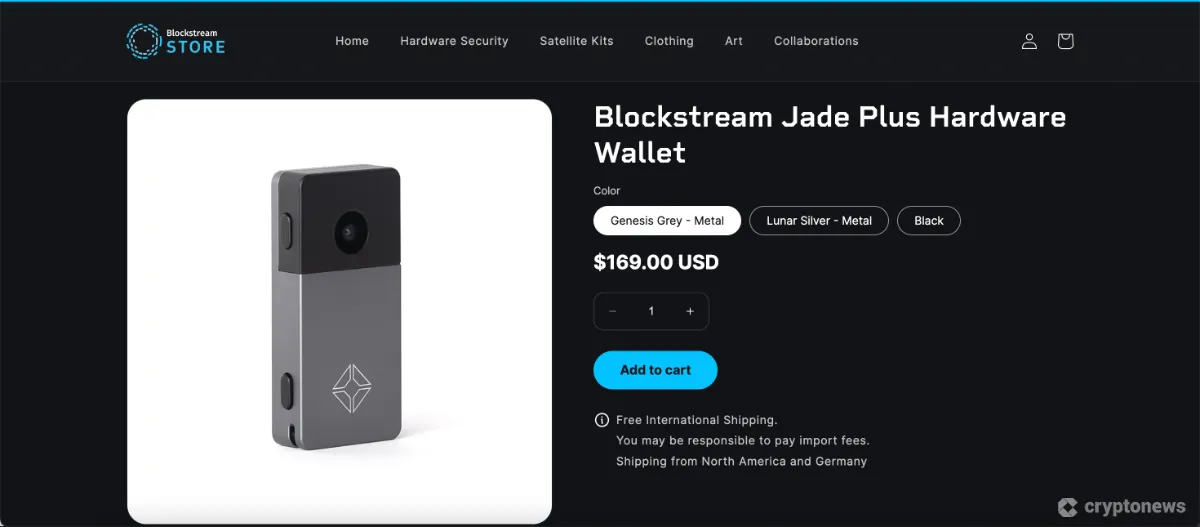
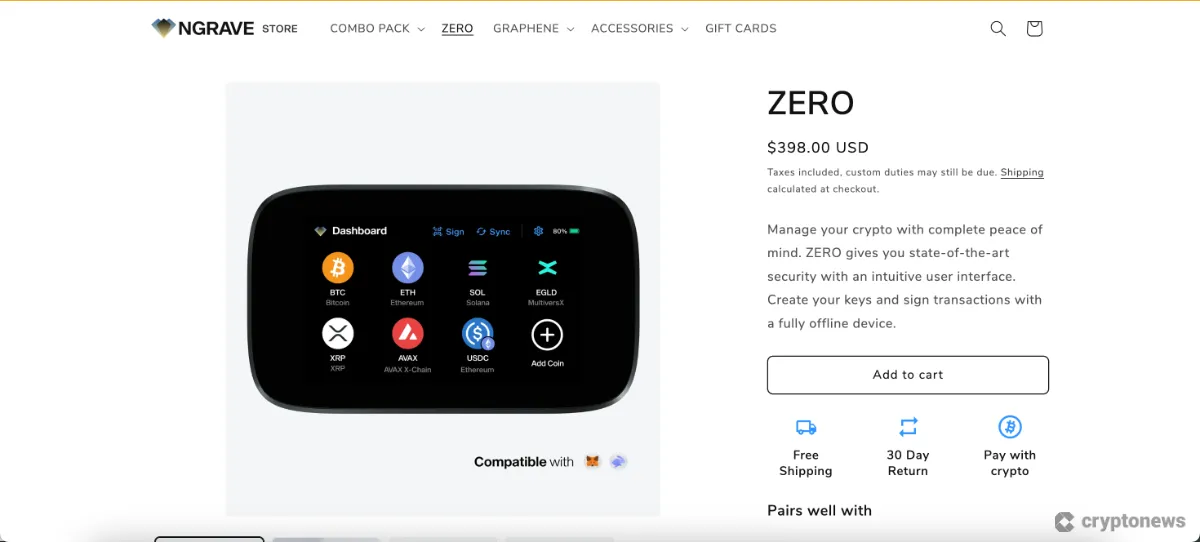
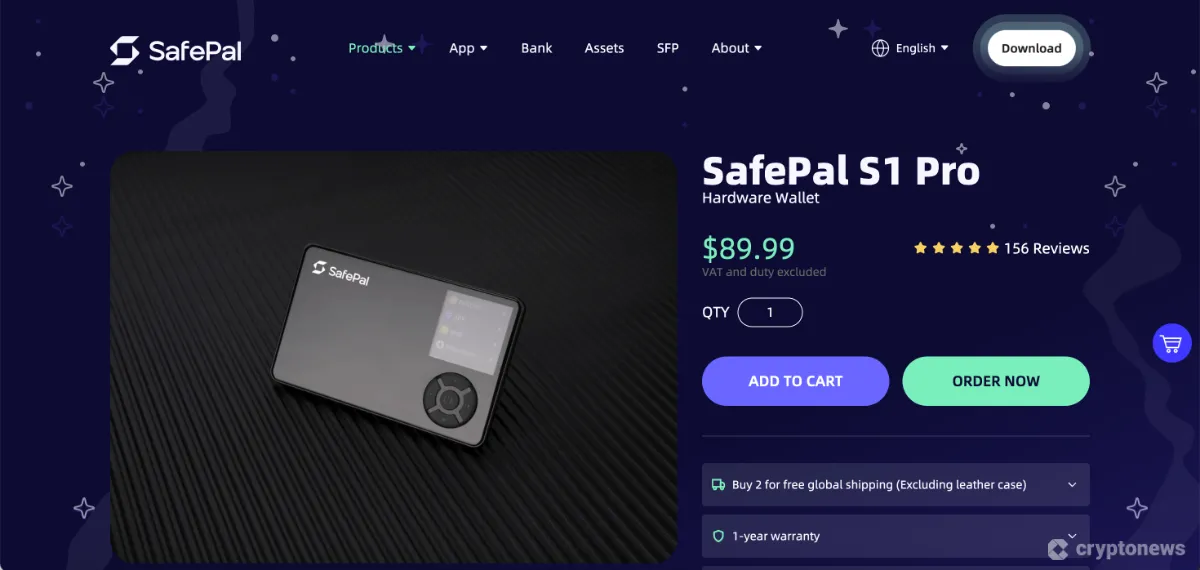
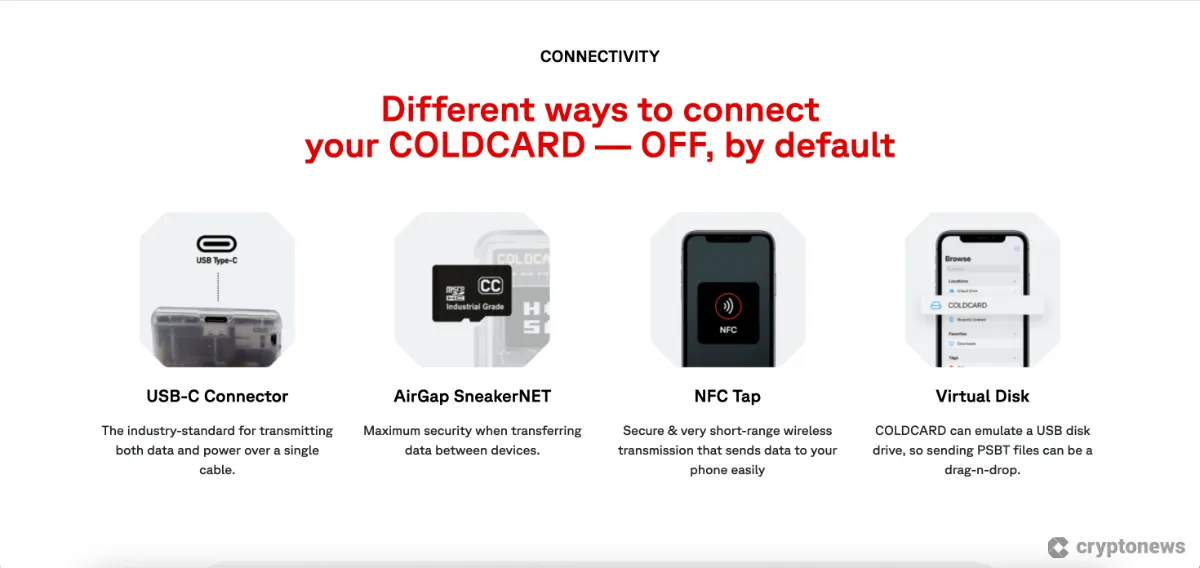
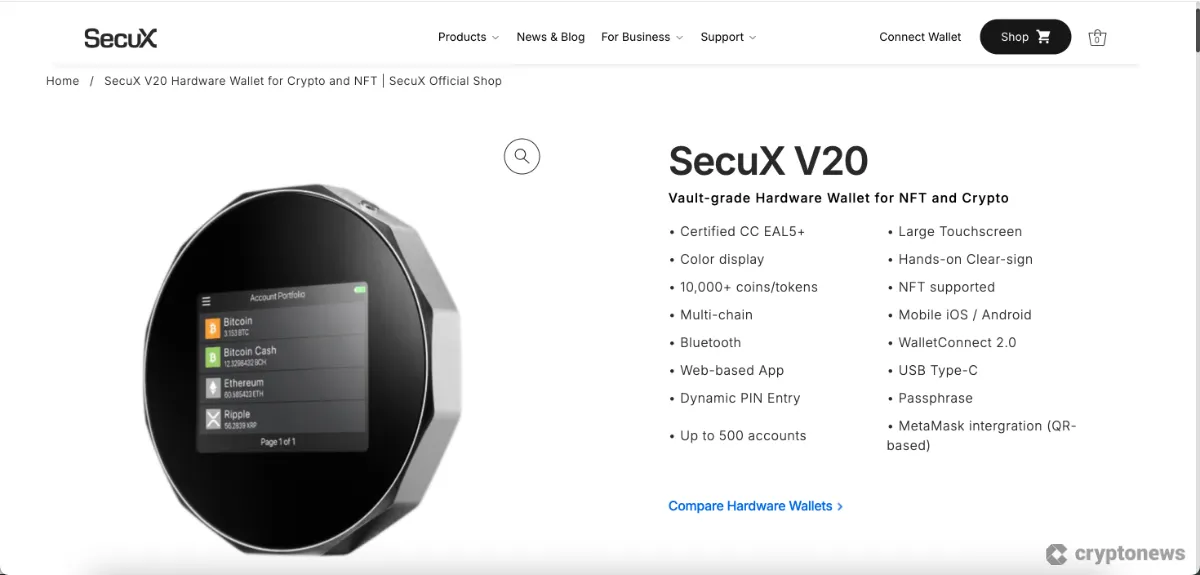
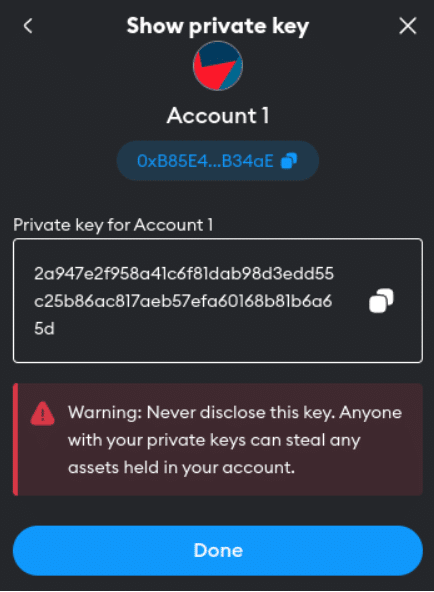
The Cypherock X1 is a hardware wallet designed to give more security for your cryptocurrency storage. Its main feature is Shamir’s Secret Sharing (SSS) technology, which divides the seed phrase into different X1 Cards, avoiding the risk of single-point failures. The device also relies on a dual-chip architecture that supports more than 9,000 currencies and uses open-source firmware for better transparency. This wallet doesn’t have an internal battery, reducing hardware malfunctions. Cypherock X1 is also very secure since it features tamper-evident physical protection, multi-signature support, and advanced encryption protocols. The device is built with ATECC608 Secure Element and an STM32L4 microcontroller, which protects the device against hacking attempts like side-channel and brute force attacks. Compatibility is another advantage, as it supports many blockchains and integrates with relevant software wallets. While offering high-level security, it remains simple, with a small OLED display and a simple joystick navigation system. These features make Cypherock X1 ideal for long-term investors with diversified crypto portfolios. Be sure to check out our in-depth Cypherock X1 review to learn all about the provider! The Ellipal Titan is a hardware wallet that relies on an air-gapped system that eliminates online attack potential by processing transactions through QR codes instead of USB, Bluetooth, or Wifi. This device supports over 10,000 cryptocurrencies across 46 blockchains, including non-fungible tokens (NFTs) management on Ethereum and Polygon. It also integrates with WalletConnect and MetaMask, enabling you to access over 200 decentralized applications (dApps). It also interacts with DeFi platforms like Uniswap and Compound. This decentralized wallet has excellent security features, including full offline operation, anti-tampering protection, and QR code verification. Its interface is similar to a smartphone, making it very user-friendly. Multi-account capabilities and firmware updates via microSD also add to the user experience by eliminating difficult update processes. Its external metal construction improves the wallet’s durability, making it more resistant to physical damage, dust, and water. While it has a higher price point compared to other options, the wallet provides long-term value through its security features, broad asset support, and easy-to-navigate interface. The Ledger Nano X is one of this list’s most feature-rich hardware wallets. It stands out with its Bluetooth connectivity, allowing users to manage their assets wirelessly through their smartphones and computers. The wallet’s performance is excellent since it supports more than 5,500 cryptocurrencies and can run up to 100 apps simultaneously. Additionally, it features a CC EAL5+ secure chip that stores private keys offline. The Ledger Nano X comes with a 100mAh battery that will allow you to use the device for up to 5 hours. Its small design (72 x 18.6 x 11.7mm), which resembles a USB stick, makes it highly portable. In terms of user experience, this wallet is very accessible, especially due to a larger HD display, two-button navigation, and easy setup using the native Ledger Live app. This hardware wallet’s security is guaranteed by the offline storage of the private keys, the encrypted Bluetooth transactions, and the addition of a secure chip that makes the wallet more resistant to hacking attempts. In addition to the thousands of cryptocurrencies the wallet supports, it is also compatible with many blockchain ecosystems, including DeFi and NFT platforms. Trezor Model T is compatible with Windows, macOS, and Linux, which makes it a go-to device for desktop users. It can also be integrated with web browsers, like Chrome and Firefox. To use the wallet, you need to connect it to your PC using a USB-C cable. You’ll also have to install the Trezor Suite app, which will allow you to buy, sell, swap, and manage your tokens. The user experience is simplified by the color touchscreen, which makes navigation and transaction verification more intuitive, similar to a smartphone. While the pricing can be considered high, the Model T delivers significant value for money by offering high-level security while being easy to use. Portability and durability also add to its value since this compact device has a reinforced casing. Tangem is a one-of-a-kind, NFC-based hardware wallet. It features a credit card-sized form factor that makes it highly portable. Tangem is different from more traditional hardware wallets. It operates without batteries, and it doesn’t need firmware updates, which makes it ideal for beginners. You can set it up by downloading the Tangem App from Google Play or App Store, and tapping the card on your smartphone. The whole process takes about three minutes. Regarding security, Tangem Wallet’s private keys are generated and stored within the card itself, reducing the risks associated with traditional recovery seed phrases. This structure also avoids the risks of phishing attacks and unauthorized access. The open-source mobile app increases the sense of transparency and safety by allowing users to audit the wallet’s security protocols themselves. Also, it uses EAL6+ certified secure elements to keep your private keys safe. In terms of portability and user experience, the waterproof design guarantees the device is durable, making it a great choice for travelers and more active users. The simple tap-to-sing functionality makes the wallet extra intuitive and easy to use. Although it doesn’t have multi-signature functionality, it is still a very accessible and secure option for daily trading. Read our detailed Tangem Wallet review to learn all about its strengths and weaknesses. The Ledger Nano S Plus is a compact and budget-friendly hardware wallet where you can manage cryptocurrencies, NFTs, and dApps. You’ll be able to send, receive, and manage your NFTs directly from the wallet once you connect it with the Ledger Live app. The Ledger Nano S Plus supports both Polygon and Ethereum-based NFTs. On top of that, the Discover section within the Ledger Live app hosts world-leading NFT dApps, such as Artacle and ClubNFT. The wallet uses a USB-C connection and supports over 5,500 digital assets. It doesn’t have Bluetooth or a battery since it prioritizes security by needing a physical connection to a computer or smartphone. Its CC EAL65+ certified secure element chip guarantees that your private keys remain offline, protecting them from cyber threats. The Ledger Nano S Plus provides a great user experience through its intuitive interface, integration with Ledger Live, and the possibility of installing more than 100 apps. While it doesn’t have more advanced features, such as wireless connectivity, this is a highly portable option due to its lightweight and USB-stick design. The Trezor Model One is Trezor’s cheapest model, which, apart from its affordable price, stands out for its durable ABS thermoplastic casing and a small OLED screen that incorporates two physical buttons. You can use these buttons to confirm and cancel your transactions. The connection on this device is made through USB-A, which avoids the risks associated with wireless connections. This Trezor model supports over 1,300 cryptocurrencies, being a great balance between affordability and important security features. This device’s security features include offline seed generation, a blind PIN entry system, and multi-factor authentication, which protect you from hacking and phishing attacks. The open-source firmware improves transparency by allowing independent security audits. While it doesn’t incorporate advanced features, such as touchscreens or mobile connectivity, this lightweight and portable gadget prioritizes security and a great value-for-price ratio. The Blockstream Jade is a hardware wallet specialized in securing Bitcoin and liquid assets. It counts on an air-gapped transaction signing, a full-color screen, and many options for connectivity, including USB-C, Bluetooth, and QR code scanning. As an open-source device, its priority is transparency and community verification, while it integrates PIN protection and tamper-evident design for even more security. For those holding BTC, this wallet offers great compatibility with the Blockstream Green app and other wallets. The design is very intuitive, with a full-color screen and scroll-wheel navigation, making transactions and details confirmation quick and easy. This gadget’s lightweight and compact design makes it very portable, making it a reliable option for on-the-go management. The NGRAVE ZERO supports more than 4,000 currencies and all tokens on the Ethereum network and the MultiversX network, making it suitable for professional crypto traders. You can also use it to store Ethereum-based NFTs. This cold wallet can be integrated with MetaMask and Rabby Wallet, which will allow you to gain access to 112 EVM-compatible chains and interact with dApps. This wallet features an air-gapped design, which means it functions entirely offline, avoiding network-based attacks. It is also equipped with EAL7-certified security—the highest level of security certification available—biometric authentication, and tamper-proof technology. In terms of user experience, the 4-inch touchscreen makes portfolio management easy for crypto investors and NFT collectors. The optional NGRAVE Graphene backup system and a fire and water-resistant stainless steel recovery feature guarantee that the device will last even longer. The SafePal S1 Pro is a suitable cold wallet for active traders. It supports 200+ blockchains and 30,000+ coins and tokens. It’s also compatible with iOS and Android mobile devices, Windows and macOS, and Chrome, Firefox, and Edge web extensions. Its native app comes with multiple exchange features. This means you can use it to conduct cross-chain swaps, connect to CEXs like Binance, and interact with dApps on Ethereum, Arbitrum, Optimism, and Polygon. Thanks to its 500mAh battery, Safepal S1 Pro can last up to 20 days on a single charge, if you use it for 10 minutes daily. This is also a highly secure and portable hardware wallet that protects cryptocurrencies using an air-gapped system, which functions completely offline. With QR-code-based transaction signing, EAL 6+ certified security, and a self-destruct mechanism that guarantees that sensitive data is erased if tampering is detected, it reduces the chances of being exposed to cyber threats. SafePal S1 Pro Key Features The Coldcard Mk4 is a hardware wallet dedicated specifically to Bitcoin that prioritizes maximum protection. It counts on the air-gapped design that enables transactions entirely offline. The device is built with dual secure element chips, a numeric keypad, and an OLED screen. It also features NFC functionality, a USB-C connection, and open-source firmware, making it one of the most customizable options available. The wallet has a tamper-evident protective cover and rate-limited PIN protection that prevents unauthorized access. The navigation is directed to more advanced users, featuring unlimited memory for large transactions and multi-sig support. The main features of the Coldcard Mk4 wallet are its advanced Trick PINs that enable you to set alternative PINs, such as duress PIN, countdown to brick PIN, and brick me PIN, that provide an additional level of protection and privacy. These features make the Coldcard Mk4 wallet suitable for tech-savvy BTC traders. The SecuX V20 hardware wallet provides investors with a great range of features to easily manage cryptocurrencies and NFTs. It has military-grade CC EAL5+ security certification, a 2.8-inch color touchscreen, Bluetooth, and USB-C connectivity options. It supports over 10,000 assets, including Bitcoin, Ethereum, and ERC-20 tokens, and is a convenient choice for beginners and advanced users. You can also create up to 500 accounts, which will allow you to manage multiple cryptocurrencies separately. Moreover, the SecuX V20 can be integrated with MetaMask and WalletConnect, meaning you’ll be able to interact with various DeFi protocols, such as Compound, Uniswap, and Aave. SecuX V20 employs a tamper-proof design that deletes sensitive data in case of unauthorized access to further its security. Its secure chip also ensures private keys are protected from external threats. The large touchscreen interface improves usability by simplifying transaction verification, while the Bluetooth functionality improves portability. The wallet’s durability relies on its aluminum casing, which protects it from physical damage. We checked the encryption standards and security protocols used, making sure wallets incorporate the best available protection against cyberattacks. We analyzed whether the wallets support multi-signature functionality, offer secure recovery options, and have built-in defenses against physical tampering. Also, we explored each wallet’s security history, checking for any vulnerabilities or past exploits that weren’t addressed. We checked out the number of cryptocurrencies and tokens each wallet supports, prioritizing the ones with broader compatibility in multiple blockchain ecosystems. Integration with DeFi applications, NFT storage, and staking capabilities was also taken into account, as well as interoperability with popular hardware and software wallets for better asset management. A good user experience is very important, so we analyzed how easy it is to set up each wallet, how intuitive their interfaces are, and whether guides and tutorials are available. We also considered the availability of multilingual support, accessibility features, and how beginner-friendly the overall use experience is for new users and investors. Hardware wallets have to be durable and portable, so we checked how each option is built around quality, physical design, and resistance to factors such as water, shock, and very high or very low temperatures. We ranked the ones that can maintain security while offering a lightweight and travel-friendly design higher. We compared the cost of each wallet with its features, guaranteeing that the higher-priced ones provide more value than the others. We also considered lifetime usability, analyzing features like free firmware updates, long-term developer support, and longevity. By using these criteria in each step of our research, our team was able to identify the best crypto hardware wallets based on security, usability, and overall value. Our methodology guarantees that investors can make more informed decisions before choosing the right wallet to keep their tokens safe. To make a transaction, you connect the wallet to your computer or phone, verify the details, and approve the transfer using the wallet’s buttons. By using a hardware wallet, you maintain control of your assets while limiting your exposure to cyberattacks. Transactions are signed inside the hardware wallet itself, ensuring your private keys never leave the device. You must also confirm every transaction manually on the device’s screen or buttons. Some wallets support two-factor authentication (2FA) for additional protection as well. These wallets support many cryptocurrencies, including Bitcoin and Ethereum. This way, you can diversify the assets you wish to manage safely. Since everything is offline, they are often seen as one of the most secure ways to store crypto. Many hardware wallets use a USB connection to connect to your computer so that you can accept or decline transactions. Newer models may use Bluetooth, which allows support for mobile use, or even an NFC chip that can connect to an NFC-enabled mobile device. Regardless of which connection type a hardware wallet uses, there’s still an additional layer that requires input from a separate device you physically hold. In addition to added security, hardware wallets typically offer protection against physical theft, offline transaction signing, recovery and backup options, and support for multiple cryptocurrencies. Let’s explore these advantages further: Hardware wallets store private keys offline, making them highly resistant to online threats like hacking and malware. The keys never touch the internet, reducing exposure to phishing attacks or viruses. Many hardware wallets offer various security features. They include PIN protection, passphrases, and even “self-destruct” mechanisms that wipe the data after a certain number of failed attempts. These features protect against unauthorized physical access. Many hardware wallets, such as Coldcard and SecuX, allow transactions to be signed offline. This is possible now through air-gapped systems and QR code transfers. There’s no exposure to potential network vulnerabilities during the signing process. Hardware wallets follow industry-standard protocols like BIP39/44 for seed phrase recovery, allowing users to restore their wallets if lost or damaged. This ensures that funds are recoverable without relying on third-party services. Hardware wallets often support a wide range of cryptocurrencies and tokens. For example, models like the SecuX V20 or Ledger Nano X can store thousands of assets. In other words, there’s more flexibility for users with diverse crypto portfolios. However, software wallets are also less secure. Pairing a software wallet with a hardware wallet makes sense in many situations. You’ll have to weigh some considerations before making a choice. Hardware wallets are not free. Compared to software wallets, which are often free to use, hardware wallets can range from around $50 to $500 depending on the model and features. This cost can be a barrier for casual or low-volume crypto users. For beginners, hardware wallets can be intimidating due to their setup complexity and security measures. Everyone has to learn the basics involving seed phrase backups, PINs, and recovery processes. Advanced features, such as air-gapped signing or multi-sig setups, may also require significant technical understanding. While hardware wallets are highly secure, they can be lost, stolen, or damaged. If the recovery seed is not properly backed up, users can lose access to their crypto holdings permanently. Using a hardware wallet depends on the availability and functioning of the physical device. Issues like battery failure, malfunction, or losing the wallet itself can delay or obstruct access to funds. Although recovery is possible with the seed phrase, the process can be cumbersome. Some hardware wallets, like the Coldcard, are Bitcoin-only, which may not meet the needs of users who want to store multiple types of cryptocurrencies. Others may support more assets but still lack compatibility with certain tokens or blockchains. As a new investor, you might choose to keep your crypto on the exchange where you trade. Exchange wallets are called custodial wallets because the exchange has custody of your crypto. As your balances grow, however, you’re at risk of losing much more. Using a self-custody crypto hardware wallet can protect you against exchange-related risks. If you need to keep a certain amount of crypto on the exchange for trading purposes, consider moving the rest to a hardware crypto wallet for safekeeping. To secure your seed phrases, it is important to utilize a proper storage device. One top option is Cryptotag, which uses aerospace-grade titanium to secure your seed phrases. This device is bulletproof and offers water and heat resistance. A software wallet like MetaMask (Ethereum) or Electrum (Bitcoin) generates and stores the private keys on an internet-connected device. The private keys used to authorize transactions are on your device at all times. If mega-companies like Subaru and Apple have security vulnerabilities in their applications, hot wallets developed by smaller teams may be at risk as well. Conversely, hardware wallets store your private keys on a separate device not connected to the internet. Even when temporarily connected to a computer or mobile device, the hardware wallet’s firmware limits interaction with your wallet. All you can do is accept or decline a transaction by clicking a button or taking a similar action on the device in your possession. Both types of wallets share some similar risks, however. Specifically, the safety of the wallet’s seed phrase or private key is paramount, but sometimes, they can get out into the wild. If someone else has this seed phrase, also called a recovery phrase or mnemonic phrase, they can create a duplicate of your wallet (and its keys). In other words, they can send your crypto to another wallet you can’t access. Any compatible software wallet can be used to access a crypto wallet created by a hardware device if someone has the seed phrase. The seed phrase and private key look different. However, either can be used to make a carbon copy of your wallet. They’re really just two ways of expressing the same value. This concern applies to both hot and cold wallets because they both use seed phrases and private keys. Choosing a secure way to store your seed phrase allows you to recreate your wallet. This is often needed to prevent someone else from making a copy of your wallet elsewhere. Storing your seed phrase in cloud storage or leaving it somewhere where others can find is also advised against. Consider how you’ll use the wallet and which security features are most important to you. Often, there’s a trade-off between security and convenience. The most secure wallets are air-gapped, meaning they can’t connect to the internet in any way. Instead, they typically use QR codes. You scan the QR code in an app or on the device itself and then approve or deny the transaction on the device. This may require more steps to complete transactions compared to a device that connects via Bluetooth or USB. Also, consider security features like a Secure Element chip. But weigh the benefits against the trade-offs for this as well. For example, Ledger states it can’t fully open-source its firmware due to the Secure Element chip, which is similar to Cypherock. Trezor, by contrast, does not use a Secure Element chip on the Model T or Model One. It provides full transparency with open-source firmware for these devices. Many popular wallets support multiple blockchains. However, some wallets only support one blockchain, most commonly seen with Bitcoin-only wallets. For example, if you’re considering a Trezor but need to store XRP, you’ll need to jump up to a Model T. Trezor’s Model One doesn’t support XRP. Meanwhile, hardware wallets like SecuX V20 support over 10,000 crypto assets, including XRP. Most multi-chain wallets support the Bitcoin and Ethereum networks at a minimum. Ethereum Layer-2 support may be limited, however. You may not see assets you hold on the Abitrum Layer 2 blockchain, for example, even though they are in your wallet. If needed, you can use a portfolio app like Debank or a blockchain explorer like Etherscan (for Ethereum) or Arbiscan (for Arbitrum). They allow you to verify transactions or tokens that don’t show in your hardware or software wallet. Software wallets are typically free to use. By comparison, you can expect to pay anywhere from $50 to well over $200 for a hardware wallet, depending on which model you choose. Cost is a consideration, but paying a lot doesn’t always translate to more secure storage. Plenty of people store large amounts of crypto on inexpensive yet reliable and well-supported devices like the Trezor Model One. Also, it might not make sense to spend hundreds of dollars to protect a smaller amount of crypto. If you choose a less expensive device to start, you can always upgrade when you have more to protect. The top hardware wallets generally don’t charge an additional fee to use the wallet after you’ve purchased it. However, many wallets enable crypto swaps or purchases from within the wallet’s software app. In this case, you may encounter fees or other costs. There are several ways to trade crypto, ranging from centralized crypto exchanges to decentralized exchanges and peer-to-peer exchanges. Ledger Live, for example, offers ways to buy crypto from within Ledger’s wallet software suite. Moreover, transaction fees vary depending on the provider you choose within the app. In most cases, buying on an exchange will be less expensive compared to using your wallet’s app. But you may prefer to buy through your wallet app. Either way, comparing those fees will have an impact on your specific use case. Not too long ago, mobile and hardware wallets didn’t belong in the same sentence. Most cold wallets worked via a USB cable plugged into a computer. However, with Bluetooth connectivity available on some hardware wallets or even NFC support, crypto hardware wallets can go wherever you go. Some models, like Ledger wallets, can connect to Android phones via an optional OTG cable that uses the USB-C port on your phone. If you think you might need to use your hardware wallet on the go, consider models that work with a cell phone or tablet. Check the App Store or Play Store reviews for the mobile app that accompanies the wallet you’re considering. Ledger Live scores well here with a 4.6 out of 5-star rating on the Google Play Store. In some cases, you may also be able to use the mobile wallet app as an on-the-go portfolio to track your investments. Bitcoin, the first cryptocurrency, is open source, meaning the Bitcoin Core code was and is available online. The alternative would be closed source, in which we don’t know what the software really does. We wouldn’t have information on security flaws or other sensitive transaction details. Crypto hardware wallets use two sets of code: The big advantage of open-source software and firmware is transparency, but security can also benefit from open-source code. An army of coders around the world poring over the code may be more likely to identify a potential issue than a smaller development team. Lastly, open-source code for firmware gives the community a way to keep older devices active even after the manufacturer ends support. If Trezor ends firmware support for the tried-and-true Model One at some point in the future, the community can fork the code and make updates as needed. Top hardware wallets like Ledger and Trezor balance security with ease of use. Both offer beginner-friendly software suites that make maintenance, like firmware updates, a breeze. NGRAVE ZERO is built to last at least 20 years of use. Almost the same level of durability is true for the Trezor Model One. Newer devices with large touchscreens, like the Ellipal Titan or Ledger Stax, are akin to a small smartphone. In other words, they’re more susceptible to damage if you were to drop them accidentally. Your use case and where you’ll use your device will have an impact on your decision. The best crypto hardware wallets can help protect any amount of crypto, large or small. However, for smaller amounts of crypto, it may be more prudent to let your balance grow before buying the latest crypto wallet gizmo. For some, a hardware wallet is a must-have piece of gear. Others may be well served with a software wallet as a starting point. Based on our research, the Cypherock X1 wallet has everything crypto traders and holders need. It supports 9,000 cryptocurrencies, it can be integrated with software wallets, and it utilizes strict security standards (Shamir’s Secret Sharing). Keep in mind that hardware wallets have their own vulnerabilities, such as physical loss, damage, or theft. Tampered devices from unreliable sellers and human errors during setup or transactions can also compromise the device and its security. To keep your wallet safe, you must follow the proper backup procedures and keep informed on best security practices.
The Top 12 Hardware Wallets Ranked
We compared the best crypto hardware wallets and assembled a list of our top 12 picks. There’s a hardware wallet for nearly any use case, and these devices are relatively affordable.
Crypto Hardware Wallet
Price
Supported Coins
Best For
Our Rating
Cypherock X1
$189
9,000+
Best overall
9/10
Ellipal Titan
$169
10,000+
DeFi enthusiasts
8/10
Ledger Nano X
$149
5,500+
Traders on the go
9/10
Trezor Model T
$129
1,000+
Desktop trading
9/10
Tangem
$54.90
6,000+
Beginners
7/10
Ledger Nano S Plus
$79
5,500+
NFT storage
8/10
Trezor Model One
$49
1,300+
Crypto traders on a budget
8/10
Blockstream Jade
$169
Bitcoin and Liquid Network assets
Bitcoin traders
7/10
NGRAVE ZERO
$398
4,000+
Professional traders
9/10
Safepal S1 Pro
$89.99
30,000+
Day traders
8/10
Coldcard Mk4
$167.94
BTC
Advanced security
8/10
SecuX V20
$139
10,000+
Multi-currency holders
7/10
The Best Crypto Hardware Wallets Reviews
Our research showed that the best hardware wallets offer a balance of security, usability, and affordability. Here’s how our top picks compare.1. Cypherock X1 – Best Crypto Hardware Wallet Overall
Cypherock X1 Key Features
Pros
Cons
2. Ellipal Titan – Best Crypto Hardware Wallet for DeFi Enthusiasts
Ellipal Titan Key Features
Pros
Cons
3. Ledger Nano X – Best Crypto Hardware Wallet for Traders on The Go
Ledger Nano X Key Features
Pros
Cons
4. Trezor Model T – Best Crypto Hardware Wallet for Desktop Trading
Trezor Model T Key Features
Pros
Cons
5. Tangem – Best Crypto Hardware Wallet for Beginners
Tangem Key Features
Pros
Cons
6. Ledger Nano S Plus – Hardware Wallet with a Secure Element Chip
Ledger Nano S Plus Key Features
Pros
Cons
7. Trezor Model One – Best Hardware Wallet for Crypto Traders on a Budget
Trezor Model One Key Features
Pros
Cons
8. Blockstream Jade – Best Crypto Hardware Wallet for Bitcoin Holders
Blockstream Jade Key Features
Pros
Cons
9. NGRAVE ZERO – Best Crypto Hardware Wallet for Professional Traders
NGRAVE ZERO Key Features
Pros
Cons
10. Safepal S1 Pro – Air-Gapped Hardware Wallet with a Secure Element Chip
Pros
Cons
11. Coldcard Mk4 – Best Hardware Wallet for Crypto for Advanced Security
Coldcard Mk4 Key Features
Pros
Cons
12. SecuX V20 – Best Crypto Hardware Wallet for Multi-Currency Holders
SecuX V20 Key Features
Pros
Cons
Methodology: How We Rated the Best Crypto Hardware Wallets
With the objective of finding and determining the best crypto hardware wallets in mind, our team conducted its research by analyzing the security features, asset compatibility, user experience, durability, and pricing of hundreds of different hardware wallets. We rated technical specifications, real-world performance, and customer feedback to guarantee a complete overall look at each option and how well they perform. Here’s how we rated each evaluated point:Security and Reliability (30%)
Supported Assets and Compatibility (20%)
User Experience (20%)
Portability and Quality (15%)
Pricing (15%)
What Is a Cryptocurrency Hardware Wallet?
A cryptocurrency hardware wallet is a physical device that stores your crypto offline, protecting it from online threats like hacking. Unlike software wallets, which are connected to the internet, hardware wallets keep your private keys securely offline.How Do Hardware Wallets Work?
A cryptocurrency hardware wallet stores your private keys offline. When you want to send or receive crypto, like using an Ethereum wallet, you connect the device to your computer or mobile via USB or Bluetooth.Wired or Wireless Connections
Advantages of Hardware Crypto Wallets
The advantages of hardware wallets center on security. You may have to sacrifice some convenience, but the goal is to protect your crypto. By keeping some or all of your crypto in a hardware wallet, you greatly reduce the risk of cyberattacks.1. Enhanced Security
2. Protection Against Physical Theft
3. Offline Transaction Signing
4. Recovery and Backup Options
5. Support for Multiple Cryptocurrencies
Limitations of Hardware Wallets
Using a hardware wallet is an important security measure, but it creates some extra steps, and there are still some risks. With software wallets, you’re not tied to a physical device, which is stored safely at home.1. Cost
2. Learning Curve
3. Physical Loss or Damage
4. Dependence on Physical Devices
5. Limited Cryptocurrency Support
Using a Hardware Wallet to Move Your Crypto Off Exchanges
You don’t need to be active in the crypto ecosystem to benefit from a hardware wallet. The common reason to choose a hardware wallet is to store the cryptocurrencies you’re holding safely.
How to Store Seed Phrases Securely
Your seed phrase gives direct access to the crypto wallet and the stored digital assets. Therefore, losing a seed phrase may lead to a permanent loss of your digital tokens. Hardware Wallets vs. Software Wallets
Moving your crypto to a wallet you control is often the best move, but is a software wallet just as good a choice? Probably not.
How to Choose a Hardware Cryptocurrency Wallet
Which cryptocurrency hardware wallet is right for you depends on your risk profile and how you think you’ll use your wallet. Cost, transparency, security features, and even mobile support can all play a role in your purchase decision.1. Security Features
2. Supported Coins and Blockchains
3. Cost
4. Fees
5. Mobile Experience
6. Open-Source or Closed-Source Software and Firmware
7. Ease of Use
8. Durability
9. Your Risk Profile
Conclusion: What is The Best Hardware Wallet for Crypto?
Finding the best crypto hardware wallets is not an easy task, especially if you’re new to crypto trading. While some models prioritize usability with touchscreens and mobile connectivity, others focus on advanced security measures such as multi-sig and tamper-proof design. The choice regarding which hardware wallet is the best for you will depend on security certifications, supported assets, and personal preferences for connectivity and backup solutions.FAQs
Are hardware crypto wallets safe?
What is the most secure crypto hardware wallet?
Should I put my crypto in a hardware wallet?
Does my crypto still grow in a hardware wallet?
Are hardware wallets worth it?
Can you put any crypto on a hardware wallet?
References
2M+
250+
8
70





 in numbers

About Cryptonews
Our goal is to offer a comprehensive and objective perspective on the cryptocurrency market, enabling our readers to make informed decisions in this ever-changing landscape.
Our editorial team of more than 70 crypto professionals works to maintain the highest standards of journalism and ethics. We follow strict editorial guidelines to ensure the integrity and credibility of our content.
Whether you’re looking for breaking news, expert opinions, or market insights, Cryptonews has been your go-to destination for everything cryptocurrency since 2017.
