What Is a Crypto MEV Bot? How They Work, Benefits, and Risks



Maximal Extractable Value (MEV) bots are becoming increasingly popular, especially on the Ethereum network. Put simply, MEV bots are algorithms that determine which transactions should be prioritized. This enables validators and MEV arbitrage bot creators to generate profits autonomously.
Other strategies are also utilized, such as front-running and liquidation mining. This beginner’s guide explains everything there is to know about MEV bots, including how they work, the different strategies used, and the required step-by-step process.
What Is MEV in Crypto?
Maximal Extractable Value (MEV) is extra profit that block producers (miners or validators) can earn. They get it by strategically ordering, including, or excluding transactions in a new block. This goes beyond standard block rewards and fees. Essentially, they manipulate transaction sequences to capture hidden value during block creation.
Block producers reorder pending transactions to exploit opportunities. Common tactics include:
- Front-running: Placing their trade right before a known profitable one.
- Sandwich attacks: Trapping a user’s trade between their own buys and sells to manipulate price.
- Liquidation hunting: Triggering and profiting from DeFi loan liquidations.
MEV acts like an invisible tax, raising costs for regular users and creating unfair markets. Billions have been extracted, mostly on Ethereum. While inherent to blockchains, solutions are emerging: fair transaction ordering protocols and MEV redistribution mechanisms aim to reduce harm and improve network fairness for everyone.
What Are MEV Bots and How Do They Work?
MEV bots are AI trading bots that use transaction ordering on blockchains for profit. They constantly scan pending transactions in the mempool and look for opportunities. When they find one, they pay high gas fees to jump ahead of other transactions. This lets them execute strategies like front-running or sandwich attacks.
Some of the best crypto trading bots make money for their operators and block producers. However, regular users pay the price through worse trade execution and higher transaction costs. It acts like an invisible tax, especially on networks like Ethereum, where MEV extraction runs into the billions.
Let’s take a closer look at how MEV bots work. This will ensure you have a firm understanding of the fundamentals.
Transaction Monitoring
MEV bots operate 24 hours per day, 7 days per week. They monitor every single transaction that goes through the Ethereum network. As mentioned, pending transactions are initially sent to the mempool. Naturally, the mempool contains many transactions at any given time.
This covers the entire Ethereum ecosystem, meaning transactions could be associated with thousands of different projects. This could include smart contracts deployed from meme coins, play-to-earn games, decentralized finance platforms, and NFT transfers.
As such, MEV bots are designed with highly advanced algorithms. Learning how to make an MEV bot in crypto will be challenging unless you’re proficient in a suitable programming language. More on this later.
MEV Opportunity Detection
The MEV bot’s first segment involves transaction monitoring. Simultaneously, the bot analyzes transaction blocks to find profit-making opportunities. For example, at their core, MEV bots were originally designed to profit from transaction reordering, which means prioritizing Ethereum transactions with the highest fees.
This is because the Ethereum network is limited in how many transactions it can process per block. Therefore, MEV bots exist to help network validators maximize their earning potential. And in doing so, MEV bots take a slice of the fees generated.
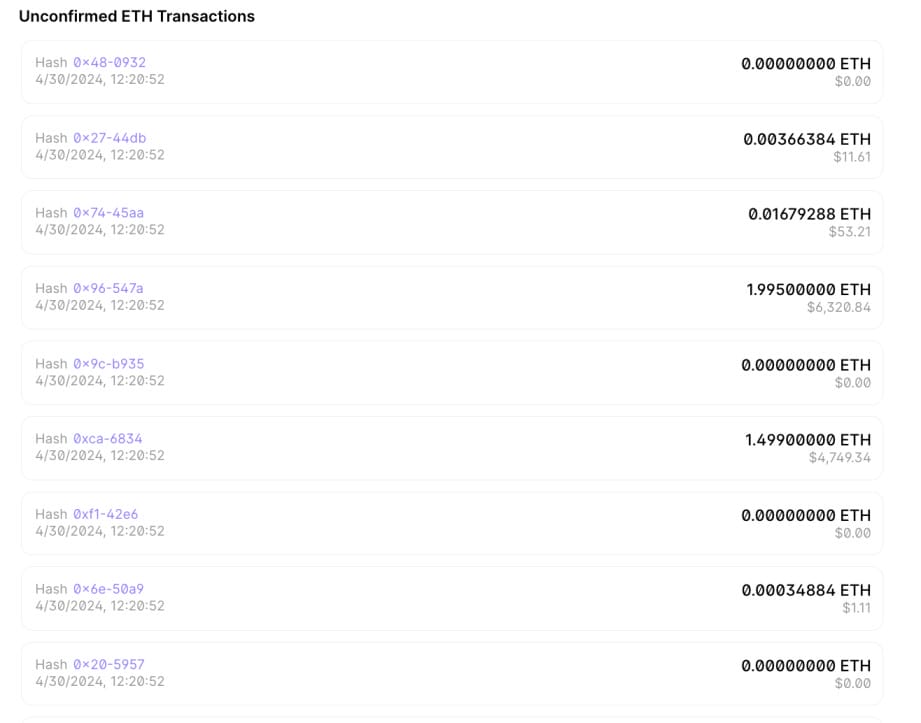
Similarly, you might notice that the best Ethereum wallets enable users to choose their fee structure. This is often a choice between slow, standard, or fast. The more you pay, the quicker the transaction is confirmed. This mirrors the profit-making concept employed by MEV bots. However, there are many other ways for MEV bots to make money, which we’ll cover later.
Automatic Trade Execution
Once an MEV bot has identified a profitable arbitrage opportunity, it will execute a position accordingly. This happens in real-time, considering that a new Ethereum block is confirmed approximately every 12 seconds. This highlights just how advanced and sophisticated MEV bots need to be to make money successfully.
In addition, the MEV bot needs to optimize the gas fees it pays to execute its order. This ensures the order makes the next Ethereum block. The submitted gas fee is a variable cost for MEV bots, so it must find the ideal balance between viability and order prioritization.
5 Ways to Make Money with MEV Bots
This section explores five ways that MEV bots make money. We’ll discuss front and back-running strategies, not to mention various arbitrage opportunities, flash loans, and liquidation systems. Read on to discover the best profit-making opportunities available in 2026.
Front-Running Bots
One of the most common strategies employed by MEV bots is front-running. In a nutshell, the bot detects large orders that have been placed but not executed by the network. This means the order is pending, which MEV bots can view in real time via the mempool. The bot will front-run a market order to benefit from the eventual price increase or decrease.
For instance:
- Let’s say the MEV bot detects a $100,000 buy order on an ERC-20 token. The buy order is priced at $1.
- The ERC-20 project has a small market capitalization, so the MEV bot knows the pending order will have a high impact on the token’s price.
- Therefore, the MEV bot enters a buy order just below $1, say at $0.999.
- The MEV bot’s order is executed first, as it was placed just below the $100,000 pending order.
- Once the opening order is executed, the token’s price increases.
- The MEV bot automatically closes the position, making a quick profit.
Now, it’s crucial to note that, per the SEC, front-running is illegal in traditional trading markets. This covers financial securities like stocks and ETFs, but not crypto assets. However, this doesn’t mean that front-running is ethical, far from it. After all, front-running bots have an unfair advantage and frequently manipulate market prices.
Back-Running Bots
Back-running bots operate similarly to front-running strategies. But there’s one key differential: back-running bots capitalize on orders that the Ethereum network has already executed. In contrast, front-running bots focus on pending orders.

Nonetheless, the back-running bot will typically enter positions after a large market order has been confirmed. The bot will then enter a buy or sell position accordingly.
For instance:
- Suppose a trader places a $50,000 sell order on one of the best utility tokens, resulting in a rapid price decline.
- Within milliseconds of the order, the MEV bot places a buy order, long before human traders notice.
- This takes advantage of the low entry price, with the MEV bot expecting an immediate recovery once new buy orders are executed.
Back-running is often a higher-risk strategy, as calculated assumptions need to be made.
MEV Arbitrage Bots
MEV bots are increasingly leveraging arbitrage systems. This is one of the lowest-risk strategies deployed, as the crypto arbitrage bot simply takes advantage of price discrepancies.
An Example of the MEV Arbitrage Strategy
- Let’s say the MEV bot scans market prices on the best decentralized exchanges.
- The bot notices that MANA tokens are trading at two different prices.
- On Uniswap, it trades for $0.43.
- On SushiSwap, it trades for $0.42.
- So, the MEV bot buys MANA on SushiSwap, taking advantage of the lower token price.
- Simultaneously, the MEV bot sells MANA on Uniswap.
- This means a $0.01 arbitrage profit is made for every MANA token traded.
For the Ethereum arbitrage bot strategy to work effectively, MEV bots must optimize gas prices. This ensures the buy and sell orders are executed in real time, and the gas price should provide a viable profit margin.
Flash Loans
MEV bots also leverage flash loans to maximize profitable opportunities. In simple terms, flash loans enable users (or MEV bots) to borrow cryptocurrencies without collateral. However, there’s one stipulation: the borrowed funds must be repaid before the next confirmed block. In Ethereum’s case, that’s about 12 seconds.
Naturally, human traders are unable to open and close profitable positions in this time frame. MEV bots, on the other hand, operate on highly advanced algorithms. This means they can monitor transactions, find a suitable opportunity, take out a flash loan, close the position, and repay the funds in one Ethereum block.
Liquidation Bots
Even the best crypto leverage trading platforms come with liquidation risks. This means the trader’s position is closed when it declines by a certain percentage. The more leverage deployed, the greater the chance of being liquidated. You’ll often hear about significant liquidations in the crypto industry, usually amounting to billions of dollars.
- For example, suppose over $1 billion worth of long positions will be liquidated if Bitcoin decreases to $65,000.
- This will result in a rapid price decline.
- However, there’s almost always an immediate rebound – this is where MEV bots come in.
- The MEV bot will buy the liquidation dip and sell once the price rebounds.
In addition, MEV bots also take advantage of undercollateralized loans on crypto lending platforms.
Here’s how:
- Users are required to put up collateral when borrowing funds. For instance, the user might deposit $1,000 worth of Bitcoin to borrow 500 USDT.
- If the price of Bitcoin declines by a certain percentage, the user needs to add more collateral. Otherwise, the loan will be liquidated, meaning the user loses their Bitcoin.
- Now, MEV bots continuously scan the best crypto lending platforms for loans close to liquidation.
- Within milliseconds of the loan being liquidated, the MEV bot will purchase the collateral at a discounted rate.
- The MEV bot can then sell the Bitcoin at standard market prices on another platform.
Advantages of MEV Bots
The main advantage of MEV bots is their ability to perform tasks above human capabilities. This means analyzing data in real time and making second-by-second decisions. MEV bots offer a fully automated service that scans the markets 24/7.
What’s more, MEV bots have the potential to make gains based on risk-averse metrics. This removes emotions from the investment process.
Let’s take a closer look at the key benefits of MEV bots.
✅ Fully Automated Trading
Although the development and testing processes can be tedious, once deployed, MEV bots are autonomous. This means you can passively trade the crypto markets.
The bot never sleeps – so it’s constantly looking for profit-making opportunities.
✅ Profit Potential
The most sophisticated MEV bots in crypto generate considerable returns. For example, Flashbots, which researches the adverse effects of MEV, claims that MEV bots have made over $2.4 million in the prior 30 days.
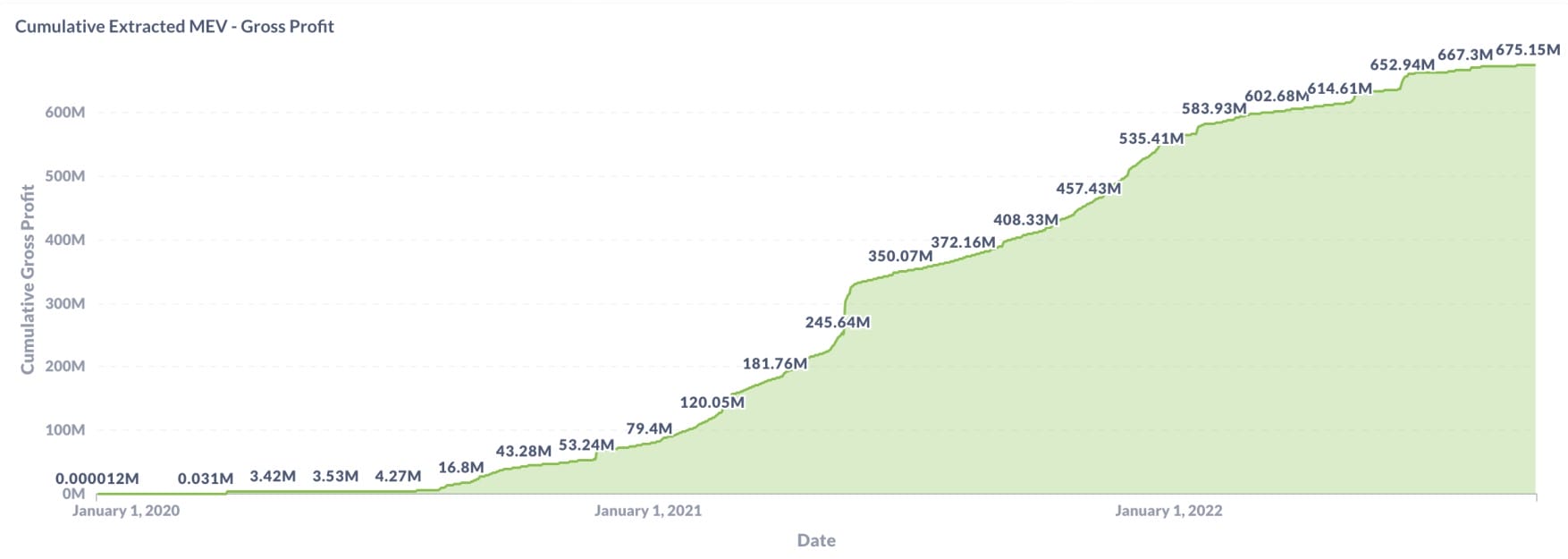
Before the Ethereum Merge, the total MEV returns were over $675 million. Considering that MEV bots have since expanded to other networks, such as Solana and BNB Chain, the returns are considerably greater.
✅ Data-Driven Decision Making
Crypto MEV bots remove a common risk from the trading process: emotions. Put simply, MEV bots make data-driven decisions based on the underlying algorithm the bot has been programmed to follow.
As mentioned, bots can only buy or sell cryptocurrencies once specific conditions are triggered.
Disadvantages of MEV Bots
MEV bots also come with drawbacks. To start with, advanced technical knowledge is required in blockchain concepts, programming, and algorithm building. Moreover, MEV bots operate in a high-risk market; profits are far from guaranteed.
Let’s take a closer look at the key risks of using MEV bots.
❌ High Technical Complexity
The reality is that unless you’re a seasoned blockchain developer with at least one modern programming language, making a profitable MEV bot is a tall order. You’d also need an intimate understanding of smart contracts, gas fee optimization, and network mempools. Not to mention risk management and high-level data analytics.
While third-party MEV tools are aimed at beginners, they’re unlikely to be profitable. After all, it doesn’t make sense for successful MEV strategies to be shared in the public domain, even if a fee is charged.
❌ Significant Market Risks
Even the most profitable MEV bots are at risk of significant losses.
Consider a case study from 2022, where an MEV bot reportedly made over 800 ETH through arbitrage strategies. However, just one hour later, the MEV bot was hacked due to a vulnerability in its underlying code. The MEV bot’s entire wallet was hacked, amounting to over 1,100 ETH.
In addition, MEV bots often execute unsuccessful trades. Nobody can predict the markets with any certainty, no matter how advanced the bot is. For example, back-running strategies rely on calculated risks. Similarly, arbitrage strategies can fail if the bot optimizes gas fees correctly.
❌ Intense Competition
One of the biggest risks facing MEV bots is other MEV bots. Put otherwise, a significant number of bots operate in the same marketplace. This could mean front-running a position that’s already been front-run.
Or missing out on the second segment of an arbitrage position. Either way, the most advanced and sophisticated MEV bots will supersede the rest of the market. This means your bot could be inferior to other market participants.
What Skills Do You Need to Make an MEV Bot?
If the MEV bot strategies discussed above sound too good to be true, in many ways, they are. This is because highly skilled programmers develop MEV bots.
Once profitable strategies and systems have been deployed, developers aren’t going to share their ‘Secret Sauce’. With this in mind, the only way to make money from MEV bots is by creating one yourself, which is easier said than done.
Advanced Blockchain Knowledge
The first minimum requirement is an intimate understanding of blockchain technology. MEV bots excel on the Ethereum blockchain, the most commonly used network for decentralized finance.
Key specialisms should include:
Expert-Level Programming Skills
In addition to blockchain knowledge, you’ll also need expert-level programming skills. After all, you’ll be building an MEV bot from the ground up. This requires advanced algorithms with highly sophisticated trigger points. This ensures the MEV bot makes profits.
- Solidity: At a minimum, you’ll need to learn Solidity. This is the programming language used by the Ethereum network.
- Modern Programming Language: MEV bot developers should also have a firm understanding of a modern programming language. Python and JavaScript are commonly used, as these languages enable bots to ‘script’ to the Ethereum blockchain.
It can take many years to become proficient in these programming skills.
Familiarity with Ethereum Development
The most successful MEV bot developers have advanced knowledge of Ethereum development tools.
For example, most developers use Truffle when building smart contracts on Ethereum. Truffle comes packed with features, such as smart contract management, automated testing, and inter-network communication.
What’s more, you should have a solid understanding of scripting tools like Web3.js or ethers.js. This enables MEV bots to directly interact with Ethereum nodes.
Data Analysis Skills
MEV bots need to analyze an unprecedented amount of data. As mentioned, bots monitor thousands of mempool transactions at any given time. Simultaneously, the bot must interpret the data in real-time and assess ways to generate risk-averse gains.
Crucially, the MEV bot won’t be proficient in data analysis unless it’s programmed accordingly. This means you, as the MEV bot developer, should be skilled in key fields like statistical analysis, information visualization, and data manipulation. Without these skills, the bot won’t have the capacity to handle large data sets.
Understanding of Risk Management
Even the most advanced MEV strategies operate in a high-risk marketplace. Like seasoned day traders, all MEV bots and MEV traders encounter losing trades. This is just the nature of the industry. Not only are MEV bots competing with human traders, but they are also competing with other bots. As such, having an advanced understanding of risk management is crucial.
At a minimum, the MEV bot should always have an exit strategy, whether that’s locking in profitable trades or closing losing ones. Bankroll management is also important. This means entering appropriately sized trades, ensuring that the bot avoids risking too much on any single position while maximizing risk-averse positions.
How to Make an MEV Trading Bot: 5 Steps to Follow
In this section, you’ll learn how to get an MEV bot in five steps. Each step requires a commitment to learn and perfect a new skill, so don’t expect to have a profitable MEV bot running overnight.
1) Get a Strong Understanding of MEV
The first step is to become an expert in Maximal Extractable Value. A good starting point is to review the MEV documentation provided by the Ethereum Foundation.
This explains key strategies like front-running, flash loans, and ‘gas golfing’. Each MEV concept comes with additional reading sources; you’ll need to review them all.
2) Choose a Programming Language and Tools
You’ll also need to become proficient in programming. This includes Solidity, the required language to build and deploy Ethereum smart contracts. A modern programming language is also needed; Python or JavaScript are good options.
In addition, you’ll need to learn how to use the Truffle suite. This is the most developer-friendly tool to engage with the Ethereum blockchain.
How to Learn Solidity?
3) Develop a Strategy and Algorithm
Having suitable programming skills is just half the battle. Additionally, you need to develop a MEV bot strategy. It should not only have the capacity to generate profits but also be a risk-averse approach. Scroll back up for a recap on the most effective MEV strategies.
After choosing a strategy, it needs to be built into a functional algorithm.
- This will be similar to the ‘if-then’ concept.
- Put otherwise, the algorithm should instruct the bot what to do when a certain condition is triggered.
- For example, buy a micro-cap ERC-20 token (then) if a buy order of $100,000 or more is entered.
This is a simplified example to illustrate the process. MEV bots are considerably more advanced than this.
4) Build and Test the Bot
After converting the strategy into a working algorithm, the MEV bot should enter the testing phase. This should initially consist of backtesting. This means testing the bot’s performance in historical trading conditions. This will require a significant amount of data, potentially requiring millions of smart contract transactions.
This reverts to our earlier point, where we explained the importance of having an analytical mindset. Additionally, your MEV bot should also be tested in live market conditions. This means using virtual funds. In doing so, any potential issues won’t be financially damaging. You can then make the required adjustments and return to the testing phase accordingly.
5) Deploy and Monitor
After an extensive testing phase, the MEV bot can be fully deployed. Just remember that a successful testing phase doesn’t guarantee future profits.
The crypto markets evolve rapidly, so constant monitoring is crucial. This means analyzing all trades made by the bot. Assess whether the bot could have done things better. And if so, adjustments should be made.
Conclusion: Are MEV Bots Profitable in 2026?
In summary, MEV bots continue to make significant gains. Whether that’s through front/back-running, arbitrage trading, or flash loans, MEV bots are considerably more advanced than human capabilities. However, the ethical side of MEV should be considered.
Not only do MEV bots have an unfair advantage, but they often engage in market manipulation. If you proceed with an MEV strategy, avoid using third-party providers, which are rarely profitable. Instead, learn how to create your own MEV bot from the ground up.
FAQs
Are MEV bots legal?
What are the risks of MEV?
Is it difficult to make an MEV bot?
What is an MEV slippage bot?
Are Solana MEV bots profitable?
How to beat MEV bots?
Are Ethereum arbitrage bots profitable in 2026?
How do MEV bots perform arbitrage trading on Ethereum?
References
2M+
250+
8
70







 in numbers