How to Trade Litecoin (LTC) Futures: Step-by-Step Guide



As one of the earliest Bitcoin forks, Litecoin remains a popular trading asset, offering active traders one key advantage over Bitcoin: higher volatility. Wider price swings can make trading Litecoin futures more profitable compared to BTC, allowing traders to use BTC’s higher volume as a signal for price direction.
Futures trading allows traders to execute larger trades with relatively small amounts of capital by using leverage. In this guide, we’ll explain what Litecoin futures are and how they work. We’ll weigh the benefits and risks of futures trading, and explore some of the easiest ways to get started.
Let’s begin with a basic guide on getting started.
- In This Article
- In This Article
- Show Full Guide
How to Trade Litecoin Futures: Quick Guide
In this example, we’ll use the popular CoinFutures app to trade Litecoin Futures, which is one of the easiest ways to get started.
- Create a CoinFutures Account: Visit CoinFutures to create an account using a valid email address, and then choose a secure password. Alternatively, you can use a crypto wallet, such as MetaMask, to connect to CoinFutures.
- Download the CoinFutures App: Download and install the app for your device. CoinFutures supports Windows, macOS, and Android for mobile devices.
- Fund Your Account: Once you’ve installed the CoinFutures app, click on the wallet icon to fund your account using a supported network, such as Bitcoin, Ethereum, or Solana.
- Set Up Your Trade: Select Crypto Futures from the main menu and choose LTC/USD as your trading pair. Pick a price direction for your trade (up or down), set a wager amount in USD, and choose a multiplier.
- Choose Your Auto Trade Options: Click on Auto to set up an automatic trade. You can choose a level to automatically take profit or cut your losses, closing your trade automatically at the levels you define.
- Withdraw Your Earnings: If your trade was profitable, you can withdraw your earnings to your non-custodial crypto wallet.
What are Litecoin Futures?
Litecoin futures refer to a type of investment contract that allows you to speculate on the future price of Litecoin without having to own the underlying asset. There are two primary types of futures contracts available: expiration futures and perpetual futures contracts. Perpetual futures are much more commonly available on crypto trading platforms.
- Expiration futures have a fixed expiration date and may involve cash settlement or, in some cases, delivery of the asset itself at settlement. However, relatively few trading platforms offer delivery futures contracts, and supported assets are typically limited to BTC and ETH.
- Perpetual futures contracts never expire, allowing traders to keep the trade open indefinitely. This type of contract also provides strong liquidity on most platforms, enabling traders to enter and exit positions more efficiently.
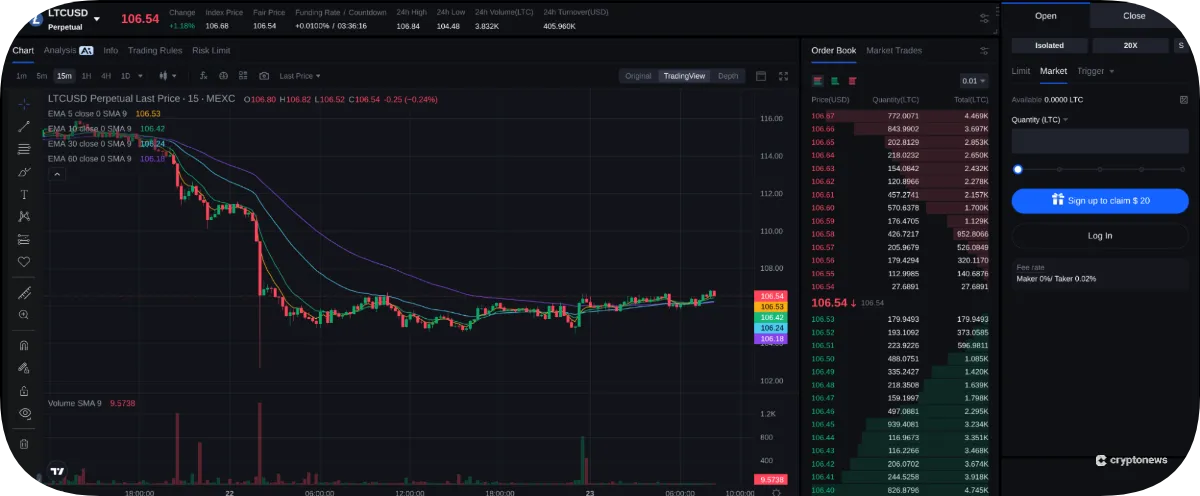
Futures trades provide a way to go long (a bet that the LTC price will increase) or short (a bet that the price will decrease), using leverage to control a larger trade amount with a comparatively small amount of money.
Some traders may look for a Litecoin futures ETF. While Bitcoin futures ETFs are available in the U.S., Litecoin doesn’t currently have one.
Next, let’s look at how Litecoin futures work, specifically perpetual futures trades.
How Does Litecoin Futures Trading Work?
Litecoin futures trading allows you to speculate on the future price of Litecoin without actually owning the crypto asset (LTC). Although expiration futures and perpetual futures share some similarities, let’s research the mechanics of perpetual futures, which are more commonly found on popular trading platforms.
We can begin by exploring some of the key concepts and their relationships. We’ll wrap up this section with an example to illustrate how it all fits together.
Leverage
Leverage allows you to control a larger trade with less capital. For example, with 10x leverage, you can control a $1,000 trade with $100 worth of capital. In short, leverage amplifies gains and gives you more exposure. However, leverage also amplifies losses. This adds volatility to an already volatile asset, so leverage should be used with caution.
Many platforms cap the max leverage at 50x or lower for Litecoin futures trading.
Margin
Margin in leveraged futures trading refers to the amount of capital required to open a trade. However, a futures trade uses two types of margin: initial margin and maintenance margin. You can think of margin as your equity in the trade.
- Initial Margin: The initial margin in a Litecoin futures trade correlates with the leverage you choose and represents the amount of capital you need to open the trade. For example, to open a 10x long trade for $1,000, you need an initial margin of $100.
- Maintenance Margin: The maintenance margin refers to the minimum amount of equity required to keep a trade open. In most cases, the exchange sets the maintenance margin at 50% of the initial margin.
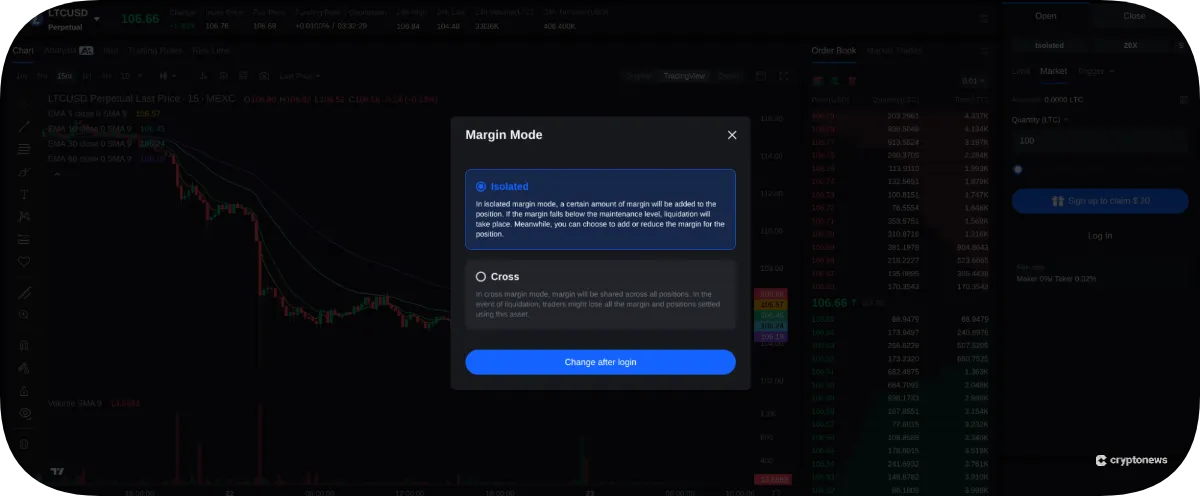
Depending on the platform you choose, you can opt for an isolated margin (one asset) or cross margin, which uses other positions as collateral for the trade.
Funding Rate
Perpetual futures do not have an expiration date, so the price of the contract won’t naturally converge with the spot price. Instead, perpetual futures contracts use a funding rate to encourage traders to close positions or switch sides, thereby keeping the contract price close to the spot price. This periodic interest rate charge varies depending on market conditions.
If the contract price is higher than the spot price, short position holders pay a fee to the long position holders. Conversely, if the contract price is lower than the spot price, longs pay the funding fee to shorts.
The funding rate can increase or decrease your equity in the trade, potentially pushing your equity closer to the minimum maintenance margin level. The risk is liquidation, which we’ll discuss next.
Liquidation
If the value of your position falls below the maintenance margin, your position may be liquidated (sold by the trading platform) to prevent further losses. When this happens, you’ll typically pay a liquidation fee, which is deducted from the remaining trade equity. The remainder, assuming there is still equity in the trade, is returned to your trading account.
Cryptocurrencies like Litecoin can be highly volatile, and increased leverage amplifies this volatility. At 25x leverage, a 1% price move that’s unfavorable to your trade can wipe out 25% of your initial margin, which is why maintenance margins seem so high.
Advanced Order Types
Advanced trading platforms typically offer a range of order types to help manage your trades and preserve your trading capital. Let’s look at some of the most common order types.
- Market Orders: Execute immediately at the current market price using available trade inventory.
- Limit Orders: Set a specific price at which you want to buy or sell. You’ll need to wait for the market to reach your price.
- Stop-Loss Orders: Automatically close a position if the price moves against you, limiting potential losses.
- Take-Profit Orders: Automatically close a position if the price moves in your favor, locking in profits.
Example of a Perpetual Futures Trade
Let’s say you expect the price of Litecoin to increase, so you go long with 10x leverage on a perpetual futures contract.
Open a Position
You deposit $1,000 as initial margin and open a long position worth $10,000.
Set up Automated Trades
Next, you set up take-profit and stop-loss orders. You set the take-profit order for 5% above the price at which you opened the trade and the stop-loss for 1% below. In this example, the position will close when you reach either a $500 profit or a $100 loss, not accounting for fees.
Monitor the Position
You can close the position to realize your profit, or you can hold it open, paying or receiving funding rates depending on the market conditions.
Closing the Position
If the price of Litecoin increases by 5%, your position is now worth $10,500. Your profit is $500, excluding fees and funding rates. You can close the position manually at any time, or wait for your take-profit or stop-loss to execute.
Next, let’s look at an example of a Litecoin futures trade on CoinFutures.
How to Trade Litecoin Futures: Step-by-Step Guide
CoinFutures simplifies futures trading with an intuitive interface that enhances the user experience. Funding fees are replaced by a fixed fee that is applied each hour the trade remains open.
This, combined with higher available leverage (up to 100x), makes the platform well-suited to quick trades on volatile assets. Let’s walk through how to get started with CoinFutures.
Create a CoinFutures Account
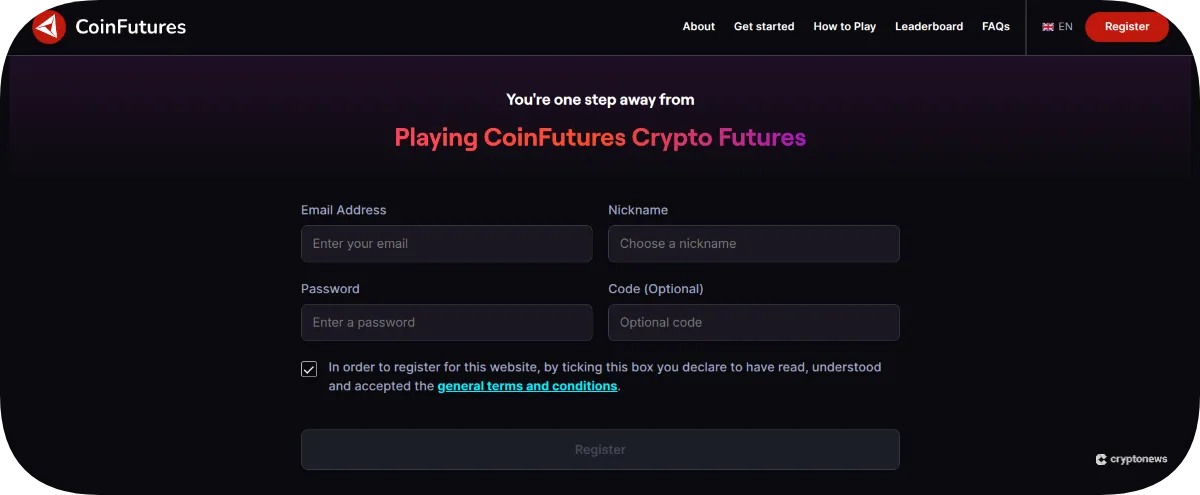
Visit CoinFutures to create an account. Choose a valid email address and pick a nickname. Then, choose a secure password.
Download the CoinFutures App
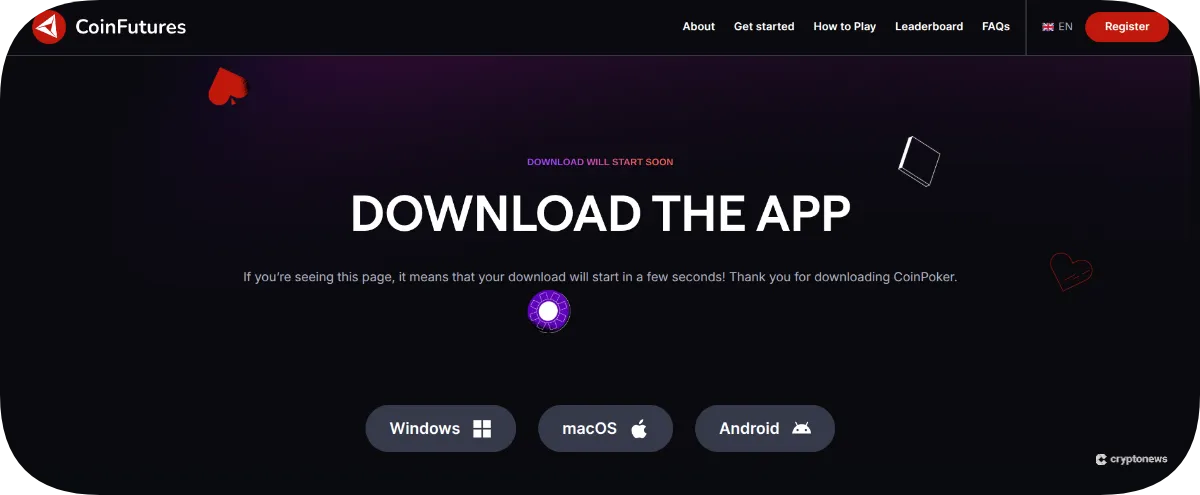
Download and install the app for your device. CoinFutures supports Windows and macOS, as well as Android for mobile devices.

Fund Your CoinFutures Account
Once you’ve installed the CoinFutures app, click on the wallet icon (cashier) to fund your account using a supported network, such as Bitcoin, Ethereum, or Solana.
Scan the QR code with your mobile wallet to ensure you send the funds to the correct wallet address and fund your account.

Set Up Your Litecoin Futures Trade
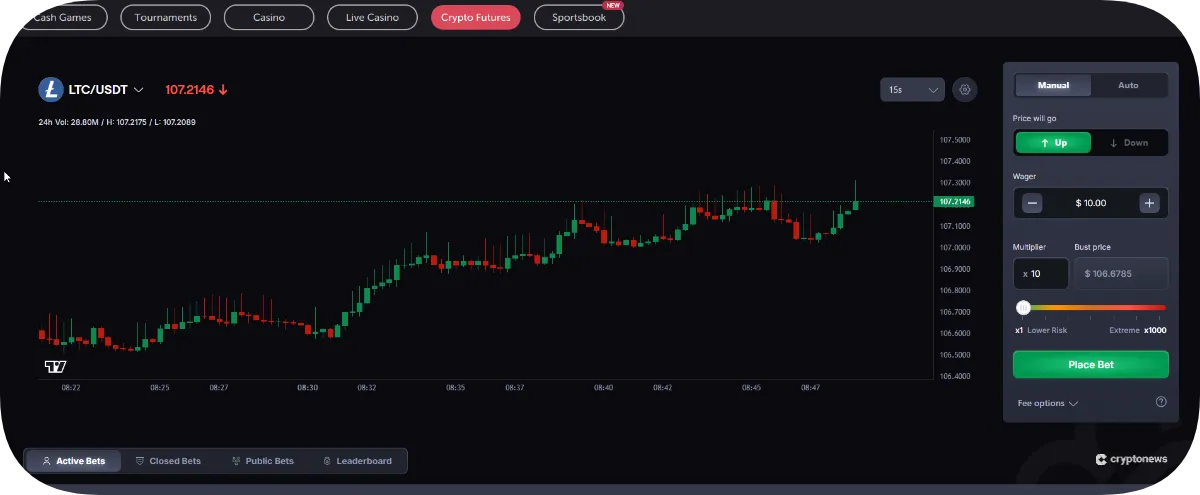
Select Crypto Futures from the main menu and choose LTC/USD as your trading pair. On the menu, choose a price direction for your trade (up or down, depending on whether you are bullish or bearish). Then set a wager. This is your investment in the trade and can be as little as $1.
Next, choose a multiplier. CoinFutures supports up to 1000x leverage. However, the app sets the multiplier at 10x by default, which is a safer starting point for new users.
Take note of the Bust Price. This is the price at which your trade will be automatically closed. Higher leverage increases the risk of incurring a loss on the trade.
Choose Your Auto Trade Options
Next, click “Auto” to set up an automatic trade. You can choose a level to automatically take profit or cut your losses, closing your trade automatically at the predefined levels. You can set a specific price or profit goal to automatically take profit. Similarly, set a loss level at which to exit your trade if the market moves against your trade.
You can also set up fee options at this step. By default, CoinFutures uses a P&L fee. This ensures you only pay a trading fee when you make a profit.
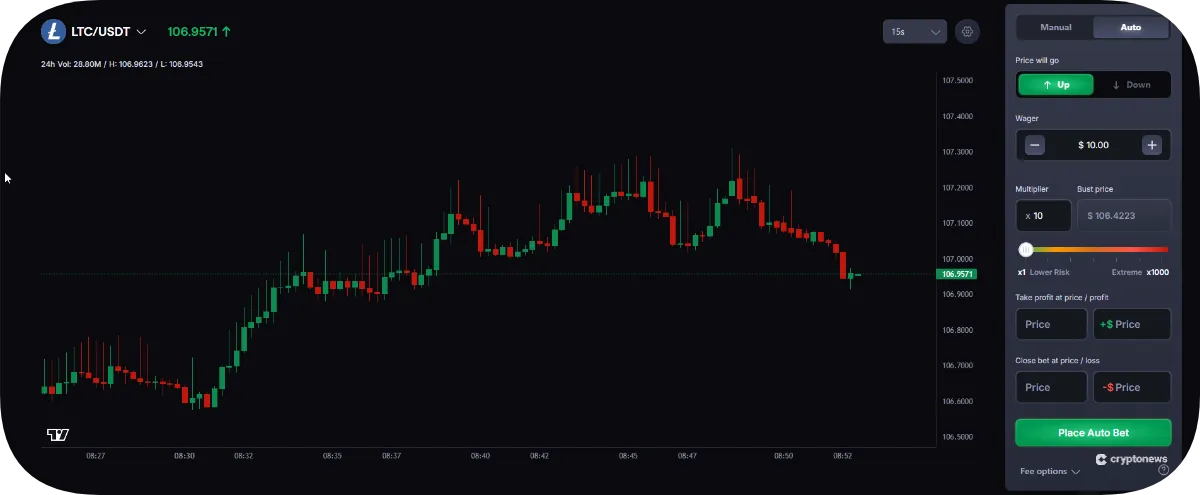
Once you’ve set up your trade, review your trade settings and place your auto bet if everything looks right. That’s it. You’re trading futures the easy way.
Where to Trade Litecoin Futures
The popularity of futures trading means you can choose from dozens of platforms, ranging from centralized exchanges like MEXC to decentralized exchanges or specialty platforms like CoinFutures.
Centralized Exchanges
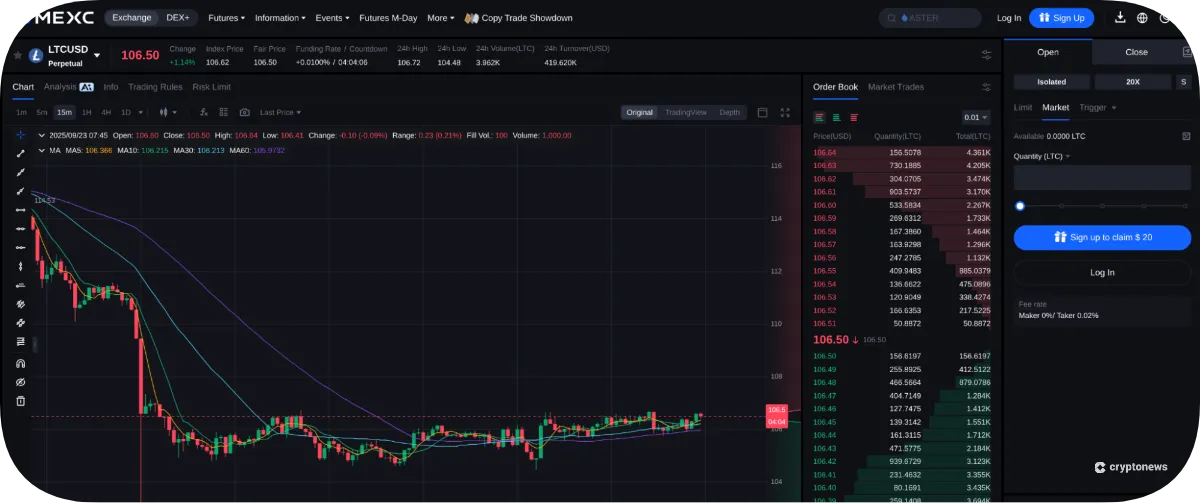
MEXC supports up to 200x leverage and boasts low fees (0% for limit orders and 0.02% for market orders). Users can earn additional trading discounts for holding MX tokens on the platform.
Decentralized Exchanges and Specialty Platforms
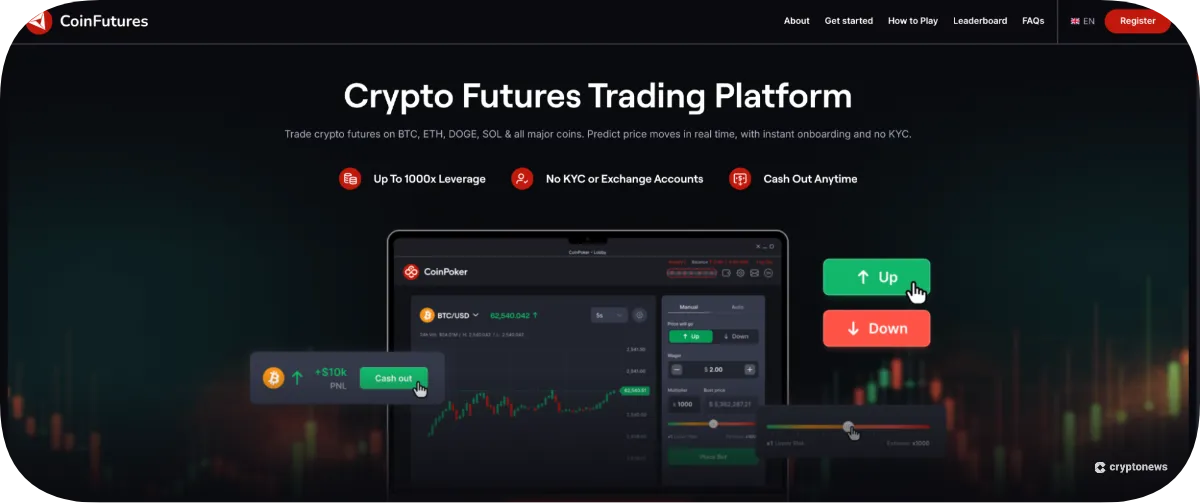
Several decentralized exchanges and specialty platforms also support Litecoin futures. Decentralized exchanges (DEXs) utilize automated smart contracts to facilitate futures trades and require the connection of a cryptocurrency wallet. As an alternative to DEXs, simple platforms like CoinFutures offer a more straightforward way to trade without requiring identity verification.
Trade Litecoin and other popular assets with up to 1,000x leverage and a $1 minimum investment.
In-Wallet Trading
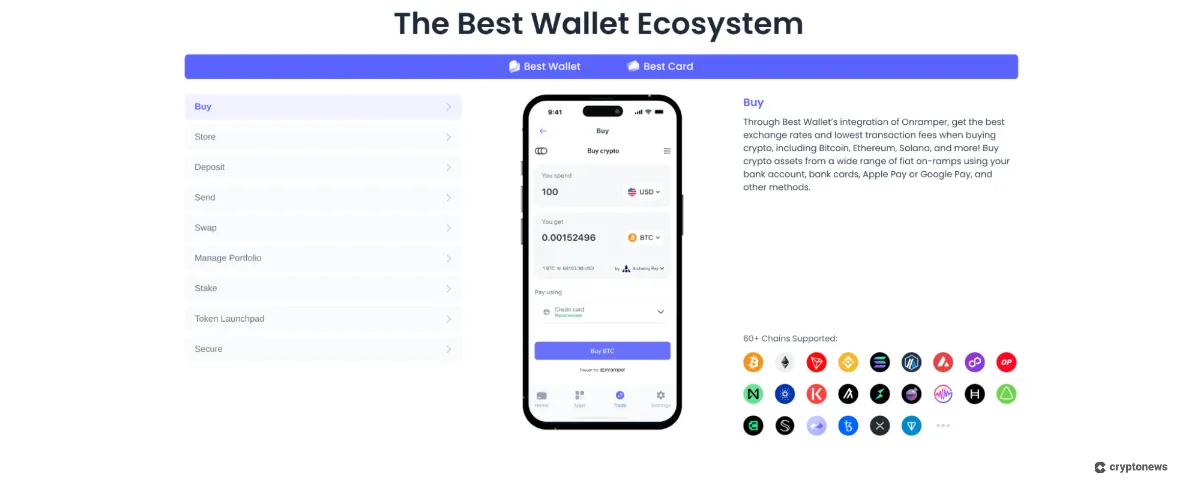
The Best Wallet mobile app offers another alternative, ultimately giving you two ways to trade. The app supports WalletConnect, enabling you to access popular decentralized exchanges for trading Litecoin futures. Upcoming releases will also support derivatives trading directly within the app.
Best Wallet is already well-known for its security, which uses Multi-Party Computation (MPC) to store your crypto assets safely. A growing list of features makes this app a top choice for both ease of use and advanced features.
What are the Benefits of LTC Futures Trading?
The primary benefits of LTC futures trading center on capital efficiency. With futures, a $100 investment can power a $5000 trade when using 50x leverage. Leverage also decreases the time required to reach your investment goals.
For example, if you invest $100 in a 50x trade, a 2% in the right direction will double your investment before fees. By comparison, it may take years to double your investment with a traditional spot trade, particularly when you buy Litecoin or other established cryptocurrencies.
Let’s explore the pros of LTC futures trading in more detail.
- Leverage and Capital Efficiency: The access to leverage of up to 50x on many platforms allows for more efficient use of capital. A relatively small investment lets you power much larger trades, providing a much higher return on investment in a shorter amount of time compared to spot trading.
- Short Selling Opportunities: LTC futures support both long and short positions. If you think the price will dip, futures offer a way to profit from the pullback.
- Hedging Against Price Volatility: Futures also offer a way to hedge against downside risk. For example, if you hold an LTC long position but expect a pullback, futures let you earn a profit to offset the paper losses on your long spot position.
- Liquidity and Market Depth: Crypto futures trading markets generally exhibit higher trading volumes than traditional spot markets. This means there are more market participants to take the other side of the trade, making trading more efficient and reducing slippage.
- Potential for Higher Returns: Leverage in futures trading allows you to control a much larger position. Small price movements can generate impressive returns.
While futures offer a potent trading tool, it’s also essential to consider the risks. Let’s review the potential risks next.
Risks of Trading Litecoin Futures
The risks associated with Litecoin futures trading center on leverage and the possibility of liquidation, which locks in losses. The loss from an ill-fated trade could wipe out your entire investment in the trade. Let’s look at the potential risks that should be weighed before making a futures trade.
- Volatility and Leverage: Leverage works in both directions, and with volatile assets like cryptocurrencies, moves of several percentage points aren’t uncommon. At the time of writing, LTC is down 9% in the past 24 hours. Leverage amplifies these moves, with higher leverage making the trade riskier.
- Liquidation Risks: Most platforms will liquidate a position when trade equity falls below 50% of the initial margin. When the exchange liquidates a position, the trader pays a liquidation fee, typically about 0.5%. However, the fee is based on the amount of the leveraged trade. On a 10x trade for $10,000, the cost would be $50. Additionally, liquidated positions are sold into a fast-moving market, likely compounding losses.
Funding Rate Risk: Volatility often makes short-term price action difficult to predict. If you find yourself on the over-weighted side of the trade, you may incur additional costs in funding fees. - Complexity: Futures trading brings more complexity compared to spot trading. While spot and futures markets offer the same order types on advanced platforms, volatility, leverage risks, and ever-changing funding fees make futures trading more complex than spot trading.
- Counterparty Risk: Spot trading allows you to withdraw your crypto assets immediately after purchase. By contrast, futures trading requires that you leave the assets on the platform until you close the position (or until the position is liquidated). The 2022 FTX exchange collapse serves as a reminder that exchanges can become insolvent without warning.
Tips for Trading Litecoin Futures
Most day traders lose money. Fortunately, many of the risks associated with trading Litecoin futures can be mitigated by following a few best practices to avoid becoming a victim.
These risk management strategies help ensure that you make better-informed trading decisions. You won’t get every call right, but effective risk management can help you preserve your capital for the next trade.
- Follow the 1% Rule: Many successful traders follow the 1% rule: don’t risk more than 1% of your trading portfolio value on a single trade.
- Utilize Take-Profit and Stop-Loss Orders: A take-profit order automatically exits your position when it reaches a profit level that you define. This prevents a round-trip if the market changes direction again. Similarly, stop-loss orders exit your position before the losses become catastrophic. For example, you may exit your position automatically when 25% of your equity is gone.
- Use Technical Indicators: Hunches alone are too risky. Instead, learn to research data and read technical indicators that confirm your hunch on the cryptocurrency market direction. Indicators like RSI, MACD, and Bollinger Bands can help you time your trades based on likely price reversals or overbought/oversold conditions.
- Use Leverage Wisely: While leverage is a powerful tool, there can be too much of a good thing. At 100x leverage, a 0.5% price move against your position will trigger a liquidation. Lower leverage is safer in volatile markets.
- Analyze Liquidity Before Trading: Lower volume altcoins often have less liquidity. It may be challenging to enter or exit a larger position without significant slippage. A crypto depth chart can help your analysis and help you understand the supply and demand dynamics before you enter a trade.
- Monitor Funding Rates: Funding rates can reduce trade equity. Weigh the cost before opening a trade and choosing a leverage multiplier. For longer-term trades, continue to monitor funding rates and their impact on your maintenance margin.
- Learn Through Practice: Some platforms, such as MEXC, offer a demo account where you can practice futures trading or test strategies without risking your trading capital.
Conclusion
Futures trading offers a more capital-efficient way to trade, allowing you to trade long or short to capitalize on short-term price moves with a comparatively small amount of capital. Trading Litecoin futures can be profitable, but it’s also very easy to lose money when using higher amounts of leverage.
Use leverage wisely, reserving higher leverage trades for high-conviction strategies. Advanced order types, such as take-profit and stop-loss orders, can help make trading decisions less emotional and allow you to let your trade continue on autopilot.
FAQs
What is the difference between Litecoin futures and spot trading?
Can I trade Litecoin futures in the US?
Is Litecoin futures trading profitable?
Can I trade Litecoin futures on Kraken?
Can I short Litecoin using futures?
References
- Isolated and cross-mode differences (mexc.com)
- The Significance and Consequences of the FTX Crypto Collapse (rutgers.edu)
- Most day traders lose money (cnbc.com)
- The 1% Rule: A Key to Long-Term Trading Success (tradingview.com)
- John Bollinger answers “What are Bollinger Bands?” (bollingerbands.com)
2M+
250+
8
70







 in numbers