How to Trade Crypto Futures in the US: Step-by-Step Guide





Crypto futures are a very popular way to speculate on crypto prices because they offer high leverage and don’t require you to own tokens directly. However, for many years, crypto futures in the US were only available for a select few tokens, making this financial instrument difficult to access for US traders.
Now, that’s beginning to change. Thanks to increased interest and positive regulatory developments, a growing number of platforms in the US are making crypto futures a part of their core offer.
In this guide, we’ll explain how to trade crypto futures in the US and highlight top platforms for crypto futures trading. Read on to start trading futures today.
- In This Article
- In This Article
- Show Full Guide
Best Crypto Futures & Options Trading Platform
- Trade crypto futures & options with up to 1000x leverage
- No KYC requirements and instant withdrawals
- Low trading fees and deep liquidity

Key Takeaways
- Crypto futures are derivatives contracts that let you speculate on the future price of a crypto token in either a bullish or bearish direction. Delivery contracts expire, while perpetual contracts do not.
- Crypto futures enable you to trade cryptocurrencies with high leverage and without owning the underlying token. They typically incur low trading fees and benefit from high liquidity.
- Crypto futures are legal to trade in the US. A growing number of crypto exchanges are offering futures trading as the US administration eases regulations.
- The best places to trade crypto futures in the US include CoinFutures, crypto exchanges like Coinbase and Kraken, and futures brokers that offer CME-listed crypto futures.
- Crypto futures carry risk. Protect yourself by choosing a trusted exchange, using leverage carefully, and applying stop-losses to your trades.
Can You Trade Crypto Futures in the US?
Yes, you can trade crypto futures in the US. Regulations around crypto futures have been changing rapidly, making it easier to access futures for a wider range of tokens than ever before.
Crypto futures trading in the US dates to 2017, when the Chicago Mercantile Exchange (CME) began trading Bitcoin futures. Ethereum futures arrived on the CME in 2021, followed by XRP and Solana futures in 2025.
Major crypto exchanges in the US avoided offering crypto futures for many years because of regulatory uncertainty and legal challenges from the Securities and Exchange Commission (SEC). However, the second Trump administration has been very pro-crypto, and regulators under the administration signaled that futures would be allowed. As a result, a number of major US crypto exchanges have launched crypto futures trading in 2025.
Yes, crypto futures trading is legal in the US. Futures can be traded on licensed futures exchanges that are regulated by the Commodity Futures Trading Commission (CFTC). All licensed futures exchanges in the US require Know Your Customer (KYC) checks and must follow anti-money laundering requirements.
What Are Crypto Futures?
Crypto futures are derivatives that obligate you to buy or sell a specific cryptocurrency token at an agreed-upon price on a date in the future. They can be used to make directional bets on the price of a cryptocurrency token over a specific timeframe.

Importantly, there are two types of crypto futures that trade in the US:
- Delivery futures: These futures expire on a specific date in the future, and the contract is automatically exercised on that date.
- Perpetual futures: These futures do not expire. They track the price of the underlying cryptocurrency, enabling positions to be closed at any time.
Both types of crypto futures contracts enable you to go long or short on popular cryptocurrencies, meaning you can speculate that the price will rise or fall. In addition, most futures trading platforms enable you to trade with leverage, so you can take positions that are much larger than the amount of capital you have on hand to fund your position.
How Does Crypto Futures Trading Work?
The best way to understand how crypto futures trading works is with an example. Say Bitcoin is currently priced at $112,000. You think it will go up to $115,000 by the end of the month, so you buy a long BTC futures contract that gives you the right to buy BTC at $114,000 on the last day of the month.
At the end of the month, you must buy BTC at that $114,000 price. If BTC has risen to $115,000, as you predicted, you can immediately sell your tokens at market price for a $1,000 profit each. On the other hand, if BTC only rose to $113,000, you would sell your tokens at market price for a $1,000 loss.
It’s worth noting that while cryptocurrency can change hands when a futures contract expires, that is, you actually receive BTC or another token, most futures contracts are settled in a stablecoin like USDT or USDC. This means that instead of taking ownership of BTC in the example above and then having to sell it, your account balance would directly reflect a $1,000 profit or loss.
How to Trade Crypto Futures in the US
Trading crypto futures is relatively easy. We’ll walk through how to trade crypto futures in the US with CoinFutures, one of the leading crypto futures trading platforms.
Step 1: Sign Up for CoinPoker
The CoinFutures crypto futures trading platform is part of CoinPoker, a popular crypto gambling site. To access CoinFutures, you can use a CoinPoker account. If you don’t have one, you can create a new account directly via CoinFutures.
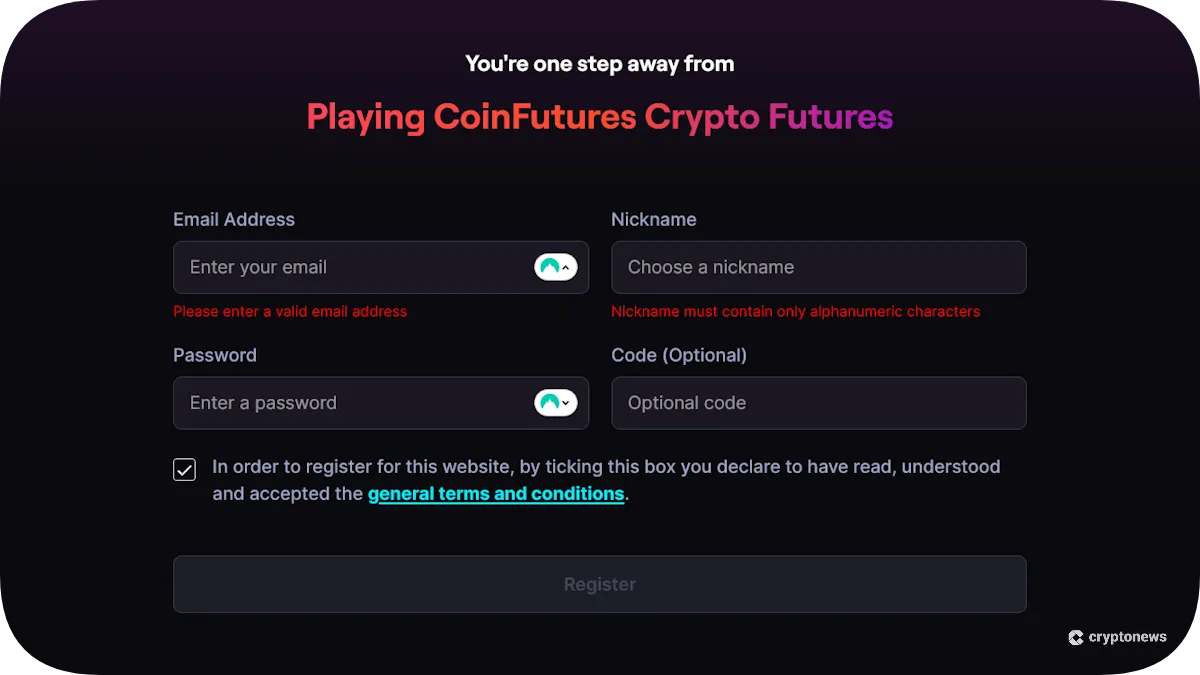
Head to CoinFutures and click Register. Enter your email address, a username, and a password to create your account. Unlike most US futures trading platforms, CoinPoker doesn’t require KYC checks, so you can remain completely anonymous.
Step 2: Download the CoinPoker App
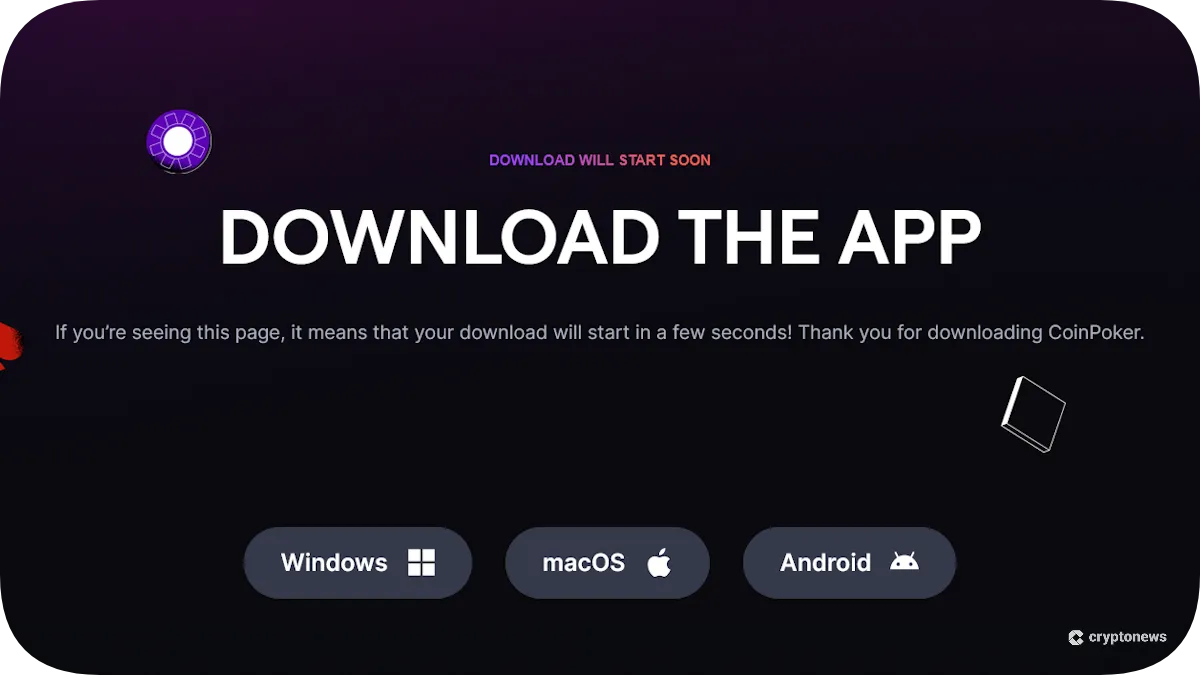
Download the CoinPoker app for Windows, Mac, or Android and install it on your device. The app is completely free and is available from the CoinPoker website.
Step 3: Make a Deposit
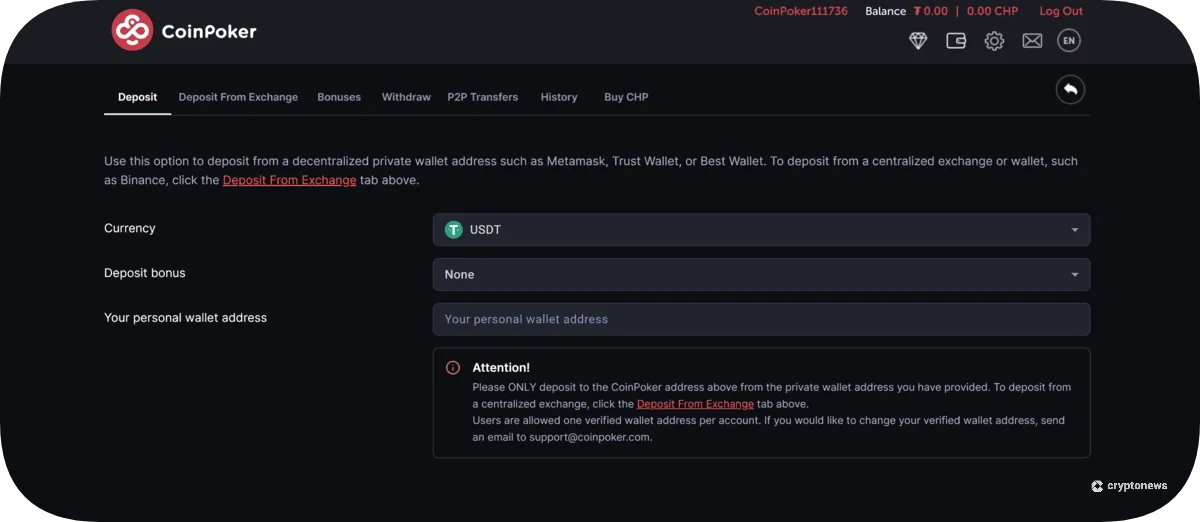
Open the CoinPoker app and click the wallet icon to make a deposit. You can deposit fiat using a credit card, debit card, or bank transfer. Alternatively, CoinPoker accepts crypto deposits in a variety of digital assets, including BTC, ETH, USDT, USDC, SOL, TRX, BNB, CHP, and WEPE.
Step 4: Open CoinFutures and Select a Token
Navigate to the CoinPoker dashboard and click Crypto Futures. Then select the token for which you want to trade futures. CoinFutures offers crypto futures for BTC, ETH, SOL, BNB, AVAX, TRX, LTC, ADA, LINK, XRP, and DOGE.
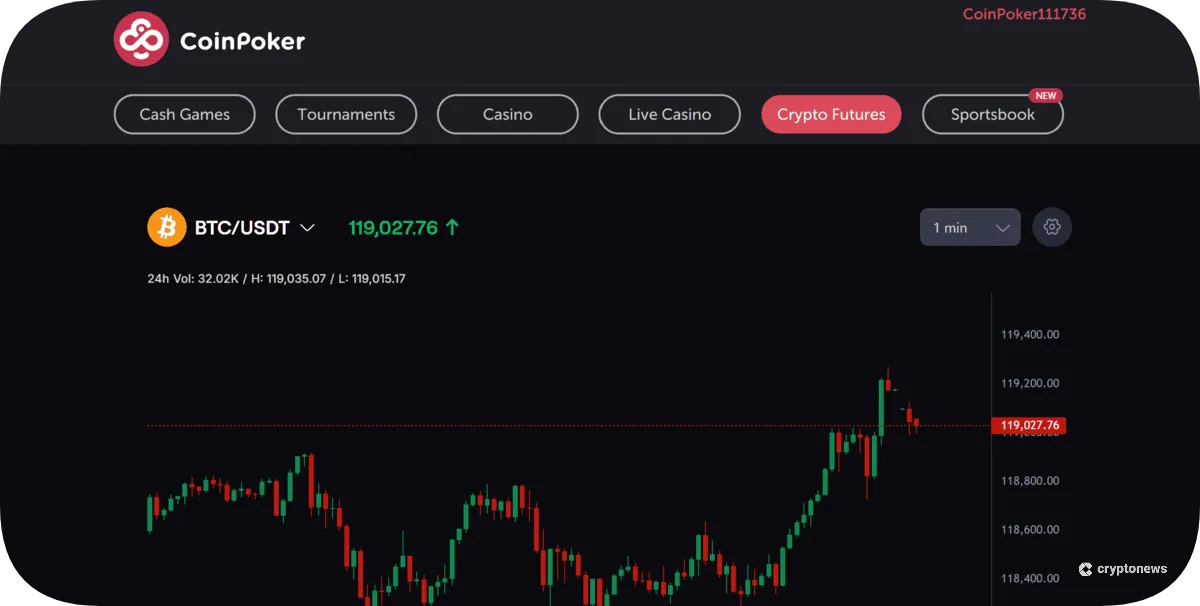
Step 5: Trade Crypto Futures
Study the price chart for the cryptocurrency you chose and decide whether you think the price will go up or down next. Select Up or Down in the order entry panel, then enter the amount you want to wager on your futures position. Next, select your multiplier: CoinFutures supports up to 1,000x leverage, meaning you can take a $1,000 future position with just $1 in capital.
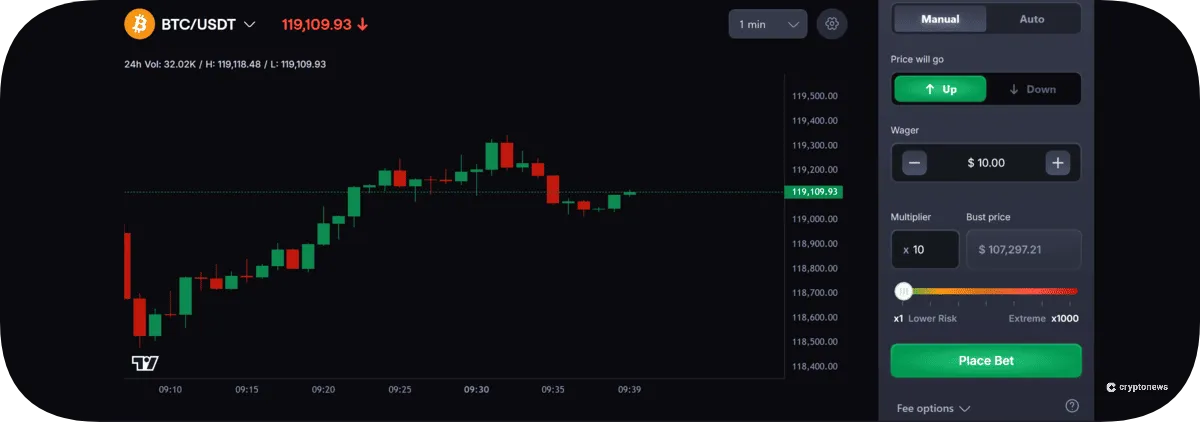
You can exit your position at any time manually when using CoinFutures. Alternatively, set take-profit and stop-loss levels to exit your trade automatically. When ready, click Place Bet to open your position.
Where Can You Trade Crypto Futures Contracts in the US?
There are now several options for where to trade crypto futures in the US. We’ll highlight some of the most popular platforms and explain what sets them apart.
Crypto Exchanges
The most common way to trade crypto futures in the US is by using a crypto exchange. Many top US exchanges let you trade both spot cryptocurrencies and futures contracts for a wide range of tokens, giving you maximum flexibility.
Centralized crypto exchanges with futures are overseen by the CFTC and have US-specific trading platforms that comply with all US regulations. They typically offer very low fees and moderate leverage.
Decentralized exchanges are not overseen by the CFTC and typically have higher fees than centralized exchanges, so they’re not recommended for US traders. However, some US traders do prefer decentralized exchanges because they offer higher leverage.
Here’s a quick overview of the best crypto futures trading platforms in the US today, with thousands of clients and futures investors:
- CoinFutures: Offers simulated crypto futures trading on 11 popular tokens with up to 1,000x leverage. No KYC required and multiple fee options available.
- Coinbase: Offers crypto futures trading on 150+ contracts with up to 10x leverage. Fees from 0.04% maker / 0.06% taker.
- Kraken: Offers crypto futures trading on 350+ contracts with up to 10x leverage. Fees from 0.02% maker / 0.05% taker.
CME-Listed Crypto Futures
The alternative to trading crypto futures through a crypto exchange is to trade contracts that are listed on the CME. These include futures for BTC, ETH, XRP, and SOL.
CME-listed futures contracts are available from any US brokerage that supports futures trading on the CME. This includes major brokerages like Interactive Brokers, Charles Schwab, Fidelity, and others. You can also trade these contracts through some crypto exchanges, including Kraken.
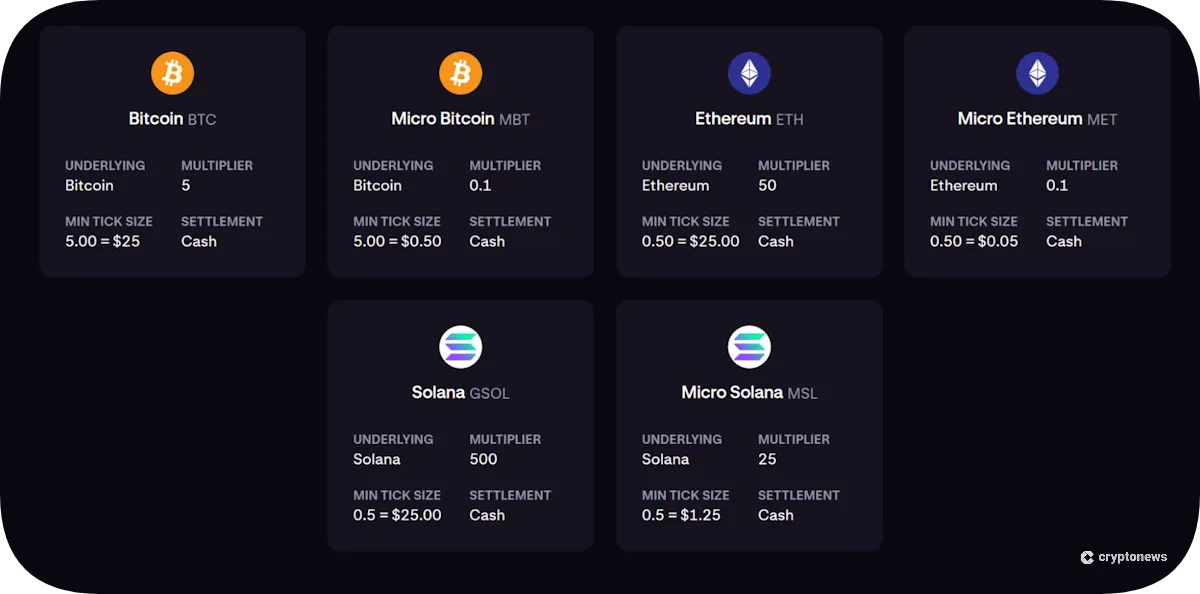
CME-listed futures products have high trading volume, but have low leverage compared to crypto exchange-traded futures contracts. Brokers also typically charge higher fees for trading these contracts.
How to Protect Yourself When Trading Crypto Futures
Cryptocurrency futures can be a powerful instrument for profiting from price movements in the crypto market, but they also carry significant risk. It’s important to know how to protect yourself when choosing a futures exchange and trading these derivatives. Here are a few helpful tips.
Choose a Trusted Trading Platform
The first thing you can do to protect yourself is to choose a futures trading platform you trust. All legitimate, legal futures exchanges in the US are regulated by the CFTC. Before you select a platform, do your own research to determine if it meets the established standards of legitimacy and security.
Note that CoinFutures isn’t regulated because it offers simulated futures, not traditional futures contracts. This platform is part of CoinPoker, a trusted crypto gambling provider, and has strong security practices in place to keep your account safe.
Watch KYC Requirements
All CFTC-regulated crypto futures exchanges require KYC checks. This means you can be identified, with your account and your personal information being at risk in the event of a data breach. This can be especially problematic if your crypto wallet is connected to your exchange account.
Platforms like CoinFutures don’t require KYC checks, making it a good alternative for privacy-conscious traders or anyone with a large crypto balance in a self-custody wallet.
Be Careful with Leverage
The ability to use leverage is one of the key advantages of trading crypto futures. You can take a relatively large position with a small amount of capital. This multiplies your potential profits when a crypto token’s price moves in the direction of your futures position.

However, leverage is a double-edged sword. Just as profits are multiplied when a token’s price moves in your direction, losses are multiplied when the price moves against you. This means it’s possible to rack up large losses quickly if you’re not careful.
The best way to manage this risk is to minimize the amount of leverage you use. You get to decide how much leverage is appropriate for each futures position. Using the maximum leverage your exchange allows for the contract you’re trading isn’t always the best idea.
Minimize the Risk of Liquidation
Leveraged futures positions can be liquidated, that is, automatically closed by your trading platform, if a trade goes against you and you don’t have the capital in your account to meet your trade’s margin requirements. In that case, your position could be closed at an inopportune time and you could face a large loss.
You can reduce the risk of liquidation by keeping more cash in your account than is required as collateral for your position. That way, if a trade starts to move against you, you have cash available to meet the new futures margin requirement.
Alternatively, you can reduce the impact of liquidations by limiting them to a single position. This is possible when you use isolated margin, which assigns a fixed amount of collateral to each trade in your account. Be very careful using cross-margin, which uses all of your positions to collateralize each other and could result in your entire account being liquidated if a trade goes against you.
Use Stop Losses
Stop-loss orders tell your trading platform to close your position if a trade starts to go against you. You specify a price below the token’s current price (or above, for short futures positions) at which your position should be closed. This sets a limit on how much money you could lose on any single trade and can help prevent emotional trading.
Crypto futures are very popular because they offer significant benefits over trading crypto tokens directly. Some of the biggest benefits include:
- High leverage, enabling efficient use of capital
- Ability to go long or short on a crypto token
- No need to own the underlying token
- Reduced trading fees compared to spot trading
- High liquidity with little to no slippage
Futures also have key risks that traders should be aware of. These include:
- Leverage can magnify losses
- Margined trades can result in liquidation
- Losses may be unlimited
- More complex than trading spot cryptocurrencies
Conclusion
Crypto futures trading is growing in popularity in the US as regulations ease and more crypto exchanges offer futures contracts. For traders, futures offer the ability to make directional bets with high leverage and without owning tokens directly.
If you’re interested in trading crypto futures in the US today, a good start is CoinFutures. It offers simulated futures on 11 of the most popular tokens with up to 1,000x leverage. Join CoinFutures today with no KYC checks.
FAQs
Is crypto futures trading regulated in the US?
Can I trade futures on Coinbase in the USA?
Are Kraken futures available in the USA?
Are crypto futures taxed in the US?
References
- Bitcoin debuts on the world’s largest futures exchange, and prices fall slightly (CNBC)
- White House Urges ‘Pro-Innovation Mind-Set’ to Crypto in New Report (New York Times)
- Leverage Is a Double-Edged Sword (The Journal of Finance)
2M+
250+
8
70







 in numbers