

Bitcoin Futures Trading Guide: What Is It and How to Start
We believe in full transparency with our readers. Some of our content includes affiliate links, and we may earn a commission through these partnerships. However, this potential compensation never influences our analysis, opinions, or reviews. Our editorial content is created independently of our marketing partnerships, and our ratings are based solely on our established evaluation criteria. Read More





Bitcoin futures enable traders to speculate on BTC with leverage, access short-selling tools, and hedge existing positions against market uncertainty. While futures traders do not own the underlying Bitcoin, they speculate on BTC price movements without managing crypto wallets.
This beginner’s guide explains how to trade Bitcoin futures and which platforms offer the best user experience. Read on to discover Bitcoin futures strategies, risk management best practices, and key considerations before getting involved.
What Are Bitcoin Futures?
Bitcoin futures are financial derivatives that track the price of Bitcoin. They enable crypto traders to speculate on future price movements without asset ownership. Although long-term investors prefer traditional buy-and-hold strategies, futures contracts offer several core advantages.
As a derivative contract, futures enable traders to go long or short, letting them profit from rising and falling Bitcoin trends. Futures are particularly useful during bearish cycles, where traders turn fading sentiment into trading gains.
Bitcoin futures remain popular for their low margin requirements, too. The best crypto futures trading platforms have a 1% margin requirement, so you can trade Bitcoin with 100x leverage. This perk amplifies a $100 wager into $10,000, which magnifies profits by 100 times.
The regulated Bitcoin futures markets operate on the Chicago Mercantile Exchange (CME), yet traditional crypto exchanges attract significantly higher volumes. Most traders use perpetual futures, although delivery futures, which have expiration dates, are growing in popularity.
How Does BTC Futures Trading Work?
Bitcoin futures differ depending on the exact contract type, such as simulated, perpetual, and delivery contracts. That said, each BTC futures product shares some core similarities, which we discuss in the following sections.
Futures Margin Requirements
Because of the margin system, futures traders have access to significantly more Bitcoin exposure compared to their available balance.
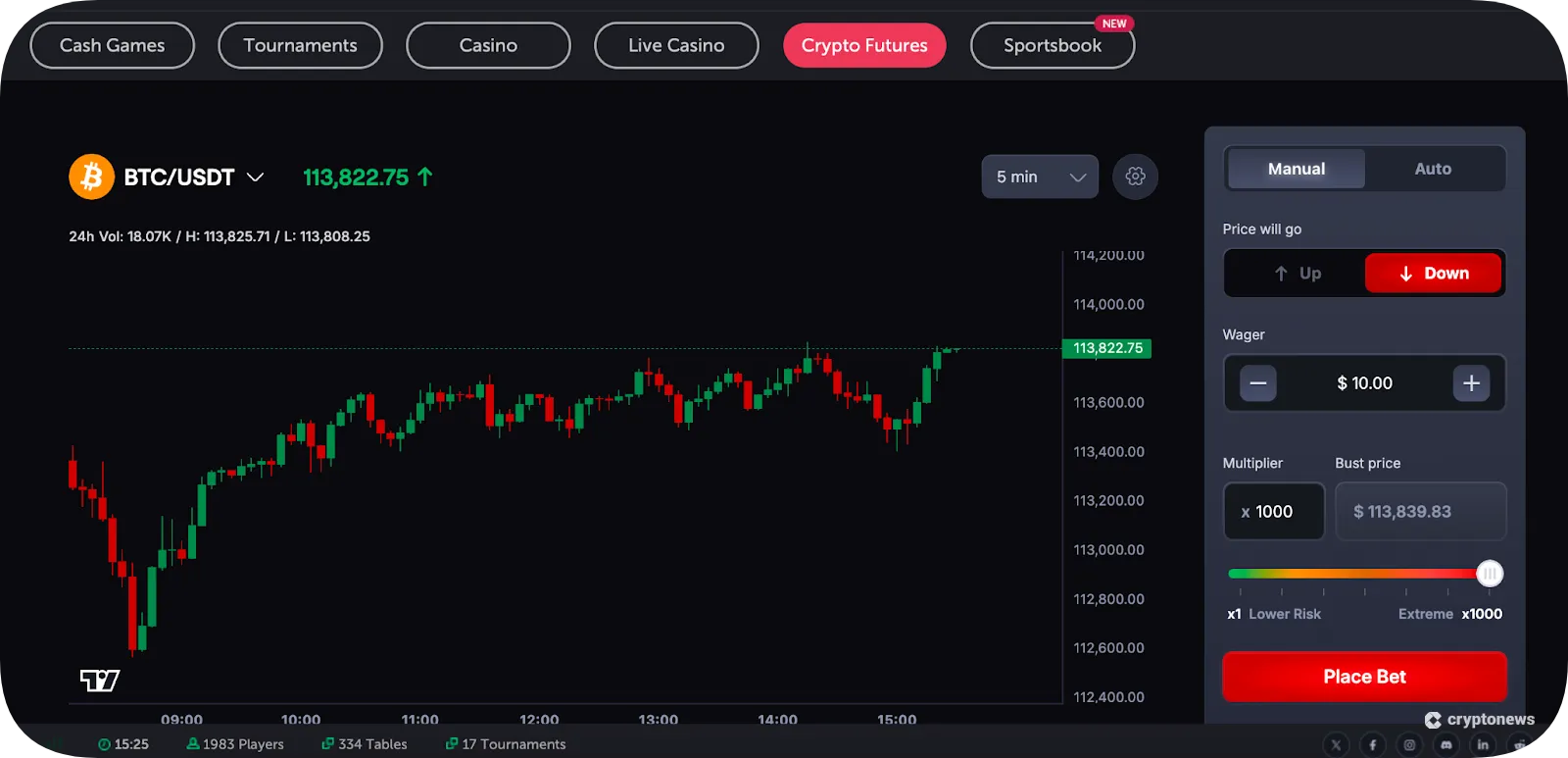
At CoinFutures, for instance, traders meet a 0.1% margin requirement. This structure means they need just 0.1% of the total trade value upfront, which converts to 1000x leverage. Those who purchase traditional cryptocurrencies must cover the full amount, restricting them from controlling larger position sizes.
Buy and Sell Orders
Bitcoin futures traders enter positions with buy or sell orders, depending on whether they predict an increase or decrease in BTC prices. The trader places the opposite order to exit their position, similar to spot trading.
The key benefit is that futures let traders target financial gain during all cycles, making them ideal for short-term strategies like day and swing trading.
Derivative Contracts
Bitcoin futures are a contractual agreement between buyers and sellers. While they let traders speculate with low margin requirements, they do not provide real asset ownership. This means you cannot withdraw funds to a private wallet, as you merely predict price movements.
Most futures contracts settle in stablecoins like USDT. These are linear contracts, although exchanges often call them “USDT-M” futures. Some platforms offer higher-risk inverse contracts. They settle in BTC, so potential profits and losses are higher.
Funding Fees
Since BTC futures have small margin requirements, traders exchange payments on the utilized leverage. This is known as “funding” in trading, and exchanges usually charge it every eight hours. The typical formula is the total position size multiplied by the funding rate.
Note that futures platforms charge funding fees to one market direction (longs or shorts) only, which depends on the imbalance between buyers and sellers. If there are more traders long on Bitcoin futures, they pay funding to short-sellers (and vice versa).
Payments reflect in the maintenance margin balance, and the system helps ensure futures prices align with BTC spot prices.
The exception is delivery futures, as contracts have a predetermined expiration date. Traders may hold contracts until they expire without incurring funding. This makes delivery futures suitable for swing traders who seek more flexibility in trade durations.
Futures Settlement
In general, traders may exit BTC futures positions at any time, although this must happen before the expiration date when trading delivery contracts.
Most contracts settle in USDT, and profits and losses depend on the entry and exit prices. For example, consider a trader who goes long on BTC/USDT futures, and with 100x leverage, their position is worth 10,000 USDT. They enter the market with a limit order price of $120,000 and exit it at $125,000. The trader makes 4.1% or about 409 USDT profit, which reflects in their exchange account immediately.
Margin Liquidation
Even the best crypto leverage trading platforms liquidate positions when the maintenance margin is depleted. The maintenance margin resembles the minimum margin balance before liquidation occurs, and most exchanges have higher requirements as position sizes rise. Margin balances decline with unfavorable price movements, as well as when trades incur funding fees.
A trader who goes long on BTC futures with 20x leverage must cover an initial margin of 5%. If the BTC price moves adversely by approximately 5% (usually slightly less), the exchange closes the futures trade, and they lose the initial margin.
While first-time futures traders may find margin calculations intimidating, CoinFutures simplifies the process with “bust prices”. As traders adjust their parameters (e.g., market direction and leverage multiple), CoinFutures updates the BTC/USDT liquidation price in clear terms.
You should never enter Bitcoin futures trades without setting stop-loss orders. Assuming the platform offers sufficient liquidity, the stop-loss ensures you avoid liquidation, since the trade closes at the stated price. The position still makes a loss, but you cap those losses rather than forfeiting the entire margin.
How to Trade Bitcoin Futures: Step-by-Step Guide
If you have evaluated the risks and want to trade Bitcoin futures today, follow the beginner’s walkthrough below. We guide first-timers through the end-to-end process, including setting up orders, managing risk, and assessing liquidation levels.
Note: As the best crypto contract trading platform for novice traders, CoinFutures is used for this guide. It has a $1 minimum trade size, negative balance protection, and a super-easy dashboard for futures trading.
Step 1: Register With CoinFutures and Download the Trading Interface
Open an account on the CoinFutures website with an email address. Choose a nickname and a strong password, and confirm your email via the CoinFutures verification link.
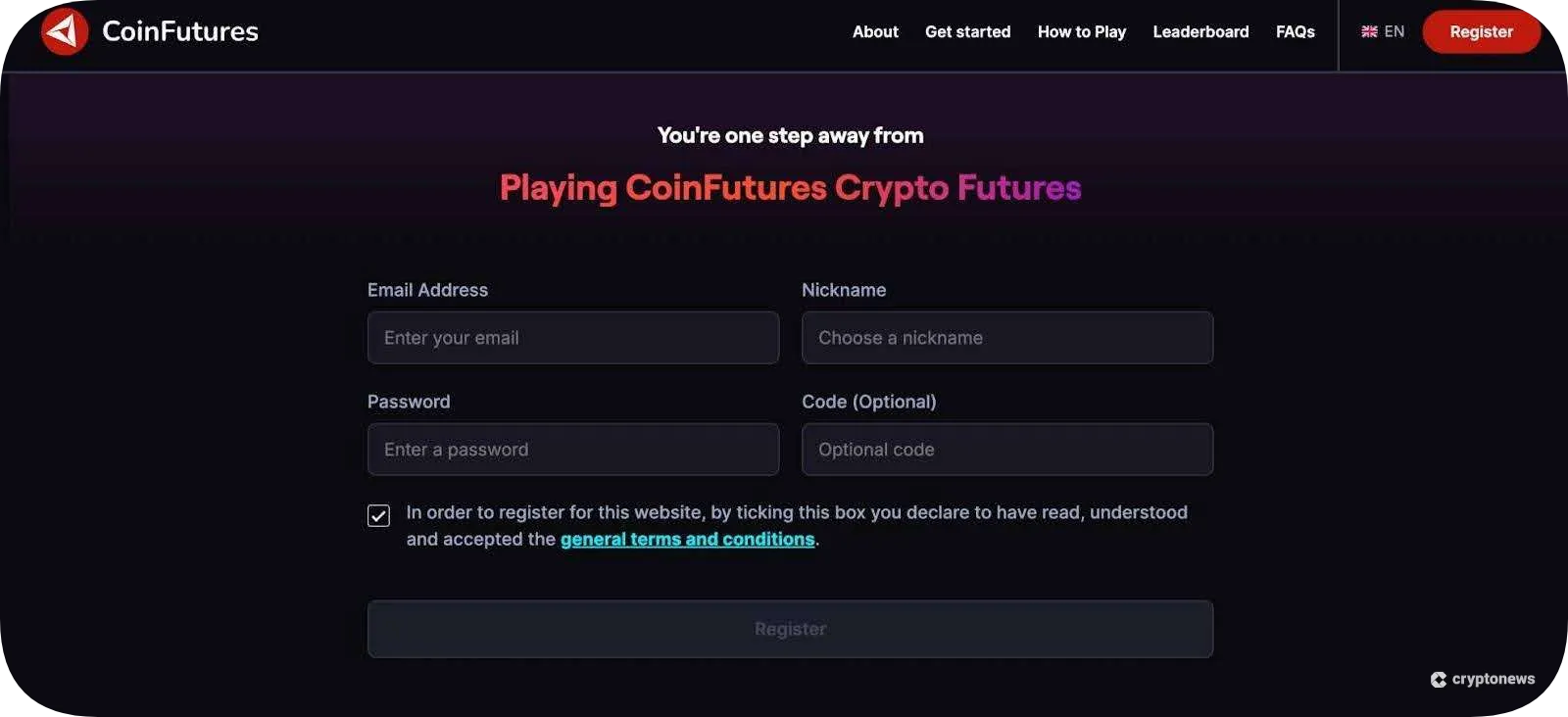
You need the CoinPoker software to trade Bitcoin futures. Founded in 2017, CoinPoker is a licensed poker platform with over 50,000 users and an excellent reputation in the public domain. CoinPoker offers free software for desktops and mobiles.
Step 2: Deposit Trading Funds
Open the CoinPoker software, log in with your email and password, and click the “Wallet” icon.
There are no minimum deposit requirements, and the platform accepts cryptocurrencies and fiat money.
Crypto Deposits (Recommended)
The best way to deposit funds is via external wallet payments. Deposits are credited near-instantly, you avoid KYC requirements, and simply cover the network fee.
CoinFutures accepts the following digital assets: BTC, ETH, USDT, USDC, POL, BNB, SOL, TRX, WEPE, and CHP.
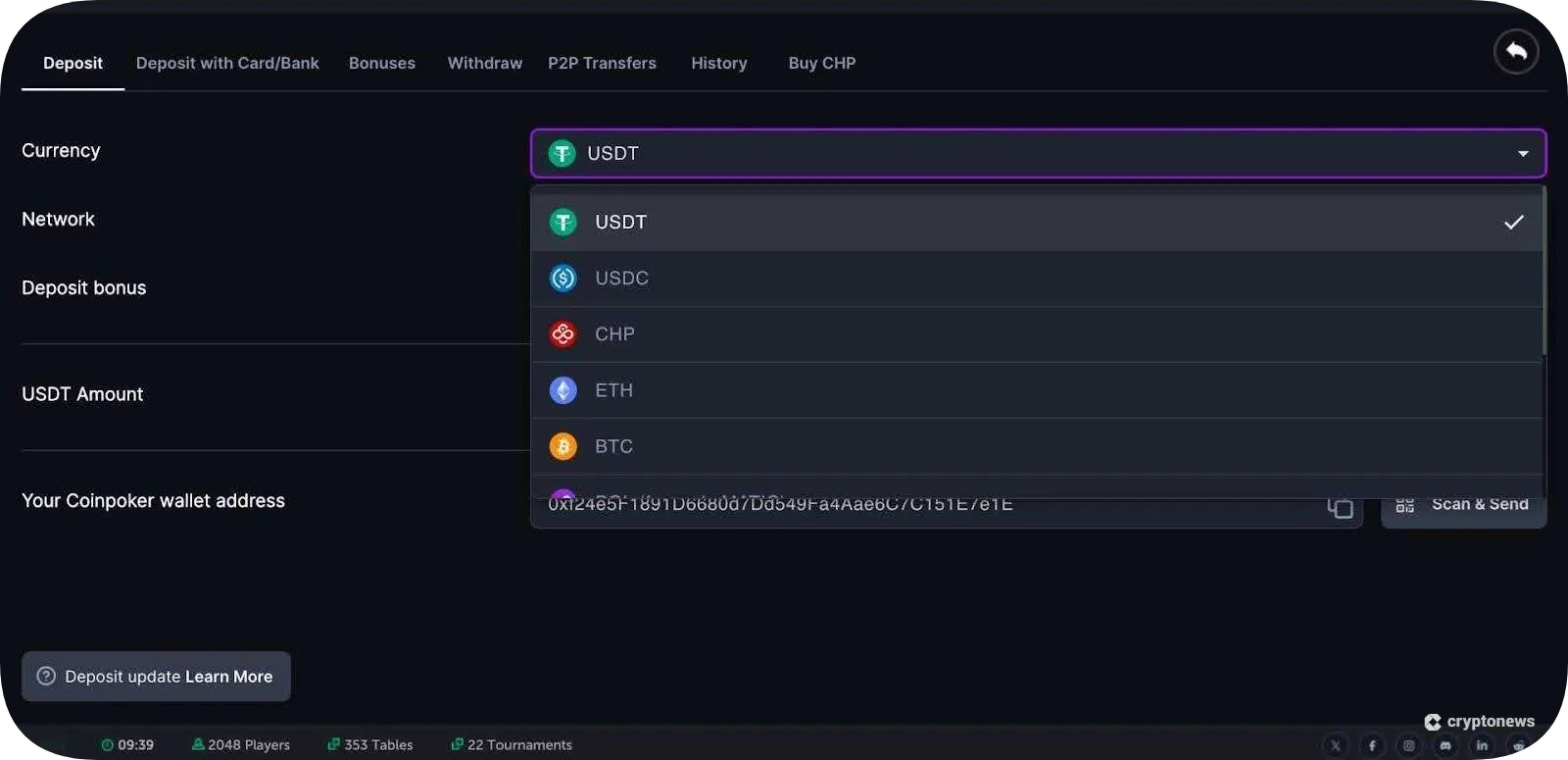
Select the crypto and network to reveal your unique deposit wallet address. Copy the address manually or scan its QR code from a mobile wallet. Then complete the transfer.
Fiat Deposits (KYC Required)
CoinFutures supports instant payment methods with traditional money, although you need to provide some KYC details. This verification step ensures CoinFutures complies with anti-money laundering regulations.
Click “Deposit With Card/Bank”, enter your details, and choose a payment method. Options include debit/credit cards, Google and Apple Pay, and PIX.
Step 3: Enter Wager and Bitcoin Futures Market Direction
Click the “Crypto Futures” button, which takes you to the BTC/USDT trading screen.
Input the wager from $1 upward. This is the initial margin requirement, and the maximum amount you can lose on liquidation.
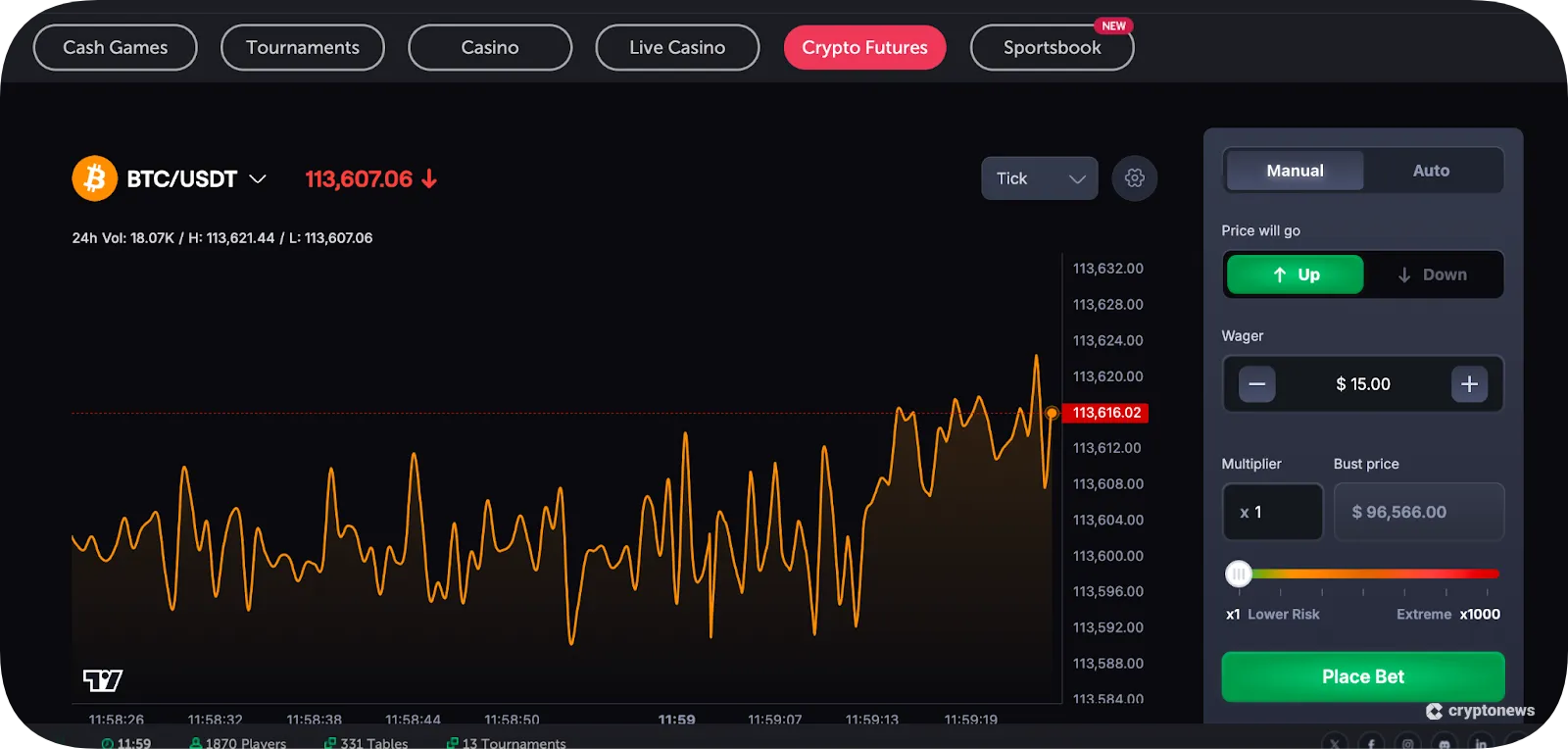
By default, the dashboard is set to “Up”, reflecting a long position. Keep the dashboard on “Up” if you believe the BTC/USDT price will rise. Change it to “Down” to short-sell BTC/USDT and profit from potential price declines.
In the above example, the trader has entered a $15 wager on an “Up” position.
Step 4: Adjust Leverage and Review the Bust Price
Enter the required leverage multiple for your Bitcoin futures trade. The minimum and maximum leverage are 1x and 1,000x. As you adjust the multiple, the bust price updates. This is the exact BTC/USDT price that liquidates the trade.
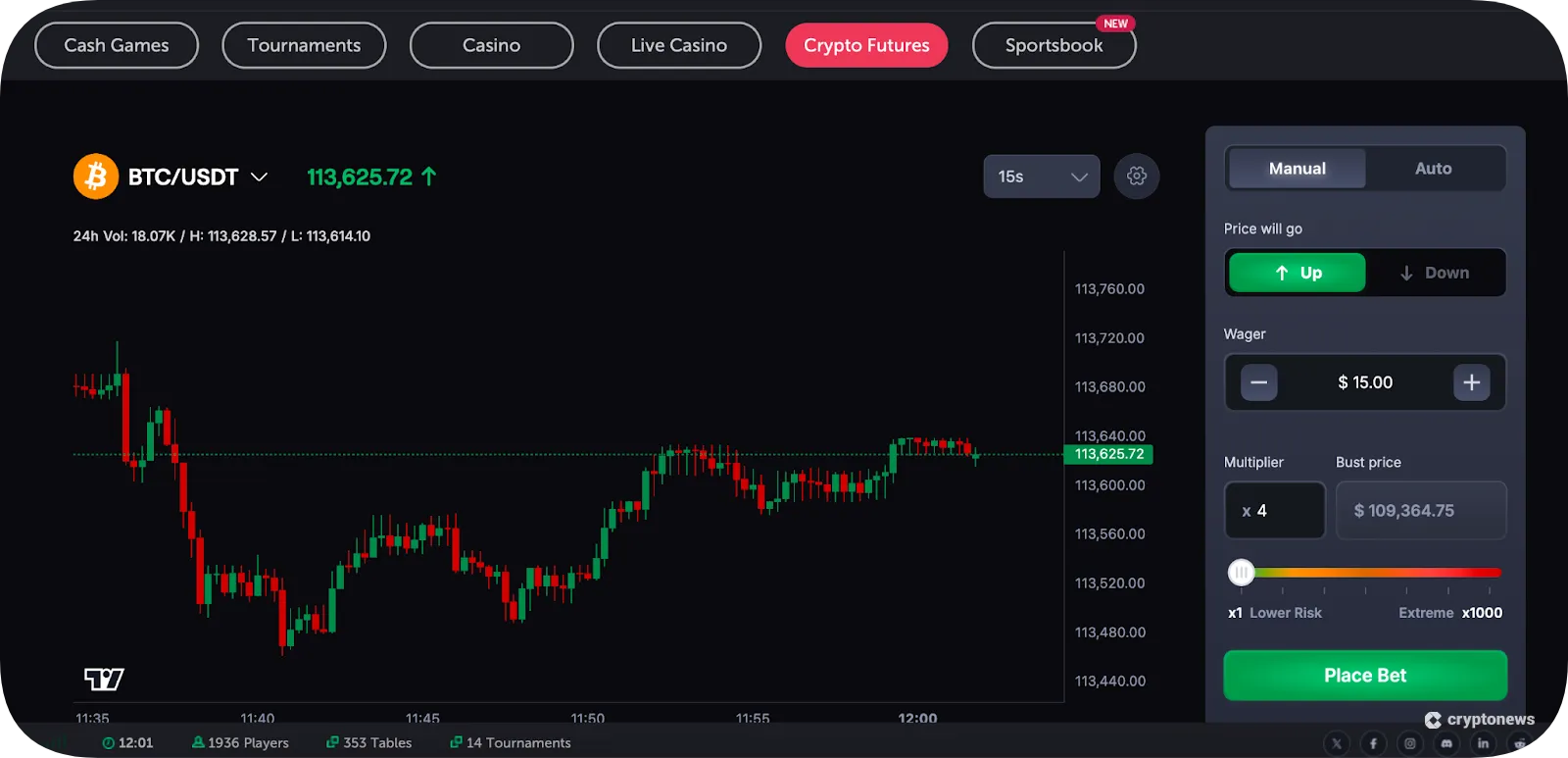
The screenshot above shows that the trader has applied 4x leverage. The current BTC futures price is $113,625.72, and based on these parameters, the trade liquidates at $109,364.75.
Remember that higher leverage makes the bust price less favorable. It reduces the gap between the entry and liquidation prices, giving traders a narrower safety net against volatility spikes.
Step 5: Set Stop-Loss Price and Place BTC Futures Trade
Stop-loss orders help protect traders against substantial losses. In the context of Bitcoin futures trading, they vastly reduce the risk of liquidation. As CoinFutures offers simulated futures products, traders avoid relying on other market participants to match stop losses, so they always execute at the stated price.
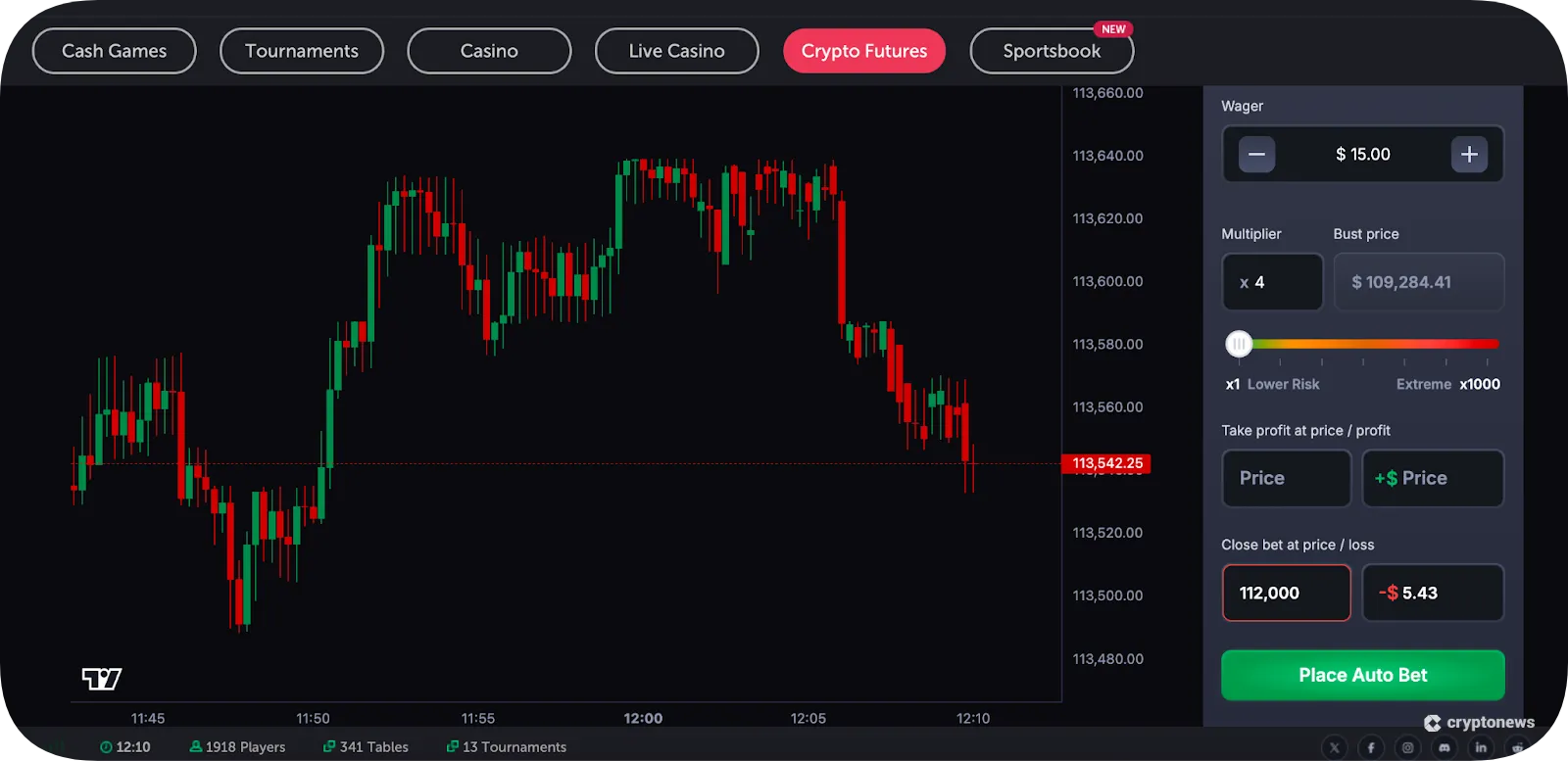
Switch the trading dashboard from “Manual” to “Auto”, and enter one of the following exit positions:
- Exact Execution Price: Set the BTC/USDT exit price based on existing analysis, such as key support or resistance levels, depending on the market direction.
- Maximum USD Loss: If you’re more comfortable using USD amounts, enter the maximum you’re prepared to lose on the futures trade.
Our example shows the stop-loss order at $112,000. As we’re long on the futures position, the trade liquidates if BTC/USDT declines to that price.
Set a Take-Profit Price
Avoid manually monitoring chart movements with a take-profit order. CoinFutures automatically closes your futures trade when the BTC/USDT price matches the take-profit target.
This ensures your profits are locked in right away and reduces the emotional stress of leverage trading cryptocurrencies.
Once you’re ready to confirm, select the “Place Auto Trade” button.
The CoinFutures balance is reduced to reflect the wager. If you avoid liquidation, the futures proceeds are added to the balance as soon as positions settle.
Types of Bitcoin Futures Trading
Understanding specific contract types is essential when learning how to trade Bitcoin futures. The most common futures products are simulated, perpetual, and delivery. Differences also exist depending on whether traders use the regulated CME markets or retail-friendly platforms like CoinFutures, MEXC, and OKX.
Read on to explore the different types of BTC futures and decide which one is right for you.
CME Bitcoin Futures
Launched at the peak of the 2017 crypto bull market, CME offers regulated Bitcoin futures to accredited and institutional investors. Retail clients may also access CME futures through regulated stock brokerages like Interactive Brokers and Fidelity, yet account minimums are often significant.
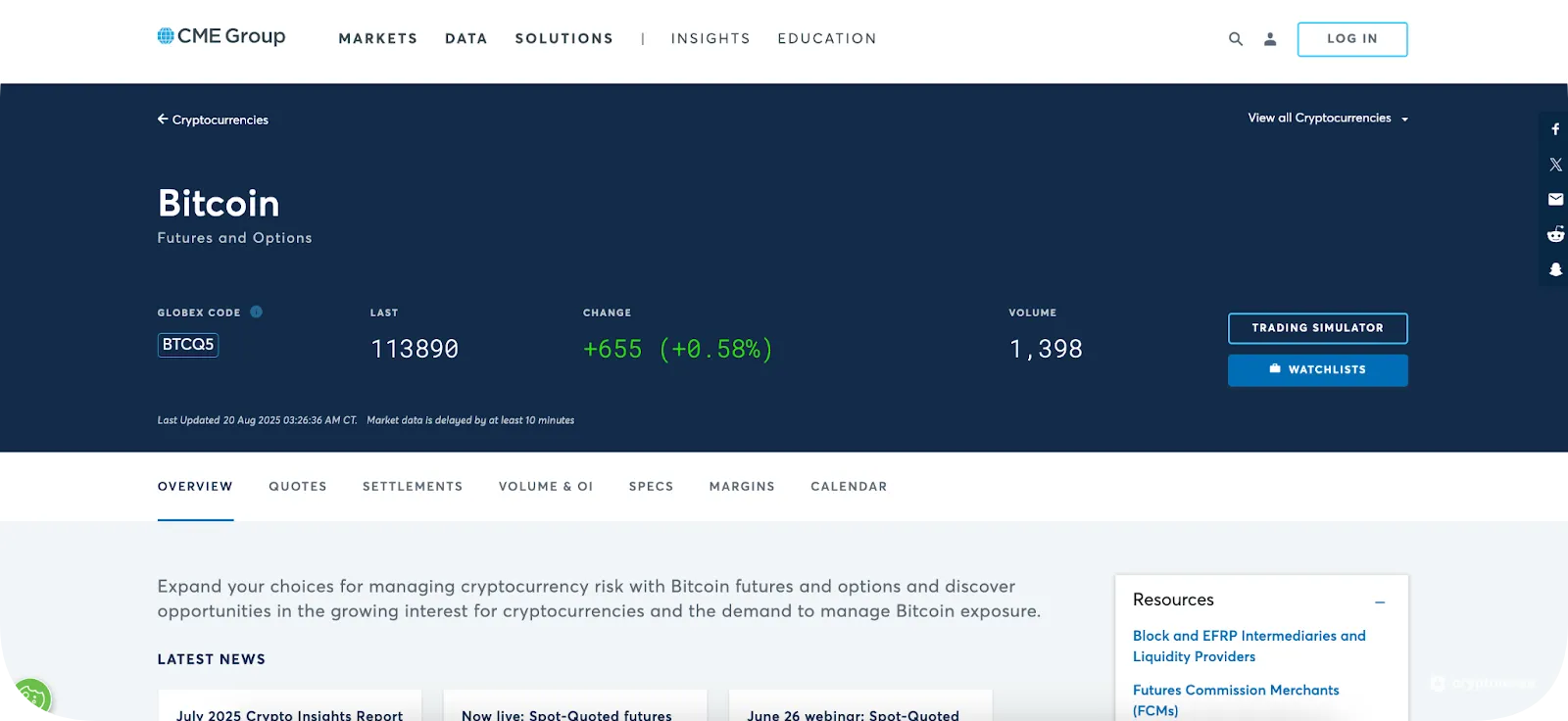
As a regulated exchange, CME futures provide a safe, transparent, and compliant way to trade Bitcoin futures.
Two contract specifications are offered by CME:
- Standard Bitcoin Futures: The minimum contract size is 5 BTC, and the initial margin is approximately 25% (varies depending on market conditions). Therefore, CME margin requires traders to have approximately $142,000 to open futures positions
- Micro Bitcoin Futures: The more affordable option, micro futures, has a 0.1 BTC contract size, which reduces the initial margin requirement to about $3,000.
Both CME contract types offer long and short trading, settle in USD, and come with monthly and quarterly expiration dates.
While CME has an institutional-focused framework, its Bitcoin futures trading volumes are much smaller than those of conventional crypto exchanges.
In addition, investors have unlimited liability. They receive margin calls when they approach the liquidation price, yet it’s at the brokerage’s discretion when to close the trade. CME futures positions can turn negative, and investors invariably owe the balance.
What Happed to Bitcoin Futures ETFs?
Bitcoin futures ETFs allow investors to gain exposure to the BTC price in a regulated environment. ETF providers purchase Bitcoin futures contracts via the CME, and the ETF price reflects those futures prices.
However, since the SEC approved spot Bitcoin ETFs in January 2024, the need for futures ETFs has waned. This is because actual BTC coins back spot ETFs, rather than derivative contracts. This provides a closer correlation between the ETF and BTC spot prices and reduces fees.
Bitcoin Futures on Crypto Exchanges
The best crypto exchanges provide a contrasting futures trading experience to CME. They offer significantly lower margin requirements, deeper liquidity, and often access to hundreds of markets. Exchanges aim their trading products at retail clients, so casual traders manage risk through negative balance protection and capped losses.
Discussed below are the most common Bitcoin futures markets available at crypto exchanges.
Perpetual Futures
Perpetual (“PERPs”) futures track the Bitcoin price like standard futures, yet they come without expiration dates. Traders may keep their long or short positions open indefinitely, although funding fees make them more suitable for short-term trades.
Most Bitcoin perpetual futures are linear contracts, as trades settle in USDT. The maximum loss potential is the initial margin, which protects traders from uncontrolled losses.
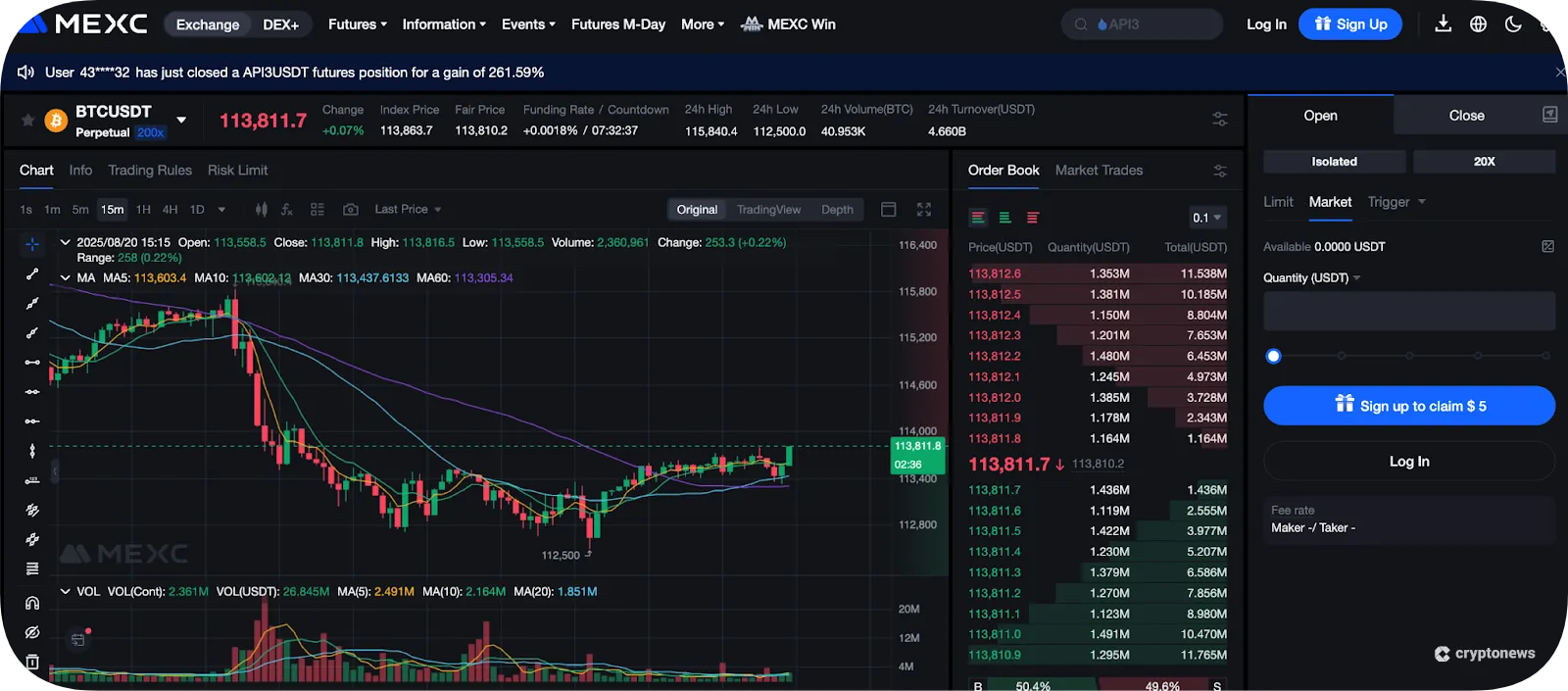
Some exchanges offer perpetual futures with inverse settlement. In addition to the initial margin on the specific futures position, traders can lose their entire account balance. This is because contracts settle in BTC instead of USDT, which increases the trader’s risk and reward.
Simulated Futures
Simulated futures function similarly to perpetuals, since they never expire, and traders cannot lose more than they initially risk.
The key differences are that platforms use secure algorithms for real-time prices, and they eliminate traditional order books. This makes simulated futures a good fit for beginners, as they enter and exit BTC futures trades without relying on liquidity.
Stop-losses and take-profits execute instantly at the target price regardless of market participation. As such, traders safely cut losses or secure profits rather than hope another platform user matches the trade.
As a beginner-friendly platform, CoinFutures offers simulated futures from just $1, and markets include Bitcoin and top altcoins like Ethereum, Dogecoin, and BNB.
Delivery Futures
Delivery contracts resemble CME futures, as they have expiration dates. However, crypto exchanges like Binance and OKX force liquidation at the maintenance margin level, ensuring traders have limited market exposure.
Some traders prefer delivery futures for longer-term positions. They avoid funding rates, and contract holders hold until expiration or cash out early based on the futures market price. Expiration timeframes range from daily and weekly to monthly, quarterly, and annually.
Best Platforms to Trade BTC Futures
Crypto traders have dozens of futures platforms to choose from. To choose a suitable platform, key factors include minimum margin requirements, contract types, fees, and user-friendliness.
For traders in the US, these are the best crypto futures platforms to consider.
Here are our top picks for BTC futures trading in 2026:
- CoinFutures: The overall best Bitcoin futures trading platform, CoinFutures is a beginner-friendly provider with a 0.1% margin requirement. Users trade long or short with 1000x leverage from just $1. Alongside Bitcoin futures, the platform supports Dogecoin, Litecoin, XRP, Solana, and other altcoin markets. Standout features include audited and transparent proof of reserves, no KYC requirements, and support for crypto and fiat payments.
- MEXC: Traders who prefer perpetual futures with advanced charting tools use MEXC. It supports over 900 futures markets with linear and inverse contracts, and analysis features include trend lines, indicators, and custom candlesticks that start from one second. MEXC charges makers and takers a low commission of 0.01% and 0.04% per side. Other features include copy trading and a maximum leverage of 500x.
- OKX: Trade Bitcoin futures on OKX with perpetual or delivery contracts, and choose between linear or inverse markets based on your risk tolerance. Margin requirements start at 0.8%, which converts to 125x leverage. OKX lists over 360 futures markets, and it charges a maximum commission of 0.05% per side. Users also access automated bots across short-term strategies like grid trading and arbitrage.
- Binance: One of the best all-rounders, Binance lists over 570 leveraged markets across perpetuals, delivery futures, and options. It boasts the deepest liquidity in the crypto market and offers competitive fees of just 0.02% per side when placing limit orders. Traders get discounted commissions when they hold BNB or hit 30-day volume targets. Binance’s native trading platform is world-class, including high-level analysis tools and rapid execution speeds.
Learn more about the advantages of Bitcoin futures.
Low Margin Requirements
Futures require a small percentage of the total contract value. As traders gain exposure to more Bitcoin than they can afford, profitable positions are amplified by substantial multiples.
Most platforms have a minimum margin requirement, which sets the maximum leverage permitted. 100x leverage crypto exchanges, for example, require just 1% upfront. Platform users would need just $500 for a $50,000 BTC/USDT futures trade.
Go Long or Short
Futures track Bitcoin prices without asset ownership. This mechanism supports long and short trading through buy and sell orders.
Traders aim to profit from BTC volatility, so futures offer greater opportunities compared to spot trading.
Capped Losses
Most crypto exchanges limit futures trading losses to the initial margin. Unlike CME Bitcoin futures, this perk ensures retail clients have limited risk exposure.
It also ensures traders can never owe funds to exchanges on losing positions, as balances cannot turn negative.
Hedge Existing Bitcoin Investment
Most traders long and short futures for short-term profits, although they also use them for hedging.
Hedging is a risk management strategy that reduces risk by holding opposing crypto positions. If an investor holds BTC but is worried about a negative regulatory development, they may short-sell futures contracts. Any price movements counter each other until the trader exits the futures trade.
Consider these disadvantages before trading BTC futures:
- Liquidation Risks: Exchanges close Bitcoin futures trades if the liquidation price triggers. These risks rise when traders use a small upfront margin, especially if the BTC price faces unusually high volatility. Liquidated futures positions result in traders losing their margin.
- Short-Term Exposure Only: Futures contracts appeal to short-term traders who seek market exposure without owning the underlying coins. This factor limits the growth potential, as traders often remain in the market for hours or days at most. In contrast, the Bitcoin price has increased by millions of percent since its inception, highlighting that long-term investors can make sizable gains by holding.
- Technical Analysis Requirements: BTC futures suit experienced traders who understand how to read and analyze charts. They use technical indicators and drawing tools to identify trends and place long or short orders accordingly. Complete beginners rarely have technical analysis skills, which puts them at a disadvantage.
- High Trading Fees: Futures exchanges charge entry and exit commissions on the total contract value. Trading with high leverage means those commissions can become unviable. Traders potentially pay funding fees every eight hours, too, depending on whether platforms charge longs or shorts.
Conclusion
Futures offer several advantages to Bitcoin investors, including low margin requirements, high leverage, and the ability to trade both market directions. Remember that futures are derivative contracts, so you don’t own the underlying BTC coins.
To start trading Bitcoin futures as a beginner, consider CoinFutures. Users trade simulated futures with leverage of up to 1000x, and clear liquidation prices help traders set sensible stop-losses.
Since CoinFutures doesn’t have a KYC process, it takes minutes to register, deposit funds, and place your first futures trade.
[/su_list][/su_column][/su_row]FAQs
Where can you trade Bitcoin futures?
What is the difference between Bitcoin spot and futures?
Are Bitcoin futures safe?
Do Bitcoin futures expire?
Are Bitcoin futures legal in the USA?
How are Bitcoin futures taxed?
References
- Bitcoin futures market data, quotes, settlements, and specifications (CME Group)
- Help Protect Your Position Using Stop Orders (Charles Schwab)
- Bitcoin debuts on the world’s largest futures exchange, and prices fall slightly (CNBC)
- Statement on the Approval of Spot Bitcoin Exchange-Traded Products (U.S. Securities and Exchange Commission)
- Bitcoin futures margin requirements (CME Group)
- What is hedging? (Fidelity)
- CFTC/SEC Investor Alert: Funds Trading in Bitcoin Futures (U.S. Commodity Futures Trading Commission)
2M+
250+
8
70







 in numbers

About Cryptonews
Our goal is to offer a comprehensive and objective perspective on the cryptocurrency market, enabling our readers to make informed decisions in this ever-changing landscape.
Our editorial team of more than 70 crypto professionals works to maintain the highest standards of journalism and ethics. We follow strict editorial guidelines to ensure the integrity and credibility of our content.
Whether you’re looking for breaking news, expert opinions, or market insights, Cryptonews has been your go-to destination for everything cryptocurrency since 2017.
