

What Is a DEX (Decentralized Exchange)?



When it comes to crypto exchanges, there are two main types: centralized exchanges (CEXs) and decentralized exchanges (DEXs). CEXs act as the “middleman” between traders, matching buy and sell orders to facilitate trading while holding users’ funds. DEXs, on the other hand, remove the middleman aspect by allowing users to swap cryptocurrencies directly from private wallets.
A DEX operates as a peer-to-peer marketplace where users trade directly with one another. Unlike centralized platforms, a DEX lets you retain full control of your private keys until a trade executes. All you need to do is connect a non-custodial wallet, swap assets, and then disconnect.
This transition from corporate custody to everything being executed by code drives billions in daily volume across chains like Ethereum, Solana, and other protocols. Our guide breaks down the mechanics of liquidity pools, the specific risks of smart contract interaction, and how to execute your first trade on a decentralized exchange without losing funds to slippage.
What Is a DEX?
A decentralized exchange (DEX) is a peer-to-peer marketplace where transactions occur directly between crypto traders. Unlike centralized, traditional asset trading platforms, DEXs rely on smart contracts – self-executing code on the blockchain – to facilitate trading without banks, brokers, or payment processors. This means that users retain full control over their funds throughout the process.
Decentralized exchanges offer:
- Non-Custodial Access: You remain the full owner of your private keys as the exchange never holds your assets.
- Permissionless Entry: Anyone with an internet connection and a wallet can trade without requiring any permissions or approvals.
- No KYC: DEX trading doesn’t require KYC or AML checks, preserving user privacy.
- On-Chain Settlement: All transactions are recorded on the blockchain and can be checked at any time.
How Do DEXs Work?
DEXs operate by replacing the centralized matching engine (the database that puts buyers and sellers together on platforms like Coinbase) with on-chain code. Instead of processing orders through a company’s server (which creates a single point of failure), these platforms use liquidity pools or on-chain order books to match buyers and sellers.
When a user initiates a trade, they interact directly with the blockchain rather than another person or entity. The protocol calculates the trading pair exchange rate based on available liquidity on both sides, and the transaction settles instantly. This architecture relies on four core components to function without intermediaries – and we’ll explore them below.
Smart Contracts
The engine of any DEX is the smart contract. This code dictates how trades execute, how prices adjust, and how fees are distributed.
Unlike a human broker who can delay an order, or a centralized server that can go offline, the smart contract executes the trade immediately once the conditions are met.
If the parameters (such as price limit or slippage tolerance) are not met, the contract rejects the transaction, making sure funds never leave the user’s wallet.
On-Chain Settlement
Every action performed on a DEX is a blockchain transaction. Any trade that executes is recorded permanently on the public ledger. This provides verifiable proof of the trade’s execution and price.
Because settlement happens on-chain, traders must pay network gas fees for every interaction, which vary depending on the blockchain’s congestion at the moment of the trade.

Self-Custody
Centralized exchanges require users to deposit funds into a custodial wallet controlled by the exchange – but DEXs function on a non-custodial basis. The user retains full control of their private keys and assets at all times. Funds are only transferred out of the user’s wallet at the exact moment the swap is executed, eliminating the risk of exchange insolvency or frozen withdrawals.
Wallet Connection
DEXs don’t require you to create any accounts, passwords, or perform any ID verifications. The only way to connect to a decentralized exchange is by connecting a wallet. This Web3 wallet acts as both the user’s identity and their bank account. Once connected, the wallet signs transactions to approve spending limits and execute trades, maintaining a barrier between the user’s long-term storage and the active application.
DEX vs. CEX: What’s the Difference?
The main distinction between centralized and decentralized exchanges comes down to who holds your wallet keys.
A CEX works like a traditional brokerage platform – you deposit funds onto the platform, thereby transferring custody to it. In other words, not your keys, not your crypto. While the funds are insured to some extent, if the exchange fails, all funds are lost. However, CEXs can offer unparalleled speed and deep liquidity, which suit many traders’ needs.
On the other hand, DEXs work more like a public utility – you do not deposit funds, but rather establish a connection between the exchange and your wallet. You hold the keys, as well as all responsibilities for their safekeeping, while the DEX is there just to facilitate transactions.
| Feature | Centralized Exchange (CEX) | Decentralized Exchange (DEX) |
| Custody | Exchange holds funds (Custodial) | User holds funds (Non-custodial) |
| Identity | Mandatory KYC (ID, selfie, address) | No KYC (Wallet address only) |
| Liquidity | Provided by market makers and order books | Provided by users via liquidity pools (AMMs) |
| Asset Variety | Vetted, high-cap tokens | Any token, including new/micro-cap assets |
| Fiat Support | Direct bank transfers and card payments | Limited, requires third-party on-ramps |
| Trading Fees | Exchange fee (Usually 0.1% – 0.5%) | Protocol fee + network gas fees |
| Security Risk | Exchange hacks, insolvency, frozen funds | Smart contract bugs, malicious tokens |
What Are the Benefits of Using a DEX?
Traders move to decentralized exchanges for access and autonomy. While centralized platforms act as gatekeepers, deciding which assets are safe or profitable enough to list, DEXs function as open utilities.
If a smart contract exists for a token and liquidity is added, it can be traded immediately. This open architecture creates specific advantages for market participants who look for more speed and control, even at the expense of convenience.
Immediate Access to New Tokens
Centralized exchanges often take weeks or months to vet and list new projects. By the time a token hits a major CEX, the initial price surge has often already occurred. DEXs allow traders to buy assets the moment a liquidity pool is created. This is the primary venue for finding early-stage projects before they reach the wider market.
Non-Custodial Security
The collapse of several major centralized platforms has highlighted all the dangers that come with trusting third parties with assets. On a DEX, the exchange never touches the user’s funds – instead, the smart contract interacts with both sides of the trade. If the DEX goes down for any reason, the user can still head over to the network’s blockchain explorer and interact with the smart contract directly.
Privacy and Data Protection
DEXs do not require personal data. There is no identity verification, no document upload, and no risk of personal data leaks. The only identifier is the public wallet address. This protects traders from the identity theft risks associated with centralized databases that store passports and home addresses of millions of users.
What Are the Drawbacks of DEXs?
The removal of intermediaries shifts all responsibility to the user. There is no customer support team to reverse a transaction or recover a lost password. If a user interacts with a malicious contract or sends funds to the wrong address, the money is unrecoverable.
This environment presents very distinct technical and financial risks.
Smart Contract Risk
DEXs rely entirely on code. If that code contains a bug or an exploit, hackers can drain the liquidity pools. Unlike a bank that might carry insurance, DeFi protocols rarely offer similar guarantees.
Users must trust the quality of the audit and the battle-tested nature of the code. Even well-known protocols can suffer from unforeseen vulnerabilities introduced by new updates.
Network Fees and Slippage
Trading on-chain requires paying gas fees for every transaction. During periods of high network traffic, a single trade on Ethereum can cost upwards of $50 or $100, regardless of the trade size.
Additionally, DEXs with low liquidity suffer from high slippage – the difference between the expected price and the executed price. Large orders on illiquid pairs can result in significant value loss instantly.
Frontrunning and MEV
Public blockchains broadcast pending transactions in a “mempool” before they are confirmed. Sophisticated bots monitor this area for large trades. When they spot a significant buy order, they can bribe miners to place their own buy order immediately before it and a sell order immediately after.
This practice, known as frontrunning, forces the trader to pay a higher price while the bot pockets the difference in the form of maximum extractable value (MEV).
What Are the Most Popular Decentralized Exchanges?
The DEX environment shifts rapidly, with liquidity moving to protocols that offer the best execution, lowest fees, and most reliable infrastructure. While hundreds of exchanges exist, a few dominant players capture the majority of trading volume.
- Hyperliquid: Currently the dominant force in on-chain derivatives, Hyperliquid operates on its own high-performance Layer 1 blockchain. It is built for speed, offering a central limit order book (CLOB) experience that rivals centralized exchanges. Traders flock here for deep liquidity on perpetual futures and the native HYPE token ecosystem.
- Uniswap: The standard for spot trading. With the launch of Uniswap V4, the protocol introduced “hooks” – customizable plugins that allow developers to build unique features like limit orders and dynamic fees directly into liquidity pools. It remains the primary venue for swapping assets on Ethereum and Layer 2 networks like Arbitrum and Base.
- PancakeSwap: The leading DEX on the BNB Chain, known for its low fees and gamified experience. Beyond simple swaps, it offers a large pool of DeFi products, including yield farming, prediction markets, and NFT trading. It is often the first destination for retail traders looking for early access to BSC-native tokens.
- Aster: A rapidly growing hybrid exchange that merges spot and perpetual trading. Aster has gained popularity by offering user interfaces tailored to different skill levels, allowing it to serve both advanced leverage traders and casual swappers. Its backing by major industry players and aggressive liquidity incentives have quickly placed it at the forefront of perp market platforms.
How to Use a Decentralized Exchange: Step-by-Step Guide
Now that we’ve covered the basics, let’s move on to using decentralized exchanges. We chose Hyperliquid as our exchange and connected to it using Best Wallet, one of the best decentralized crypto wallets.
While interfaces vary slightly between protocols, the core process (connect, deposit, trade) remains the same across the DeFi market.
Step 1: Fund Your Wallet
Before interacting with a DEX, you need a wallet funded with the correct assets. Hyperliquid operates on its own Layer 1 blockchain, but accepts deposits via the Arbitrum network.
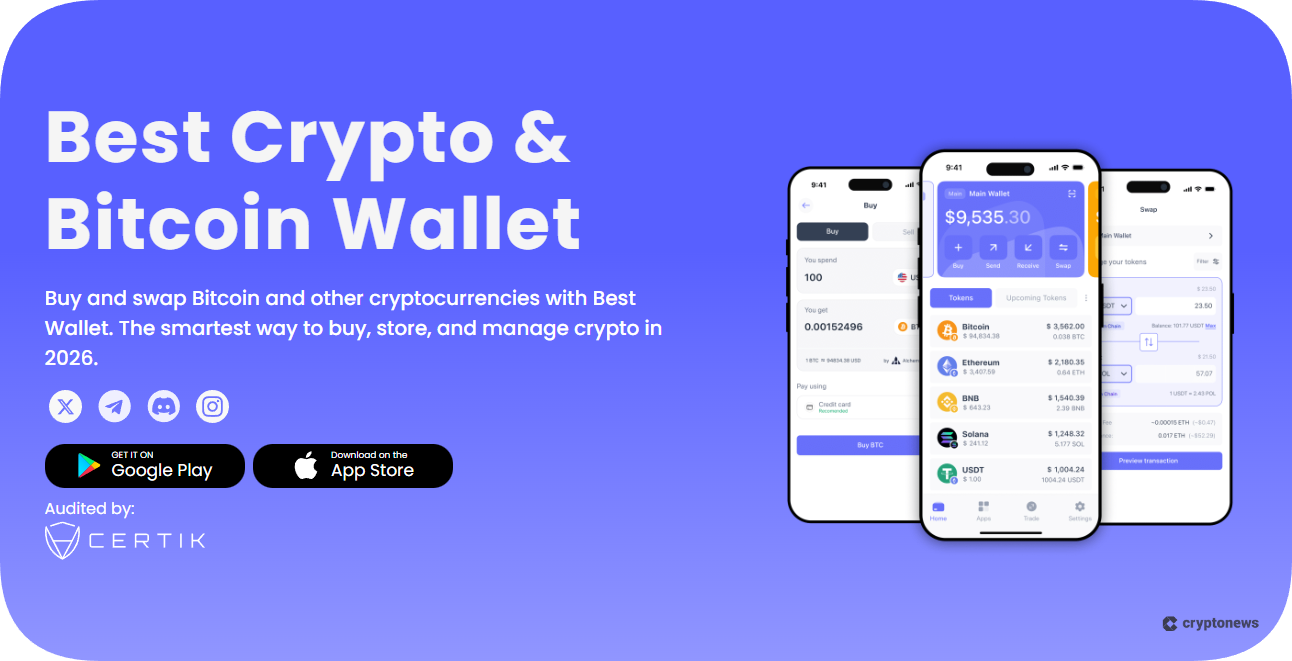
- Download the Best Wallet app on your iOS or Android mobile device.
- Get USDC (Arbitrum): You need USDC on the Arbitrum network to trade. You can buy this directly within Best Wallet using the “Buy” button, or send it from a centralized exchange (like Coinbase or Binance) to your Best Wallet address via the Arbitrum network.
- Get ETH (Arbitrum): You also need a small amount of ETH on Arbitrum to pay the initial gas fee for the deposit transaction.
Step 2: Connect to Hyperliquid
DEXs do not have login screens. You “log in” by connecting your wallet.
- Navigate to app.hyperliquid.xyz in your desktop browser.
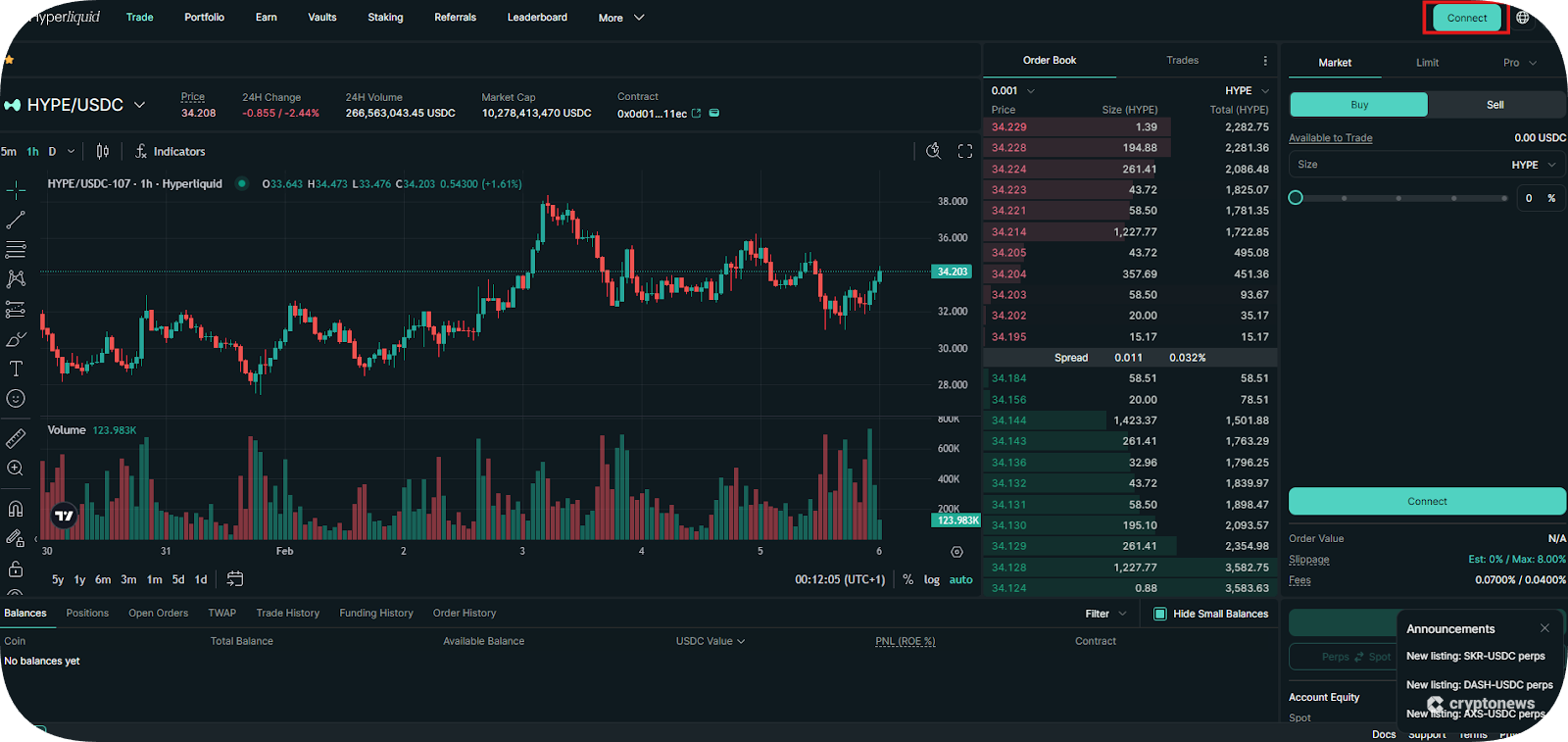
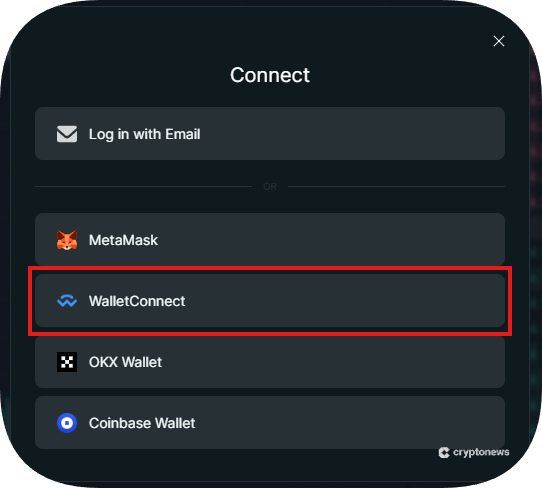
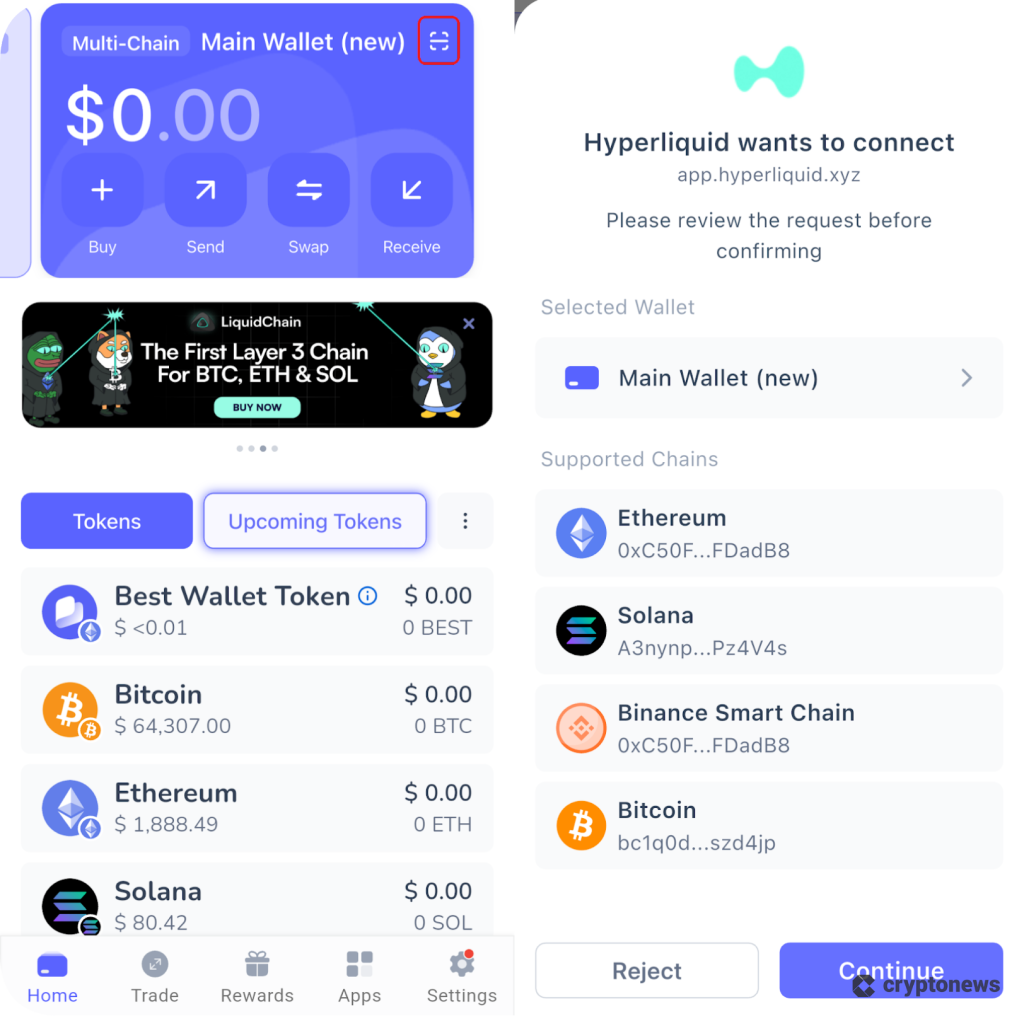
- Click the “Connect” button in the top right corner and select WalletConnect from the list of options.
- A QR code will appear on your screen.
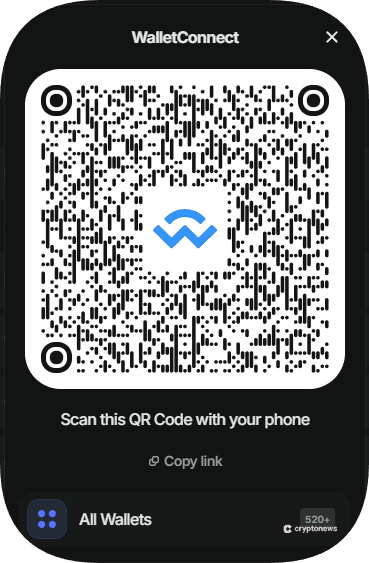
- Open Best Wallet on your phone, tap the scanner icon, and scan the QR code. Tap “Continue” on your phone to proceed with the authorization process.
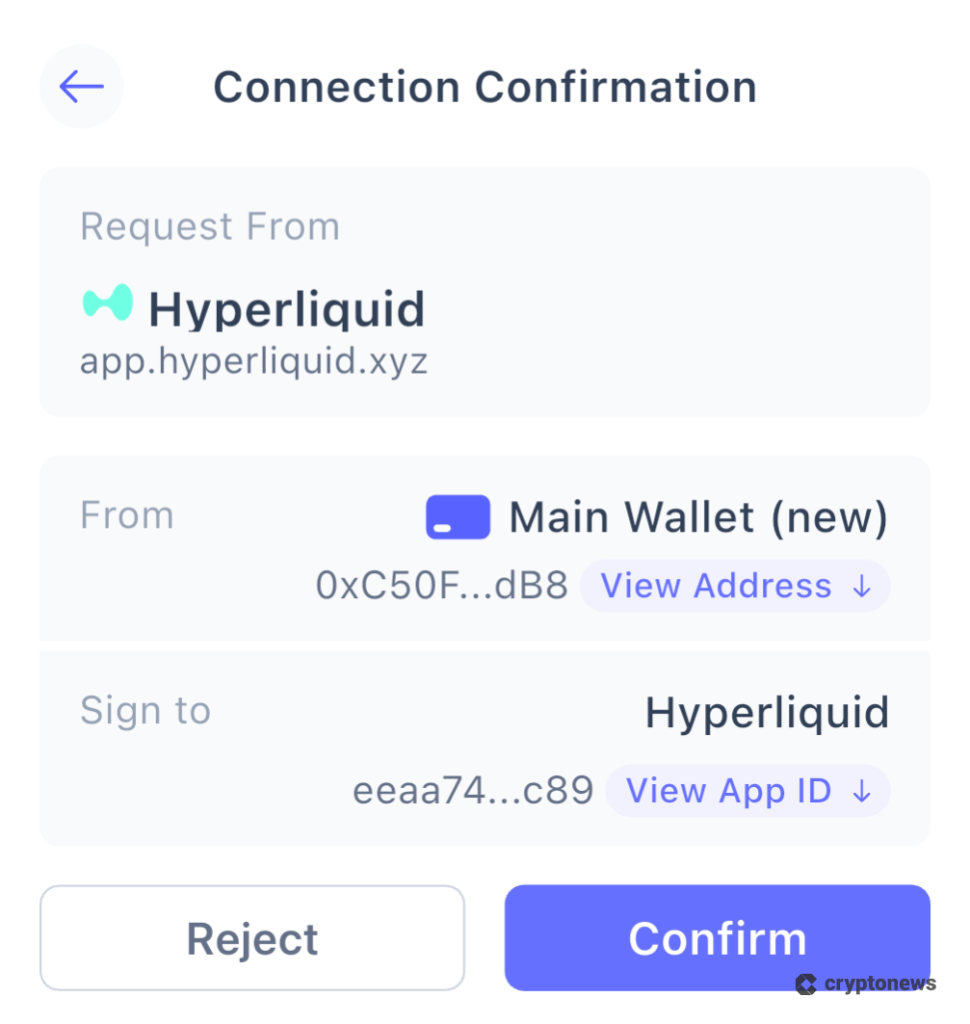
- Last but not least, confirm the connection. This will finalize the process and enable you to trade on Hyperliquid.
Step 3: Deposit Funds
Unlike Uniswap, where you trade directly from your wallet, Hyperliquid uses a high-speed order book that requires you to bridge funds into the exchange’s smart contract first.
Once you are on the Hyperliquid platform with your wallet connected, click the “Deposit” button and enter the amount of USDC you wish to trade.
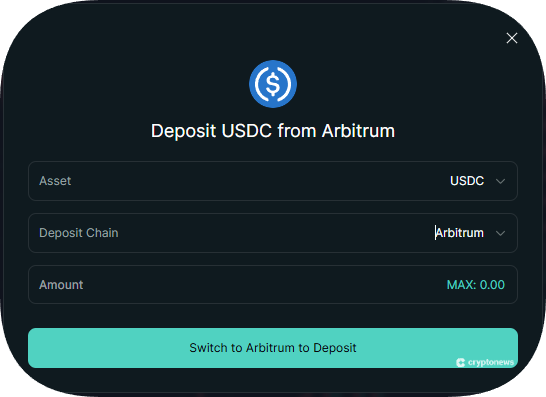
You will have to check your Best Wallet app for a prompt to sign the transaction. Once the transaction is confirmed, your USDC will be bridged to Hyperliquid.
Step 4: Execute a Trade
Now that your funds are on the exchange, you can trade instantly without gas fees.
- Search for the token you want to buy (e.g., HYPE or PURR), and select your order type (“Market” to buy immediately at the current price or “Limit” to set a specific price).
- Enter the amount of USDC you want to spend.
- Click “Buy.” The trade executes instantly, and the new tokens will appear in your Portfolio tab.
How Do DEX Fees Work?
Trading on a decentralized exchange involves two distinct costs: the fee paid to the blockchain network, and the fee paid to the liquidity providers.
Understanding the difference is critical for managing profitability, especially for smaller trades where fees can eat up a significant percentage of the capital.
Network Gas Fees
This is the cost of interacting with the blockchain itself. It does not go to the exchange, but rather to the validators who use their computing power (miners) or funds (stakers) to secure the network.
Gas fees fluctuate based on the demand, popularity, and throughput of a network, as well as the complexity of the smart contract interaction. Layer 1 network fees usually fluctuate more, while Layer 2 networks often offer higher throughputs and lower fees, but at the cost of security.
Protocol (Trading) Fees
This fee compensates the people who provide the money for you to trade. It is deducted automatically from the asset you are receiving.
- Standard Pools: Most classic automated market makers (like Uniswap V2) charge a flat 0.3% fee on every trade.
- Stablecoin Pools: Pairs like USDC/USDT often come with lower fees, typically 0.01% to 0.05%, as the price risk for liquidity providers is lower.
- Exotic Pairs: Volatile or low-liquidity tokens may carry fees of 1% or higher to compensate providers for the risk of “impermanent loss.”
Slippage
While not a direct fee, slippage is a cost that reduces the final amount received. It occurs when a trade is large enough to move the price of the token within the liquidity pool.
If a trader tries to buy $100,000 worth of a token with only $500,000 in liquidity, the price will spike during the purchase, resulting in fewer tokens received than the spot price suggested.
Aggregators and modern DEXs allow users to set a “Slippage Tolerance” (e.g., 0.5%) to prevent trades from executing if the price moves too unfavorably.
What Is a DEX Aggregator, and When to Use One?
Liquidity in crypto is fragmented. For example, a token might have $10 million in liquidity on Uniswap, $5 million on SushiSwap, and $2 million on Curve. If a trader goes directly to Uniswap to execute a large order, they are ignoring the $7 million available elsewhere, resulting in a worse execution price or higher slippage.

A DEX aggregator solves this by acting as a search engine for liquidity. Much like Kayak and Skyscanner check different airline websites to find the cheapest flight, aggregators like 1inch or Jupiter scan dozens of exchanges to find the cheapest and most efficient trading route.
When to Use an Aggregator
While regular DEX interaction is fine for small, popular pairs, aggregators are the better choice in specific scenarios.
- Executing Large Orders: If a trade is large enough to move the market price by even 1%, an aggregator is recommended. By splitting the order into smaller chunks and routing them through different pools, the aggregator preserves the value of the trade.
- Trading Illiquid Tokens: For lesser-known or low-cap tokens, liquidity might exist on a DEX the trader has never heard of. Aggregators automatically locate these pools, preventing the user from having to manually check five different websites.
- MEV Protection: Advanced aggregators like CowSwap use “batch auctions” or private transaction submissions. This protects the trade from being front-run by bots in the public mempool, a common issue on standard DEX interfaces.
- Gas Optimization: Some aggregators optimize the route not just for token price, but for gas costs. If a complex route through three different pools costs $50 in gas but only manages to save $10 in price, the aggregator will skip it in favor of a cheaper, direct route.
Conclusion
Decentralized exchanges give you a way to trade crypto while retaining true ownership of your assets. When you leave funds on a centralized exchange, you essentially own a promise that the funds will be kept safe. On a DEX, your tokens sit in your wallet, and you own the private keys. This distinction matters little when markets are calm, but it makes all the difference during a liquidity crisis or an exchange collapse.
However, the autonomy that comes with DEXs requires a high level of expertise and experience. There is no fraud department you can call when something goes wrong. The smart contract does exactly what you tell it to, even if that instruction ends up being a mistake.
This is why it’s important to treat every DEX-based transaction and interaction as one that cannot be reversed. Verify the URL before connecting, use a hardware wallet for significant sums, and always send a test amount before bridging larger amounts. The technology works, but it also requires your full attention.
FAQs
Are DEXs safe?
Do DEXs require KYC?
Is Coinbase a DEX?
What is an example of a DEX?
References
- The 10 Biggest Crypto Hacks in History (Crystal Intelligence)
- Ethereum Avg. Transaction Fee Historical Chart (BitInfoCharts)
2M+
250+
8
70







 in numbers

About Cryptonews
Our goal is to offer a comprehensive and objective perspective on the cryptocurrency market, enabling our readers to make informed decisions in this ever-changing landscape.
Our editorial team of more than 70 crypto professionals works to maintain the highest standards of journalism and ethics. We follow strict editorial guidelines to ensure the integrity and credibility of our content.
Whether you’re looking for breaking news, expert opinions, or market insights, Cryptonews has been your go-to destination for everything cryptocurrency since 2017.


 Anatol Antonovici


 Camila Karam