

Every forex program publishes a leverage figure and a profit split. Far fewer publish whether a US resident can buy the account, and fewer still name the counterparty or platform carrying the US route. Across the firms we have scored, access falls into four positions: confirmed with a named counterparty, limited to one platform, refused outright, or not stated anywhere a trader can check before paying. The table marks that last position “Not disclosed” because assuming access is what costs traders the evaluation fee.
Top Forex Prop Firms in August 2026
- Scales to $2,000,000
- MT4, MT5 and cTrader all supported
- Rules published in full detail
- Forex evaluation entry from $23
- $3 per lot forex, $0 on indices
- 74 crypto pairs, traded 24/7
- All 60 published payouts verified on Arbitrum
- 230+ instruments across five asset classes
- Weekly stablecoin payouts from a $100 minimum
- No trailing model anywhere in the catalog
- Three platform options at no extra charge
- Free published scaling ladder, five levels
- No consistency rule on any program
- 79.5%-79.95% net at $10K gross payout
- Three platforms: MT5, cTrader and DXtrade
- Bybit-integrated interface with simulated execution
- Instant route scales to $1,280,000
- Cheapest 1-phase starts at $40
CryptoSlate may earn a commission when you visit partner sites through links on this page, at no extra cost to you. Our rankings and reviews remain editorially independent and based on our published methodology. Read disclosure
Disclaimer: CryptoSlate may receive a commission when you click links on our site and make a purchase or complete an action with a third party. This does not influence our editorial independence, reviews, or ratings, and we always aim to provide accurate, transparent information to our readers.US Access, Leverage and Weekend Holding Compared
Compare the scored firms by market coverage, evaluation structure, account size, drawdown, profit split and first-payout timing.
| Prop Firm | Markets | Evaluation Types | Account Sizes | Maximum Drawdown | Profit Split | First Payout |
|---|---|---|---|---|---|---|
 FTMO FTMO | Forex / CFD | Two Step, One Step | $10,000–$200,000 | End-of-Day Trailing (Closing Balance): 10%; Static (Initial Balance): 10% | 80%–90% | 14 calendar days |
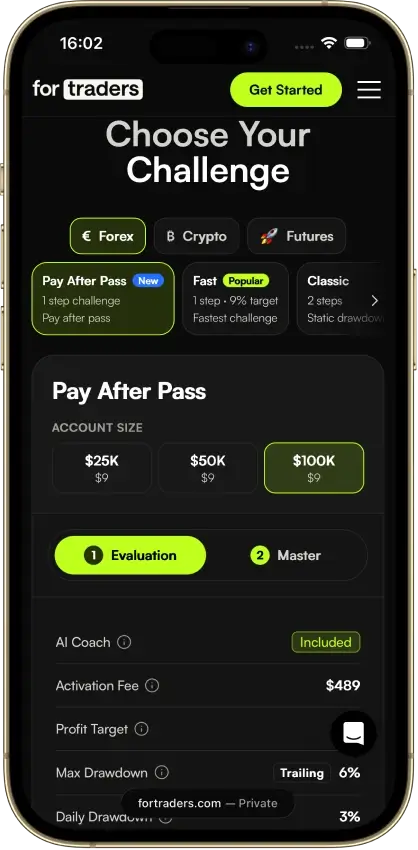
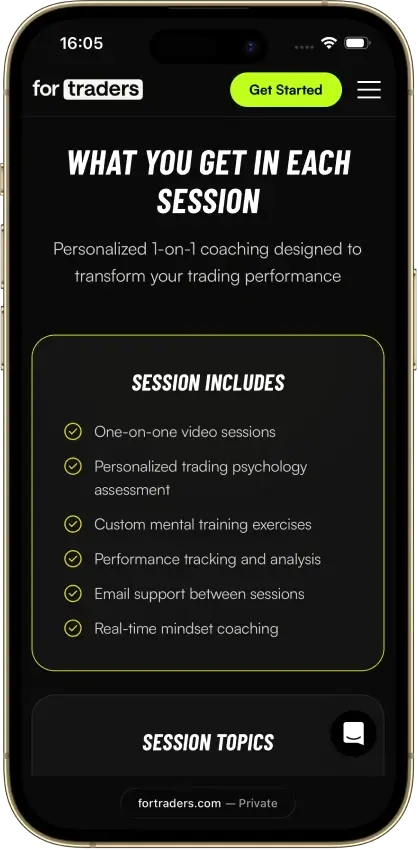
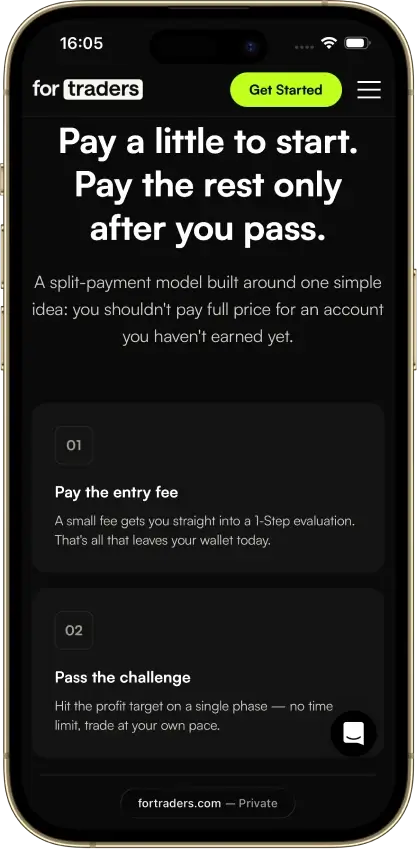
 For Traders For Traders | Forex / CFD | One Step, Two Step, Three Step, Instant | $3,000–$100,000 | Intraday Trailing (Real-Time Equity): 5–6%; Static (Initial Balance): 5–8% | 60%–90% | 14 calendar days |
 Velotrade Velotrade | Forex / CFD | One Step, Two Step | $5,000–$200,000 | 3–10% | 80%–90% | 14 calendar days |
 OneFunded OneFunded | Forex / CFD | Two Step, One Step, Instant | $5,000–$200,000 | 6–10% | 60%–90% | 14 calendar days |
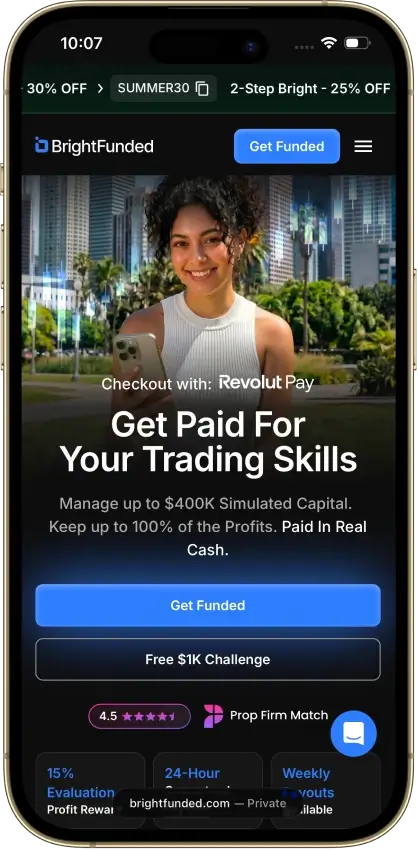
 BrightFunded BrightFunded | Forex / CFD | One Step, Two Step | $1,000–$200,000 | Intraday Trailing (Higher of Balance / Equity): 6%; Static (Initial Balance): 8–10% | 80%–100% | 30 calendar days |
 Crypto Fund Trader Crypto Fund Trader | — | — | — | — | — | — |
Read the access column before comparing leverage. A favorable account is irrelevant if the buyer cannot lawfully reach its platform, while “not disclosed” is an unresolved eligibility question rather than permission. The evaluation and funded columns should then be read as separate stages, since the account may change after passing. Weekend holding completes the picture by showing whether a strategy can remain open when the trading week ends.
Best Forex Prop Firms in Detail
FTMO
Pros
- Fee refunded in full at your first payout
- Free trial, repeatable, before you pay
- Static 10% max loss on the 2-step route
- No time limit on any evaluation
- Ten years trading and 48,676 reviews
Cons
- Among the priciest evaluations anywhere
- 1-step floor rises, reset only by a payout
- 1-step fee is not refundable
- No weekend holding on Standard accounts
- FTMO US is not an OANDA brokerage account



For Traders
Pros
- No reset fee on any of the 51 plans
- No time limit except on Strike
- Miss the 48-hour payout, trader gets 100%
- EURUSD from 0.1 pips raw spread
- No arbitration or class waiver in the T&Cs
Cons
- 5-second hold rule is not in the rulebook
- Activation fee falls due before KYC
- 3% buffer locked up on Forex Instant
- Checkout omits drawdown limits on 37 plans
- Trustpilot shows no rating for the firm

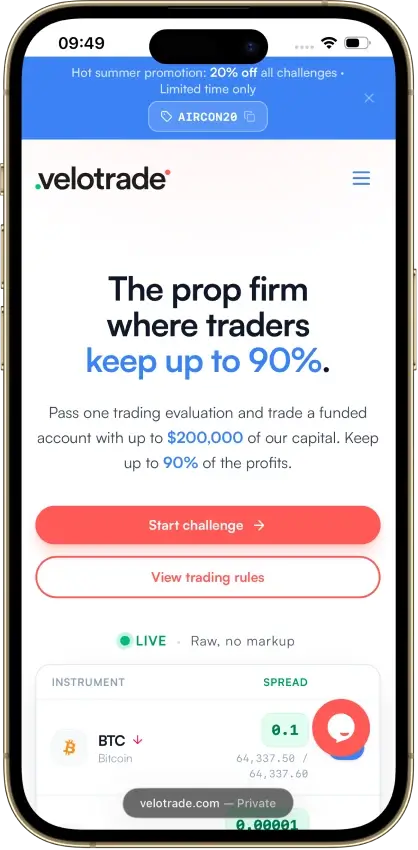
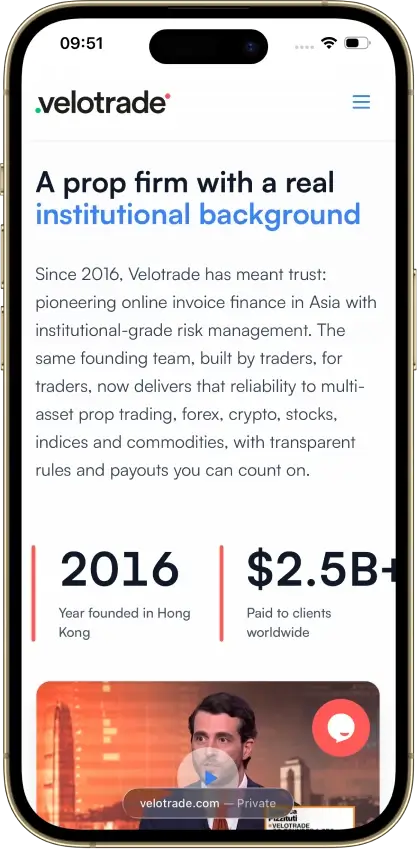
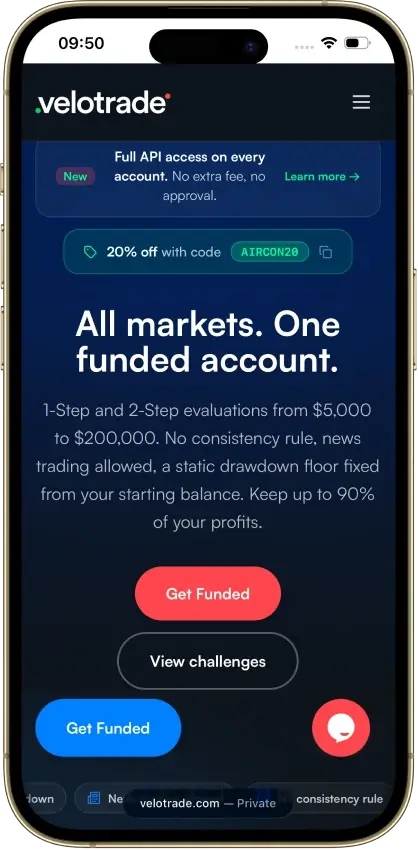
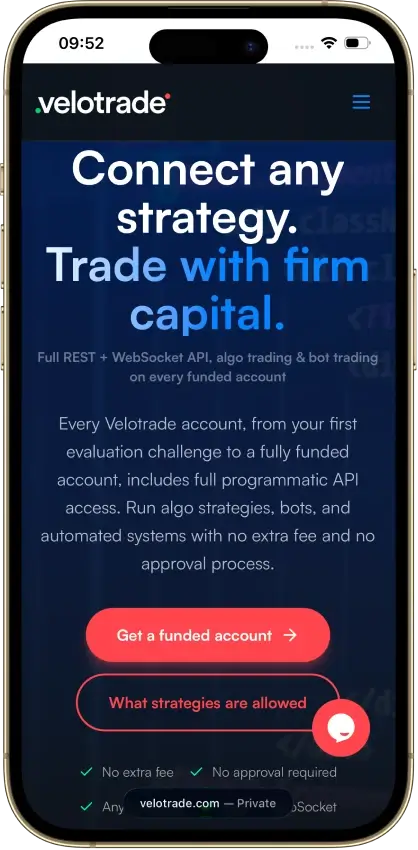
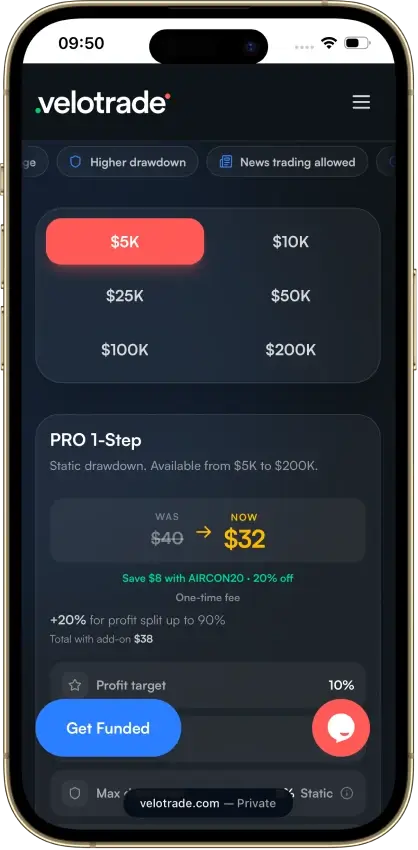
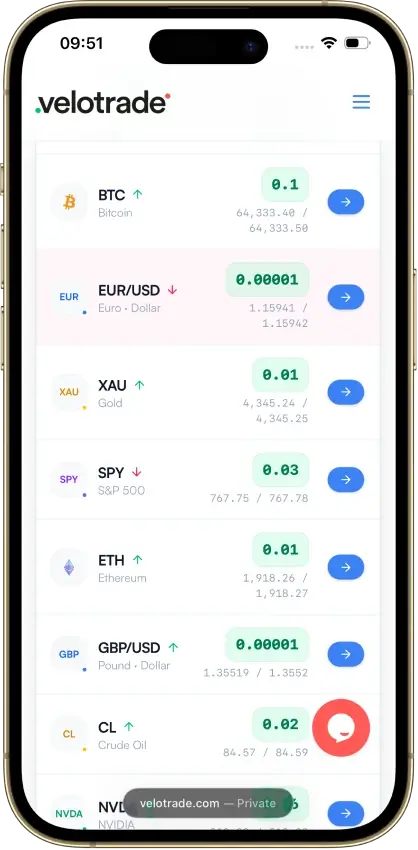
Velotrade
Pros
- All 60 payout certificates match the chain
- $40 entry, PRO cheapest at every size
- No time limit on any evaluation phase
- EAs and API allowed with no fee or approval
- Verified 20% code covers plans and add-on
Cons
- Terms keep trailing or static, as applicable
- First two payouts cap at 20x fee, excess lost
- A trading day needs 0.8% realized profit
- 90% split is a paid add-on over 80% default
- Funded drawdown limits are unpublished
OneFunded
Pros
- Static drawdown on every plan, never trails
- $29 entry on the two-step Value plan
- Core advertises a fee return at payout
- No activation or subscription fees
- 20% code applies to every plan and every size
Cons
- Add-on costs shown only at checkout
- Small Core/Value cap starts when funded
- Payout proof is the firm's own feed
- Same forex lot: $3.50 cTrader, $4.00 MT5
- Instant: 1% exposure, hard breach, no refund

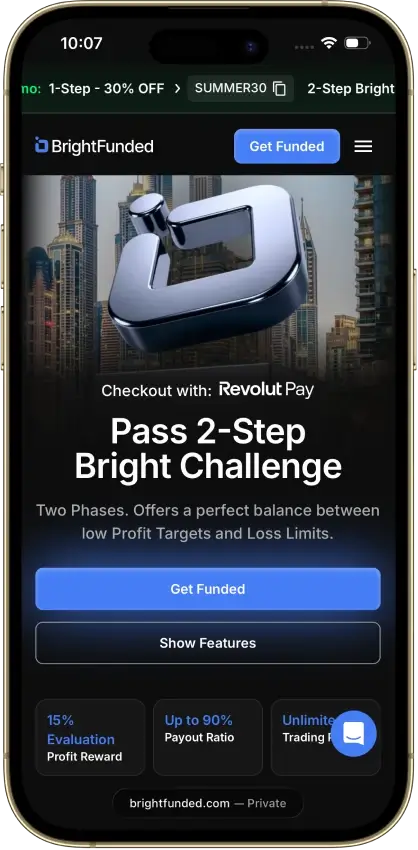
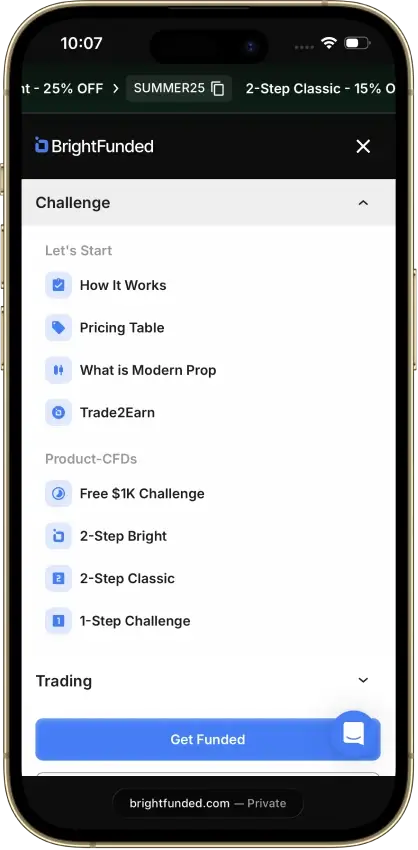
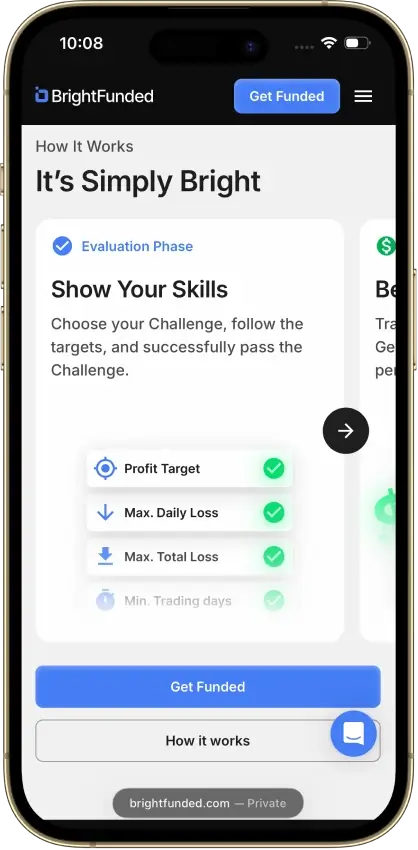
BrightFunded
Pros
- EAs allowed on supported platforms
- Unlimited time on every evaluation
- $0.01 payout minimum, no firm fee
- Help center publishes drawdown math
- Payouts reported inside 24 hours
Cons
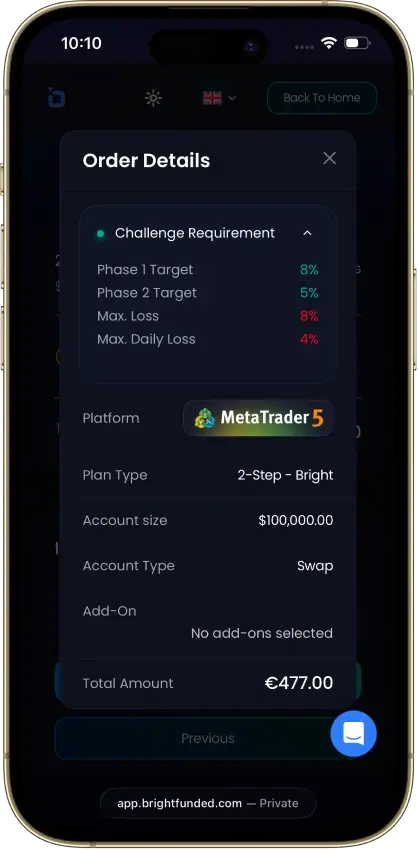
- 6% floor trails, checkout omits the type
- Guarantee scope and remedy undefined
- Default payout waits 30 days
- VAT appears only after buyer details
- Contract and app conflict on sole provider
Crypto Fund Trader
Pros
- 715 crypto pairs on a Bybit-integrated interface
- 715 crypto pairs, 900+ instruments
- No time limit and no minimum trading days
- Entry from $40 for a 1-phase $5K account
- 1:100 advertised across all instruments
Cons
- Trustpilot rating pulled for a guideline breach
- On FINMA's warning list since August 2024
- Evaluation fee is never refunded
- 90% split and weekly payouts cost extra
- Registered as an education company



Eligibility comes first in this ranking. Country access, platform restrictions and the funded-stage rule set are considered alongside leverage, holding permissions and trading costs. A generous headline term cannot offset an unavailable route or a condition disclosed only after checkout. The order follows the full review score, while the table exposes the forex-specific constraints that can make two apparently similar accounts behave very differently in practice.
Can US Traders Use Forex Prop Firms?
Some forex prop firms accept US traders, but access starts with the firm's country policy and narrows again by platform. A route through a US-registered partner differs from the international offering in both pricing and account structure. Where a firm accepts US residents directly, access changes at platform level, with part of the list open and the rest closed. The loss floor and consistency limit remain tied to the program, regardless of country.
Firms whose markets are crypto perpetuals with no forex pairs and no MetaTrader connection are left out, because a forex strategy cannot be run on them. What remains is ordered by CryptoSlate score, top down.
Which Route a US Trader Is Actually Buying
The verdict word matters less than the route behind it, because the route decides who the trader is contracting with, which terminal opens, and whether the answer can be checked before the fee is paid.
| Firm | What a US Trader Is Actually Buying | Where the Firm Publishes Its Position |
|---|---|---|
| FTMO | A separate US product, not the international one. The counterparty is OANDA, registered with the CFTC and a member of the NFA. That route exists because US rules require a US-registered company for anything listed on an exchange, and fees and account structure are set apart from the international offering | A dedicated US section, written separately from the international terms |
| AquaFunded | The same product a non-US trader buys. The platform choice narrows to Match Trade and TradeLocker, with MetaTrader 5 and cTrader outside it, and Sumsub runs identity checks before the account is funded | The restricted-jurisdiction list, which names the US among the countries accepted |
| Crypto Fund Trader | Match-Trader and nothing else. MetaTrader 5 is shut to US residents, and the Bybit route defers to Bybit's own country list, which the firm says it does not check. The platform is picked at checkout, so the decision is made before it is obvious that it matters | A platform-by-platform availability table |
| FundingPips | Nothing. The US sits outside the supported countries altogether, alongside Canada, so no platform and no model is reachable from a US address | A parenthetical in the platforms section, beside the MetaTrader 5 country note |
| FundedNext | Not disclosed. Nothing at checkout distinguishes a US buyer from any other, and nothing in the terms addresses it | Nowhere. Not in the terms, not at checkout |
| Goat Funded Trader | Not disclosed, and the checkout only rules things out. US residents and citizens are blocked from MetaTrader 5 and cTrader. MatchTrade, TradeLocker and Volumetrica go unmentioned, which is not the same as permitted. Ask support in writing before paying | Checkout, with the MetaTrader 5 half repeated in the site footer. No country-level statement anywhere |
| The5ers | Not disclosed. The Terms name forbidden territories and the US is not among them, which bars nothing and permits nothing. No page states acceptance | A list of 31 forbidden territories in the Terms, and a 30-name version in the site footer. The Terms are the contract |
Two things separate a confirmed US route from an assumed one. One is a named counterparty under a US regulator, and the other is platform-level confirmation. The counterparty determines who the trader contracts with and changes both pricing and account structure. Platform confirmation matters because a firm can accept US residents and still close the intended terminal. MetaTrader availability depends on the broker connection behind the account, not the prop firm's country list.
A checkout that excludes some platforms while staying silent on the rest does not confirm access. The absence of the US from a restricted-country list only shows that it is not explicitly barred. Until support confirms access in writing, treat the account as unbought and keep the reply. Prop-firm costs beyond checkout sets out the charges that land after the fee and the terms that can take profit back.
Leverage by Asset Class, and What Changes at Funding
A headline leverage number does little work here because asset class and account stage operate independently. First, forex receives the highest ratio wherever a firm publishes an asset breakdown, while indices, metals, energies and crypto sit at a fraction of it. Crypto is the extreme case at 1:2 or 1:1 on the same account, and crypto CFD costs at 1:1 requires a separate calculation. Metals, energies and indices use stepped leverage within one position. The opening tranche and the volume above it carry different financing, leaving the effective figure on a large trade well below the advertised one.
Second, funding can alter the leverage figure even when the strategy and position stay unchanged. Some programs keep forex constant and cut only other asset classes, while others halve forex too. A trader who sized positions at 1:100 during evaluation needs twice the margin for the same position after a move to 1:50, just as the account starts carrying payout risk. Three standard lots of EUR/USD absorb roughly $3,300 of margin at 1:100 and roughly $6,600 at 1:50. The $100,000 account that carried the trade comfortably through evaluation suddenly faces a different sizing constraint.
Lower leverage does not automatically make an account worse, although at 1:30 a single lot of EUR/USD requires roughly $3,700 of margin instead of roughly $1,100. That is retail-broker financing inside a funded account. The only strategy it rules out is tight-stop intraday sizing at scale. What matters is whether the marketed figure applies to the model bought and the stage reached. The loss floor beneath that leverage matters more than the leverage itself.
Swap, Commission and What a Swap-Free Account Costs
Financing charges separate a forex account from a futures program, and comparison tables in this segment leave that column empty. Three distinct charges land on a forex strategy, yet none appears in the pricing table. Swap and commission affect trading. Currency conversion arrives at settlement.
| Firm | Swap-Free Option | Cost | What the Upgrade Takes Back | Published Forex Commission |
|---|---|---|---|---|
| FundingPips | Yes, MetaTrader 5 only | +10% of the evaluation fee | Forex leverage falls from 1:100 to 1:30, indices from 1:20 to 1:5 | Not disclosed. No per-lot figure published, and spreads run high on Gold and GBP/USD |
| AquaFunded | Yes, swap-free and Islamic | +10% | Not disclosed | Not disclosed |
| FundedNext | Yes, sold as no swap charges | +10% | Not disclosed | Not disclosed. Weekend swaps count toward the daily loss limit |
| FTMO | Not disclosed | Not disclosed | Not disclosed | Not disclosed. A 0.7% conversion charge applies to profit or loss taken in a currency other than the account base |
| The5ers | Not disclosed | Not disclosed | Not disclosed | Not disclosed. Payout charges are 2% on crypto and Rise, 3% on bank transfer |
| Goat Funded Trader | Not disclosed | Not disclosed | Not disclosed | Not disclosed. Raw spreads from 0.1 pips, and no commission on indices and crypto |
| Crypto Fund Trader | Not disclosed | Not disclosed | Not disclosed | $2.50 per lot per side, published alongside every other asset class |
A swap-free account carries two costs, one at checkout and another through lower leverage. A surcharge priced at 10% of the evaluation fee is the visible part. If the same upgrade cuts forex leverage from 1:100 to 1:30, an identical position needs more than three times the margin afterward. That change matters more than the surcharge.
Commission is documented less consistently than swap because even a published per-lot forex figure may apply per side. A charge of $2.50 per lot per side is $5.00 round turn. A trader turning over ten standard lots a day pays $1,000 across a twenty-day month, equal to 1% of a $100,000 account. Against an 8% first-phase target, that commission equals one-eighth of the required distance. A blank in the column means the commission becomes known only after the fee is paid, not that the charge is zero. Currency conversion is the third charge and remains invisible until settlement. If 0.7% applies to profit or loss taken in a currency other than the account base, a $5,000 winning month carries $35 and a $5,000 losing month carries the same $35.
Weekend Holding and News Trading Windows
Weekend and news rules decide whether a strategy can be traded at all, and otherwise similar programs apply them inconsistently. Weeknight holding is permitted wherever these firms state a position, but weekend exposure follows a separate policy. One account type may bar Friday positions even when another at the same firm allows them. Some programs permit weekend exposure during evaluation and suspend it after conversion. A no-evaluation model can prohibit it at every stage. The consequences also differ: one system may close the position at Friday's cutoff, while another terminates the account.
| Firm | News Trading Window | What Breaching It Costs |
|---|---|---|
| FundingPips | Unrestricted in every evaluation. On a funded Master account, 5 minutes before to 5 minutes after a red-folder release. On Zero, news trading is prohibited outright and enforced across a band 10 minutes either side | On a Master account the whole profit of the trade is removed, not only the part earned inside the band. A position opened at least 5 hours ahead of the release is exempt. On Zero it is an immediate hard breach, and no exemption applies |
| FundedNext | No restriction in any evaluation phase. 5 minutes either side once funded | Only 40% of that trade's profit counts. Losses inside the window count in full |
| FTMO | On Standard, no orders inside a 2-minute band either side of a high-impact release. Unrestricted on Swing | Account reviewed. Swing lifts the window and the weekend ban together, at 1:30 instead of 1:100 |
| The5ers | 2 minutes either side on High Stakes. Allowed on the Growth programs, where bracket strategies are banned | Account reviewed |
| AquaFunded | Allowed, with a 5-minute window around red-folder releases | Profit taken inside the window is capped at 0.5% of the starting balance for that payout cycle. Anything above the cap is trimmed when the payout is processed, and the account is left intact |
| Goat Funded Trader | Permitted with no window, and advertised as a feature | Not applicable |
| Crypto Fund Trader | Allowed, with no stated restriction | Not applicable |
The penalty mechanic decides more than window length because the same two- or five-minute rule can lead to different outcomes. Consider a trade opened thirty minutes before a release and closed four minutes afterward for $2,000 of profit. A rule that strips the whole profit returns nothing, even though almost all of the move happened outside the restricted period. Under a 40% credit, the same trade returns $800 while an identical $2,000 loss counts in full as a $2,000 loss. A payout-cycle cap of 0.5% of starting balance contributes $500 on a $100,000 account. The remainder is trimmed at payout and the account stays intact. All three use a window, but only the capped version leaves this release-driven strategy tradeable.
Which Firm Suits Which Forex Trader
- FTMO's US route through OANDA uses a counterparty registered with the CFTC and holding NFA membership. Its fees and account structure differ from the international offering.
Scoring and Disclosures
Scores run from 0 to 10 and use the same pillars as every prop firm review. The model gives added weight to payout evidence and rules transparency. how we weight scoring evidence explains the method.
Buying an evaluation puts the whole fee at risk, and most traders do not pass. Every account described here is simulated, not a deposit of capital. Nothing on this page is financial advice. CryptoSlate may earn a commission on links in this comparison and may receive free evaluation accounts for testing under our commercial relationship terms. Neither arrangement changes a score.
