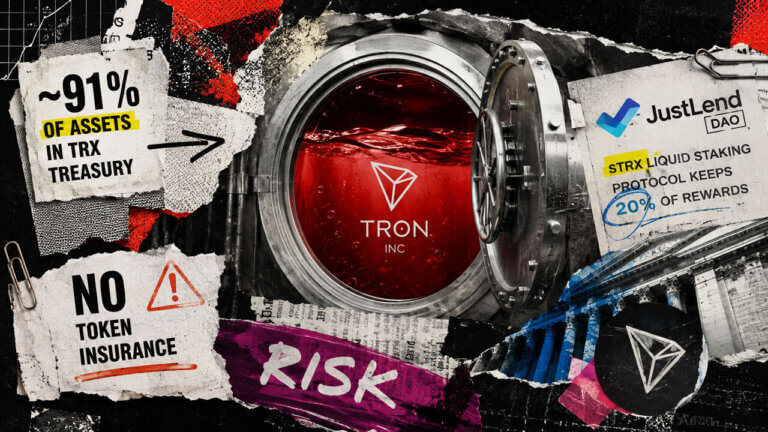
TRON's main risk is concentration around USDT. On Apr. 29, 2026, USDT made up 97.83% of stablecoin value on the network, so changes in Tether policy, issuer-level controls, or stablecoin regulation could affect TRON activity more directly than on chains with a more diversified stablecoin mix.
The Super Representative model is another trade-off. A smaller elected block-producer set can support fast coordination and predictable block production, but it gives TRON a different decentralization profile from networks with larger validator sets. This is a design choice, not just a performance feature.
Users also need to distinguish TRX from TRC-20 tokens. TRX is the native asset of the TRON blockchain. USDT on TRON is a TRC-20 token. Sending TRX, USDT-TRC-20, ERC-20 USDT, or BEP-20 USDT to the wrong network or address type can result in loss.
Issuer controls are relevant for USDT users on TRON. The T3 Financial Crime Unit, a joint initiative involving Tether, TRON, and TRM Labs, had frozen more than $300 million in criminal assets by October 2025. That shows active compliance capabilities, but it also reminds users that issuer-controlled stablecoins are not the same as native, censorship-resistant assets.