

Global OKX fits active traders in supported markets. Country-specific product and fiat limits, self-published reserves, and the separate U.S. and Wallet surfaces require careful scope checks.
OKX vs Bitget: Fees, Derivatives, and Copy Trading
OKX wins on regular spot maker and futures taker fees. Bitget has the higher stated crypto count and a lower spot taker rate with eligible BGB payment.

Bitget scores 6.7/10 for its international custodial exchange. Use it for eligible copy trading and derivatives access. Compare alternatives when your country is restricted or uniform banking is required.
Affiliate Disclosure
Some links in this comparison are affiliate links. CryptoSlate may earn a commission if you sign up through these links. Our ratings remain editorially independent.
OKX vs Bitget Overview
Lower regular maker and futures taker fees give OKX the overall win. Bitget is the starting point for a wider stated crypto menu or token-paid spot taker orders.
Winners by Category
OKX wins on regular maker and futures taker commission, and its reserve report covers more assets. Bitget takes the stated crypto count and spot taker pricing when eligible BGB payment is enabled.
OKX Bitget
OKX wins for active traders using the regular fee schedules.
Lower regular maker and futures taker fees
Higher stated crypto count and optional spot deduction
OKX wins at the regular tier. Eligible BGB payment brings Bitget’s maker rate down to the same 0.08%.
0.08%
0.10%
Bitget wins by $2 per $10,000 fill when its deduction applies. Standard taker rates otherwise tie.
0.10% regular rate
0.08% with eligible BGB payment
OKX wins — $1 less per $10,000 filled notional.
0.05%
0.06%
Bitget has the higher stated figure. This is not a same-date, same-method inventory.
397 spot base currencies, August 28, 2026 API capture
800+ published digital currencies
OKX wins on covered-asset count, not audited solvency or overall safety.
22 coins in the August 11 snapshot
Four assets in the August 27 report
Trading Fees
OKX wins on regular spot maker and futures taker pricing. Bitget’s eligible BGB payment beats OKX’s regular spot taker rate and matches its regular maker rate.
OKX Bitget
Regular Spot Maker
OKX wins — $2 less per $10,000 fill.
0.08% — $8
0.10% — $10
Regular Spot Taker
Tie — equal commission before any token deduction.
0.10% — $10
0.10% — $10
Spot Maker With Bitget BGB Payment
Tie on commission. Only the Bitget rate shown requires enabled and funded BGB payment.
0.08% regular — $8
0.08% eligible BGB-paid — $8
Spot Taker With Bitget BGB Payment
Bitget wins — $2 less when the deduction applies.
0.10% regular — $10
0.08% eligible BGB-paid — $8
Regular Futures Maker
Tie — the same maker commission.
0.02% — $2
0.02% — $2
Regular Futures Taker
OKX wins — $1 less per $10,000 filled notional.
0.05% — $5
0.06% — $6
The regular maker and futures taker schedules favor OKX. Bitget is cheaper for spot takers only under the eligible BGB-paid comparison.
Every dollar example uses $10,000 of filled notional. Futures commission uses the full traded position value, including borrowed exposure. Borrowing and futures funding add ongoing costs. Liquidation, spread and slippage also sit outside commission.
Bitget’s 20% deduction covers eligible spot and spot-margin charges when BGB payment is enabled and funded. The deduction does not apply to the regular futures rate shown here. Holding BGB for fee payment adds price exposure, so a small saving should not justify an oversized token balance. OKX’s regular rates shown here require no OKB holding.
Use the regular comparison unless your account qualifies for another tier. An immediately filled limit order can still remove liquidity and attract taker commission. OKX’s post-only instruction is useful when maker pricing matters, although rejection of a crossing order can leave it unfilled. Buy, Sell and Convert use separate quotes and can add payment-provider charges.
Listed Cryptocurrencies
Bitget’s 800-plus claim exceeds the 397 assets in OKX’s dated capture. OKX’s dated API inventory is more precisely defined, but its smaller figure uses a different counting method.
OKX Bitget
Asset Count Basis
Bitget has the higher stated asset figure. Pair totals and base-asset totals are different measures.
397 spot base currencies across 1,383 live pairs on August 28, 2026
800+ published global digital currencies
Bitget wins on the higher stated asset count.
Start a less-common coin search on Bitget, then verify the exact market and withdrawal network. A listed coin with poor depth can be more expensive to trade than the headline commission suggests.
Alongside OKX’s broad 300-plus headline, the August 28 public API capture provides a dated count of 397 spot base currencies. Neither exchange’s self-custody wallet inventory is included, and Bitget’s tokenized stocks, stock futures and CFDs belong to separate TradFi products.
Derivatives, Bots and Copy Trading
Both exchanges offer margin, futures, bots and copy trading. OKX documents options for eligible global accounts, which makes it a starting point for an options strategy.
OKX Bitget
Copy Trading
Tie on offering copying. The selected trader and follower controls determine the practical fit.
Region-dependent social trading
Spot and futures copy trading
Trading Bots
Tie on bot availability, not strategy selection or returns.
Automation for eligible markets
Bots alongside spot and futures tools
Choose OKX for its lower regular futures taker commission or its documented options product. Copying and bots alone do not separate the two.
Margin and futures exist on both, with instrument-specific position limits and liquidation rules.
Bitget puts spot and futures copying alongside its main trading tools. Before following a strategy, inspect allocation size and stop controls, then the strategy’s drawdown history. The copy-trading comparison guide covers why a leader’s past return can differ from a follower’s result. Copied futures positions transmit liquidation risk as well as gains.
A new Bitget setup should use its recommended Unified Trading Account. The older Classic Account is maintained only for essential updates. Test how an automated strategy sizes orders and closes positions before assigning live funds on either platform.
Deposits and Withdrawals
The usable bank route depends on the account. Bitget supplies specific bank-fee examples, while Global OKX routes depend on regional entity, currency and provider.
Bitget’s stated examples include €0 SEPA deposits and €1 withdrawals, plus $0 USD SWIFT deposits and $30 withdrawals. Global OKX bank pricing varies by regional entity, currency and provider. The separate OKX US ACH and wire schedule does not apply here.
Bitget names 15 direct-bank currencies, including CAD, yet prohibits Canadian residents. Its help pages also name routes associated with France, Germany and Austria, which its country terms prohibit. The governing terms establish residency eligibility, and the account shows usable withdrawal options.
For a crypto transfer, compare the same asset, network and amount on both withdrawal screens. Each displays a live fee and minimum. Bitget’s published daily crypto ceiling runs from 3 million USDT at VIP 0 to 20 million USDT at VIP 7 after KYC. OKX applies account- and risk-specific limits, so the figures are not directly comparable. Security or compliance checks can delay approval on either exchange.
KYC and Country Availability
Identity checks are mandatory for normal trading on each exchange. A permitted spot account does not automatically include derivatives, Earn or every payment method.
Neither compared global service is a US account, and both restrict Canada. Bitget also prohibits Singapore, France, Germany and Austria. Bitget stopped accepting new Japanese resident registrations on August 3, 2026, with existing accounts scheduled for close-only mode on November 1 and possible forced liquidation of remaining positions on December 31.
Global OKX’s restricted-country list also includes France and Japan. Other regional OKX entities use their own terms. Check the contracting entity and intended product before treating a regional registration or separate wallet as exchange access.
OKX asks for government ID, a selfie or facial check, and address information. Bitget requires identity information, government ID and requested checks. Both can seek additional source-of-funds or security documents after initial verification.
Security and Reserve Checks
OKX wins on the number of assets covered by the compared reserve reports. Both support monthly user-inclusion checks, but neither report is a full financial audit.
OKX Bitget
Covered Assets
OKX wins on disclosed asset coverage.
22 coins, August 11, 2026 snapshot
BTC, ETH, USDT and USDC, August 27, 2026 report
Monthly User-Inclusion Check
Tie on the ability to check inclusion, not completeness of liabilities.
zk-STARK tooling for the covered liability set
Merkle validator for the covered liability set
OKX wins on reserve-report asset coverage. Neither report establishes independently audited solvency.
OKX reported $22.96 billion in primary assets, while Bitget reported a 122% aggregate reserve ratio for its four tracked assets. Those measures describe different things and cannot rank solvency. Zero-knowledge verification and Merkle inclusion help test a reported balance set, but do not independently establish every liability, encumbrance or later balance. The limits of exchange reserve reports explain that distinction.
Both document two-factor authentication, passkeys, anti-phishing codes and withdrawal-address controls. Bitget’s company-funded Protection Fund averaged $351 million in July 2026. It is neither government insurance nor a fixed reimbursement promise for each user.
In its compliance history, OKX affiliate Aux Cayes agreed in February 2025 to an $84 million penalty and approximately $421 million forfeiture over unlicensed money-transmitting activity. Bitget’s 2024 BGB cascade and 2025 VOXELUSDT trading incident prompted compensation, with irregular VOXEL trades rolled back. Those were market-integrity events, not external custody breaches. The reserve-coverage award does not erase either record.
Apps, APIs and Support
Both support web and mobile trading, REST and WebSocket access, and test environments. OKX supplies simulated API keys, while Bitget’s demo API requires KYC.
OKX Bitget
API Test Environment
Tie on an API testing option. Bitget explicitly requires KYC for demo API use.
Simulated keys and trading environment
KYC-gated demo trading
Tie on an API test environment. OKX supplies simulated keys and a simulation header. Bitget requires KYC for demo API use and recommends Unified Trading Account for new integrations.
OKX simulation uses its designated simulated-trading header and keys. Bitget recommends its Unified Trading Account when starting an integration. Developers can restrict key permissions, create subaccount keys and allowlist IP addresses. OKX also supports scoped access and subaccounts. Test trading validates a setup without reproducing live liquidity or fills.
OKX’s 24/7 chat schedule may matter to traders working overnight. Its ticket tracking and invited video calls provide other ways to handle an account case. Bitget routes questions through chat or tickets and has a help-article library. Neither publishes a response-time or resolution SLA, and neither supplies matched execution results. Support speed and execution performance are therefore unranked.
Both exchange accounts hold custodial balances. The separate OKX Wallet evaluation covers user-controlled signing and recovery instead. A wallet’s chain coverage does not extend the trading account’s available markets.
Screenshots
OKX screenshots
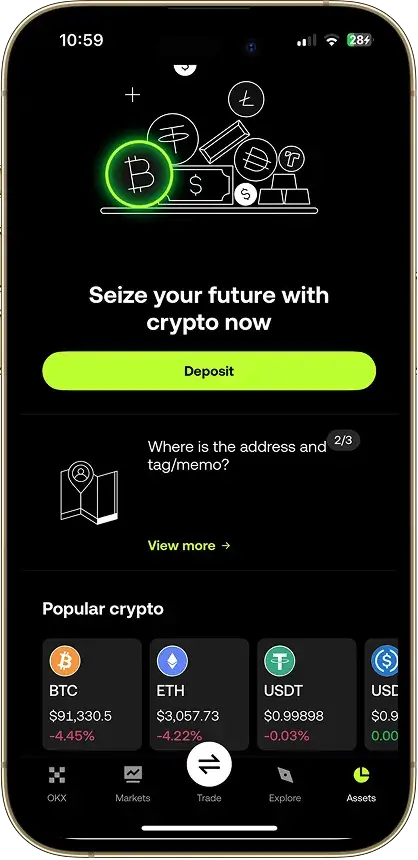
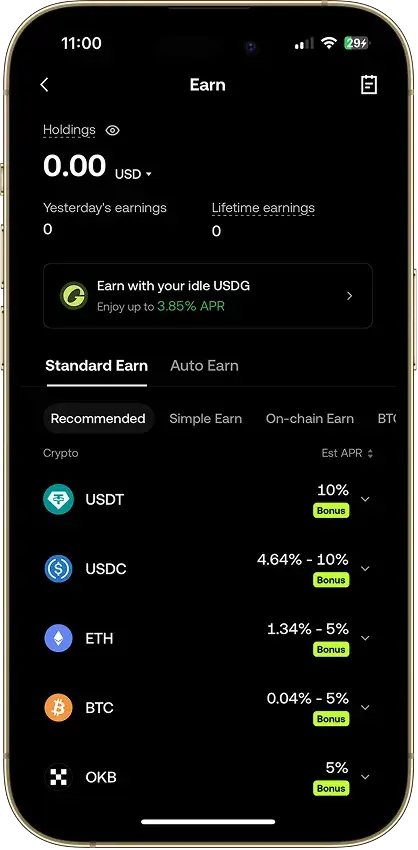
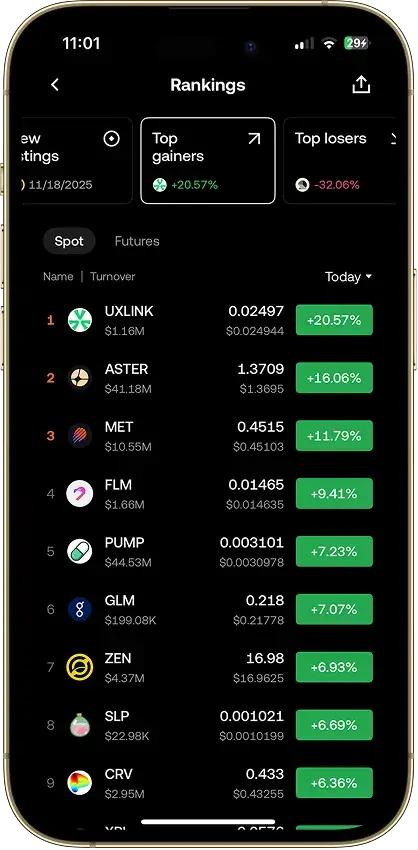
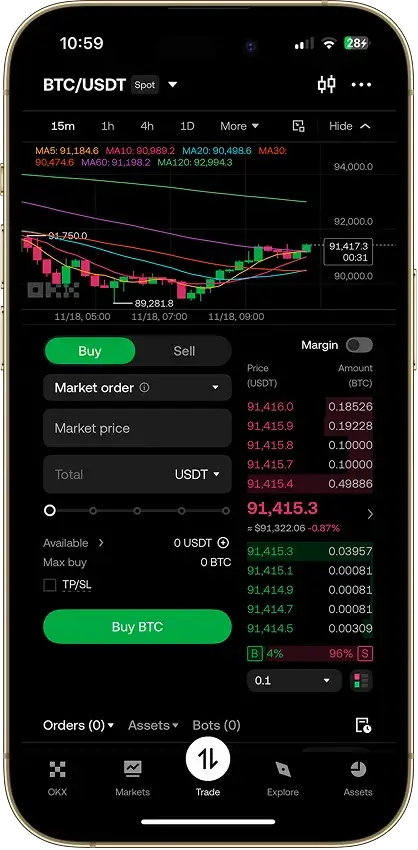
Screenshot 1 of 4
Bitget screenshots
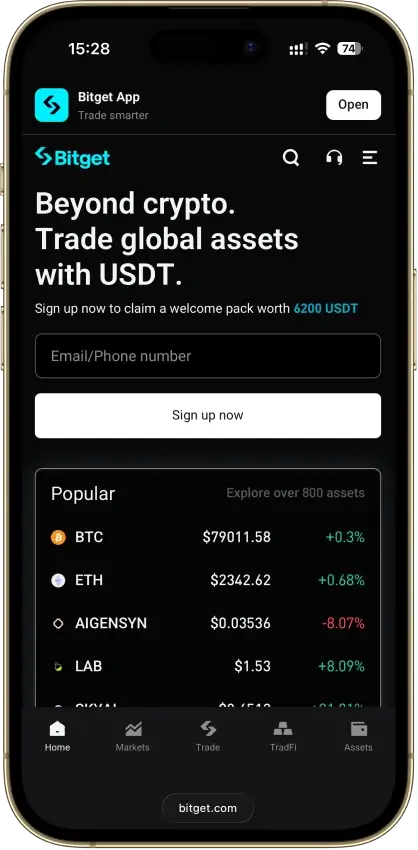

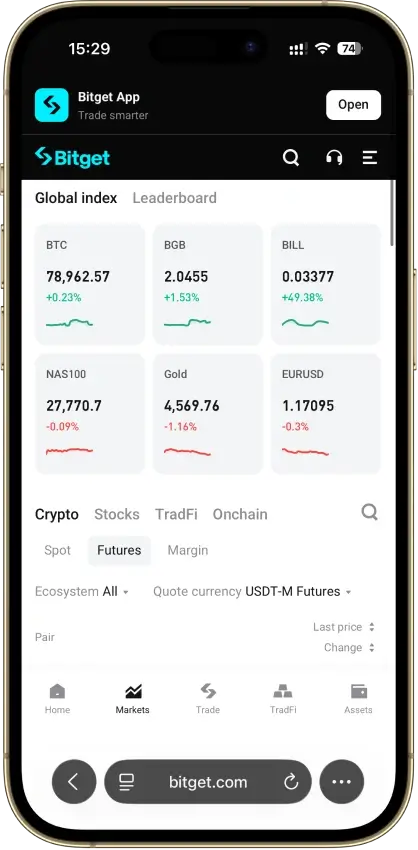
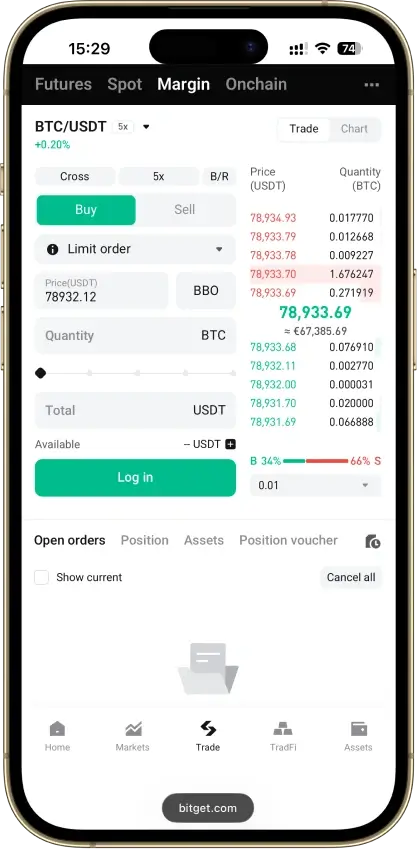
Screenshot 1 of 4
Final Verdict
OKX wins overall for regular spot makers and futures takers, with broader asset coverage in the compared reserve reports.
Affiliate Disclosure
Some links in this comparison are affiliate links. CryptoSlate may earn a commission if you sign up through these links. Our ratings remain editorially independent.
Choose OKX if you want the lower regular maker or futures taker rate without holding a fee token. Its documented options product also gives eligible users a starting point for an options strategy.
Choose Bitget if your required coin is available there, or you accept BGB price exposure to reduce eligible spot taker commission. Its higher stated crypto count is the main asset-range distinction. Both exchanges support copying and bots, so those features alone do not overturn the fee-led verdict.
FAQs
Is OKX or Bitget better overall?
OKX is the overall pick for regular spot makers and futures takers because its entry commission is lower. Bitget has the higher stated crypto count and can cost less for spot takers using eligible BGB payment. The required coin and account tier can change the practical choice.
Which has lower spot fees?
Regular OKX spot costs 0.08% maker and 0.10% taker, compared with 0.10% on both sides at Bitget. With the eligible BGB deduction, Bitget charges 0.08% on either side. That matches OKX’s regular maker rate and beats its regular taker rate, but adds token-price exposure.
Which is cheaper for futures?
Regular futures maker commission is 0.02% on both. OKX’s regular taker rate is 0.05%, against Bitget’s 0.06%, or $5 versus $6 on a $10,000 fill. Funding, liquidation and slippage are additional costs. Bitget’s BGB deduction covers eligible spot and spot-margin charges, not the regular futures rate shown here.
Does Bitget list more cryptocurrencies?
Bitget’s published 800-plus global figure exceeds the 397 spot base currencies captured through OKX’s API on August 28, 2026. One is Bitget’s own claim and the other a dated market capture, so the gap is not a precise listing difference. The pair and withdrawal network still need to be available in your account.
Which is better for copy trading?
Both offer copy trading, with Bitget explicitly documenting spot and futures copying. Choose the lead trader, allocation and loss controls that suit the strategy, and remember that copied futures positions can be liquidated.
Can US residents use these services?
Bitget has no US custodial exchange. Eligible US residents can consider the separate OKX Inc. service, whose fees and products differ from Global OKX.
Which reserve report covers more assets?
OKX’s compared report covers 22 coins, against four tracked assets at Bitget. OKX wins that coverage measure. Both let users check inclusion in monthly reports, but neither proves all corporate liabilities or continuous solvency through those reports alone.
Can I withdraw to a bank on both?
Eligible regional accounts can have bank routes, but there is no worldwide shared schedule. Bitget’s examples include €1 SEPA and $30 USD SWIFT withdrawals. Confirm the actual account route and current terms, especially where Bitget’s bank help pages conflict with prohibited-country rules.


For $10,000 of filled notional, a regular spot maker pays $8 on OKX and $10 on Bitget. A regular futures taker pays $5 and $6 respectively. OKX earns the overall verdict from these recurring trading costs, while Bitget’s optional BGB deduction changes the spot-taker result.
The OKX review covers options and RFQ alongside low entry fees and simulated API trading. The Bitget exchange assessment covers an 800-plus published crypto menu plus spot and futures copying. Bitget recommends Unified Trading Account for new trading and API setups.
This comparison covers the two global custodial exchanges. Bitget has no US exchange, so the separate OKX Inc. US service is excluded. Separate wallets and cards are excluded, as are TradFi products.