

 Robinhood Review 2026
- Robinhood offers some of the lowest fees for buying crypto with fiat in the U.S.
- The app is beginner-friendly and makes trading stocks, ETFs, options, and crypto easy in one place.
- Fee-free withdrawals and a separate self-custody wallet, enabling users to have control over their crypto.
Robinhood has become one of the most popular crypto exchanges in the U.S. But is Robinhood really the best place to buy, sell, and trade crypto for U.S. users? Our Robinhood review will help you decide.
In our review, we’ll take a deep dive into Robinhood, which built on its success as a commission-free mobile stock broker and options trading platform to enter crypto trading in 2018.
We cover everything from the types of tokens you can trade and the associated costs to the user experience and available trading tools.
Keep reading to learn everything you need to know about trading crypto at Robinhood.
Robinhood Review Verdict: Pros and Cons
Robinhood is a beginner-friendly brokerage and crypto exchange that offers trading on stocks, ETFs, options, futures, and cryptocurrencies. It has a relatively limited selection of 33 crypto tokens to trade and doesn’t offer trading on major tokens like BNB, TRX, or USDT. It also offers staking, but only on ETH and SO. However, you can trade futures contracts for BTC, ETH, SOL, and XRP.
Robinhood has some of the lowest fees for crypto trading, making it one of the best platforms to buy crypto with fiat. It offers its own self-custody wallet app and offers fee-free withdrawals to any external crypto wallet. Robinhood has few advanced trading tools, so it’s not suitable for experienced crypto traders.
Several additional features improve Robinhood’s positioning as a financial super-app. The Robinhood Gold Card is a rewards credit card offering 3% cashback with no annual fee. Robinhood Strategies is an investment management service with a very low service fee.

However, Robinhood is less attractive if you’re interested in actively trading cryptocurrency, earning yield through staking, or trading crypto perpetual futures contracts.
Pros
- Very low fees for fiat-to-crypto purchases
- User-friendly interface available on web and mobile
- Supports stock, ETF, options, futures, and crypto trading
- Fee-free withdrawals to any external crypto wallet
- A portion of deposits is available for trading instantly
- 24/7 live chat support available
Cons
- Limited selection of 33 cryptocurrencies
- Staking for ETH and SOL only with 25% commission
- No margin for crypto trading
- Few technical analysis tools
What is Robinhood?
Robinhood is a U.S. stockbroker and fintech app launched in 2013. At the time, it was the first mobile-only stock brokerage in the U.S. and the first U.S. stock brokerage to offer commission-free trades.
It completely changed the revenue model for brokerages by selling trading data instead of charging for trades. Today, most major U.S. brokerage firms have adopted Robinhood’s commission-free model.
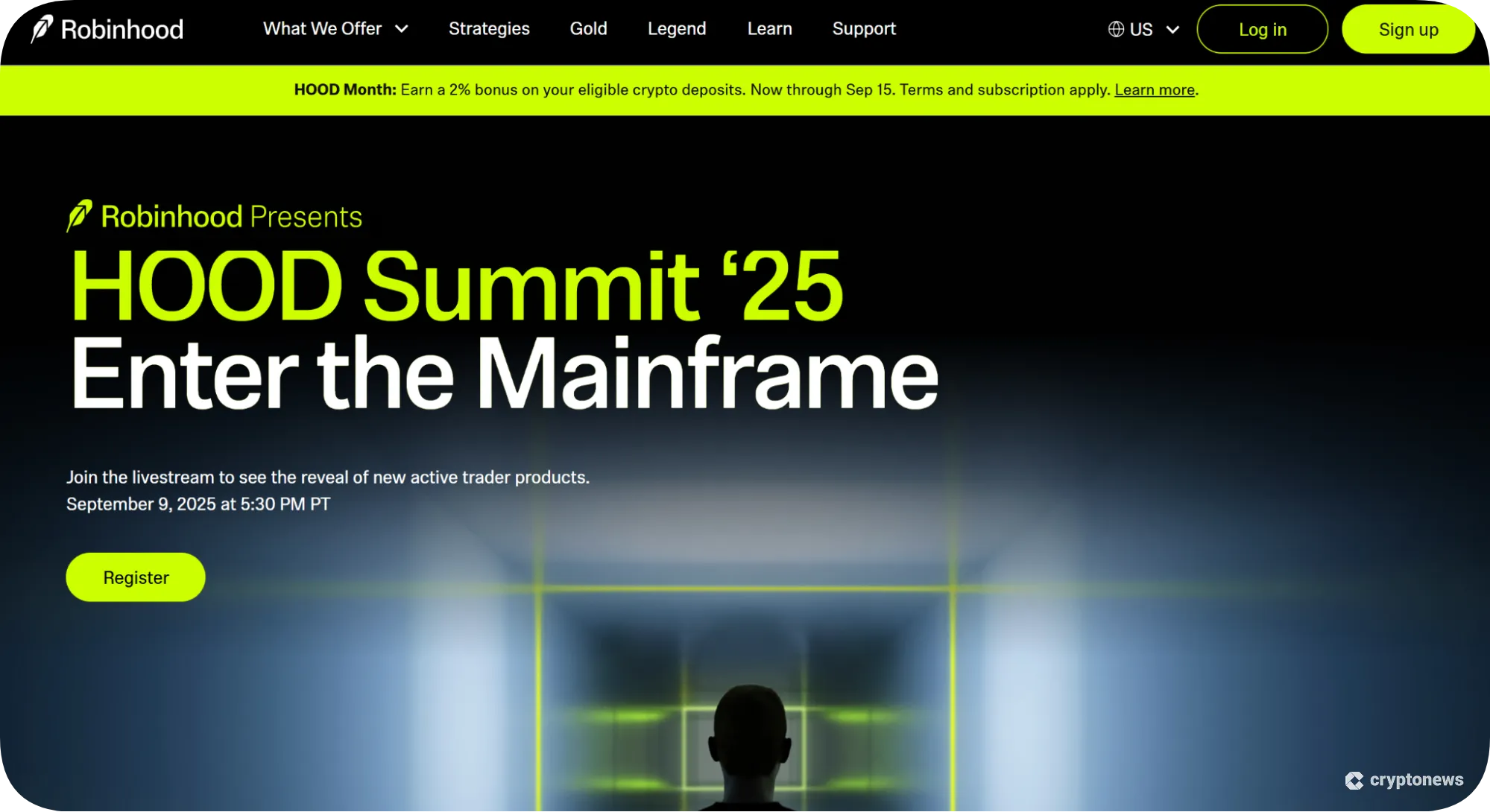
Robinhood has expanded in the years since its launch to offer options trading starting in 2017 and crypto trading starting in 2018. It began with Bitcoin and Ethereum trading only, and now offers trading on 33 crypto tokens. Robinhood has its own custodial wallet for customers and supports sending and receiving tokens from third-party self-custody wallets.
As of January 2025, Robinhood reported $20.4 billion in monthly crypto trading volume on its exchange. For comparison, U.S. competitor Coinbase reported $159 billion the same month. So while Robinhood is a major player in the U.S. market, it remains well behind the market leader.
Robinhood Crypto Exchange Overview
Robinhood’s crypto exchange has grown in scale and product offerings over the past several years. Here’s an overview of what you need to know about Robinhood as of August 2026.
| Exchange Type | Centralized exchange |
|---|---|
| Best for | US crypto traders |
| Based in | Menlo Park, CA |
| Availability | US, UK, EU |
| Licenses | FinCEN Money Services Business, NYDFS virtual currency business license, EU Crypto-Asset Service Provider license |
| KYC Verification | Required |
| Supported Coins | BTC, ETH, LTC, DOGE, SHIB, AAVE, ARB, AVAX, BCH, BONK, ADA, MEW, LINK, COMP, WIF, ETC, FLOKI, HBAR, MOODENG, TRUMP, ONDO, PNUT, PENGU, PEPE, POPCAT, SOL, SUI, XLM, XTZ, TON, UNI, USDC, XRP |
| Deposit Methods | Bank transfers, debit cards |
| Trading Products | 33 spot cryptocurrencies, 9 crypto futures |
| Fees | Spot: 0.85%; Futures: $0.50-$0.75 per contract; Staking: 25% commission |
| Key Features | Staking, recurring buys, trading tools |
| Customer Support | 24/7 live chat; phone support 7 am-9 pm (ET) daily |
Is Robinhood Safe?
Robinhood is a licensed and regulated U.S. stock brokerage and crypto exchange that’s been operating for more than a decade.
It is a member of the Financial Industry Regulatory Authority (FINRA), holds money transmitter licenses from the Financial Crimes Enforcement Network (FinCEN) and numerous U.S. states, and has a virtual currency business license from the NY Department of Financial Services, one of the U.S.’s top crypto regulatory agencies.
Overseas, Robinhood holds more than 50 crypto-related licenses in Europe and Asia thanks to its acquisition of crypto exchange Bitstamp.
Robinhood has suffered data breaches, including a 2021 incident in which personal information for millions of U.S. customers was leaked. However, the company has never suffered a direct attack on its funds, and it has never lost customer funds.
Crypto you hold in your Robinhood account is kept in a custodial wallet, meaning Robinhood has control over it. That said, the company does allow fee-free withdrawals to self-custody wallets and says that it never lends your crypto or leverages against it. In theory, this means that Robinhood always has your tokens on hand, and they shouldn’t be subject to liquidation in the event of a bank run.
Robinhood offers several security measures to keep your crypto safe, including holding tokens in cold storage wallets for most funds and keeping an insurance policy to protect against theft. Access to your account is secured by a combination of password, biometric authentication, and two-factor authentication.
Robinhood Supported Coins and Trading Pairs
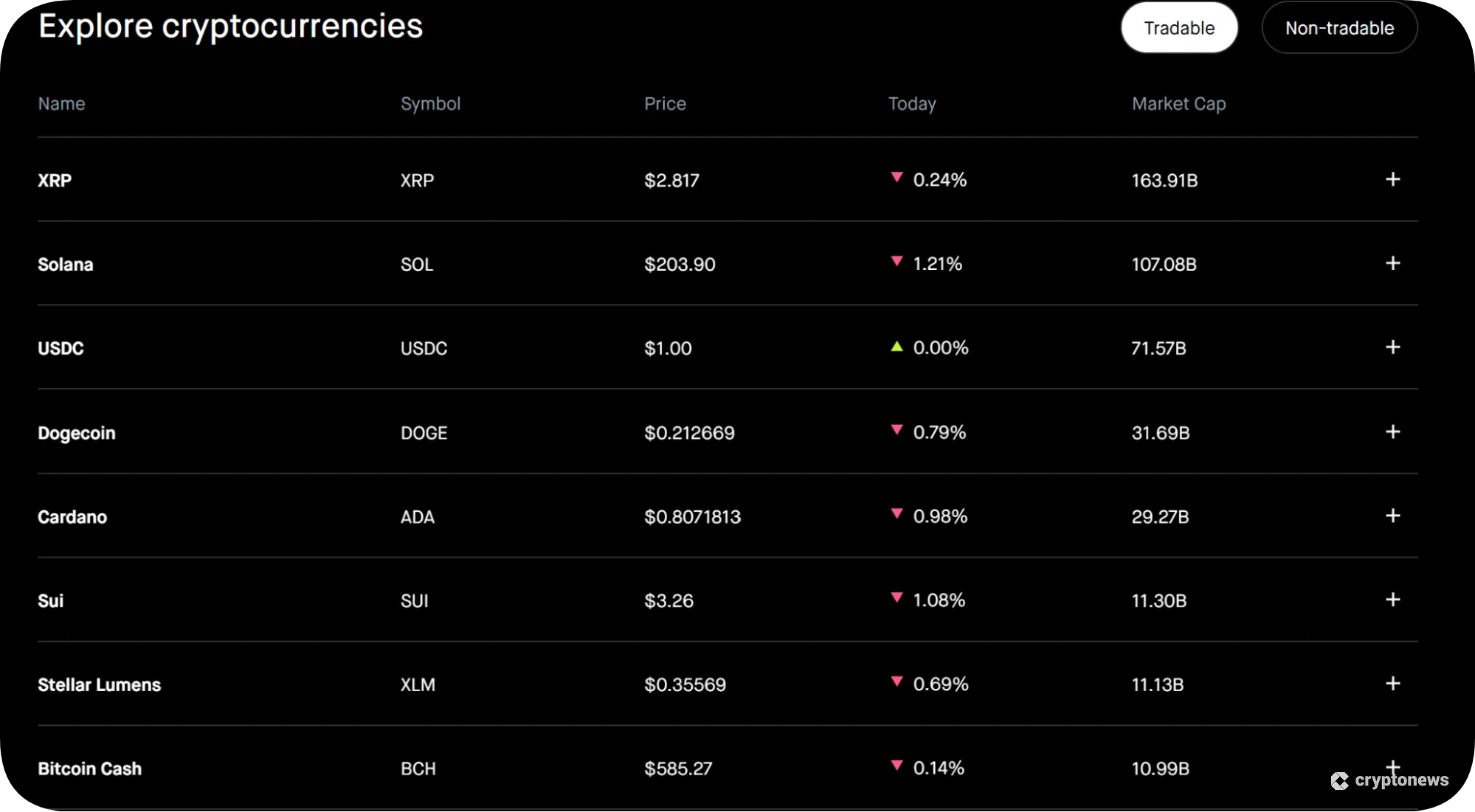
Robinhood has a limited selection of cryptocurrencies available to trade compared to other major exchanges. As of August 2026, there are 33 tokens available for spot trading:
- BTC
- ETH
- LTC
- DOGE
- SHIB
- AAVE
- ARB
- AVAX
- BCH
- BONK
- ADA
- MEW
- LINK
- COMP
- WIF
- ETC
- FLOKI
- HBAR
- MOODENG
- TRUMP
- ONDO,
- PNUT
- PENGU
- PEPE
- POPCAT
- SOL
- SUI
- XLM
- XTZ
- TON
- UNI
- USDC
- XRP
This selection includes only some of the biggest tokens by market cap. Notably, Binance’s BNB is not tradable, nor is Tether’s USDT stablecoin. TRX, the native token of the Tron blockchain, also can’t be traded on Robinhood. Staking is available for ETH and SOL only at this time.
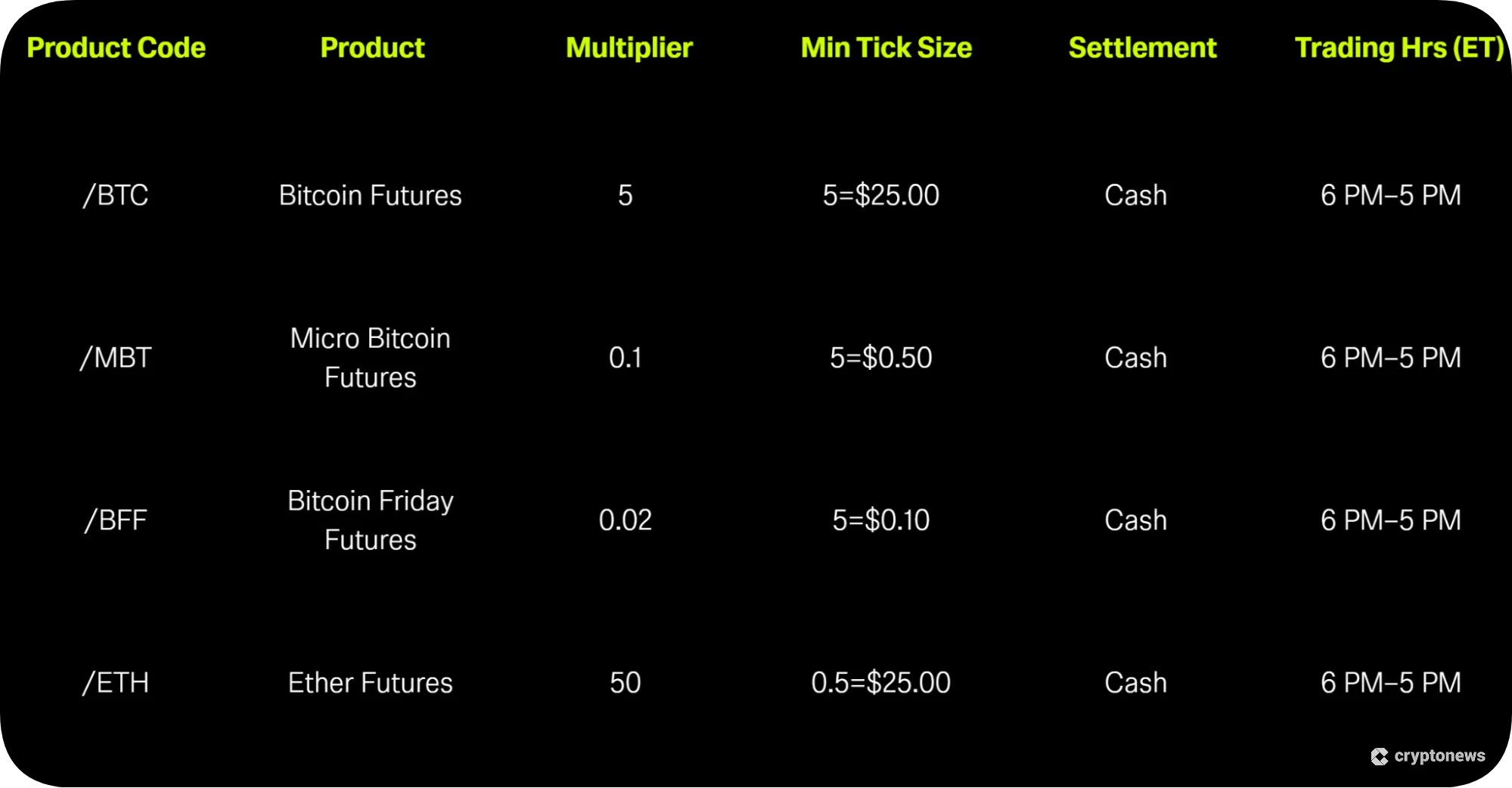
In addition to spot cryptocurrencies, Robinhood offers trading on a limited selection of crypto futures. These include:
- Bitcoin Futures
- Micro Bitcoin Futures
- Bitcoin Friday Futures
- Ether Futures
- Micro Ether Futures
- Solana Futures
- Micro Solana Futures
- XRP Futures
- Micro XRP Futures
Robinhood also offers crypto perpetual futures trading in the EU, but not in the U.S. or UK markets.
Robinhood Trading and Investing
Let’s take a closer look at the various crypto trading and investing options available at Robinhood.
Crypto Spot and Margin Trading
Spot trading is available on Robinhood for all of the 33 tokens listed above. All tokens trade in pairs with USD, not USDT or another cryptocurrency, such as Bitcoin. You can buy or sell as little as $1 worth of any token at a time.
Importantly, Robinhood is not a margin trading exchange. Crypto is not marginable and can’t be used as collateral for other trades on the platform.
Derivatives
Robinhood offers several standardized crypto futures contracts for BTC, ETH, SOL, and XRP that trade on the Chicago Mercantile Exchange (CME). These are not perpetual futures contracts, like those offered by many overseas crypto exchanges. Rather, they have fixed contract sizes and set expiration dates.
Staking
Robinhood offers staking for ETH and SOL only at this time. In addition, staking isn’t available in several states, including California, Maryland, New Jersey, New York, and Wisconsin, because of state-level regulations. Staking periods are flexible, but it can take up to several weeks to stake and unstake tokens using Robinhood.
Robinhood Stocks
While our Robinhood app review primarily focuses on crypto trading, this platform is also a U.S. leader in stock and ETF trading. You can trade most stocks on the NYSE and NASDAQ, including Bitcoin and Ethereum ETFs, but not over-the-counter (OTC) stocks. Robinhood supports fractional share trading with purchases of as little as $1.
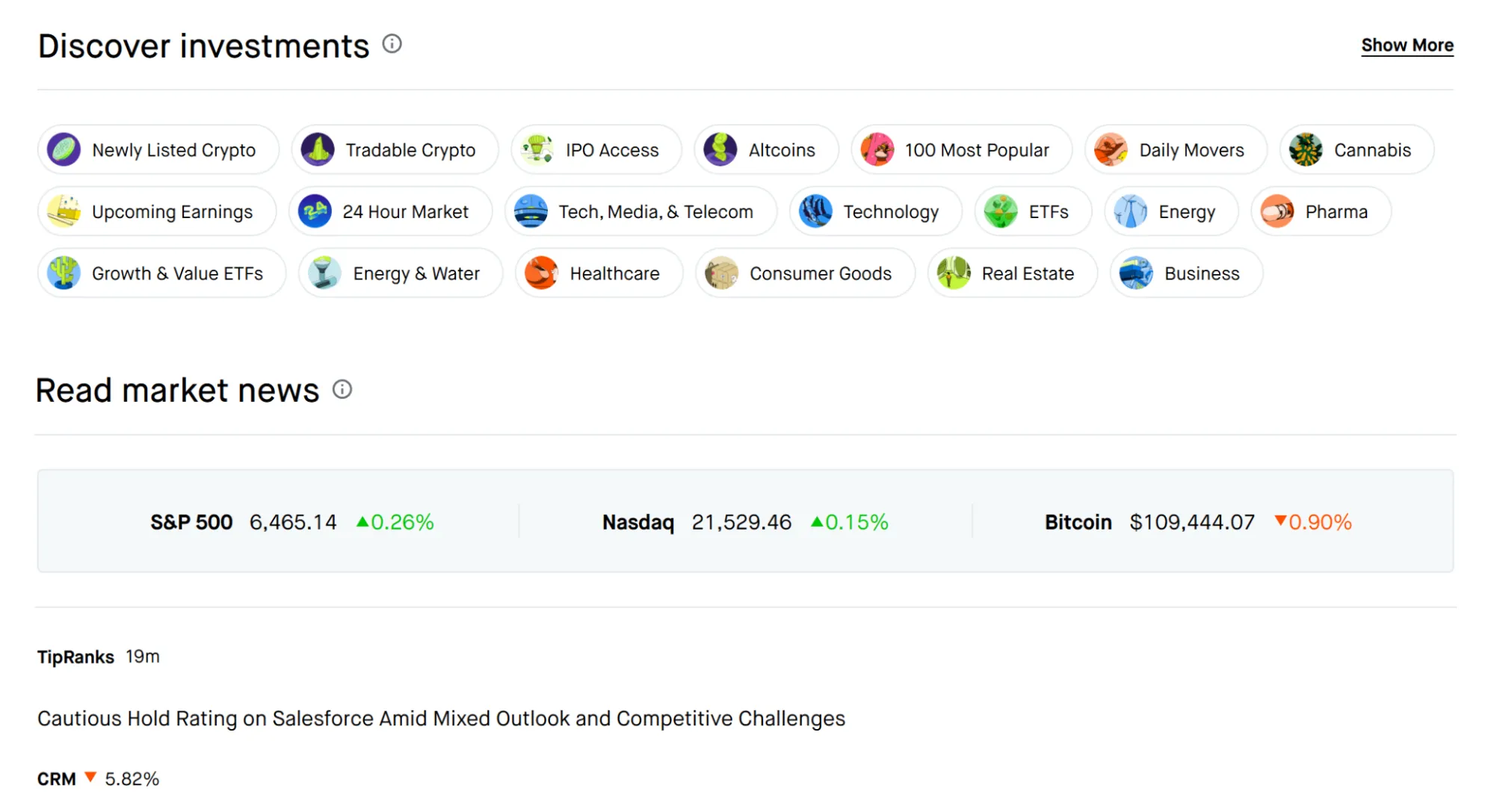
Robinhood also offers trading on hundreds of stock options, index options like SPX and VIX, and futures contracts for stock indices, forex, precious metals, and energy commodities. Margin trading is available for stock, options, and futures trading.
Robinhood Wallet Review
Robinhood Wallet is Robinhood’s self-custody crypto wallet app. It’s completely separate from the main Robinhood app, and crypto customers don’t have to use it.
By default, crypto purchased on Robinhood is stored in a custodial crypto wallet. You can transfer tokens to Robinhood Wallet or any other top self-custody crypto wallet with zero withdrawal fees.
The Robinhood Wallet is available for free for iOS and Android devices. It offers the ability to store thousands of tokens, not just the ones available on Robinhood. It also integrates with top decentralized exchanges (DEXs) so you can swap tokens easily. However, the list of supported blockchains is still relatively limited and includes only Bitcoin, Ethereum, Solana, Dogecoin, Arbitrum, Polygon, Optimism, and Base.
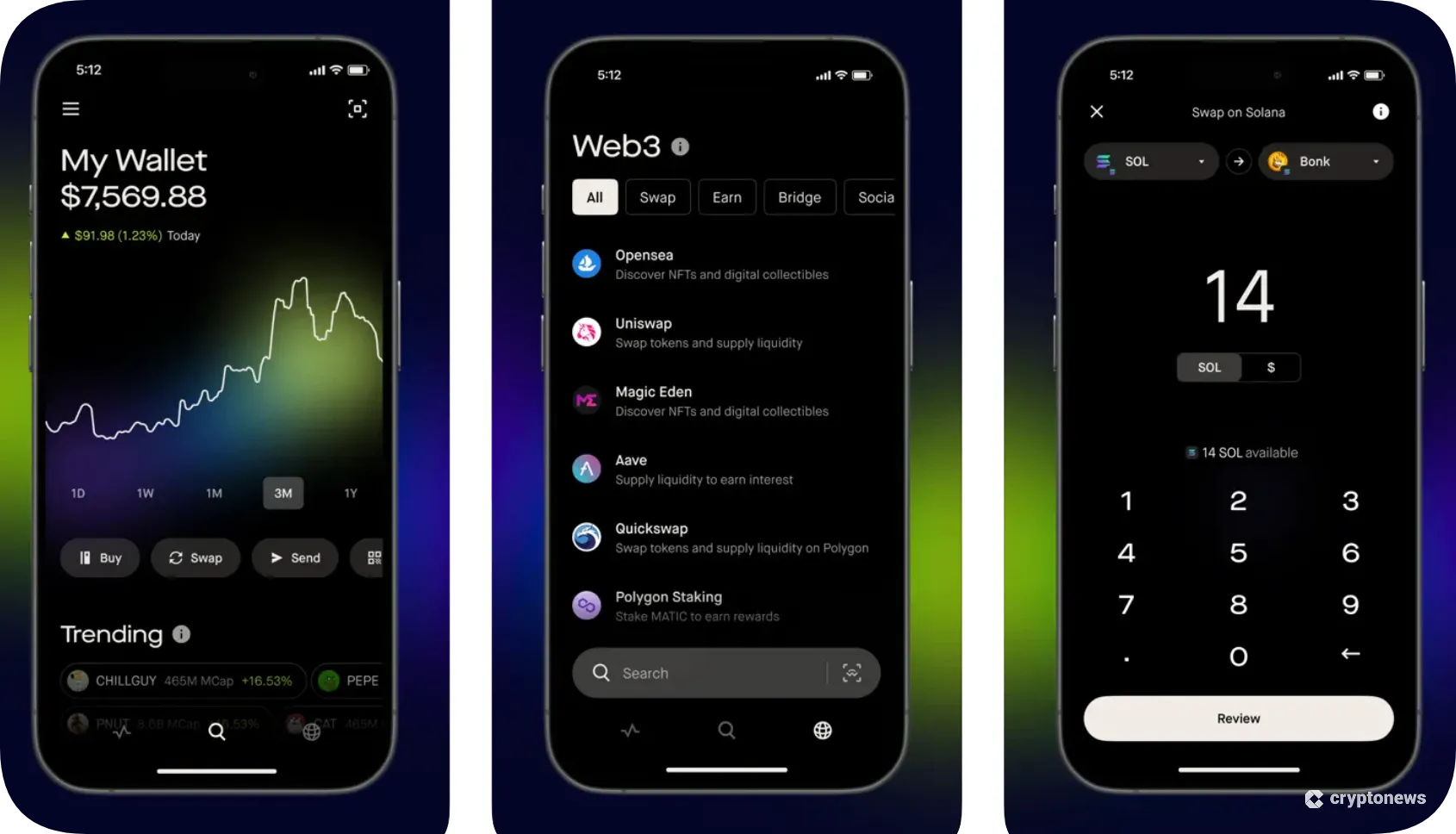
You can connect your Robinhood Wallet to your Robinhood account to buy Bitcoin or Dogecoin using fiat currency. However, this isn’t entirely seamless, as you need to have funds in your Robinhood account, which requires making a bank transfer or debit card deposit through the main Robinhood app first.
Despite this, the app offers a relatively smooth user experience and reliable security. Biometric authentication ensures only you can access your wallet. The app also includes a decentralized app (dApp) marketplace and support for NFTs, making it easy to interact with the broader world of Web3.
Robinhood Gold Subscription
Robinhood is unique among top US-based crypto exchanges in that it offers a paid subscription program, providing access to additional features. This subscription program, known as Robinhood Gold, costs $5 per month.
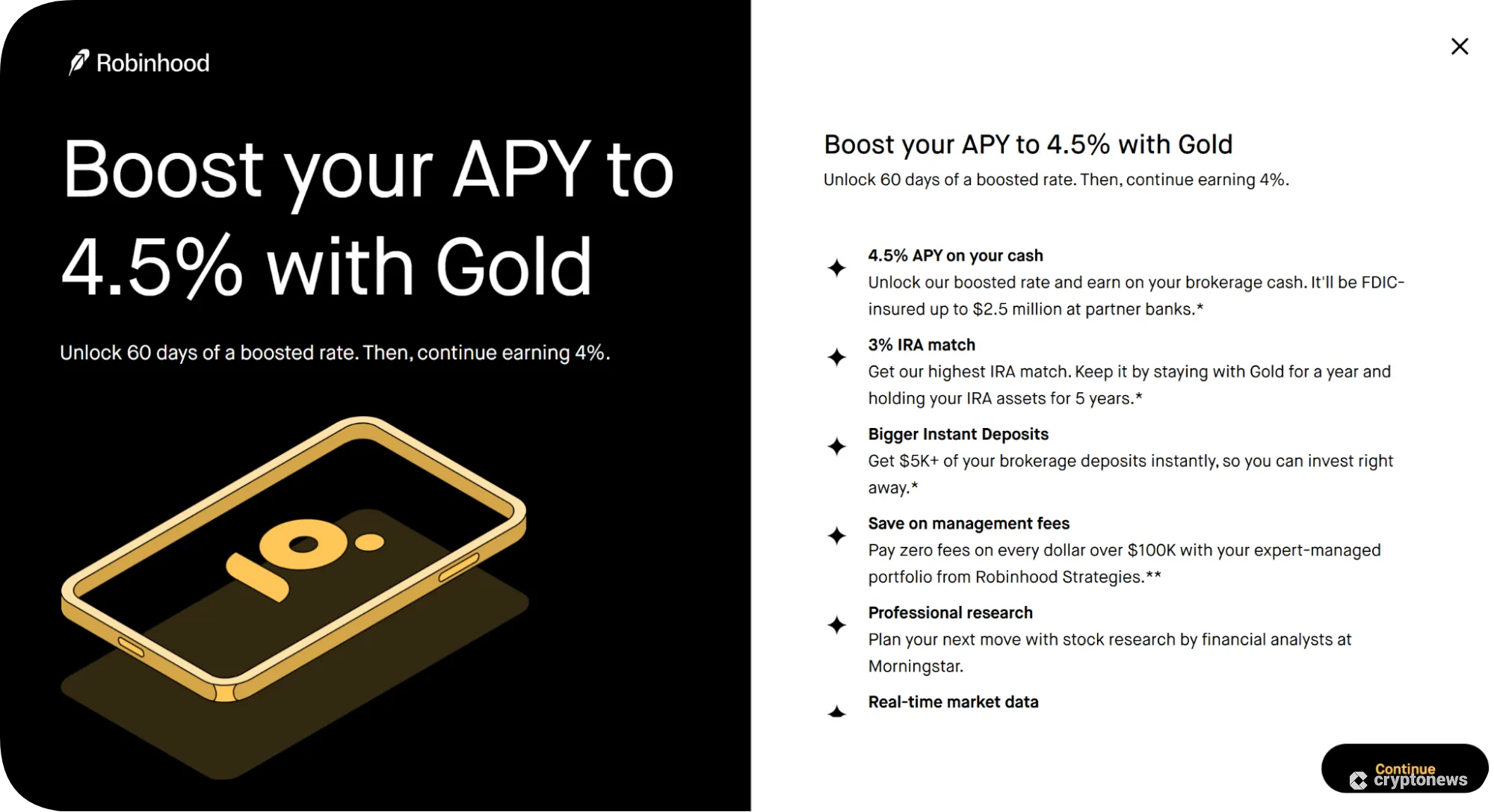
Robinhood Gold offers a variety of perks, but most of them aren’t focused on crypto. For example, Gold includes:
- 4% APY interest on uninvested cash in your Robinhood account
- Up to $2.5 million in FDIC insurance on uninvested deposits
- An annual 3% match on contributions to an Individual Retirement Account (IRA)
- Access to the Robinhood Gold Card credit card, which offers 3% cashback
- No management fees on deposits over $100k with Robinhood Strategies
- $1,000 of interest-free borrowing for margin trading
- Reduced fees for futures contract trading
- Instant access to up to $50,000 in deposits
That’s a long list of perks for just $5 per month, so it’s well worth considering Robinhood Gold if you use Robinhood as your primary stock brokerage and crypto exchange.
However, if you’re only interested in Robinhood as a crypto exchange, there aren’t many features for crypto trading. You’ll earn interest on uninvested cash and get instant access to deposits, but that’s about it. You can’t use the interest-free margin to trade crypto, and FDIC insurance doesn’t cover crypto holdings.
You should also be careful if you plan to take advantage of the IRA contribution match. While this is a great offer that can cover the cost of Robinhood Gold on its own, you must remain subscribed to Gold for one year and keep the assets in the IRA for five years to retain the full 3% match.
Robinhood Credit Card
Robinhood introduced a rewards Visa credit card in early 2025, known as the Robinhood Gold Card. This card is exclusively available to Robinhood Gold subscribers, and you have to apply to the waitlist in order to get it. There’s currently no timeline for how long you can expect to wait between signing up for Gold and receiving the Gold Card.
This credit card is very attractive. It has no annual fee (although you need a Gold subscription, which costs $60 per year) and offers 3% cashback on all purchases. When you book travel through Robinhood’s travel portal, you’ll earn 5% cashback. The card has no foreign transaction fees, and you can set up one-time-use virtual cards to make online purchases more securely.
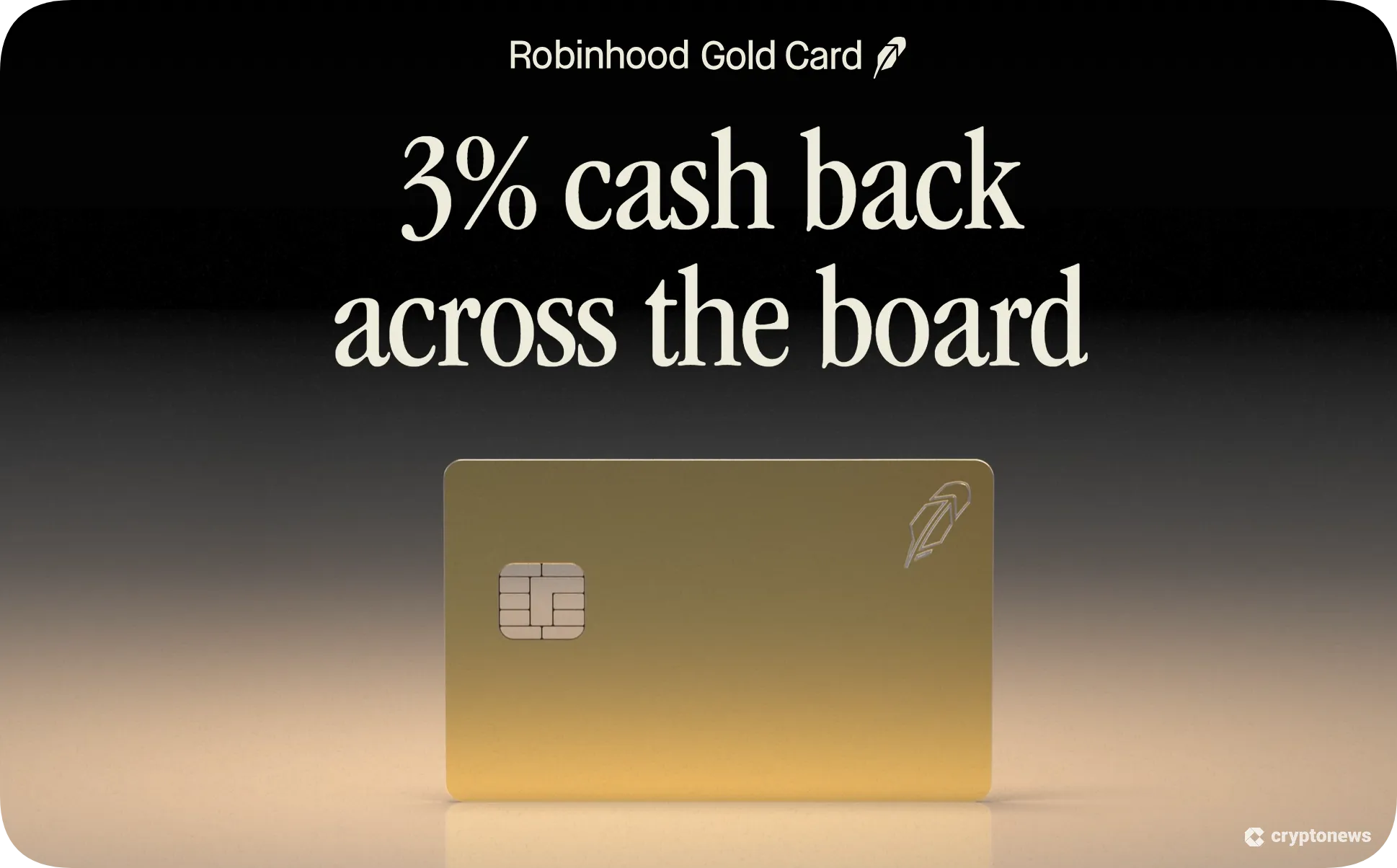
The card comes with a few additional travel benefits, including trip interruption protection and a rental car collision damage waiver. You can get cards for your entire family with a single Gold subscription and easily track spending across all of your linked cards.
This card is well worth considering, even if you don’t use Robinhood for trading. It’s one of the top cashback credit cards with a very low annual fee for a Gold subscription. And if you're looking for ways to spend your crypto, check out our guide to the best crypto credit cards.
Robinhood Strategies Review
Robinhood Strategies is a new expert-managed portfolio service designed for high-net-worth investors. It helps you build a portfolio of stocks and ETFs (excluding crypto, options, and futures) to meet your financial objectives. Your portfolio is managed by a team of human advisors and adjusted periodically to help you remain on track.
There’s no set portfolio allocation for Robinhood Strategies. Instead, the team considers your goals and market conditions to allocate your investments among categories like value stocks, growth stocks, international stocks, and more.
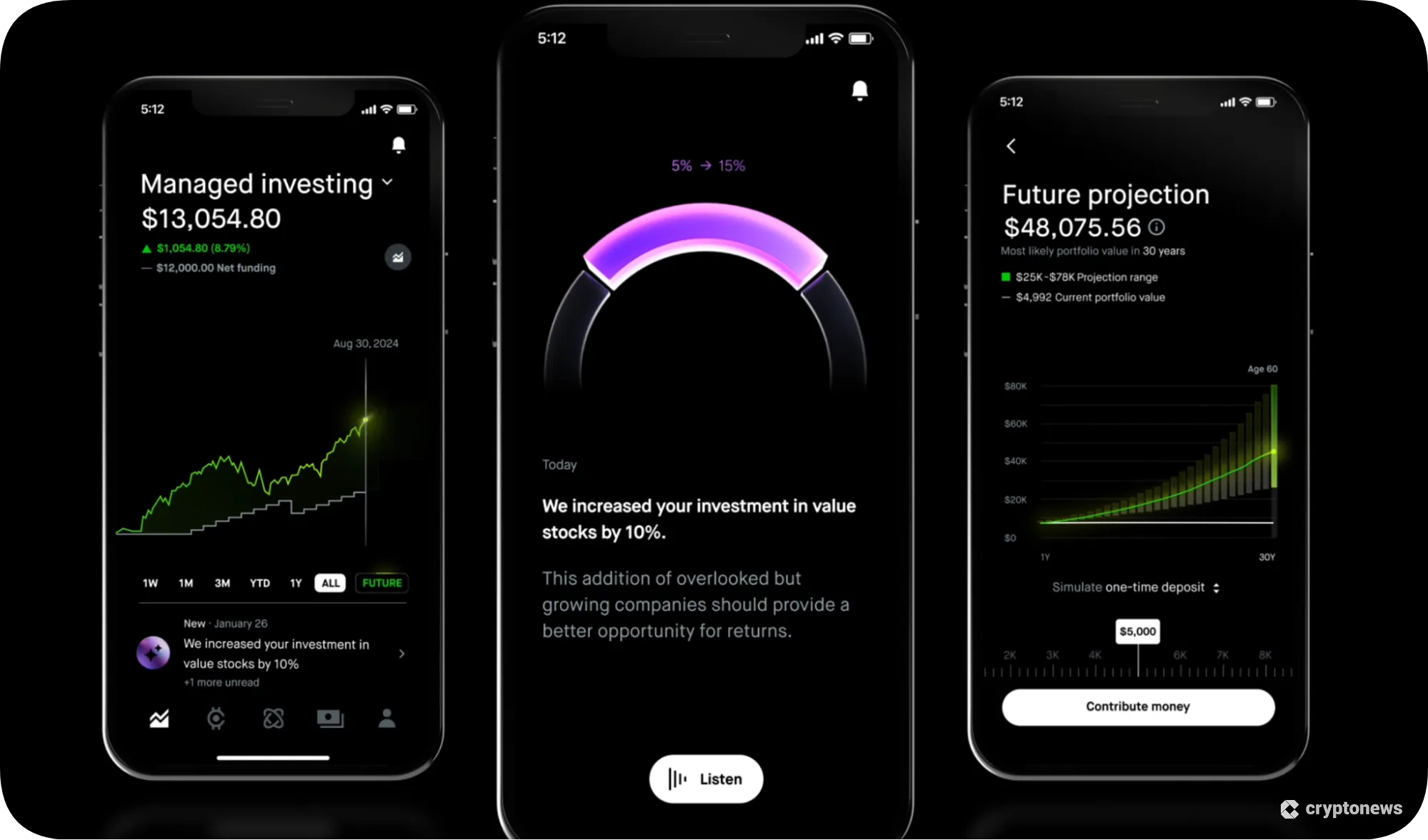
Robinhood Strategies also offers tools and calculators to help ensure you’re on track to meet your goals. For example, you can simulate how your net worth will change if you make a one-time deposit or recurring contribution to your portfolio. You can also run Monte Carlo simulations to see how your portfolio will perform under varying market conditions.
Robinhood Strategies charges an annual management fee of 0.25% of your portfolio. With Robinhood Gold, the 0.25% fee only applies to the first $100,000 in your portfolio: every dollar after that is managed for free. That makes this a very competitively priced service, even compared to robo-advisors.
Robinhood Fees
Robinhood started the trend of commission-free stock trading, and it’s remained one of the most cost-effective platforms for stock, options, and crypto trading. In fact, it’s one of the lowest-fee crypto exchanges in the U.S. today.
Here’s a breakdown of fees for different types of trading and other transactions at Robinhood.
| Stock and ETF trading | 0% commission |
|---|---|
| Options trading | 0% commission |
| Futures trading | $0.75 per contract ($0.50 per contract with Robinhood Gold) |
| Crypto trading | 0.85% per trade |
| Crypto staking | 25% commission |
| Robinhood Gold | $5 per month |
| Robinhood Strategies | 0.25% management |
| Deposit fees | None |
| Withdrawal fees | None |
| Crypto transfer fees | None |
Robinhood Payment Methods
Robinhood offers a relatively limited range of payment methods. Currently, you can only fund your account through a bank transfer, debit card payment, or crypto transfer. Credit cards and e-wallets are not supported.
To make a withdrawal from your Robinhood account, you can make a bank transfer or transfer cryptocurrency to another wallet. There are no fees for withdrawals, including crypto transfers.
Robinhood App Review: Is It User-Friendly?
Robinhood is available for web and mobile (iOS and Android) and has essentially set the bar for user experience in a mobile trading app. It’s one of the most user-friendly brokerage and crypto exchange apps we’ve tested.
Signing up for Robinhood requires KYC, so expect the onboarding process to take a few minutes. After that, you can easily view all of your investments and open positions in a streamlined dashboard.
Robinhood groups stock and ETF, crypto, and options positions separately in the dashboard, making it easy to keep track of what you own if you use it for different types of trading. An overview graph tracks your total portfolio value.
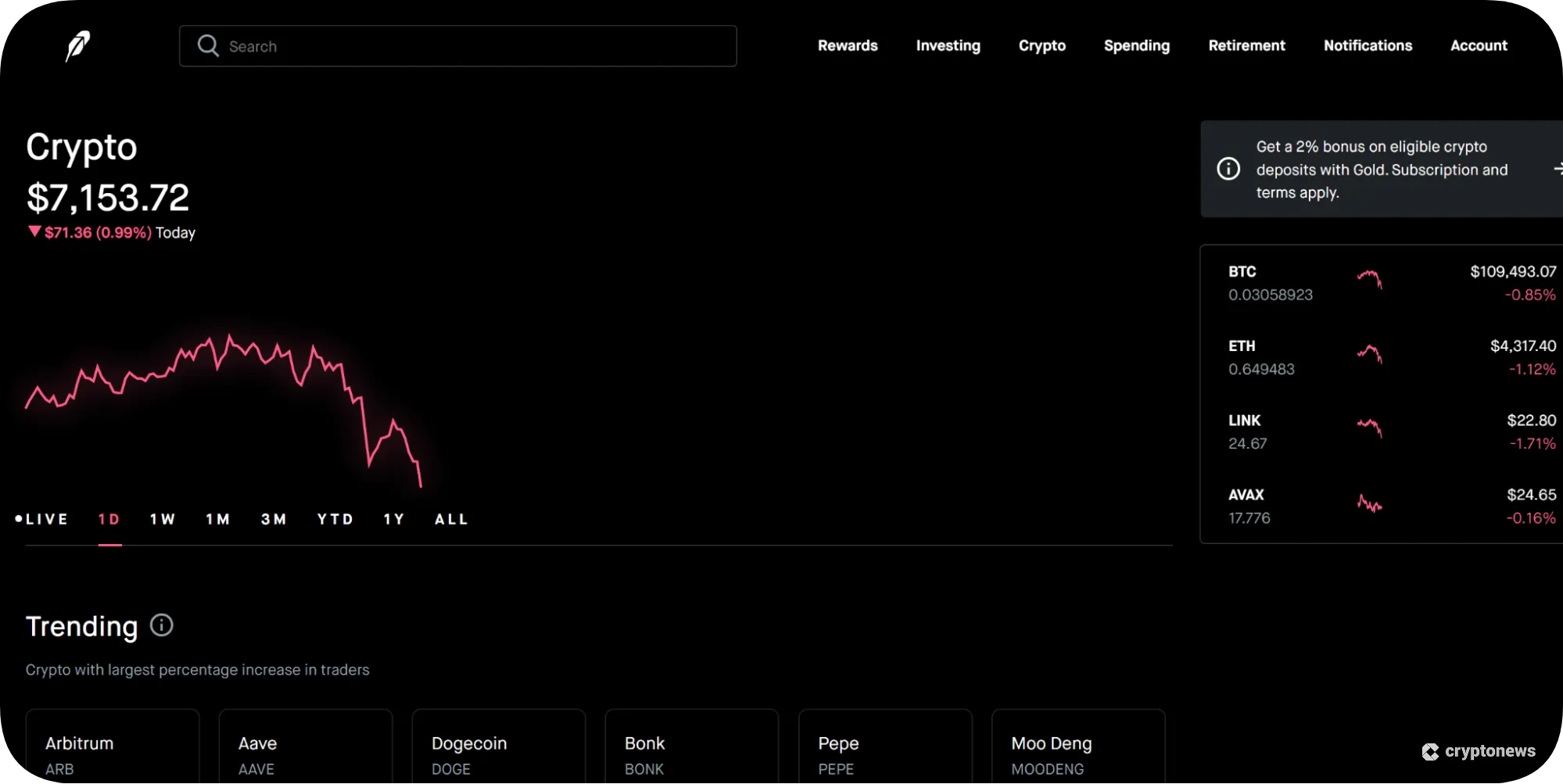
While the app has multiple tabs, most of the functionality is found in the main dashboard screen. You can search for stocks or crypto to trade, scroll down and check on your personal watchlist, or view personalized offers and suggestions for how to put your money to work for you.
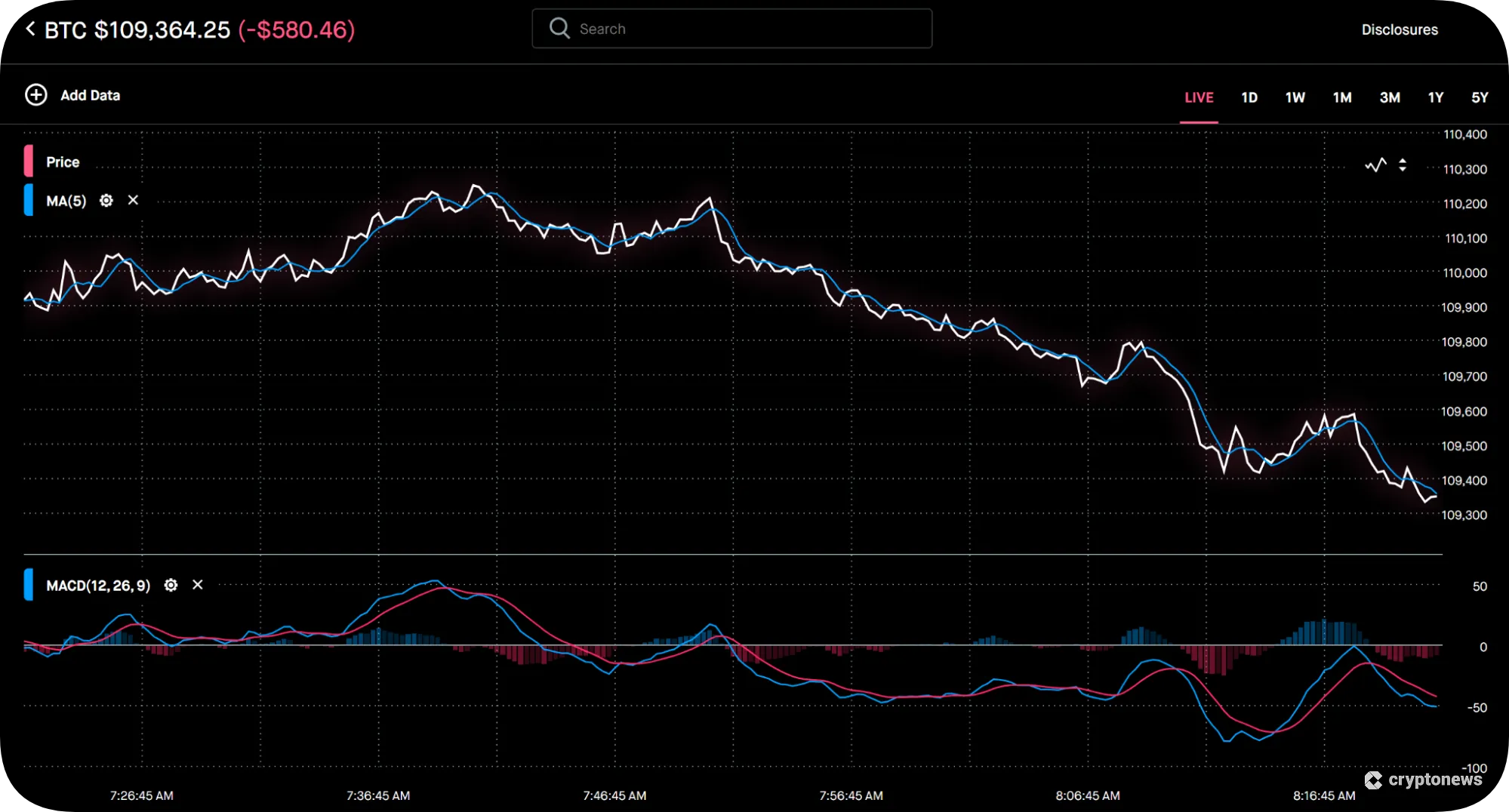
The Robinhood app supports price alerts and basic technical charts, but it shouldn’t be considered a serious crypto or stock research platform. The technical analysis tools are very limited, and there isn’t much information about stock or token fundamentals.
Robinhood offers a basic news feed for each ticker, but there are no news alerts, and the feed isn’t meant to offer a real-time list of market-wide headlines.
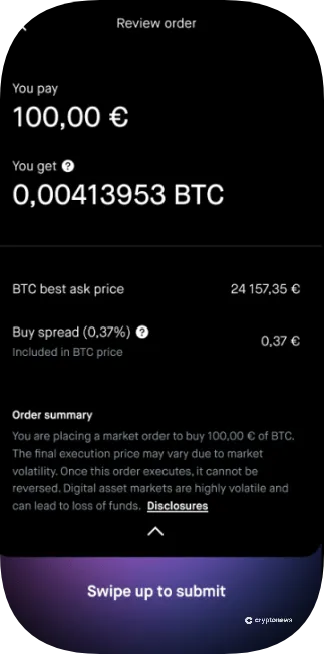
Overall, the Robinhood app is easy to use and has a very gentle learning curve for beginners. Even if you’re new to crypto or stock trading, you’ll likely find this app to be self-explanatory.
Where is Robinhood Available?
Robinhood is only available in the U.S., UK, and EU. There are some important differences in its offerings across these markets.
Specifically, Robinhood only offers stock and ETF trading in the U.S. and the UK. EU users can trade a limited number of tokenized securities, which are more similar to cryptocurrencies.
In addition, EU users have access to perpetual crypto futures for many of the tokens that Robinhood offers for spot trading. U.S. users have access to a limited set of crypto futures with monthly expirations.
Robinhood Customer Support and User Reviews
Robinhood offers 24/7 customer support by live chat and phone support from 7am-9pm (ET) daily. That said, customers have reported difficulty getting in touch with Robinhood’s support team or that customer service agents are unable to assist with more complex issues.
Users on Reddit routinely state that ‘you get what you pay for’ with Robinhood, noting that the company has limited support and trading options compared to other major brokerage firms. However, the platform also has many defenders who note that it offers a far better user experience, especially on mobile, compared to major U.S. brokers.
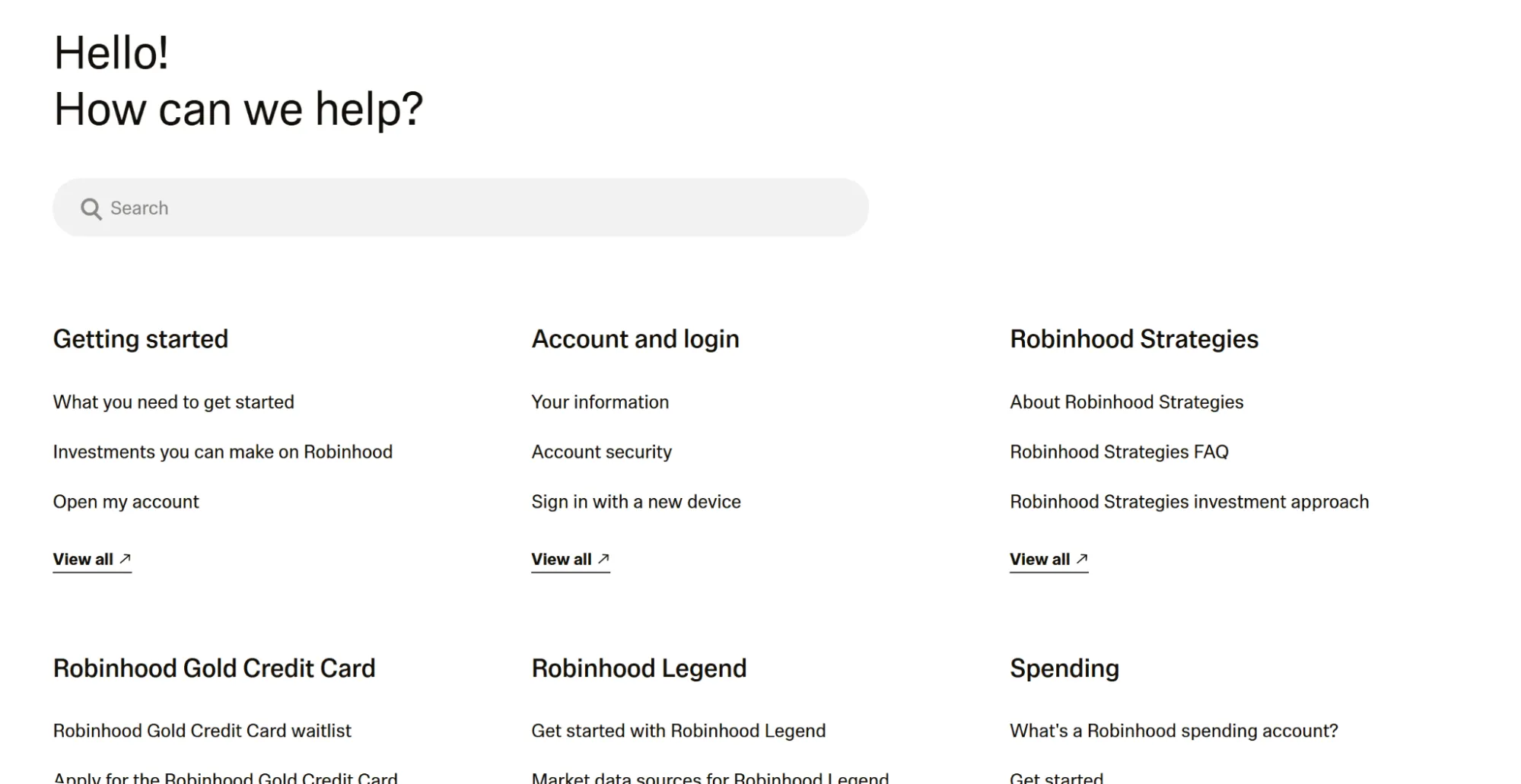
In addition to live support, Robinhood has a comprehensive online knowledge base. There are detailed guides for getting started with the platform, trading crypto, and setting up deposits and withdrawals. The support center also has a lot of information about trading limitations, fees, and other in-the-weeds details.
Overall, the app has strong reviews. It’s received 4.2 stars on Google Play after more than half a million reviews and 4.3 stars on the Apple App Store after 4.5 million reviews.
Where Can Robinhood Improve?
Our Robinhood crypto review found that this platform has a number of areas for potential improvement.
First, the app could offer a much wider range of cryptocurrencies for spot trading. While other U.S. exchanges have hundreds of tokens available, Robinhood has just 33. It would be especially nice to see Robinhood offer trading on all tokens in the top 10 cryptos by market cap, including USDT and BNB.
Second, Robinhood could roll out perpetual futures crypto trading for U.S. users. Coinbase recently launched perpetual futures, and this would be a big step forward for crypto trading on Robinhood.
The third major way Robinhood could improve its offerings for crypto investors is to support staking on a wider range of assets and to reduce processing times. Currently, staking is only supported for ETH and SOL, and it can take up to several weeks to stake and unstake tokens. This makes staking with Robinhood relatively unattractive.
Finally, Robinhood could offer more technical analysis and trading tools. While the simplicity of the Robinhood app is nice for new users, more advanced traders should be able to access the tools they need deeper in the app or in a separate, ‘pro’ app.
Currently, Robinhood’s charting tools only offer a few technical indicators for crypto trading, like moving averages, MACD, and RSI. Serious traders need to plot out trades on another platform and then move to Robinhood to enter orders.
Robinhood vs Other Top Exchanges
Now that we’ve covered all the details of trading crypto and other assets on Robinhood, how does it stack up against other US-based crypto exchanges? We’ll dive into a brief comparison between Robinhood and some of the biggest U.S. exchanges.
Robinhood vs. CoinFutures
Robinhood and CoinFutures are very different platforms. Whereas Robinhood is a true crypto exchange where you can buy and sell cryptocurrencies, CoinFutures is a derivatives simulation platform that lets you speculate on crypto price charts.
On CoinFutures, you’re not buying real crypto tokens or even real crypto futures contracts: you’re making money based on directional bets on price charts that simulate crypto price action.
For a lot of crypto traders, CoinFutures’ model can be very attractive. It doesn’t require taking ownership of crypto tokens and lets you trade with up to 1,000x leverage, so you can earn big profits from a relatively small amount of capital. It also supports more payment methods, including credit and debit cards. Just keep in mind that CoinFutures doesn’t support crypto staking or long-term investing.
Read our CoinFutures review to learn more.
Robinhood vs. Coinbase
Coinbase is the leading U.S. crypto exchange and arguably Robinhood’s biggest competitor in the crypto market. It offers spot trading on a much wider range of tokens than Robinhood and recently introduced perpetual futures trading. Coinbase also lists new tokens more frequently than Robinhood and has professional-grade charting and trading tools for crypto.
The key advantage Robinhood has over Coinbase is cost. Trading spot cryptos on Coinbase is cheaper (fees start at 0.60%), but buying crypto with a debit or credit card can cost up to 4%. For avid crypto traders and investors, it could be worth buying cryptocurrencies on Robinhood and then transferring them to a Coinbase wallet for management and trading.
Robinhood vs. Crypto.com
Crypto.com is another major U.S. exchange with more than 400 tokens available for spot trading. However, it charges much higher fees than most other major U.S. exchanges, including Robinhood. Fees can be up to 0.5% for spot trades, although this is significantly reduced if you hold the exchange’s CRO token.
Crypto.com recently expanded into sports betting and prediction markets, making it a good option if you want to take part in these activities alongside crypto trading. It also offers more advanced analysis tools than Robinhood, although the app user experience isn’t as smooth.
Robinhood vs. OKX US
OKX U.S. is the U.S. arm of global crypto exchange OKX. It offers a selection of 200+ tokens for spot trading and supports staking for 15 tokens, including ETH and SOL. OKX U.S. also lets you buy crypto with a credit card and has much more advanced technical analysis tools compared to Robinhood.
Spot trading fees at OKX U.S. start at 0.1%, making this exchange very competitive on price. The OKX app has a steeper learning curve than the Robinhood app, though, and it doesn’t offer trading on other assets like stocks or options.
How to Register on Robinhood
Here’s how to get started with Robinhood in a few easy steps.
Step 1: Sign Up
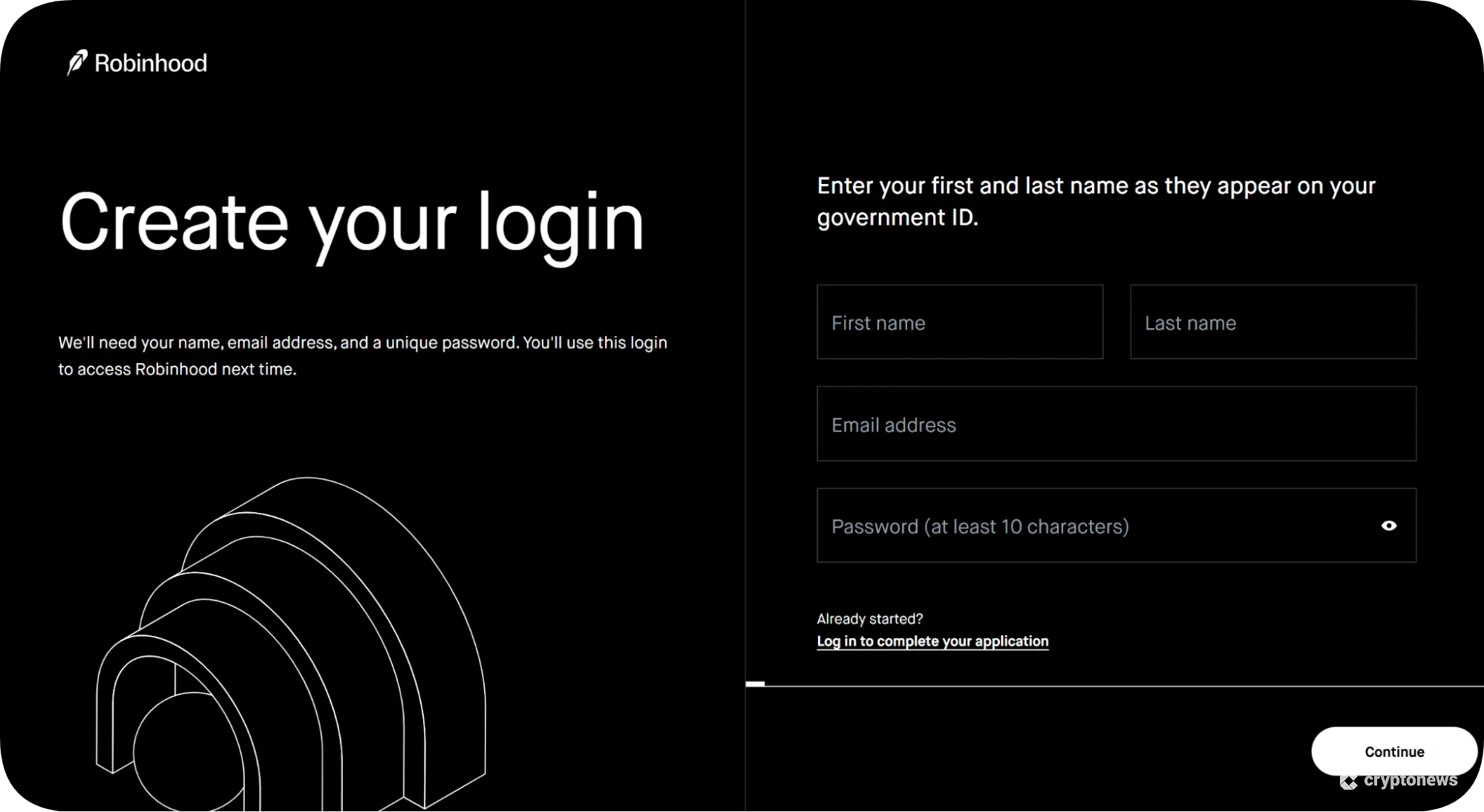
Visit Robinhood’s website or download the Robinhood mobile app and click Sign Up. Enter your name and email address and choose a password for your account.
Step 2: Complete KYC Verification
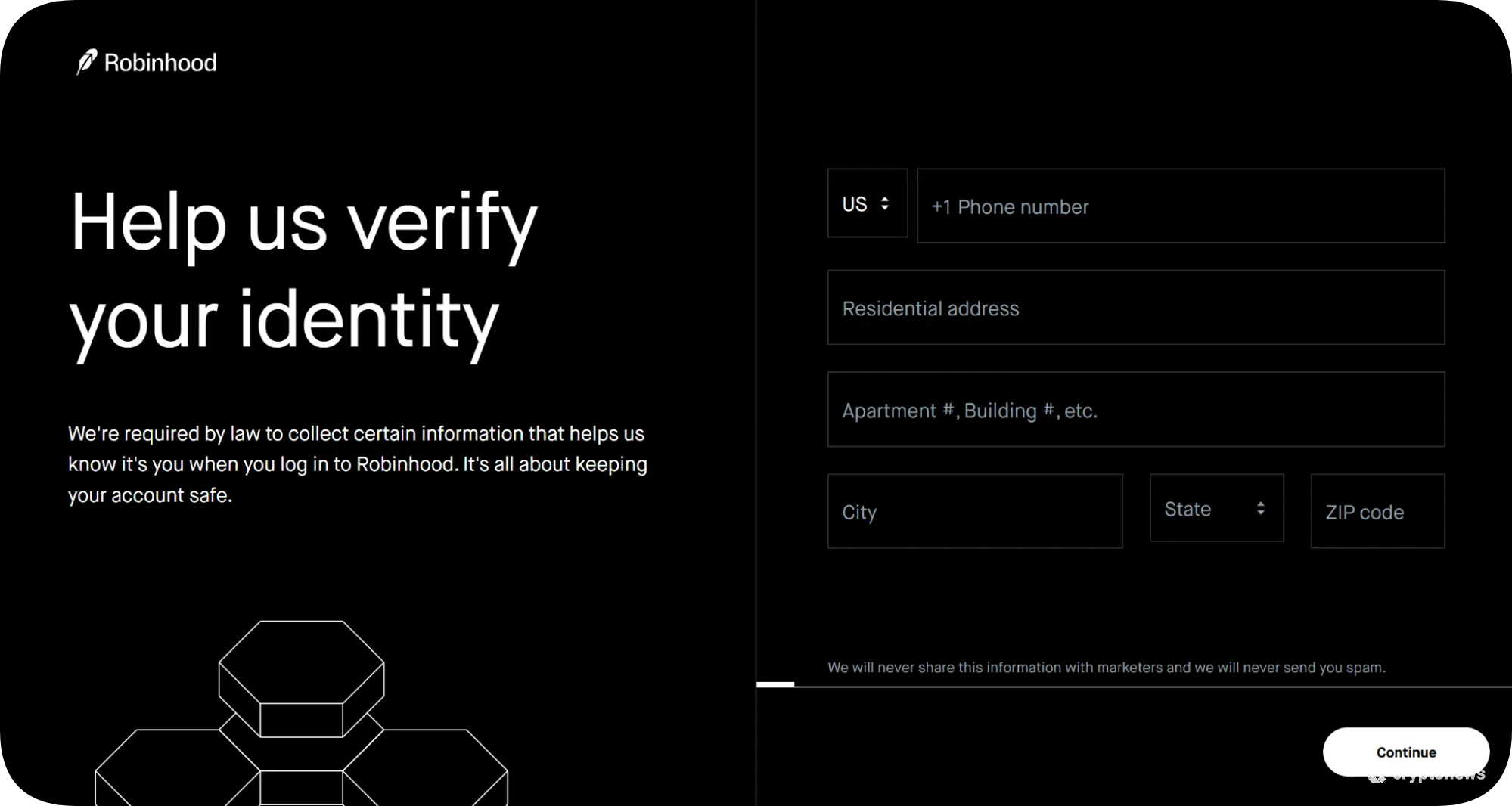
Robinhood requires you to complete KYC verification before you can make a deposit or begin trading. Enter your phone number and address, then enter the verification code that Robinhood texts you.
Next, you need to enter your birth date and Social Security number. Then upload a photo of your driver’s license or passport and take a selfie to complete the KYC process.
Step 3: Make a Deposit
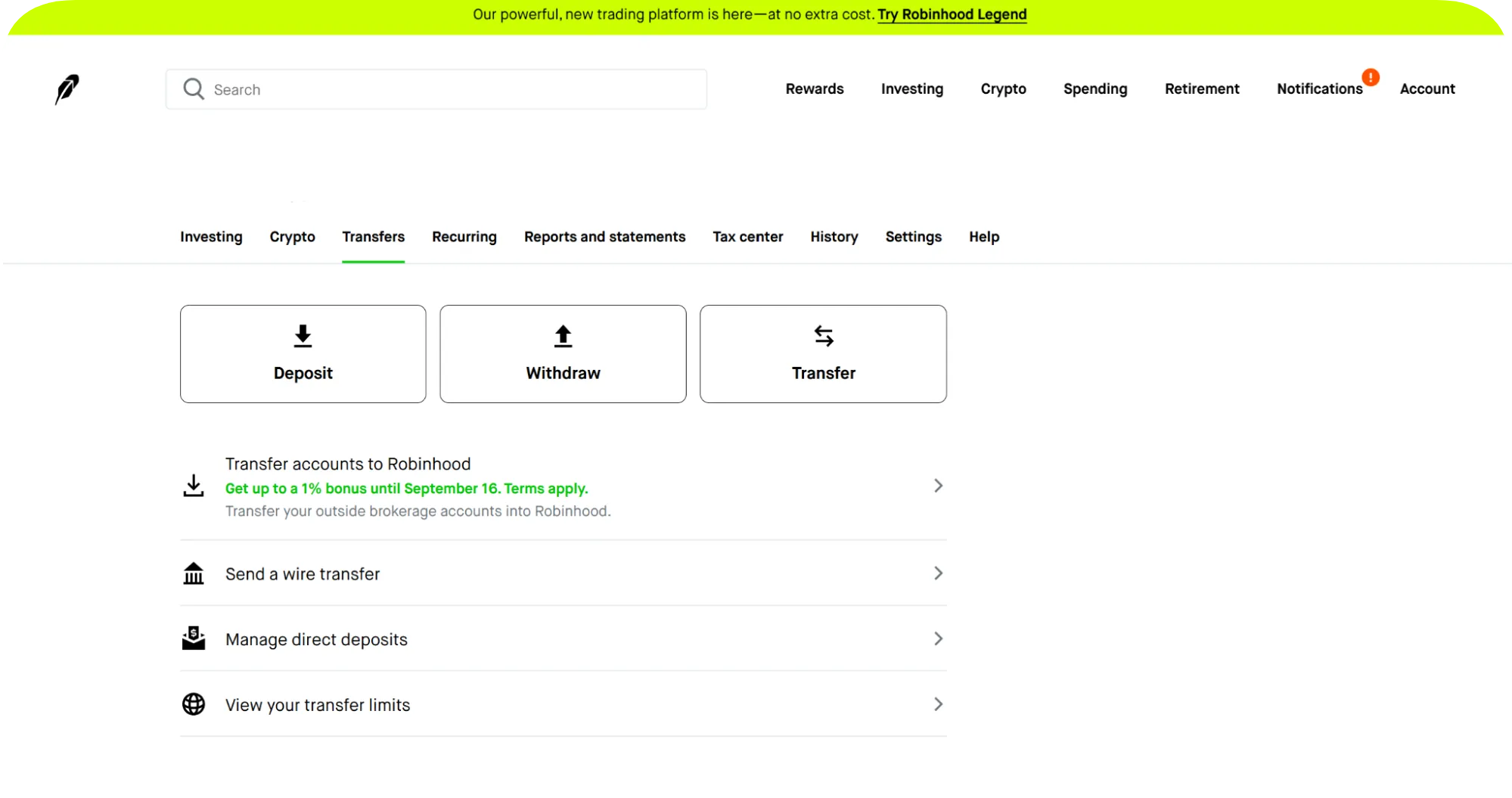
In your account dashboard, click on Account, then Transfers, and select Deposit to make a deposit. Choose the amount, then add your bank account or debit card information. You can choose to make a one-time deposit or set up recurring deposits.
Step 4: Start Trading
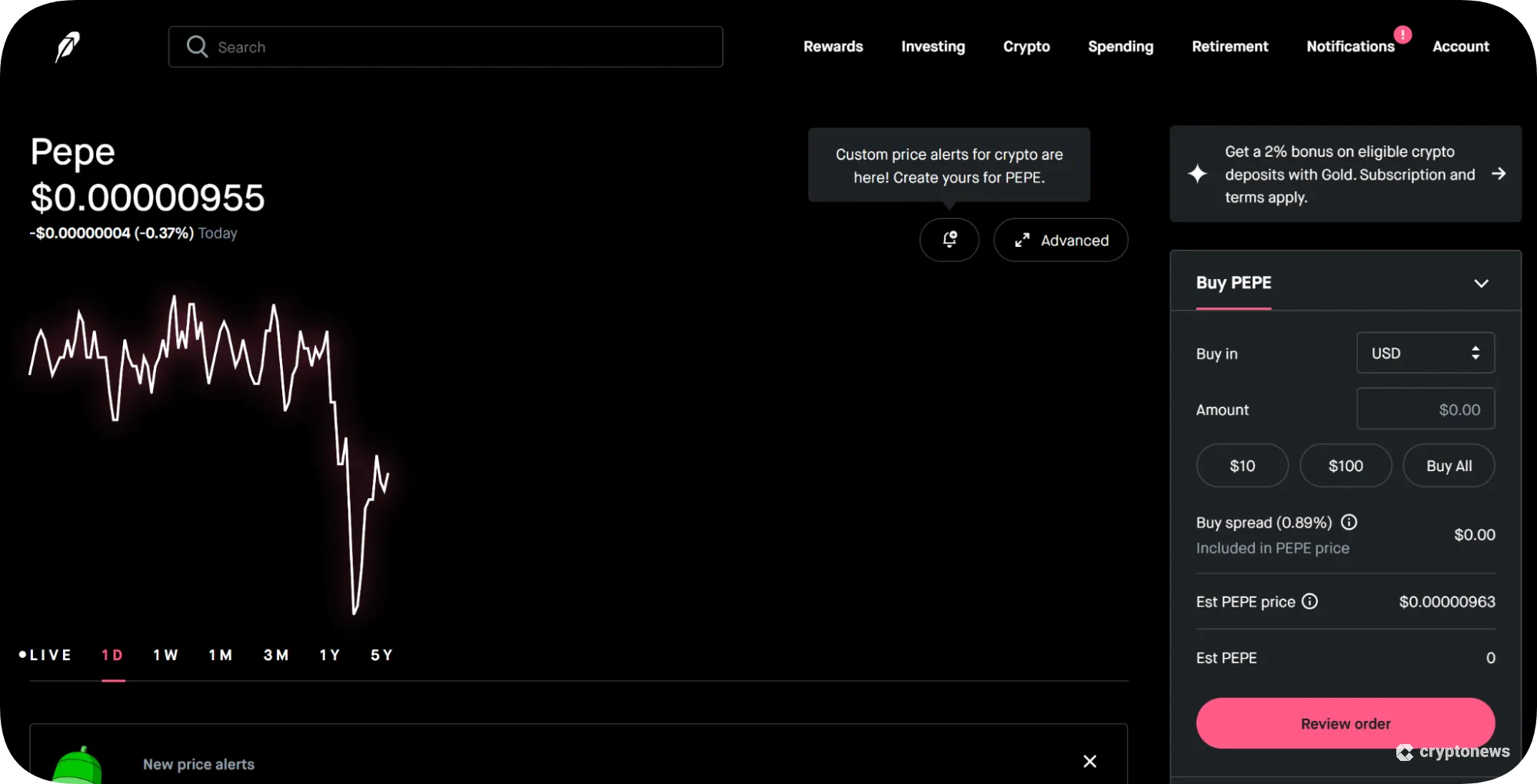
A portion of your deposit is available for trading instantly. Click on the Investing tab to view stocks, ETFs, options, and futures, or the Crypto tab to view available crypto tokens. Click on an asset to open its information page, which includes a trade order form.
Robinhood Review Conclusion: Who Is It Best For?
Robinhood is a cost-effective and easy-to-use platform for investors and traders who want to trade a mix of stocks, ETFs, cryptocurrencies, options, and futures. It stands out as one of the top stock and options trading platforms, but its support for cryptocurrencies lags behind that of other major U.S. exchanges. Robinhood only supports spot trading on 33 crypto tokens and staking on two tokens, and it lacks advanced tools for traders.
Robinhood is also better for beginners than advanced traders. The app is impressively easy to use and requires no prior experience with crypto trading to get started. However, it has very few advanced trading tools and the technical charts are very basic. Advanced crypto traders will want to choose a platform with a wider range of analysis features.
All that said, Robinhood is one of the cheapest platforms in the U.S. for buying cryptocurrency with fiat. It’s worth considering using Robinhood to get into crypto, then transferring your tokens to a self-custody crypto wallet or another exchange.
Our Methodology: How We Tested and Reviewed Robinhood
Our Robinhood review leaned on first-hand experience with the app. We signed up and created an account to explore all of the tradable assets, test out the web and mobile user experiences, and learn more about Robinhood’s analytics tools and research.
We also delved deeply into Robinhood’s support documentation to gather more information about fees and trading limitations, particularly for cryptocurrencies. User reviews on Reddit, Google Play, and the Apple App Store helped us identify areas in which Robinhood excels and areas for potential improvement.
Finally, we tested several other U.S. crypto exchanges alongside Robinhood, including CoinFutures and Coinbase, to determine how Robinhood compares. We focused primarily on crypto trading for this comparison.
FAQs
Is Robinhood trustworthy?
Is Robinhood good for crypto?
Can you day trade on Robinhood?
Is Robinhood good for beginners?
Why can’t I withdraw money from Robinhood?
Should I give my SSN to Robinhood?
References
- Robinhood Markets, Inc. Reports January 2025 Operating Data (Robinhood)
- Cryptocurrency Monthly Exchange Volume (The Block)
- Robinhood’s $200 million Bitstamp deal takes it beyond retail trading (CNBC)
- Robinhood to Pay $45 Million SEC Settlement Over Data Breach, Other Violations (Wall Street Journal)
- Robinhood expands into tokenized equities and crypto perp futures, plans Layer 2 blockchain with Arbitrum (The Block)
- Coinbase launches CFTC-regulated perpetual futures for U.S. traders amid growing crypto regulatory clarity (The Block)