Solana Co-Founder Questions Relevance of Layer-2 Solutions




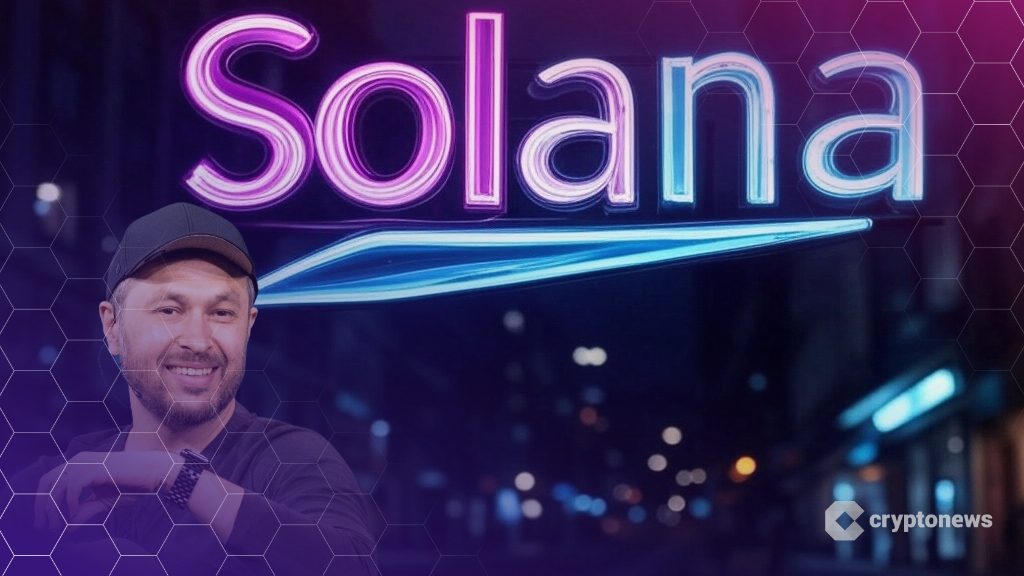
Solana co-founder Anatoly Yakovenko has reignited the debate on the necessity of Layer-2 (L2) solutions with a bold claim: “There is no reason to build an L2.”
In a recent tweet, he asserted that Layer-1 (L1) blockchains could be faster, cheaper, and more secure without the need for L2s.
He criticized L2 solutions for being constrained by a slow L1 data availability stack and the complexities of fraud proofs and upgrade multisigs.
Scalability Through Storage Increase
One of the primary concerns raised in response to Yakovenko’s stance was the scalability of a single blockchain when data storage demands increase exponentially.
A user asked, “What happens when the amount of data we want to store on blockchains goes exponential? What are the limits of keeping everything in a single blockchain?”
Yakovenko downplayed the concern, stating that Solana currently generates only 80TB of data per year, which he claims is too little to sustain a business yet too much for individuals to store conveniently.
Further discussions delved into Solana’s strategy for handling unused storage, particularly in the absence of an activated state rent mechanism.
Yakovenko clarified that while the ledger would be stored on decentralized storage providers like Filecoin, Solana’s primary focus is on efficiently managing its state growth.
Addressing Solana’s State Growth and Scalability
In an article written in March last year, Yakovenko elaborated on Solana’s state growth challenges, emphasizing that while the blockchain adds approximately 1 million new accounts daily, its total number has surpassed 500 million.
Despite the snapshot size reaching 70GB, he maintains that these numbers remain manageable as hardware continues to improve.
However, he highlighted key limitations related to memory and disk bandwidth, which influence Solana’s design choices.
To optimize state growth and ensure long-term scalability, Solana has introduced several innovations, including “Chilly,” “Avocado,” and “LSR.”
Chilly serves as a runtime cache that dynamically manages frequently accessed accounts, improving transaction efficiency.
Avocado addresses state and index compression by replacing stored account data with hashes and migrating the account index to a binary trie structure.
These solutions aim to reduce snapshot sizes and enhance transaction processing without sacrificing performance.
One major challenge lies in creating new accounts, which requires validators to prove that an account does not already exist.
This process is currently resource-intensive, and Yakovenko proposed a solution involving binary trie mining.
Validators could earn additional SOL by compressing inactive accounts into a trie structure, thereby reducing the total active state size.
He estimates that compressing Solana’s 500 million accounts could take approximately 80 days at a rate of 30 accounts per transaction.
Scalability Concern Grows After SIMD-0228’s Proposal Rejection
The latest controversial take from Solana’s co-founder follows a recently rejected proposal from the community.
According to a report from March 14, the Solana community has decisively rejected SIMD-0228, a proposal to introduce a dynamic emission schedule for staking rewards, in what has been called the largest governance vote in crypto history.
Despite an initial lead, the proposal failed to secure the required two-thirds supermajority, largely due to a late surge in opposition from smaller validators concerned about financial sustainability.
With over 74% of network stakes participating across 910 validators, the vote proves that smaller validators could successfully counter institutional influence.
Adding to the controversy, vote trading emerged as an unexpected twist when the Solayer validator sold 10% of its vote tokens on Meteora, allowing stakeholders to purchase governance rights.
As it stands now, it remains to be seen whether Solana’s state management strategies will prove more efficient than traditional L2 rollups.
However, Yakovenko’s vision for a streamlined, high-performance L1 challenges conventional thinking and could later be implemented for the blockchain’s scalability.
- Crypto Price Prediction Today 6 February – XRP, Dogecoin, Shiba Inu
- Best Crypto to Buy Now February 6 – XRP, Solana, Bitcoin
- Solana Price Prediction: $80 SOL Looks Scary – But Smart Money Just Signaled This Might Be the Bottom
- XRP Price Prediction: Key Ledger Upgrade Quietly Activated – Why This Could Be the Most Bullish Signal Yet
- China’s DeepSeek AI Predicts the Price of XRP, Solana and Bitcoin By the End of 2026

2M+
250+
8
70





- Crypto Price Prediction Today 6 February – XRP, Dogecoin, Shiba Inu
- Best Crypto to Buy Now February 6 – XRP, Solana, Bitcoin
- Solana Price Prediction: $80 SOL Looks Scary – But Smart Money Just Signaled This Might Be the Bottom
- XRP Price Prediction: Key Ledger Upgrade Quietly Activated – Why This Could Be the Most Bullish Signal Yet
- China’s DeepSeek AI Predicts the Price of XRP, Solana and Bitcoin By the End of 2026
More Articles

 in numbers