Jupiter & Helium Expose Token Buyback “Meta” — Why It Never Works in Crypto





Jupiter and Helium are forcing a difficult but increasingly unavoidable conversation in crypto: token buybacks often look effective on paper, yet fail when supply dynamics overwhelm demand.
In recent weeks, both projects have moved to reassess buyback programs after spending tens of millions of dollars with little visible impact on token prices, exposing a broader structural problem across DeFi.
Buybacks vs. Supply: Why Helium and Jupiter Are Changing Course
Helium confirmed in early January that it has halted HNT buybacks funded by Helium Mobile revenue, despite generating $3.4 million in October 2025 alone.
Founder and CEO Amir Haleem said the market showed little response to open-market purchases, prompting the team to redirect capital toward subscriber growth, hardware expansion, and increased carrier offload usage.
Helium had shifted to daily automated buybacks in late 2025, burning tokens purchased with revenue from mobile subscriptions and network data usage.
That program followed earlier treasury-funded burns and was designed to tie real business activity to token supply reduction. While data credit burns from network usage remain in place, buybacks tied to mobile revenue have now been paused.
Jupiter is facing a similar reckoning, as the Solana-based DEX aggregator spent more than $70 million on JUP buybacks in 2025, funded by roughly half of its protocol fee revenue.
With JUP trading near $0.21, down almost 90% from its early-2024 high, Jupiter founder Siong publicly asked the community whether buybacks should be halted.
The common thread is supply, as Jupiter’s circulating supply has expanded sharply, driven by airdrops, staking rewards, and scheduled unlocks.
Roughly 700 million JUP entered circulation through Jupuary 2025 alone, while ongoing ASR rewards added persistent inflation, with buybacks absorbing only a fraction of that issuance.
As critics across Solana DeFi have pointed out, buying tokens in the open market does little when new supply consistently exceeds what is being removed. In that environment, buybacks become exit liquidity rather than long-term value capture.
This dynamic has fueled a broader critique of what some describe as “chart painting.” Buybacks can create short-term support or narrative momentum, but without structural demand, they struggle to hold.
Why Buybacks Alone Struggle to Support Crypto Tokens
Several market participants argue that buybacks only work when they are paired with reasons to hold the token, such as mandatory utility, reduced emissions, or direct participation in cash flows. Otherwise, traders simply sell into predictable buying pressure.
At the same time, defenders of buybacks note they are not inherently flawed. In traditional finance, buybacks are meant to return excess capital when equity is undervalued, not to offset aggressive dilution.
In crypto, however, tokens rarely represent ownership, and future buybacks are discretionary rather than guaranteed.
For Helium, the challenge is aligning its growing off-chain business with on-chain value. The network now supports nearly 600,000 mobile subscribers and generates steady data credit burns through carrier offload.
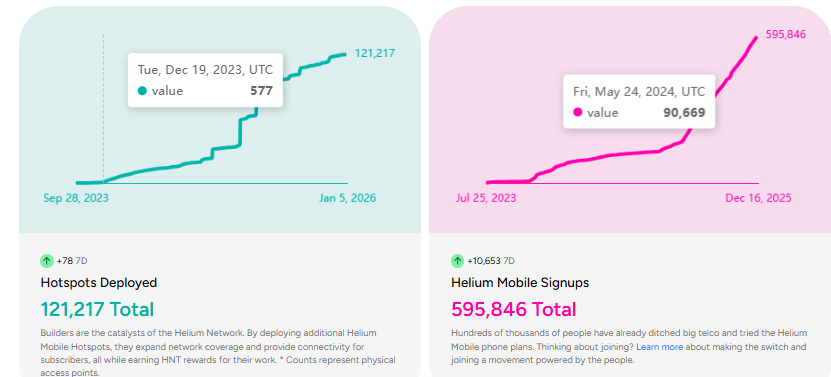
The team’s current strategy prioritizes expanding real usage, with the expectation that higher network activity will eventually strengthen token economics. Buybacks remain an option, but only once growth and cash flows materially outpace issuance.
Jupiter’s situation is more complex, as it operates one of the most profitable DeFi platforms, with deep liquidity, large TVL, and a growing suite of products, including perps, lending, and a mobile wallet. Yet JUP remains largely optional.

Analysts argue that without tighter integration into the protocol’s core functions, buybacks alone cannot absorb inflation or anchor value.
Proposals circulating within the ecosystem focus on reducing emissions, tying rewards to revenue, and making JUP an asset for serious users rather than a passive governance token.
- XRP Price Prediction: Ripple Edges Bitcoin In South Korea
- XRP Price Analysis: Wealth Managers Show Growing Interest in XRP
- Where Could XRP Price Go This September as CLARITY Act Nears?
- Ethereum Price Suppressed as Selling Pressure Mounts
- Polymarket CLARITY Act Odds Slashed to 15% of Being Passed in 2026

2M+
250+
8
70





- XRP Price Prediction: Ripple Edges Bitcoin In South Korea
- XRP Price Analysis: Wealth Managers Show Growing Interest in XRP
- Where Could XRP Price Go This September as CLARITY Act Nears?
- Ethereum Price Suppressed as Selling Pressure Mounts
- Polymarket CLARITY Act Odds Slashed to 15% of Being Passed in 2026
More Articles


 in numbers