

MegaETH (MEGA) Mainnet Launch Date: Full Details
We believe in full transparency with our readers. Some of our content includes affiliate links, and we may earn a commission through these partnerships. However, this potential compensation never influences our analysis, opinions, or reviews. Our editorial content is created independently of our marketing partnerships, and our ratings are based solely on our established evaluation criteria. Read More





MegaETH (MEGA), a Layer-2 solution for Ethereum-based projects, completed its public sale on October 30, 2025. Investors paid $0.0999 per MEGA, and the blockchain startup reached its $49.9 million hard cap.
Participants eagerly await several timeline dates, including the mainnet release and token generation event (TGE). This guide reveals the MegaETH launch date based on whitepaper documents and other primary sources.
Best MegaETH Alternative — Editor’s Pick

- Introducing the first Bitcoin L2 solution
- Allows users to trade BTC almost instantaneously
- Enhanced transaction security with ZK-proofs
 USDC
USDC- ETH
- usdt


- In This Article
- In This Article
- Show Full Guide
MegaETH Launch Date – When Does it Go Live?
The MEGA public sale, which used an English-style auction process, ran from October 27 to October 30, 2025. It enabled know-your-customer (KYC) verified participants to bid between $0.0001 and $0.0999 over a 72-hour period. According to the latest presale data, the event attracted over $1.39 billion in bid contributions and reached the full hard cap target of nearly $50 million.
According to the MegaETH whitepaper, the team aims to release its Layer-2 network in Q4 2025. It also notes that potential delays may occur due to technical issues, security audits, or unforeseen complications. From a MiCA-compliance standpoint, MegaETH offers no guarantees of its mainnet promise.
Project documents also state that on the MegaETH launch date, the solution will have limited functionality. Two core infrastructure features, staking and on-chain governance, may launch up to 18 months after the mainnet.
Another important milestone is the TGE, where the founders list MEGA tokens on crypto exchanges. After that, investors will be able to trade MEGA tokens on public markets, with the exception of U.S. clients and those who opted for a 10% discount, whose funds are locked up for an additional 12 months. The whitepaper provides a TGE date of January 2026, yet it confirms no exact dates or platforms. We have separately explored MegaETH price predictions.
Which Exchanges is MegaETH Listing on?
While MegaETH will likely announce listing partners nearer to the TGE, tokens should launch on decentralized exchanges (DEXs) right away. As MEGA uses the ERC-20 token standard, Ethereum-based DEXs like Uniswap and SushiSwap are possible. These platforms let users buy and sell MEGA in a non-custodial environment, since smart contracts execute trades.
Due to the public sale’s widespread popularity, participants also expect listings on the best crypto exchanges. The team provides no information about centralized exchange (CEX) partners, so despite unverified rumors, investors must wait for official announcements.
Better Alternatives to MegaETH
Although MegaETH provides early access to an innovative theoretical concept, its lack of firm launch dates, unfavorable token distribution, and large valuation mean better alternatives exist.
Before you buy MEGA tokens, consider these presale events with strong fundamentals.
Bitcoin Hyper (HYPER) – Bitcoin Layer-2 Scaling With Smart Contract Support
Built on the Solana Virtual Machine for superior performance, Bitcoin Hyper  HYPER +19.00% is building a secure and efficient Layer-2 network for Bitcoin (BTC). Serving the world’s most valuable digital-asset community, its decentralized Canonical Bridge ensures BTC holders retain ownership of their coins without third-party interference.

The Layer-2 platform offers several important use cases, including access to decentralized applications (dApps). BTC holders who bridge to Bitcoin Hyper will gain exposure to decentralized finance (DeFi), including staking, lending, liquidity provision, and other Web 3.0 concepts.
Ecosystem users require HYPER tokens to cover network fees, obtain governance rights, and earn staking rewards. The ongoing presale sells HYPER at a discounted price before the TGE. Participants have invested over $33.09M so far, with the presale raising north of $150,000 every week.
Visit Bitcoin HyperMaxi Doge (MAXI) – Meme Coin Maximalism With High-Leverage Potential
Maxi Doge  MAXI +13.44% is our top presale pick from the meme coin space. The Ethereum-based token leverages the dog-themed narrative, which has produced multiple billion-dollar projects like Dogecoin (DOGE), Shiba Inu (SHIB), and Floki (FLOKI).

The meme mascot depicts a gym-loving canine who trades perpetual futures with 1000x leverage. The thrill-seeking Maxi Doge embodies an all-or-nothing ethos of the most determined meme coin investors who have been invested in the market through thick and thin.
As a high-risk, high-reward crypto token, Maxi Doge offers a small market capitalization and a discounted presale price. The team has sold over $4.85M worth of MAXI to date, and buyers currently pay $0.00028360 per token. Participants who stake MAXI during the presale earn 67% APYs.
Visit Maxi DogePEPENODE (PEPENODE) – Gamified Crypto Mining With Real Meme-Coin Rewards
PEPENODE merges traditional cloud mining with gamification and play-to-earn concepts. While the mining is simulated, players earn real rewards in PEPENODE and other top meme coins based on invested time and effort.

The goal is to build a virtual server room that hosts mining equipment and progressively upgrade it with better hardware to improve its computing power. PEPENODE tokens are used to purchase nodes, upgrade facilities, and earn higher mining payouts. Alongside regular PEPENODE rewards, players will be on the lookout for mining bonuses in established coins like Pepe (PEPE).
The presale campaign sells PEPENODE at $0.0012161, although it increases prices every few days until the event ends. The presale staking feature offers 529% APYs, and the project has raised over $2.49M so far.
Visit PEPENODEWhat is MegaETH?
MegaETH enables Ethereum-based projects to operate in a more efficient transaction environment. Similar to Base, Polygon, and Arbitrum, it provides a native Layer-2 network with superior performance metrics compared to the base chain.
While Ethereum handles up to 30 transactions per second (TPS), MegaETH claims to process up to 100,000. It labels itself the “first real-time blockchain” by promising sub-millisecond latency and network fees lower than $0.01. However, these targets are theoretical rather than proven. Until the MegaETH launch date, stakeholders cannot assess real network capabilities.

The Layer-2 technology uses the proof-of-stake consensus mechanism to maximize efficiency and incentivize validators to secure the network. The mechanism relies on a key performance indicator (KPI) system to determine staking APYs.
Those who stake MEGA tokens also participate in a decentralized autonomous organization (DAO), where they vote on important ecosystem changes. The DAO, as well as the staking framework, launches 12–18 months after the mainnet.
What Are MegaETH’s Testnets?
Like many other Layer-1 and 2 startups, MegaETH plans to release testnet data before its mainnet launch. Anyone can explore the network by connecting the MegaETH testnet to MetaMask and other non-custodial wallets. The sandbox environment allows participants to claim free testnet tokens, research the native explorer, and test select applications.
However, the testnet framework has major limitations. Since stakeholders cannot independently verify network performance, such as transaction throughput and uptime, they have to trust the provided outputs.
When Does the MegaETH Public Sale Finish?
The MegaETH public sale ended on October 30, 2025, after a 72-hour auction. Despite the project setting a $49.9 million hard cap, the event experienced high early demand, receiving as much as $1.39 billion in bid contributions according to some accounts. The total amount committed at the maximum price of $0.0999 was $520 million, as per the official presale page.
To join the token sale, investors initially completed a KYC process with ID verification. Participants then placed bids between $0.0001 and $0.0999 via Tether (USDT) wallet transfers.
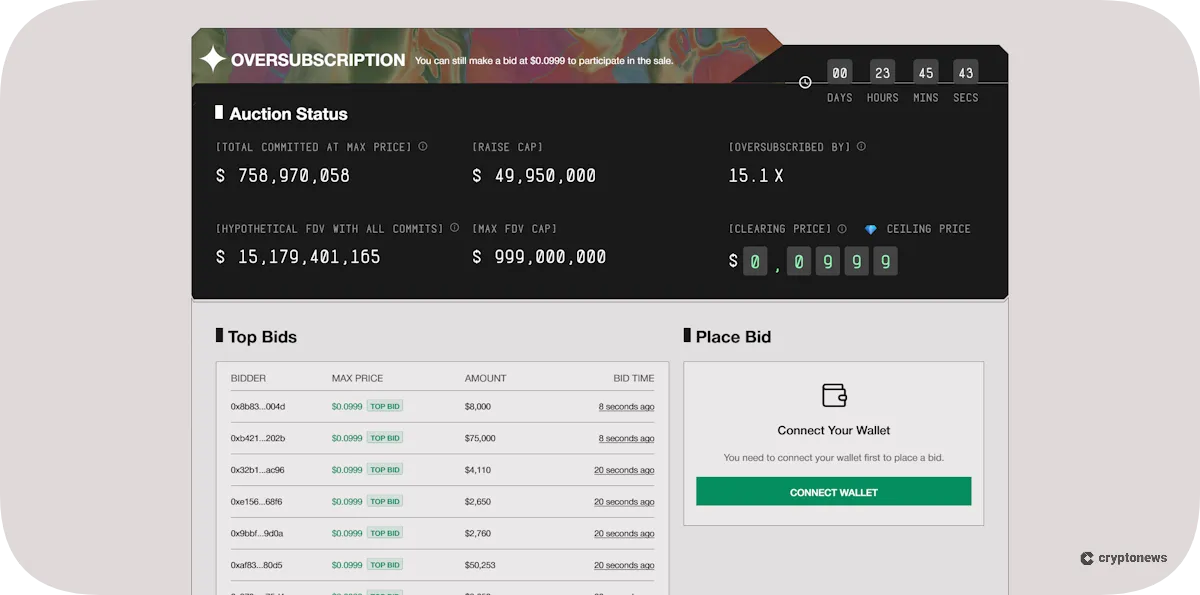
As the public sale was oversubscribed by significant multiples, only a small percentage of investors will receive MEGA tokens.
The MegaETH website explains that it determines bid winners by several factors, including social media and GitHub activity, as well as continuation to the broader Ethereum ecosystem. Those who missed out get a full refund to the same wallet address.
When is the MegaETH Exchange Listing Date?
According to project documents, MegaETH is planning its TGE in January 2026. This timeframe falls about three months after the initial coin offering’s end date, so the startup may face waning hype and media attention in the meantime.
The team will announce the exact TGE listing date on its social channels, including X and Telegram.
Why We Don’t Recommend MegaETH
For several reasons, which we will discuss in the following sections, we do not recommend MegaETH as a viable Layer-2 investment. Here are the identified red flags to consider:
❌ Unprecedented Hard Cap to Raise Ratio
The founders set a $49.9 million hard cap target, which it achieved minutes after the public sale launch. Despite reaching this goal, it continued collecting USDT bids from investors. The sale raised over $1.39 billion, more than 15 times the initial requirement (or $520 million if we count only the maximum bids).
Questions persist about this strategy, since significant capital stays in the project’s possession until the refund date. The team promises that participants whose commitments were unsuccessful will receive their funds on November 5th at the latest.
❌ Oversaturated Ethereum Layer-2 Market
A vast number of Layer-2 projects provide network services for the Ethereum ecosystem. Leading platforms include Base, Mantle, Polygon, Arbitrum, Linea, and Blast. While each Layer 2 offers fast, scalable, and cheap transactions, the market remains oversaturated.
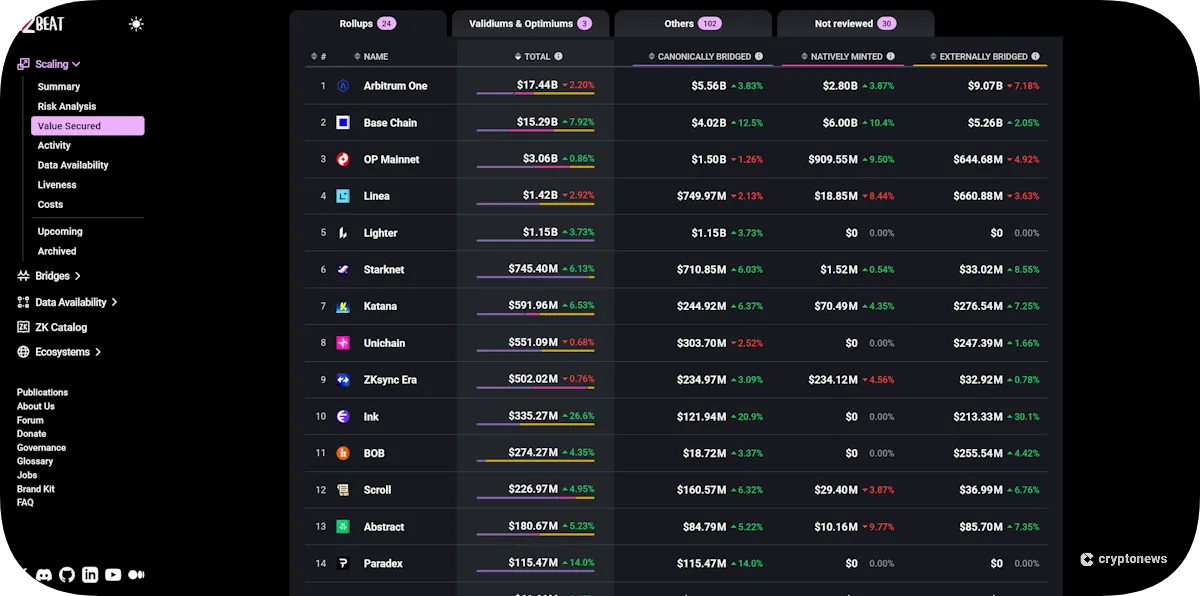
MegaETH joins this competitive industry without a live or proven product. In theory, its stated performance targets could help it gain recognition in Ethereum communities and increase its market share quickly, yet the project’s high valuation offers limited growth potential.
❌ Potential Whale Dominance
When researching the MegaETH launch date, we found that the public sale set a minimum and maximum investment of $2,650 and $186,282, respectively. This dynamic creates distribution risks, since crypto whales can capitalize on the large purchase limits.
It also restricts casual investors who want to join with small amounts. Substantial whale control could allow select individuals to influence the market adversely when they decide to sell.
❌ High-Risk Tokenomics
In our view, the project’s tokenomics lack long-term sustainability. Venture capitalists who invested in the early rounds secured 14.7% of the token supply. They received a lower price compared with the public sale, which provides an unfair advantage for the broader MEGA community.
Another 9.5% of tokens go to the team and advisors, albeit this allocation comes with a three-year vesting lock and one-year cliff.
The protocol’s uncapped supply is also a major risk. Despite allocating 53.3% of the supply to KPI staking, the whitepaper confirms that “ongoing emissions and staking rewards” can cause inflationary pressures. This stipulation suggests that the network will mint new tokens indefinitely. As such, each mint dilutes existing holders further.
❌ Extended Roadmap for Full Functionality
Although public sale investors await the mainnet launch date, which the roadmap schedules for Q4 2025, it provides reduced functionality. Staking remains a core protocol feature, yet it won’t launch for up to 18 months after the mainnet. Other ecosystem functions, including the on-chain DAO, may arrive even later.
Currently, MegaETH cannot prove its scaling targets of 100,000 transactions per second. The testnet results display basic network transactions without an independent audit.
How to Buy MegaETH
If you missed the MegaETH public auction, you must wait until January 2026 to buy MEGA tokens. No exchange partnerships are confirmed, but as an ERC-20 token, we expect a Uniswap DEX listing at a minimum.

To invest in MegaETH on Uniswap, download a non-custodial wallet like Best Wallet. Deposit or buy Ethereum (ETH), then swap those coins for MEGA via the built-in DEX aggregator. A few seconds later, a smart contract deposits MEGA into the Best Wallet balance.
👉 Learn more about how to buy MegaETH
Conclusion
While the MegaETH token sale set a $49.9 million target, the project raised hundreds of millions of dollars in under 72 hours. The Layer-2 project created widespread hype, yet we do not believe it offers long-term potential.
Key red flags include high-risk, unverified network capabilities, and a questionable fundraising structure. Notwithstanding, the MegaETH launch date indicates a mainnet release for Q4 2025 and exchange listings in January 2026.
Discover other crypto presalesFAQs
When is MegaETH going live?
Is MegaETH legit?
When can I claim my MEGA tokens?
When will MegaETH list on exchanges?
What public sales other than MegaETH are worth exploring?
References
- MegaETH MiCA-Compliant Whitepaper (MegaETH)
2M+
250+
8
70





 in numbers

About Cryptonews
Our goal is to offer a comprehensive and objective perspective on the cryptocurrency market, enabling our readers to make informed decisions in this ever-changing landscape.
Our editorial team of more than 70 crypto professionals works to maintain the highest standards of journalism and ethics. We follow strict editorial guidelines to ensure the integrity and credibility of our content.
Whether you’re looking for breaking news, expert opinions, or market insights, Cryptonews has been your go-to destination for everything cryptocurrency since 2017.
