

Top Ethereum ETFs in August 2026 – Fees & AUM





The SEC approved the first spot Ethereum ETFs on July 23, 2024, following earlier Bitcoin ETF approvals. These funds let investors gain exposure to Ethereum without directly holding the cryptocurrency. Unlike Bitcoin, Ethereum’s blockchain supports decentralized apps and NFTs and has used a greener proof-of-stake system since 2022.
Before spot ETFs, investors relied on futures-based Ethereum strategy ETFs, which often track prices less accurately and cost more. Current top options include ETHA, ETHE, ETH, and FETH. Spot Ethereum ETFs aim to simplify investing while avoiding the storage and tax challenges of owning crypto directly.
After our team deeply researched all the Ethereum ETFs available currently, we will explore the best ones to invest in now in the following sections.
- In This Article
-
- 1. iShares Ethereum Trust (ETHA)
- 2. Grayscale Ethereum Trust (ETHE)
- 3. Grayscale Ethereum Mini Trust (ETH)
- 4. Fidelity Ethereum Fund (FETH)
- 5. Bitwise Ethererum ETF (ETHW)
- 6. VanEck Ethereum ETF (ETHV)
- 7. Franklin Ethereum ETF (EZET)
- 8. Invesco Galaxy Ethereum ETF (QETH)
- 9. 21Shares Ethereum ETF (TETH)
- In This Article
- Show Full Guide
-
- 1. iShares Ethereum Trust (ETHA)
- 2. Grayscale Ethereum Trust (ETHE)
- 3. Grayscale Ethereum Mini Trust (ETH)
- 4. Fidelity Ethereum Fund (FETH)
- 5. Bitwise Ethererum ETF (ETHW)
- 6. VanEck Ethereum ETF (ETHV)
- 7. Franklin Ethereum ETF (EZET)
- 8. Invesco Galaxy Ethereum ETF (QETH)
- 9. 21Shares Ethereum ETF (TETH)
What is an Ethereum Spot ETF?
An Ethereum spot ETF (exchange-traded fund) is a regulated investment fund that tracks the price of Ethereum and trades on traditional stock exchanges. It allows investors to gain exposure to Ethereum without directly owning and managing it. This makes it easier to diversify investment strategies in traditional finance environments. A spot Ethereum ETF holds actual ETH in reserves, issuing shares that mirror its market price.
The Top Ethereum Spot ETFs in 2026
The table below lists our top Ethereum ETF picks, including five spot ETFs as well as two ETH futures ETF picks. Assets under management change daily and some funds offer a waiver during the first six months to one year following launch.
| ETF | Assets Under Management (AUM) | ETF Fee |
| iShares Ethereum Trust (ETHA) | $16.42B | 0.25% |
| Grayscale Ethereum Trust (ETHE) | $3.46B | 2.5% |
| Grayscale Ethereum Mini Trust (ETH) | $1.27B | 0% |
| Fidelity Ethereum Fund (FETH) | $1.34B | 0.25% |
| Bitwise Ethereum ETF (ETHW) | $568M | 0% |
| VanEck Ethereum ETF (ETHV) | $282M | 0.2% |
| Franklin Ethereum ETF (EZET) | $87M | 0.19% |
| Invesco Galaxy Ethereum ETF (QETH) | $36M | 0.25% |
| 21Shares Core Ethereum ETF (TETH) | $39M | 0.21% |
What is an Ethereum Strategy ETF?
Ethereum strategy ETFs are investment funds that allocate 50% or more to ETH futures, which are derivative contracts that track the price of ETH without directly holding it. Therefore, unlike spot ETFs, Ethereum strategy ETFs do not hold actual ETH in reserves, but instead gain exposure through futures markets.
The Best Ethereum Strategy ETFs
The table below lists our top Ethereum Strategy ETF picks, including five ETFs that invest exclusively in ETH futures and two ETFs that hold both ETH and BTC futures.
| ETF | Assets Under Management (AUM) | Expense Ratio | Strategy |
| ProShares Ether ETF (EETH) | $51.8M | 0.95% | ETH futures |
| VanEck Ethereum Strategy ETF (EFUT) | $19.7M | 0.66% | ETH futures |
| Bitwise Trendwise Ether and Treasuries Rotation Strategy ETF (AETH) | $6.9M | 0.89% | ETH futures |
| ARK 21Shares Active Ethereum Futures Strategy ETF (ARKZ) | $6.8M | 0.70% | ETH futures |
| ProShares Bitcoin & Ether Equal Weight Strategy ETF (BETE) | $12.2M | 0.95% | ETH and BTC futures |
| CoinShares Valkyrie Bitcoin and Ether Strategy ETF (BTF) | $42M | 1.25% | ETH and BTC futures |
Top Ethereum ETFs Reviewed
Ethereum ETFs have quickly increased in popularity. Below, we review the top Ethereum ETFs so you can choose which Ethereum ETF is best for your investment needs.
1. iShares Ethereum Trust (ETHA)
- AUM: $16.4B
- Post-Waiver Fee: 0.25%
Nearly 35% of the top 25 ETFs bear the name iShares. BlackRock, the largest ETF issuer in the US, launched its first 17 ETFs in 1996, growing to more than 4,200 ETFs globally across multiple asset classes over the years. These funds span nearly every theme and broad market and index funds. Many attribute the successful approval of the first Bitcoin ETFs and the Ethereum ETFs that followed to BlackRock’s considerable influence. The firm boasts $3.3 trillion in assets under management globally, which is more than 10% of the US GDP.
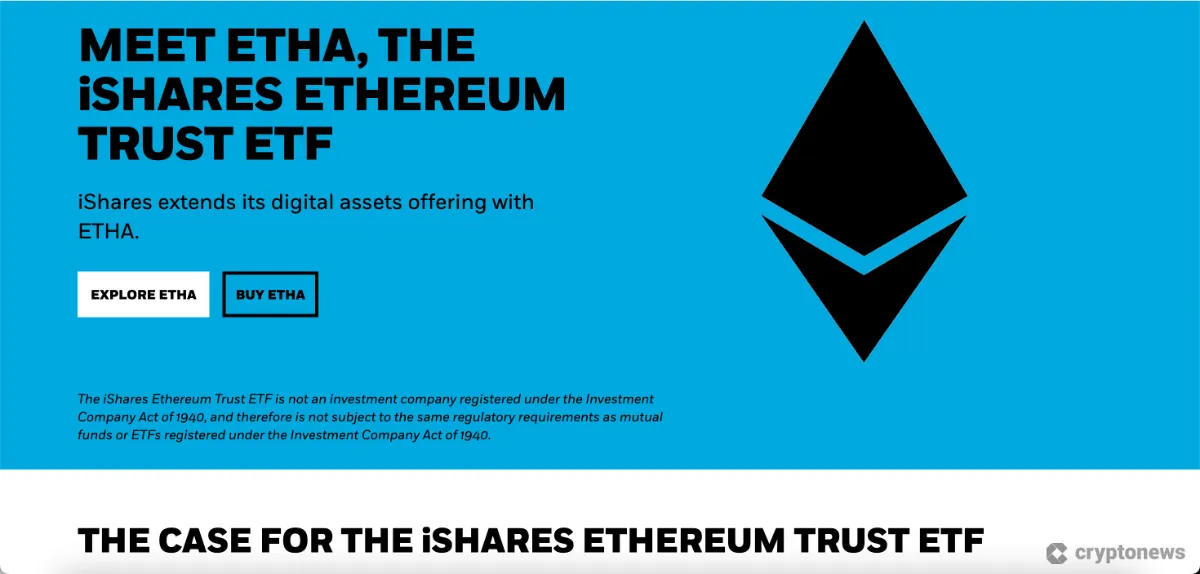
The iShares brand has helped the iShares Ethereum Trust ETF reach more than $264 million in AUM in the days following its July 2024 launch. BlackRock waives a percentage of fees until late July 2025, making the fund’s sponsor fee a low 0.12% until expiry or until the fund reaches $2.5 billion in AUM. Fees following the waiver will be 0.25%, making the iShares Ethereum Trust an affordable way to get price exposure to ETH without the custody challenges that come with self-custody. Coinbase provides custody for the fund’s digital assets.
2. Grayscale Ethereum Trust (ETHE)
- AUM: $3.46B
- Post-Waiver Fee: 2.5%
Grayscale, a pioneer in cryptocurrency investment products, played a key role in paving the way for Ethereum ETFs. The Grayscale Ethereum Trust (ETHE) launched in 2024 as one of the earliest regulated vehicles for ETH exposure. By early 2025, Grayscale managed over $8 billion in crypto assets, with ETHE accounting for nearly 40% of its holdings.

ETHE remains a top choice for investors, with assets exceeding $3.4 billion by August 2026. Unlike newer ETFs, ETHE charges a 2.5% annual fee despite the competitive pressure from low-cost rivals like FETH and ETHA. While newer spot ETFs offer lower fees, ETHE’s established track record and liquidity keep it among the top five Ethereum ETFs.
3. Grayscale Ethereum Mini Trust (ETH)
- AUM: $1.27B
- Post-Waiver Fee: 0.15%
Grayscale’s Ethereum Mini Trust (ETH) offers a low-cost entry point for Ethereum exposure, launching as a spin-off from its larger ETHE fund in July 2024. By August 2026, ETH held over $1.2 billion in assets under management (AUM), making it one of the most accessible spot Ethereum ETFs for retail investors. The fund features a reduced fee structure: Grayscale waived management fees entirely for the first six months, after which the fee settled at 0.15%. ETH’s design, which allocates 1/10th the value per share of ETHE, allows fractional ownership and aligns with the demand for affordable crypto investment vehicles.
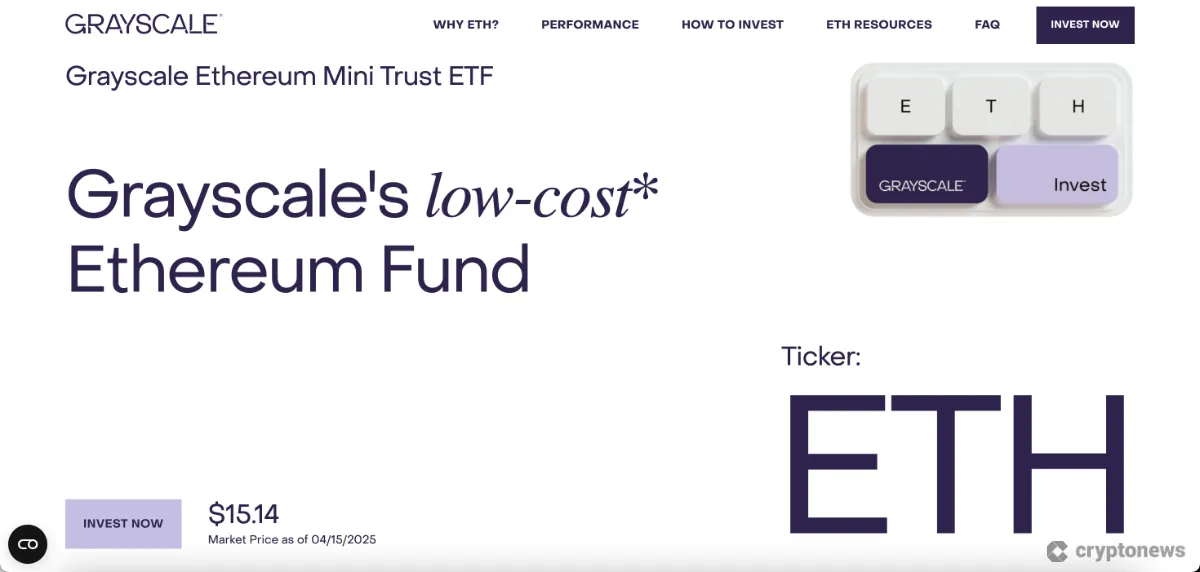
ETH’s AUM grew rapidly due to its cost efficiency and Grayscale’s reputation as a crypto asset manager. Despite its lower fees, ETH faces competition from newer ETFs like Fidelity’s FETH and BlackRock’s ETHA, which also emphasize low-cost structures. However, ETH remains a top choice for investors seeking regulated exposure without direct crypto ownership, trading on NYSE Arca with daily volumes averaging over 2 million shares.
4. Fidelity Ethereum Fund (FETH)
- AUM: $1.34B
- Post-Waiver Fee: 0.25%
Fidelity’s FETH offers a unique structure in that the fund uses another arm of Fidelity for secure custody of its digital assets. The Fidelity Ethereum Fund uses Fidelity Digital Asset Services, LLC to provide custody for the ETH held by FETH, chartering the LLC as a limited-purpose trust company. By comparison, most newly launched cryptocurrency ETFs, including Bitcoin ETFs, use Coinbase as a custodian for crypto held by the funds.
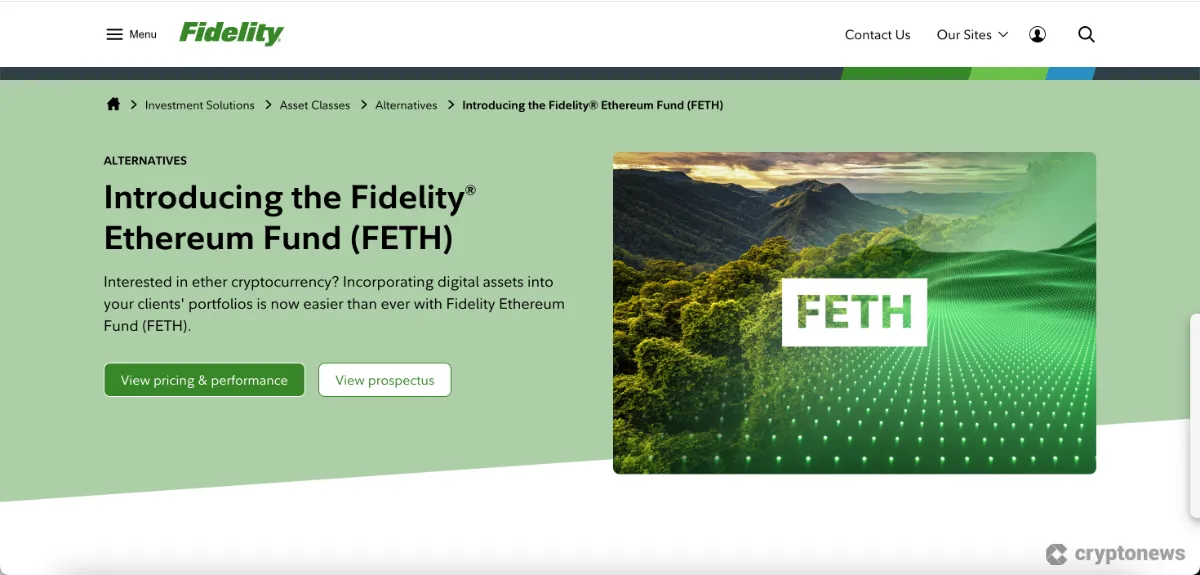
Fidelity’s history with crypto and blockchain technology dates back to 2014, prior to Ethereum’s launch. Many of the company’s crypto-based initiatives focused on Bitcoin, leading up to the early 2024 launch of the Fidelity Wise Origin Bitcoin Fund (FBTC), which has proven a popular choice for investors. FETH’s post-waiver fees are 0.25%, making it one of the higher management fees, although staying within the tight range that defines the low-cost Ethereum ETFs.
5. Bitwise Ethererum ETF (ETHW)
- AUM: $568M
- Post-Waiver Fee: 0%
The Bitwise Ethereum ETF proved to be a hit out of the gate, with investors pouring nearly $230 million into the fund within its first days. Ten percent of the fund’s profits go to fund open-source development for Ethereum, an initiative that may sway many investors when comparing closely matched options. Recipients include the Protocol Guild and PBS Foundation.
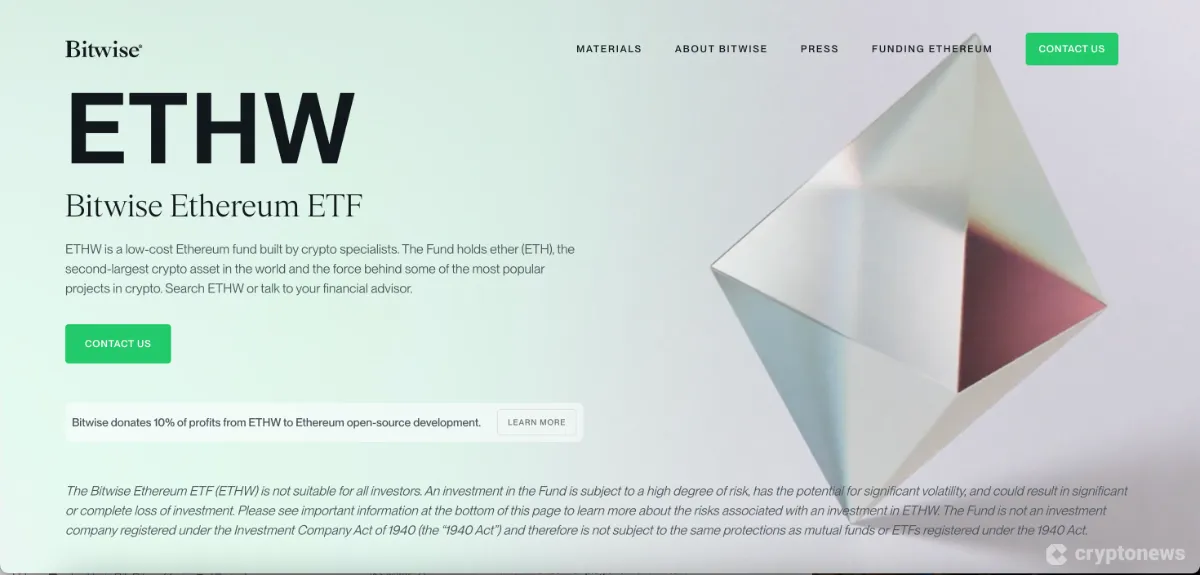
Bitwise benefits from a long history in the crypto space, with six years of experience in the crypto-themed ETF space. The fund provider has amassed an impressive army of 60 crypto specialists, giving Bitwise an edge and positioning BitWise as a leader in the space.
6. VanEck Ethereum ETF (ETHV)
- AUM: $282M
- Post-Waiver Fee: 0.2%
VanEck made a splash with a series of crypto ETF funds, including a fund that holds crypto-related stocks such as Coinbase and Microstrategy. The fund provider was also among the first to offer a Bitcoin spot ETF (HODL), and VanEck launched its Ethereum futures ETF (EFUT) in October 2023. Now, VanEck is bringing its expertise to its ETHV spot Ethereum ETF.
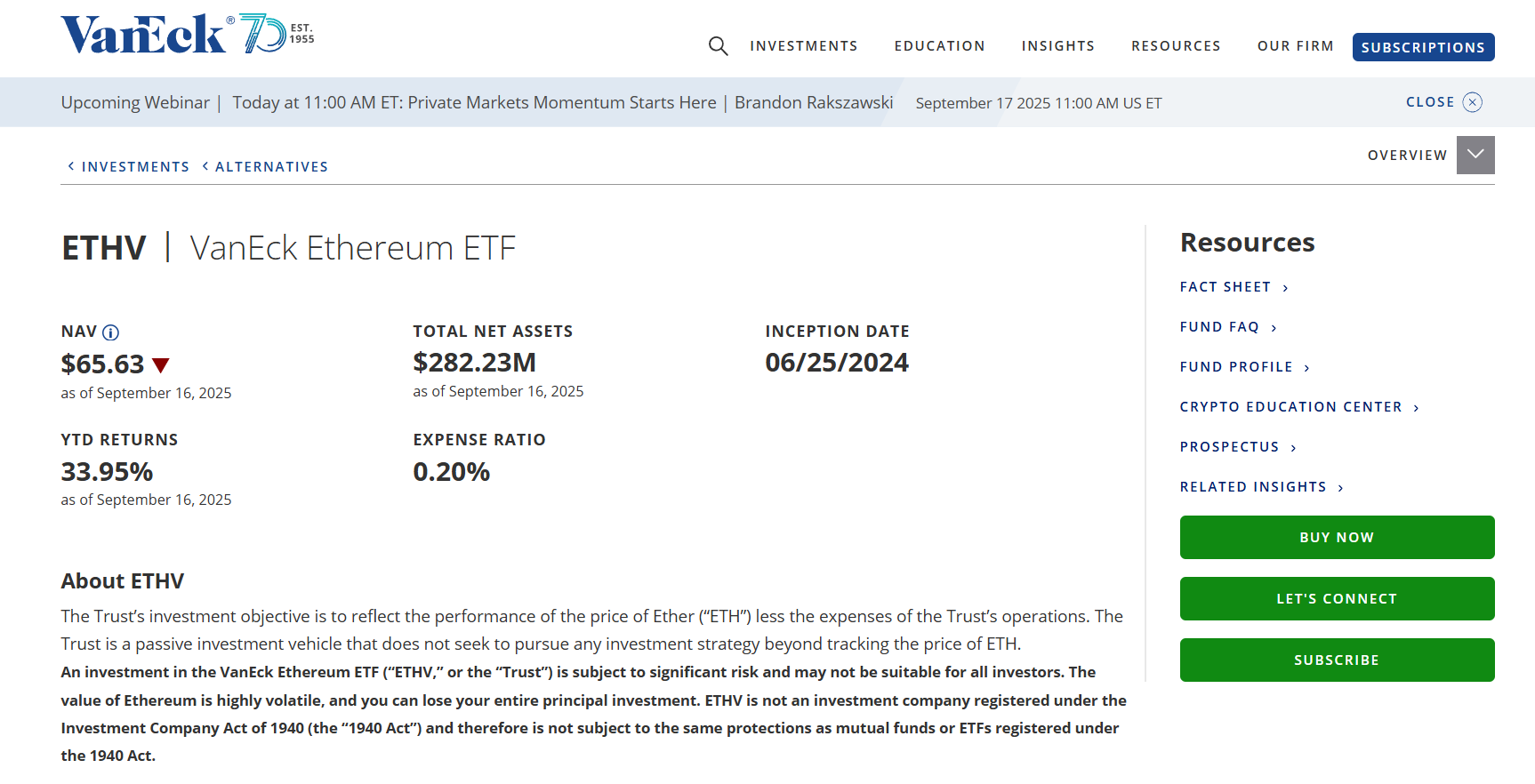
In a departure from most ETH ETFs, many of which use Coinbase for custody, VanEck uses Gemini, a crypto exchange and storage provider well known for its security, as its custodian for ETH digital assets.
7. Franklin Ethereum ETF (EZET)
- AUM: $87M
- Post-Waiver Fee: 0.19%
Franklin Templeton launched the Franklin Ethereum ETF (ticker: EZET) on July 23, 2024, providing U.S. investors with regulated exposure to ether (ETH). The ETF trades on the Cboe BZX Exchange and aims to reflect the performance of ETH minus fund expenses. Franklin Templeton waived all fees to attract early investors until the fund reached $10 million in assets under management (AUM). Now, the ETF charges a competitive fee of 0.19%.
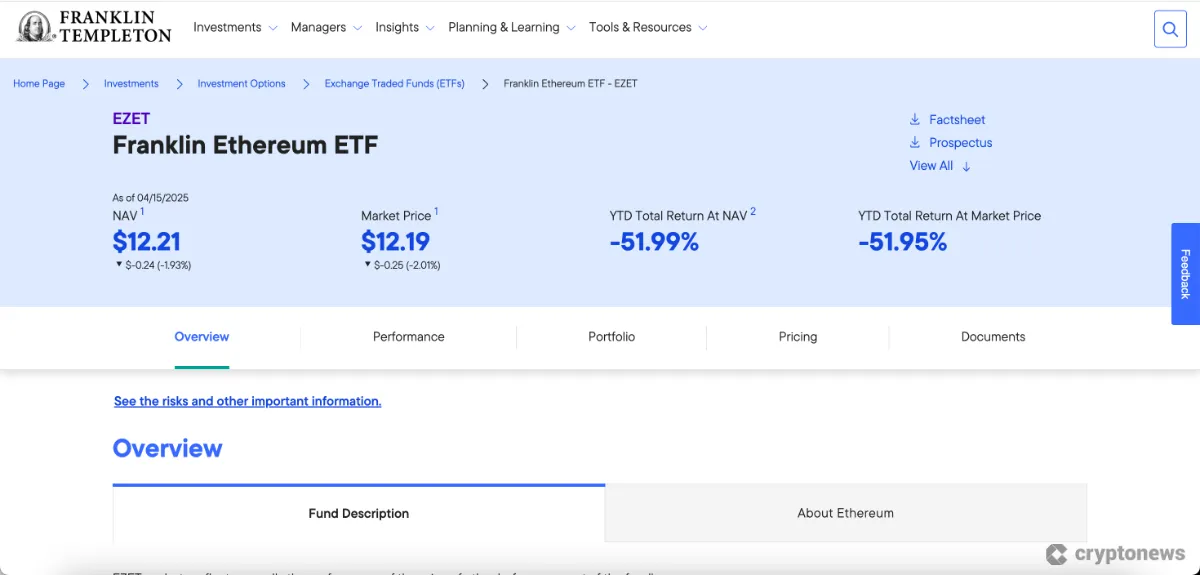
EZET is part of Franklin Templeton’s expanding digital asset offerings following the earlier launch of its spot Bitcoin ETF (EZBC). The firm has been active in the digital asset space since 2018, developing blockchain-based solutions and investment strategies. The introduction of EZET aligns with the growing demand for cryptocurrency investment options within traditional financial structures.
8. Invesco Galaxy Ethereum ETF (QETH)
- AUM: $36M
- Post-Waiver Fee: 0.25%
The Invesco Galaxy Ethereum ETF (QETH) was launched on July 23, 2024, offering U.S. investors direct exposure to Ethereum (ETH) through a regulated exchange-traded fund. The fund is listed on the Cboe BZX Exchange and aims to track the spot price of ETH, as measured by the Lukka Prime Ethereum Reference Rate, minus expenses and liabilities. The ETF charges a 0.25% fee.
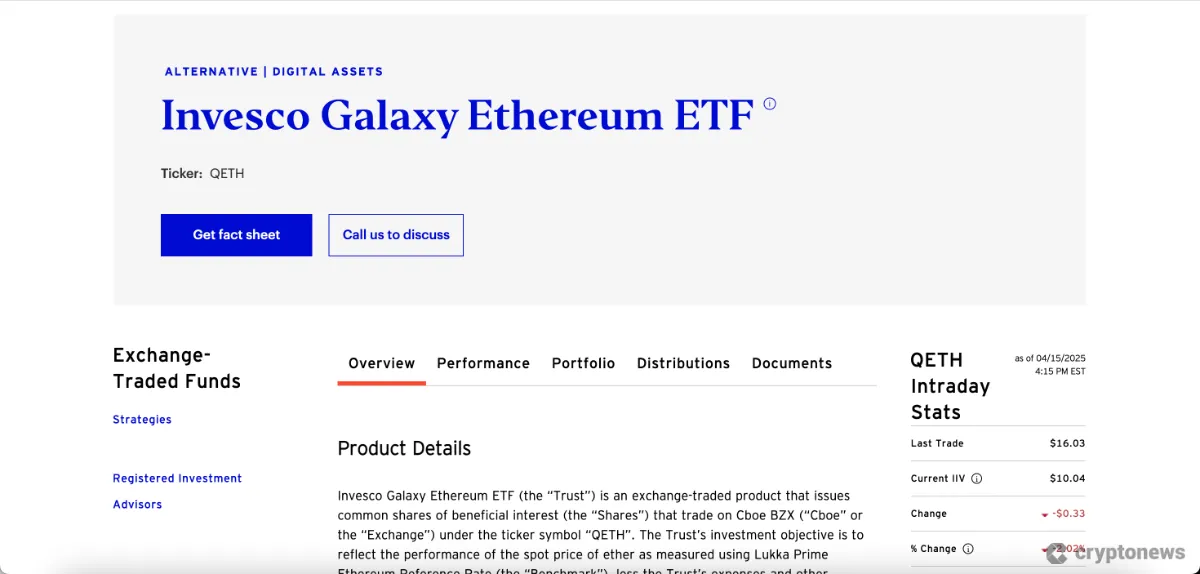
QETH is a result of the collaboration between Invesco and Galaxy Asset Management, building upon their earlier partnership with the Invesco Galaxy Bitcoin ETF (BTCO). The ETF provides investors with a familiar and secure way to gain exposure to Ethereum without the complexities of managing digital wallets or dealing with cryptocurrency exchanges.
9. 21Shares Ethereum ETF (TETH)
- AUM: $39M
- Post-Waiver Fee: 0.21%
The 21Shares Ethereum ETF (TETH) started trading on July 23, 2024, on the Cboe BZX Exchange. To attract early investors, 21Shares waived all management fees until January 23, 2025. Since then, the ETF charges a fee of 0.21%. In August 2025, the fund changed its name and ticker from 21Shares Core Ethereum ETF (CETH) to 21Shares Ethereum ETF (TETH).
As of August 2026, TETH had approximately $40 million in AUM. Coinbase Custody Trust Company, LLC, a regulated third-party custodian, holds the fund’s digital assets in cold storage. This custody arrangement aims to provide secure storage for the fund’s holdings, aligning with industry best practices.
When Were Ethereum ETFs Introduced?
The first spot Ethereum ETFs in the US arrived on July 23, 2024, just six months after the SEC approved Bitcoin spot ETFs. However, futures-based Ethereum ETFs arrived several months earlier, including exchange-traded products from VanEck and ProShares. In total, six exchange-traded funds launched in October 2023 using futures contracts to give investors ETH exposure. The later launch of spot ETH ETFs brought nine new funds to US traders, including a conversion of Grayscale’s Ethereum Trust to an ETF.
How to Choose an Ethereum ETF to Invest In?
Because Ethereum spot ETFs all use the same base asset to back shares in their respective funds, they may seem to be the same, with little distinction between them. While this is true on some levels, you’ll want to consider a few key factors before deciding which Ethereum ETF is best for you.
Assets Under Management (AUM)
Success attracts buyers, and funds with more assets under management tend to draw more eyes. However, one big benefit of larger funds is higher liquidity, allowing you to trade in or out as needed with greater efficiency. A higher AUM figure also suggests the fund is more likely to continue running long into the future. Longevity becomes a key consideration for those who prefer to buy and hold.
Lowest Fees
Many recent crypto ETFs have launched with a fee waiver, typically ranging from 6 months to a year. However, these fee waivers sunset in many cases when the fund reaches an AUM target. Once the fee waiver expires, investors can expect fund expenses of 0.15% to 0.25% for most spot ETH ETFs. However, futures-based ETFs typically have higher fees, ranging from 0.66% to nearly 1% in our roundup of the best Ethereum ETFs.
With fees for most Ethereum ETFs ranging between 0.15% and 0.25%, overhead won’t have much impact on smaller or short-term investments. However, fund costs can add up for larger investments or investments held for longer time periods.
Reputation of ETF Provider
You may also want to consider the reputation of the fund provider. For example, BlackRock’s reputation for financial strength helped to propel the firm’s iShares ETF family to 9 of the top 25 ETF spots for all ETFs. Many expect BlackRock to fare well with its spot ETH fund as well.
You can also weigh each firm’s experience with crypto funds in general. In this case, BitWise emerges as a standout, having six years of experience with crypto-themed ETFs, while some competitors first dipped a toe in the crypto waters with a Bitcoin ETF less than a year ago.
Which firm provides custody for a fund’s digital assets might also influence your decision. Coinbase is the custodian for nearly all spot Ethereum ETFs, with Fidelity and VanEck as the notable exceptions. Fidelity provides custody through another arm of the investment giant, whereas VanEck uses Gemini.
Ethereum ETFs offer several advantages over buying crypto on exchanges. These benefits range from easy access through traditional brokerages to regulatory oversight.
✅ 1. Easy Access
One of the largest draws of crypto ETFs centers on easy access. These funds trade on major exchanges and are available through traditional brokerages. For casual investors, there’s no new ecosystem to learn and no need to learn the best practices for secure crypto storage. Instead, you simply place your buy or sell orders through your favorite broker. The fund providers handle all the details, including buying and selling ETH to match fund inflows and outflows and secure storage for fund assets.
Tax preparation is also simplified in many cases, as nearly all major brokerages can export data to popular tax software. By comparison, buying crypto through a crypto exchange without support for tax software can prove tedious and time-consuming.
✅ 2. Professional Management and Security
Ethereum ETFs eliminate the need for self-custody wallets or to entrust exchanges to hold your ETH. While many new crypto wallet apps focus on simplicity, there’s still a learning curve and security concerns to consider.
Some crypto investors hold their assets on a crypto exchange as an easier alternative. However, this choice can also have risks. In 2022, the popular FTX exchange collapsed, leaving investors without access to the crypto held on the exchange.
Crypto ETFs minimize storage concerns. Each spot crypto fund must choose a custodian, who will then be approved by the SEC.
✅ 3. Protection of Regulation
Crypto ETFs also benefit from regulatory oversight. In the US, the SEC oversees ETFs, approving funds based on strict criteria and requiring quarterly filings as well as regulatory disclosures. In the US, investors also benefit from SIPC insurance, which protects investors against broker insolvency.
Depending on your needs and goals, Ethereum ETFs also bring some disadvantages. Fees may be higher than buying directly from a crypto exchange, and you may also see some opportunity costs. Let’s examine the cons.
❌ 1. Higher Fees
If you’ve used an advanced crypto trading platform, you’ve undoubtedly seen some big trades for top assets like BTC and ETH. However, trades of institutional size don’t occur this way. Instead, fund-scale trades occur on over-the-counter (OTC) markets. Here, buyers and sellers meet to buy or sell without affecting the chart, and trading expenses are minimal compared to the costs retail traders experience.
However, fund fees include several layers of management and staffing, compliance costs, custody fees, and marketing expenses. While advanced trading platforms can cost as little as 0.1% for ETH/USD trades, ETF costs can reach 0.25% for spot ETFs and up to nearly 1% for Ethereum futures ETFs.
❌ 2. No Direct Control of Your Ethereum
When you buy an Ethereum ETF, you buy shares in the fund, not Ethereum itself. Some may call this a distinction without a difference, but the difference is that you have no control over your Ethereum. The fund buys and sells, and a third-party custodian holds the ETH in offline cold storage.
This process eliminates one of the primary goals of cryptocurrency: financial sovereignty, meaning the ability to control your assets and bring your wealth with you anywhere in the world. Instead, you surrender control of the assets to financial institutions. While ETFs are easier, they come at the cost of independence.
❌ 3. Inability to Stake or Use DeFi
Perhaps the biggest consideration centers on opportunity cost. You’re limited to buying or selling shares in a fund without direct control of the assets. By contrast, if you have control over your ETH, you can stake your ETH to earn a yield (typically about 3%). Decentralized finance protocols like restaking can also multiply yields by allowing you to earn a yield from multiple chains.
Conclusion
Ethereum ETFs make it easy for investors to get ETH exposure while bypassing complicated crypto exchanges and risky storage solutions. Instead, you simply buy or sell shares in the fund through a traditional stockbroker. The fund team takes care of the messy business of buying and selling ETH, and an SEC-approved custodian holds the ETH for the fund.
While buying ETH ETFs offers an easier solution, they do come with some compromises. You won’t have control over your ETH and can’t use it to earn an extra yield. However, the easy access provided by ETH ETFs makes them well-suited to many investors, and the increased demand for ETH due to these ETFs is expected to benefit Ethereum’s price over time.
FAQs
Are Ethereum ETFs live yet?
What is the biggest Ethereum ETF right now?
How many Ethereum ETFs are there?
What fees do Ethereum ETFs have?
Is it better to buy ETH directly or use an ETF?
References
- Gemini Is Proud To Be the Custodian for VanEck’s Spot Ethereum ETP (gemini.com)
- Top 25 ETFs (marketwatch.com)
- Market share of largest providers of Exchange Traded Funds (ETFs) in the United States (statista.com)
- ABOUT iSHARES (ishares.com)
- Gross Domestic Product (GDP) (fred.stlouisfed.org)
- Ether futures ETFs hit the market as SEC mulls next steps on bitcoin fund (cnbc.com)
- A timeline of the collapse at FTX (apnews.com)
2M+
250+
8
70





 in numbers

About Cryptonews
Our goal is to offer a comprehensive and objective perspective on the cryptocurrency market, enabling our readers to make informed decisions in this ever-changing landscape.
Our editorial team of more than 70 crypto professionals works to maintain the highest standards of journalism and ethics. We follow strict editorial guidelines to ensure the integrity and credibility of our content.
Whether you’re looking for breaking news, expert opinions, or market insights, Cryptonews has been your go-to destination for everything cryptocurrency since 2017.
