



Top AI Coins by Market Cap
AI cryptocurrencies are always learning and improving by default, and this continual state of improvement could revolutionize how money works online. In the table below, you will find a summary of some of the biggest AI crypto coins.
What is AI crypto?
AI crypto combines artificial intelligence and blockchain technology into a single platform or operation. These coins aim to enhance security, automate trading, analyse data, or improve other aspects of blockchain and crypto services using AI.
Types of AI Cryptocurrencies
AI cryptocurrencies typically fall within one of four subcategories depending on the underlying technology and use case. Find a breakdown of each type down below:
AI Compute/DePIN
This category includes decentralized physical infrastructure networks (DePINs) that provide computing resources, such as GPU power and data storage. These are used for AI tasks like model training and inference, where AI learns to generate new info and predictions.
In June 2025, the World Economic Forum (WEF) valued the DePIN market at $30 billion-$50 billion, expecting it to soar to $3.5 trillion by 2028, driven by AI demand.
Best Compute/DePIN AI Crypto Projects:
- Render (RENDER): Distributed GPU network focused on rendering and AI tasks.
- Bittensor (TAO): Decentralized network for AI and machine learning (ML) training and trading.
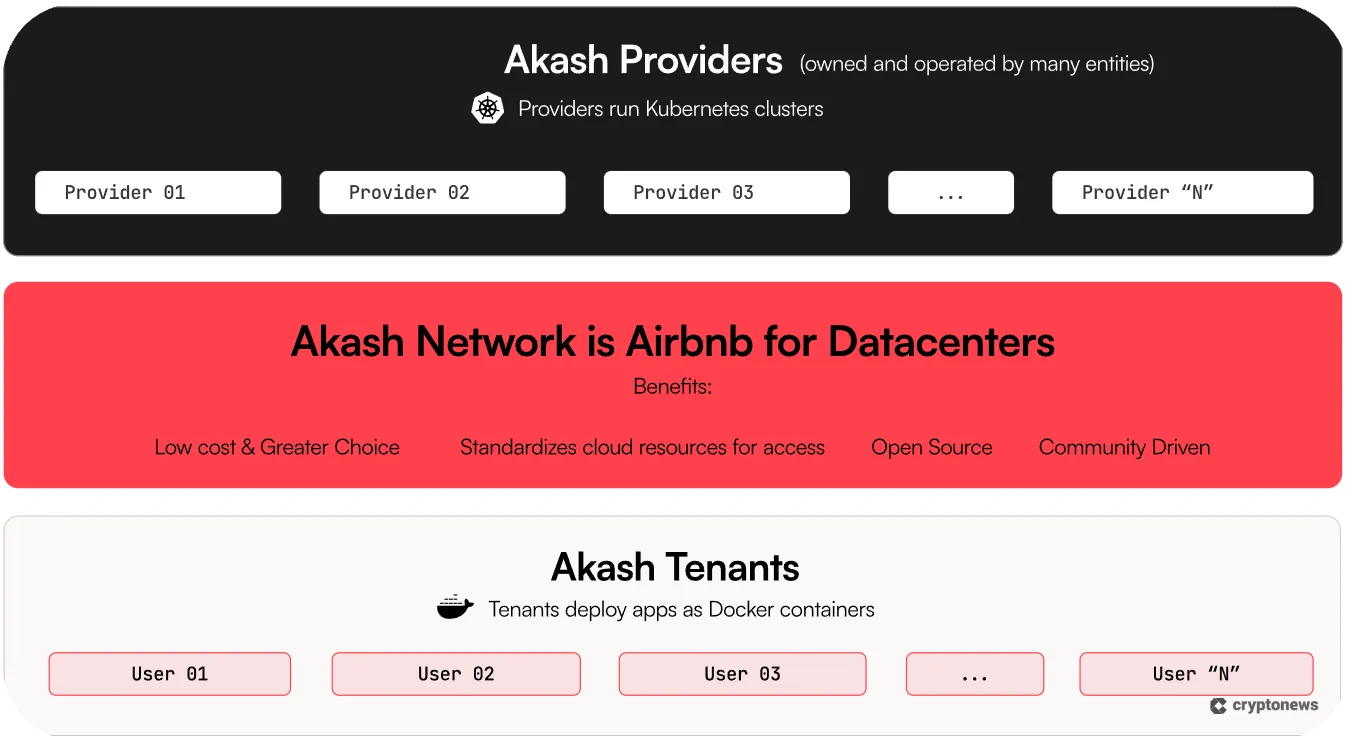
- Akash (AKT): Decentralized cloud marketplace that enables users to buy and sell computing resources, including GPUs, for AI, machine learning, and Web3 workloads.
AI Data and Provenance
These protocols source, index, verify, validate, and structure data so that AI tools can use it for training or generating outputs.
Best AI Data and Provenance Tokens:
- The Graph (GRT): A general-purpose on-chain data indexing protocol that can be used by AI protocols and agents.
- OriginTrail (TRAC): Decentralized Knowledge Graph that verifies and structures real-world and on-chain data, offering AI reliable information.
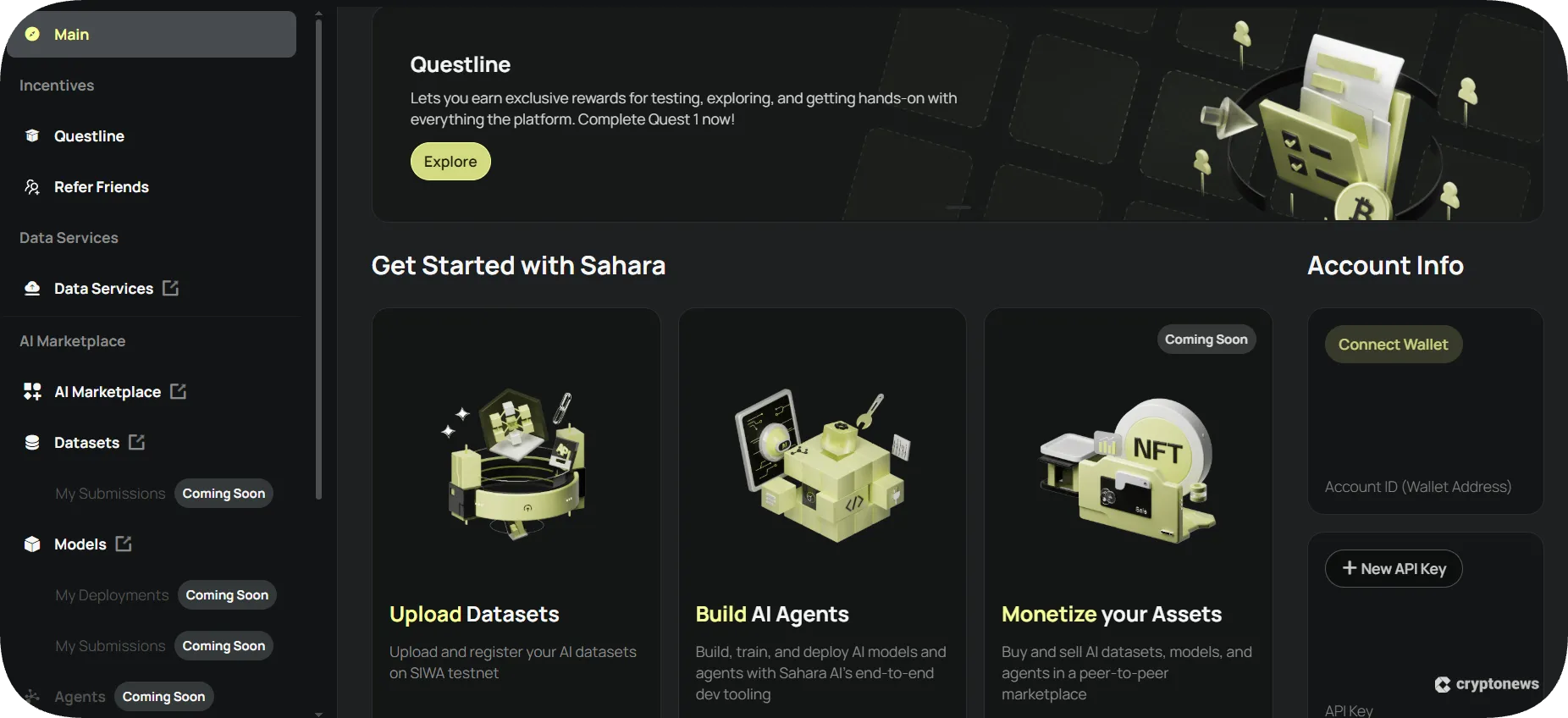
- Sahara AI (SAHARA): A blockchain AI hub, Sahara offers a Data Services platform that rewards users and data sources for sharing high-quality information.
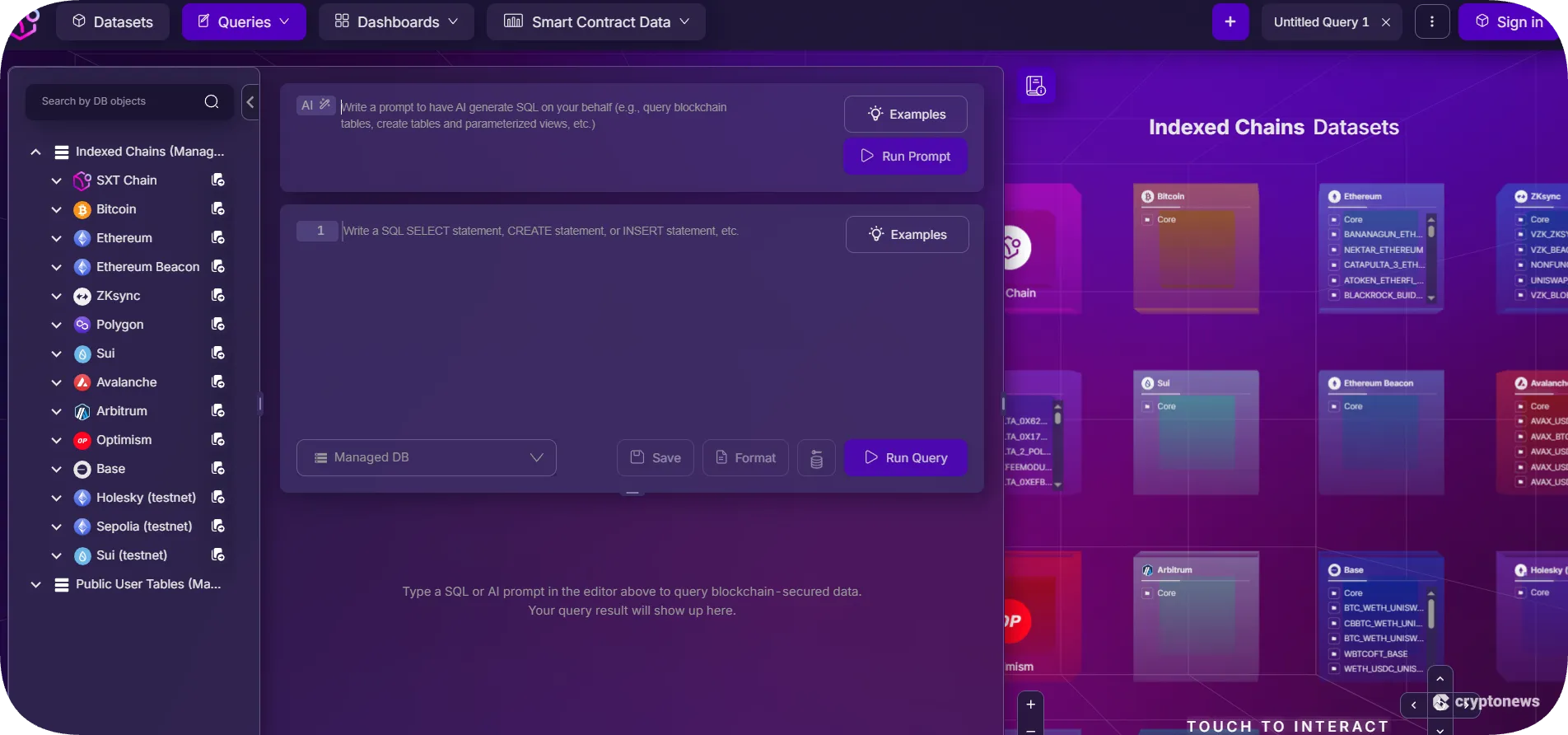
- Space and Time (SXT): A decentralized data warehouse secured by zero-knowledge (ZK) technology, enabling dApps and users to query off-chain and on-chain data and feed AI models with reliable information.
AI Models and Agents
These are decentralized protocols that allow users to develop and monetize AI models and agents directly on the blockchain. AI agents are autonomous applications that can perform certain tasks.
Best AI Models and Agents:
- SUBBD: This Web3 platform helps content creators better engage with their fans. It offers a unique content creation AI agent and tools.
- Artificial Superintelligence Alliance (FET): This alliance came from the merger of Fetch.ai, SingularityNET, and Ocean Protocol. FET offers an AI studio and open marketplace for trading AI agents.
- Bittensor: Besides acting as a DePIN platform for computing resource management, Bittensor also provide AI and ML models called subnets, which focus on different tasks.
- Sahara AI: Another key product of Sahara is its AI Development Platform, which allows developers to create and deploy AI agents that can engage with users and interact with dApps.
AI-Capable L1/L2s and Tooling
This category includes Layer 1 and Layer 2 blockchains that can integrate with AI applications, support the deployment of AI-enabled smart contracts, and provide tools to develop AI-oriented dApps.
Best AI-Capable L1/L2s and Tooling Coins:
- Internet Computer (ICP): This is a Layer 1 chain that helps data centers worldwide collaborate to form a giant virtual computer. It allows smart contracts to directly host and serve AI models.
- Sahara AI: Sahara’s flagship products, including data services and the AI development platform, are built on its native Layer 1 chain, which has multiple layers to handle AI-oriented dApps, transactions, data, and execution.
Where to Buy AI Crypto Coins
You can purchase AI crypto coins on centralized exchanges (CEXs) and DEXs or through token launchpads and presales. The choice depends on availability, your risk tolerance, trading experience, and desired level of control over your assets.
Let’s briefly explore the main options.
Centralized Exchanges (CEXs)
CEXs are centralized platforms that enable users to exchange crypto assets and buy crypto with fiat money or stablecoins.
Most CEXs act as custodians, storing assets on your behalf. While this ensures a convenient trading experience, users don’t have direct control over their assets, which are exposed to hacking attack risks.
CEXs offer a better experience and greater liquidity than DEXs and launchpads, but they are less secure than DEXs and require users to pass through KYC verification.
Here are the top CEXs and a few AI coins they support:
- Binance: RENDER, FET, SAHARA, TAO, GRT, ICP, SXT
- Coinbase: TRAC, RENDER, ICP, TAO, FET, GRT, SXT
- OKX: FET, RENDER, ICP, GRT, SAHARA
Decentralized Exchanges (DEXs)
DEXs are decentralized platforms powered by smart contracts and algorithms. Unlike CEXs, DEXs don’t rely on traditional order books that match buyers and sellers. Instead, they host smart contract-based pools representing token pairs, where liquidity providers deposit funds and earn rewards from trading fees.
These platforms offer users direct control over their funds, enabling them to trade by connecting to reputable non-custodial wallets like MetaMask. However, they may have lower liquidity and higher slippage compared to major CEXs. Also, some major AI coins, such as TAO or ICP, are not available on popular DEXs.
Here are a few major DEXs and the AI tokens they support:
- Uniswap: TRAC, SXT, FET,GRT
- Raydium: RENDER
- PancakeSwap: FET, GRT, SAHARA
Token Launchpads
Token launchpads help early-stage projects raise funds before they reach major exchanges, giving users early access to new tokens. Unlike direct presales, launchpads verify projects, but these tokens still carry higher risk compared to DEX and CEX-listed assets due to low liquidity and unproven business models.
Major launchpads include:
- Binance Launchpool: Has hosted AI projects like FET (launched as Fetch.ai).
- Best Wallet: Currently offers presales for SUBBD alongside other emerging tokens.
Cryptocurrency Presales
Token presales sell tokens directly from the project, usually before product launch.
They offer significant upside potential if the project succeeds, but the risk of scams and rug pulls is very high. ICOBench found that less than half of Initial Coin Offerings (ICOs) survive three months after launch, while the general survival rate is only 10%.
Presales are the highest-risk way to buy AI tokens. You should invest only what you can afford to lose, and look for projects with third-party audits.
To avoid scams, consider these safety tips:
- Use a secure wallet and never share your seed phrase.
- Verify smart contract addresses to make sure they’re from official channels.
- Watch for phishing sites mimicking legitimate projects.
Common presale structures include ICOs, Initial DEX Offerings (IDOs), Initial Exchange Offerings (IEOs), and Token Generation Events (TGEs), where a portion of tokens is unlocked at launch, followed by vesting schedules.


