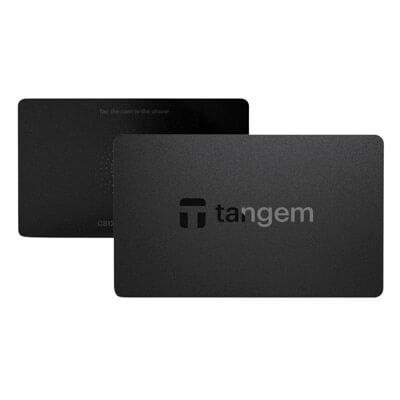


Tangem Overview
Key facts
Additional details
Tangem Screenshots
Tangem Pros and Cons
Pros
- $54.90 for a certified-SE two-card cold wallet
- EAL6+ Samsung secure element, on-card key-gen
- No seed phrase to photograph, phish, or lose
- Three independent audits, no critical findings
- No battery or cable, 25-year warranty
Cons
- July 2026 laser attack can never be patched
- No screen, the phone shows what you sign
- Lose every card and funds are gone for good
- Cannot add a backup card after setup
- Card firmware is closed-source
Who Tangem Is Best for — and Who Should Skip It

Tangem fits the holder who wants real cold storage with the least possible ceremony and the smallest budget.
- First-time hardware wallet buyers priced out of $150+ devices
- Mobile-first users who will never plug a device into a laptop
- People who consider a seed phrase a liability, not a safety net
- Multi-chain holders with mid-sized balances across the majors
It is the wrong pick for these profiles.
- Large-balance holders who need on-device address verification
- Anyone unwilling to keep two or three cards in separate locations
- Users who want firmware that can be patched when flaws appear
- Verification purists who require open-source firmware end to end
What Is Tangem and How Does It Work?
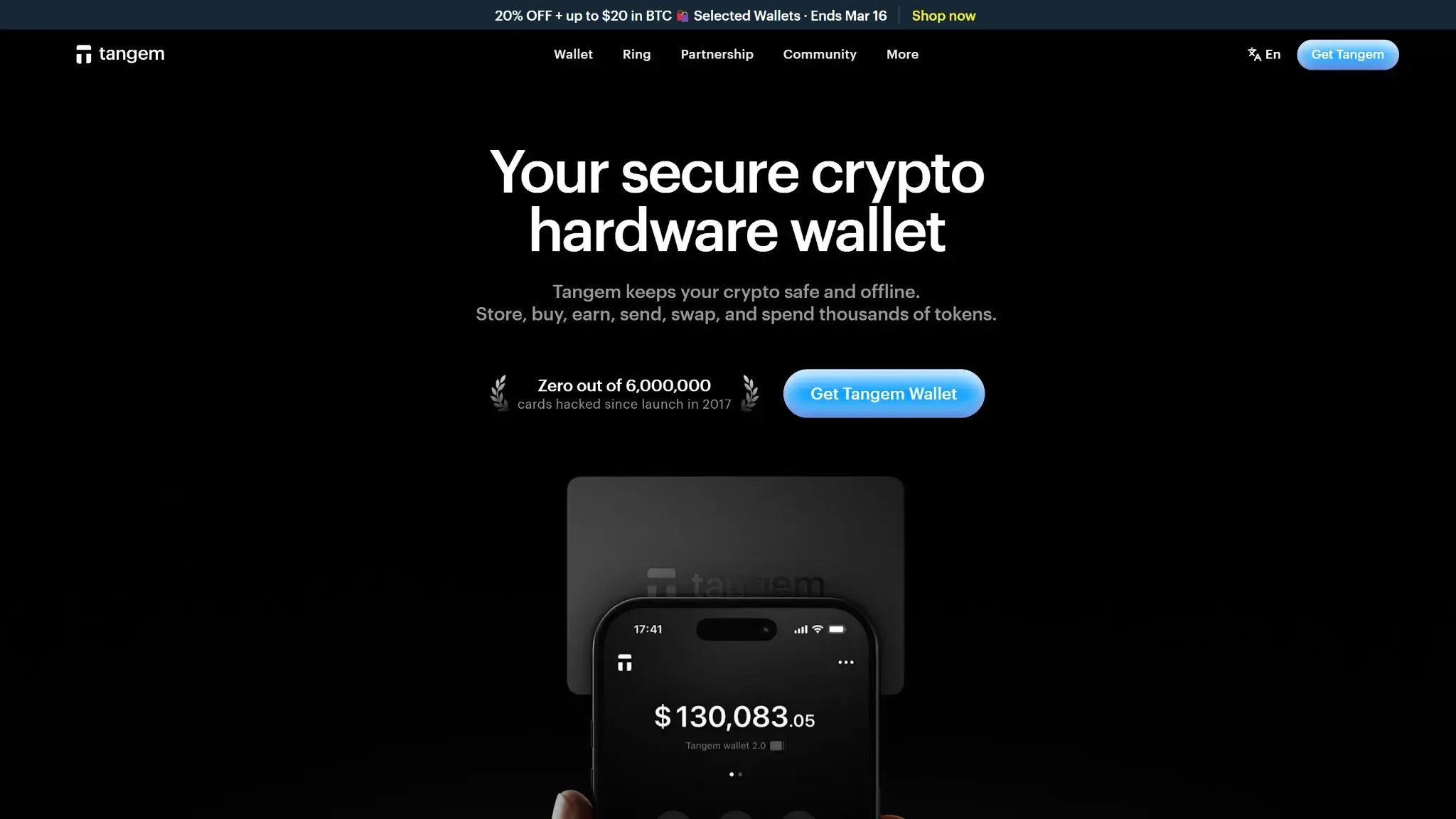
Tangem AG is a Swiss company registered in Zug (CHE-390.112.525) that has shipped around six million cards since 2017. The current product is the current-generation card, sold in packs of two or three, plus a wearable Ring that runs the same hardware. Each card is a credit-card-sized NFC device with no screen, no battery, no cable, and nothing to charge. You tap it against your phone, and the Tangem app handles everything you see. The company has no regulatory sanctions on record, and the wallet itself requires no account and no KYC.
That form factor is the entire pitch. Ledger and Trezor ask you to manage a USB device, a PIN, and a 24-word phrase. Tangem asks you to keep two or three cards in separate places and remember an access code. That simplification buys convenience at the cost of two safeguards — an on-device screen and patchable firmware — and how it trades depends on how much you hold.
Security and Custody
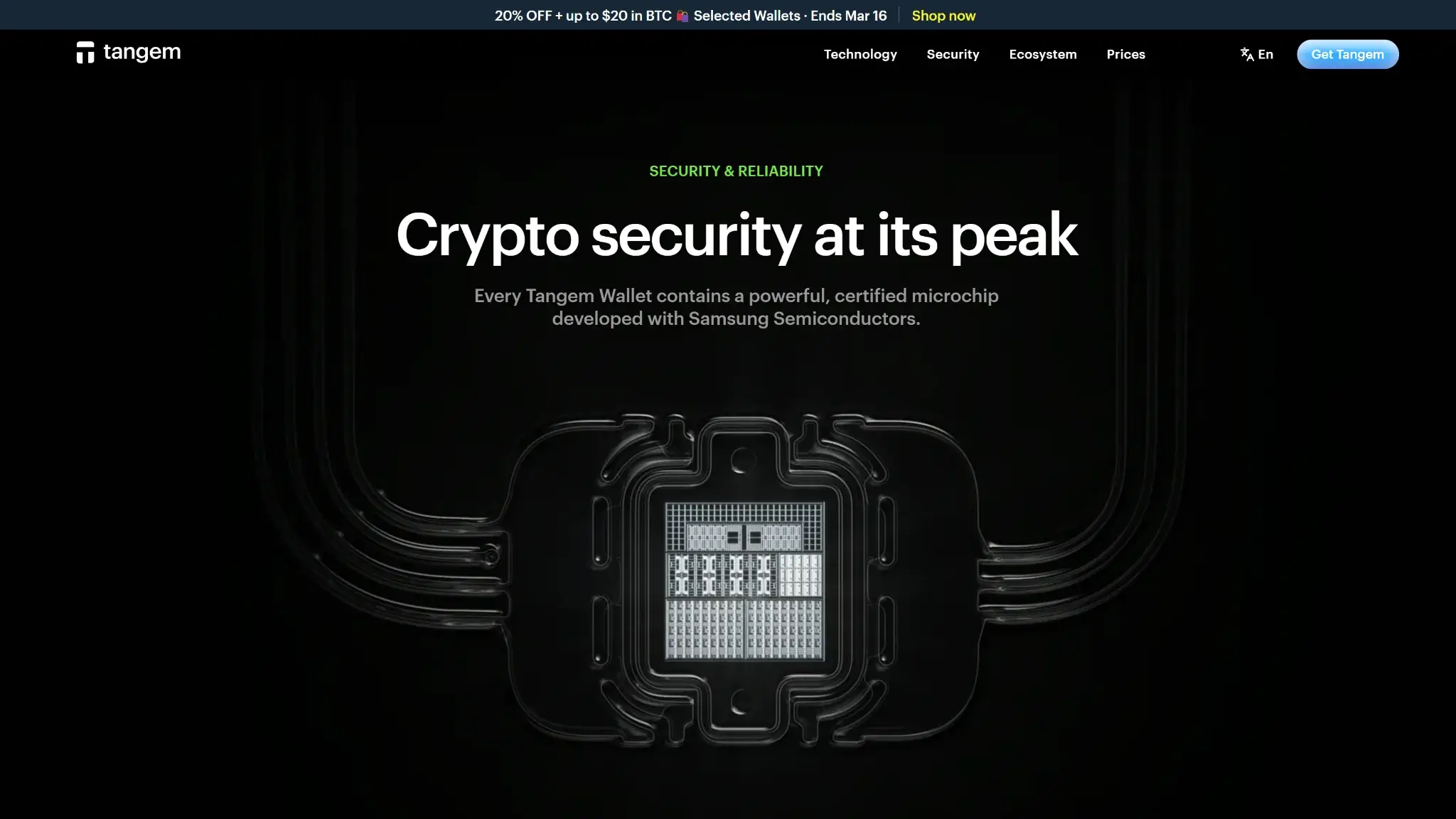
Tangem is fully non-custodial. Private keys are generated inside a Samsung secure element certified to EAL6+, using a certified hardware random number generator, and they never leave the chip. Nobody, including Tangem, can extract them through the app or the NFC interface. Three independent firms have audited the stack: Kudelski Security and Riscure have both reviewed the firmware, with Riscure's audit in December 2023, and Cure53 assessed the mobile SDK in 2026. None reported critical findings.
That clean record picked up its first real asterisk on July 9, 2026, when Ledger's Donjon security lab disclosed a laser fault-injection attack against Tangem cards. A single nanosecond laser pulse aimed at the secure element bypasses the card's recovery-state check and resets its access code, after which the attacker can sign transactions and drain the funds. The attack requires physical possession of the card, roughly $250,000 in lab equipment, and about two hours per card, so your funds are not at remote risk and no user losses have been reported. The part that changes the long-term picture is permanence. Tangem firmware cannot be updated, so no fix will ever ship, and every card in circulation carries the flaw for its lifetime. Donjon also flagged a brute-force weakness in the card's authentication protocol. Tangem has long advertised that zero of its six million cards have been hacked. That figure is the vendor's own marketing claim, and a publicly demonstrated exploit now sits beside it.
The immutability at the center of that disclosure cuts both ways, and an honest review has to state both edges. Because the firmware can never change, there is no malicious-update vector, no rushed patch that introduces new bugs, and no pressure to trust a vendor's release process. The audited code you bought is the code the card runs forever. The cost is exactly what July 2026 exposed. When a flaw is found, it is found for good.
The open-source picture needs the same precision. Tangem markets itself as open source, and the claim is true for the mobile app and SDK, both public on GitHub. The card firmware is closed. You cannot independently verify what the secure element runs, and instead you trust the Kudelski and Riscure attestations. For a hardware wallet, the firmware is the half that counts.
The last structural limit is the missing screen. The card has no display, so the app on your phone is the only place you see the destination address and amount before you approve a transaction. Malware on that phone can show you one address while the card signs another. Screen-equipped devices from Ledger and Trezor exist precisely to close this gap by rendering transaction details on hardware the malware cannot reach. This is the ceiling on Tangem's security model regardless of any specific exploit, and it is the main reason the score sits where it does.
Supported Chains and Assets
Tangem supports 14,100+ tokens across 90 blockchains by the vendor's current count. Native coverage includes Bitcoin, Ethereum, Solana, XRP Ledger, Stellar, Hedera, XDC, and TRON, with ERC-20, SPL, and TRC-20 token standards on top. That makes it a genuine multi-chain generalist rather than a single-ecosystem device, and coverage has kept pace with the chains most holders actually use. It is solid breadth for a card wallet, though not category-leading against software wallets that add new chains in an app release.
Usability and Recovery
The app generates keys on the first card, then clones them to the one or two backup cards over an encrypted card-to-card channel. There is no phrase to write down, photograph, mistype, or surrender to a phishing site, which removes the failure mode that empties more wallets than any hardware exploit does.
The seedless design collects its price in three specific rules you must understand before funding the wallet. First, if you lose every card in the set, the funds are permanently gone. There is no phrase, no cloud backup, and no support ticket that recovers them, which is why Tangem itself warns against storing all your cards in one place. Second, backup cards can only be linked during initial setup. Try to add one later and the app refuses with an error, so a two-card buyer cannot upgrade to three-card redundancy without creating a new wallet and moving funds. Third, resetting a forgotten access code requires tapping a second linked card, another reason the backup card belongs somewhere safe but reachable.
Since the 2.0 generation, Tangem also lets you generate or import a traditional 12/24-word seed phrase, displayed once during setup. That restores the standard recovery path and interoperability with other wallets, at the price of reintroducing the phrase you have to protect. Both models are legitimate. Pick one deliberately.
Features
The app covers buying, selling, and swapping through integrated partners, with pricing set by the partner handling each trade. Native staking is available on select assets, and Yield Mode routes deposits through Aave for lending yield. None of these break self-custody, since keys stay on the card throughout.
Tangem Pay, the Visa payment layer, is a separate product with a separate rulebook. It requires KYC, unlike the wallet itself, and it should be evaluated as a spending account bolted onto the wallet, not as part of the cold-storage proposition.
Cost
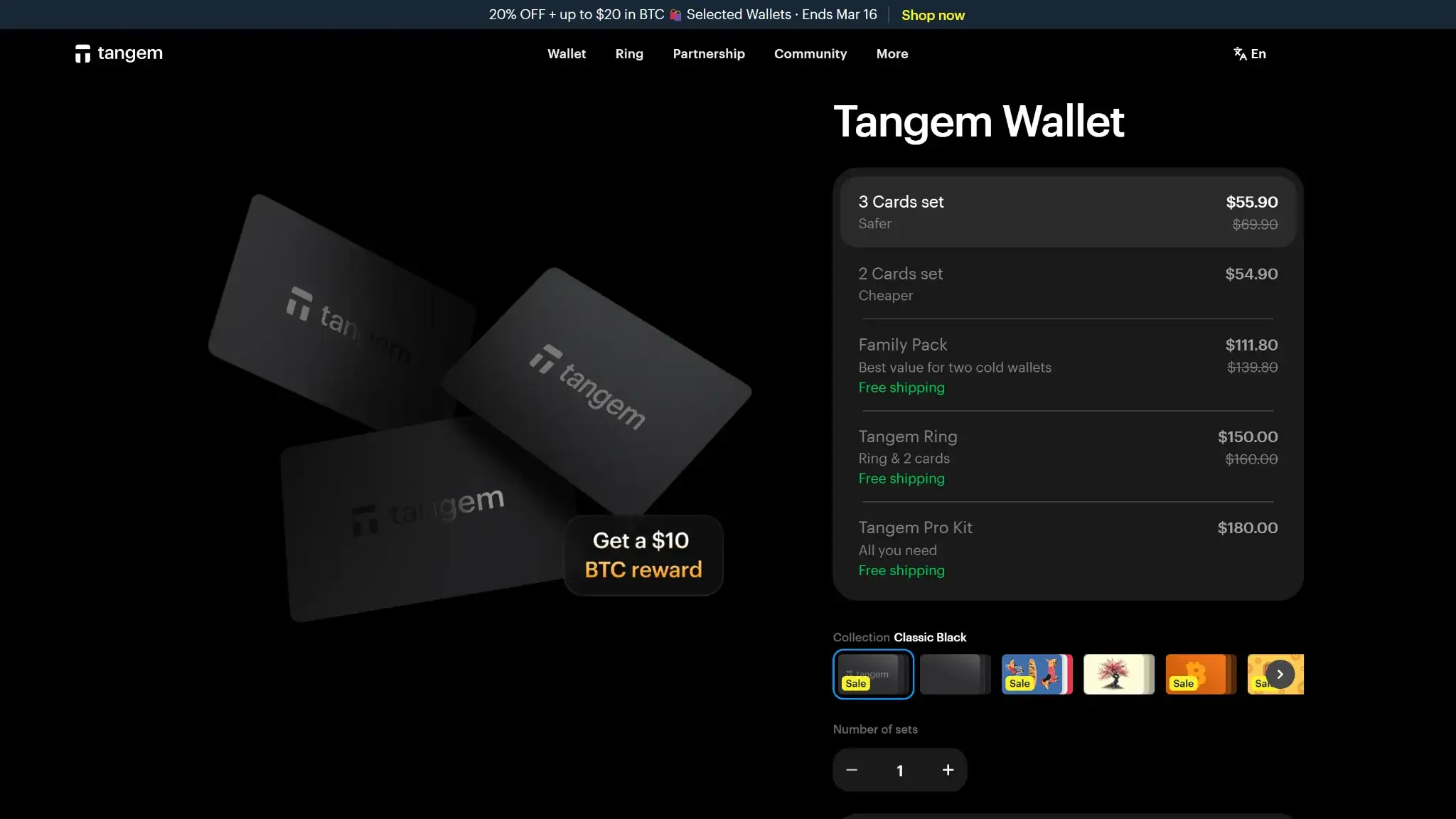
Tangem is the cheapest way to get a certified secure element in a multi-device set. The two-card pack costs $54.90 and the three-card pack $69.90, against $79 to $249 for mainstream screen-equipped hardware wallets. A Family Pack runs $139.80, the Ring with two backup cards $160, and the Pro Kit $180. Every option carries a 25-year warranty, and with no battery or connector there is nothing to charge, wear out, or replace. There are no subscriptions and no wallet-side fees, with trading costs living in partner spreads.
Final Verdict
On-card key generation in an EAL6+ Samsung chip, three clean audits, seedless backup that kills the phishing failure mode, and a $54.90 entry price would support a higher number on their own. The phone-side signing display and the unpatchable July 2026 laser disclosure are what hold it back, because both are permanent properties of the design, not bugs awaiting a fix. For mobile-first holders with moderate balances, Tangem is a legitimate and unusually cheap cold wallet, provided the multi-card discipline is followed to the letter.
Keys cloned across cards, not written down, Optional 12/24-word seed on 2.0 cards, Wearable Ring runs the same secure chip
Why it stands out
- $54.90 for a certified-SE two-card cold wallet
- EAL6+ Samsung secure element, on-card key-gen
- No seed phrase to photograph, phish, or lose
- Three independent audits, no critical findings
- No battery or cable, 25-year warranty
What to consider
- July 2026 laser attack can never be patched
- No screen, the phone shows what you sign
- Lose every card and funds are gone for good
- Cannot add a backup card after setup
- Card firmware is closed-source
Disclaimer: CryptoSlate may receive a commission when you click links on our site and make a purchase or complete an action with a third party. This does not influence our editorial independence, reviews, or ratings, and we always aim to provide accurate, transparent information to our readers.
